
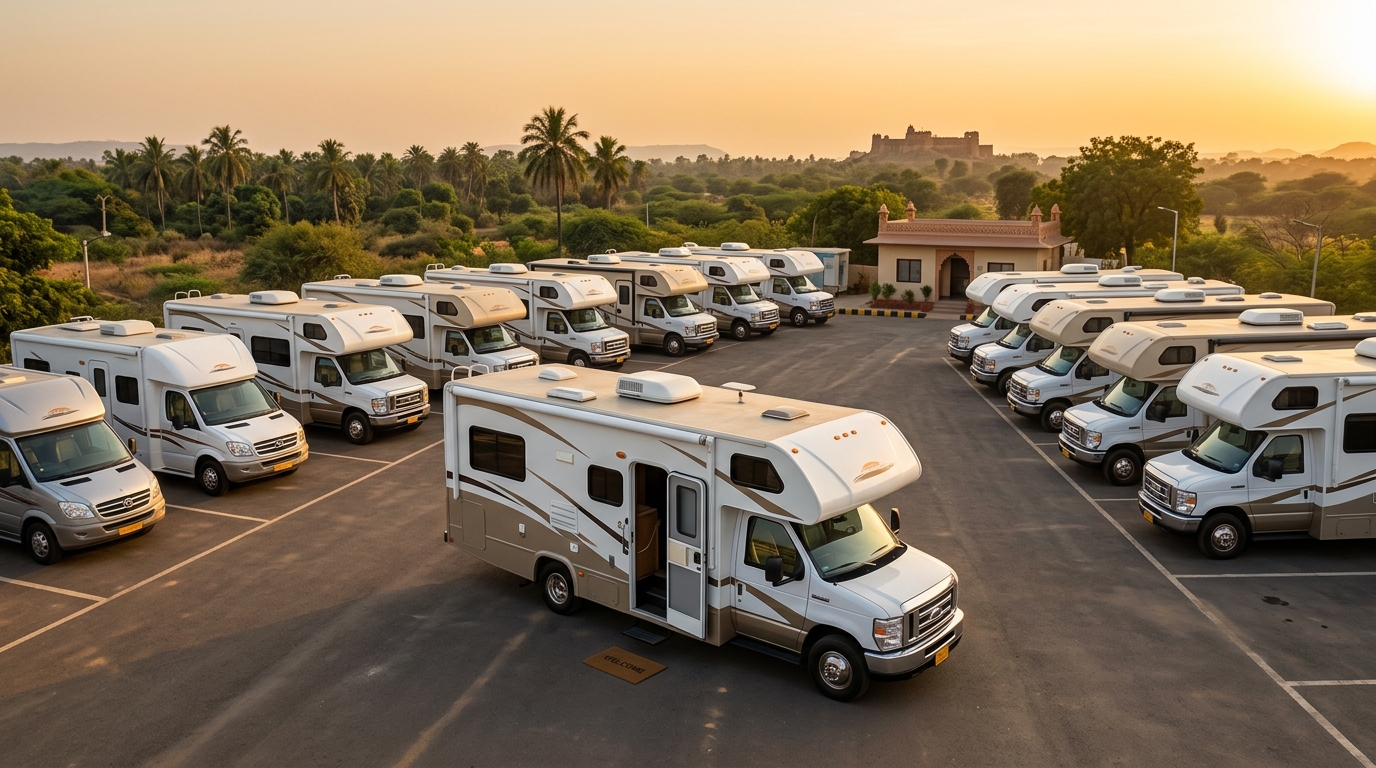
For live availability and current prices, start with our RV Rental India - Complete Guide 2026 guide.
In This Guide
- Can You Drive an RV in India? License & Age Rules
- Road Conditions & Terrain in India
- RV Size Limits, Bridges & Restricted Zones
- Fuel: Diesel vs. Petrol & Cost per 100 km
- Tolls, Vignettes & Border Rules
- Driving Tips for rv rental beginners Travelers
- Recommended RV Class for India Roads
- Should I Choose a Compact Van Instead of a Large RV in India?
- Can I Park Anywhere? Free & Wild Camping Rules in India
- Can I Drive an RV Into the City Center? Heights, Tunnels & Local Signage
- What Safety Protocols and Emergency Preparedness Do I Need for RV Travel in India?
- What RV Infrastructure and Campgrounds Are Available in India?
- How Do I Manage Water and Waste Disposal in an RV in India?
- How to Ensure Reliable Internet and Phone Connectivity While RVing in India?
- How Much Does an RV Trip Cost in India? Transparent Breakdown
- How to Practice Responsible and Sustainable RV Tourism in India?
Embarking on a rented RV adventure in India offers an unparalleled way to explore this vibrant and diverse country at your own pace. Imagine waking up to the majestic Himalayas, enjoying breakfast with a view of a serene lake, or exploring ancient temples before retreating to your comfortable mobile home. For first-timers, the idea of driving an RV in India might seem a bit daunting, but with the right preparation and a supportive partner like Bandana RV, it's an experience that’s truly within reach. We’ve been helping tens of thousands of travelers explore the world by RV since 2001, and our expertise ensures you have all the information you need for a fantastic trip.
To begin planning your unforgettable journey and for live availability and current prices, start with our RV Rental India - Complete Guide 2024. This comprehensive route plan covers everything from essential documents to choosing the perfect motorhome for your travels.
Can You Drive an RV in India? License & Age Rules
Yes, foreign visitors can drive a rented RV in India, provided they hold a valid International Driving Permit (IDP) alongside their home country's driver's license and meet the rental company's age requirements.
For most standard motorhomes, typically those under 7,500 kg Gross Vehicle Weight (GVW), a regular Class B driving license (or India's equivalent Light Motor Vehicle, LMV, license) is usually sufficient. This applies to most Class B Campervans, Class C Alcove motorhomes, and Class SI Semi-integrated RVs that are popular for rental. It's crucial to ensure your IDP is issued by the appropriate authority in your home country before you travel and remains valid throughout your entire trip in India. The minimum age to rent an RV through Bandana RV in India is 21 years old; there are no young driver surcharges or vehicle class restrictions based on age, making RV travel accessible to a broader range of adventurers. Always confirm specific licensing and age requirements directly with your chosen rental provider to avoid any last-minute surprises.
Road Conditions & Terrain in India
Indian road conditions for RV rental beginners offer a diverse experience, ranging from well-maintained national highways to narrow, occasionally unpaved rural tracks, presenting varied terrain and often unexpected obstacles.
As you explore India with your rented motorhome, you'll encounter a mix of smooth expressways, single-lane state highways, winding mountain roads, and some gravel or dirt sections, particularly when venturing into less-traveled areas. Traffic in bustling urban centers and towns can be dense and requires patience and focused, defensive driving. Rural and hilly regions often feature sharp turns, steep inclines, and occasional potholes, necessitating a slower, more deliberate driving style. The key is to embrace a leisurely pace; traveling slowly, at a maximum of 100-150 km per day on average, allows you to truly feel the place, connect to the culture, the food, and the scenery, and adapt to the varying road qualities. This approach transforms potential challenges into opportunities for deeper engagement with India's rich landscapes.
RV Size Limits, Bridges & Restricted Zones
RV size limits in India generally adhere to standard vehicle regulations, but beginners should be mindful of local height, weight, and width restrictions, particularly in older towns, bustling markets, or mountainous regions.
While national height and weight limits apply to commercial vehicles, most rental motorhomes fall within passenger vehicle dimensions, making them largely permissible on main roads. However, narrow underpasses, low bridges (often marked in meters), and historic city entrances can pose challenges for larger Class C or Class A motorhomes. Always pay close attention to road signage. Certain ecologically sensitive zones, national parks, or specific urban areas may also impose restrictions on vehicle types or sizes, or require special permits; thorough research of your intended route, perhaps using RV PLANET routes, is highly recommended to anticipate any such limitations. If your itinerary includes coastal or island regions, remember that ferries often have strict length, height, and weight limits for vehicles, and advance booking for larger RVs is usually essential.
Fuel: Diesel vs. Petrol & Cost per 100 km
Most rented RVs and motorhomes in India operate on diesel fuel, which is readily available nationwide, making it the most practical choice for beginners.
Bandana's global fleet averages indicate that semi-integrated RVs (Class SI) typically consume 10-11 Liters/100 km, alcove RVs (Class C) 10-12 Liters/100 km, and camper vans (Class B) 8-10 Liters/100 km. The price of diesel in India is dynamic, but travelers can estimate fuel expenses by budgeting for approximately ₹85-₹100 per liter. This translates to an average cost of ₹850-₹1200 per 100 km for most RV classes, which is a significant part of the total trip cost. While petrol is widely available, almost all rental motorhomes are diesel-powered, so always confirm your specific vehicle's fuel type at pickup. When planning your route, remember that RV PLANET routes allow you to itemize and track every expense, including fuel, for easy budgeting throughout your journey. On the routes offered through RV PLANET routes, you can itemize and track every expense along the way for easy budgeting.
Tolls, Vignettes & Border Rules
Navigating tolls in India is primarily managed through the FASTag electronic toll collection system, which is now mandatory for all four-wheelers, including rented RVs and motorhomes.
FASTag accounts are digitally linked to your vehicle, enabling seamless, cashless payments at toll plazas across national highways and expressways, which significantly smooths your travel. For RV rental beginners in India, it's advisable to ensure your rented vehicle is equipped with a functional FASTag, or inquire with your rental company about how to manage toll payments. India does not utilize 'vignettes' in the European style; however, certain states or specific regions may levy environmental fees or entry taxes at their borders, which should be researched in advance for your chosen route. If you're considering adventurous cross-border trips into neighboring countries from India, be prepared for extensive research into complex customs regulations, specialized vehicle permits, international insurance requirements, and visa processes.
Driving Tips for rv rental beginners Travelers
For RV rental beginners traveling in India, it's essential to prioritize defensive driving and always anticipate the unexpected, as local road etiquette can differ significantly from what you might be accustomed to.
Drive at a slower pace than you typically would, especially on unfamiliar roads, in dense traffic, or through villages, allowing ample reaction time for pedestrians, animals, and other vehicles. Planning your routes meticulously using reliable GPS applications that provide real-time traffic updates is highly recommended, and it's generally best to avoid driving after dark due to reduced visibility and increased hazards. Take frequent breaks during your week-long trip or extended road trip, particularly if you are traveling with family, to prevent driver fatigue and allow everyone to stretch and experience the local surroundings. Consider opting for a motorhome with an automatic transmission, as it can make maneuvering in India's varied traffic conditions much easier. Always keep essential emergency contacts and rental documentation readily accessible.
Recommended RV Class for India Roads
For RV rental beginners embarking on a journey across India's diverse roads, a Class SI (Semi-integrated) or Class B (Camper Van) motorhome is often recommended due to their optimal balance of maneuverability, comfort, and suitability for local conditions.
Class SI motorhomes, with an average length of around 6.9 meters from Bandana's global fleet, provide comfortable living spaces for up to 3-4 adults while remaining manageable on various terrains, including some winding roads. Class B Camper Vans, averaging approximately 5.8 meters in length (like the Combi Van with a length of 5 meters, or the Van - Economy), offer superior agility for navigating tighter city streets and mountain passes, making them ideal for 2-3 adults seeking a more compact and nimble experience. These smaller classes generally provide sufficient ground clearance for most Indian roads, though sturdy suspension is always a benefit. While larger Class C (Alcove, avg. 7.5m) and Class A (Integrated, avg. 7.5m) RVs offer more extensive amenities and space (like the C-LARGE or MHA30), their longer lengths can be more challenging for beginners in crowded areas or on winding, less developed routes. For more choices, check out our guide to RV Rental India - Complete Guide 2026.
Should I Choose a Compact Van Instead of a Large RV in India?
For RV rental beginners in India, while a compact campervan or Class B van does offer superior maneuverability, the enhanced comfort and greater indoor space of a larger motorhome (like a Class SI or Class C) generally outweigh the marginal benefits of a smaller vehicle for an extended road trip.
A compact van, such as a Class B Camper Van, is undeniably advantageous for navigating extremely tight historic city centers, very narrow mountain passes, or bustling market lanes where a larger RV might find it challenging. However, the vast majority of India's main routes and tourist destinations are accessible by standard-sized RVs, such as the F2 (a 3-berth motorhome at 6.5 meters length) or the K3 (a 4-berth at 6.99 meters length). These larger motorhomes offer crucial amenities like full bathrooms, more spacious kitchens for preparing meals, and dedicated sleeping areas, significantly enhancing the 'home-on-wheels' experience. The trade-off for a compact van often involves sacrificing living comfort, storage capacity, and amenities for slightly easier handling in very specific, challenging urban or remote situations. Consider your primary itinerary: if it focuses on major cities and highways, a Class SI or C RV provides a much better and more comfortable holiday; for deep dives into remote villages with minimal infrastructure or heavily congested old towns, a compact van might offer a practical edge. For budget-conscious travelers, our Cheap RV Rental in India - Budget Guide 2026 can help you explore options across different sizes.
Can I Park Anywhere? Free & Wild Camping Rules in India
Free and wild camping for rented RVs in India is generally not encouraged or legally permitted in most areas, making designated or secure parking options the safer and more responsible choice for RV rental beginners.
Unlike some Western countries with extensive networks of informal wild camping spots, India has a developing but not yet widespread system for RVs. Unauthorized overnight parking can lead to safety concerns or legal issues, so it's advisable to seek secure parking at reputable hotels, guesthouses (often with prior permission and a small fee), or dedicated RV parking areas where available. Some states or regions may have specific regulations regarding overnight parking, particularly near popular tourist attractions, national parks, or protected areas. Always check local regulations and follow local laws before parking overnight, prioritizing safety and respecting local communities and the environment. For finding campsites and campgrounds during your trip, we recommend using RV PLANET (rvplan.net) - a great resource for locating available spots along your route. You'll find a spot. If not at the first campground, then the next one. Always call ahead before driving to confirm availability and services, especially during peak seasons.
Can I Drive an RV Into the City Center? Heights, Tunnels & Local Signage
Yes, in most Indian cities, you can generally drive a rented RV into the city center, but RV rental beginners must pay vigilant attention to local signage, especially concerning height limits, tunnels, and potential environmental zones.
Major roads leading into and through city centers are usually wide enough for most RVs, though older parts of cities, narrow alleyways, or specific market areas might have width restrictions or be designated as pedestrian-only zones. Crucially, always watch for signs indicating height restrictions (often at underpasses, flyovers, or old city gates) and tunnel clearances, as these can vary significantly and require careful planning. Drive slowly and carefully, and you can drive almost anywhere without issues. No need to stress - just use common sense and pay attention to road markings and local traffic flow. Be aware of potential environmental zones or "no entry" times for commercial-sized vehicles in certain urban areas during peak hours; researching local regulations for your specific destination is key. Parking within city centers can be challenging; look for designated large vehicle parking or plan to park on the outskirts and use local transport for inner-city exploration. This approach allows you to enjoy the urban experience without the stress of maneuvering a larger vehicle in tight spaces.
What Safety Protocols and Emergency Preparedness Do I Need for RV Travel in India?
RV rental beginners in India must prioritize comprehensive safety protocols and emergency preparedness, including having reliable support contacts, detailed plans for unforeseen circumstances, and adequate insurance coverage.
Always carry a fully charged local mobile phone with a local SIM card (for better coverage) and have essential emergency numbers saved, including local police (112), medical assistance, and your rental company's roadside assistance. Ensure your rented RV is equipped with a robust first-aid kit, a fire extinguisher, a basic tool kit, and a spare tire, and familiarize yourself with how to use them. Understand your rental company's specific emergency procedures and their 24/7 support contacts. While Bandana provides pre-booking comparison, booking support, and post-booking coordination, your rental supplier is your primary contact during your trip. Share your detailed itinerary with a trusted contact back home, and consider carrying physical maps in addition to relying solely on GPS, especially for remote areas with potentially patchy connectivity. Upgrading to a top-level deductible for extra peace of mind is an option many travelers find valuable.
What RV Infrastructure and Campgrounds Are Available in India?
While India's dedicated RV infrastructure is still developing, a growing number of private campgrounds, caravan parks, and hotel partnerships offer secure parking and essential services for RV travelers.
Unlike Western countries with extensive, established RV park networks, India presents a nascent but expanding ecosystem of RV-friendly spots, primarily catering to an increasing domestic tourism market. Travelers should look for 'caravan parks,' 'motorhome parking,' or 'RV resorts,' which are increasingly providing facilities such as electrical hookups, water refill stations, and waste disposal points. Many hotels and resorts, particularly those in tourist-heavy regions or along popular routes, may offer secure overnight parking for RVs, often with access to basic amenities like restrooms and water for a fee; always inquire in advance. Researching specific destinations for available RV infrastructure is essential, as the quality and availability of sites vary widely by region, ensuring you have planned and confirmed overnight stops. Exploring RV Rental India - Complete Guide 2026 or even RV Rental Asia - Complete Guide 2026 can provide more general context on the developing RV scene.
How Do I Manage Water and Waste Disposal in an RV in India?
Effectively managing potable water, greywater, and blackwater disposal in a rented RV in India requires careful planning, as dedicated RV service stations are less common than in established touring destinations.
For potable water, it is highly recommended to rely on sealed bottled water for drinking and cooking, and to refill your RV's freshwater tank only at trusted sources like established hotels, designated campgrounds, or municipal water points where potability can be confirmed. Greywater (from sinks and showers) and blackwater (from toilets) must be disposed of responsibly at designated dumping stations, which are primarily found at some private caravan parks or larger service centers. Never dispose of waste water indiscriminately, as it is environmentally damaging and typically illegal. Always inquire with your rental company about appropriate disposal methods and locations along your planned route. To minimize consumption between disposal points, consider using eco-friendly toiletries and practicing water-saving habits while cooking inside your RV. For meal ideas and inspiration for your on-the-road kitchen, check out our RV-friendly recipes playlist.
How to Ensure Reliable Internet and Phone Connectivity While RVing in India?
Ensuring reliable internet and phone connectivity while RVing in India is paramount for navigation, communication, and emergencies, and it typically involves a strategic combination of local SIM cards and portable Wi-Fi devices.
Upon arrival, purchase a local prepaid SIM card from major providers such as Jio, Airtel, or Vodafone Idea. These providers offer affordable data plans and generally provide excellent coverage in populated areas and along major highways. For more consistent connectivity, especially when venturing into remote regions or mountainous terrain, consider investing in a portable Wi-Fi hotspot or ensuring your mobile phone has strong tethering capabilities. It is important to be aware that network coverage can still be patchy in very isolated areas, so always download offline maps and essential information (like booking confirmations or emergency contacts) before departing on less-traveled routes. Prioritize mobile networks known for wider coverage in the specific regions you plan to visit, and always carry power banks or a car charger to keep your devices fully charged, ready for any situation.
How Much Does an RV Trip Cost in India? Transparent Breakdown
A transparent breakdown of RV trip costs in India for beginners includes rental fees, fuel, tolls, permits, insurance, food, activities, and potential parking fees, with total costs varying significantly based on budget and itinerary.
RV rental fees typically range from ₹8,000 to ₹25,000 per day, depending on the RV class (e.g., a compact Class B campervan like Chaser versus a spacious Class C like 24 Class C Motorhome), the season, and the rental duration. Prices are dynamic, similar to flight tickets, and finalize at the time of actual booking. Fuel, primarily diesel, is a significant ongoing expense, estimated at ₹850-₹1200 per 100 km for most RVs. You'll also need to budget for tolls (via FASTag), any potential state entry permits, and comprehensive insurance coverage, which is mandatory for rentals. Factor in costs for groceries if you plan to cook in your RV (check our RV-friendly recipes playlist!), or dining out at local dhabas, as well as entrance fees for attractions and secure overnight parking, which can range from free (with prior permission) to ₹500-₹2000 per night at dedicated sites. For a deeper dive into cost-saving, check our RV Rental in India - Prices and Best Deals 2026 or Weekly RV Rental in India - Pricing 2026 guides.
For couples seeking a more compact experience, a Class B campervan may be more cost-effective, while families with kids (4-6 people) will likely prefer the space of a Class C motorhome like the C-30, which comes with higher rental and fuel costs. Last-minute RV rental deals in India are possible, especially during off-peak seasons, as availability changes daily. However, for popular periods or specific vehicle types, pre-planners who book 3-6 months in advance often secure better rates, sometimes saving up to 20%. If you're flexible with your travel dates and consider off-peak seasons (e.g., monsoon months of June-September in certain regions), you can often find the cheapest RV rentals by using comparison platforms and staying open to different vehicle types. Remember that on RV PLANET routes, travelers can itemize and track every expense along the way for easy budgeting.
How to Practice Responsible and Sustainable RV Tourism in India?
Practicing responsible and sustainable RV tourism in India is essential for minimizing your environmental impact and fostering respectful community engagement, particularly for beginners.
Adhere strictly to 'Leave No Trace' principles: always pack out all your trash, dispose of all waste properly (including greywater, blackwater, and solid waste) at designated points, and leave natural areas exactly as you found them. Conserve precious resources by minimizing water and electricity usage within your rented RV, and adopt fuel-efficient driving habits to reduce your carbon footprint, especially when exploring India's vast landscapes. Engage respectfully with local communities; learn a few basic phrases in the local language, always ask for permission before photographing individuals, and actively support local businesses and artisans by purchasing goods and services. Stay on marked roads and trails to prevent unintended damage to fragile ecosystems, and always be mindful of noise levels, particularly in quiet natural areas or near residential zones, ensuring your adventure benefits both you and the beautiful country you are exploring.
What You Shouldn't Miss
- **The Golden Triangle by RV:** Explore Delhi, Agra, and Jaipur in a rented motorhome, offering the flexibility to visit iconic sites like the Taj Mahal at your own pace and discover hidden gems along the route.
- **Kerala's Backwaters & Beaches:** Drive your campervan through the lush landscapes of Kerala, enjoying serene backwaters, pristine beaches, and vibrant local life.
- **Himachal Pradesh Mountain Escapes:** Venture into the breathtaking Himalayas with your RV, exploring charming hill stations like Shimla, Manali, and Dharamshala, pausing at scenic overlooks.
- **Rajasthan's Desert Forts:** Immerse yourself in the regal history of Rajasthan, driving a motorhome between magnificent forts and palaces in cities like Jodhpur, Udaipur, and Jaisalmer.
- **Goa's Coastal Freedom:** Enjoy the laid-back vibe of Goa, parking your RV near its stunning beaches and exploring its unique blend of Indian and Portuguese culture.
Looking for expert insights from Avi Bandana? Top 5 Adventures - recommendations from Avi Bandana
🎬 Video coming soon
Final Thoughts
Embarking on your first RV adventure in India is an exciting prospect, one that promises unforgettable memories and unique cultural immersion. While the journey might require a bit more planning and a mindful approach to driving, the rewards are immense. Imagine the freedom of setting your own schedule, cooking your own meals amidst stunning scenery, and truly connecting with the heart of India.
We’re here to support you every step of the way, from comparing the best motorhome options to ensuring you have all the essential information before you pick up your keys. Remember to travel slowly, allowing yourself the time to truly absorb the diverse landscapes and rich experiences India has to offer. This is your journey, and we handle the details, so you can live it fully.
Ready to start planning your incredible RV road trip? Discover top destinations, planning tips, all in one place!
