In This Guide
- Can You Drive an RV in Iceland? License & Age Rules
- Road Conditions & Terrain in Iceland
- RV Size Limits, Bridges & Restricted Zones
- Fuel: Diesel vs. Petrol & Cost per 100 km
- Tolls, Vignettes & Border Rules
- Driving Tips for rv rental beginners Travelers
- Recommended RV Class for Iceland Roads
- Should I Choose a Compact Van Instead of a Large RV in Iceland?
- Can I Park Anywhere? Free & Wild Camping Rules in Iceland
- Can I Drive an RV Into the City Center? Heights, Tunnels & Local Signage
🎬 Video coming soon
Can You Drive an RV in Iceland? License & Age Rules
Driving an RV in Iceland is certainly permitted, typically requiring a standard Class B driver's license for most common rental vehicles weighing up to 3,500 kg. This covers a wide range of popular campervans and semi-integrated motorhomes. For example, a vehicle like the "rent rv example A1" which is ideal for a couple and offers features like a shower and toilet, falls well within this category. However, for RVs exceeding 3,500 kg, a higher license category (e.g., C1 or C) is required, though these are rarely needed for typical leisure rentals. The minimum driver age for RV rentals in Iceland is generally 21 years old, with no young driver surcharges or vehicle class restrictions based on age, making it accessible for a wide range of adventurers. Foreign drivers from non-English-speaking countries should carry an International Driving Permit (IDP) alongside their valid national driver's license, which is recommended for ease of identification but not mandatory in most cases. Rest assured, driving a rented motorhome in Iceland is straightforward for licensed drivers.Road Conditions & Terrain in Iceland
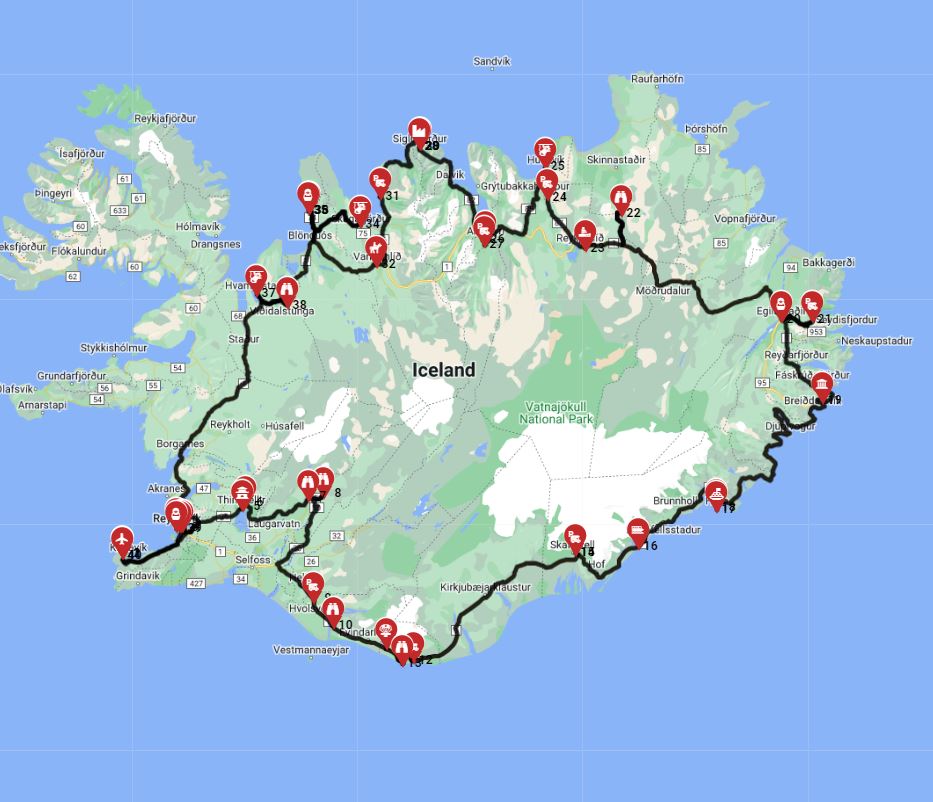
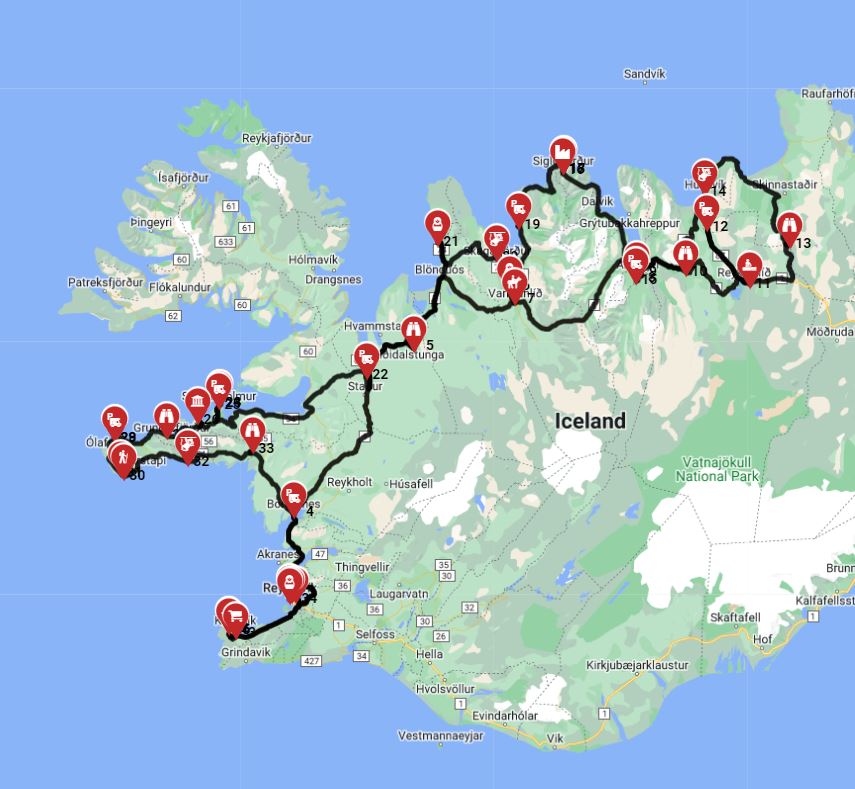
Iceland's road conditions vary significantly, offering everything from smooth paved sections on the popular Ring Road (Route 1) to challenging gravel roads and restricted F-roads in the Highlands. The main Ring Road, which encircles the island for 1,322 km, is mostly paved and generally well-maintained, perfect for a long road trip. However, many side roads leading to attractions are unpaved gravel, requiring drivers to reduce speeds to about 80 km/h, increase braking distances, and be aware of high winds that can kick up stones, potentially causing windshield damage. These strong winds are a frequent and significant hazard for RVs and motorhomes due to their high profile, so constant weather monitoring and cautious driving are essential. F-roads, found in the interior Highlands, are strictly limited to specialized 4x4 vehicles and often involve unbridged river crossings, making them unsuitable and prohibited for standard 2WD RVs and motorhomes. Additionally, sudden and dramatic weather changes, including dense fog, heavy rain, or unexpected snow and ice, are common even outside of winter, particularly in the shoulder seasons.RV Size Limits, Bridges & Restricted Zones
Most standard RVs and motorhomes can comfortably navigate Iceland's main roads, but drivers must remain aware of potential height and weight restrictions, particularly on older or single-lane bridges. These bridges, often found in rural and less-trafficked areas, may have specific weight limits or require yielding to oncoming traffic, so always pay attention to signage. Height clearances in tunnels or underpasses are generally accommodating for most rented RVs; for instance, a Class C motorhome like the "cruise america rv rental example Explorer" has a length of 7.1m and width of 2.78m, and typically has no issues. Environmental zones, common in some European cities, are not a significant restriction for RVs in Icelandic urban centers. However, local parking regulations may apply, and some popular attractions or hiking areas might have smaller parking lots. Planning your route with vehicle dimensions in mind is always a good practice.Fuel: Diesel vs. Petrol & Cost per 100 km
Most RVs and motorhomes in Iceland operate on diesel fuel, which is widely available at service stations throughout the country, although petrol is also common for smaller campervans. Iceland generally has higher fuel costs compared to many other countries, making careful budgeting for consumption a crucial aspect of trip planning. Based on Bandana’s global fleet averages, a Class B - Camper Van typically consumes 8-10 Liters/100 km, while a Semi-integrated RV (Class SI) like the "2 Berth Tamar" might use 10-11 Liters/100 km. Larger Class C - Alcove RVs, such as the "Euro Deluxe" model, typically consume 10-12 Liters/100 km. Some RV rental companies in Iceland provide fuel discount cards, which can offer modest savings on petrol or diesel purchases. When planning your route with RV PLANET routes, you can itemize and track every expense, including fuel, for easy budgeting throughout your journey.Tolls, Vignettes & Border Rules
Iceland has very few toll roads, with the primary one being the Vaðlaheiðargöng tunnel located in northern Iceland, which requires payment. Payment for the Vaðlaheiðargöng tunnel can be conveniently made online before or within 24 hours of passing through, or sometimes managed via your rental company. No vignettes or road tax stickers are required for driving on Iceland's roads, simplifying your travel. As an island nation, Iceland has no land borders, meaning there are no international border rules or crossings to navigate for RV travel within the country. Your adventure will be contained within the stunning Icelandic landscapes, eliminating the complexities of cross-border RV travel common in other parts of Europe.Driving Tips for rv rental beginners Travelers
Strictly adhere to Icelandic speed limits: 90 km/h on paved rural roads, 80 km/h on gravel, and 50 km/h in urban areas, as enforcement is rigorous. Always drive with your headlights on, day and night, as it is a legal requirement in Iceland for all vehicles. Be extremely cautious of high winds; slow down, grip the steering wheel firmly, and consider pulling over if conditions become too dangerous for high-profile RVs and motorhomes. When driving on gravel roads, reduce your speed further, maintain ample distance from other vehicles to minimize stone chip damage, and anticipate longer braking distances. For F-roads, a dedicated 4x4 campervan is truly necessary, and you should have proper training for river crossings, as these roads are often unpaved, unmarked, and extremely challenging. Prepare for shoulder and winter seasons by checking road.is and vedur.is daily for road closures and weather alerts; specialized heating and appropriate winter or studded tires are essential for safety and navigating icy conditions. Finally, secure comprehensive insurance that specifically covers damages common in Iceland, such as wind damage, ash damage, and gravel impacts, as standard policies may not suffice.Recommended RV Class for Iceland Roads
For most beginner RV travelers in Iceland, especially those focusing on the Ring Road and main attractions, a Class SI - Semi-integrated RV offers a good balance of comfort and manageable size. These motorhomes, with Bandana’s global average length of 6.9m, like a "2 Berth Tamar," provide ample living space without being overly large. Class B - Camper Vans, averaging 5.8m in length, are ideal for couples or smaller groups, offering greater agility, easier parking, and better fuel efficiency, particularly beneficial on narrower roads and for spontaneous stops. For larger families or groups requiring more space and amenities, a Class C - Alcove RV, with an average length of 7.5m, such as the "Euro Deluxe," is well-suited for main roads, providing more sleeping capacity and a spacious living area. To venture onto Iceland's F-roads, a dedicated 4x4 campervan or a Class TC - Truck Camper is truly necessary, as these are the only vehicles permitted and designed to handle the rugged terrain and potential river crossings. Consider your group size and desired level of adventure to pick the perfect mobile home.Should I Choose a Compact Van Instead of a Large RV in Iceland?
Choosing a compact van, such as a Class B Camper Van, instead of a large RV in Iceland offers distinct advantages in maneuverability, fuel efficiency, and less susceptibility to Iceland's strong high winds. A smaller footprint makes parking easier at popular attractions and navigating tighter spots in villages more comfortable. For instance, a small Camper Van can easily be driven around local spots in Hafnarfjörður or Kópavogur without stress. Conversely, a larger RV, like a Class SI (Semi-integrated) or Class C (Alcove), provides significantly more indoor living space, often including integrated bathrooms and full kitchens, enhancing comfort for longer week-long or two-week trips. While most main roads in Iceland are wide enough for larger RVs, making maneuverability less of a significant concern in most areas compared to tighter European city centers, the decision ultimately depends on your travel party size, desired level of comfort, and specific itinerary. A compact van suits adventurous couples or solo travelers, while a larger RV is better for families or groups seeking more amenities and space.Can I Park Anywhere? Free & Wild Camping Rules in Iceland
No, wild camping with an RV or motorhome is generally prohibited in Iceland outside of designated campsites or private land with explicit permission, to protect its fragile environment. This prohibition applies strictly to parking overnight in remote areas, national parks, protected reserves, and often on privately owned land without explicit consent. Fines for illegal wild camping can be significant, so it is crucial to plan your overnight stops carefully. Legal and readily available alternatives for overnight stays include the numerous official campsites found throughout Iceland, which offer essential facilities like fresh water, electricity hookups, and waste disposal points. Adhering to Leave No Trace principles is crucial; proper disposal of grey and black water must only occur at designated facilities at campsites to protect Iceland's delicate landscapes, including its unique moss and vegetation. Always check local regulations and follow local law before parking overnight. For finding campsites and campgrounds during your trip, we recommend using RV PLANET (rvplan.net) - a great resource for locating available spots along your route.Can I Drive an RV Into the City Center? Heights, Tunnels & Local Signage
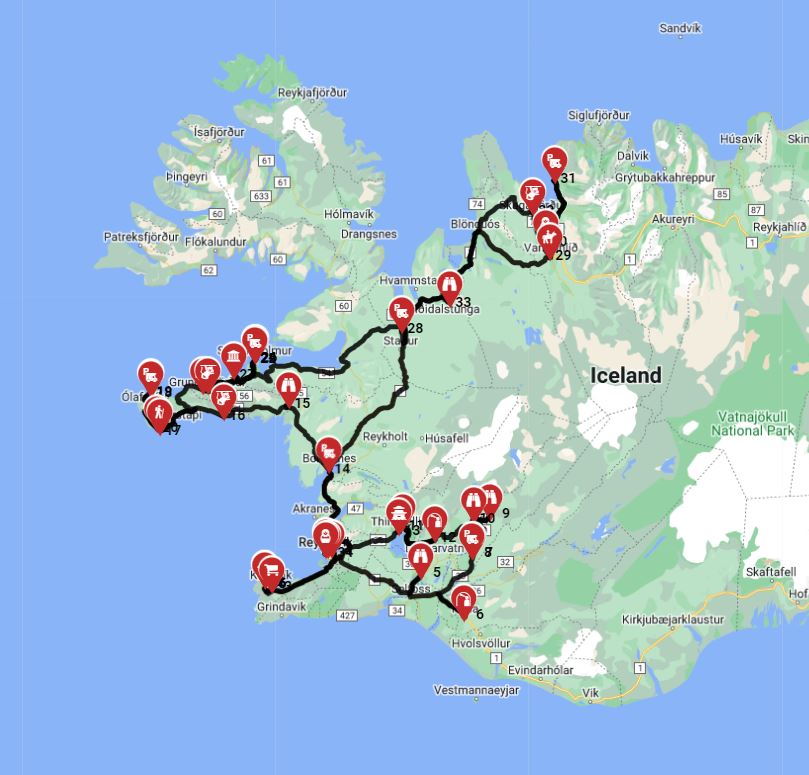
Yes, RVs and motorhomes can generally be driven into Icelandic city centers, including Reykjavik, as urban roads are typically wide enough to accommodate them without issue. Drive slowly and carefully, and you can drive almost anywhere without issues. No need to stress - just use common sense and pay attention. Drivers should, however, always pay close attention to local signage regarding any potential height restrictions for specific underpasses or parking structures, though these are rare for most RVs. Parking for larger RVs in central areas can be limited; it's often advisable to use designated RV parking areas or peripheral lots and explore the city on foot or via public transport. Be mindful of local traffic rules, one-way streets, and any temporary road closures or specific parking zones indicated by clear signage. RV PLANET (rvplan.net) also features routes that include city stops, helping you plan your entry and parking efficiently.What You Shouldn't Miss
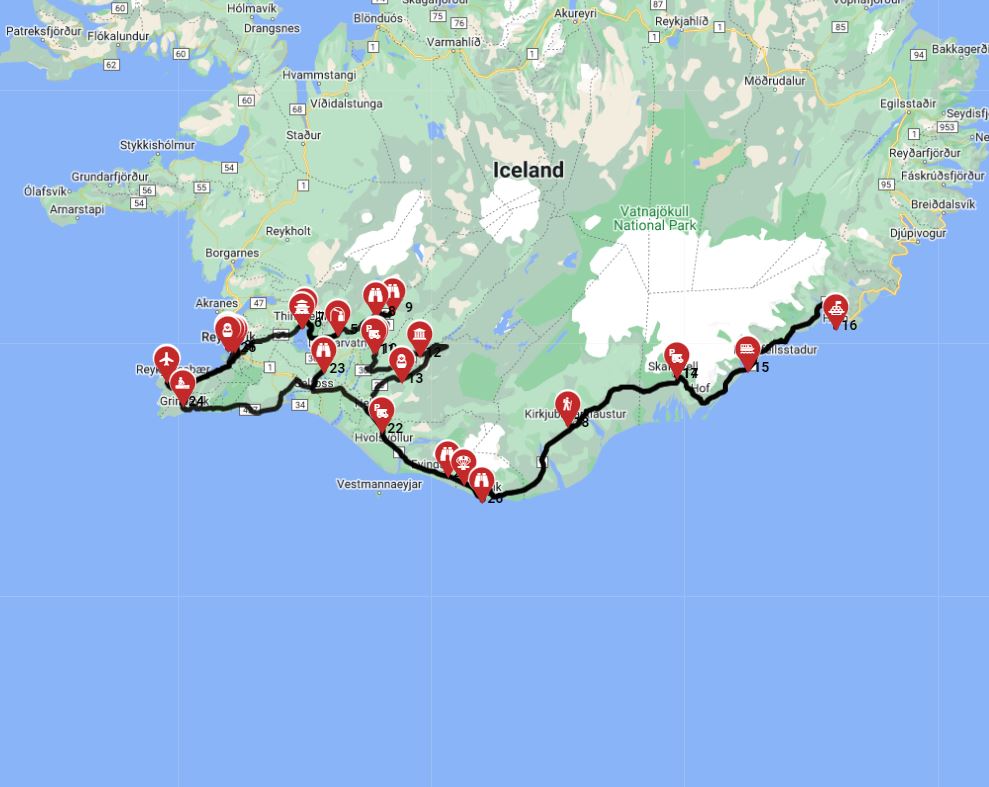
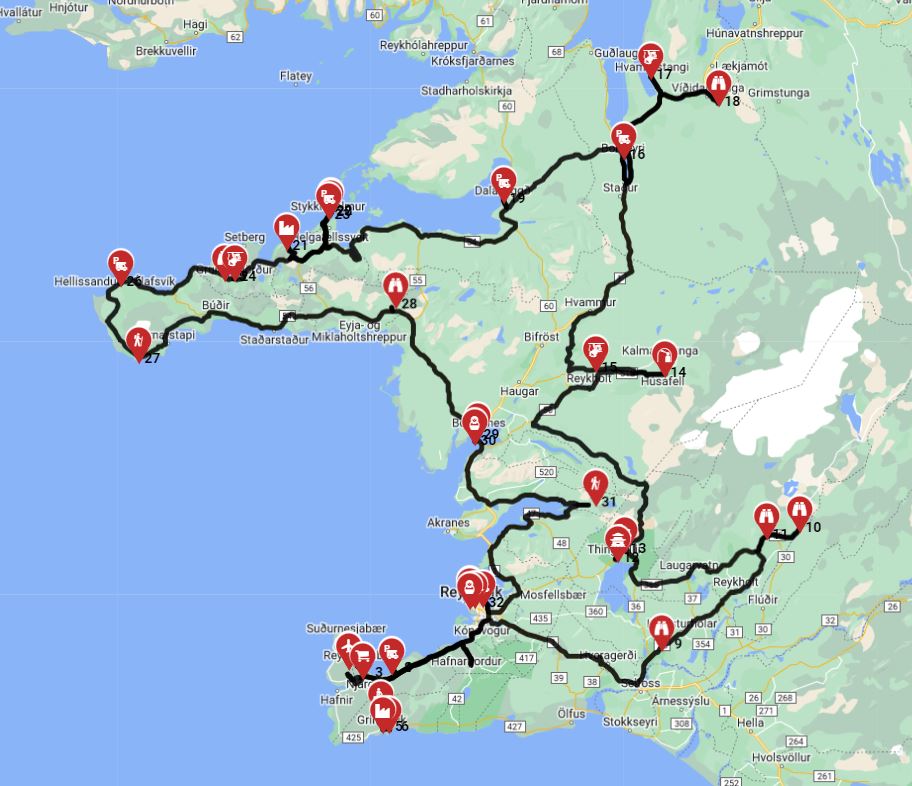
- **The Golden Circle:** This iconic route features three primary stops: Þingvellir National Park, the Geysir geothermal area, and Gullfoss waterfall. It's a perfect introduction to Iceland's natural power.
- **Jökulsárlón Glacier Lagoon:** Witness icebergs calved from the Vatnajökull glacier floating in a serene lagoon, often with seals swimming among them.
- **Skógafoss and Seljalandsfoss Waterfalls:** Experience the sheer power of Skógafoss and walk behind the cascading water of Seljalandsfoss, an unforgettable interaction with nature.
- **Reynisfjara Black Sand Beach:** Explore the dramatic black sand, basalt columns, and powerful Atlantic waves near Vík, but always respect the dangerous currents.
- **Myvatn Nature Baths:** Enjoy a relaxing dip in geothermal waters, a less crowded alternative to the Blue Lagoon, offering stunning views of the surrounding volcanic landscape.
- **Explore Snæfellsnes Peninsula:** Often called "Iceland in Miniature," this peninsula offers diverse scenery including Snaefellsjokull glacier, black sand beaches, and charming fishing villages.
Looking for expert insights from Avi Bandana? Top 5 Adventures – recommendations from Avi Bandana
Final Thoughts
Embarking on your first RV adventure in Iceland is an incredible way to experience its unique and breathtaking landscapes. While the country presents some distinct driving conditions and regulations, with the right preparation and a reliable rented motorhome or campervan, you're set for an unforgettable journey. Remember to drive slowly, respect nature, and take advantage of the excellent resources available for planning and support. At Bandana RV, we're here to make your first RV rental experience as smooth and enjoyable as possible. We provide the clarity and confidence you need to hit the road, so you can focus on making memories that will last a lifetime. Imagine cooking a delicious meal in your compact kitchen after a day of exploring, perfectly set up to enjoy one of our RV-friendly recipes playlist while overlooking a stunning Icelandic fjord. The freedom of RV travel truly brings Iceland to life!On the routes offered through RV PLANET routes, you can itemize and track every expense along the way for easy budgeting.