In This Guide
- Where to Camp in Iceland — Top Options
- Campground Types in Iceland (National, Private, Wild)
- Featured RV Park or Campground in Iceland
- Hookups & Amenities — What to Expect
- Booking Windows & Reservations in Iceland
- Nearby Supermarkets & Resupply Points
- Best RV Class for Camping in Iceland
- How to Save on Campgrounds in Iceland
- Class SI - Semi-integrated RVs for Iceland
- Class C - Alcove RVs for Iceland
- Class B - Camper Vans for Iceland
- Class A - Integrated RVs for Iceland
- Class TC - Truck Campers for Iceland
- How much does it cost to RV in Iceland?
- What is the average gas price in Iceland?
- Is it worth renting an RV in Iceland?
- Do I need a 4x4 campervan in Iceland?
- Is driving an RV in Iceland hard?
- Is it safe to wild camp in Iceland?
- What is the best month to RV in Iceland?
- Can you see the Northern Lights from an RV in Iceland?
- What should I avoid in Iceland?
- Can you drink alcohol in public in Iceland?
- Is there a lot of crime in Iceland?
Where to Camp in Iceland — Top Options
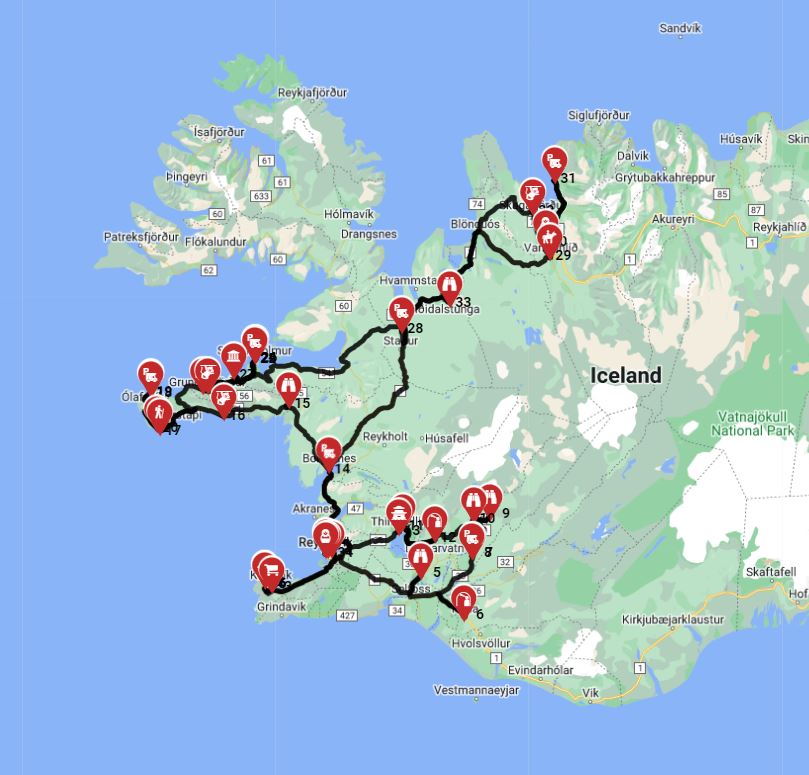
Iceland offers a diverse array of camping experiences, with popular options concentrated near the iconic Golden Circle, along the stunning South Coast, and within the dramatic landscapes of the Snaefellsnes Peninsula. You'll find well-equipped campsites conveniently located in most tourist hubs, providing essential services for your rented RV. For varied scenic beauty and access to attractions, consider regional hubs like Þingvellir National Park, near Skógafoss waterfall, and various sites scattered throughout the Snaefellsnes Peninsula.
Campground Types in Iceland (National, Private, Wild)
When planning your RV camping in Iceland, understanding the types of campgrounds and regulations is crucial. Iceland features national park campsites, numerous private campgrounds, and strict rules regarding overnight parking and "wild camping," which is generally prohibited unless explicitly permitted. As of recent legislative changes, sleeping in a motor vehicle outside of designated campsites is largely prohibited, especially along roads, in national parks, or on private land without explicit owner permission. Always opt for official campgrounds to avoid significant fines and to adhere to "Leave No Trace" principles.
National Park Campsites often provide basic amenities and are situated in breathtaking scenic areas, typically at a lower cost, with many participating in the Iceland Camping Card network. Private Campgrounds offer a wider range of facilities, from basic services to full-service resorts, generally at higher price points. Remember, the vast majority of Icelandic municipalities and national parks strictly prohibit overnight parking or camping outside of designated areas.
Featured RV Park or Campground in Iceland
While specific recommendations can vary based on your route, a good RV park in Iceland typically provides essential amenities such as electrical hookups, fresh water access, and waste disposal services. You'll also commonly find facilities like showers and laundry services. Prioritize locations that are well-maintained and offer convenient access to the major routes and attractions you plan to visit, ensuring a practical base for your explorations. Many popular campgrounds, while not necessarily resort-style, are well-equipped to handle the needs of RVers.
Hookups & Amenities — What to Expect
RV campgrounds in Iceland commonly provide reliable electrical hookups, typically featuring 230V power with a standard European two-pin plug (Schuko socket). You can expect readily available fresh water access and designated grey/black water dump stations at most sites. Wi-Fi is also widely available, though sometimes for an additional fee, ensuring you can stay connected. Many campgrounds also offer laundry facilities and showers, which may operate on a coin-operated basis. On the routes offered through RV PLANET routes, you can itemize and track every expense along the way for easy budgeting.
For electrical hookups, ensure you have a suitable adapter for your rented RV to connect to the CEE 7/4 'Schuko' socket. Water sources are generally plentiful, and the disposal points are clearly marked. Laundry and shower services add to the convenience, making longer stays comfortable and practical.
Booking Windows & Reservations in Iceland
For RV rentals in Iceland, planning ahead is advisable, particularly for peak season travel between June and August. However, spontaneous travelers can often find spots as many campgrounds operate on a first-come, first-served basis, reserving only a fraction of their capacity online. You'll almost certainly find a place to stay – if not at your first choice, then at the next campground. This is because many national park campgrounds only release about 25%–30% of their spots for reservations, leaving the majority open for walk-ins.
It is always recommended to call ahead to inquire about availability before driving long distances to a specific campground, especially during busy periods. This simple step can save you time and ensure a smoother trip. If you are a planner, booking your RV and popular campgrounds several months in advance for summer trips will help secure your preferred options.
Nearby Supermarkets & Resupply Points
To resupply your rented RV during your Icelandic adventure, look for major supermarket chains like Bónus, Krónan, and Nettó. These chains are widely available in most towns and larger villages across the country, including in urban centers and along the Ring Road, such as Reykjavik, Akureyri, Selfoss, and Egilsstaðir. They offer good value and a wide selection of groceries.
Be mindful that supermarkets in smaller towns might have shorter opening hours, especially on weekends and public holidays. Stocking up in larger towns where prices can be marginally lower can also contribute to overall budget savings for your trip.
Best RV Class for Camping in Iceland
For beginners venturing into RV camping in Iceland, Class B Camper Vans and Class SI Semi-integrated RVs are generally the most suitable choices. These vehicles offer an excellent balance of maneuverability on Iceland's diverse roads, including narrower or unpaved sections, along with comfortable living space for your camping needs. For instance, Bandana's fleet of Class B Camper Vans typically averages 5.8 meters in length and sleeps up to 3.2 individuals, making them agile and efficient.
Class SI Semi-integrated RVs provide more interior room and amenities than camper vans, making them ideal for small families or groups seeking enhanced comfort. Bandana's fleet of these models averages 6.9 meters in length and sleeps around 3.8 individuals. While both classes can offer a degree of self-sufficiency, regular stops at campgrounds are recommended in Iceland due to the strict regulations surrounding wild camping, ensuring you can access full hookups and proper waste disposal.
How to Save on Campgrounds in Iceland
The most effective strategy for RV rental beginners to save on campground fees in Iceland is by utilizing the Iceland Camping Card. This card grants access to numerous participating campsites across the country for a single, annual fee, typically covering two adults and up to four children. It's a significant saving lever, offering access to a vast network of campgrounds for a flat rate, valid for the entire season.
Traveling during the shoulder seasons (late spring or early autumn) can also result in lower campground rates and fewer crowds. Opting for municipal or regional campgrounds often proves more affordable than staying at private resorts. Additionally, inquire about discounts for longer stays, as some campgrounds offer reduced weekly rates for stays of three nights or more. To further minimize costs, consider minimizing reliance on paid amenities like showers if your RV is equipped with its own facilities.
Class SI - Semi-integrated RVs for Iceland
Class SI (Semi-integrated) RVs are a popular and practical choice for Icelandic adventures, effectively balancing comfortable living space and essential amenities with reasonable maneuverability, making them ideal for couples or small families. These RVs typically offer more interior room than compact camper vans, usually featuring a fixed bed, a functional kitchen area, and bathroom facilities. Bandana's global fleet of Class SI RVs averages 6.9 meters in length, providing ample living space without being overly cumbersome for many Icelandic roads. They commonly accommodate an average of 3.4 adults, making them suitable for small groups. For ideas you can prep on the road, watch our RV-friendly recipes playlist on YouTube.
These semi-integrated models are known for their fuel efficiency relative to their size, with common fuel consumption rates around 10-11 liters per 100 km, which is beneficial given Iceland's high fuel prices. Their balanced design makes them a versatile option for exploring the diverse terrains Iceland has to offer, from coastal routes to highland access roads (where permitted).
Class C - Alcove RVs for Iceland
Class C (Alcove) RVs are a good choice for larger families or groups traveling in Iceland, offering significant sleeping capacity and amenities. However, their larger size requires more careful driving, especially on Iceland's narrower or unpaved roads. With an average of 5.8 sleeping places in Bandana's global fleet, these RVs are excellent for bigger families or groups seeking more space and comfort. They are easily identifiable by their characteristic "alcove" sleeping area situated over the cab, and typically include full kitchen and bathroom facilities.
Bandana's fleet of Class C RVs averages 7.5 meters in length, providing considerable living and storage space. Common fuel consumption for these models is around 10-12 liters per 100 km. While capable, their larger dimensions can be challenging on Iceland's more remote or less-maintained roads and generally render them unsuitable for F-roads (mountain roads).
Class B - Camper Vans for Iceland
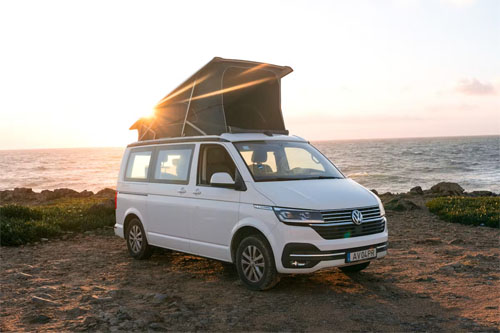
Class B (Camper Vans) are an ideal option for RV rental beginners in Iceland, prized for their compact size, ease of driving, and ability to access more diverse locations compared to larger RVs. They are particularly perfect for couples or solo travelers seeking a nimble and efficient way to explore. These are the smallest RV class, making them highly maneuverable and easy to drive and park, much like a large car. Bandana's global fleet of Class B Camper Vans averages 5.8 meters in length, facilitating navigation on most Icelandic roads.
They typically offer 3.2 sleeping places, making them best suited for 2-3 people. Common fuel consumption is around 8-10 liters per 100 km, positioning them as one of the most economical choices. Their compact footprint ensures suitability for most paved and well-maintained gravel roads, though they are generally not permitted on F-roads.
Class A - Integrated RVs for Iceland
Class A (Integrated) RVs, while offering significant luxury and spaciousness, are generally less recommended for beginners or typical Icelandic road conditions due to their considerable size, which can present challenges on narrow roads and in strong winds. These are the largest and most luxurious RVs available, boasting extensive amenities and significant living space for long-term comfort. Bandana's global fleet of Class A RVs averages 7.5 meters in length, requiring considerable driving skill and confidence. They typically offer 4.4 sleeping places, accommodating up to four adults comfortably.
Common fuel consumption for these models is around 8-12 liters per 100 km, though this can increase depending on the specific model and driving conditions. Their substantial size makes them harder to maneuver, more susceptible to Iceland's notorious winds, and often impractical for accessing many of the country's more intimate or less-traveled scenic routes.
Class TC - Truck Campers for Iceland
Class TC (Truck Campers) provide a versatile solution for Icelandic travel, particularly if equipped with 4x4 capabilities, which can open up access to more remote areas, including some F-roads, while maintaining a relatively compact footprint. These units are camper modules expertly mounted on a pickup truck chassis, offering rugged capability and often featuring a 4x4 drivetrain for enhanced traction. Bandana's global fleet of Truck Campers averages 5.5 meters in length, making them quite compact and agile for navigating varied terrains.
They typically offer 2.4 sleeping places, making them best suited for couples. Common fuel consumption is around 12-17 liters per 100 km, which can be higher due to their design and potential for off-road use. Crucially, many truck campers are 4x4, making them suitable for F-roads and more challenging terrains, though renters must verify F-road access and insurance coverage with their specific rental agreement before embarking on such journeys.
How much does it cost to RV in Iceland?
The overall cost to RV in Iceland for a beginner can range significantly, typically from €1,500 to over €4,000 per week. This estimate heavily depends on factors such as rental duration, the chosen RV class, the season of travel, the consistently high fuel prices, campground fees, and the selection of activities. RV rental prices fluctuate considerably, peaking during the summer months (June-August) and being lower in the shoulder seasons.
Fuel is a major budget component, as Iceland consistently ranks among the countries with the highest gas and diesel prices in Europe. Campground fees generally range from €15-€30 per night per person or per RV, often with additional charges for electricity or showers. Groceries in Iceland are also typically more expensive than in many other European countries, requiring careful budgeting. Finally, activity costs, such as glacier hikes, whale watching tours, or entrance fees to natural baths, can add up quickly to the total trip expenses.
What is the average gas price in Iceland?
The average gas (petrol) and diesel prices in Iceland are consistently among the highest in Europe. Prices typically fluctuate but generally remain above €2.00-€2.50 per liter (based on 2026 estimates), making fuel a significant portion of any RV trip budget. Be prepared to pay substantially more for fuel in Iceland compared to North America or mainland Europe. Prices are subject to weekly changes but tend to remain elevated.
Both petrol and diesel are expensive, with diesel often being marginally cheaper. Most gas stations are self-service and require a credit card with a PIN. Choosing a more fuel-efficient RV class, such as a Class B Camper Van (with an average consumption of 8-10 liters/100 km), can help mitigate these high fuel costs and contribute to a more budget-friendly travel experience.
Is it worth renting an RV in Iceland?
Renting an RV in Iceland is absolutely worth it for beginners seeking unparalleled flexibility, direct access to stunning natural landscapes at their own pace, and a unique, immersive travel experience that seamlessly combines accommodation and transportation. It offers immense flexibility, allowing you to adapt your itinerary based on weather changes or spontaneous discoveries, truly embracing the spirit of road-tripping.
An RV trip can often be more economical than a traditional car rental combined with separate hotel bookings, especially for multiple travelers sharing the costs. You gain the unique advantage of waking up to breathtaking Icelandic views directly from your RV window, and the self-sufficiency of having your own kitchen and bathroom adds a layer of convenience and comfort to your journey. Crucially, an RV provides a warm and comfortable base, which is particularly valuable given Iceland's notoriously unpredictable weather.
Do I need a 4x4 campervan in Iceland?
You do not typically need a 4x4 campervan for a standard RV trip that sticks to Iceland's main roads, such as the Ring Road (Route 1), which is mostly paved and entirely accessible by 2WD campervans. However, a 4x4 vehicle is legally and practically essential if you plan to venture onto designated F-roads (mountain roads) or drive extensively in winter conditions. F-roads are often rough, unpaved, and legally require a 4x4 vehicle, typically being open only during the summer months.
Many popular attractions involve short drives on gravel roads, which most 2WD RVs can handle if driven carefully and slowly. For winter travel, a 4x4 vehicle offers enhanced safety and traction on snowy and icy roads, though some routes may still become impassable regardless of vehicle type. Always check your rental agreement regarding F-road access and the specific insurance coverage for any vehicle type you choose.
Is driving an RV in Iceland hard?
Driving an RV in Iceland can present unique challenges, primarily due to strong winds, narrow bridges, occasional unpaved road sections, and rapidly changing weather conditions. However, it is manageable for beginner RVers with careful planning and a cautious approach to driving. Strong winds are common and can make driving larger RVs challenging, requiring reduced speeds and heightened vigilance.
You'll encounter many single-lane bridges on the Ring Road that necessitate careful yielding to oncoming traffic. Expect unpaved gravel sections on roads leading to popular attractions; driving slowly is key to preventing tire damage and maintaining control. Icelandic weather can shift suddenly from sunny to stormy, so always check forecasts and road conditions before setting out. Sheep frequently roam freely near roads, requiring constant awareness from drivers. Larger RVs, such as Class C or A models, demand more caution than smaller campervans (Class B, SI) on Iceland's often narrow and winding routes. Ensure you understand your rental's insurance coverage, especially for potential damage from gravel, which is frequently an optional add-on.
Is it safe to wild camp in Iceland?
Wild camping in an RV or campervan is generally not safe and largely illegal in Iceland, particularly since recent legislation has restricted overnight parking and sleeping outside of designated campsites. Heavy fines are imposed for violations, making it an unnecessary risk. Icelandic law explicitly prohibits staying overnight in a motor vehicle outside of a designated campsite unless explicit permission has been obtained from the landowner.
This prohibition applies to public roads, national parks, and most privately owned land. Illegal wild camping poses significant environmental risks, such as littering and improper waste disposal, which can negatively impact Iceland's fragile ecosystem and local communities. Always utilize official campgrounds, which provide the necessary amenities and ensure compliance with local laws, contributing to responsible and sustainable tourism. Fines for illegal camping can be substantial, making designated campgrounds a safer and more economically sensible choice in the long run.
What is the best month to RV in Iceland?
The best month to RV in Iceland for beginners is typically July or August, as these months offer the warmest weather, the longest daylight hours (up to 20+ hours), and ensure that most roads, including F-roads, are fully open. However, be prepared for higher prices and more tourists during this peak season. The shoulder seasons, specifically May/June and September, provide a compelling balance of decent conditions, fewer crowds, and potentially lower prices.
May and June are transitional months with increasing daylight and rising temperatures, but some F-roads might still be closed early in the season. September offers cooler temperatures (5-10°C), shorter daylight hours which enhance the chances of viewing the Northern Lights, vibrant autumn colors, and diminishing crowds, though F-roads begin to close. Winter (October-April) presents significant challenges due to limited daylight, snow, ice, and frequent road closures, making it a season recommended only for experienced winter drivers with appropriate 4x4 vehicles.
Can you see the Northern Lights from an RV in Iceland?
Absolutely! You can enjoy the spectacular Northern Lights (Aurora Borealis) from the comfort of your RV in Iceland, particularly during the darker months from September to April. The key is to drive away from light pollution and actively check aurora forecasts to identify optimal viewing opportunities. The period from September to April provides the necessary darkness for the best aurora viewing conditions.
Successful sightings require clear skies, strong solar activity (which can be tracked using aurora forecast apps or websites), and minimal light pollution. Your RV offers the unique advantage of allowing you to comfortably wait out cold nights and easily relocate to darker areas for better viewing. To maximize your chances, drive a short distance outside of towns and cities to escape artificial lights, and be prepared with warm clothing and photographic equipment.
What should I avoid in Iceland?
When RVing in Iceland, beginners should strictly avoid off-road driving, illegal wild camping, disregarding official weather warnings, approaching wildlife too closely, and disrespecting the fragile natural environment. Off-road driving is illegal and carries heavy fines, causing irreversible damage to Iceland's delicate ecosystem. As mentioned, illegal wild camping is prohibited; always use designated campgrounds to avoid fines and ensure environmental protection.
Never ignore weather warnings or road closures, as Icelandic conditions can change rapidly and become extremely hazardous. Maintain a respectful and safe distance from wildlife, including horses and birds, to avoid disturbing them or causing personal injury. Avoid walking on or touching the slow-growing moss, as it takes decades to recover from damage. Always practice "Leave No Trace" principles, packing out all trash and using designated facilities for waste disposal.
Can you drink alcohol in public in Iceland?
No, drinking alcohol in public places is generally illegal in Iceland. Consumption is permitted only within licensed premises, such as bars and restaurants, or in private settings. This prohibition applies to streets, parks, and other public areas, and violations can result in fines. Exceptions are made for designated outdoor seating areas of licensed establishments where alcohol can be consumed.
Alcohol can only be purchased in state-run Vínbúðin liquor stores during specific operating hours, as supermarkets do not sell strong alcoholic beverages. Within the confines of your RV at a designated campground or on private property with permission, responsible alcohol consumption is permitted.
Is there a lot of crime in Iceland?
Iceland is consistently ranked as one of the safest countries globally, boasting very low crime rates, which makes it an exceptionally secure destination for RV travelers. However, as with any travel, standard precautions against petty theft should always be observed. Violent crime is exceedingly rare in Iceland, contributing to its reputation as a safe travel destination.
Property crime, while minimal, can occur, so it's always wise to secure your valuables and lock your RV, particularly in popular tourist areas. The primary safety concerns in Iceland typically revolve around natural hazards, such as rapidly changing weather, volcanic activity, and strong ocean currents, rather than human-related crime. You can generally feel safe walking alone, even at night, in most Icelandic towns and cities. In case of any emergency, remember that dialing 112 connects you to all police, fire, and medical services.
What You Shouldn't Miss
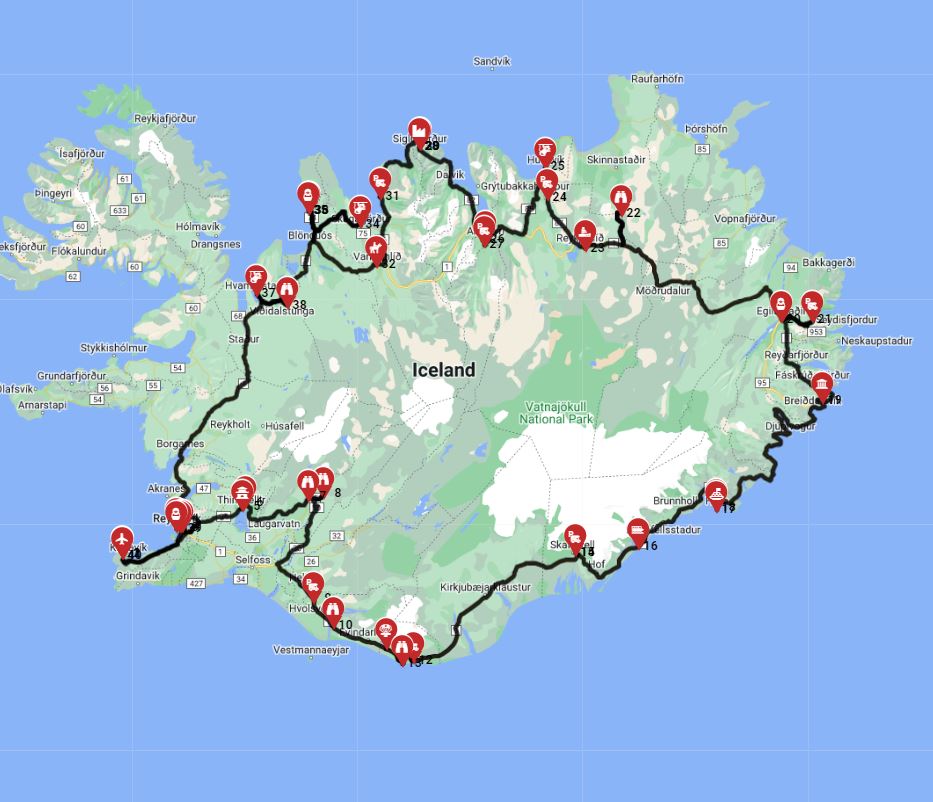
- Drive the Ring Road (Route 1): This iconic 1,332 km (821 miles) route circumnavates the island, offering access to nearly all major attractions and stunningly diverse landscapes. Consider dedicating at least 7-10 days to fully appreciate it, or longer for a more relaxed pace. Our "
" itinerary from RV PLANET is a fantastic 15-day plan covering 2,045 km.
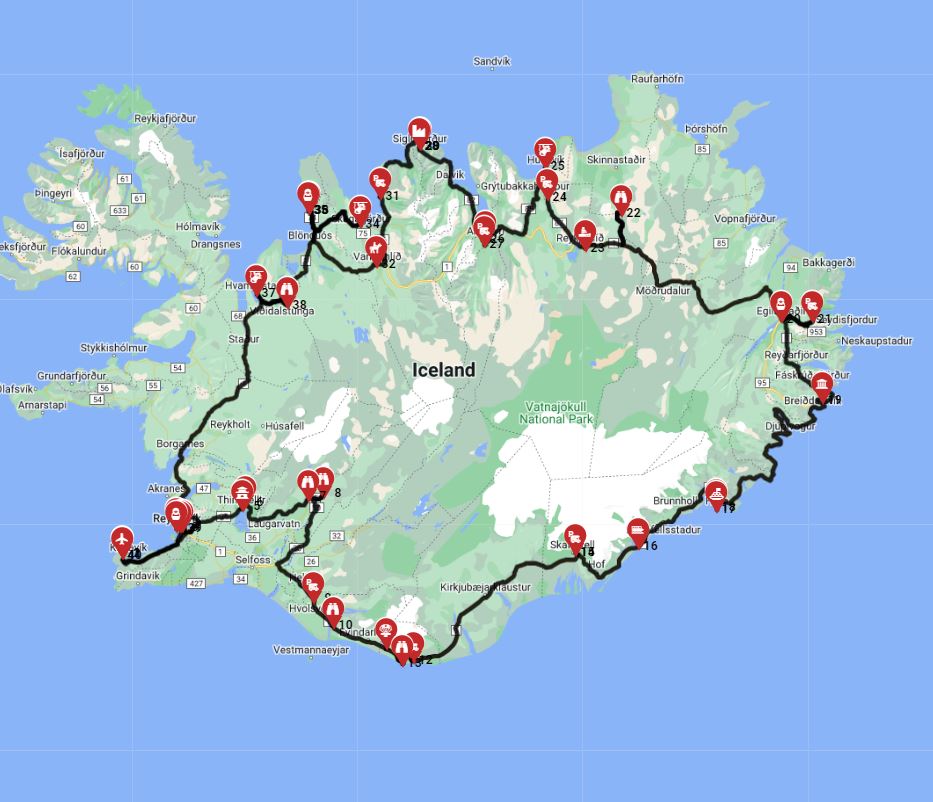 Iceland - Full ring road
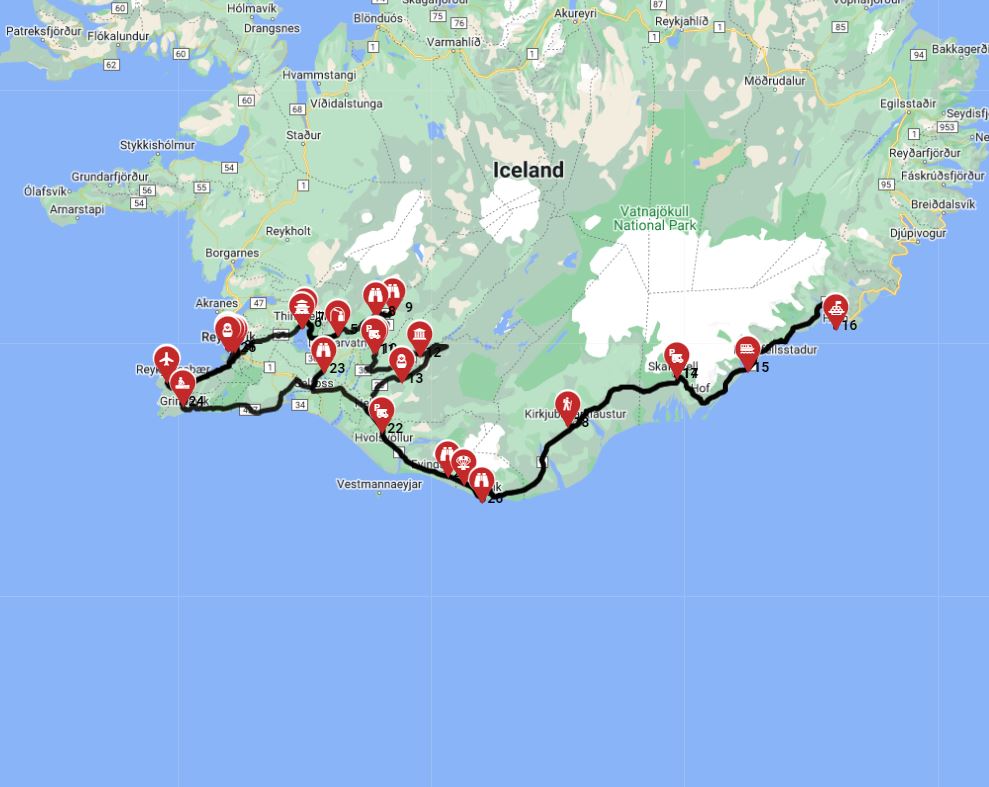
 - Explore the Golden Circle: This popular tourist route includes Þingvellir National Park (a UNESCO World Heritage site), the geothermal area of Geysir, and the magnificent Gullfoss waterfall. It's a must-do for any first-time visitor and can be comfortably incorporated into longer itineraries like the "
" 9-day route.
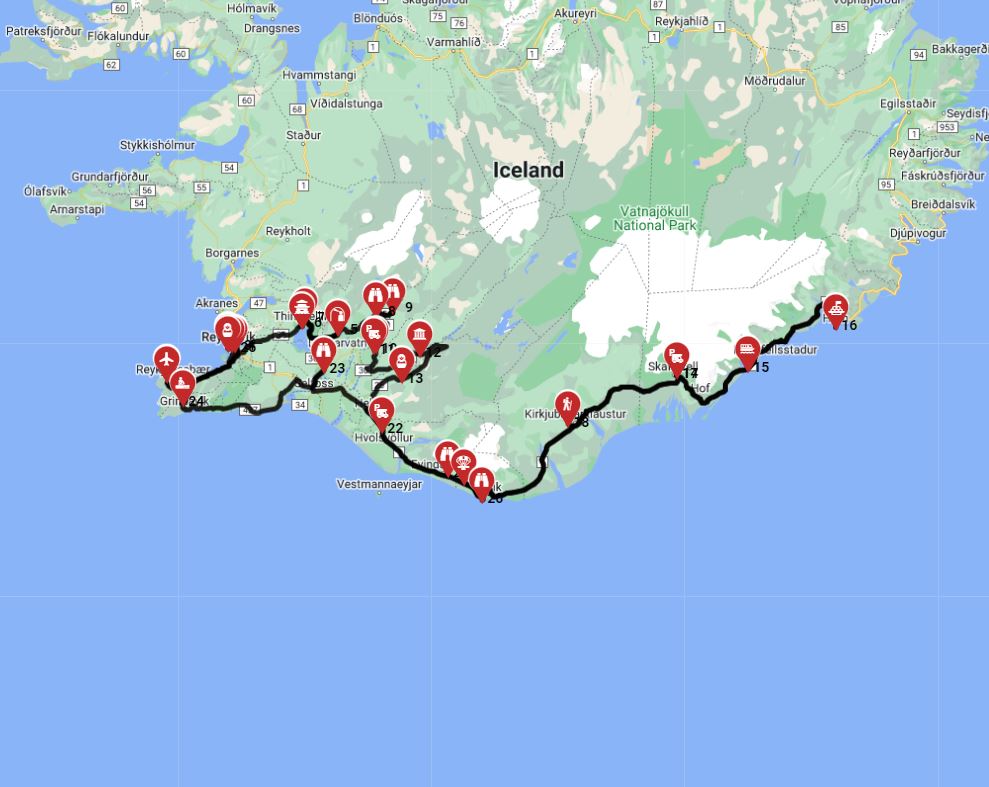 Iceland Golden Circle - South West
 - Witness the Power of South Coast Waterfalls: Seljalandsfoss (which you can walk behind) and Skógafoss are easily accessible from the Ring Road and offer breathtaking views. Many other natural features are part of the suggested routes, providing ample opportunities for exploration.
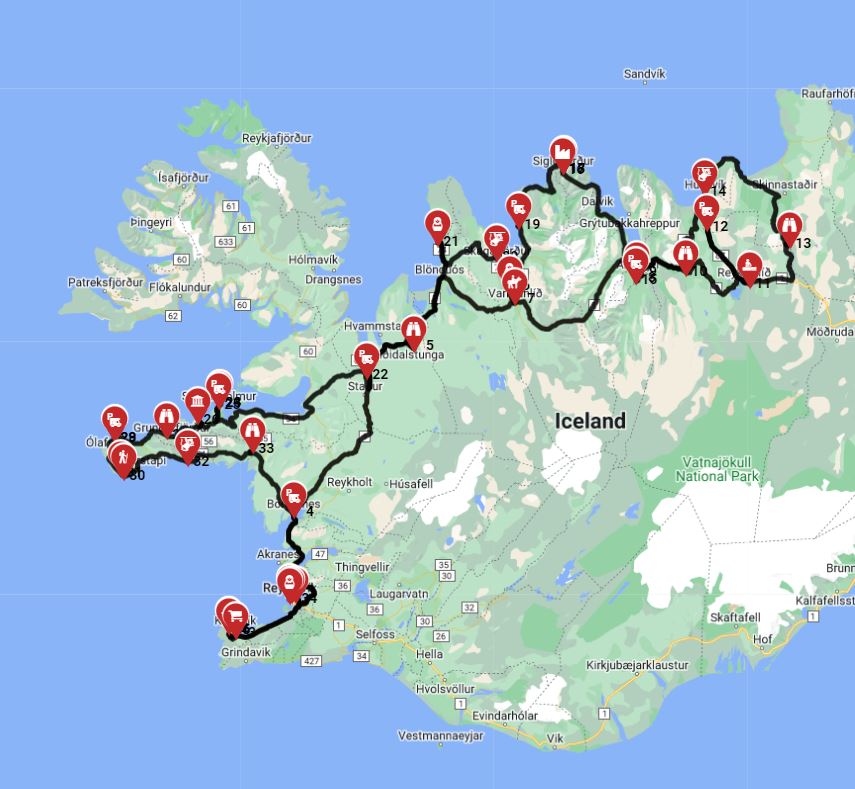
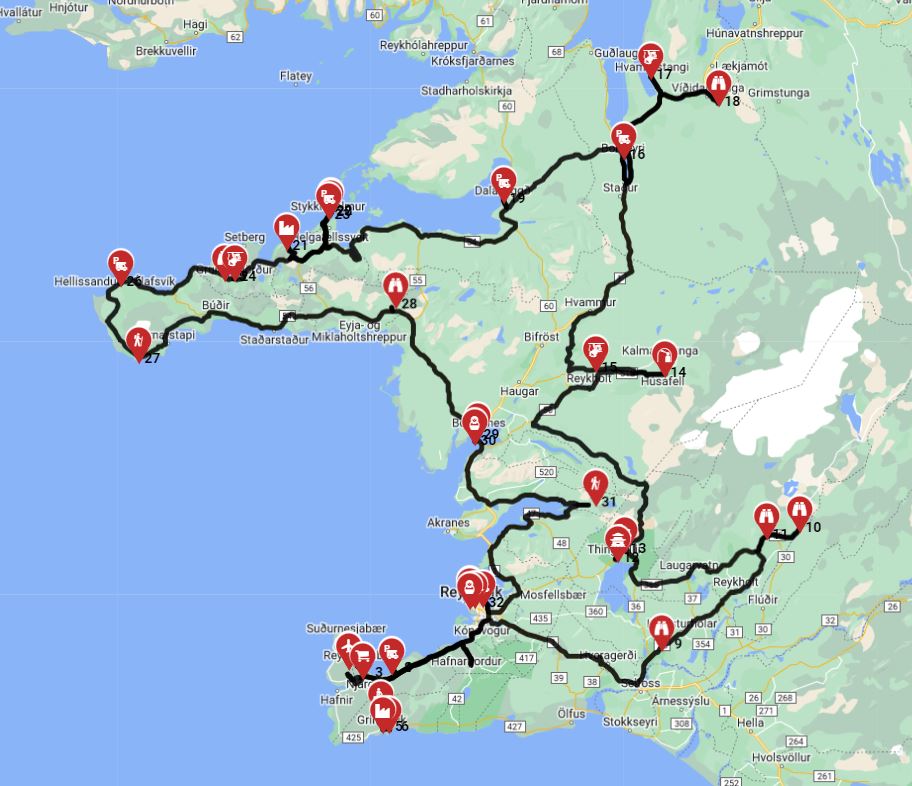
- Discover the Snaefellsnes Peninsula: Often called "Iceland in Miniature," this peninsula offers a microcosm of Iceland's diverse beauty, including volcanic beaches, charming fishing villages, and the iconic Kirkjufell mountain.
- Search for the Northern Lights: If traveling between September and April, an RV offers the perfect mobile base to chase the aurora borealis. Find dark, clear skies away from light pollution and check aurora forecasts for the best viewing opportunities.
- Visit a Geothermal Spa: Relax and rejuvenate in Iceland's famous geothermal waters, such as the Blue Lagoon or the Secret Lagoon. Many routes include stops at these natural spas, providing a perfect way to unwind after a day of driving and exploring.
Final Thoughts
Embarking on your first RV adventure in Iceland is an incredible opportunity to connect with nature and experience the island's unique beauty at your own pace. Remember to pack wisely, respect the local environment and regulations, and most importantly, embrace the journey!
With a little planning and the right vehicle, your Icelandic road trip promises to be an unforgettable experience. For even more inspiration and detailed route planning, explore the resources available through RV PLANET (rvplan.net), where you can find curated itineraries designed to maximize your adventure.
Travel slowly, savor the moments, and let the magic of Iceland unfold before you. We're here to help you every step of the way, ensuring your first RV camping experience is everything you dreamed of and more.