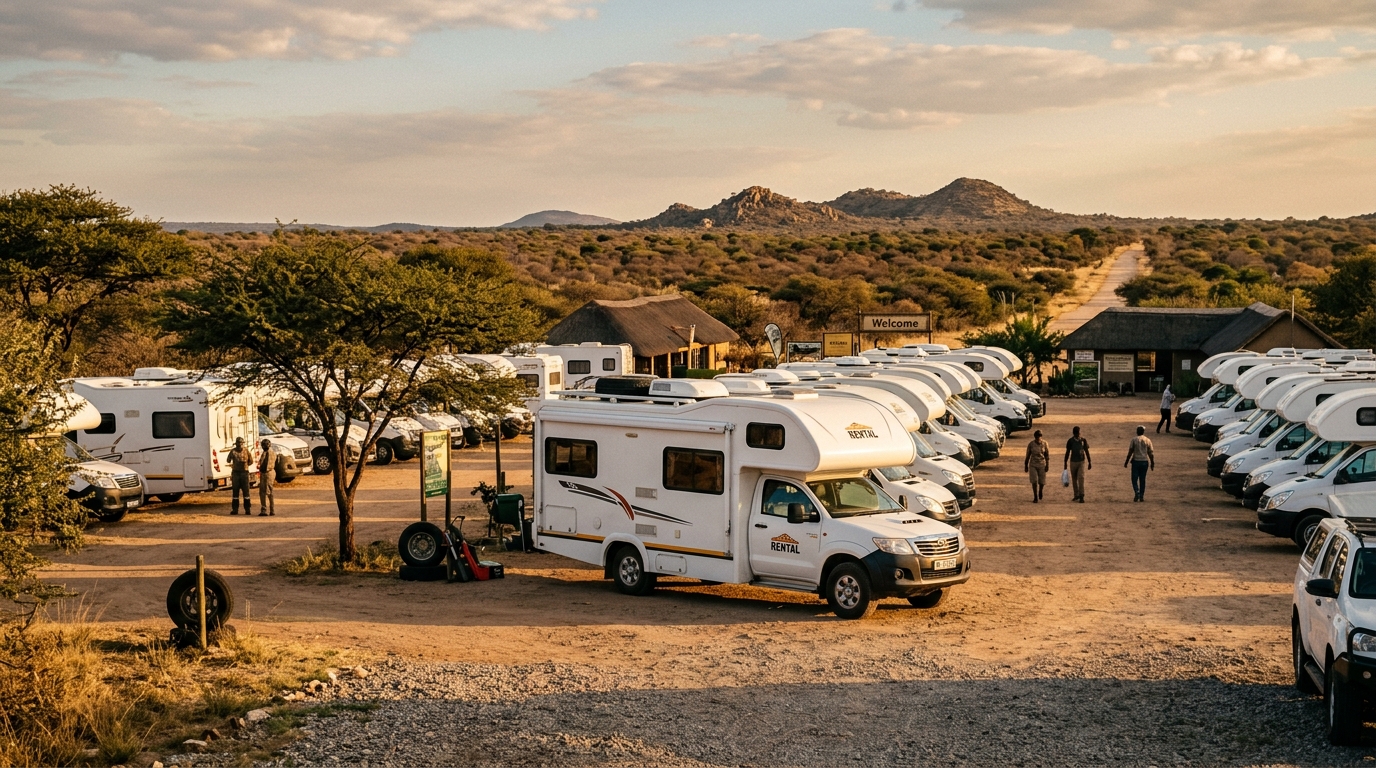
For live availability and current prices, start with our RV Rental Botswana - Complete Guide 2026 guide.
In This Guide
- Where to Camp in Botswana — Top Options
- Campground Types in Botswana (National, Private, Wild)
- Featured RV Park or Campground in Botswana
- Hookups & Amenities — What to Expect
- Booking Windows & Reservations in Botswana
- Nearby Supermarkets & Resupply Points
- Best RV Class for Camping in Botswana
- How to Save on Campgrounds in Botswana
- What do I need to rent an RV in Botswana?
- How much does it cost to rent an RV in Botswana?
- What is the best time of year to RV in Botswana?
- Is RV travel safe in Botswana?
- What are the road conditions like in Botswana?
- Do you need a 4x4 for Botswana?
- Is Botswana good for self drive safari?
- Is Namibia or Botswana better for self-drive?
- Can you just drive through Botswana?
- What is a typical RV itinerary for Botswana?
Where to Camp in Botswana — Top Options
For beginners seeking RV camping in Botswana, popular starting points include the well-equipped private campsites near Maun, the gateway to the Okavango Delta, and accessible national park sites in Chobe National Park. The Maun region offers facilities suitable for RVs, serving as a good base for Okavango Delta excursions and resupply. Chobe National Park, accessible with 4x4 RVs, provides iconic wildlife viewing opportunities at sites like Ihaha Camp. For those ready for a slightly more adventurous start, the Central Kalahari Game Reserve offers a more remote, self-sufficient experience for advanced beginners. It's generally advised that beginners prioritize easily accessible regions over deeply remote areas for their initial foray into Botswana's RV camping scene.
Campground Types in Botswana (National, Private, Wild)
Botswana offers three primary types of RV camping: highly sought-after national park campsites, privately owned lodges and campsites, and, with strict limitations, wild or freedom camping. National Park Campsites, managed by the Department of Wildlife and National Parks (DWNP) or concessionaires, typically offer basic amenities, such as long-drop toilets, bucket showers, and central water taps, and often require 4x4 vehicles and advance booking. Private Campsites and Lodges, frequently found in towns like Maun and Kasane or on private concessions, provide more extensive amenities, including hot showers, flush toilets, electricity, and sometimes restaurants, serving as convenient bases for exploration. Wild or freedom camping is generally not permitted or highly discouraged outside designated areas due to safety concerns (wildlife) and environmental impact; beginners should exclusively use established, recognized campsites.
Featured RV Park or Campground in Botswana
While specific details would be provided for a featured location, beginners should look for RV parks that offer secure facilities, reliable water access, shaded spots, and close proximity to resupply points or major tourist attractions. Prioritizing campgrounds that provide security, staff assistance, potable water, and accessible ablution blocks will contribute to a more comfortable beginner experience. It's also beneficial to look for parks that cater to self-drive vehicles, potentially offering services like tire repair or basic vehicle assistance, which can be invaluable in Botswana.
Hookups & Amenities — What to Expect
RVers in Botswana should expect a range of hookup availability, with full electric and water connections being common in private campgrounds but rarer in remote national park sites, where self-sufficiency is key. Electric hookups are typically 220-240V with 3-pin round South African Type M plugs, found mainly in private campsites; adapters are essential. Tap water is often available at private sites but should be filtered or boiled if not explicitly marked potable; national parks may have central water points requiring tank filling. Dump stations are seldom available outside major towns or dedicated private RV parks, necessitating careful black water disposal planning. Wi-Fi and cell connectivity are available in most private lodges and larger towns but are unreliable or non-existent in national parks and remote areas; a local SIM (Mascom, Orange) is recommended for limited coverage, and a satellite phone for emergencies. Hot showers and flush toilets are common in private sites, while national parks usually provide long-drop toilets and basic bucket showers. On the routes offered through RV PLANET routes, you can itemize and track every expense along the way for easy budgeting.
Booking Windows & Reservations in Botswana
Planners for RV travel in Botswana should book national park campsites 9-12 months in advance, especially for peak season, while spontaneous travelers can often find availability at private campgrounds closer to their travel dates. Popular national park sites (e.g., Chobe, Moremi) often book out up to a year ahead, with only 25-30% of spots released for advance reservations. Private campgrounds generally offer easier booking, often available a few weeks or months out, and sometimes on a same-day or next-day basis during the low season. Beginners are strongly advised to plan and book well in advance, particularly for specific routes or during high season (June-October). While you will almost certainly find a place—if not the first campground, then the next—calling ahead before driving long distances is highly recommended, especially when targeting remote areas.
Nearby Supermarkets & Resupply Points
RV travelers in Botswana can reliably resupply at major supermarkets in towns like Maun and Kasane, which serve as key gateways to the country's national parks and offer a range of groceries, fuel, and essential supplies. Well-stocked supermarkets such as Shoprite, Spar, and Pick n Pay are found in major towns like Maun, Kasane, Gaborone, and Francistown. It is always advisable to fill up fuel tanks at every opportunity in towns, as distances between stations can be vast, and it's recommended to carry extra fuel for remote trips. Stock up on bottled water or ensure you have purification methods, as potable tap water is not universally available, especially in the wilderness. The quality and variety of fresh produce can vary by town; prioritize stocking up on perishables in larger centers before heading into more remote areas.
Best RV Class for Camping in Botswana
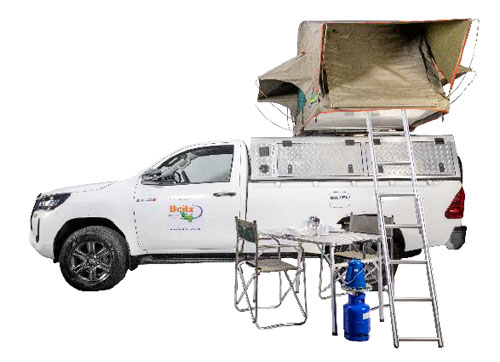
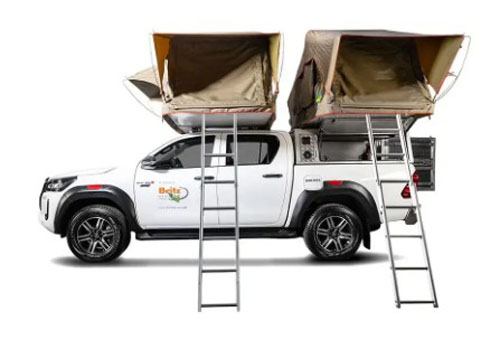
For RV camping in Botswana, the most suitable RV classes are typically robust, 4x4-capable units such as modified Class B Camper Vans or Class TC Truck Campers, due to the challenging road conditions and often remote nature of popular campsites. Bandana's global fleet offers examples like the Patagonia Camper 4x4 double cab, averaging 5.5m in length and suitable for couples, with a 4x4 capability ideal for off-road adventures. Larger RVs, such as semi-integrated (avg. 6.9m), alcove (avg. 7.5m), and integrated (avg. 7.5m) motorhomes from Bandana's global fleet, are generally less suitable for Botswana's national parks due to lower ground clearance and longer lengths, which can limit access to rugged tracks. Regardless of class, essential modifications for Botswana include high ground clearance, a snorkel for water crossings, long-range fuel tanks, heavy-duty suspension, and recovery gear.
How to Save on Campgrounds in Botswana
To save on RV campgrounds in Botswana, consider utilizing campground discount cards if offered by your rental provider, booking during the shoulder season, and opting for municipal or regional campgrounds over more expensive private resorts. Inquire with your RV rental company (like Bandana) about any affiliated campground discount cards or partnerships that can reduce nightly rates. Traveling during the shoulder season (April-May or November) often provides lower camping rates and fewer crowds compared to the peak dry season. Opting for more budget-friendly municipal or regional campgrounds over luxury private lodges is also a good strategy, understanding that amenities may be more basic. Additionally, inquire about weekly rates or discounts for stays of three or more nights, as some private campgrounds offer better value for longer durations. Considering self-sufficient camping with fewer hookups, as unpowered sites are generally cheaper, can further reduce costs.
What do I need to rent an RV in Botswana?
To rent an RV in Botswana, you typically need a valid driver's license; an International Driving Permit (IDP) is often recommended for clarity and legal compliance, although a standard license in English may suffice for many rental companies. A major credit card is required for the security deposit and any incidentals, and you must usually be at least 21 years old to rent an RV (though some suppliers may have a higher minimum age of 25 for larger vehicle classes). It's crucial to book your RV well in advance, especially for specialized 4x4 vehicles, to ensure availability during your preferred travel dates. If you plan to visit neighboring countries, discuss cross-border travel requirements with your rental company, as specific paperwork and fees will apply.
How much does it cost to rent an RV in Botswana?
The cost to rent an RV in Botswana can range significantly, with a basic 4x4 camper typically costing approximately $150-$400 USD per day, while a fully-equipped safari-ready RV can cost upwards of $500-$800 USD per day. These prices vary considerably based on the season, vehicle type, and rental duration. Base rental rates usually include mileage and basic insurance, often with a high excess, but notably exclude expenses such as fuel, national park fees, and specific camping costs. Peak season (June-October) sees the highest rental prices, whereas the shoulder seasons (April-May, November) generally offer better value. Beyond the rental rate, it's essential to budget for substantial national park conservation and camping fees, which are mandatory for non-residents. Fuel costs should also be factored in, considering common consumption rates like 8-10 Liters/100 Km for a Class B Camper Van or 12-17 Liters/100 km for a Class TC Truck Camper. Finally, allocate for potential one-way rental fees or insurance excess reduction policies.
What is the best time of year to RV in Botswana?
The best time of year for RVing in Botswana, particularly for optimal wildlife viewing and more favorable road conditions, is during the dry season from May to October. However, the shoulder seasons can offer a compelling balance of lower costs and good experiences. The dry season (May-October) ensures excellent wildlife viewing as animals congregate near shrinking water sources, and generally provides clear skies and more navigable roads. Shoulder seasons (April & November) offer pleasant temperatures, fewer crowds, and lower prices, with still decent wildlife opportunities, though April may have residual mud and November can be hot with early rains. The Green Season/Wet Season (December-March) brings lush landscapes and excellent birdwatching, but critically, many national park roads become impassable due to deep mud and water crossings, necessitating highly experienced 4x4 drivers and specific vehicle modifications. For beginners, traveling during the dry season is strongly advised for easier navigation and less unpredictable weather impacting routes and overall safety.
Is RV travel safe in Botswana?
RV travel in Botswana is generally considered safe with proper planning and adherence to safety guidelines, though challenges such as wildlife encounters, remote area emergencies, and varied road conditions necessitate vigilance. Always maintain a safe distance from wildlife within national parks and never exit your vehicle outside designated areas; remain aware of animals in campgrounds, especially at night. It is crucial to avoid driving at night due to the high risk of wildlife collisions, poor visibility on unlit roads, and potential navigation difficulties. For remote areas, it is highly recommended to carry a satellite phone or HF radio, inform someone of your itinerary, and ensure your RV is equipped with essential recovery gear, two spare tires, extra fuel, and water. Medical facilities are limited outside major towns; therefore, carry a comprehensive first-aid kit, get appropriate vaccinations pre-trip, and secure travel insurance with medical evacuation coverage.
What are the road conditions like in Botswana?
Road conditions in Botswana vary significantly, ranging from well-maintained tarred roads connecting major towns to challenging gravel, sand, and occasionally muddy tracks within national parks, often requiring a high-clearance 4x4 vehicle. Primary national roads linking major hubs like Gaborone, Maun, and Kasane are typically tarred and in good condition, suitable for all types of vehicles. Secondary roads leading to smaller towns or game reserves are often gravel, varying from smooth to severely corrugated or potholed, necessitating reduced speeds. National park tracks in areas such as Moremi and Chobe consist of deep sand, mud (especially in the wet season), rocky sections, and seasonal water crossings, making a 4x4 with good ground clearance essential. Be prepared for sand driving in regions like the Kalahari and Okavango, which requires specific techniques, and be aware of potential water crossings that may necessitate a snorkel, particularly during certain times of the year.
Do you need a 4x4 for Botswana?
A 4x4 vehicle is highly recommended and often essential for RV travel in Botswana, particularly if you plan to explore national parks like Chobe, Moremi, or the Central Kalahari Game Reserve, where roads are predominantly deep sand, mud, or severely corrugated gravel. Access to most major wildlife areas for a true self-drive safari absolutely requires a 4x4 due to the challenging terrain; two-wheel drive RVs will likely get stuck. While 2WD RVs might suffice for paved main roads connecting towns and private lodges outside parks, this significantly limits the ability to experience Botswana's authentic wild areas. When selecting a 4x4 RV, look for good ground clearance, robust suspension, suitable tires (All-Terrain or Mud-Terrain), and recovery points, with a snorkel being crucial for seasonal water crossings. Always carry essential recovery gear, such as a shovel, snatch strap, air compressor, and tire repair kit, along with basic knowledge of recovery techniques.
Is Botswana good for self-drive safari?
Botswana is exceptionally good for self-drive safaris, offering unparalleled wildlife viewing, diverse landscapes, and the freedom to explore at your own pace. However, it demands a spirit of adventure and thorough preparation, especially for beginners. A self-drive safari in Botswana provides an immersive, independent experience, allowing for flexible schedules and extended, intimate wildlife encounters. Key destinations for self-drive include Chobe National Park, Moremi Game Reserve, and the fringes of the Okavango Delta, all renowned for their abundant elephants, lions, leopards, and diverse birdlife. While rewarding, self-driving requires significant self-sufficiency, navigation skills, 4x4 driving experience, and meticulous planning for fuel, water, and food. The sense of accomplishment from navigating Botswana's wilderness and encountering its rich fauna makes it an unforgettable experience for well-prepared adventurers.
Is Namibia or Botswana better for self-drive?
Both Namibia and Botswana offer incredible self-drive experiences, but Botswana is often preferred for more immersive, wilder, and challenging 4x4 safaris with prolific wildlife, whereas Namibia is known for its dramatic desert landscapes, generally well-maintained gravel roads, and easier navigation. Botswana stands out as a premier wildlife destination, providing a more remote and untamed wilderness experience with dense populations of elephants and predators in its national parks. Namibia excels with its stunning desert landscapes, including Sossusvlei and the Skeleton Coast, and features generally well-maintained gravel roads that are more manageable for self-drive, even for some 2WD vehicles. RV travel in Botswana typically necessitates a robust 4x4 camper van or truck camper to navigate challenging roads (deep sand, mud), while Namibia offers more diverse RV options due to its varied terrain and infrastructure. Botswana is generally more expensive due to higher park fees and premium safari experiences, whereas Namibia often presents a more affordable self-drive option with a wider range of accommodations.
Can you just drive through Botswana?
While you can technically drive through Botswana, especially on main tarred roads, doing so without proper planning for border crossings, vehicle requirements, and connectivity can lead to significant logistical challenges. Border crossings into and out of Botswana require a valid passport (with at least six months' validity remaining), vehicle registration papers, your driver's license, and a letter of authorization from the rental company. Expect to pay various fees at the border, including carbon tax and road fund levies, which can typically be paid in local currency (Pula) or sometimes USD. Cell phone service is limited to major towns and main routes; carrying a satellite phone is essential for emergency communication in remote areas, even when merely passing through. Ensure your RV is in excellent condition and equipped with spare fuel, water, and tires, as breakdown services are scarce once you venture off the main transit corridors.
What is a typical RV itinerary for Botswana?
A typical RV itinerary for beginners in Botswana often spans 10-14 days, usually starting from Maun or Kasane, and focusing on accessible, wildlife-rich areas like the Okavango Delta fringes, Moremi Game Reserve, and Chobe National Park. For a 10-14 day trip, a popular route involves starting in Maun (the Okavango Delta gateway), spending 2-3 days exploring Moremi Game Reserve, then driving towards Kasane for 2-3 days in Chobe National Park (covering the Riverfront and Savuti areas), before returning or dropping off the vehicle. Shorter trips (7-9 days) typically focus on one major region, such as exclusively exploring the Okavango Delta/Moremi or Chobe National Park. Beyond traditional safaris, consider integrating opportunities for cultural immersion by visiting local villages or towns near Maun and Kasane, experiencing local markets, or exploring sites like the Makgadikgadi Pans for non-wildlife attractions. Crucially, ensure detailed planning for campsite bookings, fuel stops, and provisioning points, especially when combining regions like the wildlife-rich Northern Circuit with the more remote and vast landscapes of the Central Kalahari.
What You Shouldn't Miss
- Witnessing the vast elephant herds along the Chobe Riverfront in Chobe National Park.
- Experiencing the unique water-based game viewing in the Okavango Delta (accessible via mokoro or boat tours from Maun).
- Camping amidst the wildlife in the unfenced campsites of Moremi Game Reserve, truly immersing yourself in the wilderness.
- Exploring the vast, otherworldly landscapes of the Makgadikgadi Salt Pans, perhaps camping on the salt itself for a unique overnight adventure.
- A self-drive safari through the Mabuasehube section of the Kgalagadi Transfrontier Park, known for its dramatic red dunes and desert wildlife.
- Enjoying sundowners overlooking the Okavango Delta from a lodge or strategically chosen campsite, reflecting on the day's wildlife encounters.
Final Thoughts
Embarking on an RV adventure in Botswana is an unparalleled experience, offering intimate encounters with incredible wildlife and breathtaking landscapes. While it presents unique challenges, particularly for first-time RVers, thorough preparation and choosing the right vehicle, like a 4x4 camper van or truck camper, will ensure a smoother and more rewarding journey.
From the world-renowned Okavango Delta to the vast plains of the Kalahari and the mighty elephant herds of Chobe, Botswana offers a diverse range of experiences accessible by RV. By understanding the nuances of camping in national parks versus private sites, booking well in advance, and respecting the environment and wildlife, you're set for an unforgettable expedition.
Get inspired for your next trip! Discover top destinations, planning tips, and create your dream itinerary in advance with minimal effort and maximum enjoyment. Let Bandana Caravan help you navigate the road to your Botswana adventure!
Plan Your Botswana RV Adventure