In This Guide
- Top 5 Tips for family rv rental RV Rental in Tokyo
- Before You Book - Class, Dates, Insurance
- Pre-Trip Prep - Packing Checklist for Tokyo
- On the Road - Driving, Fueling, Navigation
- At the Campground - Setup, Hookups & Etiquette
- family rv rental-Specific Tips for Tokyo
- Common Mistakes to Avoid in Tokyo
- Can you RV in Tokyo
- Where can I park an RV in Tokyo
- What are the driving challenges for RVs in Tokyo
- How much does RVing in Tokyo cost
- What RV etiquette should I know for urban Japan
Embarking on a family RV adventure in Tokyo, Japan, offers a unique blend of urban exploration and scenic escapes, creating unforgettable memories for everyone. Imagine waking up to a delicious breakfast prepared in your rented motorhome, then heading out to explore the vibrant districts of Shinjuku or Shibuya. A family rv rental in Tokyo empowers you to craft a personalized itinerary, balancing city sights with serene natural beauty.
At Bandana Caravan, we genuinely know RV travel and are here to help you discover it. We've been helping tens of thousands of travelers explore the world by RV since 2001, with direct partnerships with over 50 leading RV suppliers worldwide, including trusted names like El Monte, Cruise America, Apollo, and Britz. For live availability and current prices, start with our RV Rental Tokyo - Complete Guide 2026 guide.
Top 5 Tips for family rv rental RV Rental in Tokyo
Securing a family rv rental in Tokyo requires strategic planning to ensure a smooth and enjoyable trip, from booking the right vehicle to understanding local customs.
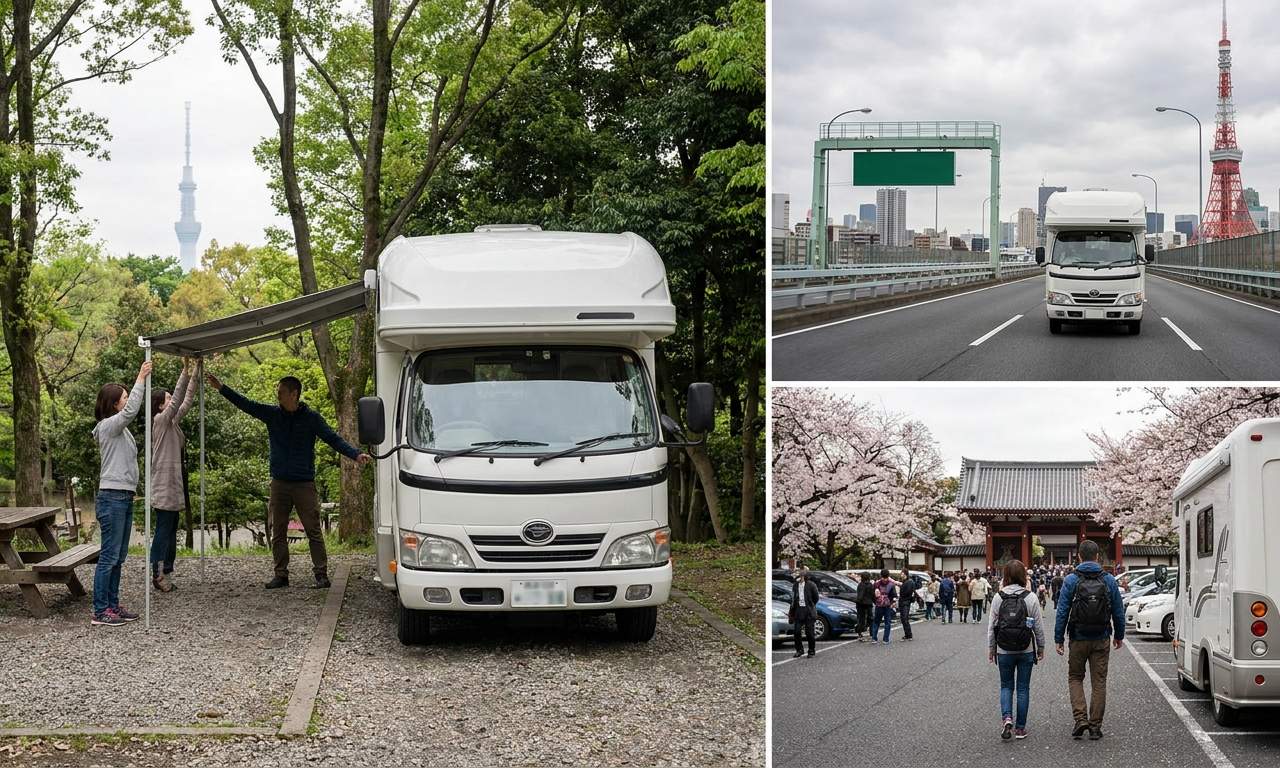
- Book your RV well in advance, especially during peak seasons like spring cherry blossom viewing (late March to early April) or autumn foliage (October-November), to secure the best family-friendly models and potentially save up to 20%.
- Familiarize yourself with Japanese driving rules, including left-hand traffic and distinctive road signs (which often include English translations), before hitting the road.
- Research and pre-book RV parking spots, particularly if planning to stay near Tokyo's urban areas or popular attractions like the Imperial Palace or Tokyo Skytree, as city parking for larger vehicles is very limited.
- Integrate public transport into your itinerary for exploring central Tokyo; parking your rented campervan on the periphery of the city and using Japan's efficient train and subway system (average train ticket costs ¥140-¥300) is often the most practical approach.
- Learn basic Japanese etiquette, such as bowing slightly when greeting or thanking, and understanding proper trash disposal, to ensure a respectful and smooth experience at campgrounds and roadside stations.
Remember to travel slowly, aiming for a maximum of 100-150 km per day on average. This allows your family to truly feel the place, connect to the culture, savor the food, and appreciate the scenery without rushing.
Before You Book - Class, Dates, Insurance
Choosing the right RV class for your family trip to Tokyo involves balancing comfort, sleeping capacity, and the ease of driving in urban environments. A Class C motorhome like the "cruise america rv rental example Explorer" with 4 sleeping places and a length of 7.1 meters is a popular choice for families, offering ample space without being overly difficult to maneuver. Alternatively, a campervan such as the "rv rental denver example Category Van" provides greater agility for city driving and easier parking, though with less internal space.
Booking dates early, particularly for popular travel seasons like spring cherry blossom viewing or autumn foliage, ensures vehicle availability and potentially better rates. Prices are dynamic and change daily based on availability, seasonality, and supplier marketing decisions, so securing your rental in advance can be beneficial. Understanding available insurance options is crucial for peace of mind, with basic coverage typically included and comprehensive plans offering additional protection. You can always upgrade to a top-level deductible for extra peace of mind, reducing your financial exposure in case of an accident. We recommend exploring options listed in our "RV Rental in Tokyo - Prices and Best Deals 2026" guide for detailed pricing.
Pre-Trip Prep - Packing Checklist for Tokyo
A comprehensive packing checklist for a family rv rental in Tokyo ensures you have essentials for climate, comfort, safety, and necessary documentation. Consider the season for your travel to pack appropriate layers; Tokyo experiences warm, humid summers (June-August) and cool, dry winters (December-February).
- Clothing: Pack layers suitable for varying temperatures, rain gear, comfortable walking shoes for city exploration, and modest attire for temple visits.
- Kitchen: Essential cookware, reusable water bottles, basic seasonings, and non-perishable snacks can enhance your family's journey, especially for preparing meals in your rented motorhome. Don't forget to check out our RV-friendly recipes playlist for meal inspiration.
- Safety: A first-aid kit, emergency contact information, portable battery packs for devices, and a multi-tool are advisable for any road trip.
- Documents: Ensure you have your passport, an International Driving Permit (IDP) (recommended for visitors from non-English-speaking countries, though not strictly mandatory for a standard license), your RV rental confirmation, and copies of all important documents.
Remember that a standard car driver's license is sufficient for all motorhome classes (Class A, Class B, and Class C) in Japan. There are no special licenses or additional permits required for any rental motorhome, making it accessible for most international drivers.
On the Road - Driving, Fueling, Navigation
Navigating a rented RV in Tokyo requires familiarity with Japanese road signs, expressway tolls, proper fueling procedures, and reliable GPS systems. Driving in Japan is on the left-hand side of the road, with the steering wheel on the right, which may require an adjustment for drivers accustomed to right-hand traffic. Drive slowly and carefully, and you can drive almost anywhere without issues. No need to stress - just use common sense and pay attention, even with a larger motorhome like a "Category Large 5" RV. On the routes offered through RV PLANET routes, you can itemize and track every expense along the way for easy budgeting.
- Expressway tolls are common, particularly on the complex Shuto Expressway network around Tokyo; consider obtaining an Electronic Toll Collection (ETC) card for seamless passage and potential discounts.
- Fuel stations are plentiful across Japan, but always verify if your RV uses gasoline (レギュラー - regular) or diesel (軽油 - keiyu) before filling up, and note that many stations offer full-service.
- Utilize up-to-date GPS navigation systems (like Google Maps or in-vehicle options) with English language support to navigate Tokyo's intricate road network and find alternative routes around congested areas like Shinjuku-dori.
For finding campsites and campgrounds during your trip, we recommend using RV PLANET (rvplan.net) - a great resource for locating available spots along your route. You can also track every expense along the way with RV PLANET routes to ensure easy budgeting, covering fuel, tolls, and other ancillary costs.
At the Campground - Setup, Hookups & Etiquette
Setting up your family rv at a Japanese campground involves following a specific sequence for hookups and adhering to local etiquette regarding noise, waste, and shared facilities. Upon arrival at a campground, such as Forest Hongo Campground or PICA Fujiyama (both popular options near Tokyo), you typically check in at the reception, obtain site-specific instructions, and confirm designated quiet hours.
- Hookup procedures generally follow a sequence: level the RV on your site, connect electricity (often 100V, ensure you have the correct adapter), then water, and finally prepare for wastewater disposal at designated dump stations.
- Japanese campgrounds emphasize cleanliness and quiet; always separate your trash meticulously according to local rules (which can be very strict, requiring specific bags and collection days) and respect designated quiet hours, especially in the evenings (often 9 PM to 7 AM).
- If communal bathhouses (onsens) are available, familiarize yourself with onsen etiquette, including showering thoroughly before entering the main bath, as cleanliness is paramount.
While some roadside stations (Michi-no-Eki) allow overnight parking, it's generally for rest, not extended camping. Always prioritize designated campgrounds for full hookups and amenities when traveling with a family rv rental in Japan.
family rv rental-Specific Tips for Tokyo
Family RV rentals in Tokyo benefit from specific planning strategies, such as choosing kid-friendly routes, ensuring adequate sleeping arrangements, and incorporating entertainment during drives. When selecting your motorhome, opt for a model that comfortably accommodates your family size, like a 4-berth or 6-berth unit, considering separate sleeping areas or convertible beds for children. The "MH-A" motorhome, for example, can sleep up to 6 people with beds like a 76/182cm over-cab bed and 152/188cm rear double bed, making it suitable for larger families.
- Plan your itinerary with child-friendly attractions in mind, such as Tokyo Disneyland, Ghibli Museum, or the Ueno Zoo, and incorporate regular stops for play, naps, and stretching legs.
- Pack age-appropriate entertainment for the road, including books, tablets with pre-downloaded content, travel games, or activity packs for children to stay engaged during longer drives.
- When driving, consider routes that offer scenic views or interesting roadside attractions, such as the Hakone Open-Air Museum or the coastal roads of Chiba Prefecture, to keep children entertained and break up travel time.
Remember that a week-long trip is a great way to experience Tokyo and its surroundings with a rented camper. If you're looking for more inspiration, check out "RV Travel Guide to Tokyo - Tips and Top Spots 2026" for further ideas.
Common Mistakes to Avoid in Tokyo
Avoiding common mistakes like underestimating parking challenges or neglecting pre-booking can significantly enhance a family RV trip in Tokyo. One major pitfall is relying on finding spontaneous parking in central Tokyo; instead, always research and reserve parking spots in advance, especially for larger RVs which may exceed typical parking garage dimensions (often limited to 2.1-2.5 meters height).
- Avoid disregarding vehicle height and width restrictions; many urban parking garages, narrow streets in older districts like Asakusa, and even some expressway underpasses are unsuitable for larger motorhomes.
- Do not underestimate the complexity of Japanese expressways; plan your routes carefully, understand the toll systems (ETC card recommended), and use a reliable GPS with English support to avoid missed exits or unexpected detours.
- Avoid neglecting cultural etiquette, such as proper waste disposal (strict sorting is required) or noise considerations at campgrounds and Michi-no-Eki; embracing local customs ensures a smoother and more respectful experience for everyone.
- Do not expect to "wild camp" or engage in *kuruma-haku* (sleeping in a car) in public spaces within Tokyo's urban core without issues; it is generally frowned upon and can lead to problems.
Remember, Bandana RV specialists are always here to support you before, during, and after your booking, offering full transparency with no hidden fees and 24/7 support for any pre-booking queries.
Can you RV in Tokyo
Yes, it is feasible to RV in Tokyo, though it requires specific planning for parking and navigation due to the city's dense urban environment. While direct RV access into the heart of Tokyo is challenging, many visitors opt to park their rented campervans or motorhomes in designated parks or roadside stations (Michi-no-Eki) on the city's periphery. For example, Michi-no-Eki Hachioji Takiyama on the western outskirts of Tokyo or designated RV parks in neighboring prefectures like Chiba or Kanagawa offer suitable overnight parking.
From these outer parking areas, travelers can efficiently utilize Tokyo's world-class public transport system, including JR trains and Tokyo Metro subways, to explore popular destinations like Ginza, Odaiba, or Akihabara. Some RV parks and campgrounds, such as New Saitama RV Center in Saitama Prefecture, offer good public transport links, making them viable base camps for extended Tokyo exploration. Careful route planning and booking RV parking in advance are essential for a successful family RV experience near the capital.
Where can I park an RV in Tokyo
Parking an RV directly in central Tokyo is extremely challenging due to size restrictions and limited availability, making suburban RV parks or designated Michi-no-Eki (roadside stations) on the outskirts more practical options. Central Tokyo typically lacks large-scale parking facilities for motorhomes, with most urban parking lots having height restrictions as low as 2.1 meters, unsuitable for many RV models. For instance, a medium-sized Class C motorhome like the "Adak Argonaut 23 - Gold" is generally too tall for multi-story garages.
Viable options often include dedicated RV parks located in prefectures adjacent to Tokyo, such as Saitama, Chiba, or Kanagawa, which offer amenities like electrical hookups and public transport access. Michi-no-Eki, while primarily rest stops, sometimes allow overnight parking for RVs and can serve as strategic base camps outside the immediate city, offering facilities like restrooms and local shops. Always check our RV Rental Deals in Tokyo - Latest Offers 2026 for current prices and availability of RVs suitable for varied parking situations.
Pre-booking any RV parking space is highly recommended, especially during peak travel seasons like Golden Week (late April-early May) or Obon (mid-August), to avoid difficulties upon arrival. For finding campsites and campgrounds during your trip, RV PLANET (rvplan.net) is an excellent resource for locating available spots along your route and often provides details on parking restrictions.
What are the driving challenges for RVs in Tokyo
Driving a rented RV in Tokyo presents unique challenges including navigating narrow streets, managing dense traffic, understanding complex expressways with variable tolls, and adhering to specific vehicle restrictions. Tokyo's urban core features numerous narrow streets in areas like Shibuya's back alleys or the historic paths of Yanaka, which can be difficult for larger RVs, even a medium-sized Class B campervan, to maneuver, requiring extra caution and spatial awareness.
Dense traffic, especially during rush hours (7-9 AM and 5-7 PM), is a constant factor, potentially leading to longer travel times and increased fuel consumption on major arteries like the Bayshore Route. The Shuto Expressway network is complex, with multiple entry/exit points and variable tolls that can be confusing without an Electronic Toll Collection (ETC) card and proper GPS navigation. Finding gas stations large enough to accommodate a longer vehicle, particularly in highly urbanized areas, can sometimes be a challenge. Drivers must also adapt to left-hand traffic, which can be an initial hurdle for those accustomed to right-hand driving. However, with patience and common sense, these challenges are easily manageable, allowing you to enjoy your "Cheap RV Rental in Tokyo - Budget Guide 2026" adventure.
How much does RVing in Tokyo cost
The cost of RVing in Tokyo varies significantly based on rental duration, RV class, insurance, parking fees, expressway tolls, and fuel expenses. RV rental rates typically range from ¥15,000 to ¥35,000 (approximately $100 to $230 USD) per day for a standard family-sized vehicle, such as a Class C motorhome, depending on the season and specific model. A luxurious Class A motorhome might be more, as detailed in our "Luxury RV Rental in Tokyo - Premium Prices 2026" article.
Insurance costs can add a significant amount, with comprehensive coverage offering more protection but increasing the daily rate; Bandana RV provides full transparency with no hidden fees, so what you see is what you get. Parking fees vary widely; urban parking can be expensive (¥500-¥1,000 per hour or more near tourist spots like Tokyo Tower), while suburban RV parks or Michi-no-Eki might charge ¥1,000-¥3,000 per night. Expressway tolls, particularly on the Shuto Expressway, can accumulate quickly, so budgeting for these is essential (an ETC card helps manage these costs). Fuel prices in Japan are comparable to other developed nations; factor in consumption based on your planned mileage and your rented RV's fuel efficiency of around 10-15 liters per 100 km for a typical Class C. For a detailed breakdown of all trip costs, from campground fees to tolls and groceries, you can easily itemize and track every expense along the way using RV PLANET routes.
What RV etiquette should I know for urban Japan
Adhering to specific RV etiquette in urban Japan, such as quiet hours at campgrounds, proper waste disposal, and respectful use of shared facilities, ensures a positive experience for everyone. Always respect designated quiet hours, usually from evening until morning (typically 9 PM to 7 AM), at campgrounds and Michi-no-Eki to avoid disturbing other travelers, especially in quiet areas like Lake Sagami Resort Pleasure Forest.
- Japanese waste disposal rules are stringent; familiarize yourself with the strict separation guidelines for different types of trash (burnable, non-burnable, plastic, glass, cans), as improper disposal is a serious faux pas.
- Properly dispose of grey and black water at designated dump stations, never in unauthorized areas, to maintain environmental cleanliness. Facilities at most Japanese campgrounds are top-notch.
- While 'wild camping' or *kuruma-haku* (sleeping in a car) in public spaces is generally tolerated at some Michi-no-Eki, it should be done discreetly, without setting up extensive camp (e.g., awnings, chairs outside) or causing disturbance.
- If using communal facilities like bathhouses (onsens) or laundry rooms, leave them as clean as you found them and follow any posted rules regarding their use.
By following these guidelines, you'll blend seamlessly into the Japanese travel culture and enjoy a respectful, smooth family rv adventure. We compare final prices across 50+ suppliers so you don't have to worry about hidden fees or surprises.
What You Shouldn't Miss
- Explore Hakone and Mount Fuji: Drive your family rv to the Hakone region for stunning views of Mount Fuji, serene lake cruises on Lake Ashi, and relaxing hot springs. It's a perfect blend of nature and culture, easily accessible from Tokyo.
- Visit Nikko's Temples and Shrines: Take a scenic route north of Tokyo to Nikko, a UNESCO World Heritage site, home to intricate shrines and temples nestled in beautiful forests. The Toshogu Shrine is particularly awe-inspiring.
- Experience the Beaches of Chiba Prefecture: Head east from Tokyo to Chiba's coast for a beach day. Kujukuri Beach, one of Japan's longest sandy beaches (66 km), offers space for kids to play and stunning ocean views.
- Discover the Historical Charm of Kawagoe: A short drive from Tokyo, Kawagoe, known as "Little Edo," offers a glimpse into Japan's Edo period with its traditional streets, old warehouses, and candy alley, a delight for families.
- Enjoy a Local Michi-no-Eki: Stop at Michi-no-Eki near Tokyo, like Michi-no-Eki Botan-en in Saitama, to experience local produce, regional snacks, and often clean restrooms, offering a taste of authentic Japanese roadside culture.
Looking for expert insights from Avi Bandana? Top 5 Adventures - recommendations from Avi Bandana
🎬 Video coming soon
Final Thoughts
A family RV trip to Tokyo offers an incredible opportunity to experience Japan's dynamic culture and stunning landscapes with the comfort and flexibility of your own mobile home. While navigating a large city like Tokyo with a rented motorhome requires thoughtful planning, the rewards of having your accommodation and transportation in one truly make for an enriching adventure. Imagine exploring the bustling markets of Tsukiji in the morning and relaxing by a tranquil lake near Mount Fuji by evening.
Remember that the key to a successful family rv journey in Tokyo is preparation: understanding local driving rules, pre-booking your accommodations, and embracing the unique cultural nuances. We at Bandana Caravan are committed to making your rental experience as seamless and transparent as possible, offering you the best deals and reliable support every step of the way. Discover top destinations, planning tips, all in one place!
So, gather your family, pack your bags, and get ready for an unforgettable exploration of Tokyo and beyond. Your incredible Japanese family RV adventure is waiting!
Find Motorhome Rentals in Tokyo