In This Guide
- Top 5 Tips for family rv rental RV Rental in Tokyo - Airport
- Before You Book - Class, Dates, Insurance
- Pre-Trip Prep - Packing Checklist for Tokyo - Airport
- On the Road - Driving, Fueling, Navigation
- At the Campground - Setup, Hookups & Etiquette
- family rv rental-Specific Tips for Tokyo - Airport
- Common Mistakes to Avoid in Tokyo - Airport
- What are some RV itineraries starting from Tokyo airports (NRT/HND) and first-night camping spots?
- Where can RVs legally and safely park overnight near Tokyo?
- What cultural etiquette should RV travelers know in Japan?
- How much does an RV trip in Japan cost?
- How do I manage RV utilities and laundry in Japan?
- What unique RV-accessible attractions are near Tokyo?
- What are the best internet, navigation, and language solutions for RVers in Japan?
- What are the seasonal considerations for RV travel in Japan?
- Is an RV rental worth it for exploring Japan beyond Tokyo?
Embarking on a family motorhome adventure in Tokyo - Airport promises a unique blend of urban excitement and serene natural exploration. Traveling with a rented RV gives your family the freedom and flexibility to discover Japan at your own pace, creating memories that last a lifetime. For live availability and current prices, start with our RV Rental Tokyo - Airport - Complete Guide 2026 guide.
Top 5 Tips for family rv rental RV Rental in Tokyo - Airport
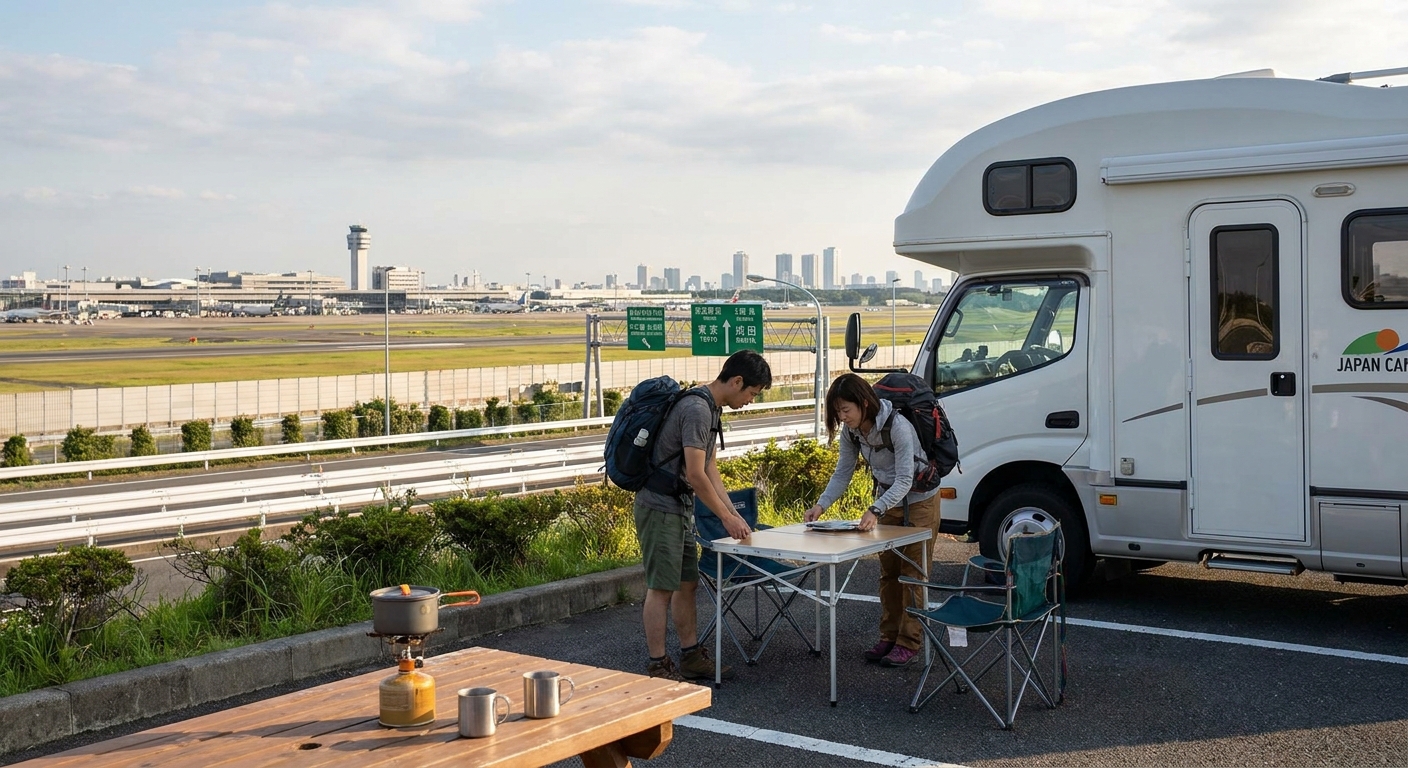
Ensuring a smooth family RV rental experience in Tokyo - Airport requires careful planning and attention to local specifics. First, booking your motorhome well in advance, particularly for Japan's peak seasons such as the spring cherry blossoms (March-May) or autumn foliage (September-November), is crucial to secure your preferred vehicle and potentially better rates, with savings of up to 15-20% when booking 3-6 months out. Second, selecting an RV class suitable for Japanese roads is vital; while all motorhomes can be driven almost anywhere, smaller, more compact campervans or Class C RVs often navigate narrower streets and parking lots outside major cities more easily. For instance, a campervan like the "rv rental denver example Category Van" is ideal for a couple or small family, offering good maneuverability. Drive slowly and carefully, and you can drive almost anywhere without issues. No need to stress - just use common sense and pay attention. Third, thoroughly research and plan your overnight parking options, prioritizing designated michi-no-eki (roadside stations) or dedicated RV parks located beyond central Tokyo for both legality and safety.
Fourth, familiarize your family with Japanese cultural etiquette, especially concerning waste disposal rules, appropriate noise levels in shared public facilities like bathhouses, and general respectful behavior. Finally, ensure you have reliable internet connectivity and up-to-date navigation tools, such as a portable Wi-Fi device or a local SIM card, to navigate unfamiliar roads and manage any language differences effectively. This detailed preparation will significantly enhance your family's travel comfort and enjoyment.
Before You Book - Class, Dates, Insurance
Choosing the right motorhome for your family RV rental in Tokyo - Airport involves balancing spaciousness for comfort with maneuverability for Japan's unique road system. While larger Class C motorhomes, like the "rv rentals example Comfort Class" which features 3 double beds and is ideal for a big family, offer more living space, more compact Class C or campervan conversions are often preferred for navigating urban areas and smaller roads found outside Tokyo's main arteries. Locking in your rental dates early, ideally 3-6 months out for peak travel seasons, will secure your preferred motorhome model and can result in more favorable pricing. Don't forget that prices are dynamic and change daily based on availability, seasonality, and supplier marketing decisions, so checking regularly is a good idea. Even last-minute availability exists, so if you're a spontaneous traveler, don't despair – just call ahead.
Regarding insurance, basic coverage is always included with your rental. For greater peace of mind, especially when traveling with family, you can upgrade to a top-level deductible for extra protection. When you search for family rv rentals in Tokyo - Airport through Bandana Caravan, you'll see all relevant insurance options displayed clearly, ensuring full transparency with no hidden fees or surprises.
Pre-Trip Prep - Packing Checklist for Tokyo - Airport
Preparing for your family RV rental in Tokyo - Airport ensures comfort and convenience throughout your journey. A smart packing strategy includes layers of clothing suitable for varied temperatures, as Japan's climate can change significantly between coastal regions near Narita and Haneda airports and more mountainous areas further inland. Beyond clothing, bring essential kitchen items like a small cutting board and reusable bags to supplement the basic supplies typically provided with a rented motorhome, making cooking family meals easier. For inspiration on meals you can make on the go, check out our RV-friendly recipes playlist.
Additionally, always ensure you have a comprehensive first-aid kit, readily accessible emergency contact information, and a travel adapter for Japanese outlets (Type A/B, 100V). Critically, carry your valid international driving permit (IDP), passport, and physical copies of your RV rental confirmation and insurance details. An IDP is recommended for visitors from non-English-speaking countries, although a standard car driver's license is sufficient for all motorhome classes (Class A, Class B, and Class C) in Japan. The minimum rental age is 21, with no young driver surcharges.
On the Road - Driving, Fueling, Navigation
Navigating Japan with your family RV rental from Tokyo - Airport is an exciting part of the adventure, though it requires specific attention to local driving customs. Driving in Japan means adhering to left-hand traffic, which can take some getting used to for those accustomed to right-hand drive. Most road signs, especially near major cities like Tokyo and along expressways, include English translations, making navigation more accessible. Fueling up involves locating gas stations, many of which are full-service (where an attendant will pump your gas), and understanding the different fuel types - regular gasoline is often denoted by a green hose or pump. For toll roads, an Electronic Toll Collection (ETC) card is highly recommended for seamless expressway payments and can be rented with your RV. On the routes offered through RV PLANET routes, you can itemize and track every expense along the way for easy budgeting.
Effective navigation is best achieved with a combination of Google Maps (download offline maps for areas with spotty service) and potentially a Japanese car navigation system, which some RV rentals include and often offer English language options. Drive slowly, max 100-150 km per day on average. Take time to feel the place, connect to the culture, the food, and the scenery. Remember, you can drive almost anywhere without issues just by driving carefully and using common sense. Consider reviewing our "Driving an RV in Tokyo - Airport - Complete Guide 2026" for more localized advice.
🎬 Video coming soon
At the Campground - Setup, Hookups & Etiquette
Arriving at a Japanese campground with your family RV rental involves specific procedures to ensure a pleasant stay for everyone. Upon arrival, follow the detailed check-in instructions provided by the campground staff and proceed to your designated site before initiating any setup. Connecting to utilities typically means properly attaching to power (standard Japanese outlets are 100V, so ensure your RV or adapters are compatible), water, and understanding the local grey/black water disposal protocols. Waste disposal is particularly important in Japan; campgrounds and michi-no-eki have strict rules for sorting trash into burnable, non-burnable, plastics, and recyclables.
Cultural etiquette extends to campgrounds as well. Observe quiet hours, usually from late evening to early morning, to respect fellow campers. Maintain exceptional cleanliness in all shared facilities, including restrooms, showers, and any communal cooking areas. Remember that many national and state parks in Japan reserve only 25-30% of their spots, with the rest being first-come-first-serve. Don't stress too much, though - you'll find a spot. If not at the first campground, then the next one; just call ahead before driving. For finding campsites and campgrounds during your trip, we recommend using RV PLANET (rvplan.net) - a great resource for locating available spots along your route.
family rv rental-Specific Tips for Tokyo - Airport
Optimizing your family RV rental in Tokyo - Airport for travel with kids involves thoughtful planning and leveraging the comfort of your motorhome. Schedule your drives to accommodate naps for younger children, utilizing the RV's comfortable sleeping areas like the "Rear Double Bed - 135/195cm" found in a "B 2 - Classic" motorhome during travel or planning stops at scenic michi-no-eki for quiet breaks. Stock your rented RV with a variety of snacks and drinks sourced from local Japanese supermarkets; this helps manage meal costs and ensures you have options for picky eaters, making road trips more enjoyable. Ensure appropriate child safety seats are either rented with your vehicle or brought from home, as required by Japanese law for all young passengers.
Utilize the RV's interior space for quiet activities such as reading, drawing, or watching movies during longer drives or unexpected rainy days, providing a familiar and private retreat for your children. Consider a Class C RV, like the "cruise america rv rental example Explorer", which is ideal for a family of 4, offering a comfortable living area and amenities. For more tailored route plans, explore the RV PLANET routes, which allow you to itemize and track every expense along the way for easy budgeting. Also, consider our "RV Travel Guide to Tokyo - Airport - Tips and Top Spots 2026" for more insights.
Common Mistakes to Avoid in Tokyo - Airport
To ensure a smooth family RV rental experience in Tokyo - Airport, it's wise to be aware of common pitfalls. Instead of underestimating driving times, particularly near metropolitan areas like central Tokyo or the busy Route 16 leading to Narita, use real-time traffic applications and factor in potential delays from tolls and narrow roads. Rather than relying solely on smartphone GPS, consider renting a portable Wi-Fi device or a local SIM for consistent internet access and accurate navigation, especially when venturing into more remote areas of Japan. An International Driving Permit (IDP) is recommended for visitors from non-English-speaking countries to avoid potential issues.
Another common mistake is expecting roadside camping. Instead of illegally parking, always research and reserve specific overnight parking locations like michi-no-eki or paid RV parks to avoid legal issues and ensure safety. Finally, rather than neglecting cultural norms, familiarize yourself and your family with Japanese waste separation rules and public bathhouse etiquette to ensure respectful interactions with locals and fellow travelers. For more budget insights, our "Family RV Rental in Tokyo - Airport - Pricing Guide 2026" offers detailed cost breakdowns.
What are some RV itineraries starting from Tokyo airports (NRT/HND) and first-night camping spots?
For itineraries starting from Narita (NRT), families can consider routes heading east towards the Chiba coastline for ocean views and seafood, or north towards Ibaraki Prefecture for lakes and nature, with local campgrounds or michi-no-eki like Narita Yume Farm Family Auto Campground offering immediate first-night stays. From Haneda (HND), westward routes towards Hakone, the scenic Fuji Five Lakes region with stunning views of Mount Fuji, or the Izu Peninsula are popular choices, often with easily accessible RV parks or campsites for your initial stop.
A practical first-night strategy involves driving for approximately an hour from either Narita International Airport (NRT) or Haneda Airport (HND) to a designated michi-no-eki or a pre-booked campground in prefectures such as Chiba, Kanagawa, or Yamanashi, allowing for a relaxed start away from immediate city traffic. For example, Michi-no-Eki Tako Ajisai-kan near NRT offers fresh local produce and parking. Remember to explore our "RV Rental Japan - Complete Guide 2026" for broader route ideas and tips.
Where can RVs legally and safely park overnight near Tokyo?
RVs can legally and safely park overnight near Tokyo at designated Michi-no-Eki (roadside stations), which are government-supported rest areas offering amenities like restrooms and often allowing overnight parking for self-contained motorhomes. Michi-no-Eki Hanyu Parking Area on the Tohoku Expressway near Tokyo, for instance, provides extensive facilities. Dedicated RV parks and private campgrounds, many requiring advance reservations, offer secure and amenity-rich options for overnight stays in the greater Tokyo area, addressing concerns like 'Can I camp near Tokyo?' and 'Is it safe to sleep in a car?'.
While street parking is generally prohibited for overnight stays across Tokyo, some larger paid parking lots, particularly those near tourist attractions or train stations like those in Ueno or Shinjuku, may accommodate RVs for a fee, though these options should always be verified beforehand. Always prioritize designated RV-friendly locations to avoid legal issues and ensure a peaceful night's rest for your family. Checking out "Driving an RV in Tokyo - Airport - Complete Guide 2026" can also provide valuable localized parking information.
What cultural etiquette should RV travelers know in Japan?
RV travelers in Japan should adhere strictly to waste separation rules, as Japan has a complex system for sorting trash into burnable, non-burnable, plastics, and recyclables, with designated disposal points clearly marked at michi-no-eki and campgrounds. When using public bathhouses (onsen or sento), it is essential to wash thoroughly before entering the communal baths, maintain respectful quiet, and understand that visible tattoos may be prohibited or require covering in some establishments. Always minimize noise levels, especially when parked overnight at michi-no-eki or campgrounds, to show consideration for other travelers and local residents.
Beyond these specifics, always be polite and courteous in interactions, using simple Japanese phrases like 'Arigato gozaimasu' (thank you) and observing common courtesies like bowing slightly when greeting or thanking someone. Remember that Japan values harmony and respect for public spaces, and demonstrating these values will significantly enhance your travel experience and interactions with locals. Our approach at Bandana Caravan, focusing on respect and transparency, aligns well with this cultural appreciation.
How much does an RV trip in Japan cost?
The overall cost of an RV trip in Japan typically includes daily RV rental fees, which can range from ¥15,000 to ¥35,000 or more depending on RV size (e.g., a compact campervan like the "rv rental denver example Category Van" versus a larger Class C for families) and seasonality. Fuel costs are a significant factor, with gasoline prices generally higher than in many Western countries, and tolls on Japan's extensive expressway network, such as the Tomei Expressway leading out of Tokyo, can accumulate quickly, making an ETC card essential for managing these expenses efficiently.
Camping fees vary, from free at some michi-no-eki to around ¥2,000-¥5,000 per night for private campgrounds with amenities. Food expenses can be managed by frequent grocery shopping at supermarkets, offering a more budget-friendly option than consistently dining out at restaurants. Potential hidden costs include city parking fees, propane refills (a 9 kg bottle typically costs ¥2,000-¥3,000 to refill), and unexpected navigation system rentals if not included. For comprehensive budgeting and tracking, utilizing RV PLANET routes allows travelers to itemize and track every expense along the way, helping you stick to your budget and offering a 25% planning discount.
How do I manage RV utilities and laundry in Japan?
Managing RV utilities in Japan involves utilizing campground hookups for water and electricity, where standard electrical outlets are 100V with Type A/B plugs, often requiring an adapter for non-Japanese appliances. For instance, a Class C motorhome like the "cruise america rv rental example Explorer" has an 82-liter fresh water tank and 82-liter waste water tank, requiring regular servicing. Water refill and waste (grey/black water) disposal stations are commonly found at larger campgrounds and some michi-no-eki, but availability can vary, necessitating careful planning, especially when traveling in rural areas far from major cities like Tokyo. Look for facilities near major routes such as Route 6 or Route 16 around Tokyo.
Laundry facilities are widely available throughout Japan in the form of coin laundries ('coin-laundry' or 'koin randorii'), which can be found in towns, near supermarkets, at some michi-no-eki, and within most dedicated campgrounds. These typically offer modern washing machines and dryers for a small fee, usually ¥200-¥500 per load, providing a convenient solution for keeping your family's clothes clean during extended road trips. This blend of amenities supports longer RV journeys, making a week-long trip or two-week adventure more comfortable.
What unique RV-accessible attractions are near Tokyo?
Beyond Tokyo's bustling core, a rented RV facilitates access to unique natural attractions like the tranquil lakes and majestic views of Mount Fuji in the Fuji Five Lakes region (Kawaguchiko, Saiko, Yamanakako), easily reachable via the Chuo Expressway from Tokyo. Explore historical charm with a visit to Kawagoe, known as 'Little Edo,' offering traditional streets and temples with RV parking often available at the city's outskirts, or venture to the coastal beauty of the Izu Peninsula for scenic drives along Route 135 and relaxing hot springs in towns like Atami.
Discover lesser-known spots such as the ancient cedar forests of Chiba Prefecture or the serene temples nestled in the mountains of Saitama, often with convenient RV parking nearby. For families, areas like Hakone offer open-air museums and pirate ship cruises on Lake Ashi, easily accessible with the flexibility of a motorhome, allowing for a comfortable pace for children. Traveling slowly, at max 100-150 km per day, allows you to truly feel the place, connect to the culture, the food, and the scenery.
What are the best internet, navigation, and language solutions for RVers in Japan?
For reliable internet connectivity, RVers in Japan should consider renting a portable Wi-Fi device (often called 'pocket Wi-Fi') from airports like Narita or Haneda, or online, or purchasing a data-only SIM card upon arrival, ensuring consistent access for navigation and communication throughout your family RV trip. The most effective navigation tools include Google Maps, which works well even in rural areas (downloading offline maps is highly recommended), and some RV rentals come equipped with Japanese car navigation systems that often have English language options.
To overcome language barriers, translation apps like Google Translate (especially with its camera and voice translation features) are invaluable for reading signs, understanding menus at local eateries around Tokyo - Airport, and communicating with locals. Learning a few basic Japanese phrases like 'konnichiwa' (hello) and 'sumimasen' (excuse me/I'm sorry) can also significantly enhance interactions and show respect for the local culture. For comprehensive route planning, RV PLANET offers excellent itineraries with built-in tools, and remember Bandana Caravan provides 24/7 support for your pre-booking and booking needs.
What are the seasonal considerations for RV travel in Japan?
Seasonal planning is key for an enjoyable family RV rental in Tokyo - Airport, as Japan's diverse climate presents distinct characteristics throughout the year. Spring (March-May) offers pleasant weather and iconic cherry blossoms, but it is a peak season, requiring early bookings for both motorhomes and campgrounds due to high demand and potential crowds at popular spots like Ueno Park or Shinjuku Gyoen National Garden. Summer (June-August) brings heat, humidity, and the possibility of typhoons, especially in coastal regions, making air conditioning in the RV and planning for indoor activities or higher-altitude destinations in areas like Nagano important considerations.
Autumn (September-November) provides ideal weather for RV travel with comfortable temperatures and stunning fall foliage, making it another popular period requiring advance reservations for campsites and RVs. Winter (December-February) can involve snow and cold temperatures, particularly in northern Japan and mountainous areas like the Japanese Alps, potentially leading to road closures and necessitating an RV equipped with proper heating and winter tires if heading to colder regions. Always check local weather forecasts and road conditions before embarking on a daily drive.
Is an RV rental worth it for exploring Japan beyond Tokyo?
An RV rental is often considered highly worthwhile for exploring Japan beyond Tokyo's immediate city center, offering unparalleled flexibility to discover rural landscapes, quaint towns, and remote natural beauty inaccessible by public transport. For families, a rented motorhome provides a convenient and comfortable base, allowing for spontaneous stops, easy access to snacks and restrooms, and a private space for children's naps, which is a significant advantage over navigating public transport with luggage and kids. This freedom enables you to truly experience regions like the Fuji Five Lakes or the Izu Peninsula without being constrained by train schedules.
Compared to booking multiple hotels and relying on trains, an RV can be a cost-effective option for families or groups, especially when factoring in accommodation, food preparation within the RV, and the liberation from restrictive schedules. The 'worth it' factor increases for those desiring a deeper, more immersive experience of Japan's diverse regions, allowing travelers to tailor their journey and stay longer in areas that truly capture their interest. With our full price transparency and 25% planning discount on RV PLANET routes, your Tokyo - Airport family rv rental becomes an even smarter choice.
What You Shouldn't Miss
- Explore Fuji Five Lakes: Drive your rented motorhome to Kawaguchiko, Saiko, and Yamanakako for breathtaking views of Mount Fuji, especially during sunrise or sunset. Park at a local campground and enjoy the serene beauty.
- Visit Edo Period Kawagoe: Step back in time in "Little Edo" Kawagoe, just northwest of Tokyo. Stroll through traditional merchant streets, visit Kashiya Yokocho (Candy Alley), and easily find outskirts parking for your RV.
- Discover the Izu Peninsula: Head south from Tokyo for a coastal road trip along the Izu Peninsula. Enjoy stunning ocean vistas, volcanic landscapes, and numerous onsen (hot springs) towns, many with RV-friendly parking.
- Experience Michi-no-Eki Culture: Make sure to stop at several Michi-no-Eki. These roadside stations, like Michi-no-Eki Boso-mura near Narita, offer local produce, unique snacks, clean facilities, and often free overnight parking for your motorhome.
- Kamogawa Seaworld Adventure: A fantastic family-friendly attraction in Chiba Prefecture, easily accessible with a rented RV from Tokyo - Airport. Enjoy dolphin and killer whale shows, and explore marine life exhibits.
- Looking for expert insights from Avi Bandana? Top 5 Adventures - recommendations from Avi Bandana.
Final Thoughts
A family RV rental in Tokyo - Airport truly unlocks the diverse wonders of Japan. Imagine waking up to views of Mount Fuji from your comfortable motorhome, or easily pulling over at a michi-no-eki to sample local delicacies with your loved ones. This kind of travel offers unparalleled freedom and cherished moments, making your journey as memorable as the destination itself.
From the meticulous planning before you depart to the cultural nuances on the road, Bandana Caravan is here to support you every step of the way. We want you to focus on the joy of discovery and connection, knowing all the details are handled with full transparency. Get inspired for your next trip and discover why so many families choose the open road for their adventures!
Find Motorhome Rentals in Tokyo - Airport