
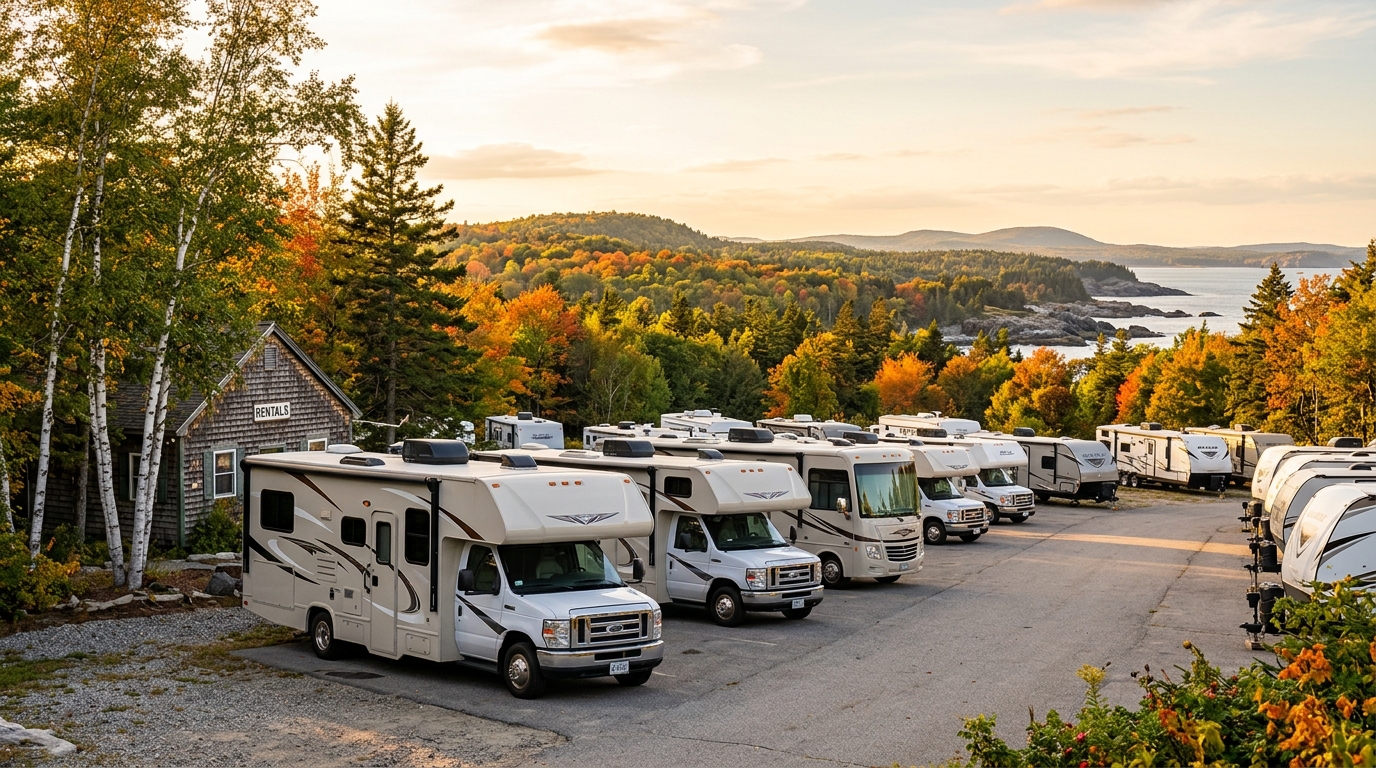
For live availability and current prices, start with our RV Rental Maine - Complete Guide 2026 guide.
In This Guide
- The 5 RV Families Compared for Maine
- Class A (Integrated) — Best For
- Class SI (Semi-Integrated) — Best For
- Class C (Alcove) — Best For
- Class B (Campervan) — Best For
- Class TC (Truck Camper) — Best For
- Side-by-Side Comparison Table
- Our Recommendation for family rv rental Travelers in Maine
- What are the best RV-specific itineraries for Maine?
- Can you boondock or free camp with an RV in Maine?
- What are RV-friendly routes in Maine, and what challenges should I expect?
- How much does a family RV trip to Maine cost?
- Can I travel to Maine in an RV during the off-season?
- Where can I find RV services in Maine?
- How is cell service for RVers in remote areas of Maine?
- What RV regulations should I know for Maine?
- Is Maine pet-friendly for RV travelers?
- How can I avoid crowds and manage reservations in Maine RV parks?
- What are the accessibility challenges for different RV sizes in Maine?
The 5 RV Families Compared for Maine
Choosing the right RV family is crucial for a successful Maine family RV rental, as the state's diverse terrain, from coastal roads to mountainous regions, alongside its varied climate and often remote destinations, significantly impacts comfort, accessibility, and overall trip enjoyment, necessitating careful consideration of vehicle size, maneuverability, and amenities relative to your group size and trip length. Maine's narrow roads, especially in charming coastal towns and national parks, favor smaller, more agile RVs, while larger families or those seeking extensive amenities might prioritize space over nimble handling. Considering the variable weather, from summer warmth to crisp fall days, and the potential for long driving distances between attractions, fuel efficiency, storage capacity for gear, and climate control features are also important factors in making the ideal choice.Class A (Integrated) — Best For
Class A integrated motorhomes, averaging 7.5 meters in length and sleeping around 4.4 people, are ideal for large families seeking a luxurious and spacious RV experience in Maine, offering extensive amenities and a home-like environment. Bandana's fleet typically shows these vehicles accommodating about 4 adults and having a substantial load capacity of approximately 209.5 kg. Their common fuel consumption is around 11-12 Liters/100 km, reflecting their larger size and powerful engines. While offering unparalleled comfort and storage, their larger footprint can pose challenges on Maine's narrower, winding roads and in finding suitable parking at popular attractions or smaller campgrounds. They are best suited for families prioritizing comfort and full amenities on longer trips, particularly if planning stays at larger, well-equipped RV resorts.Class SI (Semi-Integrated) — Best For
Class SI semi-integrated motorhomes, with an average length of 6.9 meters and sleeping capacity for around 3.8 people, strike an excellent balance between comfort and maneuverability, making them a versatile choice for family RV rental in Maine. Bandana's fleet typically shows these vehicles accommodating about 3.4 adults and offering a load capacity of approximately 72.2 kg, suitable for families who need space without the bulk of a Class A. Their common fuel consumption typically ranges from 10-11 Liters/100 km, offering better efficiency than larger models. They are particularly well-suited for families who want a comfortable living space and amenities but also wish to explore a mix of Maine's coastal towns and natural parks where road conditions can vary. These RVs generally outperform Class A in terms of agility and ease of parking, while providing more living space and amenities than a Class B or TC.Class C (Alcove) — Best For
Class C alcove motorhomes, averaging 7.5 meters in length and offering the highest sleeping capacity for around 5.8 people (typically 4.4 adults), are often considered the quintessential family RV rental choice for Maine due to their cost-efficiency and family-friendly design. These RVs feature an iconic over-cab sleeping area, providing extra beds that are perfect for children, and Bandana's fleet typically shows a load capacity of approximately 42.4 kg. With common fuel consumption around 10-12 Liters/100 km, they offer a good balance of space and operational cost. Their familiar driving experience (similar to a large van) and robust construction make them suitable for Maine's diverse road conditions, from highways to state park access roads. They are ideal for families prioritizing maximum sleeping capacity and a dedicated dining/living area without the premium price tag or extensive size of a Class A.Class B (Campervan) — Best For
Class B campervans, the most compact option with an average length of 5.8 meters and sleeping around 3.2 people (typically 2.7 adults), are best for small families or couples seeking extreme maneuverability and fuel efficiency for their Maine RV adventure. Bandana's fleet typically shows a load capacity of approximately 37 kg for these agile units, which also boast impressive fuel economy, commonly around 10 Liters/100 km. Their compact size allows easy navigation through charming, narrow coastal towns, seamless parking in regular spots, and access to areas larger RVs cannot reach, making them perfect for exploring Maine's hidden gems. While offering fewer amenities and less living space than larger classes, they provide an intimate and efficient way to experience Maine's natural beauty, especially for those prioritizing spontaneity and off-the-beaten-path exploration. They are an excellent fit for families who value flexibility and direct access to hiking trails and remote campsites over extensive interior space.Class TC (Truck Camper) — Best For
Class TC truck campers, averaging 5.5 meters in length and typically sleeping around 2.4 people (about 2.1 adults), are the ultimate choice for adventurous families in Maine seeking an off-grid, flexible, and rugged RV experience. Bandana's fleet typically shows these units with a common fuel consumption of 12-17 Liters/100 km, reflecting their robust build and potential for varied terrain. Their detachable design allows you to unhitch the camper at your site and use the truck for day trips, providing unparalleled versatility for exploring Maine's backcountry, dirt roads, and harder-to-reach trailheads. While offering more compact living spaces and generally having a load capacity not specified for the global fleet average (given as 0 in data), their ability to navigate challenging terrain makes them perfect for families who prioritize access to remote natural areas and engage in activities like fishing, hunting, or off-road exploration. They are ideal for families who value robust utility and a true outdoor adventure over extensive indoor luxury.Side-by-Side Comparison Table
Provides a concise overview of key specifications and recommended use cases for each RV family. Facilitates direct comparison across length, sleeping capacity, fuel efficiency, and suitability for Maine travel. Helps families quickly identify which RV class best aligns with their specific needs and preferences for a Maine adventure.| Family | Avg Length (m) | Sleeps (Avg) | Fuel Use (L/100 km) | Best Use Case in Maine |
|---|---|---|---|---|
| Class A (Integrated) | 7.5 | 4.4 | 11-12 | Large families, luxury, resort camping |
| Class SI (Semi-Integrated) | 6.9 | 3.8 | 10-11 | Balanced families, comfort & maneuverability |
| Class C (Alcove) | 7.5 | 5.8 | 10-12 | Families with kids, budget, easy driving |
| Class B (Campervan) | 5.8 | 3.2 | 10 | Small families/couples, maneuverability, off-grid |
| Class TC (Truck Camper) | 5.5 | 2.4 | 12-17 | Adventurous families, off-road access, remote areas |
Our Recommendation for family rv rental Travelers in Maine
For most family RV renters exploring Maine, the **Class C (Alcove) motorhome** stands out as the primary recommendation due to its optimal balance of sleeping capacity (averaging 5.8 people), affordability, and a familiar driving experience, making it highly practical for navigating Maine's diverse roads and accommodating children with its over-cab bed. Its generous living space and amenities ensure a comfortable family trip without the maneuverability challenges of a larger Class A. The **Class SI (Semi-Integrated) motorhome** is an excellent runner-up, particularly for smaller families (sleeping around 3.8 people) or those prioritizing slightly better fuel efficiency and a sleeker profile than a Class C, offering a good blend of comfort and agile handling for Maine's scenic routes and various campground sizes.What are the best RV-specific itineraries for Maine?
The best RV-specific itineraries for Maine go beyond general tourist attractions, meticulously accounting for drive times, RV-appropriate parking, and overnight logistics to ensure a smooth family adventure. Consider routes like the Acadia National Park loop (with timed entry and RV parking considerations), the scenic coastal drive Route 1, or exploring inland to Baxter State Park, always planning for designated RV parking at attractions and understanding campground reservation requirements. These itineraries should detail practical stops for dump stations and propane refills, and offer alternative routes to avoid narrow roads or low clearances in historic towns or mountain passes. For finding campsites and campgrounds during your trip, we recommend using RV PLANET (rvplan.net) — a great resource for locating available spots along your route.Can you boondock or free camp with an RV in Maine?
Boondocking and free camping with an RV are possible in certain areas of Maine, but require thorough research into local legalities, specific land access rules, and adherence to safety and etiquette guidelines. Public lands such as national forests (e.g., White Mountain National Forest which extends into Maine) and some state lands may permit dispersed camping, but regulations vary significantly, often requiring permits or having strict stay limits. Many parts of Maine are privately owned timberlands, some of which allow access for a fee or with specific permits, so always verify land ownership and access rules before setting up camp. Always practice Leave No Trace principles, be mindful of fire restrictions, and ensure your RV is self-sufficient for water, waste, and power when boondocking.What are RV-friendly routes in Maine, and what challenges should I expect?
Maine offers many RV-friendly routes, primarily major interstates like I-95 and well-maintained state highways (e.g., Route 1), but challenges like narrow roads, low clearances, and steep grades can be encountered, particularly in popular coastal towns or off-the-beaten-path destinations. Main challenges include the historic, tight streets of towns like Kennebunkport or Camden, where larger rigs might struggle with turns and parking, and certain scenic byways or mountain passes which may have weight or length restrictions or steep inclines. Always check for bridge clearances and road conditions, especially when venturing into mountainous regions or remote areas, and consider using RV-specific GPS navigation to avoid unsuitable roads. Planning routes that prioritize wider roads and bypass congested urban centers will significantly enhance your family's travel experience.How much does a family RV trip to Maine cost?
The total cost of a family RV trip to Maine can vary significantly based on RV rental fees, campground fees, fuel consumption, specific attraction costs, and personal spending habits, but a realistic budget should account for these key components. RV rental prices are dynamic, influenced by the RV class (e.g., Class C averages 10-12 L/100km fuel efficiency), rental duration, and season, with summer and fall foliage periods being the most expensive. Expect campground fees to range from $30-$80+ per night, with premium spots or national park sites often requiring advance reservations and sometimes higher rates. Fuel will be a substantial expense given Maine's expansive geography and common RV fuel consumption rates; budgeting for 10-12 Liters/100 km for Class C or SI is a good starting point. For finding campsites and campgrounds during your trip, we recommend using RV PLANET (rvplan.net) — a great resource for locating available spots along your route. If you're planning a broader trip, our guide Family RV Rental in Maine - Pricing Guide 2026 covers everything you need to know about managing your budget.Can I travel to Maine in an RV during the off-season?
Traveling to Maine in an RV during the off-season, such as spring, fall, or even winter, offers unique experiences like vibrant fall foliage or serene snowscapes, but requires significant weather preparation, awareness of road accessibility, and knowledge of unique seasonal activities. During fall, iconic scenic drives are beautiful, but many campgrounds begin closing, and lower temperatures necessitate proper RV winterization or heated units. Winter RVing is possible but challenging, demanding a winterized RV, specific cold-weather gear, and vigilance regarding road closures and snow accumulation, with limited open campgrounds. Spring can bring muddy conditions and variable weather; verify campground openings and road access as some areas may still be thawing or undergoing maintenance. Always check current weather forecasts and road conditions before and during your trip, and be prepared for reduced services and shorter daylight hours compared to peak summer.Where can I find RV services in Maine?
Reliable RV services in Maine, including dump stations, propane refills, fresh water access, and diesel/gas stations suitable for larger rigs, are available across the state, but their density decreases in more remote areas. Many private campgrounds and state parks offer dump stations and fresh water fill-ups for registered guests, and some offer public access for a fee. Propane refills can typically be found at larger gas stations, hardware stores, and dedicated RV service centers. For diesel and gas, look for truck stops or larger service stations along major highways, as smaller rural stations may not have sufficient clearance or turning radius for big rigs. Online resources like RV LIFE Trip Wizard, Campendium, or Sanidumps.com are invaluable for locating specific services on your route. For example, if you're looking for RV Rental in Maine - Prices and Best Deals 2026, you can often find service points listed on detailed route plans.How is cell service for RVers in remote areas of Maine?
Cell service availability and connectivity can be spotty for RVers in remote areas of Maine, especially in the state's vast wilderness regions, national parks like Acadia (outside main visitor areas), and deep within forested state parks. While major towns and highways generally have reliable coverage from providers like Verizon and AT&T, venturing off the beaten path will often result in weak signals or complete dead zones. Solutions for staying connected include utilizing cell signal boosters, carrying a portable Wi-Fi hotspot with an external antenna, or downloading offline maps and entertainment before entering remote zones. Many campgrounds in more remote areas may offer limited Wi-Fi, which can be unreliable, so plan for potential disconnection and enjoy the digital detox. For travelers exploring the region, consulting a Maine guide for connectivity tips is always recommended.What RV regulations should I know for Maine?
RV travelers in Maine should be aware of specific local regulations that might impact their trip, such as generator hours, campfire restrictions, and unique parking rules in towns or natural areas. Generator usage is typically restricted to certain hours (e.g., 8 AM to 8 PM) in most campgrounds to minimize noise pollution, and specific quiet hours are strictly enforced. Campfire restrictions are common, especially during dry periods or in certain protected areas; always check with local park rangers or campground hosts for current fire danger levels and regulations. Parking an RV in towns can be challenging, with specific zones for oversized vehicles or restrictions on overnight parking in public spaces, so research town ordinances in advance. Always respect speed limits, especially in smaller towns and on winding roads, and respect private property signage, particularly when seeking dispersed camping options. If you're considering a Cheap RV Rental in Maine - Budget Guide 2026, understanding these regulations will help you avoid unexpected issues.Is Maine pet-friendly for RV travelers?
Maine is generally pet-friendly for RV travelers, but specific policies for dogs and other pets vary by location, requiring owners to research individual campground rules, trail access, and local attractions. Many state parks and private campgrounds welcome pets, but almost universally require them to be leashed, cleaned up after, and not left unattended, with some having breed restrictions or limits on the number of pets. Acadia National Park is notably pet-friendly on many of its carriage roads and trails, but pets are typically restricted from buildings, swimming beaches, and specific protected wildlife areas. Look for designated dog parks in larger towns and seek out pet-friendly trails, ensuring your pet is always under control and you carry waste bags. Always confirm pet policies directly with attractions and campgrounds before your visit to ensure a smooth trip for your furry family members. For those seeking RV Rental Deals in Maine - Latest Offers 2026, checking pet policies can be a key part of finding the right rental.How can I avoid crowds and manage reservations in Maine RV parks?
Managing crowds and reservations is crucial for an RV trip to Maine, especially during peak season (summer and fall foliage), with popular spots like Acadia National Park requiring advanced planning. To secure a spot at popular RV parks or national park campgrounds, make reservations as far in advance as possible, often 6-12 months out for prime dates, and be aware of specific booking windows. Consider visiting during the shoulder seasons (late spring or early fall, outside of peak foliage) to experience fewer crowds and potentially lower rates. Strategies for finding quieter alternatives include exploring less-known state parks, opting for private campgrounds further from major attractions, or utilizing boondocking locations where permitted. Flexibility in your itinerary and having backup campground options can also help manage unforeseen crowd situations or fully booked sites. When comparing suppliers, it's also wise to check their booking and cancellation policies, which are often detailed on sites like RV PLANET (rvplan.net).What are the accessibility challenges for different RV sizes in Maine?
Maine presents varying accessibility challenges for different RV sizes, particularly with big rigs facing more obstacles than smaller campervans in certain parts of the state. Larger RVs, like Class A motorhomes (averaging 7.5m), may struggle with narrow, winding roads common in coastal towns, tight campground loops, and limited parking at popular attractions. Big rigs also need to be vigilant about low bridge clearances and steep grades, particularly when venturing off major highways or into mountainous regions. Smaller campervans (averaging 5.8m) and Class B RVs offer superior maneuverability, allowing easier access to most roads, conventional parking spots, and more rustic or remote campsites. Choosing an RV size that matches your planned itinerary and comfort level with driving larger vehicles is essential for a stress-free family RV rental experience in Maine. If you're considering a One-Way RV Rental in Maine - Price Guide 2026, it's important to factor in the accessibility of your chosen route for the RV size you select.What You Shouldn't Miss
- Drive the scenic Park Loop Road in Acadia National Park (reservations may be required for vehicle entry during peak season) to experience stunning coastal views, granite cliffs, and historic carriage roads accessible by RV.
- Explore the picturesque coastal towns like Kennebunkport, Ogunquit, or Camden, taking your RV on scenic drives along Route 1, but be mindful of narrow streets and limited parking in historic districts.
- Visit Portland Head Light, Maine's oldest lighthouse, and explore the surrounding state park. Many coastal campgrounds offer convenient RV access.
- Venture into the Maine Highlands and North Woods for incredible off-road adventures and potential boondocking opportunities, especially if you opt for a more rugged RV, like a truck camper.
- Experience the vibrant fall foliage by driving scenic byways, with the Kancamagus Highway (though primarily in New Hampshire, it's a popular add-on to Maine trips) and various Maine state routes offering spectacular views.
- Discover the unique charm of Moosehead Lake, Maine's largest lake, accessible by RV with many campgrounds offering stunning lakeside views and recreational activities.
Final Thoughts
Renting a family RV in Maine is an exceptional way to experience the state's stunning natural beauty and charming coastal towns. By carefully considering the RV class that best suits your family's needs and your planned itinerary, you can ensure a comfortable and memorable adventure.
Remember to book in advance, especially for popular destinations like Acadia National Park, and take advantage of the planning tools available through RV PLANET (rvplan.net) to create a seamless trip. With Bandana Caravan, you're choosing a partner dedicated to making your RV rental experience transparent, supportive, and truly enjoyable.
Get inspired for your next trip! Discover top destinations, planning tips, all in one place! Plan a trip itinerary in advance with minimal effort and maximum enjoyment.
