In This Guide
- Best Iceland RV Itinerary for family rv rental - Overview
- 7-Day Classic Route in Iceland
- 14-Day Extended Journey in Iceland
- Recommended RVPlan Trip for Iceland
- Must-See Stops Along the Way (Avi Bandana Picks)
- Daily Driving Distances & Drive Times in Iceland
- Best RV Class for This Itinerary - Couple & Family Picks
- What are the essential safety tips and emergency preparedness steps for RV travel in Iceland?
- How to manage day-to-day RV living practicalities in Iceland (water, waste, laundry, groceries)?
- What are common myths and misconceptions about RVing in Iceland, especially regarding wild camping and 4x4 needs?
- How can I practice responsible and sustainable RV travel in Iceland?
- How to choose the right RV for a family trip to Iceland?
- How to find unique local experiences and integrate with Icelandic culture while RVing?
- What are the unique challenges and rewards of RVing in Iceland during different seasons?
Best Iceland RV Itinerary for family rv rental - Overview
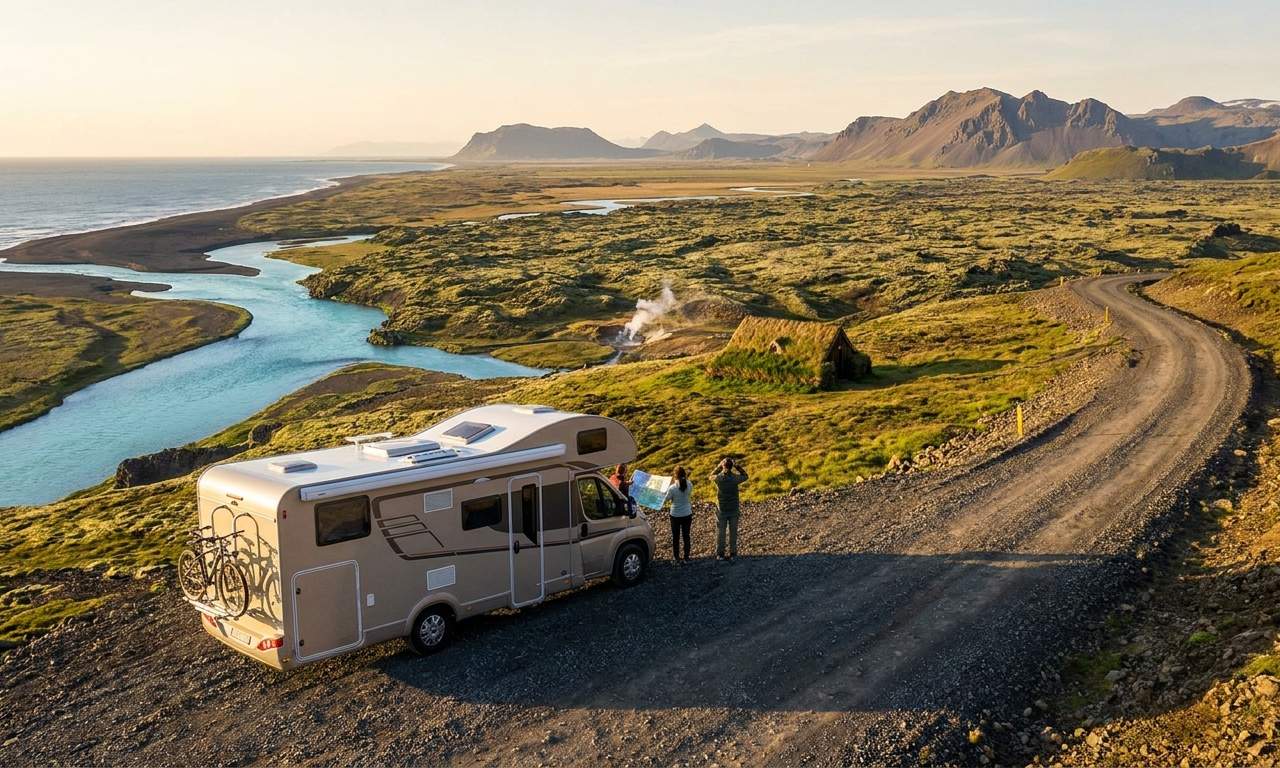
A family RV adventure in Iceland typically involves circumnavigating the Ring Road, spanning approximately 1,332 km (828 miles) for the main route. The ideal duration for a comprehensive family RV trip is 10-14 days, though a concentrated 7-day itinerary is also possible for those with limited time. For live availability and current prices, start with our RV Rental Iceland - Complete Guide 2026 guide. The best season for an RV rental in Iceland with family is generally June to August, offering mild weather and extended daylight hours, which facilitates easier travel and access to attractions. This guide outlines popular routes, practical tips, and essential considerations for an unforgettable family journey. Imagine exploring stunning landscapes with your children, having the flexibility to stop whenever a mesmerizing waterfall or a playful herd of Icelandic horses catches your eye.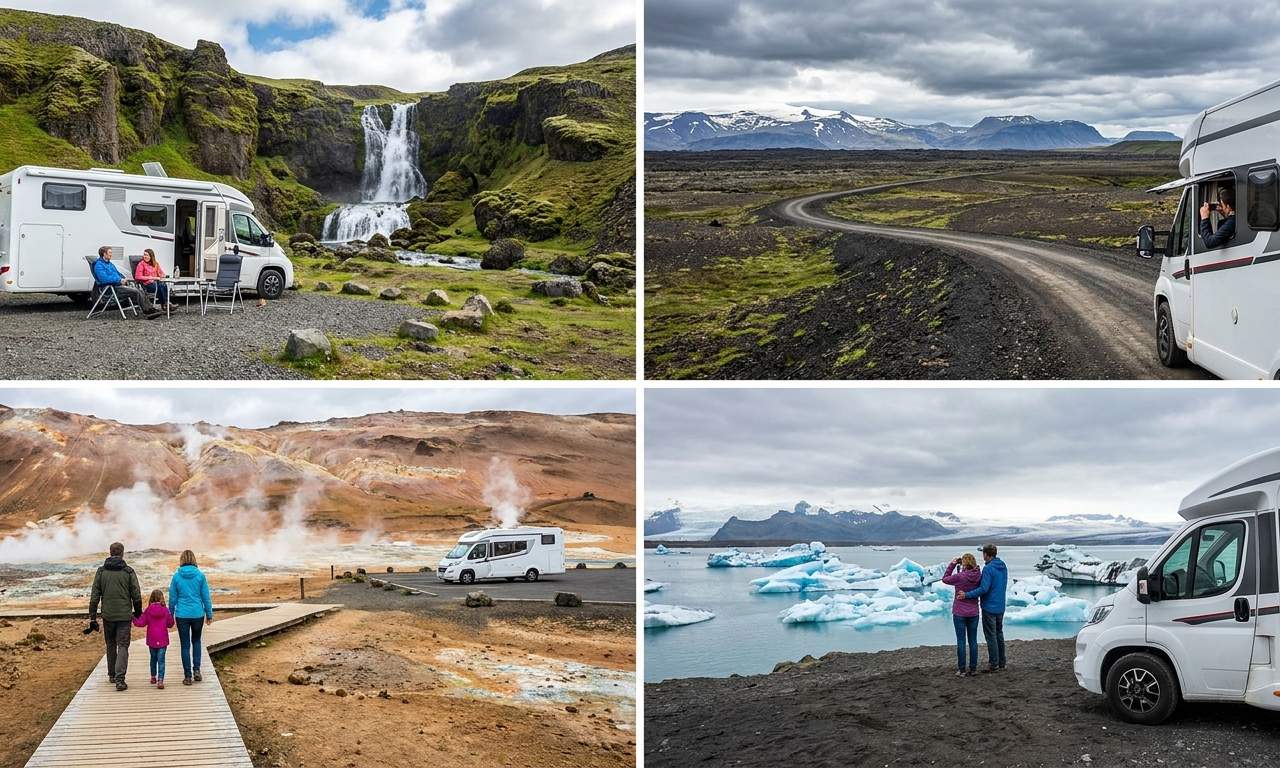
7-Day Classic Route in Iceland
This compressed itinerary focuses on Iceland's Golden Circle and the South Coast, ideal for families with limited time, averaging around 100-150 km (60-90 miles) of driving per day to allow for exploration. Traveling slowly, a key recommendation from Bandana, ensures you truly feel the place, connecting to the culture, food, and scenery rather than rushing through it. * **Day 1:** Arrive in Reykjavik, pick up your rented motorhome, and explore the charming capital city. Drive slowly and carefully; you can drive almost anywhere without issues. No need to stress - just use common sense and pay attention. Sleep near Reykjavik, perhaps at Reykjadalur Campground. * **Day 2:** Embark on the iconic Golden Circle adventure, visiting Thingvellir National Park, the Geysir geothermal area with its erupting hot spring Strokkur, and the powerful Gullfoss waterfall. This day covers approximately 120 km. Settle in for the night at Skjól Campground near Geysir. * **Day 3:** Journey along the dramatic South Coast towards Vik, stopping at the magnificent Seljalandsfoss (where you can walk behind the waterfall), Skogafoss waterfalls, and the unique Reynisfjara black sand beach with its basalt columns. This leg is around 160 km. Vik Campsite offers a convenient overnight spot. * **Day 4:** Continue east from Vik towards the breathtaking Jökulsárlón Glacier Lagoon and Diamond Beach, with potential stops at the Fjaðrárgljúfur canyon. Expect to drive about 190 km. Skaftafell Campground is a popular and well-equipped option. * **Day 5:** Explore the Skaftafell Nature Reserve, perhaps with a hike to Svartifoss waterfall, or enjoy more time at Jokulsarlon. Drive towards Kirkjubæjarklaustur, covering about 100 km. The Kirkjubæjarklaustur Campsite offers a peaceful setting. * **Day 6:** Head back towards Selfoss/Hveragerði, making stops at Urriðafoss and the vibrant Kerið crater. This drive is approximately 200 km. Selfoss Campsite provides facilities for your final night in the RV. * **Day 7:** Return to Reykjavik, drop off your rented campervan, and prepare for departure, a short drive of about 60 km. For finding campsites and campgrounds during your trip, we recommend using RV PLANET (rvplan.net) - a great resource for locating available spots along your route.14-Day Extended Journey in Iceland
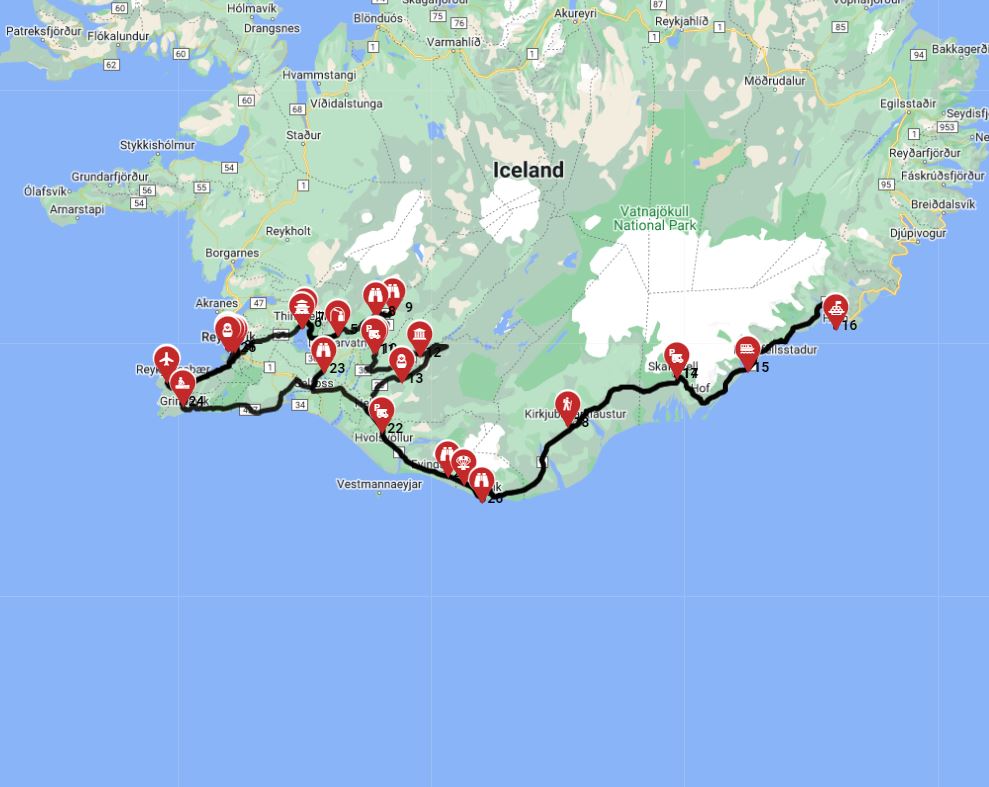
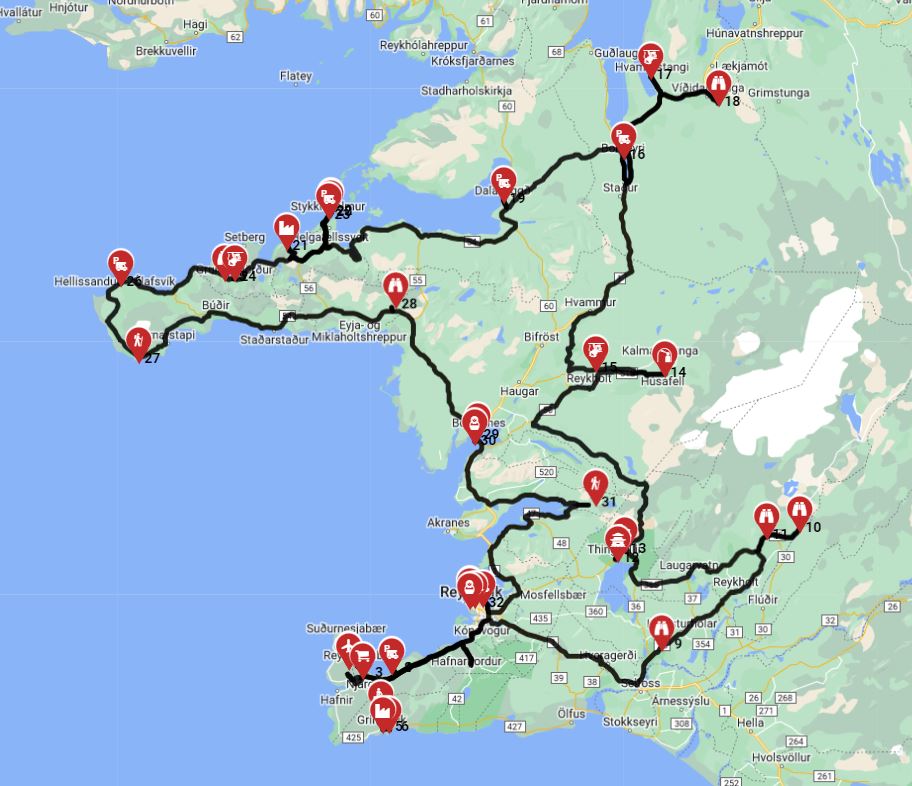
A 14-day itinerary allows families to circumnavigate the entire Ring Road, plus explore the Snæfellsnes Peninsula or parts of the Westfjords, maintaining Avi Bandana's recommended maximum of 100-150 km (60-90 miles) per day for relaxed travel. This slower pace allows for deeper immersion in Iceland's diverse landscapes and local culture. You can find many ideas for extended routes on RV PLANET routes, where you can itemize and track every expense along the way for easy budgeting. * **Days 1-3:** Golden Circle & South Coast (Reykjavik, Thingvellir, Geysir, Gullfoss, Seljalandsfoss, Skogafoss, Vik, Reynisfjara). Sleep near these attractions, for example, in Selfoss or Vik. This segment is covered in more detail in our "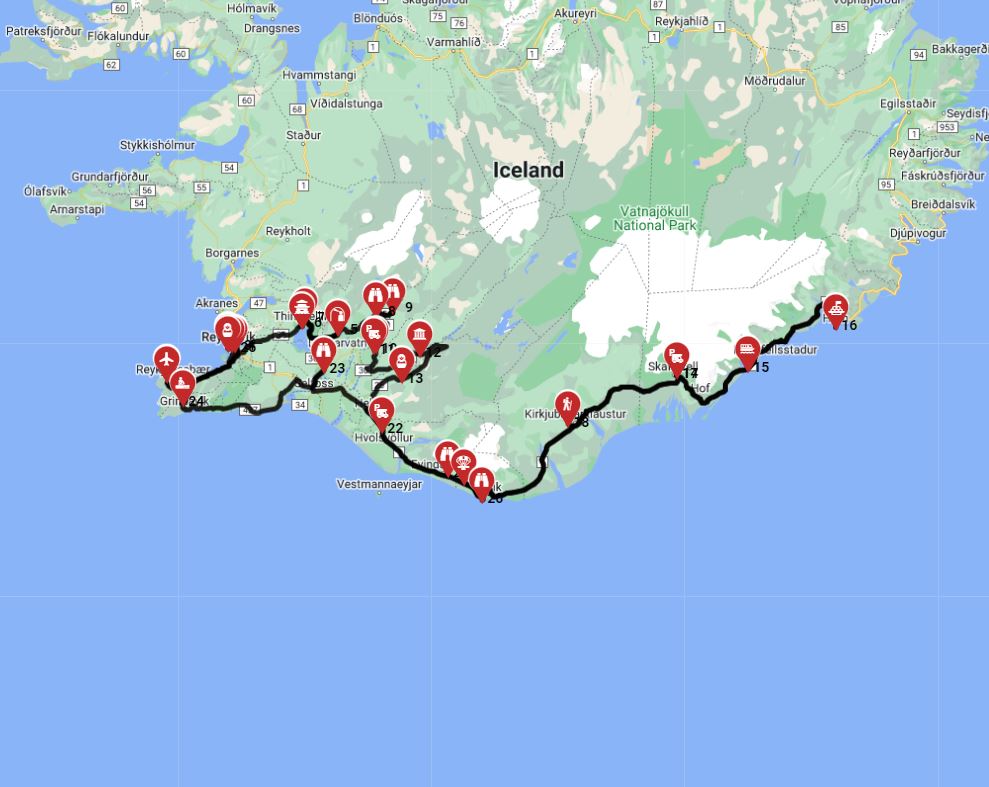
Iceland Golden Circle - South West
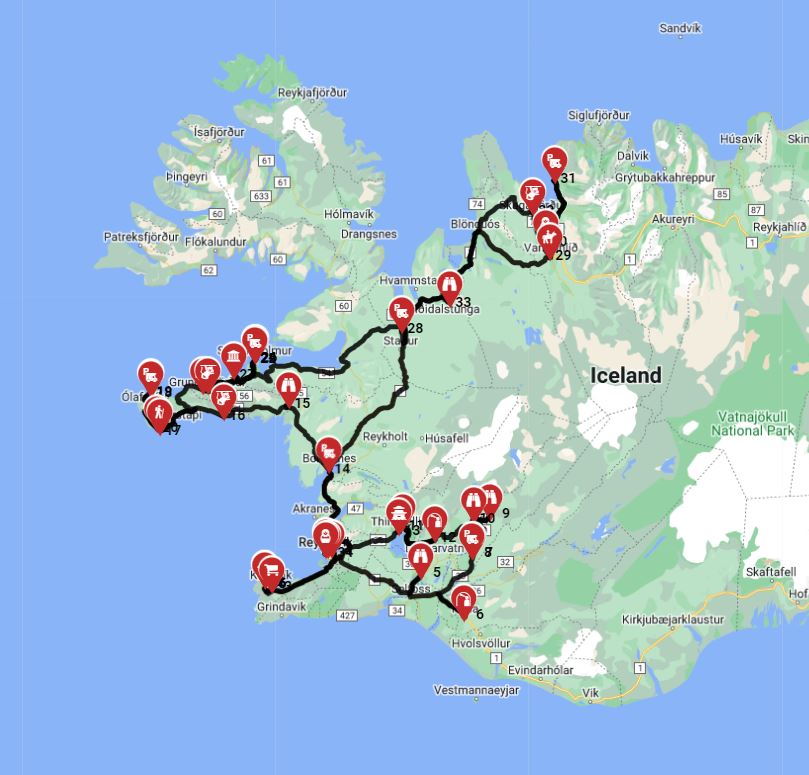
Recommended RVPlan Trip for Iceland
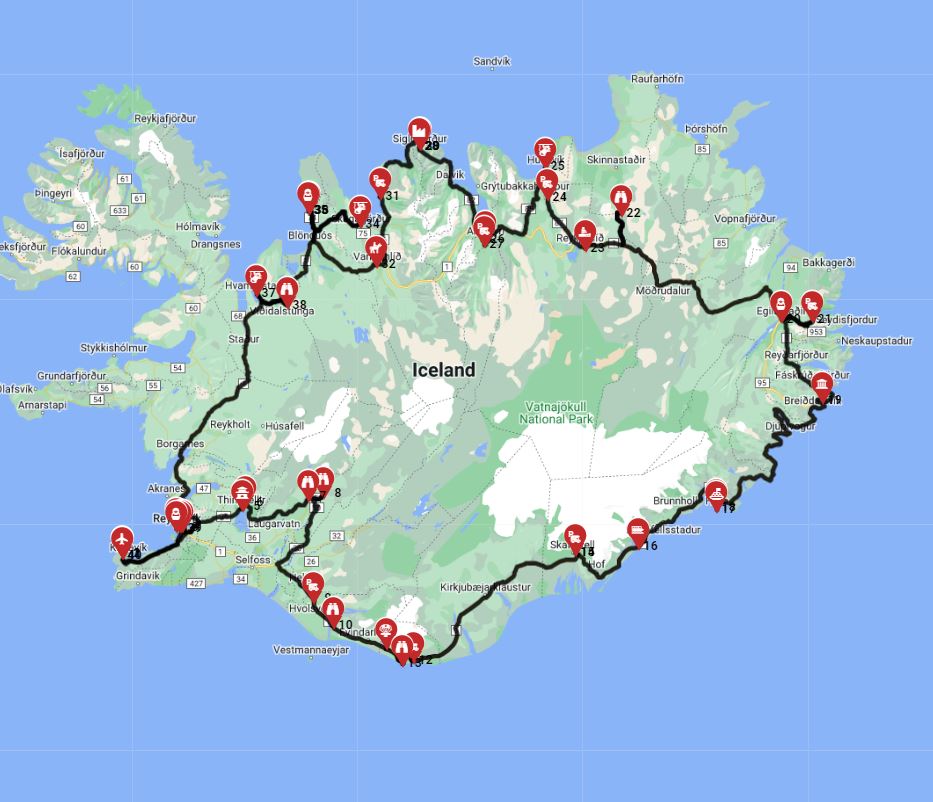
For families seeking a pre-planned, stress-free adventure, the RVPlan trip named "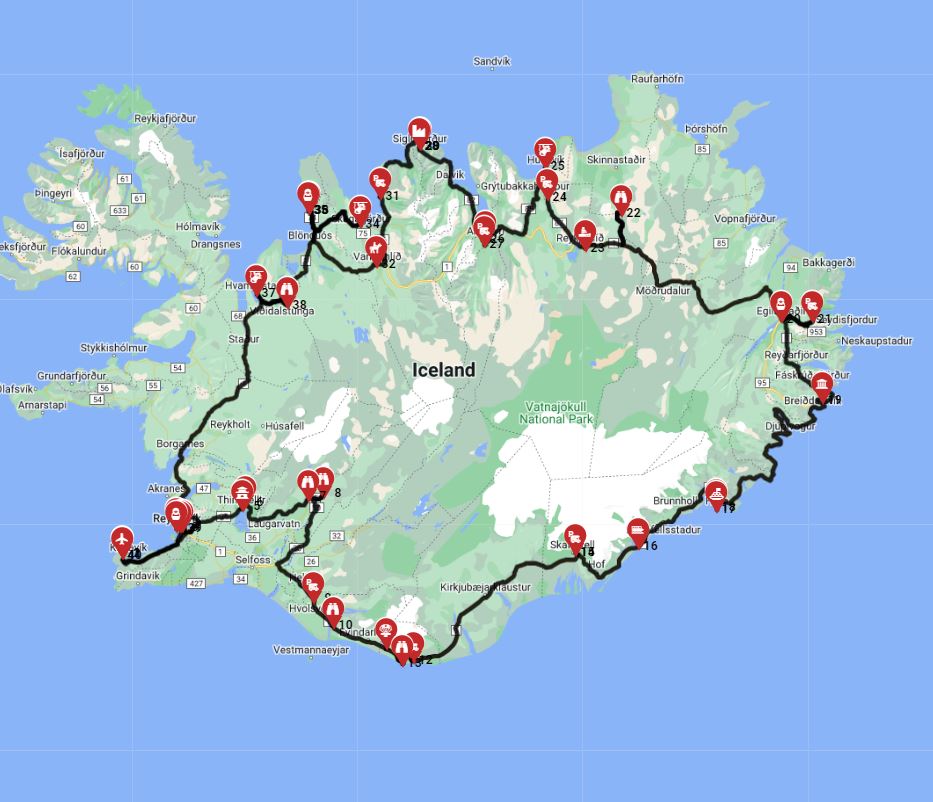
Iceland - Full ring road
Iceland Golden Circle - South West
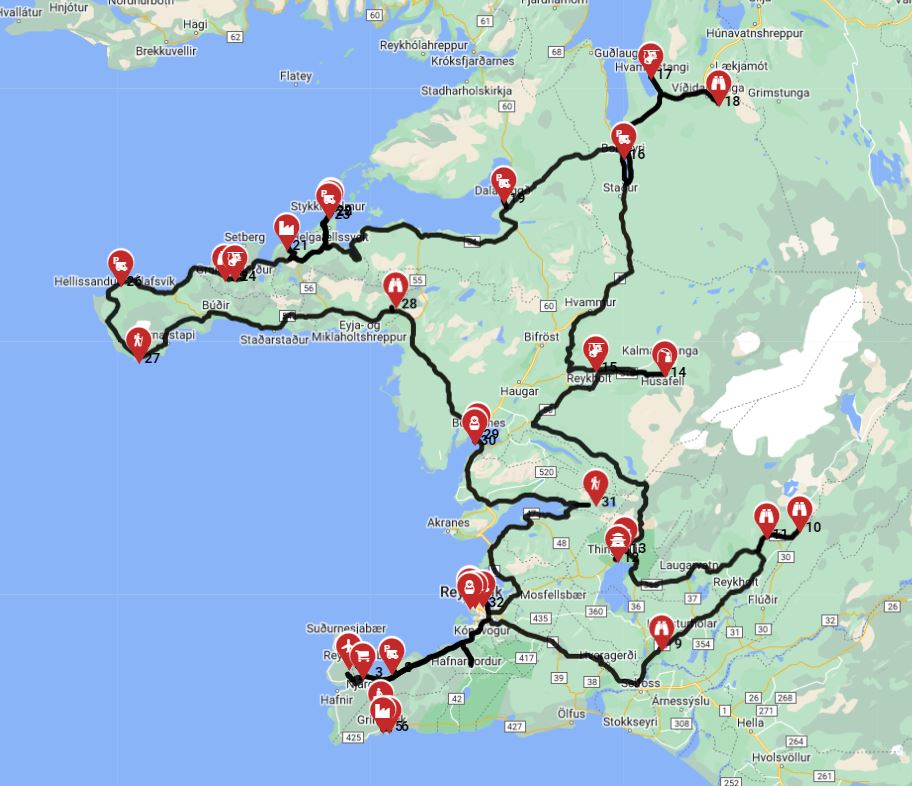
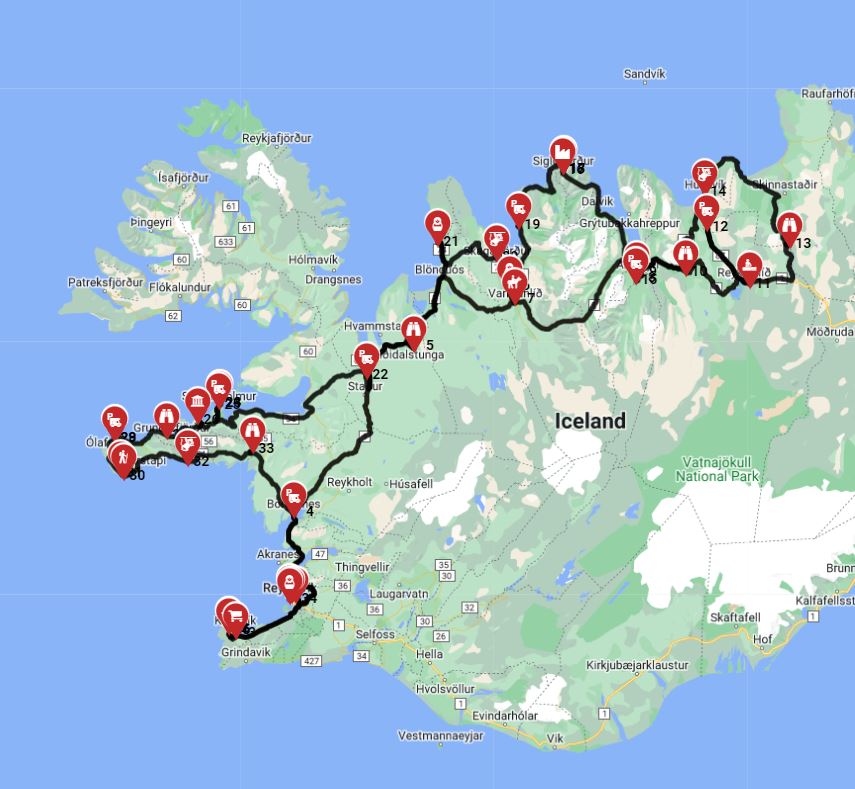
Iceland - North West
Must-See Stops Along the Way (Avi Bandana Picks)
Avi Bandana's top picks for a family RV trip in Iceland, drawing from the "
Iceland - Full ring road
Iceland - Full ring road
Daily Driving Distances & Drive Times in Iceland
Avi Bandana recommends a maximum of 100-150 km (60-90 miles) per day on average when RVing in Iceland to allow ample time for exploration, unexpected stops, and adapting to rapidly changing weather conditions. Sticking to this pace ensures families can truly enjoy the journey without feeling rushed, prioritizing safety and scenic appreciation over covering vast distances quickly. It's about soaking in the unique atmosphere and creating memories, not just ticking off locations. Drive slowly and carefully, and you can drive almost anywhere without issues. No need to stress - just use common sense and pay attention. Example drive times in Iceland include: * **Reykjavik to Vik:** Approximately 187 km (116 miles), typically 2.5-3 hours of driving. * **Vik to Jökulsárlón Glacier Lagoon:** Approximately 193 km (120 miles), requiring about 2.5-3 hours of driving. * **Akureyri to Lake Mývatn:** A shorter stretch of approximately 90 km (56 miles), taking around 1 hour of driving. Remember, these are just driving times; add generous buffers for scenic viewpoints, meal breaks, and spontaneous adventures. An RV rental offers the ultimate flexibility to embrace slow travel, allowing your family to truly connect with Iceland's magic.Best RV Class for This Itinerary - Couple & Family Picks
Choosing the right RV for your Iceland adventure is crucial, balancing comfort, maneuverability, and family needs. Bandana makes this easy, and our "Rent&Plan" service can provide expert-curated itineraries perfectly matched to your chosen RV. A standard car driver's license is sufficient for ALL motorhome classes (Class A, Class B, and Class C) available for rental. There are no special licenses, CDLs, or additional permits required. The minimum rental age for motorhomes in Iceland is 21, and there are no young driver surcharges or vehicle class restrictions based on age. *🎬 Video coming soon
What are the essential safety tips and emergency preparedness steps for RV travel in Iceland?
Navigating Iceland in an RV requires specific safety precautions due to its unique and often unpredictable environment, so always check road.is for real-time conditions before departing each day. Be sure to download the 112 Iceland app, which allows you to send an emergency text message with your GPS location to the Icelandic emergency services if cellular service is limited. * **Weather Preparedness:** Iceland's weather changes rapidly; be prepared for extreme winds, sudden rain or snow, and fog by carrying layers, checking forecasts frequently, and being ready to pull over safely if visibility or wind becomes too dangerous. Always hold your RV or campervan doors firmly with both hands, as strong gusts can easily rip them off their hinges, incurring costly, often uninsured, damage. * **Driving Hazards:** Understand that F-roads (mountain roads) often require 4x4 vehicles and may involve unbridged river crossings, which can be hazardous; never attempt these in a 2WD RV, and always assess water depth and current carefully before crossing. For other roads, drive slowly and carefully, and you can drive almost anywhere without issues. No need to stress - just use common sense and pay attention. * **Emergency Protocols:** In case of a breakdown or medical emergency, Iceland's emergency number is 112; ensure your phone is charged, carry a power bank, and consider renting a satellite phone for remote areas where cell service is unreliable. Remember that Bandana offers supportive service before, during, and after your booking, including coordination if issues arise with your rental vehicle. * **Volcanic Ash & Road Closures:** Stay informed about potential volcanic activity; ash can reduce visibility and damage engines, so follow local alerts and road closure directives, which are often communicated via public service announcements and roadside signs. * **Getting Stuck:** Carry basic recovery gear like a shovel and traction mats, especially when venturing off paved roads (where permitted); inform someone of your route and expected return time when exploring remote areas.How to manage day-to-day RV living practicalities in Iceland (water, waste, laundry, groceries)?
Efficiently managing daily RV practicalities in Iceland enhances your family's comfort and ensures a smooth journey; planning for water, waste, and supplies is key. Iceland's tap water is among the purest in the world, making refilling tanks easy and safe. * **Water Refill Stations:** Most official campgrounds throughout Iceland provide fresh water refill points; it's advisable to top up your tank whenever available, especially before heading into less populated regions. Many gas stations also offer water services for a small fee. * **Waste Disposal (Gray/Black Water):** Designated dumping stations for gray and black water are primarily found at official campgrounds and some gas stations. Remember that proper disposal is critical for Iceland's fragile environment; never dispose of waste in natural areas, as it's illegal and harmful. * **Laundry Facilities:** Many larger campgrounds, particularly those in popular towns like Vik, Akureyri, and Reykjavik, offer coin-operated laundry facilities, which are essential for longer family trips. Planning a laundry day every 4-5 days can keep your packing lighter. * **Grocery Shopping Guides:** Stock up on groceries in larger towns like Reykjavik, Selfoss, Akureyri, and Egilsstaðir, where major supermarkets (Bónus, Krónan, Nettó) offer better selection and prices. Smaller towns will have limited options and higher costs. Cooking meals in your rented motorhome is a great way to manage your budget and enjoy family time; don't forget to check our RV-friendly recipes playlist for meal ideas on the road! * **Internet Access:** While Wi-Fi is common at campgrounds and cafes, consider purchasing a local SIM card (from providers like Siminn or Vodafone) for reliable mobile data, especially when using navigation or looking up information on the go. Many RV rentals offer portable Wi-Fi as an add-on.What are common myths and misconceptions about RVing in Iceland, especially regarding wild camping and 4x4 needs?
Dispelling common myths about RVing in Iceland is crucial for a responsible and enjoyable family trip, particularly concerning 'wild camping' and vehicle requirements. Our team of true RV specialists, not just a side department of a travel agency, understands these nuances. * **Wild Camping is Illegal (for RVs):** The widespread myth of 'wild camping' for RVs in Iceland is largely false. Since 2015, it is generally illegal to camp overnight outside of designated campgrounds, private land with explicit, written permission, or specifically marked areas. Failing to comply can result in hefty fines, emphasizing the importance of staying at one of Iceland's 170+ official campsites. * **4x4 for the Ring Road Myth:** It's a misconception that a 4x4 RV is required for the entire Ring Road; the main Route 1 is paved and perfectly accessible with a standard 2WD campervan or motorhome. For example, a vehicle like the MH4-5 - SIF (sleeping 4, 2.3 Liter Diesel engine) is ideal for the Ring Road. * **F-Roads Require 4x4:** Conversely, accessing F-roads (mountain roads) absolutely requires a 4x4 vehicle, often with higher clearance, and these are typically prohibited for standard RVs due to insurance restrictions and dangerous terrain. Attempting F-roads in a non-4x4 rented motorhome can void your insurance and lead to significant out-of-pocket expenses. * **Insurance Nuances:** Be aware that standard rental insurance might not cover damage incurred off-road, including F-roads or river crossings, or specific Icelandic hazards like ash or gravel damage. Always read your rental agreement carefully for exclusions. Remember that while Bandana offers top-level deductible reimbursement as an optional upgrade for peace of mind, specific exclusions may still apply for reckless driving or off-roading.How can I practice responsible and sustainable RV travel in Iceland?
Practicing responsible and sustainable RV travel is paramount in Iceland's fragile environment, ensuring its pristine beauty remains for future generations. This is a land of delicate ecosystems that need our respect and protection. * **Leave No Trace:** Adhere strictly to 'Leave No Trace' principles by taking all your trash with you, including organic waste, and properly disposing of it in designated bins at campgrounds or waste facilities. Never leave anything behind, even organic matter, as it can disrupt local flora and fauna. * **Respect Local Nature & Communities:** Stay on marked paths and roads to avoid damaging delicate moss and vegetation, which can take decades to recover. Be mindful of noise levels in quiet areas and campgrounds, especially after dark, to respect local residents and other travelers. * **Avoid Sensitive Areas:** Do not drive off-road (it's illegal and destructive) or park in areas marked as protected or sensitive ecosystems. Follow all signage regarding access restrictions, particularly around geothermal sites, bird nesting areas, or private lands. * **Eco-Friendly Practices:** Conserve water and electricity in your rented RV; fresh water tanks are typically 80-150 liters, and waste water tanks are similar, requiring conscious usage. Use environmentally friendly cleaning products for dishes and personal hygiene to minimize chemical impact, and support local businesses that demonstrate sustainable practices by purchasing local goods and services. * **Driving Habits:** Drive efficiently and at recommended speeds (max 100-150 km/day on average). This not only saves fuel but also reduces your carbon footprint and allows for a more relaxed pace to appreciate the scenery. When considering total trip costs including fuel, remember that RV PLANET routes allow you to itemize and track every expense for easy budgeting.How to choose the right RV for a family trip to Iceland?
Selecting the perfect RV for your family's Iceland adventure involves considering itinerary, comfort needs, budget, and desired activities, as Bandana's diverse fleet typically offers a range of options from over 50 leading RV suppliers worldwide. Our full transparency means no hidden fees, no surprises, just clear pricing. * **Itinerary & Road Access:** For a Ring Road trip with minimal F-road detours, a 2WD Class C Alcove motorhome (Bandana's global fleet average sleeps 5.8 people, ideal for 4-5 adults, with an average length of 7.5 meters) or a Class SI Semi-integrated model (global fleet average sleeps 3.8 people, ideal for 3-4 adults) is sufficient, offering comfort and space. Vehicles like `MH4-5 - HEL` (sleeping 5, 2.3 litre, 130 hp engine) are perfect for this. If F-road access is essential for your activities (e.g., highland hiking), you'll need a specifically equipped 4x4 campervan. These are less common, come with strict usage guidelines, and typically higher costs, so confirm availability and restrictions with your rental provider. For example, a `4x4 Camper B - THOR` (sleeping 3, 40 Liter fresh water tank) is designed for tougher terrain. * **Comfort Level & Amenities:** Families traveling with younger children or during colder seasons may prefer larger RVs like a Class C Alcove for more interior space, a separate dining area, and better heating systems. Models like the `MHC24` (sleeping 6, 160 Liter fresh water tank) offer ample space and amenities. Consider features like a refrigerator (e.g., the `C-30` has a 150 Liter one), stove, and toilet for maximum convenience. * **Budget Considerations:** Smaller campervans (Class B, global fleet average sleeps 3.2 people, ideal for 2-3 adults, around 5.8 meters long) are generally more fuel-efficient and less expensive to rent, suiting budget-conscious families or those preferring a more compact vehicle. The `MH2 - IDUNN` (sleeping 2, 120 Liter fresh water tank) is a great compact option. * **Cargo & Storage:** Evaluate the load capacity; families with luggage, outdoor gear, and provisions will benefit from RVs with higher average load capacity, such as Bandana's Class A Integrated (average 209.5 kg) or Class SI (average 72.2 kg). Always ensure your chosen camper has enough space for everyone's belongings comfortably.How to find unique local experiences and integrate with Icelandic culture while RVing?
Engaging authentically with Icelandic culture from an RV enhances your family's trip beyond typical tourist spots; seek out opportunities to connect with local life. The flexibility of a rented RV allows you to stray from the beaten path and discover hidden gems. * **Local Festivals & Events:** Research local festivals (e.g., local town celebrations, music festivals) happening during your visit; these are often vibrant community events accessible by RV, offering a glimpse into Icelandic traditions and contemporary culture. Websites like visiticeland.com often list events. * **Unique Hot Springs:** Beyond the major lagoons, many smaller, often free, natural hot springs are accessible by RV, providing a more intimate and local bathing experience (e.g., Landbrotalaug, Guðrúnarlaug in the Westfjords). These offer a genuine taste of Icelandic geothermal culture. Remember the local custom of nude pre-showering at public facilities, a crucial part of Icelandic hygiene. * **Off-the-Beaten-Path Eateries:** Utilize your RV's flexibility to visit small-town cafes, fish & chip stands by the harbor, or family-run restaurants away from the main tourist routes to taste authentic local cuisine and interact with residents. Freshly caught fish in a coastal village is an experience you won't forget. * **Interact Respectfully:** Be open to conversations with locals at campgrounds, gas stations, or small shops; show genuine interest in their culture and land, and always ask permission before taking photos of people or private property. A simple "Halló" (hello) and a smile go a long way. * **Support Local Craft & Produce:** Visit local farmers' markets, craft shops, and small fishing villages to purchase handmade souvenirs, fresh produce, and unique local goods directly, contributing to the local economy. This is a wonderful way to bring home authentic memories.What are the unique challenges and rewards of RVing in Iceland during different seasons?
RVing in Iceland offers distinct experiences across seasons, each presenting unique challenges and unparalleled rewards that impact family travel planning. Understanding these seasonal nuances is key to a successful adventure. * **Summer (June-August):** This is the most popular time for a family rv rental in Iceland. **Rewards:** Enjoy long daylight hours (the famous midnight sun), the mildest weather with average temperatures of 10-13°C (50-55°F), full access to most roads (including F-roads for 4x4s), vibrant green landscapes, and prime puffin viewing season (late May to early August). **Challenges:** Peak tourist season means higher prices for everything from motorhome rentals to activities, crowded campgrounds that require booking ahead, and fewer last-minute availability options. Many national/state parks reserve only 25-30% of spots; the rest are first-come-first-serve. You'll find a spot. If not at the first campground, then the next one. Call ahead before driving. * **Shoulder Seasons (April-May & September-October):** These months offer a balance. **Rewards:** Fewer crowds, generally lower prices (for example, a `Luxury Small` motorhome with a 100 Liter fresh water tank could be more affordable), beautiful autumnal colors or spring blossoms, and excellent chances of seeing the magical Northern Lights (especially September/October). **Challenges:** Variable weather can be cold and wet, some F-roads may still be closed, daylight hours are shorter, and some smaller campground services might be limited. * **Winter (November-March):** For the truly adventurous. **Rewards:** The spectacular Northern Lights often dominate the dark skies, dramatic snow-covered landscapes create a serene beauty, fewer tourists mean more solitude, and lower prices for RV rentals. **Challenges:** Many roads (especially F-roads) are closed, harsh weather is common (storms, icy roads, high winds), daylight is very limited, and specific winter tires/gear are essential. Higher demand for RVs with robust heating is expected. Fewer campgrounds are open, so planning is critical. For example, our "Winter RV Driving in Iceland - Safety Guide 2026" provides essential advice for this season. * **Heating Needs:** Regardless of the season outside of peak summer, ensure your RV rental has a robust heating system, and plan for extra fuel consumption for heating, especially when planning cooking activities with the family. * **Northern Lights Viewing Strategy:** During darker months, plan your itinerary to include nights away from city lights, and use aurora forecast apps for the best chances. RVs provide the flexibility to chase clear skies and find optimal viewing spots. Each season offers a unique way to experience Iceland, and with proper preparation, any time of year can be an unforgettable family adventure.What You Shouldn't Miss
- **The Golden Circle's Geothermal Wonders:** Witness the powerful eruption of Strokkur geyser at Geysir, the majestic Gullfoss waterfall, and the historical significance of Thingvellir National Park.
- **The South Coast's Black Sand Beaches:** Explore the dramatic Reynisfjara black sand beach near Vik, with its unique basalt columns and powerful waves, always keeping a safe distance from the ocean.
- **Glacier Lagoon Boat Tours:** Take a boat tour among the floating icebergs of Jökulsárlón Glacier Lagoon, a truly surreal experience that will captivate both adults and children.
- **Whale Watching in Husavik:** Head to Husavik, often called the whale-watching capital of Iceland, for an unforgettable encounter with these magnificent marine creatures.
- **Relaxing in Geothermal Baths:** Unwind at the Mývatn Nature Baths, a serene alternative to the more crowded Blue Lagoon, offering stunning views of the northern landscapes.
- **Hiking to Svartifoss:** Embark on a family-friendly hike in Skaftafell Nature Reserve to discover Svartifoss, a unique waterfall framed by dark basalt columns, resembling a pipe organ.
Final Thoughts
An RV family adventure in Iceland offers an unparalleled opportunity to connect with nature, create lasting memories, and experience the freedom of the open road. From the geysers of the Golden Circle to the glaciers of the South Coast, each day promises new discoveries and breathtaking scenery. Remember, it's about the journey as much as the destination. With Bandana, you're choosing a partner committed to full transparency, reliable support, and expert guidance. Our goal is to make your family's motorhome rental in Iceland as smooth and enjoyable as possible, allowing you to focus on the magic of the moment. We encourage you to travel slowly, savoring each stop and immersing yourselves in the unique Icelandic culture. Imagine waking up to a new, stunning view every day, sharing meals in your cozy rented camper, and simply enjoying the flexibility to explore at your family's pace. Get inspired for your next trip and discover top destinations, planning tips, all in one place! Your unforgettable family RV journey through Iceland awaits.On the routes offered through RV PLANET routes, you can itemize and track every expense along the way for easy budgeting.