In This Guide
- Best Austria RV Itinerary for family rv rental — Overview
- 7-Day Classic Route in Austria
- 14-Day Extended Journey in Austria
- Recommended RVPlan Trip for Austria
- Daily Driving Distances & Drive Times in Austria
- Best RV Class for This Itinerary — Couple & Family Picks
- How much does an RV rental cost in Austria?
- What is the best way to travel around Austria?
- Is it easy to drive an RV in Austria?
- Can you wild camp in Austria with an RV?
- What is the best month to RV in Austria?
- Is Austria a good country for RV travel?
- Do you need a special license to drive an RV in Austria?
- How long does it take to drive through Austria?
- Where is the best place to rent an RV in Austria?
- What is the cheapest time to rent an RV in Austria?
- What is the minimum age to rent an RV in Austria?
Best Austria RV Itinerary for family rv rental — Overview
Exploring Austria by RV offers an unparalleled journey through its majestic Alpine landscapes, historic cities, and crystal-clear lakes, providing a flexible and engaging travel experience for families. A recommended duration for a comprehensive exploration is a minimum of 7 days, ideally extending to 14 days to fully appreciate the diverse regions. For those embarking on a 14-day loop, anticipate covering approximately 1200-1500 km, a distance perfectly manageable with a leisurely pace. The prime season for family RV adventures in Austria spans from late spring (May-June) through early autumn (September), offering pleasant weather for outdoor activities and ensuring most scenic routes and attractions are accessible. This period also provides the best balance of daylight hours and manageable crowds.
7-Day Classic Route in Austria
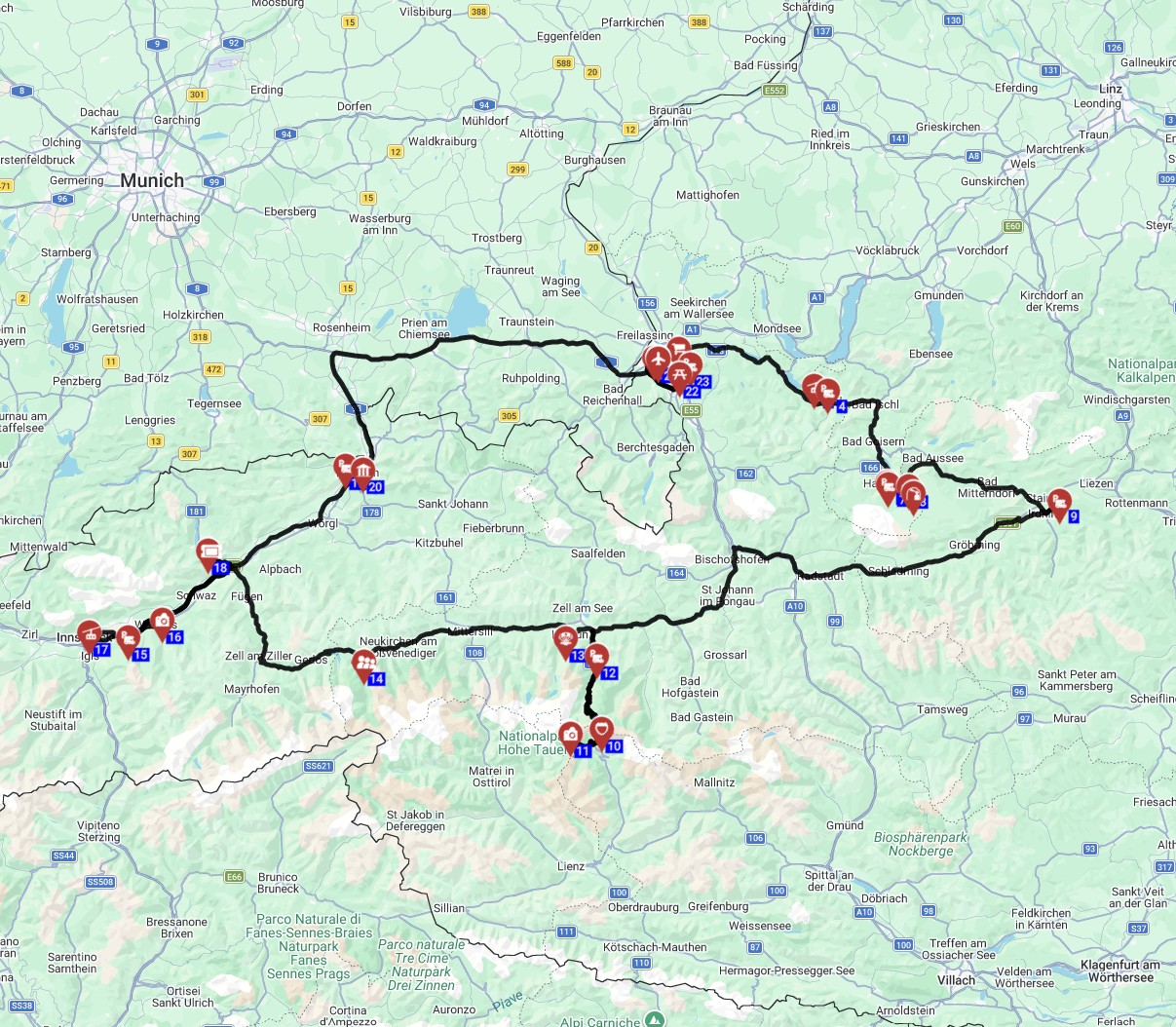
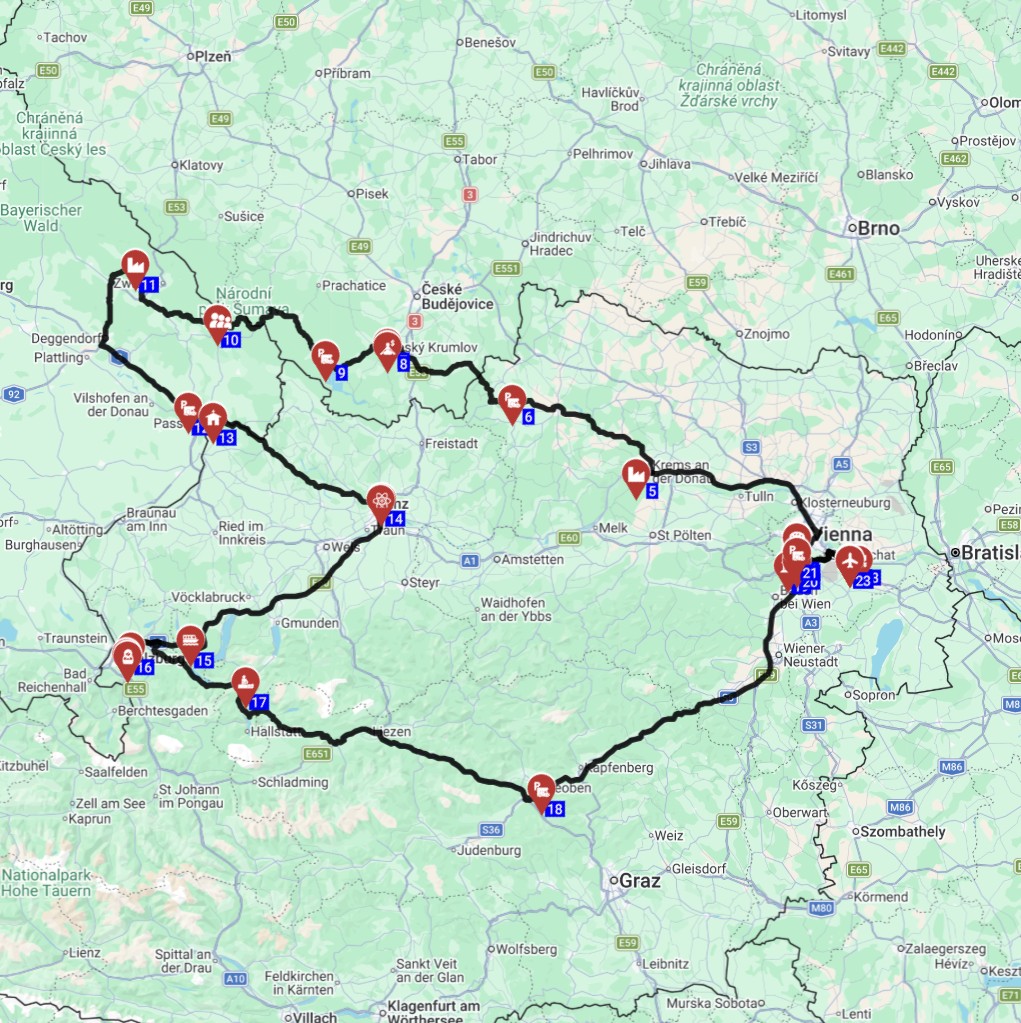
A 7-day classic RV itinerary in Austria is perfectly tailored to explore the heart of the Salzkammergut region and its charming surroundings, offering a delightful mix of natural beauty and cultural immersion for families. This route prioritizes scenic drives and iconic stops, keeping daily distances manageable for a relaxed pace. Start your adventure in Salzburg, then drive approximately 40 km to the picturesque Lake Wolfgangsee, with options to stay at Camping Berau am Wolfgangsee.
Day 2 involves a short 60 km drive to the UNESCO World Heritage village of Hallstatt, a truly magical stop, and overnight at Camping Gams Hallstatt. Continue your journey on Day 3 for about 80 km to Ramsau am Dachstein, an area rich with hiking trails and adventure for children, with Camping Zirngast as your base. Day 4 takes you approximately 70 km towards Liezen and the Gesäuse National Park, featuring sights like Admont Abbey, with Camping Hartl as a convenient option. On Day 5, a 100 km drive brings you to Steyr, a city boasting a beautifully preserved historic old town; consider Campingplatz Steyr for your overnight stay.
Day 6 is a shorter drive of about 40 km to Linz, where you can explore the city and its unique Pöstlingbergbahn, followed by a 20 km stretch along the Danube cycling path; Camping Linz is a suitable option. Finally, Day 7 completes the loop with a 130 km drive back to Salzburg, allowing time for any missed city sights before concluding your journey, perhaps with an extra night at Camping Nord-Sam if you choose to extend your stay.
14-Day Extended Journey in Austria
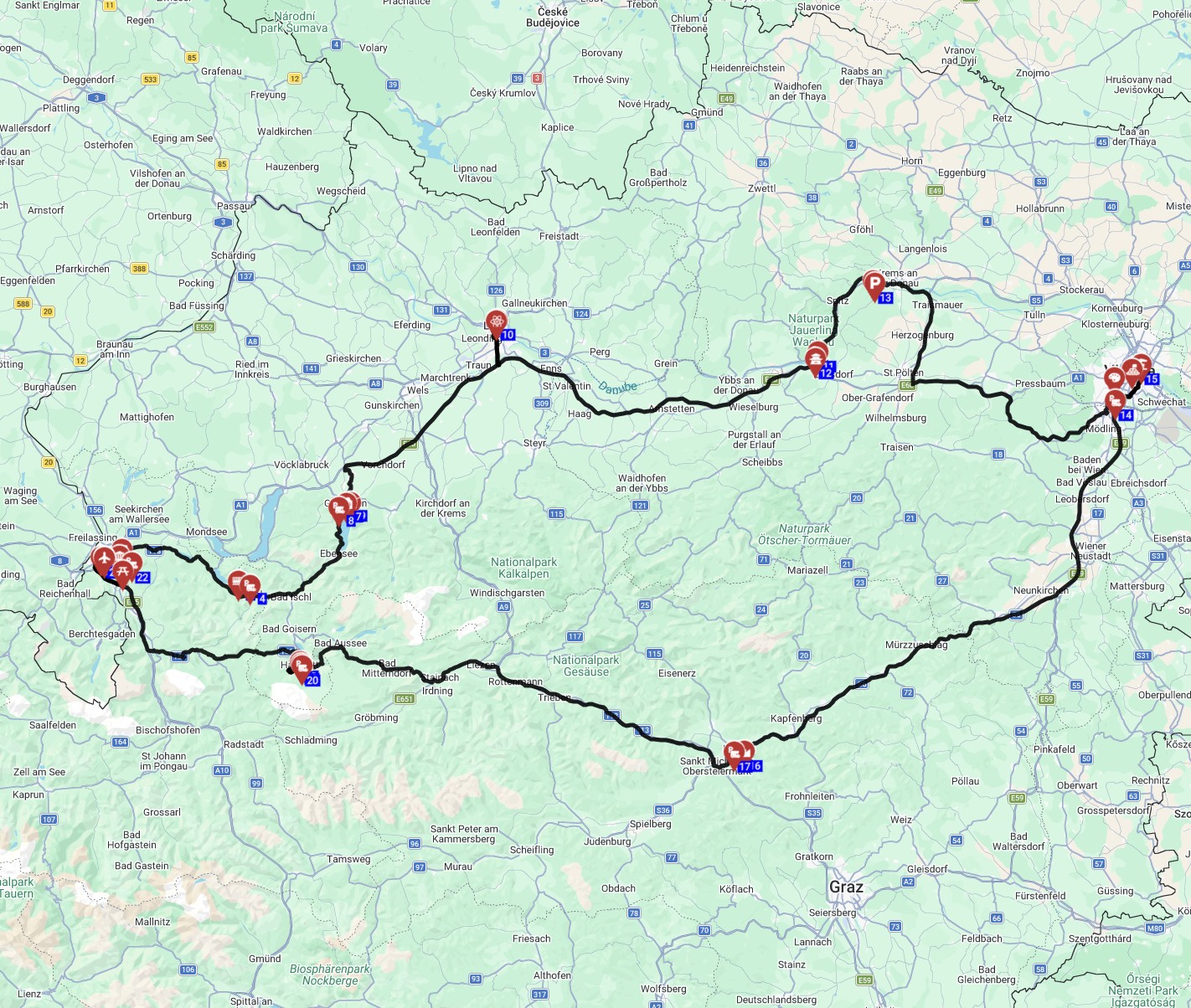
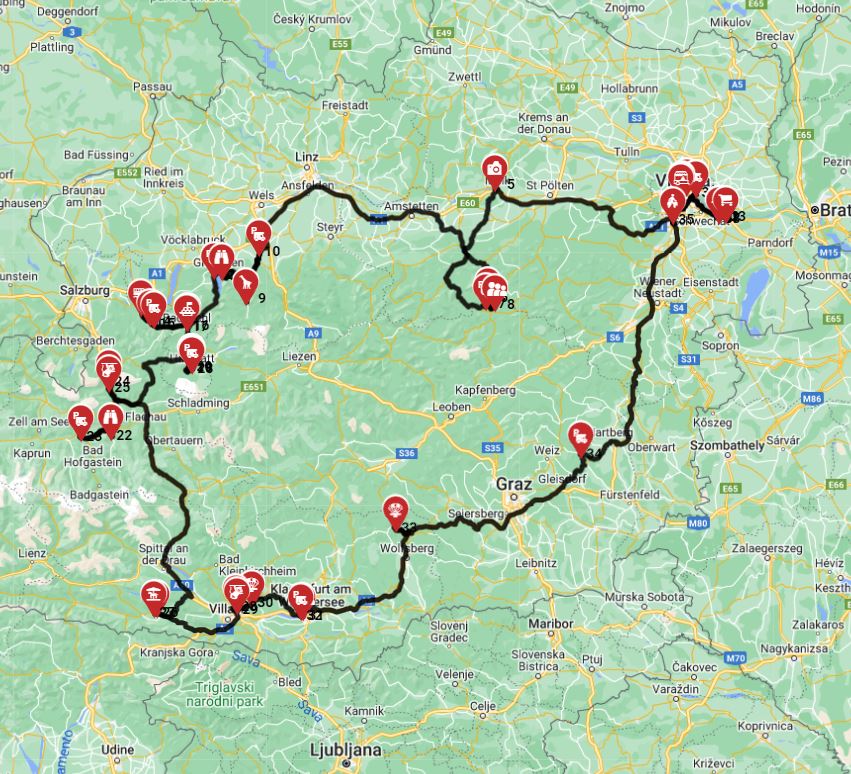
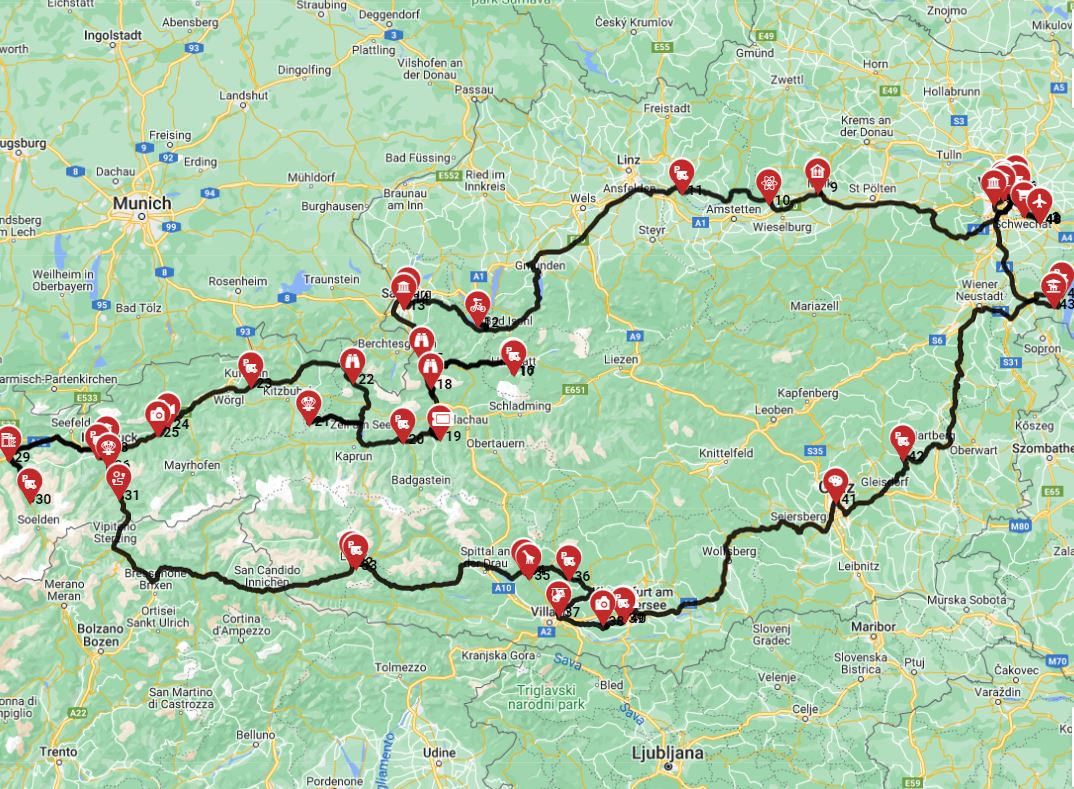
For a more immersive experience, this 14-day Austrian RV itinerary expands upon the classic route, incorporating vibrant cities and wine regions for a comprehensive family adventure. Week 1 focuses on the Salzkammergut and Styria, starting with Salzburg and Lake Wolfgangsee (Days 1-2), followed by Hallstatt and the Dachstein region (Days 3-4), with stays at places like Camping Berau am Wolfgangsee and Camping Gams Hallstatt.
Days 5-7 will take you through Gesäuse National Park (Camping Hartl) and onto Graz, the capital of Styria, renowned for its culinary scene and charming old town, with opportunities to explore the Southern Styrian Wine Road; consider Camping Graz-West or Camping Leibnitz. Week 2 ventures into Eastern and Central Austria, starting with Eisenstadt and the Neusiedler Lake (Day 8), famous for birdwatching, with accommodation at Strandcamping Podersdorf. Vienna awaits on Days 9-10, where you'll park your RV at a city campsite like Camping Wien West and explore the capital using public transport, immersing yourselves in its imperial history.
Days 11-12 lead you through the stunning Wachau Valley, perhaps visiting Melk Abbey and Dürnstein Castle, with Camping Melk or Camping Linz as options, enjoying scenic Danube routes. The final days (13-14) involve exploring historic Steyr and Schlierbach Monastery (Campingplatz Steyr), before a final scenic drive towards Lake Mondsee and back to Salzburg, concluding your memorable Austrian RV exploration.
Recommended RVPlan Trip for Austria
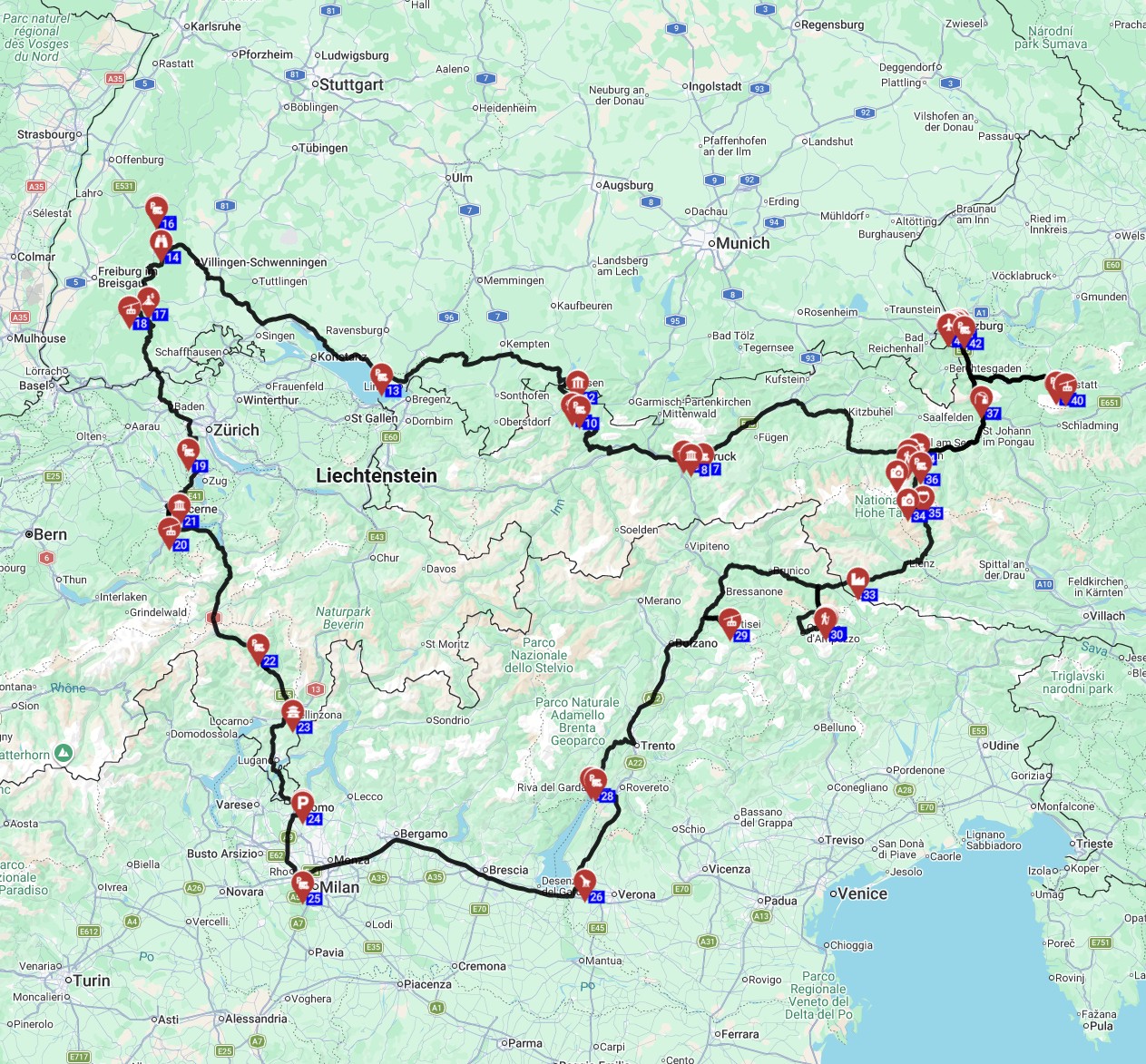
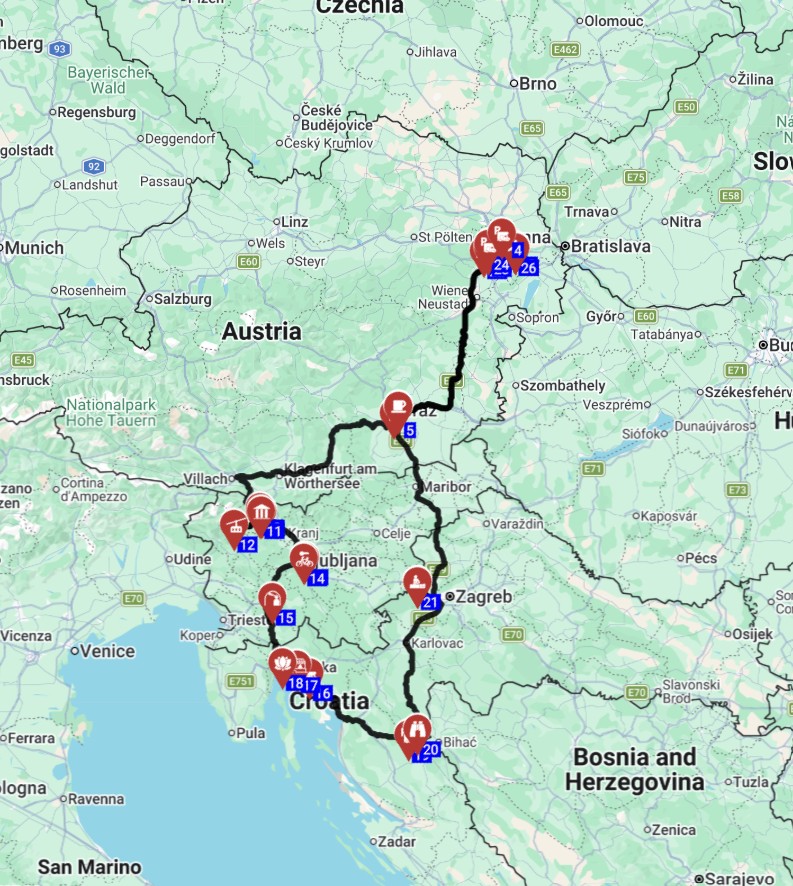
For those looking to seamlessly combine their RV rental with a well-crafted itinerary, RVPlan offers an excellent solution. Consider the "Zurich Roundtrip - South - Austria Tirol, Italy, Switzerland" trip, a comprehensive 22-day journey covering approximately 1866 km. This family-friendly itinerary, starting and ending in Zurich, is designed to provide a diverse and memorable experience, taking you through the Austrian Tirol and into parts of Italy and Switzerland.
Must-See Stops Along the Way (Avi Bandana Picks)
Avi Bandana's personal recommendations for an authentic Austrian RV experience emphasize cultural immersion and local flavor, often highlighted in curated itineraries. When exploring Austria, focus on seeking out charming historical towns and significant landmarks like the UNESCO World Heritage village of Hallstatt or Schönbrunn Palace in Vienna to delve into Austria's rich past. Savoring authentic Austrian cuisine is a must; look for local Gasthäuser (inns) and restaurants offering regional specialties like Wiener Schnitzel or Styrian pumpkin seed oil dishes.
Exploring bustling local markets provides a glimpse into daily Austrian life, where you can find handmade crafts and regional delicacies. For unique insights into Austrian craftsmanship, consider visiting local industries, which could range from cheese dairies in the Alps to vineyard visits in the Wachau Valley, adding a unique dimension to your travels.
Daily Driving Distances & Drive Times in Austria
Avi Bandana's advice for RV travel in Austria emphasizes enjoying the journey: aim for an average of no more than 100 miles (150 km) per day. This approach to slow travel allows ample time for spontaneous stops, exploring charming villages, and fully appreciating the scenic beauty without the stress of rushing.
For example, a drive from Salzburg to Hallstatt typically takes about 1.5 to 2 hours (approximately 70 km), a very manageable distance. Similarly, traveling from Innsbruck to Zell am See is about 2 to 2.5 hours (around 130 km), and the route from Graz to Lake Wörthersee near Klagenfurt is roughly 1.5 to 2 hours (approximately 140 km). These drive times illustrate how sticking to a relaxed daily mileage can make RVing in Austria a truly enjoyable experience.
Best RV Class for This Itinerary — Couple & Family Picks
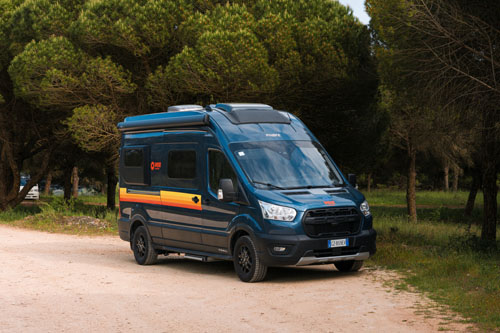
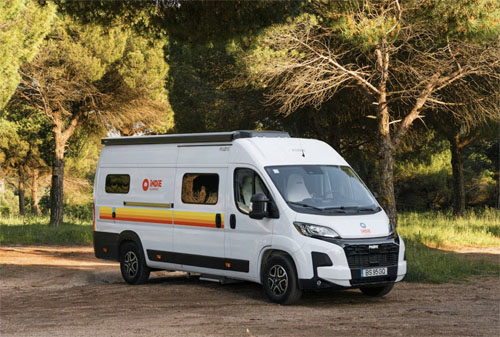
Selecting the right RV class is crucial for enhancing your family's experience in Austria, ensuring a balance between comfort and ease of driving on varied terrains. For couples, a **Class B - Camper Van** is an excellent choice. With Bandana's global fleet averaging 5.8m in length and sleeping around 3.2 people, these are agile, easy to navigate through narrow mountain roads and quaint villages, and offer fuel efficiency of about 8-10 Liters/100 Km.
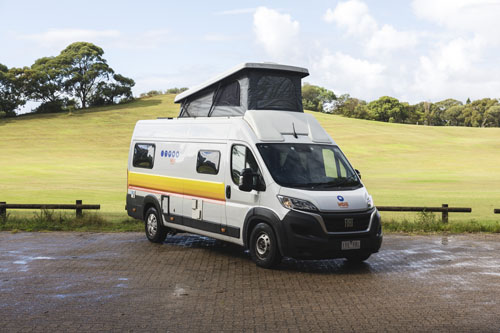
For families, a **Class C - Alcove** motorhome provides essential space and dedicated sleeping areas, perfect for those traveling with children. These RVs, averaging 7.5m in length and sleeping up to 5.8 people, typically accommodate 4.4 adults comfortably. They offer ample storage, with average load capacities around 42.4 kg, and fuel consumption is generally around 10-12 Liters/100 Km, ensuring comfort without sacrificing too much maneuverability. To further simplify your planning, consider Bandana's 'Rent & Plan' service, which pairs your RV rental with expert-designed itineraries, accessible through trip-planning software to eliminate the planning headache.
How much does an RV rental cost in Austria?
The cost of an RV rental in Austria typically ranges from €80 to €200 per day. This price is highly dependent on the RV class, the season of travel, the rental duration, and the amenities included. Peak summer months (July-August) are the most expensive, while the off-season (November-March) typically offers the best deals.
Beyond the rental fee, a realistic budget for an Austrian RV trip should account for several key expenses to avoid surprises. Fuel costs are significant; based on Bandana's global fleet averages, RVs consume 10-12 Liters/100 km. With current fuel prices, this can add a substantial amount to your budget, especially on longer routes like the 1200-1500 km of a 14-day itinerary. Don't forget the mandatory digital 'vignette' for motorways, with prices varying by duration, plus potential separate fees for scenic toll roads like the Grossglockner High Alpine Road. Campsite fees can range from €25-€60 per night for a family pitch, depending on location and amenities. Budget also for groceries if you plan to cook in your RV, and for entrance fees to attractions, museums, or adventure parks, which can add up for a family. For ideas you can prep on the road, watch our RV-friendly recipes playlist on YouTube. On the routes offered through RV PLANET routes, you can itemize and track every expense along the way for easy budgeting.
What is the best way to travel around Austria?
For families seeking flexibility, scenic exploration, and a comfortable journey through Austria, an RV rental stands out as a superior travel method, blending convenience with immersion. An RV offers unparalleled freedom to adjust your itinerary spontaneously, allowing for visits to picturesque viewpoints, hidden villages, and remote hiking trails. The advantage of having your 'home on wheels'—complete with a kitchen, bathroom, and comfortable sleeping arrangements—eliminates the constant need to pack and unpack, making family travel significantly easier.
While a car and hotel combination allows for quick city-hopping and traditional hotel amenities, it lacks the immersive nature experience of an RV and can be more costly with dining out and accommodation expenses. Public transport is an eco-friendly option for connecting major cities, but it severely limits access to off-the-beaten-path destinations and imposes strict schedules, which can be restrictive for families with young children or extensive gear. Ultimately, an RV rental combines the benefits of personal transport with integrated accommodation, making it the ideal choice for families wanting to discover Austria's diverse landscapes at their own pace.
Is it easy to drive an RV in Austria?
Driving an RV in Austria is generally manageable due to its well-maintained roads, though drivers should be aware of specific challenges like narrower mountain routes and potential city parking difficulties. Austria's road infrastructure is excellent, with highways and federal roads in very good condition, ensuring smooth long-distance travel.
Navigating mountainous regions, such as the Grossglockner High Alpine Road, requires careful driving. RVs should utilize lower gears on steep inclines and descents, and drivers should be comfortable with switchbacks and managing traffic on popular routes. Parking in major cities like Vienna, Salzburg, and Innsbruck can be challenging for larger RVs. It's often recommended to park at designated RV-friendly campsites or park-and-ride facilities on the outskirts and explore city centers using public transport. Always pay attention to signage, as some historic town centers or very narrow village roads might have height, width, or weight restrictions.
Can you wild camp in Austria with an RV?
Wild camping, or free camping, is generally prohibited outside designated campgrounds in Austria, with regulations varying slightly by federal state. However, 'parking to restore driving ability' is often tolerated overnight in non-prohibited areas, provided no 'camping-like behavior' occurs—this means no setting up awnings, tables, or chairs outside the vehicle, and leaving no trace.
For legal and convenient overnight stays, utilize 'Stellplätze' (dedicated RV parking spots, often with basic services) or traditional campsites. These offer secure locations with necessary amenities. Always respect private property and look for signs indicating parking restrictions, such as 'Camping verboten' (Camping forbidden), as enforcement is strict, especially in popular tourist areas, national parks, and nature reserves. Fines for illegal wild camping can be substantial.
What is the best month to RV in Austria?
The optimal months for RV travel in Austria are typically May through September, offering warm weather, accessible mountain roads, and a full range of open campsites and attractions for families. During peak season (July-August), you'll experience the warmest weather and longest daylight hours, perfect for outdoor activities like swimming in lakes and exploring the Alps. However, this is also the busiest and most expensive period, so advance booking for popular campsites and attractions is highly recommended.
The shoulder seasons—May to June and September—provide an excellent balance. May and June offer blooming landscapes, pleasant temperatures, and fewer crowds than mid-summer; mountain passes, including the Grossglockner, generally open by late May or early June. September brings crisp air, stunning autumn foliage, and still-warm days, with reduced tourist numbers and often more favorable prices. Winter RVing (October-April) is a different experience, focused on ski resorts and Christmas markets, with many campsites closed and driving requiring winter tires and possibly snow chains, alongside potential road closures in mountain areas.
Is Austria a good country for RV travel?
Austria is an excellent country for RV travel, highly regarded for its stunning Alpine scenery, well-developed infrastructure, numerous family-friendly campsites, and diverse cultural and outdoor experiences. The country's scenic beauty is exceptional, ranging from the majestic peaks of the Alps and the turquoise lakes of the Salzkammergut to the rolling vineyards of Styria and the historic Danube Valley, offering breathtaking landscapes at every turn that are perfectly suited for RV drives.
Austria's infrastructure supports RV travel with a superb road network, making navigation relatively straightforward. Campsites are generally of high quality, well-equipped, and family-oriented, often providing amenities like playgrounds and direct access to hiking or cycling trails. The country excels in offering activities for all ages, including adventure parks, cable cars to mountain peaks, historical castles, and interactive museums, ensuring something for everyone. Austria is also a very safe and clean country, contributing to a stress-free travel experience for families. Be mindful of challenging mountain roads for larger RVs and limited city parking, which might require parking outside urban centers and using public transport.
Do you need a special license to drive an RV in Austria?
For most recreational vehicles rented in Austria, a standard B driving license, valid for vehicles up to 3,500 kg Gross Vehicle Mass (GVM), is sufficient. This typically covers most family-sized camper vans (Class B) and many semi-integrated (Class SI) and alcove (Class C) motorhomes.
However, if the RV you plan to rent has a GVM exceeding 3,500 kg but not more than 7,500 kg, you will require a C1 category license. This is less common for standard family rentals but can apply to some larger, more luxurious integrated (Class A) motorhomes. Ensure your driving license remains valid for the entire rental period. For non-EU license holders, an International Driving Permit (IDP) alongside your national license is highly recommended and often legally required. Always confirm your specific license coverage with the rental company before booking to avoid any issues.
How long does it take to drive through Austria?
While a quick transit across Austria from west to east or north to south can be done in a single long day (approximately 6-8 hours on highways), to truly experience the country, Avi Bandana recommends a minimum of 7-14 days for a family RV trip. Rushing through Austria in an RV negates the purpose of the journey; the true beauty lies in the ability to linger, explore, and soak in the diverse landscapes and culture at a comfortable pace.
A 7-day itinerary, like the '7-Day Classic Route', allows for thorough exploration of a specific region, such as Salzkammergut and Upper Austria, adhering to the recommended maximum of 100 miles (150 km) per day. An extended 14-day journey, such as the '14-Day Extended Journey', provides ample time to delve into multiple regions, from the lakes of Salzkammergut to the history of Vienna and the vineyards of Styria, allowing for a deeper and more relaxed immersion into Austria.
Where is the best place to rent an RV in Austria?
The most convenient places to rent an RV in Austria are typically major cities with international airports, such as Vienna, Salzburg, and Innsbruck. These locations offer a wide selection of rental companies and RV types, making them popular starting points for journeys across Austria or even into neighboring countries.
Vienna, as the capital, provides the broadest range of rental options. Salzburg is ideal for those focusing on the stunning Salzkammergut region and the Alps, while Innsbruck is perfect for exploring the Austrian Alps extensively, offering direct access to mountain passes and scenic drives. When choosing a provider, look for companies with a diverse fleet of well-maintained vehicles, comprehensive insurance options, transparent pricing, and excellent customer service. Consider providers that offer trip planning assistance, such as Bandana's integrated route planning tools, to streamline your adventure.
What is the cheapest time to rent an RV in Austria?
The most affordable time to rent an RV in Austria is generally during the low season, which typically runs from November to April (excluding major holidays like Christmas and Easter), when demand is significantly lower, leading to reduced rental prices.
During the low season, rental prices can be up to 50% lower than in the peak summer months. While the weather is colder and some mountain passes may be closed, this period is ideal for winter sports enthusiasts or those seeking a quieter, more budget-friendly experience. The shoulder seasons (May-June and September-October) offer a good value compromise, with more favorable weather and moderate pricing compared to the high costs of peak season and the limitations of the low season. Regardless of the season, booking your RV rental several months in advance, especially for summer travel, can often secure better rates and guarantee the availability of your preferred RV class.
What is the minimum age to rent an RV in Austria?
The minimum age to rent an RV in Austria is generally 21 years old. However, some rental companies may require drivers to be 23 or even 25 years old, and often apply a young driver surcharge for those under 25.
It's crucial to check the specific terms and conditions of each rental provider, as age requirements and any associated fees can vary significantly. Most companies also stipulate that the driver must have held a valid driving license for a minimum period, typically one or two years, often without major endorsements. Always ensure you have your valid driving license (and an International Driving Permit, if applicable) readily available, along with any other required identification, upon vehicle pick-up.
What You Shouldn't Miss
- Drive the scenic Grossglockner High Alpine Road (toll applies) for breathtaking mountain vistas and access to hiking trails.
- Explore the charming, UNESCO-listed village of Hallstatt, with its iconic lakeside views and historic salt mine.
- Immerse yourself in the musical history of Salzburg, visiting Mozart's birthplace and enjoying the stunning Baroque architecture.
- Discover the cultural gems of Vienna, from Schönbrunn Palace to the historic city center, using public transport from your RV campsite.
- Experience the natural beauty and hiking opportunities in Gesäuse National Park, known for its dramatic landscapes and the impressive Admont Abbey.
- Savor local flavors at a traditional "Heuriger" in the Wachau Valley, perhaps enjoying local wine and regional specialties.
Final Thoughts
Embarking on an RV adventure in Austria promises an unforgettable journey, blending the freedom of the open road with the charm of its diverse landscapes and rich culture. By planning a route that suits your family's pace and interests, you can create lasting memories exploring everything from alpine peaks to historic city centers.
Remember that Bandana Caravan is here to support you every step of the way, offering transparent pricing and expert advice to ensure your Austrian RV rental is as smooth and enjoyable as possible. We encourage you to travel slowly, savor the moments, and truly connect with the heart of Austria. Get inspired for your next trip and discover the ease of planning with our comprehensive resources.