
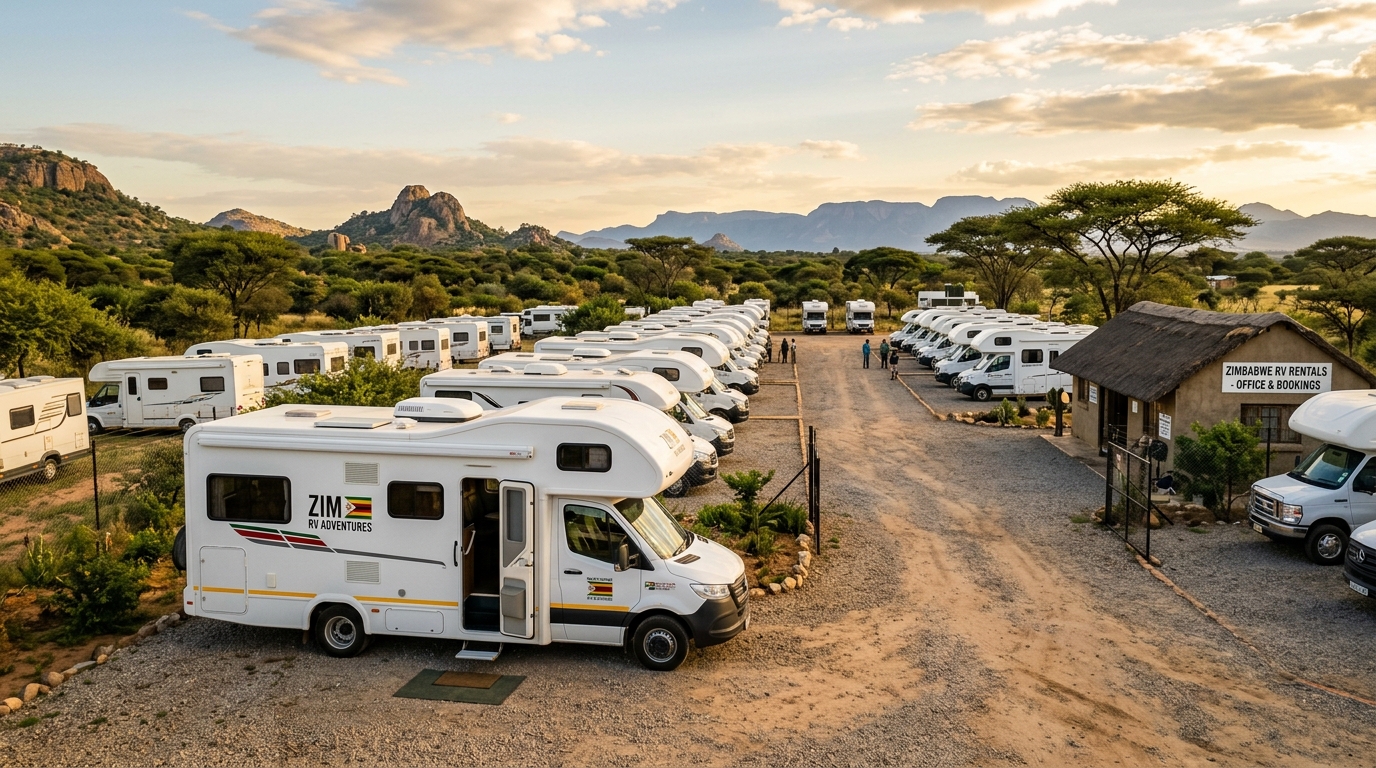
For live availability and current prices, start with our RV Rental Zimbabwe - Complete Guide 2026 guide.
In This Guide
- Can You Drive an RV in Zimbabwe? License & Age Rules
- Road Conditions & Terrain in Zimbabwe
- RV Size Limits, Bridges & Restricted Zones
- Fuel: Diesel vs. Petrol & Cost per 100 km in Zimbabwe
- Tolls, Vignettes & Border Rules in Zimbabwe
- Driving Tips for Family RV Travelers in Zimbabwe
- Recommended RV Class for Zimbabwe Roads
- Should I Choose a Compact Van Instead of a Large RV in Zimbabwe?
- Can I Park Anywhere? Free & Wild Camping Rules in Zimbabwe
- Can I Drive an RV Into the City Center? Heights, Tunnels & Local Signage
- What Is the Best Time to Visit Zimbabwe by RV?
- How Much Does It Cost to Rent a Family RV in Zimbabwe?
- What are the Essential Logistical Considerations for Self-Driving an RV in Zimbabwe?
- How to Prepare Your RV for Zimbabwe's Unique Terrain?
- Navigating Border Crossing Procedures with an RV in Zimbabwe
- Comprehensive Wildlife Safety for RV Campers in Zimbabwe
- Top Family-Friendly RV Itineraries Beyond Victoria Falls, Hwange, and Mana Pools
- Renting an RV Locally vs. Bringing One from Neighboring Countries in Zimbabwe
- Health and Medical Preparedness for RV Travel in Zimbabwe
- Stocking Your RV: Practical Advice for Food and Water in Zimbabwe
- Top Cities for RV Rental in Zimbabwe
- Zimbabwe Road Rules & Emergency Information
- What You Shouldn't Miss
- Why Book with Bandana Caravan
- Final Thoughts
- Frequently Asked Questions
Embarking on a family RV adventure in Zimbabwe offers an unparalleled way to explore this southern African gem, combining the thrill of safari with the comfort and flexibility of your own mobile home. Imagine waking up to the sounds of the bush, preparing breakfast in your rented RV kitchen, and then setting off to discover ancient ruins or thundering waterfalls. Zimbabwe is a country of breathtaking landscapes, diverse wildlife, and rich cultural heritage, perfect for a self-drive motorhome trip.
For live availability and current prices, start with our RV Rental Zimbabwe - Complete Guide 2024. This comprehensive resource will help you plan every detail of your family RV driving in Zimbabwe, ensuring safe routes and an unforgettable experience.
Can You Drive an RV in Zimbabwe? License & Age Rules
A valid foreign driver's license, accompanied by an International Driving Permit (IDP), is generally required for non-residents driving a rented RV in Zimbabwe. Drivers typically need to be at least 21 years old for most motorhome rental companies, with no young driver surcharges or vehicle class restrictions based on age. While the national legal driving age for a standard vehicle in Zimbabwe is 16, rental policies set a higher minimum. Ensure your license class covers the specific RV weight you intend to rent to avoid legal issues, although a standard car license is sufficient for all Class A, Class B, and Class C motorhomes.Road Conditions & Terrain in Zimbabwe
Zimbabwe's main highways connecting major cities and tourist destinations such as Victoria Falls, Harare, and Bulawayo are generally tarred and in fair to good condition, making them suitable for most RV travel. However, secondary roads, especially those leading into iconic national parks like Hwange or Mana Pools, or more remote areas, can quickly transition to gravel, dirt, or even deeply rutted tracks. In these instances, a robust Class C motorhome or a 4x4 Truck Camper (like the "Patagonia Camper 4x4 double cab") might be more comfortable, though not always strictly necessary for well-maintained tracks. The terrain varies significantly from flat plains to rolling hills and mountainous regions, which will naturally influence your driving speeds and fuel consumption. We always recommend driving slowly and carefully, paying attention to your surroundings, and you can drive almost anywhere without issues.RV Size Limits, Bridges & Restricted Zones
Generally, there are no explicit RV size limits for main roads in Zimbabwe, allowing various motorhome classes, including Class C Alcove RVs averaging 7.5 meters in length, to travel freely. However, certain national parks or remote tracks may have practical limitations due to narrowness, sharp turns, or low-lying branches, so checking with park authorities or using detailed RV PLANET routes is advisable. Few low bridges or tunnels present height restrictions on major routes; nevertheless, always pay attention to local signage, especially in older town centers or less developed areas. Environmental zones are not typically a concern for RVs in Zimbabwe in the same way as in some European cities, but access to sensitive wilderness areas or smaller, more intimate camps might be restricted for exceptionally large vehicles. For example, some Class A motorhomes might find very tight turns challenging in certain national park sections. Ferry limits are primarily relevant for cross-border travel, such as the Kazungula Ferry, where RV weight and length will be factors in cost and feasibility.Fuel: Diesel vs. Petrol & Cost per 100 km in Zimbabwe
Diesel is the predominant fuel type for rented RVs and motorhomes in Zimbabwe and is generally more widely available than petrol, especially outside major urban centers. Based on Bandana's global fleet averages, a Class SI - Semi-integrated RV typically consumes 10-11 Liters/100 km, while a Class C - Alcove RV averages 10-12 Liters/100 km. Petrol and diesel costs fluctuate significantly but are generally higher in Zimbabwe than in some neighboring countries; budgeting around $1.50 - $2.00 USD per liter is a reasonable estimate. This makes the cost per 100 km for an RV roughly $15 - $24 USD. Fuel stations can be sparse in remote areas, necessitating careful planning for refueling stops and carrying extra fuel in jerry cans if venturing off main routes. For a more detailed look at fuel costs, check our Cheap RV Rental in Zimbabwe - Budget Guide 2024.Tolls, Vignettes & Border Rules in Zimbabwe
Zimbabwe has several toll gates on its major highways, which RVs are required to pay upon passage, with fees varying by vehicle class; motorhomes typically fall into a higher category than standard cars. Vignettes, or fixed-period road usage stickers common in some regions, are not standard in Zimbabwe; instead, tolls are paid per-use at booths. For border crossings, such as Beitbridge into South Africa or Kazungula into Botswana/Zambia, RV travelers must prepare for specific documentation requirements, including temporary import permits for the vehicle, carbon tax, and possibly road access fees. Be prepared for potentially lengthy procedures and currency requirements (USD is widely accepted) at border posts, and always ensure all vehicle and personal documents are meticulously in order. This is a critical aspect of one-way RV rental in Zimbabwe, which is possible between certain countries but requires careful planning.Driving Tips for Family RV Travelers in Zimbabwe
Planning regular stops is paramount for family RV rentals in Zimbabwe; with children, identify suitable picnic spots or designated rest areas every 2-3 hours for stretching, snacks, and bathroom breaks. Prioritize safety and speed by always adhering to speed limits, which are often lower for larger vehicles like RVs, and exercise extra caution for livestock, pedestrians, and unexpected potholes on the road. Managing fuel and water is crucial; keep your RV's tanks topped up whenever possible, especially before entering remote regions or national parks where supplies are scarce. Embrace local interactions: be courteous to local drivers and pedestrians; a friendly wave or respectful interaction can significantly help in navigating local customs and seeking assistance if needed. Given the potential for challenging road conditions, carrying essential spares and tools, such as spare tires, basic tools, a first-aid kit, and even recovery gear for off-the-beaten-path adventures, is highly advisable.Recommended RV Class for Zimbabwe Roads
For family RV rentals in Zimbabwe, a Class SI - Semi-integrated or Class C - Alcove motorhome is highly recommended due to their optimal balance of comfort and practicality on main Zimbabwean roads. Bandana's Class SI - Semi-integrated RVs, such as an "Active Compact Select" or "Euro Quest", average around 6.9 meters in length and sleep 3-4 people, offering ample space without being excessively large, making them manageable for families. Class C - Alcove RVs, like a "Benimar Sport 323" or "Conquest", averaging 7.5 meters in length and sleeping 5-6 people, provide more generous living and sleeping space, ideal for larger families, and their typically robust chassis handles varied road conditions well. While a 4x4 Truck Camper might offer superior off-road capability for very challenging routes, for most family itineraries covering main roads and well-maintained park tracks, the comfort and amenities of a Semi-integrated or Alcove RV are preferred. If you are looking for more premium options, explore our Luxury RV Rental in Zimbabwe - Premium Prices 2024.Should I Choose a Compact Van Instead of a Large RV in Zimbabwe?
For most family RV travel in Zimbabwe, a larger RV, such as a Class SI - Semi-integrated or Class C - Alcove motorhome, often provides significantly more comfort and indoor space, which typically outweighs the minor maneuverability advantages of a compact van. A compact van, like a Class B - Camper Van (e.g., "Active Classic" or "Juliette 2-3"), averaging 5.8 meters in length, can be marginally easier to navigate through very tight urban areas or extremely narrow park tracks, but such instances are rare on typical family RV routes. Larger RVs offer dedicated sleeping areas, more extensive kitchen facilities, and often private bathrooms, enhancing the family travel experience. The trade-off between space and maneuverability generally favors the larger RV for family comfort on Zimbabwean roads, as the infrastructure on main routes usually accommodates them well. Drive slowly and carefully, and you can drive almost anywhere without issues. No need to stress - just use common sense and pay attention.Can I Park Anywhere? Free & Wild Camping Rules in Zimbabwe
Wild camping or free camping is generally not advised and often illegal in Zimbabwe, especially within national parks, game reserves, and private conservancies due to safety and conservation concerns. Designated campsites are readily available throughout popular tourist areas and national parks, offering varying levels of facilities from basic bush camps to those with ablution blocks and power hookups. These established campgrounds are the only legal and safe places to overnight in a rented RV or campervan. Outside of designated areas, permission should always be explicitly sought from landowners if you intend to park overnight on private land. Rules can vary significantly by region and park; always check local regulations and follow local law before parking overnight, prioritizing safety and respecting wildlife habitats. For finding campsites and campgrounds during your trip, we recommend using RV PLANET (rvplan.net) - a great resource for locating available spots along your route.Can I Drive an RV Into the City Center? Heights, Tunnels & Local Signage
Yes, you can generally drive a rented RV or motorhome into city centers in Zimbabwe, such as Harare or Bulawayo, as these cities typically lack the strict height, weight, or environmental restrictions found in some European cities. However, drivers should remain vigilant for local signage indicating potential low bridges, narrow streets, or areas with restricted parking, particularly in older or more congested parts of town. Traffic congestion can be a factor in larger cities, especially during peak hours, which might make maneuverability in a larger RV challenging. Parking for RVs in city centers can be limited; it is advisable to utilize larger car parks, shopping mall parking, or inquire about designated RV-friendly spots if available. Remember to drive slowly and carefully, and you can drive almost anywhere without issues. No need to stress - just use common sense and pay attention.What Is the Best Time to Visit Zimbabwe by RV?
The best time to visit Zimbabwe by RV is generally during the dry season, from May to October, as roads are more accessible and wildlife viewing is optimal. During this period, temperatures are pleasant, typically ranging from 20-30°C (68-86°F), and the sparse vegetation forces animals to congregate around waterholes, enhancing safari experiences in parks like Hwange. The wet season, from November to April, can present challenges with muddy and impassable roads, especially in national parks or remote areas, potentially limiting RV access to certain regions. Seasonal considerations also impact river levels for activities such as canoeing in Mana Pools, which are higher in the wet season, and influence migratory patterns of birds and animals, affecting overall wildlife viewing opportunities. To find deals for your preferred season, check out RV Rental Deals in Zimbabwe - Latest Offers 2024.How Much Does It Cost to Rent a Family RV in Zimbabwe?
The cost of renting a family RV in Zimbabwe varies significantly based on factors such as the RV class, rental duration, season, and included features (e.g., mileage packages, insurance, amenities). For example, a Class C motorhome ideal for families might range from $150-$400 USD per day. In addition to the daily rental fees, travelers should budget for operational costs including fuel, which can be $15-$24 USD per 100 km, national park entry fees (e.g., Hwange National Park fees are around $20-$30 USD per person per day, plus a vehicle fee of roughly $10-$20 USD), and varied campsite costs (typically $10-$50 USD per night for powered sites). Food provisioning estimates should also be included, as dining out can add up. Don't forget to factor in visa costs, comprehensive insurance, and potential cross-border charges if your itinerary includes neighboring countries. For more granular financial planning, remember that RV PLANET routes allow travelers to itemize and track every expense along the way for easy budgeting. For specific weekly costs, you can also look at Weekly RV Rental in Zimbabwe - Pricing 2024.🎬 Video coming soon
What are the Essential Logistical Considerations for Self-Driving an RV in Zimbabwe?
Beyond basic road safety, detailed logistical planning for a family RV trip in Zimbabwe is essential and includes specific vehicle requirements. For instance, the necessity of a 4x4 RV, such as a "4x4 Jimny" or "Patagonia Camper 4x4 double cab," might arise for certain parks like Mana Pools or Gonarezhou, especially during the wet season, when other motorhome classes might struggle. Travelers must assess the availability and reliability of fuel stations, particularly in remote regions, and plan routes accordingly to avoid running dry. Addressing water sourcing and purification methods is crucial, as tap water is not always safe to drink; consider carrying sufficient bottled water or a reliable purification system, alongside proper waste disposal protocols to protect Zimbabwe's pristine environment. Researching internet and cell connectivity in remote areas is also vital, as coverage can be sporadic, so preparing for offline navigation with physical maps or downloaded GPS apps is highly recommended. Finally, familiarizing yourself with cultural etiquette tips for local interactions, such as greeting elders and dressing modestly in rural areas, will ensure respectful and enriching engagement.How to Prepare Your RV for Zimbabwe's Unique Terrain?
Vehicle preparation for Zimbabwe's diverse terrain includes ensuring correct tire pressure for varying surfaces-lower for gravel tracks to increase traction and higher for tarred roads to improve fuel efficiency. Carrying at least two spare tires and the necessary tools for changing them is also highly recommended, given the potential for punctures on unpaved roads. Pack essential spare parts like fan belts, various filters, and basic fluids (oil, brake fluid), and ensure you have a comprehensive toolkit and recovery gear (e.g., tow rope, shovel, high-lift jack) for off-the-beaten-path adventures. It's advisable for at least one adult in the family group to have basic mechanical knowledge for common issues like tire changes, checking fluid levels, or minor engine checks. Lastly, ensure your rented RV's suspension and undercarriage are robust enough for potentially bumpy and uneven roads, and that all lights and indicators are fully functional for safety.Navigating Border Crossing Procedures with an RV in Zimbabwe
Comprehensive preparation for RV border crossings in Zimbabwe involves having all necessary documents readily accessible, including passports (with sufficient validity), vehicle registration, the RV rental agreement, a letter of authority from the rental company permitting international travel, an International Driving Permit (IDP), and proof of comprehensive insurance. Specific requirements often include a Temporary Import Permit for the RV, which is usually obtained at the border post, and payment of carbon tax and road access fees, which can vary. Be prepared for potential queues and thorough inspections at major border posts like Beitbridge (into South Africa) and Kazungula (into Botswana/Zambia). Tips for a smoother crossing include arriving early in the day to avoid peak times, having exact change in USD for fees, and maintaining a patient and polite demeanor with officials, which can significantly expedite the process.Comprehensive Wildlife Safety for RV Campers in Zimbabwe
For RV campers in Zimbabwe, comprehensive safety protocols for wildlife encounters outside the vehicle are absolutely crucial, especially in unfenced areas or designated bush camps within national parks. Always adhere strictly to national park regulations, never approaching wildlife on foot, and maintaining a safe and respectful distance from all animals. If an elephant approaches your camp, remain calm, make yourself look as big as possible, make noise to deter it, and slowly retreat into your RV; never run. For lion safety, particularly at night, stay inside your motorhome, keep doors and windows securely closed, and avoid leaving food or scented items outside, which can attract predators. Attending park briefings and heeding advice from local guides regarding specific animal behaviors and emergency procedures will greatly enhance your safety and overall experience. Remember, you are a visitor in their home.Top Family-Friendly RV Itineraries Beyond Victoria Falls, Hwange, and Mana Pools
While Victoria Falls, Hwange National Park, and Mana Pools are iconic and certainly worth visiting, Zimbabwe offers many lesser-known gems perfect for unique family RV adventures. Consider an itinerary that includes the Great Zimbabwe Ruins for a deep dive into ancient history, offering historical insights and often having camping options nearby for your motorhome. Explore the unique granite rock formations and ancient San cave paintings of Matobo Hills National Park, combining spectacular scenery with cultural sites, and offering several RV-friendly campsites. For off-the-beaten-path camping, explore the Eastern Highlands, including Nyanga National Park and the Chimanimani Mountains, which offer stunning scenery, cooler climates, and opportunities for hiking and birdwatching away from the major safari circuits. Research local community-run campsites in these areas for authentic cultural experiences and to support local tourism initiatives, making your family RV trip even more enriching. RV PLANET (rvplan.net) offers 1,300+ pre-planned routes across 5 continents, including excellent itineraries for Zimbabwe.Renting an RV Locally vs. Bringing One from Neighboring Countries in Zimbabwe
Renting an RV locally in Zimbabwe can offer convenience, as the vehicle is already registered and typically comes with local support, although the fleet size and variety may be smaller. This approach simplifies paperwork and allows for easier access to assistance during your trip. Bringing a rented RV or campervan from neighboring countries, such as South Africa, often provides a wider selection of vehicles and potentially more competitive pricing due to larger markets. However, this option involves additional cross-border administrative hurdles, including temporary import permits, carbon tax, and potentially complex insurance arrangements that must cover the RV for the entire duration of your trip, including all countries visited. Costs should be compared holistically, including the rental rate, one-way fees (if applicable, which can range from $150-$500 USD), and all associated border fees and specialized cross-border insurance. Bandana Caravan, with direct partnerships with 50+ leading RV suppliers worldwide including El Monte and Apollo, can help you compare final prices and options transparently, ensuring no hidden fees.Health and Medical Preparedness for RV Travel in Zimbabwe
Health preparedness for RV travel in Zimbabwe requires specific vaccinations, typically including Hepatitis A, Typhoid, and Tetanus, and a crucial consultation with a travel doctor for personalized advice at least 6-8 weeks before your trip. Malaria prevention is paramount, especially when visiting low-lying areas or national parks during the wet season; this includes taking prescribed antimalarial medication, diligently using insect repellent with DEET, and sleeping under mosquito nets if your RV allows for open-air sleeping. Researching access to emergency medical services in remote areas is vital, as facilities can be limited; consider comprehensive travel insurance that explicitly covers medical evacuation, which can be a lifesaver in an emergency. Always carry a well-stocked first-aid kit, including medications for common ailments, and ensure at least one adult knows what steps to take in a medical emergency, including contacting your embassy or local emergency services on 999.Stocking Your RV: Practical Advice for Food and Water in Zimbabwe
Practical advice for provisioning food and water in Zimbabwe involves stocking up in major cities like Harare or Bulawayo, where larger supermarkets offer a wider and more reliable selection of goods. Explore local markets for fresh produce, meat, and traditional items to immerse yourself in local culture and flavors, but always ensure proper hygiene and refrigeration, especially for perishables in your RV's refrigerator. Availability of specialized items, such as gluten-free products or specific international brands, can be limited outside urban centers, so plan accordingly if these are essential for your family. Prioritize food safety by keeping food covered, cooking thoroughly, and ensuring access to safe drinking water, either by buying bottled water, using a reliable water filter, or boiling local sources effectively for any meals prepared in your RV kitchen. If you're looking for inspiration for meals on the go, check out our RV-friendly recipes playlist.Top Cities for RV Rental in Zimbabwe
Zimbabwe offers several key cities where you can begin your RV adventure, providing convenient access to various attractions.- Harare: As the capital, Harare is a primary hub for RV rentals, offering access to well-stocked supermarkets, mechanical services, and a starting point for journeys to the Eastern Highlands or Great Zimbabwe Ruins. For more specific information, refer to RV Rental Harare - Complete Guide 2024.
- Victoria Falls: Home to one of the Seven Natural Wonders of the World, Victoria Falls is another popular pickup location. It's an ideal base for exploring the falls, engaging in adventure activities, and starting trips towards Hwange National Park or crossing into Botswana/Zambia. You can find detailed rental options at RV Rental Victoria Falls - Complete Guide 2024.
- Bulawayo: Zimbabwe's second-largest city, Bulawayo, offers a gateway to Matobo Hills National Park and is a historical and cultural center. It provides a good starting point for exploring the southwestern parts of the country.
- Kariba: While smaller, Kariba, on the shores of Lake Kariba, is perfect for those interested in houseboating, fishing, and water-based safaris, with RV campsites available near the lake.
- Mutare: Situated in the Eastern Highlands, Mutare is a great starting point for nature lovers eager to explore mountains, forests, and coffee plantations.
Zimbabwe Road Rules & Emergency Information
Driving a rented motorhome in Zimbabwe requires familiarity with local road rules for a safe and enjoyable journey. Zimbabwe drives on the left-hand side of the road, similar to South Africa and other Southern African countries. Speed limits are generally 120 km/h (75 mph) on highways, 100 km/h (62 mph) on open roads, and 60 km/h (37 mph) in urban areas, but always pay attention to posted signs and adjust for road conditions. Headlights must be used at all times, even during the day. It's mandatory to carry two red reflective triangles and a fire extinguisher in your vehicle. For emergencies, the general emergency number is 999 for police, ambulance, and fire services. Mobile phone coverage can be patchy in remote areas, so consider purchasing a local SIM card (available in major cities) for better connectivity on main routes and keep emergency numbers stored offline. Always inform someone of your route plans, especially when venturing into less populated regions, and travel slowly, enjoying the scenery at an average of 100-150 km per day.What You Shouldn't Miss
- **Victoria Falls Immersion:** Experience the sheer power of Mosi-oa-Tunya, "The Smoke that Thunders," from various viewpoints, including the Knife-Edge Bridge, and consider a scenic helicopter flight for a breathtaking aerial perspective.
- **Hwange National Park Safari:** Drive your RV to Hwange, Zimbabwe's largest national park, home to over 100 mammal species including a massive elephant population of over 40,000. Enjoy self-guided game drives and stay at one of the well-equipped RV-friendly camps.
- **Great Zimbabwe Ruins Exploration:** Journey to Masvingo to discover the ancient city of Great Zimbabwe, a UNESCO World Heritage site, and marvel at the impressive dry-stone architecture that speaks volumes of a powerful ancient civilization.
- **Matobo Hills Cultural & Wildlife Tour:** Explore the stunning granite kopjes and unique rock formations of Matobo Hills National Park, a UNESCO site, where you can go rhino tracking on foot and discover ancient San rock art.
- **Eastern Highlands Scenic Drive:** Take a leisurely drive through the verdant Eastern Highlands, encompassing Nyanga National Park, Chimanimani Mountains, and Vumba Botanical Gardens, offering cooler climates, hiking trails, and picturesque views.
- Looking for expert insights from Avi Bandana? Top 5 Adventures - recommendations from Avi Bandana.
Final Thoughts
An RV adventure through Zimbabwe offers an unparalleled opportunity for families to create lasting memories amidst stunning natural beauty and vibrant culture. With careful planning and the right information, navigating the roads and exploring its diverse landscapes in a rented motorhome can be a truly enriching experience. Remember to embrace slow travel, allowing an average of 100-150 km per day, to fully absorb the sights, sounds, and flavors of this incredible country. Whether you dream of spotting the Big Five in Hwange, marveling at the ancient ruins of Great Zimbabwe, or simply enjoying the freedom of the open road, a family RV rental provides the perfect mobile base. Bandana Caravan is here to support you every step of the way, from comparing prices and booking the ideal family RV to offering expert advice and pre-planned route plans. Get ready to discover the magic of Zimbabwe on your own terms. Find your next family RV rental in Zimbabwe and start planning an adventure that truly redefines travel.On the routes offered through RV PLANET routes, you can itemize and track every expense along the way for easy budgeting.
