In This Guide
- Can You Drive an RV in South America? License & Age Rules
- Road Conditions & Terrain in South America
- RV Size Limits, Bridges & Restricted Zones
- Fuel: Diesel vs. Petrol & Cost per 100 km
- Tolls, Vignettes & Border Rules
- Driving Tips for family rv rental Travelers
- Recommended RV Class for South America Roads
- Should I Choose a Compact Van Instead of a Large RV in South America?
- Can I Park Anywhere? Free & Wild Camping Rules in South America
- Can I Drive an RV Into the City Center? Heights, Tunnels & Local Signage
- What is the 3-3-3 rule for RV travel?
- Can you RV in South America?
- Can you technically drive from North America to South America?
- Can I cross my RV into Mexico?
- What countries are RV friendly?
- What part of South America can you not drive through?
- What is the largest RV you can drive without a special license?
- Can I drive in Argentina with a US license?
- What You Shouldn't Miss
- Why Book with Bandana Caravan
- Final Thoughts
- Frequently Asked Questions
Imagine your family cruising through the dramatic landscapes of Patagonia, waking up to Andean sunrises, or exploring vibrant colonial cities, all from the comfort and flexibility of your own rented motorhome. South America offers an unparalleled adventure for RV travelers, promising a journey filled with diverse cultures, breathtaking nature, and unforgettable family memories. Whether you're a seasoned RVer or planning your first extended road trip, navigating this incredible continent by motorhome is an achievable dream. For live availability and current prices, start with our RV Rental South America - Complete Guide 2026 guide.
Can You Drive an RV in South America? License & Age Rules
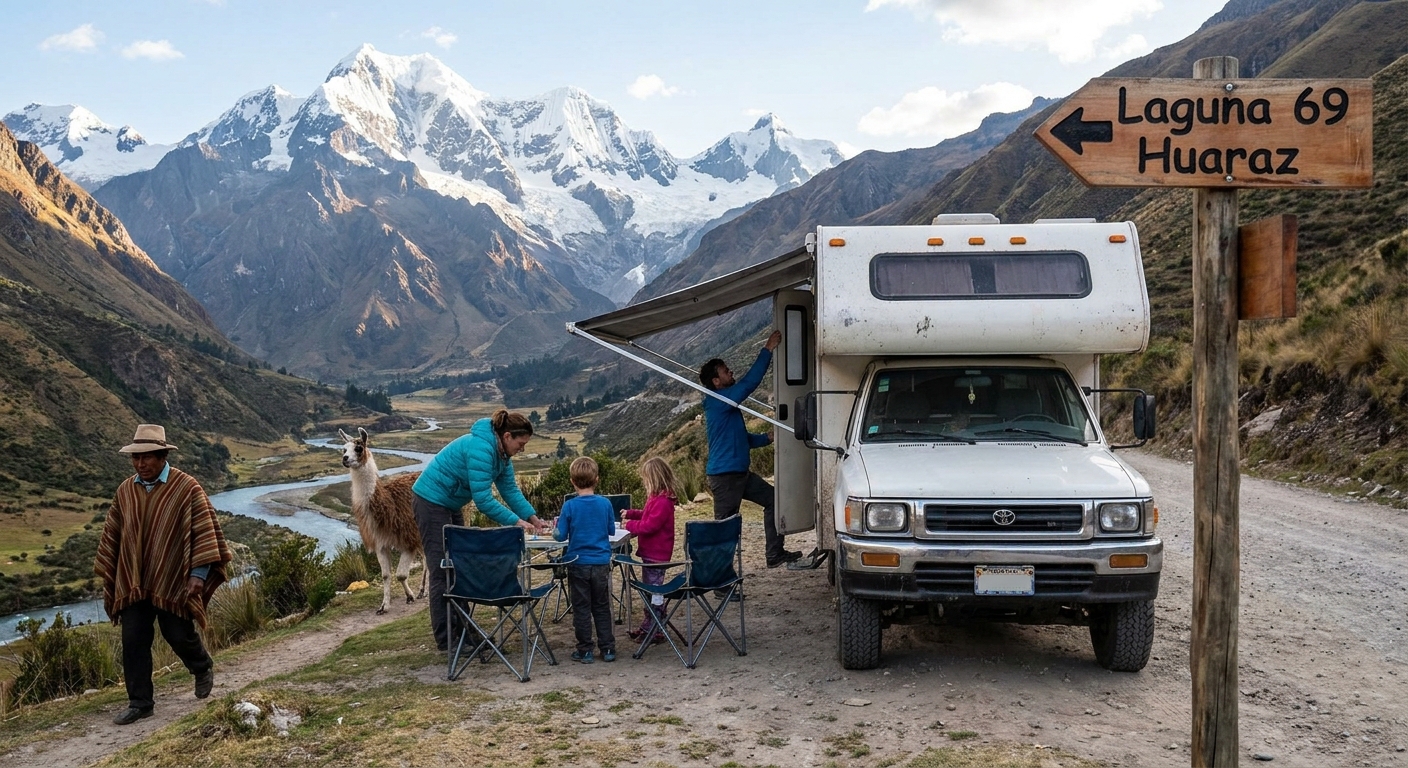
Yes, you can absolutely drive a rented RV in South America, and a standard car driver's license (equivalent to a Class B in many countries) is typically sufficient for most motorhomes under 3,500 kg (7,700 lbs) Gross Vehicle Weight (GVW). An International Driving Permit (IDP) is highly recommended for all foreign drivers as it translates your domestic license into multiple languages, significantly easing interactions with local authorities and rental agencies. The minimum driver age for RV rentals in South America is consistently 21 years across most reputable suppliers, and you won't encounter any young driver surcharges or vehicle class restrictions based on age with Bandana Caravan's partners. Always carry your original driver's license, IDP, passport, and vehicle registration documents; while digital copies are useful backups, physical copies are essential for all legal requirements.
Road Conditions & Terrain in South America
South America presents a fascinating mix of road conditions, from well-maintained paved highways that connect major cities to extensive networks of unpaved, gravel, or dirt roads, often referred to as 'ripio,' especially prevalent in regions like Patagonia and remote rural areas. Mountainous regions, particularly the Andes, feature winding roads with steep ascents and descents, demanding careful driving, reduced speeds, and consistent attention to your rented RV's performance. Urban areas can present narrow streets, heavy traffic, and varied local driving styles, all of which require heightened awareness and cautious navigation; remember, you can drive slowly and carefully, and you can drive almost anywhere without issues. No need to stress - just use common sense and pay attention. We strongly encourage a slow, scenic driving pace, averaging no more than 100-150 km per day, to fully appreciate the diverse landscapes, allow for unexpected road hazards, and reduce wear and tear on your vehicle. It is wise to prepare for variable road quality and potential weather impacts, such as mudslides during the rainy season or snow in high altitudes, by carrying relevant safety and communication gear.
RV Size Limits, Bridges & Restricted Zones
While explicit height and weight limits are less common on open highways in South America compared to some European countries, RV drivers must remain vigilant for local signage, especially when entering older towns and city centers. Low bridges and narrow archways are primarily found in historic urban districts; always check for height and width restrictions carefully before proceeding into these areas. Ferry crossings, which are essential for reaching regions like Patagonia or accessing various islands, may impose specific length, height, or weight limitations, and booking in advance is often advisable, particularly for larger rented motorhomes. Some major cities also implement environmental zones or restricted traffic areas to reduce pollution; always research local regulations to avoid fines or plan routes that bypass these zones. Bandana Caravan's diverse fleet, with popular models like the Class C Alcove (averaging 7.5 meters in length) or Class SI Semi-integrated (averaging 6.9 meters in length), are generally well-suited for these conditions, but drivers must always be mindful of their vehicle's precise dimensions.
Fuel: Diesel vs. Petrol & Cost per 100 km
Diesel is the predominant fuel type and generally more readily available and often cheaper than petrol (gasoline) across South America, making diesel-powered motorhomes a practical choice for your rental. Bandana Caravan's fleet typically sees common fuel consumption for Class SI - Semi-integrated RVs at 10-11 Liters/100 km and Class C - Alcove RVs at 10-12 Liters/100 km. For a Class B - Camper Van, fuel consumption averages around 8-10 Liters/100 km, while Class A - Integrated RVs typically consume 8-12 Liters/100 km. To estimate your cost per 100 km, simply multiply the average liters per 100 km by the current local fuel price, remembering that prices can vary significantly by country and region. While some rental RVs might offer fuel discount cards, it's always best to inquire with your rental provider about options to manage fuel expenses. Remember that on RV PLANET routes, you can itemize and track every expense along the way for easy budgeting. On the routes offered through RV PLANET routes, you can itemize and track every expense along the way for easy budgeting.
Tolls, Vignettes & Border Rules
Tolls are common on major highways in many South American countries, particularly Argentina, Chile, and Brazil, and payment methods can vary widely from cash to electronic systems. Always ensure you have small denominations of local currency readily available for cash tolls. Vignettes, or pre-paid road tax stickers, are generally not a widespread concept in South America, unlike in parts of Europe, with tolls serving as the primary road usage charge. Border crossings between South American countries demand careful navigation of customs and immigration procedures, often requiring Temporary Import Permits (TIPs) for your rented RV. It's crucial to gather all necessary vehicle documentation, such as registration, proof of ownership, insurance, your driver's license, and IDP, along with personal identification like your passport and any required visas, well in advance of any planned border crossing. While Bandana Caravan assists with pre-booking comparison and coordination, specific border regulations are best researched close to your travel dates as they can change.
Driving Tips for family rv rental Travelers
For family RV travelers in South America, planning regular stops every 2-3 hours is a smart strategy to allow children to stretch, use restrooms, and prevent driver fatigue, making the journey more enjoyable for everyone. Engaging the family in navigation or destination selection can keep them actively involved, and utilizing in-RV activities like games, books, or movies can be helpful during longer stretches of driving. Embracing budget-friendly meal preparation within your rented RV is a fantastic way to save money and cater to specific family preferences, especially for snacks and picnic lunches; don't forget to check our RV-friendly recipes playlist for inspiration. Consider pre-purchasing electronic toll passes if available for your chosen route or carry ample small currency for cash tolls to simplify travel and avoid delays. Opting for an automatic transmission RV, if available, can significantly reduce driver fatigue, particularly when navigating South America's varied terrain or bustling urban traffic.
Recommended RV Class for South America Roads
For family RV rentals in South America, the Class SI - Semi-integrated and Class C - Alcove motorhome models are generally recommended due to their excellent balance of comfort, spaciousness, and relative maneuverability on diverse road conditions. Class SI - Semi-integrated RVs, with an average length of 6.9 meters and typically sleeping 3-4 adults, offer comfortable living space without being excessively large, making them suitable for smaller families. Class C - Alcove RVs, averaging 7.5 meters in length and often accommodating 4-6 adults, provide ample sleeping capacity (e.g., a "24' Class C Motorhome" with a 152/203cm bed over the cab and a 152/203cm rear double bed) and generous storage, which is ideal for larger families and their gear. These classes typically offer sufficient ground clearance for most paved and well-maintained gravel roads encountered during South American adventures, providing a robust and comfortable base for exploring while offering all essential amenities.
Should I Choose a Compact Van Instead of a Large RV in South America?
For most family RV travelers in South America, a larger rented RV, such as a Class C or Semi-integrated motorhome, is generally not an issue and often provides superior comfort and indoor space, which can be invaluable for families on extended trips. A compact campervan (Class B), averaging 5.8 meters in length, certainly offers enhanced maneuverability for navigating tight historic city centers or accessing more remote, unpaved campsites. However, the trade-off for a compact van is significantly less interior space, fewer sleeping berths (typically 2-3 people, like the "rv rental denver example Category Van"), and limited storage, which can be challenging for families, especially those traveling with children and their necessary gear. Unless your itinerary is heavily focused on extensive off-road adventures, frequent urban parking in extremely congested areas, or exclusively very tight scenic routes, the benefits of a larger motorhome usually outweigh the minor maneuverability advantages of a compact van in most South American scenarios.
Can I Park Anywhere? Free & Wild Camping Rules in South America
Free or wild camping (often called boondocking) is widely practiced and generally tolerated in many rural and remote areas of South America, offering incredible opportunities for immersion in stunning natural beauty. Always prioritize safety and security when wild camping; research locations thoroughly using community-driven apps like iOverlander, which provides user-generated reviews on safety, amenities, and suitability of campsites. Formal campgrounds, offering valuable amenities such as water, electricity, and restrooms, are available in popular tourist regions and national parks, providing a secure and comfortable alternative to wild camping. It is essential to always respect private property, local communities, and environmental regulations; always ask for permission before parking on private land and practice strict 'leave no trace' principles to preserve these beautiful environments. Rules vary significantly by region and specific country, so always check local signage and follow local laws before parking overnight.
Can I Drive an RV Into the City Center? Heights, Tunnels & Local Signage
Yes, you can drive a rented RV into most South American city centers, but doing so requires heightened awareness of local conditions and specific vehicle considerations. Drive slowly and carefully, and you can drive almost anywhere without issues. No need to stress - just use common sense and pay attention. It is crucial to pay close attention to local signage indicating height limits for tunnels, underpasses, and multi-story car parks, as well as weight restrictions on certain bridges, which are more common in historic districts. Be especially mindful of narrow streets in older, colonial city centers, and be aware of potential environmental zones or residents-only areas that might restrict vehicle access or require special permits. For major cities with busy, unorganized traffic, a practical approach is often to park your motorhome on the outskirts and utilize public transportation or ride-sharing services for exploring the city center itself. Utilizing reliable offline navigation apps like Maps.me can provide helpful alerts about potential height or width restrictions on your planned urban route.
What is the 3-3-3 rule for RV travel?
The 3-3-3 rule for RV travel is a widely adopted guideline encouraging safe and enjoyable trips by recommending travelers drive no more than 300 miles (approximately 480 km) in a day, arrive by 3 PM, and stay for at least 3 nights at each location. Driving no more than 300 miles daily helps prevent driver fatigue, allows for spontaneous stops at interesting sights, and significantly reduces the stress of long hauls, which is especially beneficial when traveling with a family. Arriving by 3 PM ensures you have ample daylight to find your campsite, efficiently set up your rented RV, and familiarize yourself with the surroundings before dusk, enhancing both safety and relaxation. Staying for at least 3 nights enables a more relaxed pace of travel, providing sufficient time to explore the local area, recuperate from driving, and truly immerse yourself in the experience rather than constantly being on the move. This rule also promotes a sustainable and enjoyable rhythm for longer RV journeys, minimizing burnout and maximizing cultural immersion and relaxation.
Can you RV in South America?
Yes, RVing in South America is not only possible but offers an incredibly rewarding adventure through diverse landscapes and vibrant cultures, provided you undertake proper planning for logistics, safety, and vehicle readiness. Many countries, including Argentina, Chile, Peru, and Ecuador, have established routes and a growing infrastructure that supports motorhome travel, offering access to breathtaking scenery and unique cultural experiences. Successful RV travel in South America requires thorough preparation regarding your rented vehicle's maintenance, comprehensive emergency preparedness, including specific toolkits and knowledge of how to find local mechanics, and robust communication solutions. Implementing solid safety and security strategies, such as selecting secure parking locations, often found via iOverlander reviews, and maintaining awareness of local conditions, is crucial for a worry-free family adventure. The unparalleled freedom, unique cultural immersion, and access to stunning natural beauty, make RVing in South America a highly worthwhile experience despite the initial planning complexities.
Can you technically drive from North America to South America?
Technically, you cannot drive directly from North America to South America due to the impassable Darién Gap, a dense jungle and swamp region spanning approximately 100 kilometers (60 miles) that divides Panama and Colombia. This remote and roadless stretch completely breaks the Pan-American Highway, making overland passage physically impossible for any vehicle, including a rented RV. Overlanders typically ship their RVs from a port in Colón, Panama, to Cartagena, Colombia, or vice-versa, utilizing either container shipping or Roll-on/Roll-off (RoRo) ferry services. This shipping process involves specific logistics, customs paperwork, and costs that must be carefully factored into your overall budget and extensive trip planning. Thoroughly researching reputable shipping agents and understanding the import and export procedures for both Panama and Colombia is absolutely essential for a smooth transition across this significant geographical barrier.
Can I cross my RV into Mexico?
Yes, you can cross your rented RV into Mexico, but it requires specific documentation and adherence to local regulations. A Temporary Import Permit (TIP) for the vehicle is mandatory for driving beyond the 'free zone' near the border and can be obtained online in advance or at the border crossing. You must carry your valid driver's license (an International Driving Permit is highly recommended), current vehicle registration, and proof of vehicle ownership to ensure a smooth process. Crucially, Mexican liability insurance is legally required and must be purchased from a Mexican provider, as most US or Canadian policies are not valid for liability coverage in Mexico. Be prepared for varying border crossing procedures and potential fees; having all documentation organized and easily accessible will significantly facilitate a smoother process, helping you avoid unnecessary delays.
What countries are RV friendly?
Several South American countries are particularly RV-friendly, with Argentina, Chile, Peru, and Ecuador being among the most popular for their established routes, developing infrastructure, and breathtaking landscapes. Argentina and Chile offer extensive networks of both paved highways and challenging unpaved roads, such as the famous Carretera Austral, along with vast wilderness areas perfect for wild camping and a growing network of formal campgrounds. Peru provides incredible cultural immersion and access to historical sites like Machu Picchu, with motorhome travel becoming increasingly popular, though roads can be more challenging in its mountainous regions. Ecuador offers diverse ecosystems, ranging from the majestic Andes to the Amazon rainforest, with relatively shorter distances between major attractions, making it appealing for varied RV exploration. These countries generally feature welcoming locals, active overlanding communities (often connected via platforms like iOverlander), and stunning natural beauty that combine to make them ideal for family RV adventures, provided thorough safety and mechanical preparedness.
What part of South America can you not drive through?
The primary part of South America you absolutely cannot drive through is the Darién Gap, a remote and formidable stretch of dense jungle and swampland located between Panama and Colombia. This approximately 100-kilometer (60-mile) section is a significant natural barrier, featuring treacherous terrain, thick rainforest, and a complete lack of road infrastructure, rendering it impassable by vehicle. The Darién Gap effectively severs the Pan-American Highway, meaning any overland journey from North or Central America into South America (or vice-versa) requires sea or air transport for your RV. Beyond this unique geographical barrier, while specific roads may be temporarily impassable due to extreme weather conditions, such as mudslides in the Amazon or heavy snow in the high Andes, or localized civil unrest, there are no other permanent geographical obstacles that prevent overland travel across the continent.
What is the largest RV you can drive without a special license?
In most places, including many South American countries, you can typically drive a rented RV up to 3,500 kg (7,700 lbs) Gross Vehicle Weight (GVW) on a standard Class B (car) license, though it's always prudent to verify specific local regulations. This 3,500 kg threshold generally encompasses most Class B Camper Vans and many Class SI Semi-integrated motorhomes, which are popular choices for family travel due to their balance of size and maneuverability. RVs exceeding 3,500 kg GVW, which might include some larger Class C Alcove models (like the "MH-A" at 8.8m length and 63L propane tank) or most Class A Integrated RVs, may require a higher license category, such as a C1 or equivalent 'light truck' license. It is crucial to check the specific GVW of your chosen rental RV model and cross-reference it with the licensing requirements of each South American country you plan to visit, as laws can vary. Always ensure your driver's license is valid for the weight class of the RV you intend to operate to avoid legal issues and ensure proper insurance coverage.
Can I drive in Argentina with a US license?
Yes, you can generally drive a rented motorhome in Argentina with a valid US driver's license for a tourist stay, as Argentine law typically allows foreign tourists to drive with their national license for up to 90 days. However, an International Driving Permit (IDP) is highly recommended and is often required by many RV rental agencies or insurance providers to ensure clarity and ease of translation. The IDP serves as an official translation of your US license into 10 languages and is recognized in over 150 countries, significantly simplifying interactions with local authorities during routine checks. Many Bandana Caravan rental partners in Argentina may explicitly require an IDP as part of their rental agreement for compliance and insurance purposes. Always carry your physical US driver's license, your IDP, and your passport when driving, as traffic police may request all these documents during routine roadside inspections.
What You Shouldn't Miss
- **The Carretera Austral, Chile:** Drive this legendary 1,240 km scenic route through pristine Patagonian wilderness, past glaciers, fjords, and dense forests, with ample opportunities for wild camping.
- **Perito Moreno Glacier, Argentina:** Witness the thunderous calving of this massive glacier in Los Glaciares National Park, an awe-inspiring natural wonder.
- **The Atacama Desert, Chile:** Explore the otherworldly landscapes of the world's driest desert, with incredible stargazing, geysers, and salt flats.
- **Machu Picchu & Sacred Valley, Peru:** While you can't drive directly to Machu Picchu, a rented RV provides the perfect base for exploring the Sacred Valley before taking a train or hike to the iconic Inca citadel.
- **Iguazu Falls, Argentina/Brazil:** Experience the power of one of the world's largest waterfall systems, a truly spectacular sight from both the Argentine and Brazilian sides.
- **Route of the Seven Lakes, Argentina:** Traverse this picturesque route in Argentine Patagonia, connecting charming lakeside towns and offering stunning views of pristine waters and Andean peaks.
Looking for expert insights from Avi Bandana? Top 5 Adventures - recommendations from Avi Bandana.
🎬 Video coming soon
Final Thoughts
Embarking on a family RV adventure through South America is an incredible way to experience the continent's breathtaking diversity, from the towering peaks of the Andes to the sprawling Patagonian plains. With careful planning and the right rented motorhome, you'll discover a freedom of travel unmatched by traditional tours. Remember to embrace the slow travel philosophy, allowing plenty of time to connect with local cultures, savor delicious regional cuisine, and soak in the stunning scenery.
At Bandana Caravan, we are here to support you every step of the way, from comparing prices and coordinating your booking to offering transparent advice. Our commitment is to make your family RV trip in South America as seamless and joyful as possible. So, start dreaming, start planning, and get ready for the adventure of a lifetime!
Compare Motorhome Prices for South America Today!