
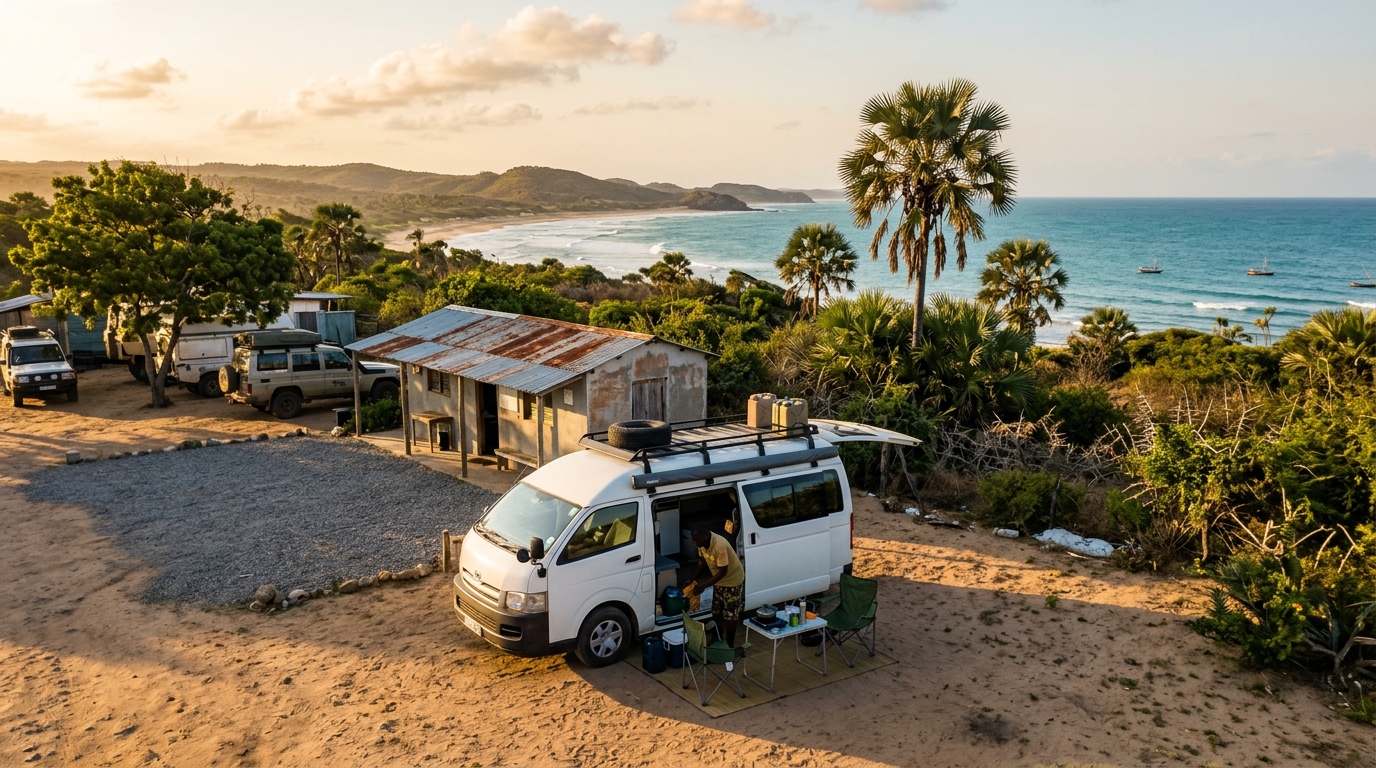
For live availability and current prices, start with our RV Rental Mozambique - Complete Guide 2026 guide.
In This Guide
- Can You Drive an RV in Mozambique? License & Age Rules
- Road Conditions & Terrain in Mozambique
- RV Size Limits, Bridges & Restricted Zones
- Fuel: Diesel vs. Petrol & Cost per 100 km
- Tolls, Vignettes & Border Rules
- Driving Tips for Family RV Rental Travelers
- Recommended RV Class for Mozambique Roads
- Should I Choose a Compact Van Instead of a Large RV in Mozambique?
- Can I Park Anywhere? Free & Wild Camping Rules in Mozambique
- Can I Drive an RV into the City Center? Heights, Tunnels & Local Signage
- Do I Need a 4x4 for Mozambique?
- How Many Days Do You Need in Mozambique for an RV Trip?
- What Language is Spoken in Mozambique?
- Can You Drink the Water in Mozambique?
- How Much Does an RV Rental Trip Cost in Mozambique?
- Connectivity and Navigation for RV Travel in Mozambique
- What to Do If Your RV Breaks Down in Mozambique
- Choosing RV Campgrounds in Mozambique
- Sustainable and Responsible RV Travel in Mozambique
Can You Drive an RV in Mozambique? License & Age Rules
Yes, foreigners can generally drive an RV in Mozambique with a valid domestic driver's license and an International Driving Permit (IDP). The minimum driving age is typically 18, but most RV rental companies in Mozambique require drivers to be at least 21 or 23 years old, often with a minimum of two years of driving experience. For RVs exceeding 3,500 kg Gross Vehicle Mass (GVM), a higher license category (e.g., C1 or C) might be necessary; however, many standard family RVs, like Class B or Semi-integrated models, fall under the standard B category, which is usually covered by a typical car license. Always carry your original driver's license, IDP, passport, and copies of your vehicle registration and rental agreement documents while driving to present to authorities if required.
Road Conditions & Terrain in Mozambique
Mozambique's primary national highways, such as the EN1 and EN4, are generally paved and in reasonable condition for RV travel, though drivers should anticipate potholes, uneven surfaces, and sections under repair. Secondary and rural roads, particularly those leading to remote coastal areas or national parks, are frequently unpaved gravel or dirt tracks, which can become challenging, especially during the rainy season, potentially requiring a 4x4 RV or very careful driving with a 2WD vehicle. The terrain varies from flat coastal plains to more undulating interior landscapes, encouraging a slower, more scenic driving pace. Be highly vigilant for pedestrians, cyclists, and livestock on all roads, as they are common hazards, particularly outside of major urban areas. Driving slowly and carefully is key to navigating these conditions safely.
RV Size Limits, Bridges & Restricted Zones
Standard RV sizes are generally accommodated on Mozambique's main road network, with specific height or weight restrictions being rare on primary routes. Drivers should always pay close attention to local signage, especially for specific bridge load limits, low-clearance tunnels, or narrow passages that may exist on older infrastructure or secondary roads. Environmental or restricted zones typically apply to national parks or conservation areas, which may have specific vehicle type requirements (e.g., 4x4 only for certain tracks) or entry fees, rather than general RV size limitations. If planning to use ferry crossings, such as to Inhaca Island or across certain rivers, inquire about specific length, width, and weight limitations, and consider booking in advance for larger RVs.
Fuel: Diesel vs. Petrol & Cost per 100 km
Diesel is the most common fuel type for RVs and is widely available at service stations throughout Mozambique, particularly along major routes and in urban centers, with petrol also being readily accessible. Bandana's global fleet averages indicate that a Class SI (Semi-integrated) RV typically consumes 10–11 liters/100 km, a Class C (Alcove) RV averages 10–12 liters/100 km, and a Class B (Camper Van) typically uses 8-10 liters/100 km. Fuel costs in Mozambique are generally comparable to neighboring Southern African countries; it is advisable to budget generously and refuel whenever possible, especially before entering remote areas. While specific fuel-card perks for Mozambique rentals are not commonly noted, always inquire with your RV rental provider about any potential fuel discount programs or arrangements. On the routes offered through RV PLANET routes, you can itemize and track every expense along the way for easy budgeting.
Tolls, Vignettes & Border Rules
Mozambique has several toll roads, most notably the N4 Maputo Corridor, and drivers should expect to pay tolls on certain national roads, typically in local currency (Metical) or South African Rand. Specific regional data for Mozambique tolls or vignettes is not provided in this context, but it's common for toll plazas to be cash-only, so always carry small denominations of currency. When entering Mozambique from neighboring countries, be prepared for border crossing procedures which may include vehicle import fees, temporary import permits for your RV, and road taxes. Some RV rental companies may offer information or options to pre-purchase toll passes or provide guidance to help avoid fines; verify these details with your provider before your trip.
Driving Tips for Family RV Rental Travelers
Plan frequent stops, ideally every 2-3 hours, for rest, stretching, and bathroom breaks to keep children comfortable and prevent driver fatigue, enhancing safety. Prioritize safety by driving defensively, strictly adhering to speed limits, and avoiding night driving due to poor visibility, road conditions, and unexpected obstacles. Always keep valuables out of sight and secure within your RV, and remain aware of your surroundings, especially when parked in urban areas or during overnight stays. For budget-conscious families, utilize your RV's self-catering facilities by stocking up on groceries in larger towns, balancing market purchases with occasional local restaurant meals. If available and preferred, opt for an automatic transmission RV, which can make driving on varied terrain and navigating traffic in Mozambique more relaxed for family travelers. For ideas you can prep on the road, watch our RV-friendly recipes playlist on YouTube.
Recommended RV Class for Mozambique Roads
For family RV rental in Mozambique, a Class SI (Semi-integrated) or Class C (Alcove) RV is generally recommended, offering a good balance of comfort, space, and suitability for the main road network. Bandana's Class SI RVs, with an average length of 6.9 meters and sleeping places for 3.8, provide ample living space without being excessively large, making them a practical choice for families. Class C Alcove RVs, averaging 7.5 meters in length and sleeping 5.8 people, offer superior internal space, often with a robust chassis that can provide sufficient ground clearance for varied Mozambican terrain, enhancing comfort for larger families. While specific ground clearance figures are not provided, these classes generally cope well with paved and reasonably maintained gravel roads; for extensive off-road adventures, a Class TC (Truck Camper), averaging 5.5m in length, might offer better ground clearance and 4x4 capability if available.
Should I Choose a Compact Van Instead of a Large RV in Mozambique?
For most family RV travel in Mozambique, a larger RV like a Class C or Semi-integrated offers significantly more comfort, living space, and amenities, which generally outweighs the minor maneuverability benefits of a compact van. A compact van, such as Bandana's Class B Camper Vans (averaging 5.8 meters in length), might be advantageous for very tight urban centers or extremely narrow, winding mountain passes, although such highly confined spaces are less common on Mozambique's main tourist routes. The added indoor space, larger kitchens, and dedicated sleeping areas of a larger RV are typically more beneficial for family comfort and convenience during a multi-day or multi-week trip in Mozambique. Ultimately, the decision balances maximum comfort and amenities (larger RV) with slightly easier navigation in highly restricted areas (compact van), with the former often being the better trade-off for families.
Can I Park Anywhere? Free & Wild Camping Rules in Mozambique
Wild camping (free camping) is generally tolerated in very remote, undeveloped areas of Mozambique, but it is not officially sanctioned and inherently carries risks related to safety and wildlife encounters. Specific regional data for official free-camping rules in Mozambique is not provided, making it highly advisable to prioritize designated and secure campsites for family safety and amenities. Always seek explicit permission from local landowners before attempting to wild camp on private property, and be highly mindful of local customs and minimizing your environmental impact. For a safer, more comfortable, and often more scenic experience, families should utilize established campsites, resorts, or lodges that offer secure parking, proper facilities, and often stunning locations. Rules vary by region; always check local regulations and follow local law before parking overnight, and prioritize organized facilities for peace of mind when traveling with a family.
Can I Drive an RV into the City Center? Heights, Tunnels & Local Signage
Yes, you can generally drive a standard RV into most city centers in Mozambique, including major cities like Maputo, Beira, and Nampula, without encountering widespread restrictions. However, drivers must pay close attention to local signage, particularly for specific height limits on underpasses, tunnels, or multi-story car parks, and be aware of any narrow streets or residents-only parking zones. Specific regional data for Mozambique-specific height watchouts or environmental zones is not provided in this context, so reliance on visible signage and common sense is paramount. Parking a larger RV can be challenging in bustling city centers; consider parking on the outskirts or at designated RV-friendly spots and using local taxis or public transport for urban exploration. It's generally advisable to avoid driving large RVs through congested city centers during peak hours to minimize stress from traffic and parking difficulties.
Do I Need a 4x4 for Mozambique?
For most family RV rental trips in Mozambique, sticking to major paved routes (such as the EN1 and EN4) and well-established tourist destinations, a standard 2WD RV (like a Class SI or Class C) is usually sufficient. A 4x4 RV or a Truck Camper (such as Bandana's Class TC, if available with 4x4 capability) becomes necessary if your itinerary includes extensive travel on unpaved secondary roads, sandy tracks leading to remote beaches, or within certain national parks and conservation areas. When planning, carefully review your destinations: if you intend to explore extensive off-road areas, drive on beaches, or travel during the rainy season, a 4x4 RV is highly recommended for safety and accessibility. Destinations like Gorongosa National Park or specific stretches of the Mozambican coastline often require 4x4 capability; always confirm road conditions and vehicle requirements with local park authorities or your rental provider.
How Many Days Do You Need in Mozambique for an RV Trip?
For a comprehensive family RV trip in Mozambique, a minimum duration of 10-14 days is generally recommended to comfortably experience key highlights, allowing for travel time between destinations and ample relaxation. A shorter trip of 7 days could be focused on exploring a specific region, such as the southern coastline (e.g., Maputo, Ponta do Ouro, Inhambane) or a single prominent national park. Longer trips of 3 weeks or more enable a deeper exploration of the country, allowing travel from the south to central or even northern regions, incorporating multiple national parks, cultural sites, and extended beach stays. Factor in a slower travel pace in an RV, anticipating potential delays on secondary roads and allowing for extended stays at scenic locations; Bandana recommends building buffer days into your itinerary for flexibility.
What Language is Spoken in Mozambique?
Portuguese is the official language of Mozambique and is widely spoken in urban centers, government, and business, making essential Portuguese phrases highly beneficial for RV travelers. While many people in popular tourist areas may have some English proficiency, particularly younger generations, learning a few basic Portuguese greetings and phrases will significantly enhance cultural interactions and facilitate daily transactions. Mozambique is linguistically diverse, with numerous indigenous languages spoken across different regions, including Emakhuwa, Xichangana, and Sena. Essential phrases for RV travelers include 'Olá' (Hello), 'Obrigado/a' (Thank you), 'Por favor' (Please), 'Quanto custa?' (How much?), 'Onde está...?' (Where is...? for fuel, a campsite, etc.), and 'Ajuda!' (Help!).
Can You Drink the Water in Mozambique?
It is generally not recommended to drink tap water directly in Mozambique without purification, particularly outside of major hotels or international establishments, due to potential contamination risks. For family RV travel, always rely on commercially bottled water for drinking and brushing teeth, or ensure your RV is equipped with a highly reliable water filtration and purification system. Comprehensive health advice for Mozambique includes maintaining good hydration, exercising caution with ice in drinks, and thoroughly washing all produce with purified water before consumption. Before traveling, consult your doctor for recommended vaccinations (e.g., Hepatitis A, Typhoid, Yellow Fever) and malaria prophylaxis, and always carry a well-stocked first-aid kit for common ailments and emergencies.
How Much Does an RV Rental Trip Cost in Mozambique?
The total cost of an RV rental trip in Mozambique comprises several key components: the RV rental rate, fuel expenses, camping fees, national park entry fees, visa costs (if applicable), road tolls, and average food expenses. RV rental rates vary significantly based on the vehicle class (e.g., Class B Camper Van generally more economical than a Class C Alcove), rental duration, and the travel season. Fuel will be a substantial expense; budget for approximately 10-12 liters/100 km for most RV classes, with prices fluctuating but generally comparable to regional averages. Factor in national park entry fees (e.g., Gorongosa National Park), which can be substantial per person per day, and diverse camping fees ranging from basic community sites to full-service private resorts. Additional costs include potential visa fees, any border crossing charges, and daily food expenses, which can be managed by fully utilizing your RV's self-catering facilities and balancing local market purchases with occasional restaurant dining. You can itemize and track every expense along the way for easy budgeting using RV PLANET routes.
What to Do If Your RV Breaks Down in Mozambique
In the event of an RV breakdown in Mozambique, first ensure the safety of your family by pulling off the road if possible and deploying warning triangles. Immediately contact your RV rental company's emergency roadside assistance or local contact number, as they are best equipped to arrange repairs or a replacement vehicle. While awaiting assistance, stay with your vehicle and avoid flagging down strangers; if in a remote area, utilize a satellite communication device if you have one. For minor issues, finding repairs or spare parts in less developed regions can be challenging, though local mechanics in larger towns are often resourceful; for complex RV systems, specialized assistance may be limited.
Choosing RV Campgrounds in Mozambique
Mozambique offers a range of RV camping options, from basic community-run bush camps within national parks to well-appointed resorts and private lodges along its stunning coastline. Established campgrounds typically provide essential amenities such as secure parking, ablution facilities (showers and toilets), and often braai (BBQ) areas, with some offering electrical hook-ups. Booking procedures vary; popular coastal resorts and national park campsites should be booked in advance, especially during peak holiday seasons, while smaller, more remote sites might operate on a first-come, first-served basis. Safety considerations at campsites include securing your belongings, being aware of local wildlife (particularly in unfenced areas), and adhering to any park regulations regarding fires or noise. Consider amenities like swimming pools, restaurants, and organized activities if traveling with a family, and always research recent reviews for facilities and security before making a reservation.
Sustainable and Responsible RV Travel in Mozambique
Practice 'Leave No Trace' principles rigorously by packing out all trash, minimizing water and energy consumption, and properly disposing of all waste to minimize your environmental impact. Support local communities by consciously purchasing goods and services from local vendors, dining at local restaurants, and engaging respectfully with local cultures and traditions. Adhere strictly to all national park and conservation area rules, including respecting speed limits, staying on designated tracks, and not disturbing wildlife. Be mindful of noise levels at campsites, especially near local communities or wildlife, and respect the natural tranquility of Mozambique's diverse landscapes to ensure an enjoyable experience for all.
What You Shouldn't Miss
- Coastal Drive from Maputo to Vilanculos: Traverse scenic routes along the Indian Ocean, stopping at charming beach towns like Inhambane and Tofo for fresh seafood and dolphin spotting.
- Gorongosa National Park: Experience one of Africa's most successful wildlife restoration projects, offering incredible opportunities for game drives and spotting diverse flora and fauna in a stunning natural setting.
- Bazaruto Archipelago: Accessible via boat or small aircraft from Vilanculos, this stunning group of islands offers unparalleled snorkeling, diving, and pristine beaches, with possibilities for RV parking at coastal bases.
- Ilha de Moçambique: Explore the historical heart of Mozambique, a UNESCO World Heritage site with rich Portuguese colonial architecture and a unique cultural fusion, accessible via ferry or by arranging transport for your RV.
- Southern Beaches (Ponta do Ouro): Discover the southernmost tip of Mozambique for incredible diving, snorkeling, and relaxed beach vibes, easily reachable for a southern-focused RV adventure.
- Ibo Island: Journey to the northern archipelago of Quirimbas to experience Ibo Island's fascinating history, artisanal silver crafts, and unique cultural heritage.
Final Thoughts
Embarking on an RV adventure in Mozambique offers a unique way to explore this beautiful country, blending freedom with the comforts of home. From the stunning coastlines to the wildlife-rich interior, a rented RV provides the perfect base for unforgettable family memories. With careful planning and awareness of the local conditions, your Mozambican RV journey promises to be a truly enriching experience.
Let Bandana Caravan help you find the perfect RV for your Mozambican exploration. We simplify the booking process so you can focus on the adventure ahead. Get inspired for your next trip, discover top destinations, and access planning tips all in one place!
Plan your trip itinerary in advance with minimal effort and maximum enjoyment. Compare RV rental prices for Mozambique today and start envisioning your incredible journey!
