
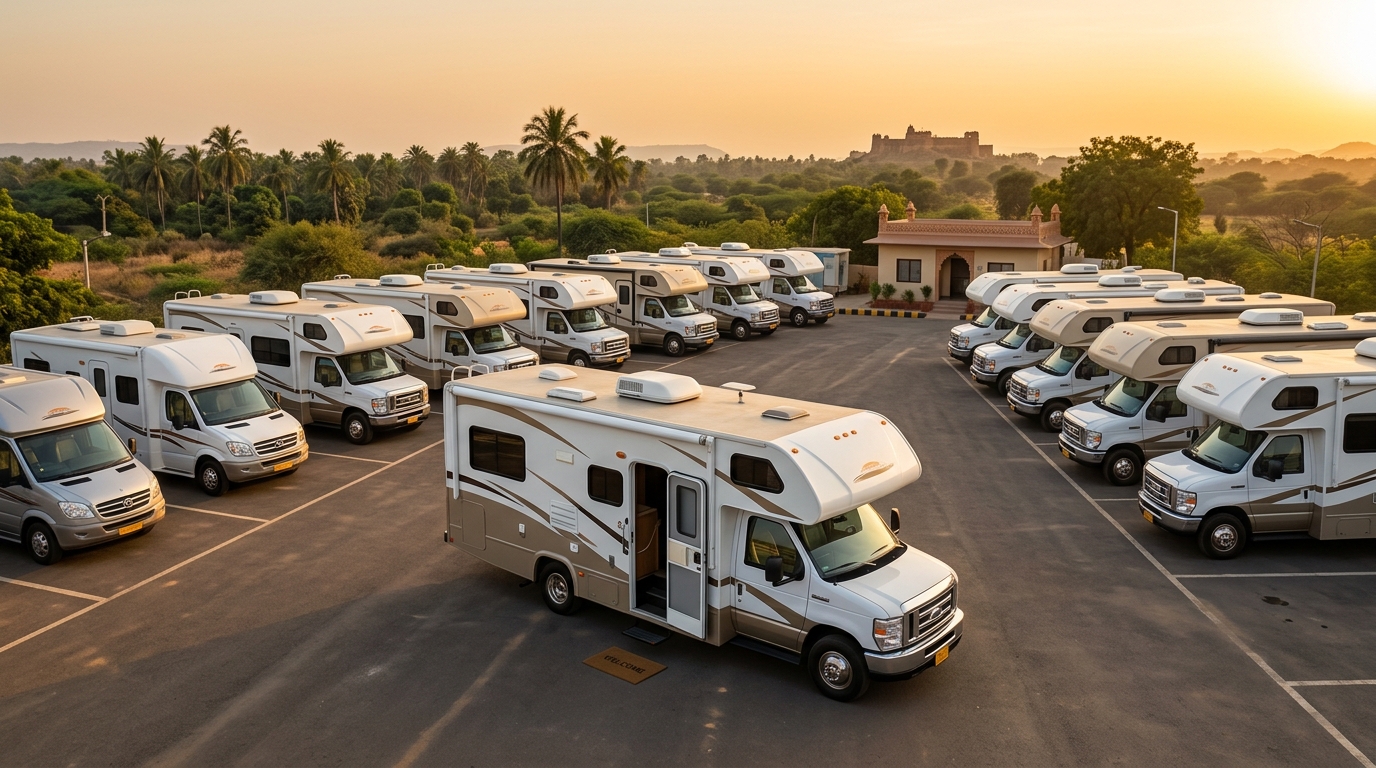
For live availability and current prices, start with our RV Rental India - Complete Guide 2026 guide.
Can You Drive an RV in India? License & Age Rules
Yes, you can drive an RV in India, but understanding the licensing and age requirements is crucial for a smooth rental experience. For Indian citizens, a Light Motor Vehicle (LMV) license is generally sufficient for RVs up to 7,500 kg GVW. However, vehicles exceeding this weight might necessitate a Heavy Motor Vehicle (HMV) license. The legal minimum driver age in India is 18, but most RV rental companies typically set their own age requirements, often at 21 or 25 years old, to rent a motorhome.
International travelers planning to drive a rented RV in India must present a valid International Driving Permit (IDP) in conjunction with their national driver's license. It's essential to ensure that your IDP is valid for the entire duration of your trip and covers the appropriate vehicle categories for motorhome rentals. Always carry copies of your passport, visa, IDP, national license, and the rental agreement for easy reference.
For those considering bringing their own RV into India, the customs procedures are complex and typically involve a Carnet de Passages en Douane. For most international visitors, opting for a local RV rental is a far more practical and straightforward approach to exploring India.
Road Conditions & Terrain in India
India's road network presents a diverse and often challenging landscape for RV travel, varying significantly from well-maintained national highways to demanding rural and mountain roads. National and State Highways generally offer a smoother experience for inter-city travel, connecting major destinations with better road surfaces. However, as you venture onto rural roads, expect them to be narrower, potentially unpaved, and often shared with pedestrians, cyclists, and livestock. This necessitates slower speeds and increased vigilance.
Mountain passes, particularly in regions like the Himalayas, feature winding routes with steep inclines and sharp turns, requiring particularly cautious driving and a good understanding of your RV's capabilities. Urban areas are characterized by dense, often unpredictable traffic, making navigating larger RVs more challenging. Therefore, while driving an RV into city centers is generally possible, it demands close attention to local signage and traffic flow. Driving at night is generally discouraged across India due to poor visibility and the variability of road conditions, including unmarked obstacles.
RV Size Limits, Bridges & Restricted Zones
While universal RV size limits are not strictly enforced across India, it's essential to remain vigilant for local height and weight restrictions, particularly concerning older bridges and underpasses. Many bridges and underpasses may have posted height limits, commonly around 3.5 to 4 meters, which can significantly impact taller RVs. Always pay attention to local signage indicating such restrictions to avoid unexpected obstacles and potential damage.
Certain areas, such as national parks, wildlife sanctuaries, or environmentally protected zones, may impose specific vehicle restrictions or require special permits for entry. It's crucial to research these regulations for any protected areas you plan to visit. If your itinerary involves coastal or island travel requiring ferry services, these will invariably have their own specific length and weight capacities for RVs, often necessitating advance booking and adherence to their guidelines.
Always verify route specifics for any dimensions that might affect your RV, especially when deviating from main highways into smaller towns or more remote regions, to ensure a smooth and unimpeded journey.
Fuel: Diesel vs. Petrol & Cost per 100 km
Most RVs available for rent globally, and by extension many in India, typically operate on diesel. Diesel is widely available across the country and is often more fuel-efficient for larger vehicles like motorhomes. In India, diesel is the predominant fuel type for RVs, although petrol is also common for smaller passenger vehicles and some commercial applications, particularly in urban centers.
For typical rental RV classes, fuel consumption varies. For instance, Bandana's Class SI - Semi-integrated RVs often consume around 10–11 liters per 100 km, while Class C - Alcove RVs might use 10–12 liters per 100 km. More compact Class B - Camper Vans generally offer better fuel economy, consuming approximately 8–10 liters per 100 km.
As of 2026, diesel prices in India generally fluctuate between ₹90-₹105 per liter. This means that a Class SI RV, consuming around 10.5 liters per 100 km, would cost approximately ₹945-₹1102 per 100 km in fuel. Fuel stations are abundant along national highways, but they can become scarce in remote or less populated regions. Therefore, careful planning for refills is essential, ensuring you don't run low, especially when venturing off the main routes.
Tolls, Vignettes & Border Rules
India primarily utilizes a widespread network of toll plazas on its national highways for road usage fees, rather than a vignette system. These plazas can be manned by attendants or utilize electronic toll collection. The FASTag system, a prepaid electronic tag affixed to the vehicle's windscreen, is widely implemented for automated toll collection, offering significant convenience and faster passage through toll gates. On the routes offered through RV PLANET routes, you can itemize and track every expense along the way for easy budgeting.
While manual cash lanes are still available at many toll plazas, opting for a FASTag is generally more efficient and can save time. It's important to note that there are no vignette (time-based road tax sticker) requirements for driving an RV within India itself. These systems are more common in some European countries.
Cross-border travel with a rental RV from India into neighboring countries like Nepal or Bhutan is typically heavily restricted due to complex permit requirements, customs procedures, and insurance limitations. It is strongly recommended to confirm any cross-border policies and required documentation directly with your RV rental provider well in advance if such travel is contemplated, though it is often not permitted.
Driving Tips for family rv rental Travelers
When driving an RV in India, prioritize defensive driving techniques and maintain a cautious pace. Be prepared for unpredictable actions from other road users, including two- and three-wheelers, pedestrians, and livestock. Expect to use your horn frequently to signal your presence, especially when overtaking or approaching blind spots, as it's an integral part of communication on Indian roads.
Plan for frequent stops every 2-3 hours to ensure rest and comfort for all family members, helping to combat driving fatigue. Always give ample space to larger vehicles like trucks and buses, which may drive assertively. Leveraging a FASTag for toll payments will streamline your journey, avoiding delays at toll plazas.
Embrace slow travel; aim to cover no more than 100-150 km per day on average to truly appreciate India's diverse landscapes and allow for spontaneous discoveries. If available, opting for an RV with an automatic transmission can significantly reduce driving fatigue, especially in varied traffic conditions.
Recommended RV Class for India Roads
Considering the varied road conditions in India, Class B - Camper Vans and Class SI - Semi-integrated RVs are generally the most recommended for family travel. These smaller, more agile RVs offer superior maneuverability, which is invaluable for navigating bustling city streets, narrow rural roads, and tight mountain passes.
Class B - Camper Vans, with an average length of 5.8 meters, are particularly adept at handling India's diverse terrains and finding parking in urban areas. They typically consume around 8–10 liters per 100 km, offering good fuel efficiency. Class SI - Semi-integrated RVs, averaging around 6.9 meters in length, provide a good balance of living space and amenities for up to 3-4 sleeping places while maintaining reasonable agility.
These semi-integrated models generally consume about 10–11 liters per 100 km, offering a comfortable compromise for families. While larger Class C - Alcove RVs (averaging 7.5m) or Class A - Integrated RVs offer maximum living space, they can be more challenging to navigate and park in congested Indian environments. The ultimate choice depends on your family size, desired comfort level, and the specific terrain you plan to explore, with maneuverability often being a key factor for varied routes.
Should I Choose a Compact Van Instead of a Large RV in India?
While a compact van like a Class B Camper Van offers greater agility for India's often-congested roads and challenging terrain, larger RVs provide crucial comfort and indoor living space, which are invaluable for family trips. Class B Camper Vans, typically around 5.8 meters long, truly excel in navigating narrow city lanes, finding parking, and handling tight mountain passes with relative ease.
However, larger RVs such as Class SI - Semi-integrated models (around 6.9 meters) or Class C - Alcove RVs (approximately 7.5 meters) offer significantly more dedicated sleeping areas, kitchen facilities, bathrooms, and overall living space. For families undertaking extended travel, the enhanced comfort, storage, and amenities of a larger RV often outweigh the minor maneuverability challenges they might present. For ideas you can prep on the road, watch our RV-friendly recipes playlist on YouTube.
A compact van is genuinely more practical for itineraries that are heavily focused on exploring very tight historic city centers or extremely narrow access roads in remote villages. For the majority of family RV adventures in India, the added convenience and superior living space of a larger RV often make it the more suitable and enjoyable choice for a memorable road trip.
Can I Park Anywhere? Free & Wild Camping Rules in India
Free or 'wild' camping is generally not permitted across India without explicit permission and is largely discouraged due to safety concerns and the general lack of dedicated facilities. India does not have an extensive network of official RV parks or dedicated campsites comparable to what you might find in Western countries. This means overnight parking requires careful consideration and often creative solutions.
Practical overnight parking solutions include seeking permission at large Dhabas (roadside eateries) that cater to truck traffic. These locations often have ample space and may permit overnight stays, frequently in exchange for patronage. Many guesthouses, hotels, or resorts in smaller towns might also allow RVs to park in their secure lots, sometimes for a nominal fee or if you are a guest at their establishment.
With respectful inquiry and communication, it may also be possible to park overnight at larger temple or ashram compounds after obtaining explicit permission from the management. Always prioritize well-lit, visible, and ideally supervised locations for overnight stays over isolated spots for enhanced personal safety. Remember that rules can vary significantly by region, so always check local regulations and adhere to local law before deciding where to park your RV overnight.
Can I Drive an RV Into the City Center? Heights, Tunnels & Local Signage
Yes, you can generally drive an RV into most Indian city centers, but it requires careful attention to local signage, traffic density, and the prevalence of narrow streets. Always be prepared to navigate through bustling urban environments, which often feature a high volume of traffic.
Pay close attention to local signage, which will indicate height limits, especially around underpasses, old city gates, or historic structures. Similarly, be aware of weight restrictions posted for bridges and tunnels. While most tunnels are designed to accommodate standard truck heights, it's always prudent to verify signage, particularly for very tall RVs, to avoid any issues. Some cities might have specific zones with vehicle restrictions, though these are less commonly encountered by RVs compared to commercial trucks.
Parking in bustling city centers can often be challenging. Consider parking your RV on the outskirts of the city and utilizing local public transport or taxis for exploration to make your urban visits more manageable. Always research specific city regulations and utilize street view features online before entering a new urban area with a large RV to get a sense of the road conditions and parking possibilities.
Detailed cost breakdowns for RV rental, fuel, permits, and alternative camping/parking solutions.
RV rental rates in India vary based on the vehicle class (e.g., Class B Camper Van versus a larger Class C Alcove), the duration of the rental, and the season. Daily rates are the standard for pricing RV rentals, with longer rental periods often offering better per-day value.
Fuel costs are a significant consideration. For Bandana's Class SI - Semi-integrated RVs, which typically consume 10-11 Liters/100 km, expect fuel costs to be approximately ₹900-₹1155 per 100 km at current 2026 diesel prices, which range from ₹90-₹105 per liter. Budgeting for additional expenses is also crucial. This includes national park entry permits, specific regional road permits that may be required in certain areas, and highway tolls, which are often managed through the FASTag system.
Alternative camping or parking solutions, such as utilizing Dhabas or guesthouse compounds, might incur small fees, typically ranging from ₹100-₹500 per night, or these costs can sometimes be absorbed if you are dining or staying at the establishment. It's essential to factor in other travel expenses such as groceries, activity fees, potential damage waivers offered by rental companies, and comprehensive travel insurance that covers medical emergencies. A realistic daily budget, excluding the RV rental itself, might range from ₹2,000-₹5,000 for fuel, parking, and basic necessities, depending heavily on your travel intensity and specific destinations.
Comprehensive safety guide covering road hazards, personal safety, wildlife encounters, emergency procedures, and navigating local cultural nuances.
Road safety in India requires constant vigilance. Drive defensively, always anticipating potential hazards such as potholes, unmarked speed breakers, slow-moving vehicles, pedestrians, and unexpected livestock on the road. Ensure personal safety by keeping valuables out of sight within the RV, always locking doors when leaving the vehicle unattended, and thoroughly researching safe overnight parking areas.
Be aware of potential wildlife encounters, especially when driving through rural or forested areas. It’s advisable to avoid feeding any animals you may see. In terms of emergency preparedness, have essential contact numbers readily available: Police at 112 and Ambulance services at 102. Ensure your RV is equipped with a comprehensive first-aid kit and any necessary personal medications.
Navigate local cultural nuances with respect. Dress modestly, particularly when visiting religious sites or rural communities, ensuring shoulders and knees are covered. Always ask for permission before photographing people, especially women and children, and be prepared to respect any refusal. Using your right hand for eating, giving, or receiving items is customary, as the left hand is often considered impure. Patience and flexibility are key, as time and processes may operate on a more relaxed schedule in many parts of India.
Specific, step-by-step guidance for international travelers (foreigners) including visa requirements, International Driving Permits (IDPs), customs procedures for bringing personal RVs, and rental eligibility.
International travelers intending to visit India must secure a valid Indian visa prior to arrival; e-visas are conveniently available for many nationalities. For driving an RV, it is imperative to obtain an International Driving Permit (IDP) from your home country's motor vehicle authority. This IDP must accompany your national driver's license and be valid for the duration of your rental.
RV rental companies in India typically have specific eligibility criteria for drivers, usually requiring them to be between 21 and 25 years old and to have held a valid driver's license for a minimum specified period, often one or two years. It is always best to confirm these requirements directly with the rental provider when booking.
Bringing a personal RV into India temporarily involves highly complex customs procedures, often requiring a Carnet de Passages en Douane. For this reason, opting for a locally rented RV is overwhelmingly the most practical and accessible option for exploring the country. Ensure your rental agreement includes comprehensive insurance covering the RV and third-party liability. Additionally, consider obtaining personal travel insurance that provides coverage for medical emergencies and other unforeseen events during your trip. Always carry multiple copies of your passport, visa, IDP, national license, RV registration, and rental agreement while you are driving.
In-depth analysis of actual road conditions across different regions (highways, rural roads, mountain passes) and recommendations on the most suitable RV types/sizes for various terrains.
India's diverse topography translates into a wide spectrum of road conditions. National Highways are generally the best-maintained and most suitable for all RV classes, including larger Class C - Alcove RVs (approximately 7.5 meters) or Class A - Integrated RVs (also around 7.5 meters), offering a comfortable experience for long-distance travel.
However, rural roads frequently present challenges. They are often narrow, with variable surfaces, making smaller Class B - Camper Vans (around 5.8 meters) or compact Class SI - Semi-integrated RVs (approximately 6.9 meters) ideal for maneuverability. These more compact options allow for easier navigation through villages and tighter spaces.
Mountain passes, especially in regions like the Himalayas, demand the most agile vehicles. Class B Camper Vans are often the best suited for these terrains due to their maneuverability on steep inclines and sharp, winding bends. For desert regions like Rajasthan, road conditions are generally good, making most RV classes viable, though drivers should be prepared for potential strong winds. Coastal areas, with their charming towns and narrower roads, also benefit from the flexibility offered by Class B or Class SI RVs. Overall, Class B Camper Vans are highly recommended for adventurous itineraries covering varied terrains, while Class SI - Semi-integrated models offer a balanced blend of comfort and agility across most Indian regions.
Practical solutions and tips for finding overnight parking and alternative camping spots, given the scarcity of dedicated RV parks (e.g., safe parking at Dhabas, temple grounds with permission, guesthouses with parking).
Given the scarcity of dedicated RV parks in India, finding suitable overnight parking often involves leveraging local establishments and seeking permission. Large Dhabas (roadside eateries) located on national highways are excellent resources; after seeking permission from the owner, they typically offer safe overnight parking, often accompanied by authentic local food.
In smaller towns and cities, inquiring at guesthouses, hotels, or resorts is a viable strategy, as many offer secure parking areas for RVs, sometimes for a nominal fee or as part of a guest package. For a more cultural experience, approaching larger temple or ashram compounds with a respectful request might grant permission for overnight parking, provided you communicate clearly with the management.
When parking in urban or semi-urban areas, consider larger, well-lit service stations or fuel stops along highways as potential safe spots for an overnight stop. It's crucial to always prioritize well-trafficked, visible, and preferably supervised locations over isolated spots to enhance your safety. When parked overnight, maintain privacy by drawing curtains and keeping interior lights off.
Seasonal travel advice and regional recommendations: best times to RV travel in different parts of India, considering weather, festivals, and road accessibility.
The cooler, dry months from October to March are generally considered the ideal period for RV travel across most of North, Central, and South India. During this time, the weather is pleasant, making road travel more comfortable and enjoyable, with clearer skies and fewer disruptions.
For the Himalayan regions, such as Ladakh and Spiti, the summer months of April to June are the only practical window for RV travel. This period offers snow-free passes and more temperate weather conditions, making these stunning, high-altitude routes accessible. It's crucial to avoid RV travel in the plains and southern parts of India during the peak summer months (April to June) due to extreme heat and humidity, which can make driving and living in an RV uncomfortable.
The monsoon season, typically from July to September, brings heavy rainfall across much of India. This increases the risk of landslides and road disruptions, making it a less suitable time for RV travel, particularly in mountainous and coastal regions. Planning your trip around major festivals like Diwali or Holi can offer rich cultural immersion, but be prepared for increased traffic and potentially crowded conditions during these times. Always research specific regional weather patterns and road accessibility relevant to your chosen destinations before finalizing your travel dates.
Cultural etiquette and interaction tips for RV travelers to ensure respectful engagement with local communities.
Respecting local customs and traditions is paramount when RVing in India. Dress modestly, especially when visiting religious sites or rural areas, ensuring that shoulders and knees are covered. When entering temples, mosques, or other places of worship, remember to remove your shoes, maintain silence, and avoid touching religious idols or artifacts.
A respectful greeting involves a polite 'Namaste' accompanied by folded hands. Always ask for permission before photographing people, particularly women and children, and be ready to accept a refusal gracefully. In local markets, polite bargaining is common, but always approach it with a smile and good humor. Remember to use your right hand for eating, giving, or receiving items, as the left hand is traditionally considered impure.
Be mindful of public displays of affection, which are generally frowned upon in many parts of India. Embracing patience and flexibility will greatly enhance your experience, as timekeeping and processes may operate on a more relaxed schedule in many local contexts. Engaging positively and respectfully with the communities you encounter will undoubtedly enrich your journey.
Emergency preparedness strategies, including what to do in case of vehicle breakdown, medical emergencies, or accidents, with local contact information and resources.
In the unfortunate event of a vehicle breakdown, your first priority is safety. Safely pull over to the side of the road, activate your hazard lights, and immediately contact your RV rental company's 24/7 roadside assistance service. They will guide you through the necessary steps.
For medical emergencies, the national ambulance service can be reached by dialing 102. It is advisable to carry a comprehensive first-aid kit in your RV, along with any necessary personal medications. Familiarizing yourself with the locations of hospitals or clinics along your planned route can be very beneficial in advance.
In the event of an accident, ensure the safety of everyone involved, then call the police immediately at 112. Collect relevant details from all parties involved, and promptly notify both your rental company and your insurance provider. Carrying a local Indian SIM card is highly recommended for reliable communication and consider downloading offline maps for areas where network coverage may be inconsistent. Comprehensive travel insurance that specifically includes emergency medical evacuation and roadside assistance tailored for India is also a prudent investment.
Recommended essential gear and accessories specific to RV travel in India (e.g., navigation tools for patchy network areas, water filtration, local language phrasebooks).
For reliable navigation in areas with patchy network coverage, it's essential to download offline maps using applications like Google Maps or Maps.me, and always carry a physical map as a backup. Given that tap water in India is generally not safe for drinking, packing a reliable water filtration system or purification tablets is crucial, alongside bottled water supplies.
To facilitate basic communication, an English-to-Hindi or regional language phrasebook, or a good translation app on your smartphone, is highly recommended. Ensure you have a power bank or a suitable inverter to charge electronic devices, especially in locations where shore power access might be limited. A comprehensive first-aid kit is non-negotiable, including essential items like anti-diarrhea medication, pain relievers, and effective insect repellent, which is vital depending on the region and season.
Carry a powerful torch or headlamp for navigating in the dark or during potential power outages. Obtaining a local Indian SIM card from providers like Jio or Airtel will ensure reliable calls and data connectivity. Essential hygiene items such as hand sanitizer and wet wipes are invaluable for convenience on the go. Consider packing a basic tool kit for minor RV adjustments and mosquito nets or repellents, depending on your specific destinations and the time of year.
What You Shouldn't Miss
- Drive the Majestic Leh-Manali Highway: For the adventurous, navigating this route through the Himalayas offers an unparalleled RV experience, with access to some of the world's highest motorable passes.
- Experience Rajasthan's Desert Landscapes: Explore the vast Thar Desert, visiting historic forts and vibrant cities like Jaisalmer and Jodhpur, all from the comfort of your rented RV.
- Discover Kerala's Backwaters: While not directly RV accessible in all parts, plan routes that allow exploration of the serene backwaters, perhaps by parking your RV and taking a houseboat tour.
- Visit the Golden Triangle (Delhi, Agra, Jaipur): These iconic destinations offer a glimpse into India's rich history and culture, easily accessible via RV on well-maintained highways.
- Explore the Ghats of Varanasi: Experience the spiritual heart of India by RV, parking nearby and exploring the ghats along the Ganges River, a truly unique cultural immersion.
Final Thoughts
Embarking on an RV adventure in India offers a unique and immersive way to explore its incredible diversity. While the roads and infrastructure present their own set of challenges, the rewards of discovering this incredible country at your own pace are immense. With careful planning, the right vehicle choice, and a spirit of adventure, your family RV rental in India promises to be an unforgettable journey.
Remember to embrace the slow travel philosophy – take your time, connect with the local culture, savor the regional cuisines, and truly soak in the breathtaking scenery. The experiences you'll gather on India's roads are as varied and vibrant as the country itself. We encourage you to explore the possibilities and start planning your Indian RV adventure today!
