For live availability and current prices, start with our RV Rental Frankfurt - Complete Guide 2026 guide.
In This Guide
- Can You Drive an RV in Frankfurt? License & Age Rules
- Road Conditions & Terrain in Frankfurt
- RV Size Limits, Bridges & Restricted Zones
- Fuel: Diesel vs. Petrol & Cost per 100 km
- Tolls, Vignettes & Border Rules
- Driving Tips for family rv rental Travelers
- Recommended RV Class for Frankfurt Roads
- Should I Choose a Compact Van Instead of a Large RV in Frankfurt?
- Can I Park Anywhere? Free & Wild Camping Rules in Frankfurt
- Can I Drive an RV Into the City Center? Heights, Tunnels & Local Signage
- What do I need to drive my motorhome in Germany?
- Are RVs allowed in Germany?
- Can your family ride in a RV while it drives?
- Can you sleep anywhere in a campervan in Germany?
- Can you drive at 15 in Germany?
- What is family insurance in Germany?
- How much is RV insurance normally?
Can You Drive an RV in Frankfurt? License & Age Rules
To drive most family RV rentals in Germany, a standard B driving license is sufficient if the vehicle's Gross Vehicle Weight (GVW) does not exceed 3,500 kg (7,700 lbs). For non-EU license holders, an International Driving Permit (IDP) is required in conjunction with your national license for stays up to six months in Germany. Renting an RV typically requires drivers to be at least 21 years old, though some rental companies may have a minimum age of 25 for larger RV classes and may also require a minimum of 1-3 years of driving experience. Vehicles with a GVW between 3,500 kg and 7,500 kg require a C1 license category, but the majority of family-oriented RV rentals fall within the standard B category.
Road Conditions & Terrain in Frankfurt
Road conditions in Frankfurt and throughout Germany are generally excellent, featuring well-maintained Autobahns (motorways) and regional roads perfectly suitable for RV travel. Frankfurt itself is predominantly flat, which simplifies urban driving, while the surrounding regions like the Taunus mountains offer picturesque, winding roads and gentle inclines ideal for scenic routes. While Germany's Autobahns allow for faster transit, family RV trips are often more enjoyable on regional B-roads, which provide easier access to charming smaller towns and natural attractions. Be prepared for denser traffic and potentially more complex navigation within urban centers, especially during peak hours, necessitating slower and more deliberate driving.
RV Size Limits, Bridges & Restricted Zones
Family RV drivers in Frankfurt must be aware of Germany's Environmental Zones (Umweltzonen), particularly within the Frankfurt city center, which mandate a 'Umweltplakette' (environmental sticker) for entry. Most modern rental RVs comply with emission standards to receive the green environmental sticker, which must be clearly displayed on the windshield and can be acquired online or at TÜV/DEKRA stations. While main roads and Autobahns generally accommodate RVs, always heed signage for specific height restrictions (e.g., tunnels, underpasses, parking garages) and weight limits, especially on older or less-traveled routes. Larger Class A Integrated (average length 7.2m) and Class C Alcove (average length 7.3m) RVs may find maneuverability challenging in tight historic town centers or narrow streets.
Fuel: Diesel vs. Petrol & Cost per 100 km
The vast majority of family RV rentals in Germany, including Frankfurt-based Class B Camper Vans, Class SI Semi-integrated, Class A Integrated, and Class C Alcove models, operate on diesel fuel, which is readily available. Average fuel consumption for a Class B Camper Van ranges from 6-11 liters per 100 km, while larger Class SI, A, and C models typically consume between 8-14 liters per 100 km. Assuming an average diesel price of €1.80/liter (price varies), the estimated fuel cost for 100 km would range from approximately €10.80 for smaller vans to €25.20 for larger RVs. Rental agreements often specify the required fuel type, and some rent-motorhome RVs may include fuel discount cards or require vehicles to be returned with a full tank. On the routes offered through RV PLANET routes, you can itemize and track every expense along the way for easy budgeting.
Tolls, Vignettes & Border Rules
Germany does not impose general tolls or vignettes for passenger cars, including most family RVs under 7.5 tonnes Gross Vehicle Weight (GVW) used for leisure travel. Heavier RVs exceeding 7.5 tonnes GVW may be subject to the LKW-Maut (truck toll) on Autobahns and certain federal highways; travelers should verify their specific RV's weight class. When planning day trips from Frankfurt to neighboring countries, be aware that nations like Austria and Switzerland require a vignette for motorway use, while France operates a barrier-based toll system. Some rent-motorhome RVs offer the convenience of pre-purchasing toll passes or vignettes for bordering countries, which can simplify travel and help avoid potential fines.
Driving Tips for family rv rental Travelers
Plan for frequent stops, approximately every 2-3 hours, to allow for restroom breaks, stretching, and snacks, which is crucial for comfort when traveling with children. Always secure all loose items within the RV before driving to prevent them from shifting or becoming hazards during sudden braking or turns, ensuring family safety. Familiarize yourself with Germany's varying speed limits: generally 100 km/h on rural roads and an advisory of 130 km/h on many Autobahn sections, but RVs over 3.5t typically have lower limits (e.g., 80-1W00 km/h). Utilize GPS navigation systems that offer RV-specific routing, which can account for vehicle dimensions to help avoid low bridges, narrow streets, or unsuitable routes. Ensure your RV carries the mandatory safety equipment: a warning triangle, a first-aid kit, and high-visibility vests for all occupants, to be used in case of a breakdown or accident.
Recommended RV Class for Frankfurt Roads
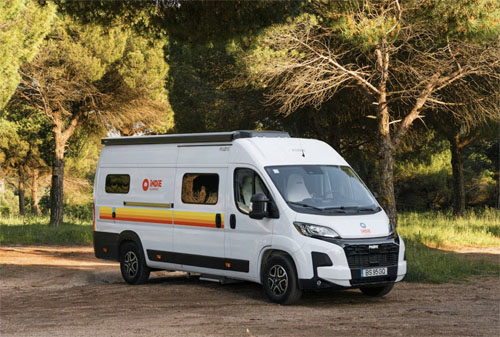
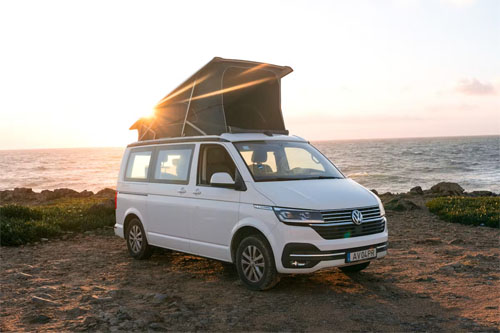
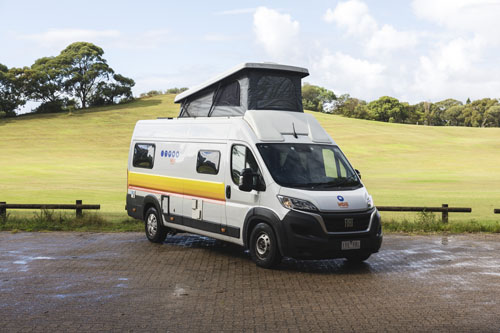
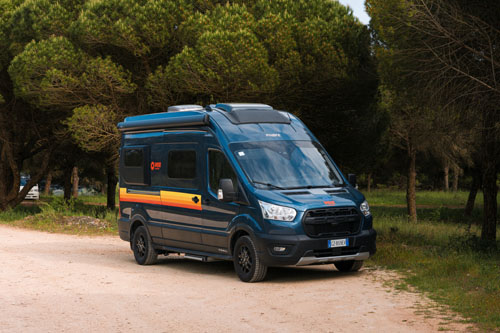
For a family RV rental exploring Frankfurt and its surrounding regions, Class SI - Semi-integrated models offer an excellent balance of comfort and maneuverability, with an average length of 6.9 meters and sleeping places for 3.5 people. Class B - Camper Vans are highly recommended for families prioritizing agility and easier parking in urban environments, featuring an average length of 5.5 meters and sleeping for up to 3.5, making them nimble for city exploration. Both Class SI and B vehicles are well-suited for navigating Germany's excellent roads, providing ample comfort for families without being overly cumbersome for smaller towns or campsites. Larger Class C Alcove (average 7.3m, 5.2 sleeping places) and Class A Integrated (average 7.2m, 4 sleeping places) models offer more interior space and amenities, ideal for longer trips with more occupants, but require more careful navigation in tight spots.
Should I Choose a Compact Van Instead of a Large RV in Frankfurt?
The choice between a compact van (like a Class B Camper Van) and a larger RV in Frankfurt depends on your family's travel priorities, though most RV sizes can be driven without major issues. A compact van, with an average length of 5.5 meters, offers superior maneuverability and significantly easier parking in crowded city centers and charming small villages. Larger RVs (Class SI, A, C, averaging 6.9m to 7.3m) provide substantially more interior space, advanced amenities, and overall comfort for families, particularly beneficial for longer trips or during inclement weather. For optimal family comfort, especially with multiple children, the added living space, dedicated sleeping areas, and larger kitchen/bathroom facilities of a semi-integrated or alcove RV often outweigh the slight increase in driving complexity. Consider a compact van if your itinerary focuses heavily on urban exploration with minimal time spent at the campsite; otherwise, a larger RV generally provides a more comfortable and spacious family experience. For ideas you can prep on the road, watch our RV-friendly recipes playlist on YouTube.
Can I Park Anywhere? Free & Wild Camping Rules in Frankfurt
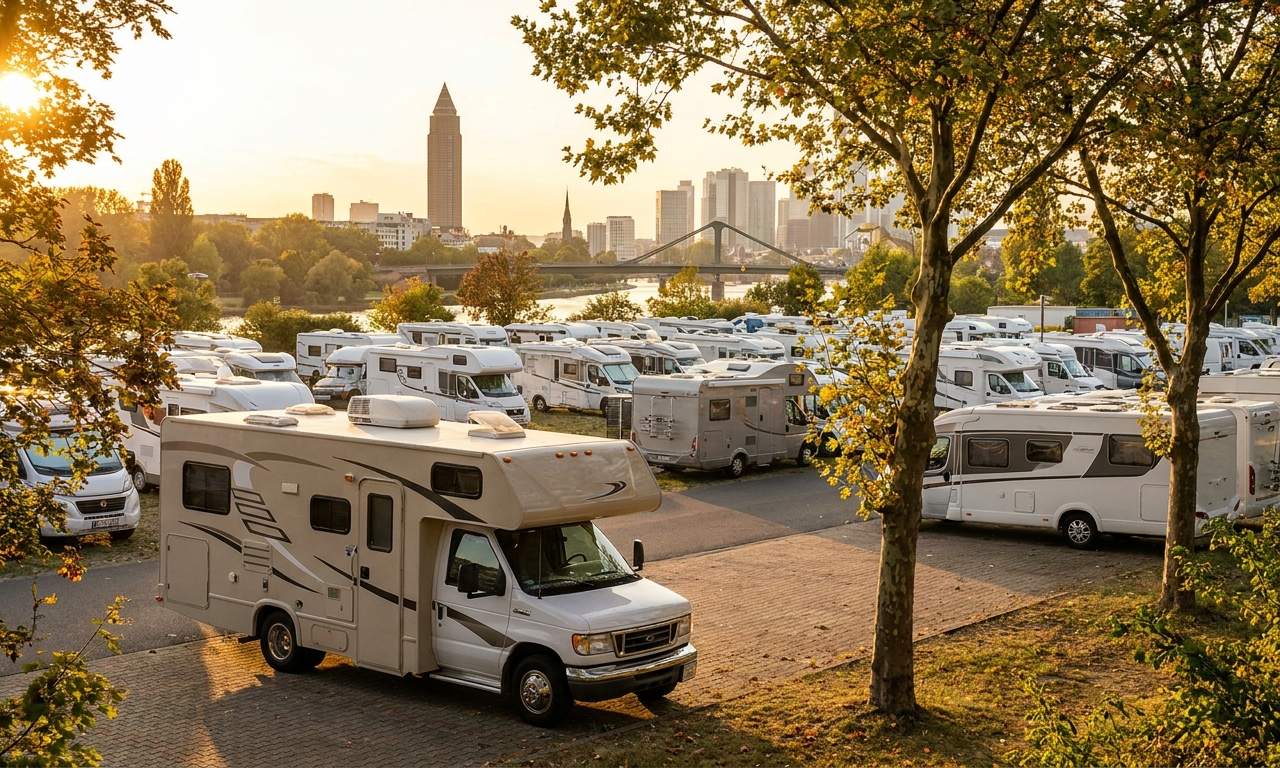
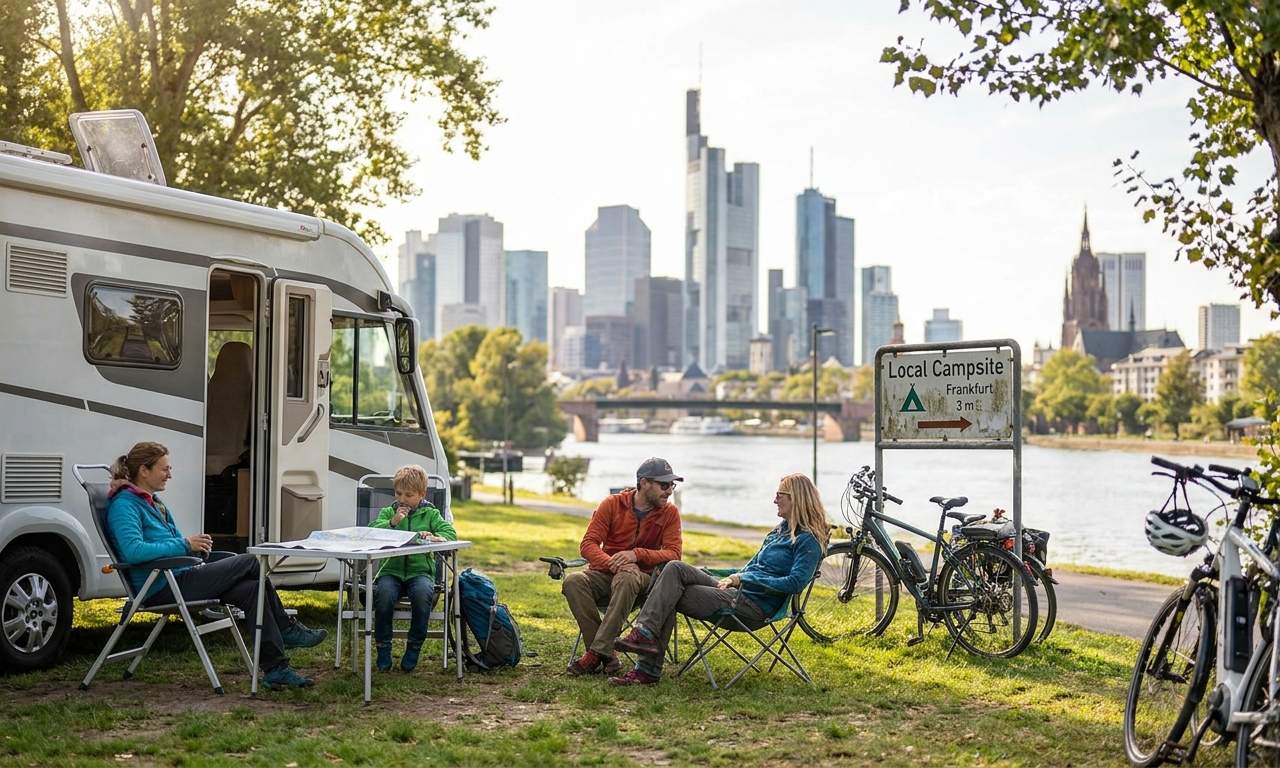
In Germany, wild camping—setting up camp outside designated areas for more than a single night's rest—is generally prohibited and can lead to significant fines. However, discreet overnight parking to restore driving fitness (e.g., sleeping for a few hours) is usually tolerated in public parking areas, provided no 'camping behavior' (such as extending awnings or setting out chairs) occurs. Frankfurt and its surrounding regions offer numerous 'Stellplätze' (designated RV parking spots), often equipped with basic amenities like waste disposal and electricity, which are legal and convenient for overnight stays. For proper camping with full facilities, families should utilize official campgrounds, which are widely available within a short drive of Frankfurt and offer safety and legal compliance. Always verify local regulations, as rules can vary by municipality and region, and prioritize official campsites for a hassle-free and legal overnight experience.
Can I Drive an RV Into the City Center? Heights, Tunnels & Local Signage
Yes, you can generally drive an RV into Frankfurt's city center, but it requires careful attention to specific local regulations and road signage. Frankfurt operates an Environmental Zone ('Umweltzone') in its central area, meaning your RV must display a valid green 'Umweltplakette' (environmental sticker) to enter, which is standard for most modern rental RVs. Drivers must be vigilant for local signage indicating height limits (e.g., for tunnels, underpasses, or parking garages), weight restrictions, narrow streets, or 'residents only' zones. Parking an RV directly in the city center can be challenging due to limited space and restrictions; consider parking at an RV-friendly campground just outside the city and utilizing Frankfurt's efficient public transport network for city exploration. Utilizing navigation systems with RV-specific settings is highly recommended to help avoid restricted routes and identify suitable parking or public transport connections.
What do I need to drive my motorhome in Germany?
To drive a motorhome in Germany, you need a valid driving license (Category B for vehicles up to 3.5t GVW, C1 for up to 7.5t GVW), along with your vehicle registration and proof of adequate insurance. Non-EU citizens are required to carry an International Driving Permit (IDP) in conjunction with their national driver's license for stays up to six months in Germany. All motorhomes must carry mandatory safety equipment including a warning triangle, a first-aid kit, and high-visibility vests for all occupants, to be used in case of a breakdown or accident. An 'Umweltplakette' (environmental sticker) is also compulsory for entry into designated Environmental Zones, such as the one in Frankfurt's city center.
Are RVs allowed in Germany?
Yes, RVs are widely allowed and are very popular in Germany, supported by excellent infrastructure including motorhome-friendly roads, numerous campgrounds, and dedicated 'Stellplätze' for overnight parking. Germany enforces specific regulations, such as Environmental Zones ('Umweltzonen') in many cities, including Frankfurt, which require RVs to display a valid environmental sticker. Speed limits for RVs vary based on their weight: generally 100 km/h on Autobahns and 80 km/h on rural roads for vehicles over 3.5 tonnes, while lighter RVs adhere to passenger car limits. Adherence to all German traffic laws, proper documentation, and respect for local parking and camping rules are essential for a smooth and enjoyable RV trip.
Can your family ride in a RV while it drives?
Yes, family members are legally permitted to ride in an RV while it is in motion in Germany, provided they are seated in designated seats and properly restrained with seatbelts. All passengers, including children, must use seatbelts, and children under 12 years old or shorter than 150 cm must be secured in an appropriate child seat or booster seat. It is crucial to ensure all loose items inside the RV are securely stowed away before driving to prevent them from becoming dangerous projectiles during sudden braking or turns. For safety, everyone should remain seated and belted while the RV is in motion, and movement within the living area should be avoided.
Can you sleep anywhere in a campervan in Germany?
No, you cannot legally sleep anywhere in a campervan in Germany, as wild camping (setting up a full camp) is generally prohibited and can result in significant fines. However, discreet overnight parking for a single night to restore driving fitness (e.g., sleeping for a few hours) is usually tolerated in public parking areas, provided no 'camping behavior' occurs. For anything beyond a brief overnight rest, families should utilize official campgrounds or designated 'Stellplätze' (motorhome parking areas) that offer specific facilities for RVs. Always prioritize official sites for safety, amenities, and compliance with local laws to ensure a hassle-free and legal overnight experience.
Can you drive at 15 in Germany?
No, you cannot drive an RV or car at 15 in Germany; the minimum legal driving age for a Category B license (for cars and most RVs up to 3.5t) is 17 or 18, depending on the accompanied driving program. For renting an RV, most rental companies in Germany require drivers to be at least 21 years old, and often 25 for larger or premium models, typically with a specified minimum number of years of driving experience. Driving an RV in Germany requires a valid Category B license for vehicles up to 3.5 tonnes, which is obtained at a minimum age of 18, or 17 with accompanied driving. Very limited exceptions exist for specific light mopeds or agricultural vehicles at 15 or 16, but these do not apply to motorhomes.
What is family insurance in Germany?
In the context of RV rental in Germany, 'family insurance' doesn't refer to a single specific product, but rather comprehensive coverage options for the vehicle and its occupants. Standard RV rentals typically include basic Third-Party Liability insurance (Haftpflichtversicherung) which covers damages to other vehicles or property caused by your rental RV, extending to family members as passengers. Families should actively consider additional insurance options offered by rental companies, suchas Collision Damage Waiver (CDW) to reduce your deductible in case of damage to the rental RV itself, or personal accident insurance for occupants. It is advisable to review your personal travel insurance or credit card benefits, as they may provide supplementary coverage for rental vehicles or travel-related incidents during your trip.
How much is RV insurance normally?
The cost of RV insurance varies significantly based on factors such as the RV's value, the driver's age and experience, the level of coverage chosen, and the deductible amount. When renting an RV for family travel in Germany, basic Third-Party Liability insurance is typically included in the rental price by law, covering damages to third parties. Optional rental insurance, such as Collision Damage Waiver (CDW) or Super CDW, can substantially reduce your financial liability (deductible) for damage to the rental RV itself. Expect to pay an additional daily fee for these optional coverages, which can range from approximately €15-€40 per day to reduce or eliminate deductibles, depending on the rental company and RV class.
What You Shouldn't Miss
- For finding campsites and campgrounds during your trip, check out RV PLANET (rvplan.net) — a great tool for locating available spots along your route.
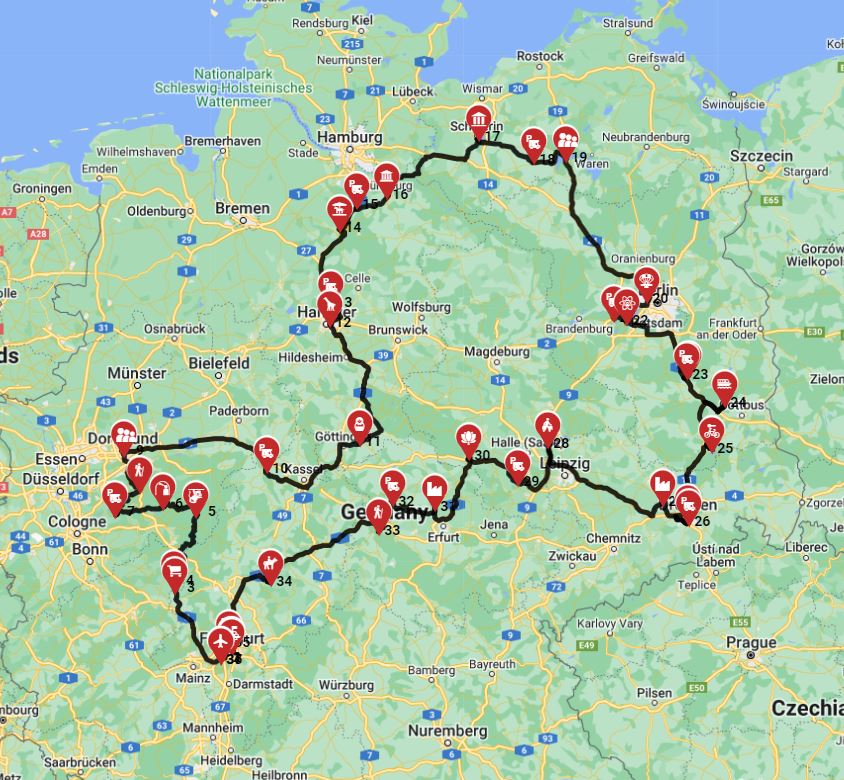
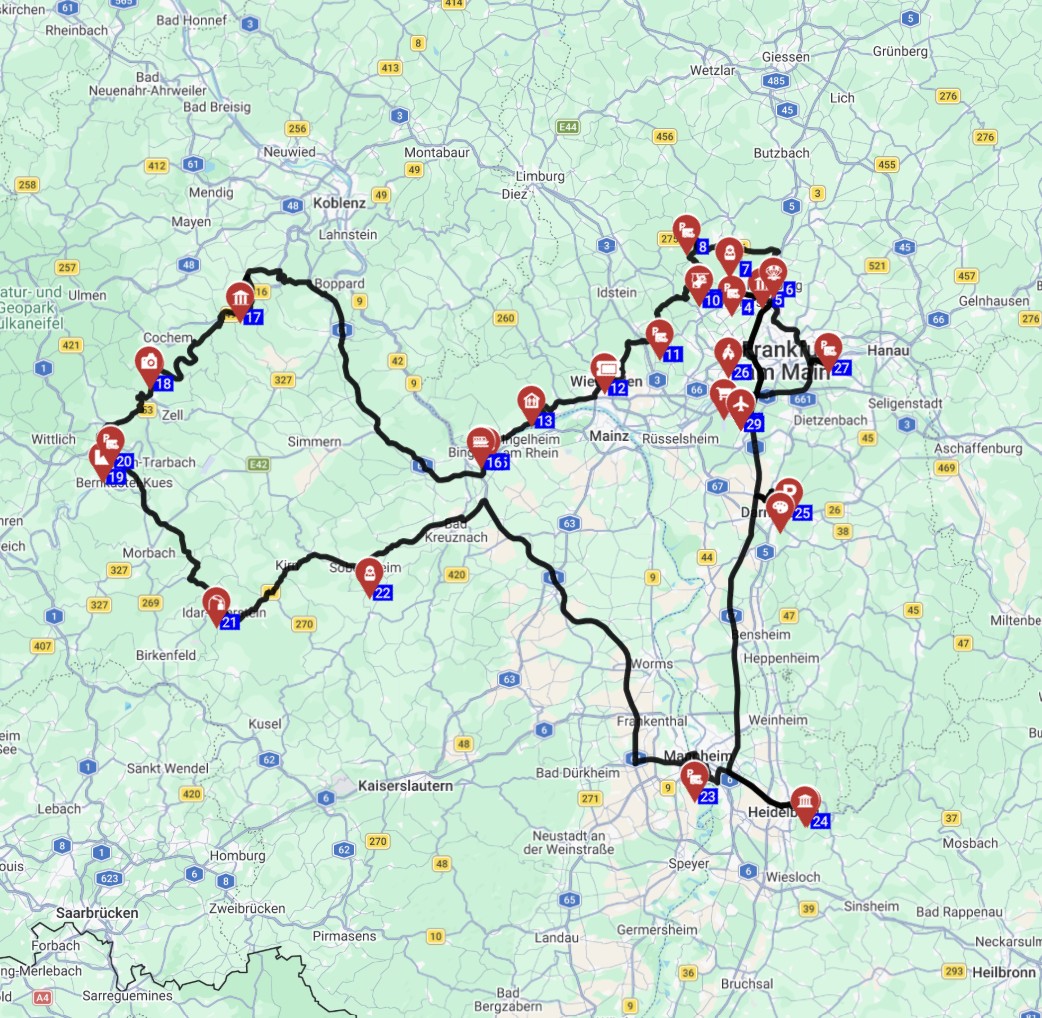
- Consider utilizing the Frankfurt Roundtrip - North Germany - Including Hamburg & Berlin (15 days, 2238 km) for a comprehensive exploration of northern Germany.
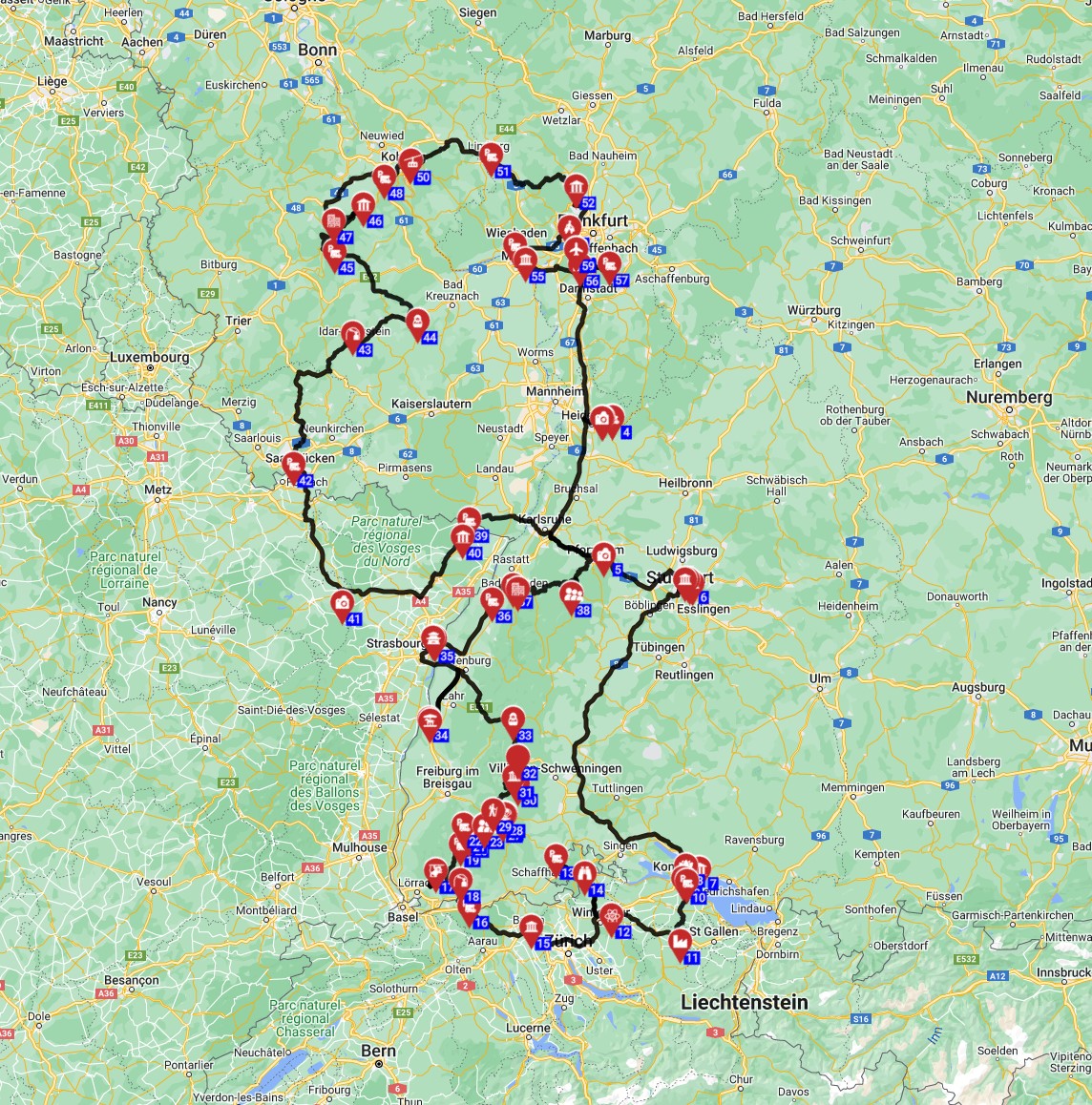
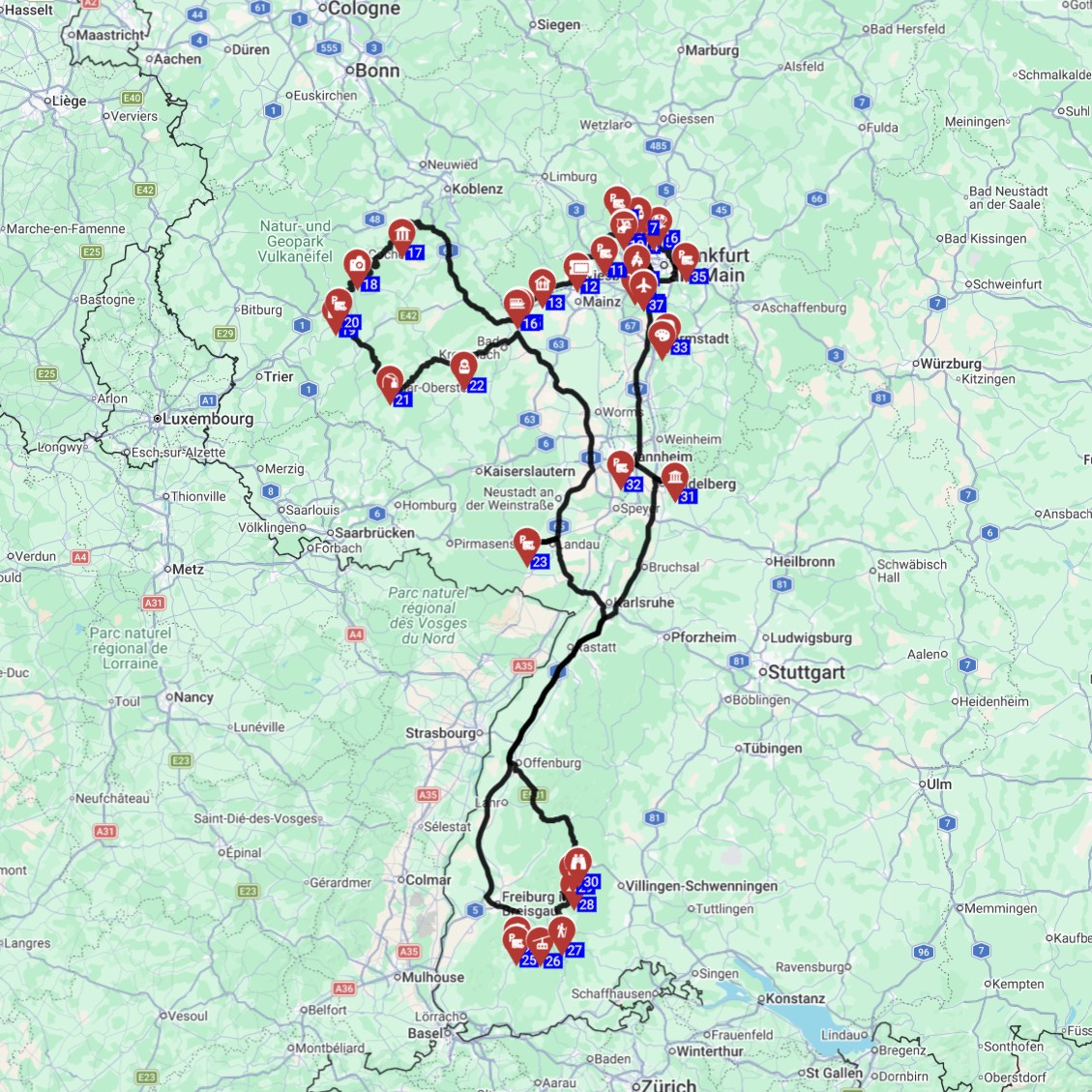
- The offers a 22-day journey covering 2005 km, perfect for immersing yourselves in the Black Forest region and other southern German attractions.
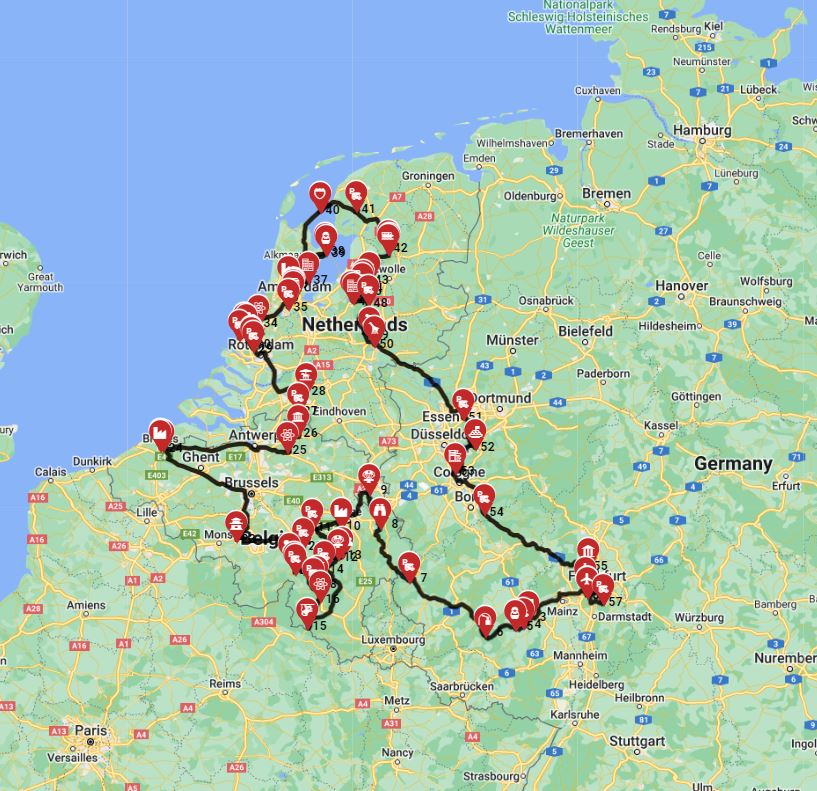
- For a diverse European adventure, the (22 days, 2255 km) is ideal, taking you through Germany, Belgium, and the Netherlands.
- Don't miss sampling Frankfurt's famous 'Ebbelwoi' (apple wine) in the traditional taverns of Sachsenhausen.
- Take advantage of Germany's extensive 'Stellplatz' network for convenient and affordable overnight parking.
Final Thoughts
Renting a family RV in Frankfurt offers an incredible way to experience Germany and its surrounding regions. By understanding the driving regulations, road conditions, and specific requirements for RV travel, you can ensure a smooth and enjoyable journey. Remember to plan your route, pack wisely, and embrace the freedom that RV travel provides.
With Bandana Caravan, you get the peace of mind that comes from transparent pricing and dedicated support, allowing you to focus on creating unforgettable memories. Start planning your Frankfurt RV adventure today and discover the convenience and joy of exploring Europe at your own pace!
Find Motorhome Rentals in Frankfurt