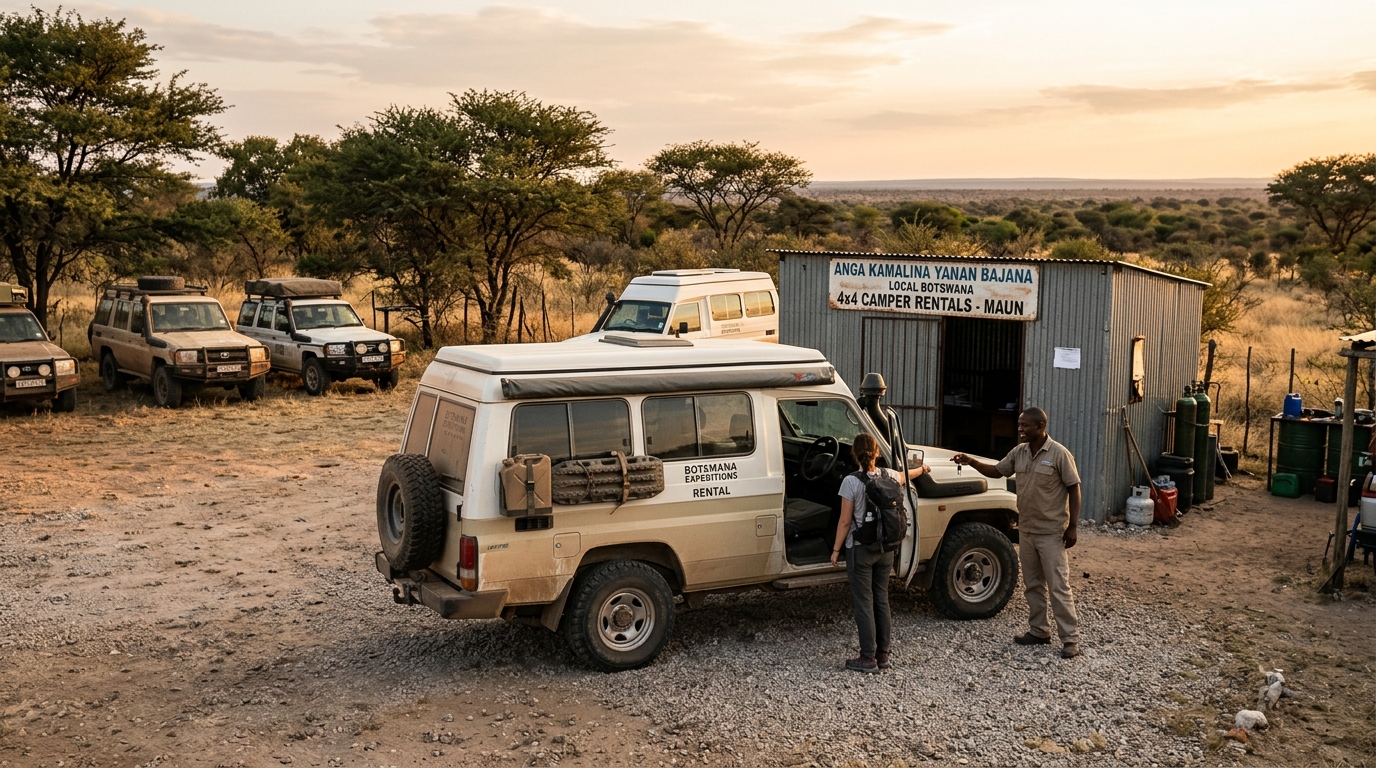
For live availability and current prices, start with our RV Rental Botswana - Complete Guide 2026 guide.
In This Guide
- Can You Drive an RV in Botswana - License & Age Rules
- Road Conditions & Terrain in Botswana
- RV Size Limits, Bridges & Restricted Zones
- Fuel - Diesel vs Petrol & Cost per 100 km
- Tolls, Vignettes & Border Rules
- Driving Tips for Family RV Rental Travelers
- Recommended RV Class for Botswana Roads
- Should I Choose a Compact Van Instead of a Large RV in Botswana?
- Can I Park Anywhere Free & Wild Camping Rules in Botswana
- Can I Drive an RV Into the City Center - Heights, Tunnels & Local Signage
- How much does it cost to rent an RV in Botswana?
- What is the best time of year to RV in Botswana?
- Is Botswana safe for RV travel?
- What documents do I need to rent an RV in Botswana?
- Can I cross borders with a rental RV from Botswana?
- What essential recovery gear should I pack for RVing in Botswana?
- How do I manage waste and water during off-grid RV camping in Botswana?
- What are common road conditions and fuel stops in remote areas of Botswana?
- What are the insurance requirements for RV rental in Botswana?
- How can I stay connected while RVing in remote Botswana?
- Are there cultural sites and non-wildlife attractions for RV travelers in Botswana?
- Top Cities for RV Rental in Botswana
- Botswana RV Road Rules and Essential Local Info
Embarking on a family RV adventure in Botswana is an extraordinary way to discover Southern Africa's breathtaking landscapes and abundant wildlife at your own pace. Imagine waking up to the sounds of the African bush from your comfortable rented motorhome, ready for another day of exploration. Botswana offers a unique blend of wilderness and well-developed infrastructure, making it an increasingly popular destination for RV travelers. For live availability and current prices, start with our RV Rental Botswana - Complete Guide 2024 guide, your comprehensive resource for planning an unforgettable journey. We at Bandana RV are true RV specialists, dedicated to ensuring your trip is seamless, from comparing family RV rental options in Botswana to providing full transparency on costs, so there are no hidden fees and no surprises.
Can You Drive an RV in Botswana - License & Age Rules
A valid national driver's license from your home country, accompanied by an International Driving Permit (IDP), is generally required for driving a rented RV in Botswana. The IDP serves as an official translation of your license, facilitating communication with local authorities, though it is not mandatory in all cases for non-English speaking licenses. The minimum driver age for any RV rental in Botswana is 21 years old, with no young driver surcharges or vehicle class restrictions based on age, a significant advantage for younger families or groups of friends. For all motorhome classes, including Class A, Class B, and Class C, a standard car driver's license is sufficient, as these vehicles fall below the heavier weight thresholds that might require a commercial license in other regions. Always ensure your license is valid for the entire duration of your week-long trip or extended road trip.
Road Conditions & Terrain in Botswana
Botswana offers a mix of well-maintained tarred roads that connect major towns and tourist hubs, alongside extensive gravel, sand, and sometimes corrugated tracks, especially prevalent in national parks and remote areas. While tarred roads are generally in good condition, secondary routes and park roads often require higher ground clearance, making the journey an adventurous experience rather than a stressful one. Drivers should anticipate encountering wildlife on roads, particularly outside protected areas and at dawn or dusk, necessitating slow and vigilant driving. Encouraging slow, scenic travel, aiming for a maximum of 100-150 km per day on average, allows families to fully appreciate Botswana's unique landscapes and diverse wildlife, turning the journey into an integral part of the adventure. This approach helps in safely navigating changing road conditions and unexpected animal crossings.
RV Size Limits, Bridges & Restricted Zones
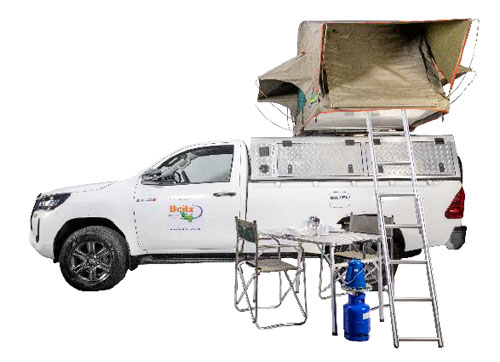
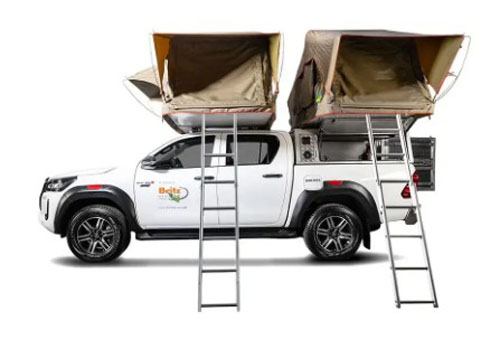
Botswana generally does not impose strict RV size limits or have numerous low bridges typically found in some other regions, allowing most standard motorhome sizes to navigate the country without issues. However, specific environmental zones, particularly within national parks and wildlife reserves like the Okavango Delta or Moremi Game Reserve, may have vehicle restrictions or require special permits for larger vehicles due to the sensitive nature of the terrain. Access to certain remote tracks or areas with very deep sand can be challenging for very large, two-wheel-drive motorhomes, making smaller, higher-clearance options or Class TC (Truck Camper) rentals like the "Patagonia Camper 4x4 double cab" more suitable for adventurous routes. Ferry crossings, such as those to access certain islands or riverine areas, should be checked in advance for vehicle size and weight limitations, although these are less common for typical RV itineraries.
Fuel - Diesel vs Petrol & Cost per 100 km
Diesel is the predominant fuel type for RVs in Botswana and is widely available at fuel stations, while petrol (gasoline) stations are also common in major towns and along main routes. Based on Bandana's global fleet data, a typical semi-integrated or Class C motorhome, like the "cruise america rv rental example Explorer" with its 2.5-liter Turbo Diesel engine, consumes between 10-12 liters per 100 km. The cost per 100 km will vary with current fuel prices, but travelers should budget for fuel to be a significant ancillary expense, especially when covering long distances in remote areas where prices can be higher due to logistics. It is crucial to refuel whenever possible, especially before entering national parks or remote regions, as fuel stations can be scarce or have limited operating hours, sometimes operating only between 7 AM and 6 PM. For budgeting and tracking these expenses, remember that RV PLANET routes offer tools to itemize every cost along your way, helping you stay on track financially. On the routes offered through RV PLANET routes, you can itemize and track every expense along the way for easy budgeting.
Tolls, Vignettes & Border Rules
Botswana does not typically employ tolls or vignettes on its roads in the same way many European countries do, however, various road user charges and carbon taxes may apply upon entry or exit. For cross-border travel with a rented RV into neighboring countries like Namibia, South Africa, or Zambia, comprehensive documentation is essential; this includes your passport, visa (if required for your nationality), driver's license, an International Driving Permit, and a valid Carnet de Passage or temporary import permit for the vehicle. Rental companies must provide a specific letter of authorization for cross-border travel, along with the vehicle's registration papers and proof of insurance for all countries you intend to visit. Border crossing procedures can be time-consuming, sometimes taking 1-3 hours, so travelers should allow ample time, ensure all paperwork is meticulously in order, and be prepared for potential road levies collected at the border posts.
Driving Tips for Family RV Rental Travelers
For family RV rental travelers in Botswana, prioritizing safety and comfort means planning regular stops every 2-3 hours to allow children to stretch, eat, and use facilities, especially on extended driving days. Drive defensively and adhere strictly to speed limits (typically 120 km/h on major highways, 80-100 km/h on secondary roads, and 40 km/h in national parks), as livestock and wildlife frequently cross roads, particularly in rural areas; avoiding driving at night is highly recommended due to increased wildlife activity. Pack a well-stocked first-aid kit, ample water (at least 5-10 liters per person per day), and snacks, as facilities can be sparse between towns, and ensure communication devices are charged. Familiarize yourself with basic vehicle checks like tire pressure and fluid levels, as remote driving can be demanding on RVs. Consider pre-downloading offline maps, such as through Google Maps or Tracks4Africa, as mobile connectivity (Mascom, Orange Botswana) can be unreliable in many remote parts of Botswana, often dropping to 0-1 bar outside major towns.
Recommended RV Class for Botswana Roads
For a family RV rental in Botswana, Class SI (Semi-integrated) and Class B (Camper Van) motorhomes from Bandana's fleet are often recommended, balancing comfort with maneuverability for varying road conditions. Class SI models, with an average length of 6.9 meters and sleeping capacity for around 3-4 adults (averaging 3.4 adults), provide ample space and comfort for families, making them suitable for major tarred routes and well-graded gravel roads. For example, a vehicle like the '2 Berth Rover' would offer excellent living features for a family. Class B Camper Vans, averaging 5.8 meters in length and accommodating around 2-3 adults (averaging 2.7 adults), offer greater agility and are ideal for smaller families or those tackling more challenging tracks, often featuring better ground clearance. For the most rugged terrain and excellent ground clearance, Class TC (Truck Camper) models like the '4x4 Scout Adventure Truck Camper Gold', averaging 5.5 meters, can be an excellent choice, albeit with more compact living spaces. These vehicles are generally equipped with air conditioning and essential kitchen facilities, making them suitable for the Botswana climate.
🎬 Video coming soon
Should I Choose a Compact Van Instead of a Large RV in Botswana?
Choosing a compact van over a large RV in Botswana primarily comes down to balancing maneuverability on rougher tracks against family comfort and amenities. While Botswana's main roads accommodate all RV sizes, a compact van (like a Class B Camper Van) genuinely helps when navigating tighter tracks within some national parks, areas with deep sand (especially in the Central Kalahari Game Reserve), or more challenging river crossings due to its smaller footprint and often better ground clearance. For families, a larger RV (such as a Class SI or C), like the 'Family Sleeper (FS)' which offers 3 double beds, typically provides significantly more indoor living space, a larger kitchen with a 3-burner gas stove, a separate toilet/shower, and more storage, enhancing comfort during longer trips or periods of inclement weather. The trade-off is often that larger RVs are heavier and longer, potentially limiting access to the very most adventurous routes but providing a more comfortable 'home away from home' experience, which can be invaluable for families. Drive slowly and carefully, and you can drive almost anywhere without issues. No need to stress - just use common sense and pay attention to road conditions.
Can I Park Anywhere Free & Wild Camping Rules in Botswana
While true 'wild camping' (parking anywhere without permission) is generally not permitted in Botswana, particularly within national parks, reserves, or private land, designated campsites and official wild camping sites are widely available. In national parks and wildlife management areas, you must book and stay in designated campsites, which vary from rustic (e.g., in remote parts of Chobe National Park) to fully serviced (e.g., at certain private concessions), to protect sensitive ecosystems and manage wildlife interactions. Off-grid camping requires careful planning for waste management, strictly adhering to a 'pack out everything you pack in' policy for all trash and waste, water sourcing (carrying sufficient supplies from major towns or purifying local water, with boiling recommended), and power solutions (solar panels, extra batteries are highly recommended for extended stays, especially for powering a refrigerator for your RV-friendly recipes playlist). Respecting local communities and minimizing environmental impact are paramount; always ask for permission before camping on private or communal lands outside designated areas. Rules vary by region, so always check local regulations and follow local law before parking overnight. For finding campsites and campgrounds during your trip, we recommend using RV PLANET (rvplan.net) - a great resource for locating available spots along your route.
Can I Drive an RV Into the City Center - Heights, Tunnels & Local Signage
Yes, you can generally drive an RV into city centers in Botswana, as most urban areas, such as Gaborone and Francistown, are not characterized by the strict height limits, narrow streets, or numerous low tunnels found in some European cities. Cities like Gaborone or Maun are relatively RV-friendly, but drivers should still pay attention to local signage, especially concerning potential height limits for underground car parks (rare for RVs), restricted areas, or residents-only streets. Parking a large RV, such as a 7.5-meter long Class C motorhome, in city centers can be the main challenge, as dedicated RV parking is rare; it's often easier to park on the outskirts and use taxis or local transport (like shared minibuses or local cabs) for inner-city exploration. Environmental zones are not typically a concern for RVs in Botswana's cities; however, awareness of general road conditions and traffic flow in busier areas is always advisable. Drive slowly and carefully, and you can drive almost anywhere without issues. No need to stress - just use common sense and pay attention.
How much does it cost to rent an RV in Botswana?
The cost to rent a family RV in Botswana varies significantly based on the RV class, rental duration, season, and included amenities, with daily rates typically ranging from $150 to $400 USD or more. Prices are generally higher during the peak dry season (June to October) due to increased demand for wildlife viewing, with some premium Class C motorhomes reaching $500+ USD/day. Conversely, rates can be lower in the wet or shoulder seasons, potentially saving travelers 10-25% on a two-week adventure. Factors influencing the total cost include unlimited mileage packages (often $50-$100 USD/day extra), comprehensive insurance coverage (which can add $30-$60 USD/day), additional equipment like camping gear or satellite phones, and one-way rental fees (which can range from $150 to $500 USD). Always inquire about all inclusions and exclusions, such as campground fees, fuel, and cross-border permits, to understand the full financial commitment. For current deals and transparent pricing, check our RV Rental in Botswana - Prices and Best Deals 2024 page, where we ensure full transparency with no hidden fees and no surprises.
What is the best time of year to RV in Botswana?
The best time of year to RV in Botswana for most travelers is during the dry season, which spans from May to October, when wildlife viewing is at its peak and road conditions are generally more favorable. During this period, water sources are scarce, concentrating animals around permanent waterholes and rivers like the Chobe River, making them easier to spot, and the cooler, drier weather is ideal for camping and outdoor activities. Daily temperatures average 20-30°C, and nights can drop to 5-15°C. The wet season (November to April) brings lush landscapes and migratory birds, offering a different beauty but also challenging road conditions due to mud and seasonal flooding, especially in remote areas of the Okavango Delta, potentially limiting access for 2WD motorhomes. Shoulder seasons (April/May and November) can offer a good balance of pleasant weather, fewer crowds, and potentially lower prices, though with slightly less predictable wildlife sightings or road conditions.
Is Botswana safe for RV travel?
Botswana is widely considered one of Africa's safest countries for RV travel, offering a stable political environment and low crime rates, particularly in major tourist areas like the Okavango Delta, Chobe National Park, and Central Kalahari Game Reserve. However, specific safety advice beyond general tips includes strict adherence to wildlife encounter protocols on roads, such as maintaining safe distances (at least 20-30 meters) and never feeding animals, especially in national parks where encounters are frequent. For emergency communication in remote areas, carrying a satellite phone is highly recommended as cell service is unreliable, often completely absent, beyond 50-100 km from major towns. Understanding medical emergency procedures, including having a comprehensive medical evacuation plan that covers remote areas (such as through Okavango Air Rescue), is crucial. Health precautions beyond standard advice include taking anti-malarial medication for travel in malaria zones (e.g., Okavango Delta, Chobe, especially during the wet season), using insect repellent to deter tsetse flies, and ensuring waterborne illnesses are avoided by using purified or bottled water for all consumption in camping scenarios, with a recommended minimum of 5 liters per person per day.
What documents do I need to rent an RV in Botswana?
To rent an RV in Botswana, you will primarily need a valid driver's license from your home country, an International Driving Permit (IDP), your passport, and the credit card used for booking. Ensure your driver's license is valid for the entire rental period of your two-week adventure or longer, and that your IDP is current, as it serves as a translation of your license and is legally required for foreign drivers from non-English speaking countries. Rental agreements will require proof of your identity via passport, and for international travelers, a valid visa for Botswana may also be necessary depending on your nationality and length of stay. It's also advisable to carry a copy of your rental agreement and comprehensive travel insurance documents, as these may be requested by authorities or in case of an incident. Always double-check with your specific rental supplier in Botswana, such as Bandana partners like Apollo or Britz, for any additional documentation they might require.
Can I cross borders with a rental RV from Botswana?
Yes, you can cross borders with a rental RV from Botswana into neighboring countries like Namibia, South Africa, or Zambia, but it requires explicit permission and specific documentation from your rental company. Before your trip, inform your rental provider of your cross-border itinerary to obtain a 'Letter of Authorization' or 'Border Letter,' which grants you permission to take the vehicle outside Botswana. You will also need a valid Carnet de Passage for the vehicle, or specific temporary import permits and road taxes (e.g., carbon tax of approximately BWP 200) for each country you enter, along with your passport, driver's license, an IDP, and proof of vehicle insurance that extends coverage across all intended countries. Familiarize yourself with the visa requirements for all countries you plan to visit, as well as their specific border crossing procedures and any associated fees or road levies to ensure a smooth transition. This level of planning is part of what makes Bandana your supportive partner, helping you coordinate all necessary paperwork before your booking.
What essential recovery gear should I pack for RVing in Botswana?
For RVing in Botswana's unique terrain, especially off the main tarred roads and onto the gravel and sand tracks of national parks, essential recovery gear includes a comprehensive tire repair kit, a high-lift jack capable of lifting a 5-ton motorhome, and an air compressor for critical tire pressure adjustments. Beyond standard spare tires, you should pack tools for quick punctures, recovery straps or ropes (rated for 8-10 tons) for getting unstuck, and a sturdy shovel for digging out tires from sand or mud. Specific vehicle modification recommendations for Botswana's conditions often include opting for RVs with higher ground clearance (at least 20 cm recommended), suitable all-terrain tires (e.g., BFGoodrich K02), and potentially a snorkel if anticipating deep water crossings (though this is more common for 4x4 vehicles than standard RVs). Sand driving techniques are vital; ensure you know how to lower tire pressure for better traction (e.g., to 1.5-1.8 bar) and how to use recovery boards (sand ladders) effectively to extricate your RV from soft sand. Consider reviewing our One-Way RV Rental in Botswana - Price Guide 2024 for options that might include such specialized vehicles.
How do I manage waste and water during off-grid RV camping in Botswana?
Managing waste and water during off-grid RV camping in Botswana requires a strict 'leave no trace' philosophy, emphasizing responsible disposal and self-sufficiency to protect fragile ecosystems. For waste management, all trash must be compacted and carried out of sensitive ecosystems; black and grey water (from sinks and showers) should only be emptied at designated dump stations, never in the bush. Water sourcing involves carrying ample potable water from towns (a typical 100-liter fresh water tank in a Class C motorhome like the 'MIC' lasts about 3-4 days for a family of four), and having a reliable water purification system (e.g., filter, purification tablets) for emergency refills from natural sources, always boiling if unsure. Power solutions for extended off-grid stays typically involve robust battery systems charged by solar panels or while driving, supplementing with a generator if permitted and necessary. Adhering to local regulations for wild camping in sensitive ecosystems, such as national parks, means minimizing your footprint, avoiding disturbance to wildlife, and respecting designated areas, with fines up to BWP 1000 for non-compliance.
What are common road conditions and fuel stops in remote areas of Botswana?
Common road conditions in remote areas of Botswana frequently involve thick sand tracks (especially in the Kalahari regions), severely corrugated gravel roads that can be very taxing on vehicles, and seasonal water crossings (particularly during and after the wet season in regions like the Okavango Delta). Detailed route breakdowns should account for these conditions; allow significantly more time for travel on unpaved roads (often reducing average speed to 30-50 km/h) and inquire locally about real-time conditions before setting out, especially regarding water levels. Reliable fuel stops in remote areas are scarce; towns like Maun, Ghanzi, or Kasane are primary refueling points, but smaller settlements might have limited options, so always fill up when you can (most RVs have fuel tanks of 70-120 liters) and carry extra fuel in jerry cans if venturing deep into wilderness areas. Vehicle repair services in remote areas are very basic, with only major towns offering full workshops; travelers should be equipped to handle minor repairs (tire changes, fluid top-ups) themselves and understand that specialized RV repairs might require significant travel to larger towns.
What are the insurance requirements for RV rental in Botswana?
Insurance for RV rental in Botswana typically includes comprehensive vehicle insurance, often with a Collision Damage Waiver (CDW) and an associated excess (deductible), which is mandatory and provided by the rental company. The standard deductible can be high, often between $1500-$3000 USD. Beyond basic vehicle coverage, it is crucial to arrange for comprehensive medical evacuation insurance, specifically tailored for remote African RV travel, to cover emergency transport from isolated locations to suitable medical facilities, with costs potentially exceeding $10,000 USD without coverage. Travelers should also secure a robust travel insurance policy that covers personal liability, luggage, trip cancellation, and medical emergencies, ensuring it specifically includes adventure activities or remote travel if applicable. You can upgrade to a top-level deductible for extra peace of mind, significantly reducing your out-of-pocket liability. Understand the terms of the vehicle insurance, including what is covered (e.g., damage from wildlife encounters, sand damage) and any exclusions, as well as the excess amount you would be liable for in case of an incident.
How can I stay connected while RVing in remote Botswana?
Staying connected while RVing in remote Botswana can be challenging, as reliable cell service areas are largely limited to major towns like Gaborone, Maun, and Kasane, and along primary highways, with coverage quickly diminishing in national parks and wilderness areas. For essential communication and emergencies in remote regions, a satellite phone is a highly recommended, often necessary, solution, providing reliable voice and sometimes basic data connectivity regardless of cellular network availability; rental costs for these can range from $15-$30 USD per day. While some lodges or larger campsites may offer limited Wi-Fi hotspots, internet access in remote areas is generally scarce and often slow or expensive, so planning for offline navigation and entertainment (pre-downloading movies, music, or e-books) is advisable. Consider carrying a local SIM card (e.g., Mascom or Orange Botswana) for better coverage in areas where it is available, and always inform someone of your itinerary and expected return times, especially before entering areas with no network coverage for several days.
Are there cultural sites and non-wildlife attractions for RV travelers in Botswana?
Beyond its renowned wildlife safaris, Botswana offers RV travelers opportunities to explore significant cultural sites and unique geographical features, providing a richer understanding of the country. RV travelers can visit historical sites like the Tsodilo Hills, a UNESCO World Heritage site known for its ancient San rock art (over 4,500 paintings dating back 100,000 years), or explore the vast salt pans of Makgadikgadi and Nxai Pans for a surreal, otherworldly experience. Interacting respectfully with local communities is key to responsible tourism; visiting cultural villages (e.g., those near Maun or Gumare) or local markets provides insight into Botswana's diverse cultures. Learning a few basic Setswana language tips, such as 'Dumela' (hello) or 'Ke a leboga' (thank you), can significantly enhance interactions with locals and demonstrate cultural respect. Minimizing environmental impact includes staying on designated tracks, practicing proper waste disposal, and supporting local economies through ethical purchases, ensuring these unique attractions are preserved for future generations.
Top Cities for RV Rental in Botswana
Botswana offers several excellent starting points for your family RV rental adventure, each providing access to different facets of this diverse country. For a comprehensive overview of prices and deals, you might look at our Family RV Rental in Botswana - Pricing Guide 2024. Here are some of the top cities:
- Gaborone: As the capital and largest city, Gaborone offers the widest selection of rental motorhomes and campervans. It's a great base for exploring the southern part of Botswana, including the Mokolodi Nature Reserve just 12 km south of the city.
- Maun: Known as the gateway to the Okavango Delta, Maun is the primary hub for safaris and a popular pickup location for those heading into the wilderness. You can find robust 4x4 campervans here, ideal for the sandy tracks leading to the delta's edges.
- Kasane: Located in the north, Kasane is the entry point for Chobe National Park, famous for its enormous elephant herds. This town is perfect for RV travelers focusing on the northern wildlife areas and potential cross-border trips to Victoria Falls in Zimbabwe or Zambia.
- Francistown: Botswana's second-largest city, Francistown, serves as a key logistical hub in the northeast. It’s a convenient stop for resupply and a good starting point for exploring the eastern reserves or continuing north to Kasane.
- Ghanzi: Situated in the western Kalahari region, Ghanzi is known for its vibrant San (Bushman) cultural experiences. It's an ideal spot for RVers looking to connect with indigenous cultures and explore the vast, semi-arid landscapes of the Central Kalahari.
- Palapye: A growing town in the eastern part of the country, Palapye is strategically located along the A1 highway, making it a practical stop for travelers transiting between Gaborone and Francistown or heading towards the Tuli Block.
- Serowe: This historical village, the traditional capital of the Bangwato people, offers cultural insights and is close to the Khama Rhino Sanctuary, a successful conservation project that is easily accessible with a rented motorhome.
Choosing your pickup city wisely can significantly influence your adventure, so consider your preferred route and the available RV rental deals in Botswana - Latest Offers 2024. If your journey extends beyond Botswana, our RV Rental Africa - Complete Guide 2024 provides valuable continent-wide insights.
Botswana RV Road Rules and Essential Local Info
Navigating Botswana in a rented RV is an exciting experience, and understanding local road rules and essential information will ensure a smooth journey. In Botswana, vehicles drive on the left-hand side of the road, and seatbelts are mandatory for all occupants. Speed limits are generally 120 km/h on national highways, 80-100 km/h on secondary roads, and 40 km/h in national parks and urban areas. Always be aware of livestock and wildlife, which frequently roam freely and can pose a hazard, especially outside daylight hours. While there are no specific RV road tolls, temporary road permits and carbon taxes may be levied at border crossings. In case of an emergency, the national numbers are Police 999, Ambulance 997, and Fire 998. Mobile connectivity, primarily via Mascom, Orange Botswana, and BTC, is reliable in major towns but diminishes rapidly in remote wilderness areas, making a satellite phone a wise investment for deep bush travel. For finding campsites and campgrounds during your trip, RV PLANET (rvplan.net) offers valuable resources. We recommend a slow travel approach, averaging no more than 100-150 km per day, allowing ample time to appreciate the stunning scenery, connect with local culture, and enjoy the journey without rush. This pace is crucial for safety and for truly experiencing the magic of Botswana.
What You Shouldn't Miss
- Chobe National Park Game Drives: Experience world-class wildlife viewing, especially incredible elephant herds, on morning and afternoon game drives from your campervan in Chobe National Park.
- Okavango Delta Mokoro Trips: Explore the tranquil waterways of the Okavango Delta in a traditional dugout canoe (mokoro), offering a unique, silent wildlife experience from Maun.
- Makgadikgadi Pans Stargazing: Witness the unparalleled clarity of the Milky Way and stunning sunrises over the vast, otherworldly Makgadikgadi Salt Pans, often accessible with 4x4 capable campervans during the dry season.
- Central Kalahari Game Reserve Wilderness: Venture into the remote heart of the Kalahari for a true wilderness experience, encountering unique desert-adapted wildlife and enjoying secluded campsites.
- Tsodilo Hills Ancient Rock Art: Discover the spiritual significance of Tsodilo Hills, a UNESCO World Heritage site boasting thousands of ancient rock paintings by the San people, a profound cultural journey.
- Khama Rhino Sanctuary: Visit this community-based wildlife project near Serowe to see both black and white rhinos in their natural habitat, supporting vital conservation efforts with your RV rental.
Looking for expert insights from Avi Bandana? Top 5 Adventures - recommendations from Avi Bandana.
Final Thoughts
An RV adventure through Botswana promises an incredible family experience, blending the thrill of wildlife safaris with the freedom of the open road. From the moment you compare motorhome prices for Botswana to the final campfire under the African stars, our goal is to support your journey with transparency, expert advice, and unwavering assistance. Whether you're a pre-planner eager to map out every detail with RV PLANET routes or a spontaneous traveler ready to discover new campsites each day, Botswana's diverse landscapes await.
Remember to embrace slow travel, allowing 100-150 km per day on average, to truly immerse yourselves in the culture, food, and breathtaking scenery. With Bandana RV, you're choosing a partner that stands for honesty and support, ensuring your RV rental experience in Botswana is everything you dreamed of. Get inspired for your next trip and discover top destinations, planning tips, all in one place!
So, pack your bags, prepare for an unforgettable journey, and let Bandana RV help you find your perfect family RV rental in Botswana. Check Botswana RV Rental Prices Now and begin planning the adventure of a lifetime.