
In This Guide
- Where to Camp in UK — Top Options
- Campground Types in UK (National, Private, Wild)
- Featured RV Park or Campground in UK
- Hookups & Amenities — What to Expect
- Booking Windows & Reservations in UK
- Nearby Supermarkets & Resupply Points
- Best RV Class for Camping in UK
- How to Save on Campgrounds in UK
- Can you wild camp in an RV in the UK
- How much does a family RV rental holiday in the UK cost
- What are the driving challenges for RVs in the UK, especially for North Americans
- How is mobile signal and Wi-Fi for RVs in remote UK areas
- Can I bring my pet on an RV rental trip in the UK
- What are the benefits of off-season RV travel in the UK
- What local etiquette should I know for RV travel in the UK
- What are some unique RV routes and hidden gems in the UK
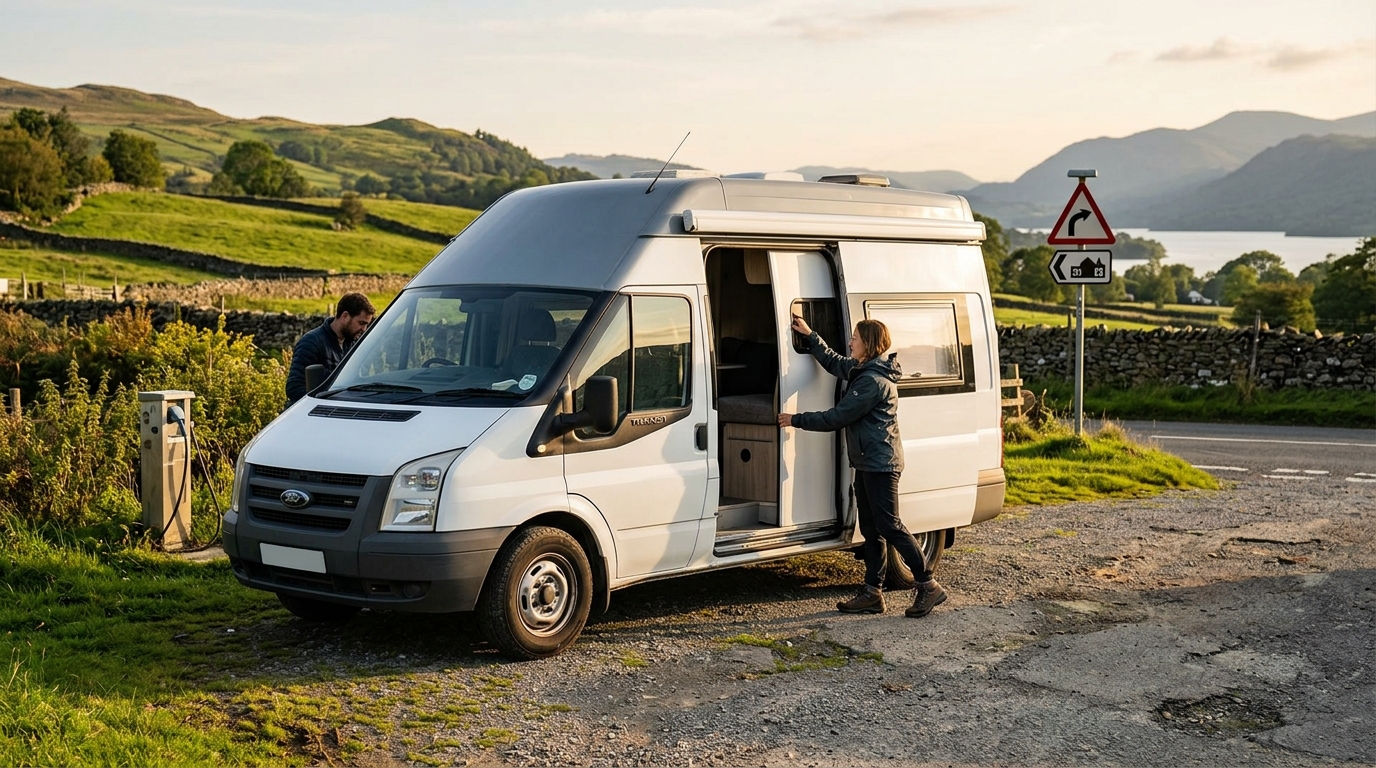
Embarking on a family RV camping adventure in UK offers an incredible way to explore its diverse landscapes and rich history, creating lasting memories. Imagine waking up to the rolling hills of the Cotswolds, exploring ancient castles, or enjoying fresh sea air along the Cornish coast - all from the comfort of your rented motorhome. With Bandana Caravan, your journey is transparent, fully supported, and tailored by true RV specialists. We've been helping tens of thousands of travelers since 2001, ensuring a smooth and enjoyable trip for every family. For live availability and current prices, start with our RV Rental UK - Complete Guide 2026 guide.
Where to Camp in UK — Top Options
The UK offers diverse family-friendly RV camping options, from the rugged Scottish Highlands to the serene Lake District and the scenic Cornish coast, ensuring every family finds their perfect spot. Consider regional gems like the New Forest for wildlife encounters with its famous ponies, or the Northumberland Coast for historical sites like Bamburgh Castle and dramatic beaches. Many regions boast well-equipped campsites near major attractions and natural beauty spots, catering specifically to families with amenities such as playgrounds and dedicated activity areas. For families looking to explore charming villages and stunning coastlines, areas like Devon and Cornwall offer hundreds of sites, with many having direct beach access or nearby walking trails, making them popular choices for a week-long trip.
Campground Types in UK (National, Private, Wild)
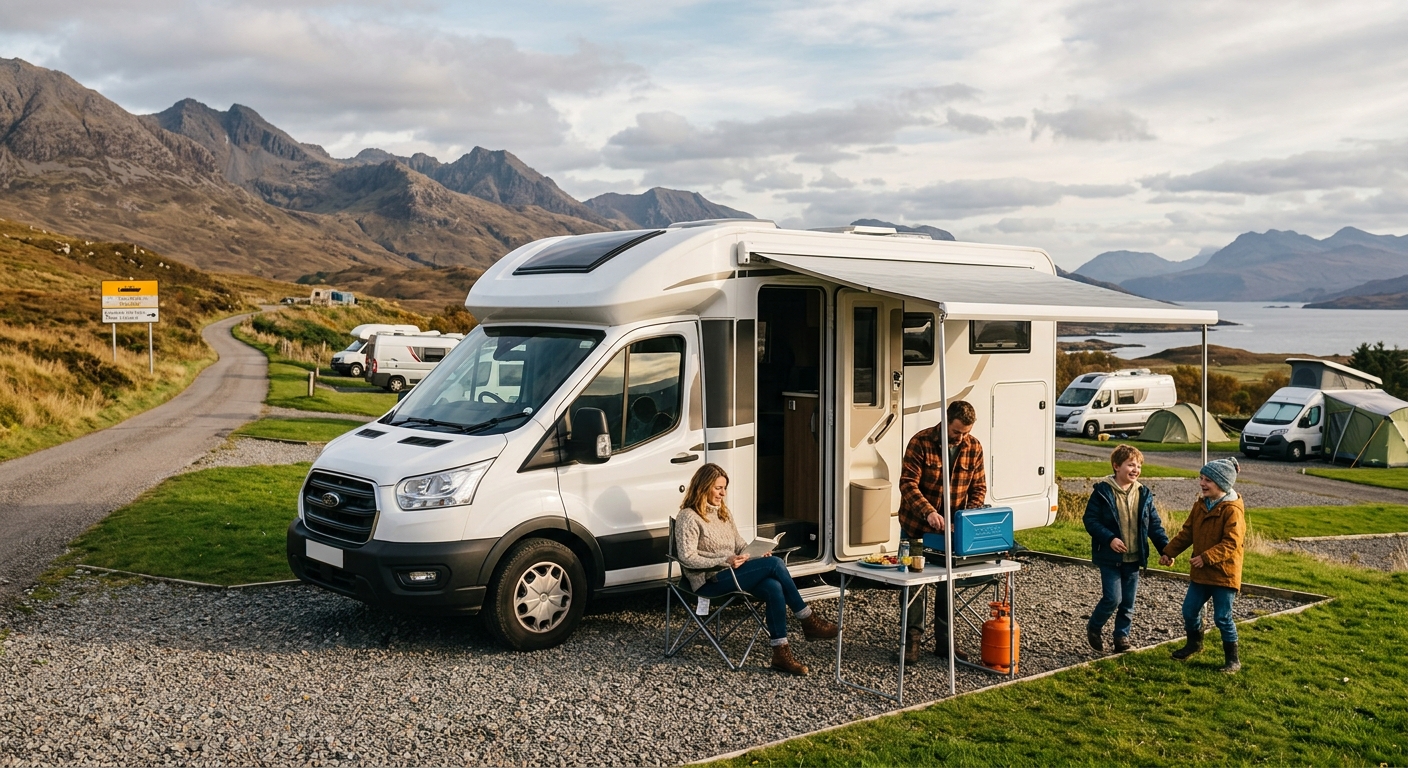
In the UK, RVers can choose between structured national park sites, amenity-rich private campgrounds, and the more restrictive 'wild camping' options. National Park campsites, such as those in the Peak District or Snowdonia, often provide basic facilities like toilets and fresh water in stunning natural settings; these sites typically require advance booking, especially during peak season, where over 70% of pitches can be reserved months ahead. Private campsites, including those run by the Caravan and Motorhome Club or Camping and Caravanning Club, offer extensive amenities like electric hookups, hot showers, laundries, and sometimes even swimming pools or entertainment, with pitch fees ranging from £20-£50 per night. Wild camping with a rented RV is generally not permitted on public land in England and Wales without specific landowner permission, which is rarely granted for larger vehicles; however, in Scotland, while the 'right to roam' exists, it's best practiced ethically and discreetly with small campervans, avoiding private land and always leaving no trace.
Featured RV Park or Campground in UK
When selecting an RV park in the UK, look for family-friendly amenities such as playgrounds, dedicated pet areas, and proximity to local attractions, ensuring a comfortable base for your adventures. Prioritize sites with good reviews regarding cleanliness, staff helpfulness, and family suitability; many top-rated parks boast 4.5-star ratings on platforms like Google Maps. These parks often offer a range of pitch types, from basic grass pitches starting at £20/night to fully serviced hardstanding pitches with individual water and grey waste points, which can cost up to £50/night. Consider locations that provide easy access to hiking, cycling, or water-based activities, which are ideal for keeping children engaged. For example, campsites near the coast often feature direct beach access or watersports rentals, perfect for active families on an extended road trip.
Hookups & Amenities — What to Expect
UK RV campsites typically offer essential hookups, including 240V electricity, fresh water, and waste disposal points for grey and black water. Electrical hookups use a blue CEEform connector, so North American travelers will need appropriate adaptors and possibly voltage converters to use their appliances, as the standard voltage is 240V/50Hz. Most sites provide fresh water taps at pitches or communal points, and grey water can be drained into designated points at the pitch or a central service area; black water (toilet waste) is disposed of at chemical disposal points. Wi-Fi availability varies significantly across sites; some offer complimentary Wi-Fi in communal areas, while others charge for limited access, and signal strength can be poor in remote locations, making offline planning crucial. Laundry facilities, hot showers, and flushing toilets are standard amenities at most private campgrounds, often included in the pitch fee, ensuring a comfortable camping experience for your family rv rental.
Booking Windows & Reservations in UK
For a family RV rental trip in the UK, especially during peak season (July and August) or for popular destinations like the Lake District, it is highly recommended to book campsites several months in advance to secure preferred spots. During these busy months, popular national park campgrounds and coastal sites can be fully booked 4-6 months out, so early planning is crucial for families with specific itinerary needs. While some national park campgrounds may only release 25%-30% of their spots for reservations, leaving the rest for first-come, first-served, relying on this for family travel can be risky, particularly for larger motorhomes. For spontaneous travelers, calling ahead to check availability before driving to a campsite is always advisable, especially when traveling with children. During shoulder seasons (April-May, September-October), booking 1-2 months in advance is usually sufficient, offering more flexibility and often better rates, sometimes with savings of up to 25% on pitch fees.
Nearby Supermarkets & Resupply Points
Families renting an RV in the UK will find convenient resupply points with major supermarket chains like Tesco, Sainsbury's, Asda, and Morrisons widely available across the country, often with larger "Extra" or "Superstore" formats offering dedicated RV parking. Lidl and Aldi are excellent choices for budget-friendly groceries and fresh produce, while smaller Co-op stores are common in rural villages for quick essentials. Look for these larger supermarket formats, as they often have ample car parks suitable for accommodating a Class C motorhome or campervan, making your grocery runs stress-free. In more remote areas, plan ahead as supermarket access may be limited; local farm shops or independent grocers can be charming alternatives for fresh, local produce, enhancing your culinary experience on the road. For families who enjoy cooking delicious meals in their rented RV, exploring local ingredients is part of the fun. Need inspiration? Check out our RV-friendly recipes playlist. On the routes offered through RV PLANET routes, you can itemize and track every expense along the way for easy budgeting.
Best RV Class for Camping in UK
For family RV camping in the UK, the Class C Alcove and Class SI Semi-integrated motorhomes are often ideal, balancing comfortable living space with manageable driving dimensions for narrower UK roads. A rented Class C Alcove, like the "cruise america rv rental example Explorer", typically averages 7.1m in length and sleeps 4 people comfortably with a 160/220cm over-cab bed, offering robust family accommodation suitable for hookup-dependent travel with typical fuel consumption of 11 Liters/100 km. Bandana also offers Class SI Semi-integrated models, such as the "Active Standard Auto", averaging around 6.5m in length, which are easier to maneuver on UK roads, ideal for smaller families or those seeking slightly better fuel efficiency (typically 9-11 Liters/100 km). For maximum flexibility and ease of navigation in tighter spaces, a Class B Camper Van, like the "Active Original", averaging 5-6m in length, is excellent for navigating historic villages and can be more economical (typically 8-10 Liters/100 km). While Class A Integrated motorhomes offer premium comfort and can accommodate up to 6-7 sleepers, their average length of 7.5m to over 9m can be more challenging on very narrow UK roads and require extra care for parking, with fuel consumption typically 12-18 Liters/100 km. A standard car driver's license is sufficient for driving all these motorhome classes in the UK, with a minimum rental age of 21 and no young driver surcharges.
How to Save on Campgrounds in UK
To reduce campground expenses for a family RV rental in the UK, consider utilizing campground discount cards, traveling during the shoulder or off-season, and opting for municipal or regional sites over private resorts. Membership in organizations like the Caravan and Motorhome Club or the Camping and Caravanning Club can offer significant savings, often 10-25% off pitch fees at participating campgrounds across the UK, totaling considerable savings on a week-long trip. Booking during the shoulder seasons (April-May, September-October) typically results in lower rates and fewer crowds compared to the peak summer months, sometimes saving up to 30% on nightly rates. Municipal or regional campgrounds tend to be more affordable than private holiday parks with extensive facilities, offering a more budget-friendly option for families seeking a simpler stay. Additionally, many campgrounds offer weekly rates that are cheaper per night than shorter stays; consider booking for 3+ nights to maximize savings.
Can you wild camp in an RV in the UK
While wild camping in an RV is generally restricted or illegal in England and Wales without landowner permission, Scotland upholds a 'right to roam' that, with ethical considerations, allows for responsible overnight parking in certain areas. In England and Wales, 'wild camping' in an RV typically constitutes trespassing and is only legal with explicit permission from the landowner; local bylaws also prohibit overnight parking in many public spaces, including many laybys. Scotland's Land Reform (Scotland) Act 2003 grants a 'right to roam' that includes informal camping, although it's primarily designed for lightweight camping (tents) and requires responsible behavior, implying discreet and minimal impact for RVs, meaning you should avoid large motorhomes in sensitive areas. Ethical wild camping principles, such as 'leave no trace,' parking out of sight, avoiding obstructing roads or views, and carrying out all waste, are crucial anywhere you choose to stop overnight. Some informal spots, like specific laybys or designated 'Aires' in certain regions (though less common than in mainland Europe), might tolerate overnight parking, but these should always be used with respect and consideration for local communities.
How much does a family RV rental holiday in the UK cost
A family RV rental holiday in the UK typically involves costs for the rental itself, campsite fees, fuel, food, and potential attraction passes, which can vary significantly based on vehicle size, season, and itinerary. RV rental costs for a family-sized motorhome (e.g., a Bandana Class C Alcove sleeping 4-6 people) can range from £80 to £200+ per night depending on season, model, and duration; a one-week rental in shoulder season might start around £600, while a two-week rental in peak season could exceed £2,800. Campsite fees generally cost between £20 and £50 per night for a family pitch with hookups, with premium sites or peak season commanding higher prices, often reaching £60-£80/night in popular coastal areas. Fuel is a significant expense, as UK petrol and diesel prices are higher than in North America; Bandana's fleet averages 10–12 Liters/100 km, so budget for this across various regions, especially when traveling distances of 100-150 km per day. Food budgets can be managed by cooking in your rented RV, but factor in occasional meals out, particularly pub lunches, which are a quintessential UK experience and can add £15-£25 per person. Consider additional expenses like ferry costs for trips to the Scottish Isles or Isle of Wight (£50-£150 per vehicle), entry fees for attractions, parking fees (often £5-£15 for larger vehicles), and potential optional insurance upgrades or cleaning charges. On RV PLANET routes, travelers can itemize and track every expense along the way for easy budgeting.
What are the driving challenges for RVs in the UK, especially for North Americans
North American RVers will find driving a family RV in the UK challenging due to narrower roads, numerous roundabouts, country lanes, and the adjustment to driving on the left side of the road, which requires careful planning and adaptation. The most immediate challenge is adapting to driving on the left side of the road and managing a right-hand drive vehicle; this impacts visibility and lane positioning, especially on two-lane roads. UK roads, particularly in rural areas and historic towns, are considerably narrower than North American counterparts, often with hedges or stone walls directly adjacent to the road, requiring constant vigilance for oncoming traffic and parked cars. Navigating the prevalent multi-lane roundabouts demands understanding lane discipline and signaling conventions to avoid confusion and ensure smooth passage; a good GPS system is invaluable here. Renters must pay close attention to vehicle dimensions, as height (e.g., under 3.5m) and width restrictions are common on bridges, underpasses, and in historic village centers; always check your RV's exact measurements and plan routes accordingly. Parking in villages and at popular attractions can be extremely limited for larger vehicles, necessitating research for designated RV parking areas or using park-and-ride schemes. Drive slowly and carefully, and you can drive almost anywhere without issues. No need to stress - just use common sense and pay attention. For more visual tips, check out our video content.
🎬 Video coming soon
How is mobile signal and Wi-Fi for RVs in remote UK areas
Mobile signal coverage for RVs in remote UK areas can be unreliable and spotty, while campsite Wi-Fi quality varies significantly, often being slow or available only in communal areas, making offline navigation and entertainment planning essential. While major mobile networks like EE, Vodafone, O2, and Three offer extensive coverage across urban and suburban areas, signal strength can drop significantly in mountainous regions (e.g., parts of the Lake District, Snowdonia), national parks, and remote coastal areas. Campsite Wi-Fi is often a paid amenity and can be slow, unreliable, or restricted to reception areas, so do not rely on it for critical work or high-bandwidth activities, as only about 60% of campsites offer reliable Wi-Fi at pitches. For navigation, using UK-specific apps that offer offline maps (e.g., Google Maps, OS Maps) or a dedicated GPS is highly recommended, as online mapping may fail in areas with poor signal. Managing power for charging devices is crucial; UK electrical outlets are 3-pin and 240V, so bring appropriate adapters and possibly a power bank for off-grid situations to keep devices charged for photos and communication.
Can I bring my pet on an RV rental trip in the UK
Many RV rental companies in the UK, including Bandana partners like Apollo and Britz, offer pet-friendly vehicles, but travelers must adhere to specific pet travel guidelines, including the UK Pet Travel Scheme for international visitors, and choose pet-friendly campsites and attractions. If traveling internationally with a pet from outside the UK, the Pet Travel Scheme requires your animal to be microchipped, vaccinated against rabies (with a minimum of 21 days passed since primary vaccination), and have an Animal Health Certificate or pet passport issued by a vet. When renting an RV, always confirm the company's pet policy; pet-friendly rentals are common but may involve an additional cleaning fee (typically £50-£150) or a refundable pet deposit. Most campsites in the UK welcome well-behaved dogs, often with a small nightly charge (£2-£5 per pet), but always check their specific rules regarding leashing, designated exercise areas, and waste disposal, as some may restrict certain breeds or numbers of pets. Research pet-friendly attractions, pubs, and restaurants in advance, as access can vary widely; many National Trust and English Heritage sites allow dogs in outdoor areas. Be aware of local regulations concerning animals, such as leash laws in public spaces and prompt waste disposal, to ensure a respectful trip.
What are the benefits of off-season RV travel in the UK
Traveling in a family RV during the UK's off-season or shoulder seasons (spring and autumn) offers significant advantages such as fewer crowds, lower rental and campsite prices, and unique local events, despite potential weather challenges. Fewer crowds at popular attractions like Stonehenge or national parks like the Lake District allow for a more serene and authentic experience, without the hustle and bustle of peak summer tourist traffic; you might find up to 50% fewer visitors. RV rental rates and campsite fees are typically 15-30% lower outside of July and August, providing substantial savings for budget-conscious families. The shoulder seasons showcase the UK's natural beauty with vibrant spring blooms in April or stunning autumnal colors in October, offering unique photographic opportunities. Families can enjoy specific seasonal events like local food festivals, harvest celebrations, or festive Christmas markets (late off-season) without the peak-season tourist crush. While weather can be more unpredictable, modern rented motorhomes are well-equipped for cooler temperatures with efficient heating systems, and careful planning allows enjoyment of brisk walks and cozy evenings on your extended road trip.
What local etiquette should I know for RV travel in the UK
When undertaking an RV trip in the UK, understanding local etiquette, such as respecting private property, mindful waste disposal, and engaging politely in pub culture, enhances cultural immersion and ensures a positive experience for both travelers and locals. Always give way to oncoming traffic on narrow country lanes, especially on single-track roads with designated passing places; pull over respectfully into passing bays to allow others to pass, often flashing your headlights as a thank you. In pubs, waiting to be served at the bar is customary rather than table service, and a small tip (e.g., "buy the bartender a drink" or rounding up to the nearest pound) is appreciated but not always expected. Practice 'leave no trace' principles rigorously; dispose of all rubbish in designated bins, sort recycling where available, and never leave waste in the countryside or laybys, as local communities value their pristine landscapes. Respect local communities by minimizing noise, especially late at night or early morning (after 10 PM and before 8 AM), and parking considerately, ensuring you don't block access or scenic views. Engage politely with locals; a 'please' and 'thank you' goes a long way, and don't be afraid to ask for directions or recommendations in a friendly manner, as most Britons are happy to help.
What You Shouldn't Miss
- **Explore the Jurassic Coast, England:** Drive along this 153 km UNESCO World Heritage site in a rented motorhome, stopping at fossil beaches like Lyme Regis and the iconic Durdle Door. Many campsites offer sea views.
- **The North Coast 500, Scotland (or a portion):** While a big route, tackling a section in your campervan allows you to experience dramatic Highland scenery, including rugged mountains, pristine lochs, and historic villages.
- **The Brecon Beacons National Park, Wales:** Ideal for active families, offering waterfalls, walking trails, and stargazing opportunities in its Dark Sky Reserve status, with numerous family-friendly RV parks.
- **Visit a Traditional English Pub:** Experience local culture by stopping for a classic pub lunch or dinner, many of which are dog-friendly and offer hearty meals.
- **The Isle of Wight:** Take a ferry across with your rented RV to explore this charming island, known for its Needles, sandy beaches, and dinosaur footprints, perfect for a week-long family getaway.
Looking for expert insights from Avi Bandana? Top 5 Adventures — recommendations from Avi Bandana
Final Thoughts
A family RV camping trip in the UK promises an unforgettable adventure, blending the freedom of the open road with the comfort of a home-on-wheels. From the dramatic cliffs of the Scottish coast to the charming villages of the English countryside, there's a unique experience around every bend for you and your loved ones. Remember to embrace the slow travel philosophy, allowing yourselves time to truly connect with the culture, food, and stunning scenery. We handle the details, you live the journey.
Don't let the planning process overwhelm you. With Bandana Caravan, you have a supportive partner every step of the way, from choosing the perfect family RV rental to ensuring a seamless booking experience. Our expertise and transparent approach mean you can focus on the excitement of your upcoming adventure. Get inspired for your next trip and discover top destinations, planning tips, all in one place!
Ready to create your own family RV memories in the UK? Discover our range of motorhomes and campervans designed for every family size and adventure style.
