
In This Guide
- Where to Camp in India - Top Options
- Campground Types in India (National, Private, Wild)
- Featured RV Park or Campground in India
- Hookups & Amenities - What to Expect
- Booking Windows & Reservations in India
- Nearby Supermarkets & Resupply Points
- Best RV Class for Camping in India
- How to Save on Campgrounds in India
- How much does it cost to rent an RV in India?
- How do I rent an RV in India?
- Do I need a special license to drive an RV in India?
- What are the rules for RV camping in India?
- Is it safe to RV in India?
- What are the best places to RV in India?
- Are there RV parks in India?
- Can I bring my own RV to India?
Embarking on a family RV camping adventure in India offers an unparalleled opportunity to explore this vibrant country at your own pace, creating unforgettable memories with your loved ones. Imagine waking up to the Himalayan sunrise, having breakfast with a view of a tranquil lake in Kerala, or exploring the cultural richness of Rajasthan with your home-on-wheels. This comprehensive guide will equip you with all the essential information for planning your dream family motorhome trip in India. For live availability and current prices, start with our RV Rental India - Complete Guide 2026 guide.
Where to Camp in India - Top Options
India offers diverse camping experiences ranging from serene Himalayan foothills to vibrant coastal areas and desert landscapes for rented caravans. Popular regions for RV camping include Himachal Pradesh and Uttarakhand for breathtaking mountain scenery, Rajasthan for unique cultural desert safaris, and Goa or Kerala for relaxing beach-side adventures. While dedicated RV parks are still emerging across India, many travelers successfully utilize private estates, eco-resorts with designated camping facilities, or even forest department sites after obtaining necessary permits. Our Rent&Plan service can help you craft a route that includes some of these hidden gems, ensuring you connect to the culture, the food, and the scenery, traveling slowly, ideally a maximum of 100-150 km per day.Campground Types in India (National, Private, Wild)
Camping in India can be broadly categorized into national park sites, private campgrounds, and wild camping, each offering distinct rules and experiences for your rented camper. National Park sites, such as those in Uttarakhand or Madhya Pradesh, often have specific regulations, require advance permits, and may have restrictions on motorhome access to protect wildlife and fragile ecosystems. Private campgrounds and resorts represent a growing segment, offering secured parking, basic amenities, and often better facilities for a fee, making them an excellent choice for family RV rental in India. Wild or 'freedom' camping, while not officially regulated, is generally tolerated in remote, non-restricted areas. When choosing this option, always prioritize local etiquette, seek permission from landowners if applicable, maintain a respectful distance from villages, and adhere strictly to leave-no-trace principles to avoid any issues and ensure a positive interaction with local communities.Featured RV Park or Campground in India
When seeking a featured RV park or campground in India, prioritize locations offering secure parking, essential amenities, and proximity to scenic or cultural attractions, ensuring a comfortable experience for your family rv rental. Look for establishments that provide gated security, reliable access to water and electricity, and a level pitch suitable for your campervan or motorhome. Many emerging RV-friendly spots are found within eco-resorts or private farm stays, offering a unique blend of natural beauty, local hospitality, and some creature comforts. For example, some resorts in Himachal Pradesh are starting to offer dedicated spots for mobile homes, providing a safe base for exploring the mountains. Remember, Bandana RV specializes in connecting you with the right vehicle for your Indian adventure, and our full transparency means no hidden fees or surprises as you plan your route.Hookups & Amenities - What to Expect
In India, expect varying levels of hookups and amenities at campgrounds when traveling with a rented RV; while basic facilities like a water source and a place to park are common, full electrical, water, and sewage hookups are less standardized than in Western countries, presenting unique daily living challenges. Electricity is typically available, often requiring a standard Indian 3-pin plug (Type D or M) and operating on 230V, so universal adapters may be necessary for your appliances. Water refills can often be managed at campsites, designated water stations, or sometimes with the helpful assistance of local communities, while grey and black water disposal points are still developing. This means careful planning or responsible discharge in appropriate, non-sensitive areas is essential for your rented mobile home. Wi-Fi, laundry facilities, and hot showers are more reliably found in private resorts or larger camping areas, whereas national park sites may offer very minimal amenities. Preparing meals in your RV's kitchen is a fantastic way to enjoy local produce; check out our RV-friendly recipes playlist for inspiration.Booking Windows & Reservations in India
For family RV rentals in India, planning and booking ahead, especially during peak seasons (October-March and May-June for hill stations), is highly recommended for popular campgrounds and destinations. While spontaneous travel is certainly part of the RV charm and possible, securing reservations ensures availability, particularly for larger motorhomes or at national park campgrounds where only 25-30% of spots may be reservable, with the remainder offered on a first-come, first-served basis. Don't stress too much if you haven't booked every night; you'll find a spot. If not at the first campground, then the next one. Calling ahead before driving to a campground is a wise practice to confirm availability and avoid inconvenience. Booking 2-3 months in advance for popular routes can also give you access to better options, and you can explore more details on this in our "Weekly RV Rental in India - Pricing 2026" guide.Nearby Supermarkets & Resupply Points
For RV travelers in India, resupply points for groceries and essentials are readily available in towns and cities, often found at major supermarket chains or bustling local markets. Look for large format stores like Reliance Fresh, More Retail, or D-Mart in urban areas such as Delhi, Mumbai, or Bengaluru, which offer a wide range of produce, pantry staples, and household items for your rented campervan. Smaller towns and villages will have local Kirana stores (convenience stores) and fresh produce markets, providing an opportunity for cultural immersion while stocking up on supplies. Always keep an eye on your water and provisions, especially when venturing into more remote areas like Ladakh or parts of Rajasthan. When planning your route, consider how to budget for groceries, fuel, and other daily expenses. Our RV PLANET routes allow travelers to itemize and track every expense along the way for easy budgeting.Best RV Class for Camping in India
The best RV class for camping in India, considering its diverse road conditions and varying infrastructure, generally favors more agile and compact vehicles like Class B Camper Vans or Class SI Semi-integrated RVs for ease of navigation, though Class C Alcove models can certainly accommodate larger families. For families seeking a balance of comfort and maneuverability, Bandana's global fleet averages indicate that a Class SI - Semi-integrated RV, with an average length of 6.9 meters and sleeping places for 3.8 adults, offers a good option, like the *2 Berth Tamar* or *K1/25*. Class C - Alcove RVs, averaging 7.5 meters and accommodating 5.8 sleeping places (4.4 adults), are ideal for larger families, such as the *MHC28* which has 7 sleeping places, but may require more careful navigation on narrower roads. Class B - Camper Vans, averaging 5.8 meters in length with 3.2 sleeping places, are highly recommended for their agility and suitability for varied terrain, including potential off-the-beaten-path destinations, due to their typically better ground clearance and compact size, making them optimal for navigating India's specific driving culture and diverse road types. An example would be the *Camper Van Plus - V600*. Drive slowly and carefully, and you can drive almost anywhere without issues. No need to stress - just use common sense and pay attention, regardless of your chosen RV size for your family rv rental.How to Save on Campgrounds in India
To save on campgrounds in India, utilizing discount cards where available, choosing shoulder seasons, and opting for municipal or regional sites over private resorts are effective strategies for your family motorhome trip. Look for specific camping clubs or rental companies that might offer their own campground discount programs or partnerships. Booking during the shoulder seasons (e.g., March-April, September-October) often provides lower rates and fewer crowds compared to peak tourist periods like Diwali or Christmas. Additionally, staying for three or more nights can frequently unlock weekly rates or other long-stay discounts, and if traveling in a group, sharing hookups at a single site can further reduce costs. Always ask about package deals or long-stay discounts when calling ahead. Our "RV Rental Deals in India - Latest Offers 2026" guide can provide more insights into finding the best value.How much does it cost to rent an RV in India?
The cost to rent an RV in India typically varies widely based on the RV class, rental duration, season, and the specific amenities included. Smaller campervans (Class B), such as a 2-berth *Happy 1*, generally start from INR 8,000-12,000 per day (approximately $95-$145 USD), while larger Class C (Alcove) or Semi-integrated RVs for families, like a 6-berth *Euro Deluxe*, can range from INR 15,000-30,000+ per day (approximately $180-$360+ USD). Factors influencing the final price include fuel consumption (Bandana's Class C Alcove models typically consume 10-12 Liters/100 km), mileage limits, insurance coverage, and additional services like a local driver or a fully equipped kitchen. Prices are dynamic, similar to flight tickets, changing daily based on availability, seasonality, and supplier marketing decisions. The final price is always set at the actual booking time. For premium options, refer to "Luxury RV Rental in India - Premium Prices 2026".How do I rent an RV in India?
Renting an RV in India involves selecting a suitable vehicle from an online rental platform like Bandana RV or a local operator, submitting necessary identification, and understanding the terms of the rental agreement. Begin by researching reputable motorhome rental companies online, comparing their fleet options, pricing, and customer reviews to find one that aligns with your family's needs. The rental process typically requires providing a valid driver's license, an International Driving Permit (if you're a foreign national), and a security deposit, along with signing a contract detailing insurance, mileage limits, and breakdown procedures. Bandana RV offers full transparency with no hidden fees, ensuring what you see is what you pay, and our Rent&Plan service can help you select the ideal itinerary and vehicle for your trip. We're true RV specialists, dedicated exclusively to RV travel, not a travel agency side department.Do I need a special license to drive an RV in India?
Driving an RV in India generally requires a valid Indian driving license for Indian citizens, or an International Driving Permit (IDP) along with your original national license for foreign nationals, for vehicles up to 7,500 kg. For most family-sized RVs, including Class A, Class B, and Class C motorhomes, a standard private vehicle license (non-commercial) is sufficient, as these vehicles usually fall well within the permissible weight limits. No special license or CDL is required. While an IDP is recommended for visitors from non-English-speaking countries to assist with language barriers, it is generally not mandatory if your national license is in English. It is crucial to verify with your specific rental provider the exact licensing requirements for the campervan or motorhome class you intend to rent and ensure all documentation is current and accessible before your trip.What are the rules for RV camping in India?
RV camping in India is governed by a blend of emerging regulations for designated sites and general guidelines for responsible outdoor conduct, with specific rules varying significantly by location. For national parks and protected areas, strict rules apply regarding entry, permits, designated camping spots, waste disposal, and noise levels to protect local flora and fauna, often restricting motorhome access entirely or to specific zones. When wild camping or 'freedom camping' with your rented mobile home, it is essential to prioritize local etiquette and cultural immersion by seeking permission from landowners or local authorities before setting up camp. Always maintain a respectful distance from villages, avoid blocking public access, and adhere to strict leave-no-trace principles to preserve the environment and foster positive relationships with local communities. This includes properly disposing of all waste and minimizing your environmental impact.Is it safe to RV in India?
RV travel in India can be safe and rewarding with proper preparation and awareness of local driving conditions and cultural nuances, despite common perceptions of challenging roads. Navigating Indian traffic requires understanding its unique driving culture, which includes frequent horn usage ('horn please') to signal presence, diverse road users (pedestrians, cyclists, animals, overloaded vehicles), and varied road types from well-maintained expressways to rural single-lane roads. Drive slowly and carefully, and you can drive almost anywhere without issues. No need to stress - just use common sense and pay attention. Emergency preparedness is crucial: have local emergency contact numbers (Police 112, Ambulance 102, Fire 101), ensure your rental RV has a robust support network for breakdowns (Bandana offers support before, during, and after booking, including coordination with suppliers for roadside assistance), and consider a local SIM card for reliable communication in remote areas, as accessing local mechanics or medical help can be more challenging off the main routes.What are the best places to RV in India?
The best places to RV in India for families often include scenic routes through the Himalayas, cultural trails in Rajasthan, and coastal drives in Goa or Kerala, with a growing emphasis on off-the-beaten-path destinations. Consider less-explored routes for your rented motorhome like the serene Zanskar Valley in Ladakh (seasonal access for advanced RVers), the tribal regions of Chhattisgarh for unique cultural insights, or the lush Western Ghats in Maharashtra for stunning landscapes and opportunities for cultural immersion away from typical tourist crowds. Exploring cities like Jaipur, Udaipur, or Rishikesh in your mobile home also offers a convenient base. To truly experience local culture, research specific villages or local festivals along your route, engage respectfully with communities, and utilize local markets for resupply, ensuring an authentic and enriching travel experience beyond the well-trodden paths. RV PLANET (rvplan.net) offers more than 1,300 pre-planned routes across 5 continents, including detailed itineraries for Asia that can inspire your India adventure.Are there RV parks in India?
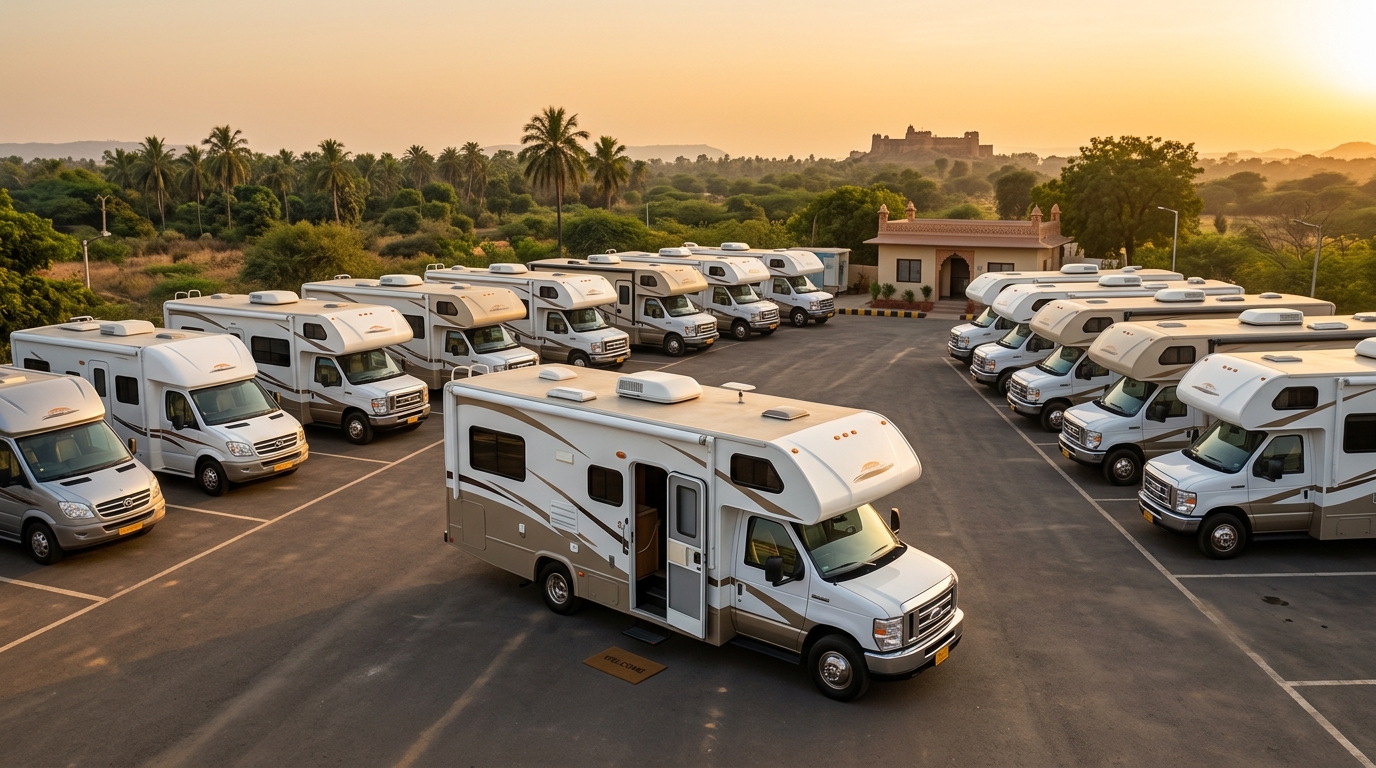
Yes, India is experiencing a nascent but growing trend of dedicated RV parks and campervan-friendly campsites, offering more structured and amenity-rich options for travelers. These emerging RV parks, often located near popular tourist destinations or scenic routes like those in Himachal Pradesh or Goa, provide amenities such as secure parking, electrical hookups (230V, Type D or M), water supply, and increasingly, waste disposal facilities. While not as widespread or standardized as in Western countries, the number of such facilities is steadily increasing, driven by the growing interest in road trips and adventure tourism in India. Travelers looking for structured camping options for their rented RV will find these private initiatives a welcome development.Can I bring my own RV to India?
Bringing your own RV to India is possible but involves a complex process requiring careful planning for shipping, customs clearance, and temporary registration. A comprehensive guide for bringing your own motorhome typically includes obtaining a Carnet de Passage en Douane (CPD) document, managing international shipping logistics to a major port like Mumbai, Chennai, or Kolkata, and navigating potentially lengthy Indian customs regulations upon arrival. Beyond the initial entry, you would also need to consider local insurance that covers your vehicle, understand long-term stay implications, and potentially connect with India's nascent RV/camping community for support, tips, and companionship on your extended journey. For most vacationers, renting a campervan in India is a far more straightforward and stress-free option, allowing you to focus on the adventure itself.What You Shouldn't Miss
- **The Golden Triangle by RV:** Explore Delhi, Agra (Taj Mahal), and Jaipur, driving your rented motorhome between these iconic cities for a cultural immersion.
- **Himalayan Foothills of Himachal Pradesh:** Drive through scenic routes to destinations like Manali or Shimla, enjoying mountain air and picturesque landscapes with your campervan.
- **Goa's Coastal Charm:** Discover the beaches and vibrant culture of Goa with the flexibility of your rented RV, finding relaxed spots along the Arabian Sea.
- **The Backwaters of Kerala:** While direct RV access might be limited in some areas, use your mobile home as a base to explore serene backwater villages and lush greenery.
- **Wildlife Safaris in Ranthambore:** Park your RV near a safari entry point and take a jeep safari to spot tigers in one of India's most famous national parks.
- Looking for expert insights from Avi Bandana? Top 5 Adventures - recommendations from Avi Bandana.
Final Thoughts
India, with its kaleidoscope of cultures, breathtaking landscapes, and warm hospitality, is a destination truly meant to be explored. A family RV rental in India transforms your journey into a flexible, intimate adventure, allowing you to immerse yourselves deeply in its wonders without the constraints of traditional travel. You're not just moving from one place to another; you're creating a mobile home base for discovery, bonding with your loved ones, and connecting with the very heart of this incredible nation. Remember to embrace the spirit of slow travel, spending enough time in each location to truly absorb its essence. Whether you're navigating the bustling streets of Mumbai or finding serenity in a remote Himalayan village, your rented motorhome offers the comfort and freedom to tailor your trip precisely to your family's dreams. We at Bandana are here to ensure your planning is as seamless as possible, giving you the confidence to embark on this grand Indian adventure. Are you ready to create unparalleled family memories on the open roads of India? Your perfect family RV trip awaits, offering a blend of cultural exploration, natural beauty, and the freedom of the open road.On the routes offered through RV PLANET routes, you can itemize and track every expense along the way for easy budgeting.
