In This Guide
- Can You Drive an RV in South America? License & Age Rules
- Road Conditions & Terrain in South America
- RV Size Limits, Bridges & Restricted Zones
- Fuel: Diesel vs. Petrol & Cost per 100 km
- Tolls, Vignettes & Border Rules
- Driving Tips for RV Rental Travelers
- Recommended RV Class for South America Roads
- Should I Choose a Compact Van Instead of a Large RV in South America?
- Can I Park Anywhere? Free & Wild Camping Rules in South America
- Can I Drive an RV Into the City Center? Heights, Tunnels & Local Signage
- What is the 3-3-3 rule for RV travel?
- Can you RV in South America?
- Can you technically drive from North America to South America?
- Can I cross my RV into Mexico?
- What countries are RV friendly?
- What part of South America can you not drive through?
- What is the 3-3-3 rule for RV travel?
- What is the largest RV you can drive without a special license?
- What age can Mexicans drive?
- Who has the least expensive RV insurance?
- What You Shouldn't Miss
- Why Book with Bandana Caravan
- Final Thoughts
- Frequently Asked Questions
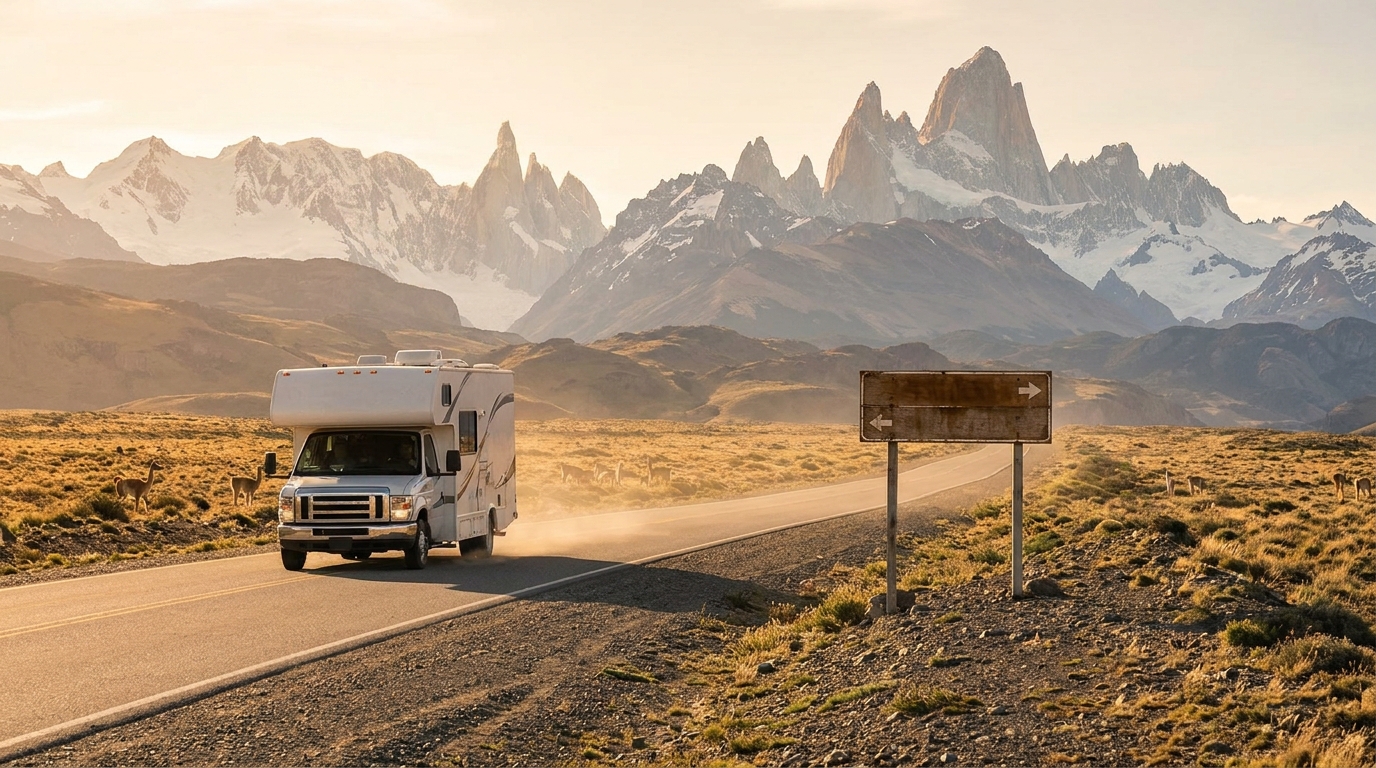
South America beckons with its incredible diversity, from the majestic Andes and the vast Amazon rainforest to pristine coastlines and vibrant cities. The ultimate way to immerse yourself in this continent's rich tapestry of culture and nature is by embarking on an RV adventure. Imagine yourself waking up to a Patagonian glacier view, preparing breakfast in your rented motorhome, and setting off on a new, incredible journey at your own pace. At Bandana Caravan, we specialize in making these dreams a reality, offering full transparency with no hidden fees and 24/7 support throughout your booking journey. For ideas you can prep on the road, watch our RV-friendly recipes playlist on YouTube.
To help you prepare for an unforgettable road trip, our comprehensive RV Rental South America - Complete Guide 2026 covers everything you need to know about navigating this diverse continent in a rented RV or campervan. We’re true RV specialists, passionate about helping you discover the freedom of the open road.
Can You Drive an RV in South America? License & Age Rules
Yes, most foreign travelers can drive a rented RV in South America with a valid driver's license and an International Driving Permit (IDP). For Bandana's global fleet, a standard Class B driver's license (or equivalent in your home country) is typically sufficient for RVs up to 3,500 kg (7,700 lbs) Gross Vehicle Weight (GVW). Vehicles exceeding this weight threshold, such as some larger Class A motorhomes, may require a higher license category in some countries, but generally, a standard car license covers all rental motorhomes. The minimum driver age for RV rentals in South America is typically 21 years old across most rental companies, and we proudly offer no young driver surcharges at Bandana Caravan. Always carry your original national driver's license, an IDP, your passport, and vehicle registration documents for smooth travels.
Road Conditions & Terrain in South America
South American road conditions vary significantly, from well-maintained paved highways in major corridors and coastal regions to challenging unpaved gravel roads (ripio) in remote areas and mountainous terrain. You can expect diverse terrain, including the high altitudes of the Andes, dense Amazon rainforest roads, vast plains of the Pampas, and winding coastal routes. Driving a rented RV in South America often requires a slower pace and increased vigilance, especially on unpaved sections where potholes, loose gravel, and corrugation are common. Many picturesque routes, like Argentina's Ruta 40 or Chile's Carretera Austral, feature extensive gravel sections that demand robust vehicles and careful driving. Opting for a rented RV with higher ground clearance and durable tires is advisable for exploring more remote and scenic destinations, encouraging a focus on the journey itself.
RV Size Limits, Bridges & Restricted Zones
While specific RV size limits vary by country and region in South America, most standard rental RVs (like Class B campervans or Class C motorhomes, which average 5.8 to 7.5 meters in length) are generally accommodated, though larger vehicles might face challenges in narrow colonial towns or very remote tracks. Pay attention to posted height and weight restrictions, particularly for low bridges, tunnels, and urban areas, as infrastructure can be less standardized than in North America or Europe. Some cities may have environmental zones or restrictions for larger vehicles during peak hours, so check local regulations when planning to enter urban centers. Ferry crossings, essential in regions like Patagonia or the Chilean fjords, can have length and weight limitations and often require advance booking for larger RVs. Always be aware of local signage and consult up-to-date road maps or navigation apps that include vehicle dimension alerts.
Fuel: Diesel vs. Petrol & Cost per 100 km
Diesel is the predominant fuel type for RVs and commercial vehicles across South America and is generally more widely available than petrol (gasoline), especially in rural areas. The average fuel consumption for Bandana's global fleet varies by class: Class SI - Semi-integrated RVs typically consume 10-11 Liters/100 km, Class C - Alcove RVs 10-12 Liters/100 km, and Class B - Camper Vans around 8-10 Liters/100 km. Fuel costs fluctuate significantly between countries; for example, Venezuela has historically low prices, while Chile or Uruguay tend to be more expensive. It's advisable to fill up whenever possible, especially before entering remote areas, as fuel stations can be scarce in some regions. While specific fuel-card perks with Bandana rentals may vary, some local rental partners might offer discount cards or preferred station networks, so inquire when booking. On the routes offered through RV PLANET routes, you can itemize and track every expense along the way for easy budgeting.
Tolls, Vignettes & Border Rules
Tolls are common on major highways in many South American countries (e.g., Argentina, Chile, Brazil), usually paid in local currency at booths, and can vary by vehicle type and distance. Unlike some European systems, vignette systems (pre-purchased stickers for road use) are less common for general RV travel in South America; most tolls are point-to-point. Border crossings between South American countries for RVs require careful preparation, including vehicle registration, proof of ownership, valid driver's licenses and IDPs, and often a temporary import permit for the vehicle. Be prepared for varying processing times, potential fees, and thorough inspections at international borders; patience is key. For comprehensive financial planning for such costs, remember that RV PLANET routes allow travelers to itemize and track every expense along the way for easy budgeting.
Driving Tips for RV Rental Travelers
Pacing yourself is crucial for an enjoyable RV trip in South America; embrace the 'slow travel' philosophy and plan shorter driving days, especially on unpaved roads or in mountainous terrain, allowing extra time for unexpected stops. Maximum 100-150 km per day on average is a good guideline to take time to feel the place, connect to the culture, the food, and the scenery. For navigation and connectivity, downloading offline maps (like Maps.me or Gaia GPS) and considering a local SIM card upon arrival for mobile data is highly recommended; satellite communicators offer added security for truly remote regions. Safety is paramount: drive defensively, especially in urban areas and on narrow roads, and avoid driving at night due to poor lighting, unmarked obstacles, and potential wildlife. Budget wisely, factoring in variable fuel costs, potential tolls, and camping fees, and set aside a contingency fund for unexpected vehicle maintenance or border-crossing expenses. Finally, learning basic Spanish or Portuguese phrases, being respectful of local customs, and carrying a well-stocked first-aid kit, including any necessary prescription medications, with precautions for food and water safety, will enhance your experience.
Recommended RV Class for South America Roads
For South America's diverse road conditions, a Class B - Camper Van or a Class SI - Semi-integrated RV from Bandana's global fleet are generally highly recommended due to their optimal balance of maneuverability and comfort. Class B - Camper Vans, with an average length of 5.8 meters and sleeping 2-3 adults, offer excellent agility, making them ideal for narrow city streets, winding mountain passes, and easier ferry crossings, while still providing essential amenities like a compact kitchen and sleeping area. A like the 'rv rental denver example Category Van' is a great example of a compact, agile option. Class SI - Semi-integrated RVs, averaging 6.9 meters in length and sleeping 3-4 adults, provide a comfortable balance of space and drivability, suitable for longer journeys and a better base for extended stays, coping well with paved highways and moderately challenging gravel roads. Both classes offer relatively better fuel efficiency compared to larger models, which is a significant consideration given varying fuel prices and availability across South America.
Should I Choose a Compact Van Instead of a Large RV in South America?
Generally, there is no inherent issue with driving most RV sizes in South America; the decision between a compact van and a larger RV often hinges on desired comfort and indoor space versus maneuverability. A compact Class B Camper Van, with its smaller footprint (average length 5.8m), genuinely helps in navigating tight historic city centers, parking in urban environments, and traversing very narrow mountain passes or unpaved tracks where turning space is limited. However, for extended trips, families, or those prioritizing living comfort, a larger RV like a Class SI (average 6.9m) or Class C (average 7.5m) offers significantly more indoor space, larger beds, more storage, and better bathroom facilities, which can be a better trade-off for long-term travel. Larger RVs provide a more robust and comfortable 'home on wheels' experience, which can be invaluable when facing diverse weather conditions or spending extended periods in remote areas. Ultimately, assess your group size, travel style, and the specific regions you plan to explore; while a compact van offers agility, the added comfort of a larger RV often enhances the overall South American road trip experience for many travelers. For families considering a longer adventure, our RV Rental in South America for Families - Pricing 2026 guide offers tailored advice.
Can I Park Anywhere? Free & Wild Camping Rules in South America
Free and wild camping (boondocking) is widely practiced and generally tolerated in many remote and rural areas of South America, especially in countries like Argentina and Chile, offering incredible opportunities to stay in stunning natural landscapes. Designated campsites, private campgrounds, and 'estancias' (ranches) often provide safer and more amenity-rich alternatives, particularly near popular tourist destinations or in areas where wild camping might be less advisable. When wild camping, always prioritize safety: choose well-trafficked, visible spots if possible, avoid isolated areas at night, and trust your instincts. Adhere strictly to Leave No Trace principles: pack out all trash, dispose of human waste properly, and minimize your environmental impact to preserve these pristine locations. Rules vary by region- always check local regulations, respect private property, and follow local law before parking overnight, and consider asking locals for advice on safe spots. For finding campsites and campgrounds during your trip, we recommend using RV PLANET (rvplan.net) - a great resource for locating available spots along your route.
Can I Drive an RV Into the City Center? Heights, Tunnels & Local Signage
Yes, you can almost always drive a rented RV into city centers in South America, but it requires careful attention to local signage, particularly regarding height restrictions, tunnels, and low bridges. Drive slowly and carefully, and you can drive almost anywhere without issues. No need to stress - just use common sense and pay attention. Many historic city centers in South America feature narrow streets and tight turns, making maneuverability challenging for larger RVs; a Class B Camper Van would be considerably easier to navigate. Pay close attention to posted height limits for underground parking garages, which are often too low for RVs, and be mindful of overhead cables in some older urban areas. Environmental zones or restricted access areas based on vehicle emissions or size are becoming more common in major cities like São Paulo or Bogotá, so research specific city rules in advance. Always look for local signage indicating vehicle restrictions, residents-only streets, and recommended routes for larger vehicles, and consider parking on the outskirts and using public transport for central city exploration.
What is the 3-3-3 rule for RV travel?
The 3-3-3 rule for RV travel is a popular guideline to help maintain a comfortable and safe pace on the road, advising travelers to drive no more than 300 miles (or 480 kilometers) in a day, arrive at their destination by 3 PM, and stay for at least 3 nights. Driving no more than 300 miles ensures you don't over-tire yourself, allowing for stops, scenic detours, and reducing the risk of fatigue-related accidents. Arriving by 3 PM provides ample daylight to set up camp, explore the immediate surroundings, and address any unexpected issues before it gets dark. Staying for at least 3 nights at each stop allows for a more relaxed pace, reducing the stress of constant packing and unpacking, and offering more time to genuinely experience a location. This guideline promotes slow travel, which is our recommendation for truly experiencing South America.
Can you RV in South America?
Yes, RVing in South America is entirely possible and offers an incredible adventure, allowing travelers to explore diverse landscapes from the Andes Mountains to coastal regions at their own pace. Many countries, particularly Argentina, Chile, and parts of Brazil and Peru, have established tourism infrastructures that support RV travel, including campgrounds and fuel stations. Successful RV travel in South America requires thorough planning, including understanding local driving laws, vehicle requirements, and preparing for varying road conditions. While challenges such as remote routes and border crossings exist, the freedom and flexibility of a rented RV make it an unparalleled way to experience the continent's rich culture and natural beauty. Our team of true RV specialists can help you compare prices and find the perfect motorhome for your South American journey.
Can you technically drive from North America to South America?
Technically, you cannot drive directly from North America to South America due to the impassable Darién Gap, a remote and undeveloped stretch of dense jungle, swamps, and mountains spanning the border between Panama and Colombia. This 160-kilometer (100-mile) roadless region is a formidable barrier, devoid of roads and populated by indigenous communities, illicit actors, and challenging wildlife. To transport a rented RV from North America to South America, vehicles typically need to be shipped via cargo container or Roll-on/Roll-off (RoRo) ferry, usually from ports in Panama to Colombia or vice versa. The shipping process involves significant planning, cost, and logistics, including customs procedures and choosing a reliable shipping agent. For travelers focused on exploring South America, starting your rental directly on the continent is a more straightforward approach.
Can I cross my RV into Mexico?
Yes, you can cross your rented RV into Mexico, but it requires specific documentation and adherence to Mexican import regulations. You will need a Temporary Import Permit (TIP) for your RV, which can be obtained online through Banjercito before your trip or at the border, requiring your vehicle title/registration, driver's license, passport, and a credit card. A refundable deposit is usually required for the TIP, varying by vehicle age, and it must be canceled when you exit Mexico. Mexican liability insurance is legally required for all vehicles, as foreign insurance policies are not recognized, and this must be purchased from a Mexican provider. Ensure all vehicle documents are in order, and be prepared for potential inspections and varying procedures at different border crossings. While our focus is on South America, Bandana Caravan's expertise extends across many regions, providing you with transparent information for any cross-border considerations.
What countries are RV friendly?
In South America, Argentina and Chile are widely considered the most RV-friendly countries due to their extensive road networks, diverse landscapes, and a relatively developed infrastructure for camping and tourism. Patagonia, spanning both Argentina and Chile, is a particularly popular RV destination, offering stunning national parks, wild camping opportunities, and a strong community of overlanders. For more detailed insights, consider exploring our country-specific route plans, such as the RV Rental in Argentina - Prices, Routes & Tips 2026 or RV Rental in Chile - Prices, Routes & Tips 2026. Brazil, with its vast size and varied terrain, also offers many RV opportunities, especially along its beautiful coastlines and in regions with national parks, though road quality can be inconsistent. Peru provides an incredible cultural and historical experience for RVers, with routes leading to Machu Picchu and through the Andes, though roads can be more challenging and camping options less formalized. Uruguay is known for its safety and good road conditions, making it a pleasant, albeit smaller, RV destination for those exploring the Río de la Plata region.
What part of South America can you not drive through?
The primary part of South America you cannot drive through is the Darién Gap, which is a dense, roadless jungle and swamp region located on the border between Panama and Colombia. This 160-kilometer (100-mile) stretch effectively breaks the Pan-American Highway, making continuous overland travel between Central and South America impossible by vehicle. While there are no other major geographical barriers of this scale that completely prevent driving, specific areas might be inaccessible due to extreme terrain, lack of maintained roads, political instability, or environmental protection laws. Travelers wishing to cross this divide with their rented RV must arrange for sea transport, typically shipping their vehicle from Panama to a port in Colombia (or vice-versa). Always research specific routes and regional advisories, especially when venturing into very remote or politically sensitive border areas within individual countries.
What is the 3-3-3 rule for RV travel?
The 3-3-3 rule for RV travel is a widely adopted pacing guideline for any extended road trip by motorhome or campervan. It recommends driving no more than 300 miles (approximately 480 km) in a day, arriving at your chosen campsite by 3 PM, and staying for at least 3 nights at each location. This approach helps prevent driver fatigue, allows ample time to set up camp and explore your surroundings in daylight, and encourages a deeper connection with each destination rather than rushing through. For travelers embarking on a South American adventure, adhering to this rule ensures a more relaxed, enjoyable, and memorable journey, enabling you to truly savor the landscapes and cultures. This rule applies to any rental RV vacation, promoting a sustainable and fulfilling travel experience.
What is the largest RV you can drive without a special license?
In most jurisdictions globally, including South America, the largest rented RV you can drive without a special commercial license is typically a vehicle with a Gross Vehicle Weight (GVW) or Maximum Authorized Mass (MAM) of up to 3,500 kg (approximately 7,700 lbs). This weight limit generally encompasses most Class B - Camper Vans, Class C - Alcove RVs, and Class SI - Semi-integrated motorhomes available within Bandana's global fleet, making them accessible with a standard Class B (or equivalent) driver's license. Larger Class A - Integrated motorhomes or heavier Class C models may exceed this 3,500 kg limit, potentially requiring a higher license category (e.g., C1 in Europe) or a non-commercial special license, depending on the specific country's regulations. Always verify the specific GVW of the RV you intend to rent and cross-reference it with your national driver's license category and the driving regulations of each South American country you plan to visit. For instance, a '24 Class C Motorhome' (sleeping up to 5) has a length of 7.46m and a fresh water tank of 166 Liters, typically falling within standard license requirements.
What age can Mexicans drive?
In Mexico, the minimum age to obtain a driver's license is generally 18 years old, though some states may allow a provisional license for 15-17 year olds with parental consent and specific restrictions. For foreigners renting an RV in Mexico, the minimum age required by most rental companies is typically 21 years old. Drivers aged 21 and over are generally accepted without additional young driver surcharges at Bandana Caravan partner suppliers. Foreign drivers must possess a valid driver's license from their home country, and an International Driving Permit (IDP) is highly recommended, though not strictly required in all Mexican states, as it serves as a valuable translation of your license. Ensure you meet both the legal driving age for Mexico and the minimum age requirements of your RV rental provider to avoid any issues.
Who has the least expensive RV insurance?
Determining the 'least expensive' RV insurance for South American rental travel is complex, as costs vary widely based on the specific rented RV, duration of travel, countries visited, and coverage type; direct South American insurance providers for international visitors are not always easily compared. For RV rentals, the base insurance is typically included in your rental agreement, but this often covers only basic liability and collision with a high deductible. Additional protection like zero-deductible or roadside assistance is usually an optional add-on that renters can purchase for extra peace of mind. Bandana Caravan offers top-level deductible reimbursement as an optional upgrade, ensuring you travel with confidence. It's critical to compare quotes from several providers well in advance of your trip, ensuring the policy covers the specific countries you plan to visit and offers adequate coverage for medical emergencies, vehicle breakdown, and third-party liability.
What You Shouldn't Miss
- Explore Patagonia's Glaciers: Drive the famed Ruta 40 in Argentina or Carretera Austral in Chile for breathtaking views of Moreno Glacier, Torres del Paine, and other Patagonian wonders.
- Discover the Atacama Desert: Experience the surreal landscapes of Chile's Atacama Desert, from lunar valleys to high-altitude lagoons, best explored in a compact campervan like the '2 Berth Hi Top'.
- Visit the Iguazu Falls: Witness the awe-inspiring power of Iguazu Falls, on the border of Argentina and Brazil. Plan for at least two days to see it from both sides.
- Journey through the Andes: Traverse the dramatic mountain passes of the Andes in Peru or Bolivia, experiencing ancient cultures and incredible vistas.
- Relax on Brazil's Coastline: Enjoy the vibrant beaches and coastal towns of Brazil, with plenty of opportunities for beachfront camping.
Looking for expert insights from Avi Bandana? Top 5 Adventures - recommendations from Avi Bandana
🎬 Video coming soon
Why Book with Bandana Caravan
Full Transparency
At Bandana Caravan, we believe in no hidden fees, no surprises. What you see is what you get. Our prices are dynamic, changing daily like flight tickets based on availability and seasonality, but the final price is always clear at the actual booking time.
24/7 Booking Support
You'll always find real people behind you. We provide round-the-clock support before and after your booking, assisting with comparisons and coordination to ensure a smooth planning process.
True RV Specialists
We aren't a side department of a general travel agency. Founded in 2001, we have over 23 years of dedicated experience helping tens of thousands of travelers explore the world by RV. We partner directly with 50+ leading RV suppliers worldwide, including El Monte, Cruise America, Apollo, and Britz, offering unparalleled personal experience and attention to the smallest details.
Rent&Plan with Discounts
Access to 1,300+ pre-planned routes across 5 continents via our sister company, RV PLANET (rvplan.net). As a bonus, enjoy a 25% planning discount when you use rvplan.net to craft your perfect itinerary.
Final Thoughts
Embarking on an RV rental adventure through South America is more than just a trip- it's an opportunity to discover breathtaking landscapes, vibrant cultures, and create cherished memories at your own pace. With a rented motorhome or campervan, you unlock the freedom to explore remote corners and bustling cities alike, always with the comfort of your mobile home base. Remember to travel slowly, allowing yourself to truly connect with each place, its food, and its people.
At Bandana Caravan, we're dedicated to supporting your journey from the moment you start planning until you return your keys. Our commitment to full transparency, expert advice, and robust support ensures your South American RV trip is as smooth and enjoyable as possible. So, what are you waiting for? Your extraordinary South American adventure awaits!
Ready to plan your unforgettable journey? Compare Motorhome Prices for South America today and let the open road be your guide!