
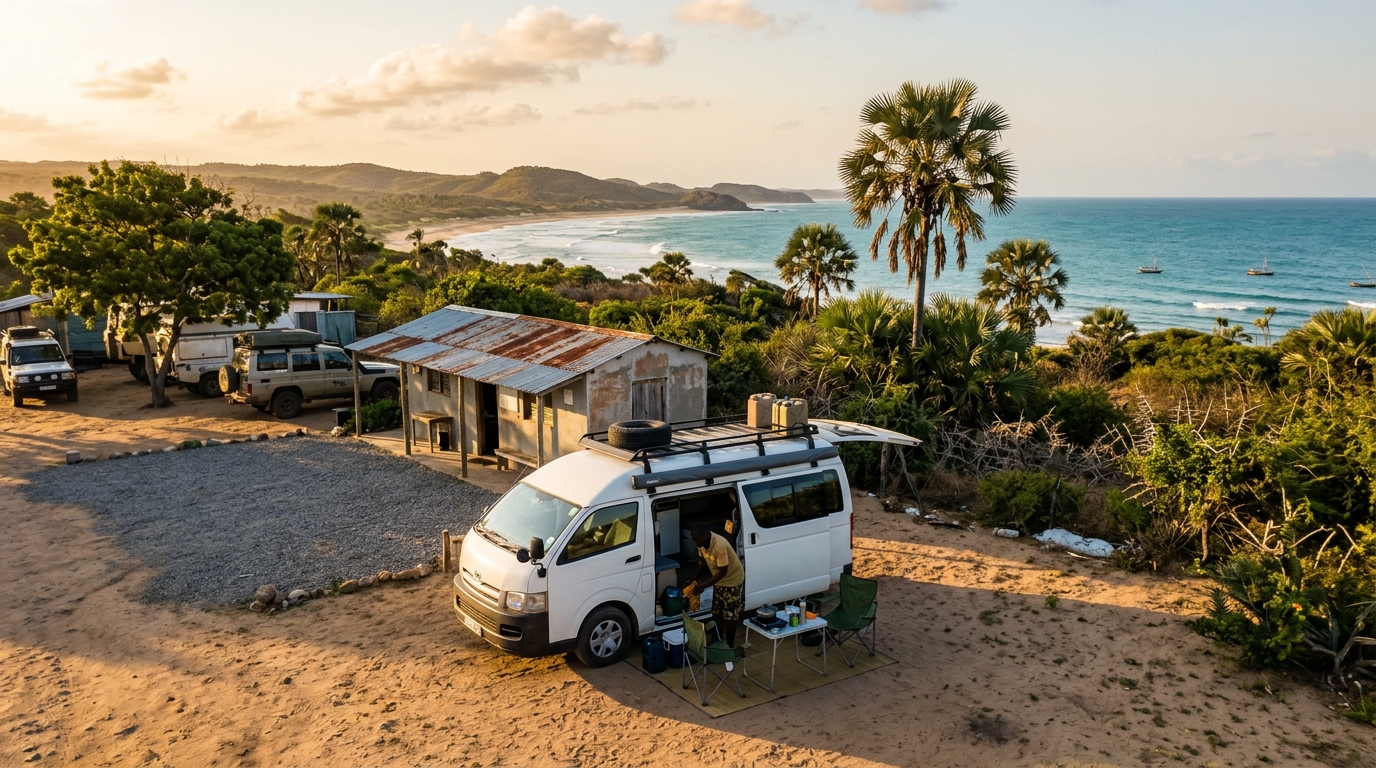
For live availability and current prices, start with our RV Rental Mozambique - Complete Guide 2026 guide.
In This Guide
- Can You Drive an RV in Mozambique? License & Age Rules
- Road Conditions & Terrain in Mozambique
- RV Size Limits, Bridges & Restricted Zones
- Fuel: Diesel vs. Petrol & Cost per 100 km
- Tolls, Vignettes & Border Rules
- Driving Tips for rv rental Travelers
- Recommended RV Class for Mozambique Roads
- Should I Choose a Compact Van Instead of a Large RV in Mozambique?
- Can I Park Anywhere? Free & Wild Camping Rules in Mozambique
- Can I Drive an RV Into the City Center? Heights, Tunnels & Local Signage
- Is it Safe to Drive an RV in Mozambique? Security & Emergency Protocols
- What Health Precautions Should I Take for RVing in Mozambique? Vaccinations & Malaria
- What Cultural Etiquette and Language Tips are Essential for RV Travelers in Mozambique?
- What are the Best Communication Strategies for RV Travel in Remote Mozambique?
- How Do Seasonal Changes Affect RV Travel on Mozambique Roads?
- What is the Cost of an RV Rental Trip in Mozambique? Budgeting & Hidden Fees
- What Documentation Do I Need for RV Travel in Mozambique? Permits & Insurance
- How Do I Cross the Border into Mozambique with an RV? A Step-by-Step Guide
- Where Can I Find RV Campgrounds and Hookups in Mozambique?
- What are the Best RV-Accessible Itineraries and Attractions in Mozambique?
Can You Drive an RV in Mozambique? License & Age Rules
Navigating Mozambique with a rented RV is generally feasible for foreigners, provided you have the correct documentation. A valid domestic driver's license, coupled with an International Driving Permit (IDP), is typically required. For RVs under 3.5 tons, which encompasses most rental motorhomes, a standard B or C category license is usually sufficient. Rental companies often impose their own minimum driver age, commonly set between 21 and 25 years old, irrespective of the official licensing requirements.
Road Conditions & Terrain in Mozambique
Mozambique's road network presents a varied experience for RV travelers. While primary highways like the EN1 are generally better maintained, they can still feature significant potholes. Many secondary routes and coastal areas transition to gravel, dirt tracks, or sandy paths, which can be particularly challenging. The rainy season, from November to April, can render unpaved roads impassable for 2WD RVs and necessitates robust vehicles, ideally 4x4, for accessing more remote regions or national parks. Throughout the country, it's crucial to drive slowly and cautiously, always being aware of unexpected obstacles, livestock, and pedestrians. Traveling during daylight hours is strongly recommended to maximize visibility and safety on all types of terrain.
RV Size Limits, Bridges & Restricted Zones
While specific, country-wide RV size limitations aren't always strictly enforced on major roads, drivers should remain vigilant about potential height restrictions, especially on older bridges or in less developed areas. Larger RVs might find navigating narrow village roads or utilizing ferry services challenging due to space and weight constraints. Access to national parks, such as the renowned Gorongosa National Park or the Maputo Special Reserve, typically requires specific entry permits. It's also important to note that some park areas or internal roads may restrict larger or 2WD RVs, particularly during the wet season when conditions can be more demanding. Always verify local regulations and park entry requirements in advance, as certain environmental zones around protected areas may have access restrictions.
Fuel: Diesel vs. Petrol & Cost per 100 km
Diesel is the predominant and most readily available fuel for RVs in Mozambique, particularly outside major urban centers. When considering fuel costs, budget generously, as consumption can be higher on rough roads or in remote areas. Bandana's fleet data indicates typical consumption rates: Class B Camper Vans around 8-10 liters/100 km, Class C Alcove models at 10-12 liters/100 km, and larger Class A Integrated or Truck Campers (TC) consuming between 12-17 liters/100 km. Fuel stations can be sparse in certain regions, so it’s advisable to refuel whenever possible, especially before venturing into less developed areas. On the routes offered through RV PLANET routes, you can itemize and track every expense along the way for easy budgeting.
Tolls, Vignettes & Border Rules
Mozambique utilizes toll roads primarily on major highways, such as sections of the EN1 and the N4 toll road connecting to South Africa. Tolls are typically paid in the local currency, Metical, though South African Rand may be accepted at larger toll gates. Credit card acceptance can vary. While specific vignettes for RVs are not a common requirement, be prepared for other potential road usage fees. When crossing international borders with an RV, ensure you have all necessary documentation, including passports, driver's licenses, IDPs, temporary import permits (TIPs), and mandatory third-party insurance for Mozambique, which is usually purchased at the border.
Driving Tips for rv rental Travelers
To ensure a safe and enjoyable RV journey in Mozambique, adhere to a few key driving practices. Always prioritize driving during daylight hours to better navigate road conditions, identify pedestrians, and avoid potential nighttime hazards. Maintain a slower speed than you might be accustomed to, especially on unpaved or corrugated roads, to manage potholes and terrain changes. Before departing, secure all interior items to prevent shifting and potential damage on bumpy routes. It's wise to carry essential spares like a spare tire, basic tools, and sufficient water and fuel, particularly for remote expeditions. Familiarize yourself with local traffic laws, speed limits, and signage, and be prepared for occasional document checks at checkpoints.
Recommended RV Class for Mozambique Roads
For navigating Mozambique's diverse and often challenging road network, a **Class B - Camper Van** or **Class TC - Truck Camper** is frequently recommended. Their smaller size and enhanced maneuverability are advantageous, and many of these models can be found with 4x4 capabilities, which is highly beneficial for varied terrains and remote exploration. A Class B Camper Van, typically around 5.8 meters long, offers a good balance of comfort and agility. For more rugged conditions, a Class TC Truck Camper, often built on a 4x4 chassis, provides superior ground clearance and off-road performance, though it might have higher fuel consumption. While larger RVs like Class C (Alcove) or Class SI (Semi-integrated) models offer more interior space, their size and typical 2WD configuration may limit access to more adventurous or remote locations.
Should I Choose a Compact Van Instead of a Large RV in Mozambique?
Opting for a compact van, such as a Class B Camper Van, can be highly advantageous for RV travel in Mozambique. These vehicles are often equipped with 4x4 capabilities and are significantly easier to maneuver on less developed roads, through narrow village paths, and during the rainy season when road conditions can deteriorate rapidly. Their compact size also makes them simpler to park and handle on rough terrain compared to larger motorhomes. However, if your itinerary primarily involves well-maintained main roads and established campsites, larger RVs like Class C or Class SI models might offer a better trade-off in terms of interior space and amenities for extended trips or families. The choice ultimately depends on your planned route and priorities.
Can I Park Anywhere? Free & Wild Camping Rules in Mozambique
Wild camping in Mozambique operates in a somewhat grey area. While not explicitly codified with strict laws, it is often tolerated in very remote, non-protected areas if you secure permission from local communities or landowners. Wild camping is strictly prohibited within national parks and official conservation areas, where overnight stays must be in designated, often pre-booked and fee-based, campsites. If considering informal overnight stops, always prioritize safety, avoid isolated areas, and never camp on private land without explicit permission. Adhering to "leave no trace" principles is essential to preserve Mozambique's natural beauty and ensure continued access for future RV travelers. Remember that rules can vary by region, so always confirm local regulations.
Can I Drive an RV Into the City Center? Heights, Tunnels & Local Signage
Yes, RVs can generally be driven into most city centers in Mozambique, including the capital, Maputo. However, be prepared for significant congestion and potential challenges with parking availability for larger vehicles in these urban environments. Always pay close attention to local signage, particularly for any height restrictions on underpasses or older bridges, which are more common on secondary roads but can still be encountered in cities. While specific tunnels with height limitations are not a widespread issue, navigating narrow streets in historic or densely populated areas might require careful maneuvering for larger RVs. Planning your city routes in advance and utilizing GPS with up-to-date mapping is advisable. Consider parking on the outskirts and using public transport or taxis for inner-city exploration if your RV is particularly large.
Is it Safe to Drive an RV in Mozambique? Security & Emergency Protocols
Driving an RV in Mozambique can be a safe experience with proper precautions and awareness. While the country generally enjoys good political stability, it's essential to stay informed about local news and avoid any areas experiencing unrest. Crime tends to be concentrated in larger cities, where petty theft and opportunistic crimes can occur; always secure your RV, refrain from displaying valuables openly, and avoid driving at night. For remote travel, carrying a satellite phone for emergency communication is highly recommended. Ensure your travel insurance covers emergency medical evacuation and familiarize yourself with local emergency numbers for police and medical services. Be cautious of common scams, such as unofficial "tolls" or donation requests; always insist on official documentation or receipts for any payments.
What Health Precautions Should I Take for RVing in Mozambique? Vaccinations & Malaria
Prior to your RV trip to Mozambique, consult a medical professional for necessary vaccinations and health advice. Yellow Fever vaccination is typically mandatory if arriving from an endemic country. Routine immunizations, including tetanus, diphtheria, polio, and hepatitis A and B, are also recommended. Mozambique is a high-risk malaria zone, making comprehensive prevention crucial. This includes taking prescribed antimalarial medication, using mosquito repellent containing DEET, sleeping under mosquito nets, and wearing protective clothing at dusk and dawn. Medical facilities are limited, especially in remote areas, and their quality varies; therefore, carrying a well-stocked first-aid kit and securing travel insurance that covers emergency medical evacuation is vital. Ensure you have adequate supplies of any personal prescription medications and always purify drinking water or opt for bottled water to prevent waterborne illnesses.
What Cultural Etiquette and Language Tips are Essential for RV Travelers in Mozambique?
Respectful interaction with local communities will greatly enhance your RV travel experience in Mozambique. Begin interactions with a polite greeting; a simple "Olá" in Portuguese is widely understood and appreciated, especially when outside major tourist hubs. Learning a few basic Portuguese phrases, such as "bom dia" (good morning), "obrigado/a" (thank you), and "por favor" (please), will significantly improve your communication. When visiting villages or markets, dress modestly, particularly women, and always seek permission before taking photographs of people. Bargaining is common in markets, but do so respectfully and with a smile, avoiding aggressive negotiation. Be prepared for a more relaxed approach to time, often referred to as "mañana" or "African time," where punctuality and immediate service may not always be priorities.
What are the Best Communication Strategies for RV Travel in Remote Mozambique?
Effective communication is key for RV travel in remote Mozambique due to unreliable cell service outside populated areas and the main EN1 highway. Purchasing a local SIM card from providers like Vodacom or Movitel upon arrival is recommended for better local rates and data access in towns, but coverage diminishes significantly in rural and coastal regions. For venturing into truly signal-free areas, a satellite phone is highly recommended for reliable emergency communication. Informing family or friends of your itinerary and check-in schedule is also a crucial step, and carrying a personal locator beacon (PLB) or satellite messenger can provide an additional safety net for distress signals. Budget for data, as costs can be relatively high, and always download offline maps (e.g., Maps.me, Gaia GPS) before setting off.
How Do Seasonal Changes Affect RV Travel on Mozambique Roads?
Seasonal variations in Mozambique significantly impact RV travel, particularly the distinction between the rainy season (November to April) and the dry season (May to October). During the rainy season, many unpaved roads, dirt tracks, and river crossings can become impassable due to mud, severe damage, or rising water levels, often necessitating 4x4 vehicles and causing considerable delays. The dry season generally offers the best conditions for RV travel, with roads being more accessible, skies clearer, and humidity lower, making it ideal for exploring remote areas and national parks. Coastal roads, especially those with sandy sections, can be particularly challenging during the wet season, even for 4x4s. Planning your RV itinerary to coincide with the dry season will undoubtedly enhance the safety, comfort, and overall accessibility of your chosen destinations.
What is the Cost of an RV Rental Trip in Mozambique? Budgeting & Hidden Fees
A comprehensive RV rental trip budget in Mozambique extends beyond the daily rental fee. Factor in expenditures for visas, vehicle and driving permits, fuel (which can be substantial, with averages of 8-17 liters/100 km depending on RV class), food, and accommodation. While wild camping can reduce lodging costs, expect to pay for secure campsites with amenities, ranging from affordable to moderately priced. Consider potential "hidden" costs like conservation area entry fees, especially if visiting multiple parks, and be aware of potential unofficial tolls or "donations" requested in remote areas. Comprehensive travel insurance, including emergency medical evacuation, is also a critical budget item to avoid unexpected expenses.
What Documentation Do I Need for RV Travel in Mozambique? Permits & Insurance
To ensure a smooth RV journey in Mozambique, meticulous documentation is essential. You'll need a valid passport, a visa if required for your nationality, your national driver's license, and ideally an International Driving Permit (IDP). For rental vehicles, temporary import permits (TIPs) are typically issued at the border. Mandatory third-party insurance for Mozambique is a must and must be purchased either at the border or in advance, as foreign vehicle insurance is generally not valid. Always carry original vehicle registration documents or a letter of authority from the rental company. It's prudent to have multiple copies of all essential documents, keeping originals secure and separate, to facilitate any interactions with local authorities or at checkpoints.
How Do I Cross the Border into Mozambique with an RV? A Step-by-Step Guide
Crossing the border into Mozambique with an RV, especially from South Africa at popular crossings like Komatipoort/Ressano Garcia, requires careful preparation. First, complete the exit procedures in the departing country, presenting passports, vehicle registration, and any necessary permits. Next, at Mozambique immigration, present passports, fill out entry forms, and obtain visas if not secured beforehand. For customs, declare your RV, secure a temporary import permit (TIP) if applicable, and purchase the mandatory third-party vehicle insurance, often available at the border post. Your RV may undergo a brief inspection, so have all documentation readily accessible. Be prepared for potential queues and processing delays, and always maintain patience and politeness. Insist on official receipts for all payments and keep copies of all stamped documents for your records.
Where Can I Find RV Campgrounds and Hookups in Mozambique?
RV-specific infrastructure in Mozambique is still developing, with dedicated campgrounds primarily located along popular coastal routes and near major tourist hubs. These sites offer a range of amenities, though full hookups (water, electricity, sewage) are less common than in more developed RVing destinations. Many lodges and resorts in coastal towns like Vilanculos and Tofo provide designated camping areas, some offering basic water and electricity points. You might also find suitable overnight stops by inquiring at lodges or guesthouses that permit RV camping, often including access to ablution blocks. For more remote or off-road adventures, facilities will be more basic, emphasizing the need for self-sufficiency.
What are the Best RV-Accessible Itineraries and Attractions in Mozambique?
Mozambique's stunning coastline, rich culture, and diverse wildlife offer several rewarding RV itineraries. The **Southern Coastal Route**, stretching from Maputo to Inhambane and Tofo, is a popular choice, accessible via the EN1 and coastal roads. This route offers access to beautiful beaches, excellent diving spots in Tofo and Vilanculos, and cultural experiences in Inhambane, with campsites available at Praia do Bilene, Barra Beach, and Pomene. For wildlife enthusiasts, **Gorongosa National Park** is a must-visit; while some internal roads may require 4x4, the main Chitengo camp is generally RV-accessible (check seasonal road conditions). Adventurous RVers with suitable vehicles might explore the **Northern Coastal areas**, though road infrastructure is more challenging, and access to islands like Ibo Island in the Quirimbas Archipelago often requires ferry or boat transfers. Integrating stops at local markets (e.g., Maputo Central Market) and historical sites like the UNESCO World Heritage site of Ilha de Moçambique will provide authentic cultural immersion.
What You Shouldn't Miss
- Drive the EN1 highway, experiencing its unique character and stopping at roadside cashew vendors for a local taste.
- Explore the stunning beaches and diving opportunities around Tofo and Vilanculos, potentially finding rustic beachfront campsites for your RV.
- Visit Gorongosa National Park, a jewel of conservation, while being mindful of seasonal road conditions for RV access.
- Immerse yourself in local culture by visiting Maputo's Central Market for vibrant sights, sounds, and tastes.
- Consider the adventurous journey to Ibo Island, a UNESCO World Heritage site, which may require specific arrangements for RV access to the archipelago.
Final Thoughts
Embarking on an RV adventure in Mozambique promises a unique blend of natural beauty and cultural richness. While the roads and infrastructure present their own set of challenges, with the right vehicle and preparation, the rewards are immense. From the stunning coastline to the vibrant interior, a rented RV offers an unparalleled way to explore this captivating country at your own pace.
Remember to prioritize safety by driving during daylight, staying informed about road conditions, and carrying essential supplies. Embrace the spirit of adventure, connect with the local culture, and allow the rhythm of Mozambique to guide your journey. We're here to support you every step of the way, ensuring your RV rental experience is as smooth and enjoyable as possible.
Ready to start planning your Mozambican RV adventure? Compare vehicle options and prices today to find the perfect motorhome for your journey!
