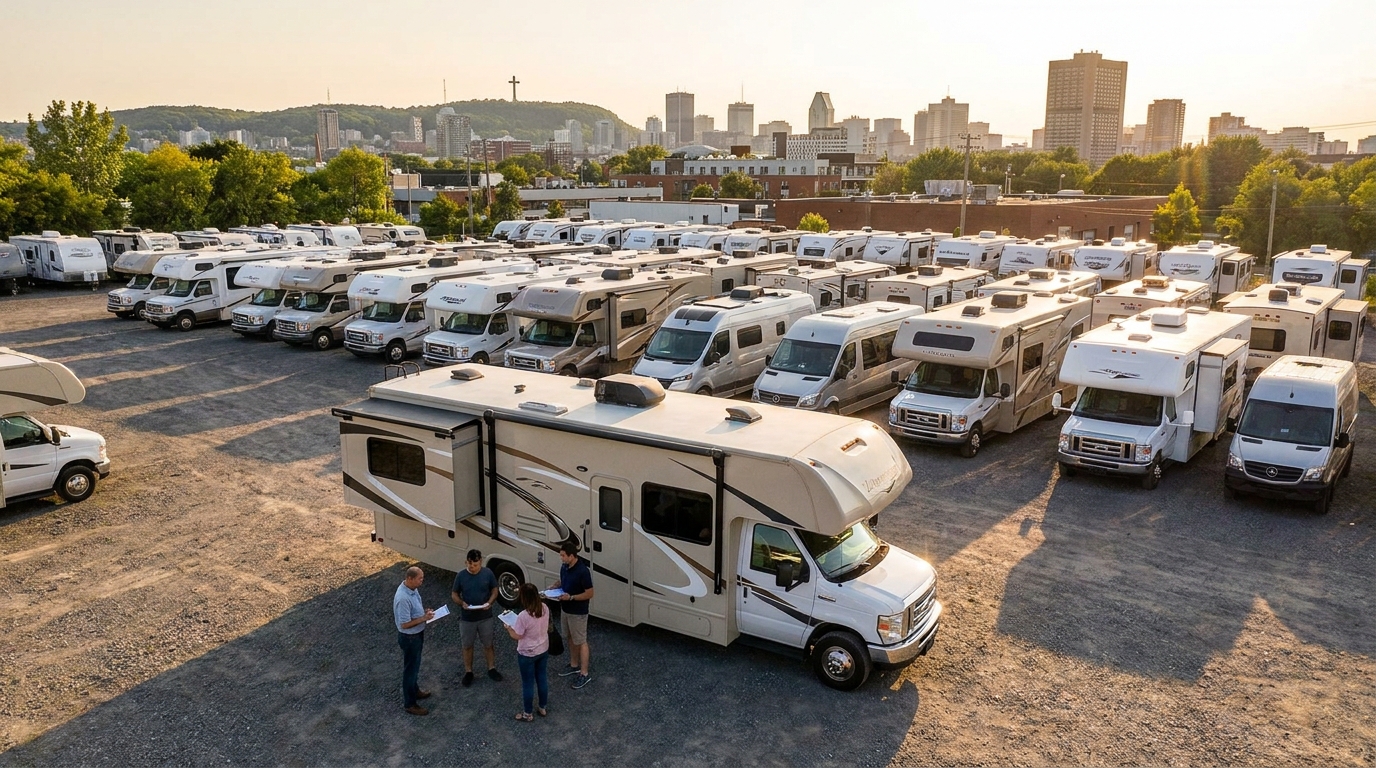
For live availability and current prices, start with our RV Rental Montreal - Complete Guide 2026 guide.
In This Guide
- Can You Drive an RV in Montreal? License & Age Rules
- Road Conditions & Terrain in Montreal
- RV Size Limits, Bridges & Restricted Zones
- Fuel: Diesel vs. Petrol & Cost per 100 km
- Tolls, Vignettes & Border Rules
- Driving Tips for rv rental Travelers
- Recommended RV Class for Montreal Roads
- Should I Choose a Compact Van Instead of a Large RV in Montreal?
- Can I Park Anywhere? Free & Wild Camping Rules in Montreal
- Can I Drive an RV Into the City Center? Heights, Tunnels & Local Signage
- What is the 3-3-3 rule for RVs?
- Can Americans RV in Canada?
- How much is RV insurance in Canada?
Can You Drive an RV in Montreal? License & Age Rules
Most standard RVs up to 11,000 kg (24,250 lbs) can be driven in Quebec with a regular Class 5 passenger vehicle license, which is equivalent to most Canadian and U.S. non-commercial driver's licenses. For RVs exceeding 11,000 kg or equipped with air brakes, a higher class license (e.g., Class 3 for heavy vehicles) may be required in Quebec, although the majority of rental RVs fall below this weight threshold. The minimum driver age for renting an RV in Montreal typically ranges from 21 to 25 years old, varying based on the rental company's specific policies. Foreign drivers require a valid driver's license from their home country; an International Driving Permit (IDP) is highly recommended for licenses not issued in English or French. Be aware that licensing requirements can evolve; for example, while Quebec's rules are specific, other provinces like Ontario may have different Class D or A requirements for heavier vehicles that would apply if you travel there.
Road Conditions & Terrain in Montreal
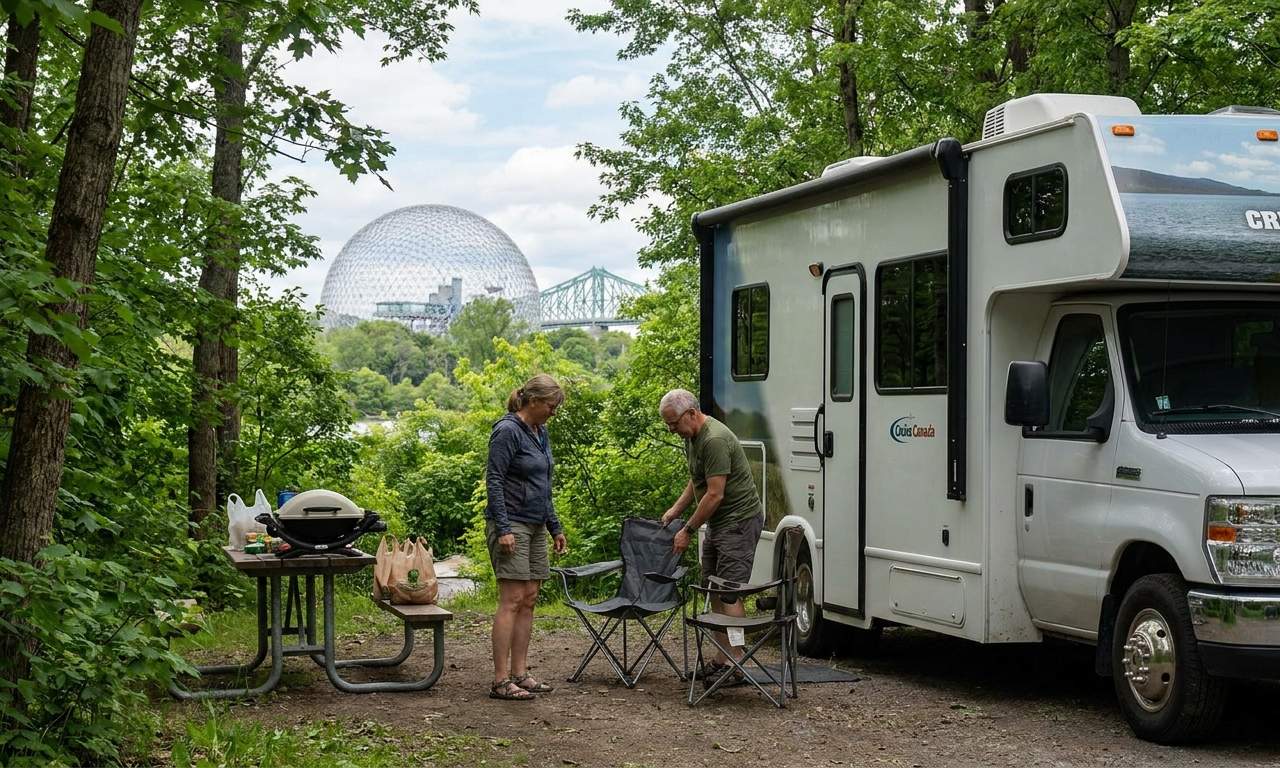
Montreal's urban core features a mix of well-maintained and older paved roads, with some areas susceptible to potholes due to severe winter weather and freeze-thaw cycles, generally on flat terrain. Expect significant traffic congestion during peak hours and around the city's numerous construction zones, which are common for infrastructure improvements. Major highways (e.g., Autoroutes 10, 15, 20) connecting to Montreal offer smoother driving conditions and are well-suited for RV travel. Navigating older, narrower streets within historic districts like Old Montreal requires heightened vigilance and patience when driving an RV. Driving an RV through Montreal and its surrounding regions encourages a slower, more deliberate travel pace, allowing for greater enjoyment of Quebec's scenic routes.
RV Size Limits, Bridges & Restricted Zones
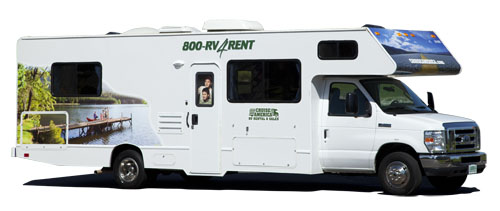
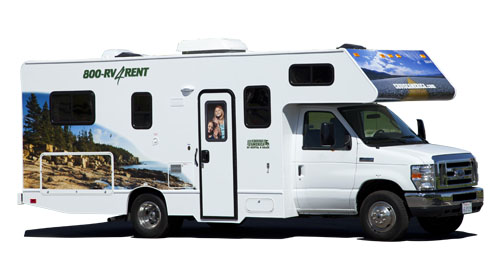
While there are no blanket RV size limits for general driving in Montreal, drivers must be exceptionally vigilant for specific height and weight restrictions on older bridges, underpasses, and parking structures within the city. Many urban parking garages in Montreal have height limits typically ranging from 2.0 to 2.2 meters (6'6\" to 7'2\"), which makes them unsuitable for most RVs, often taller than 3 meters (10 feet). Montreal currently does not enforce specific environmental or low-emission zones that would restrict RV access, but travelers should always verify for updated local regulations before their trip. Specific signage will clearly indicate height restrictions on tunnels and bridges, particularly on routes leading into and out of the island of Montreal; it is crucial to obey these warnings. For Bandana's fleet, Class C - Alcove RVs average 8.5 meters in length and Class B - Camper Vans average 6.6 meters, necessitating careful navigation in tight urban spaces and awareness of overhead clearances.
Fuel: Diesel vs. Petrol & Cost per 100 km
Both diesel and petrol (gasoline) fuels are widely available at service stations throughout Montreal and across Quebec, with most rental RVs operating on one of these types. Bandana's Class B - Camper Vans typically consume 11–15 Liters/100 km, while Class TC - Truck Campers average 12–17 Liters/100 km, offering good fuel efficiency for their size. Larger RVs like Class SI - Semi-integrated models consume around 25 Liters/100 km, and Class C - Alcove RVs typically range from 25-30 Liters/100 km. Fuel costs in Quebec fluctuate and are generally comparable to other major Canadian provinces; checking current local prices via apps or gas station signs is recommended for accurate budget planning. Some RV rental companies, including Bandana, may offer fuel discount cards or similar perks on specific RV models, which can provide savings on fuel expenses during your journey. On the routes offered through RV PLANET routes, you can itemize and track every expense along the way for easy budgeting.
Tolls, Vignettes & Border Rules
Quebec has fewer tolled roads compared to some other Canadian provinces or the United States, though specific bridges or sections of highways, such as the A-30, may have tolls around Montreal. There is no vignette system required for driving in Quebec, which is a common requirement in several European countries. For Americans RVing in Canada, ensure all travelers possess a valid passport; depending on nationality, a visa may also be required for entry. Crossing the border with an RV necessitates presenting the vehicle's registration, valid proof of insurance, and if it's a rental, a letter of permission from the rental company is highly recommended. Some rental RVs from rent-motorhome providers may offer the option to pre-purchase toll passes or include transponders to simplify travel and avoid potential fines, especially if your route extends into Ontario or the U.S.
Driving Tips for rv rental Travelers
Always plan your driving routes in advance, especially when entering Montreal's city center, to account for one-way streets, traffic, and construction zones. Consider parking your RV at an outlying Metro station or campground and utilizing Montreal's efficient public transit system (Metro, buses) for urban sightseeing to avoid city driving and parking stress. For family trips, adhere to the recommendation of taking regular breaks every 2-3 hours; this reduces driver fatigue and allows all passengers to stretch and re-energize. Familiarize yourself with Quebec's distinct road signage, which is predominantly in French, to ensure a safer and more confident driving experience. Opting for an RV with an automatic transmission, commonly found in Bandana's fleet, can significantly ease driving in urban stop-and-go traffic and navigating Montreal's busy streets.
Recommended RV Class for Montreal Roads
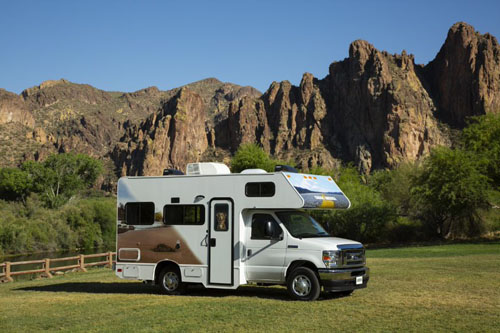
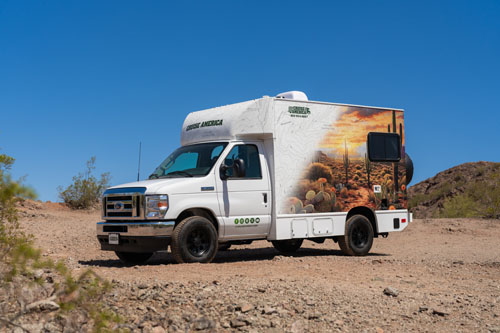
For navigating Montreal's blend of urban and surrounding scenic roads, Class B - Camper Vans and Class TC - Truck Campers are highly recommended due to their superior maneuverability. Class B - Camper Vans, averaging 6.6 meters in length, offer excellent flexibility for city driving and parking, coupled with better fuel economy (11–15 Liters/100 km) and essential amenities. Class TC - Truck Campers, with an average length of 7.4 meters, provide a good balance of compact size suitable for city access and the robustness needed for venturing into more rugged areas, consuming 12–17 Liters/100 km. While larger Class C - Alcove (avg. 8.5m) and Class SI - Semi-integrated (avg. 7.6m) RVs provide greater living space and comfort, their extended length and height can make navigating Montreal's narrower streets and limited parking more challenging. The ideal RV class ultimately depends on your comfort level with vehicle size and your specific travel plans, balancing urban exploration needs with desired interior comfort.
Should I Choose a Compact Van Instead of a Large RV in Montreal?
While a compact van, such as a Class B Camper Van, offers superior maneuverability and easier parking in Montreal's dense urban core, larger RVs are generally manageable for driving on main city routes and highways. A compact van (e.g., Bandana's Class B Camper Van, averaging 6.6m) genuinely facilitates navigating narrow historic streets, fitting into smaller parking spots, and typically offers better fuel efficiency. However, if your priority is greater interior living space, dedicated sleeping areas, and more extensive kitchen or bathroom facilities, a larger RV like a Class C - Alcove (avg. 8.5m) or Class SI - Semi-integrated (avg. 7.6m) often presents a better trade-off. The choice hinges on your itinerary: if extensive urban exploration with frequent city parking is a primary goal, a compact van is advantageous; conversely, if you plan to largely park at campgrounds outside the city and use public transport, a larger RV provides a more comfortable 'home away from home'. Many RV travelers find that the perceived difficulty of driving a larger RV in Montreal is often overestimated, provided they plan routes carefully and remain attentive to their vehicle's dimensions. For ideas you can prep on the road, watch our RV-friendly recipes playlist on YouTube.
Can I Park Anywhere? Free & Wild Camping Rules in Montreal
It is generally illegal to sleep in a car or RV on public streets or undesignated areas within the city of Montreal; municipal bylaws strictly prohibit unauthorized overnight parking and camping. Free or 'wild camping' (boondocking) is not permitted in Montreal's urban or suburban areas; violations can result in significant fines or vehicle towing. For legal and secure overnight RV parking, travelers must utilize established RV parks, campgrounds, or designated private parking lots that explicitly allow overnight stays. Several well-equipped campgrounds are located within a reasonable driving distance of Montreal, offering amenities and secure parking suitable for RVs. Rules regarding overnight parking vary significantly by region and municipality — always consult local regulations and adhere to local law before parking your RV overnight, even in areas just outside the immediate city.
Can I Drive an RV Into the City Center? Heights, Tunnels & Local Signage
Yes, you can generally drive an RV into Montreal's city center, but it demands meticulous attention to local signage concerning height limits, narrow streets, and potential restricted zones. Specific watchouts include numerous low bridges and underpasses, particularly in older parts of the city and near railway lines, which can have height restrictions as low as 2.7 meters (9 feet). Major tunnels, such as sections of the Ville-Marie Expressway, typically accommodate standard RV heights, but drivers must consistently observe all posted signage for any exceptions. Local signage will provide essential directions, indicate one-way streets, and mark any residents-only parking areas; using a GPS system with RV-specific routing can help pre-warn about height restrictions. Consider parking your RV at an outer-borough Metro station with ample parking (e.g., Angrignon, Montmorency, or Longueuil) and commuting into central areas via public transit to avoid complex urban driving and secure parking.
What is the 3-3-3 rule for RVs?
The '3-3-3 rule' for RV travel is a widely recommended guideline designed to ensure safe, relaxed, and enjoyable road trips, particularly useful when exploring diverse destinations like Montreal and Quebec. The first '3' suggests driving no more than 300 miles (approximately 480 km) in a day, which allows for relaxed travel without rush and ample time to appreciate the journey and destination. The second '3' recommends arriving at your campground or parking spot by 3 PM, providing sufficient daylight hours to comfortably set up camp, explore the immediate surroundings, and relax before nightfall. The third '3' advises staying for at least 3 nights in each location, fostering a deeper immersion in the local culture, reducing the constant cycle of packing and unpacking, and allowing for more in-depth exploration. Applying the 3-3-3 rule to a Montreal RV trip encourages a balanced approach, enabling ample time to explore the city's attractions before retreating to a nearby, comfortable campground.
Can Americans RV in Canada?
Yes, Americans can absolutely RV in Canada, provided they meet all necessary entry requirements for themselves, their vehicle, and any accompanying pets, ensuring a smooth border crossing. All U.S. citizens must present a valid passport for entry into Canada by land, air, or sea, regardless of age. When bringing a personal or rental RV across the border, you must have the vehicle's registration, valid proof of insurance (which rental companies provide), and for a rental, a letter of permission from the rental company is highly advisable. Be informed about Canadian customs regulations concerning bringing certain goods, firearms, and agricultural products across the border; accurately declare all items as required to avoid issues. Ensure your U.S. auto insurance policy extends coverage to Canada, or that your rental RV insurance explicitly includes cross-border travel; reputable rental companies typically include appropriate coverage.
How much is RV insurance in Canada?
The cost of RV insurance in Canada varies significantly based on factors such as the RV's class, age, market value, the specific type and extent of coverage, your driving record, and the province where it's registered. For rental RVs in Canada, basic liability and collision insurance are typically integrated into the rental cost, with options available to purchase additional coverage (e.g., deductible reduction, roadside assistance) directly from the rental provider. For privately owned RVs, annual premiums can range from approximately $500 to well over $3,000, with larger Class A motorhomes generally being more expensive to insure than smaller Class B camper vans or truck campers. Specific requirements for renters or cross-border travelers often include a mandatory minimum amount of third-party liability coverage, which rental companies are legally obligated to provide. It is crucial for renters to thoroughly review their rental agreement and any personal insurance policies to fully understand the scope of their coverage for theft, damage, and medical emergencies while traveling in Canada.
What You Shouldn't Miss
- For a seamless city exploration experience, consider parking your RV at a Metro station outside the immediate downtown core and using public transport. The Montreal Metro system is efficient and can help you avoid the stress of navigating busy streets and finding RV-specific parking.
- When planning your route, utilize RV-specific GPS or apps that can help identify low clearance bridges and tunnels. Montreal's older sections can have height restrictions that are critical for larger RVs to avoid.
- Embrace the local culture by stopping at "casse-croûtes" (snack bars) for authentic Quebec poutine. It's a unique culinary road trip experience that's a must-try when RVing in the region.
- Explore Parc National des Îles-de-Boucherville, an island national park accessible within a short drive from Montreal. It offers hiking trails and canoeing opportunities, providing a refreshing nature escape close to the city.
- Remember that right turns on red are prohibited on the Island of Montreal unless otherwise posted. This is a common driving nuance that can catch visitors off guard.
Final Thoughts
Renting an RV for your Montreal adventure opens up a world of possibilities, blending the excitement of city exploration with the freedom of the open road. By understanding the unique driving considerations in Montreal and choosing the right vehicle for your needs, you're set for an unforgettable experience.
Remember to plan ahead, familiarize yourself with local driving customs, and leverage resources like RV PLANET (rvplan.net) for route planning and campground booking. With the right preparation, your RV journey through Montreal and Quebec will be seamless and filled with incredible memories.
Find Motorhome Rentals in Montreal