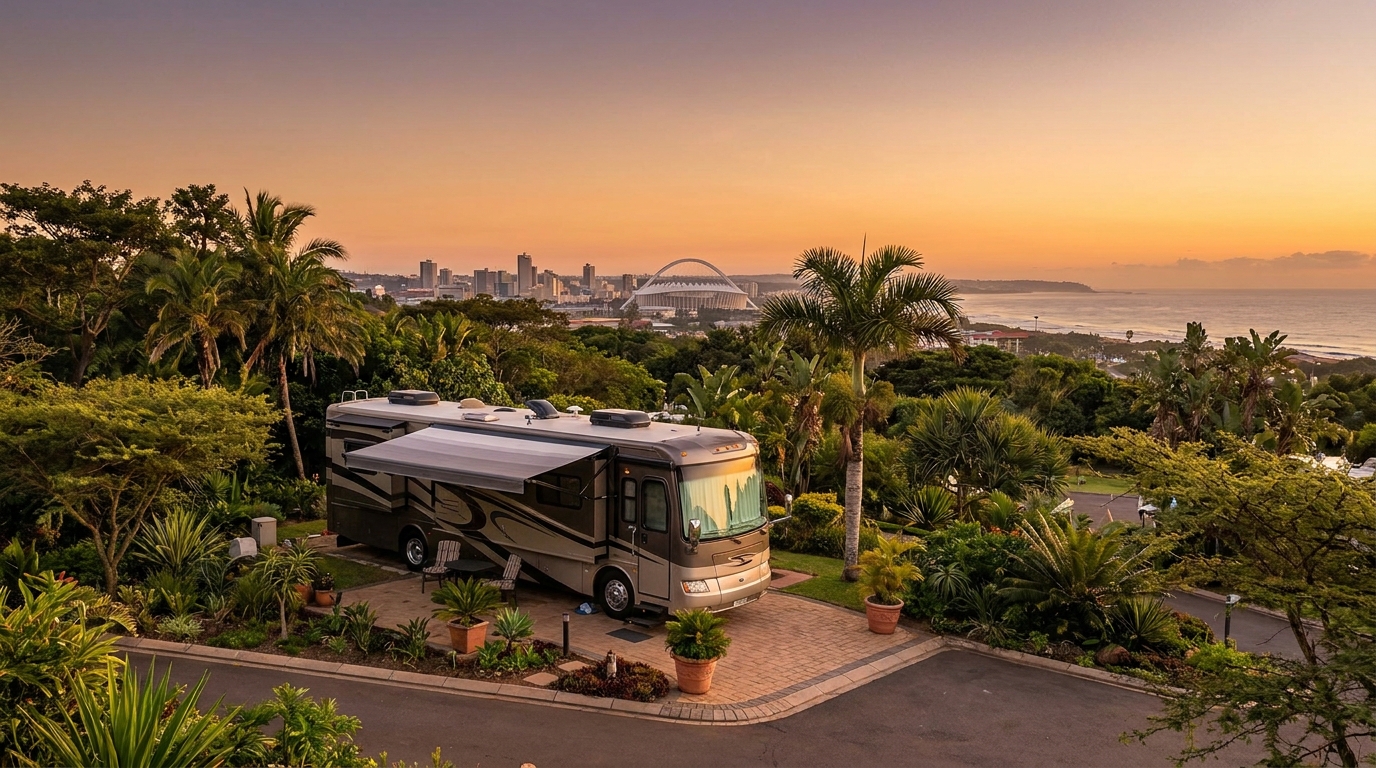
For live availability and current prices, start with our RV Rental Durban - Complete Guide 2026 guide.
In This Guide
- Can You Drive an RV in Durban? License & Age Rules
- Road Conditions & Terrain in Durban
- RV Size Limits, Bridges & Restricted Zones
- Fuel: Diesel vs. Petrol & Cost per 100 km
- Tolls, Vignettes & Border Rules
- Driving Tips for rv rental Travelers
- Recommended RV Class for Durban Roads
- Should I Choose a Compact Van Instead of a Large RV in Durban?
- Can I Park Anywhere? Free & Wild Camping Rules in Durban
- Can I Drive an RV Into the City Center? Heights, Tunnels & Local Signage
- Where can I find RV parks, dump stations, and water refills in Durban?
- What are the best RV-friendly scenic drives and routes around Durban?
- How much does an RV trip to Durban cost? Budgeting for fuel, tolls, and camping
- Can I use an RV for safaris, beach access, and day trips from Durban?
- What RV safety tips and emergency contacts do I need for South Africa?
- Are there specific permits or regulations for RVs in Durban's national parks?
- What are the best times to visit Durban in an RV, considering weather?
- Where can I stock up on food and water for my RV trip in Durban?
- Are there RV repair services or local communities in Durban?
Can You Drive an RV in Durban? License & Age Rules
In South Africa, a standard B or EB driver's license is generally sufficient for most RVs under 3,500 kg Gross Vehicle Mass (GVM), which includes many camper vans and smaller semi-integrated models. For larger RVs exceeding 3,500 kg GVM, such as some Class C Alcove or Class A Integrated models, a C1 license (valid for vehicles up to 16,000 kg) is required. The minimum driver age for renting an RV in Durban and throughout South Africa is typically 21 years old. Foreign drivers must possess a valid driver's license from their home country, accompanied by an International Driving Permit (IDP) if their domestic license is not printed in English.
Road Conditions & Terrain in Durban
Durban's major highways and arterial roads, such as the N2 and N3, are generally well-maintained and highly suitable for RV travel, offering smooth journeys. While urban and main routes are excellent, drivers should be prepared for varying road conditions in more rural parts of KwaZulu-Natal, which can include gravel sections, unpaved roads, or surfaces with occasional potholes, especially after heavy rains. The terrain around Durban ranges from coastal plains to the undulating KwaZulu-Natal Midlands and the formidable Drakensberg Mountains, meaning RV drivers may encounter steep gradients and winding passes. Embracing a slower, more deliberate driving style in an RV allows for safer navigation and a fuller appreciation of the region's diverse and scenic landscapes.
RV Size Limits, Bridges & Restricted Zones
Durban's road infrastructure largely accommodates RVs of various sizes, with no widespread specific RV size limits on primary routes, but awareness of your vehicle's dimensions is crucial. Drivers should always observe road signage for potential height restrictions (typically around 4.5 meters for bridges or tunnels) in older city areas or specific underpasses, though these are less common on major thoroughfares. There are no prevalent environmental zones or specific RV-restricted areas within Durban that would significantly impede general RV travel. Ferry limits are not a concern for RV travel directly within Durban; however, any planned trips involving ferries to islands or other destinations would necessitate checking specific vessel capacity and booking requirements.
Fuel: Diesel vs. Petrol & Cost per 100 km
Most RVs available for rent in Durban, particularly those from Bandana's global fleet, are diesel-powered, which is readily available at service stations throughout South Africa. Diesel fuel consumption for Bandana's semi-integrated RVs typically ranges from 10–11 Liters/100 km, while alcove models average 10–12 Liters/100 km, and camper vans consume approximately 8-10 Liters/100 km. As of 2026, fuel prices in Durban fluctuate; budgeting approximately ZAR 25-30 per liter for diesel is a reasonable estimate, meaning a 100 km journey could cost between ZAR 250 and ZAR 450 depending on the RV model and driving style. Some RV rental companies may offer fuel discount cards or loyalty programs, which can provide minor savings on overall fuel expenses. On the routes offered through RV PLANET routes, you can itemize and track every expense along the way for easy budgeting.
Tolls, Vignettes & Border Rules
South Africa employs a national toll road system, including key routes leading to and from Durban, with no vignette system required for RVs. Major routes such as the N2 and N3 around Durban feature multiple toll plazas, and RVs are typically classified as Class 2 or 3 vehicles, incurring higher fees than standard cars. It is advisable to carry South African Rand (cash) for manual toll booths, although some larger plazas accept credit cards; electronic toll tags can be purchased or may be offered by your RV rental provider to avoid delays and potential fines. For international RV travel from Durban to neighboring countries like Lesotho or Eswatini, specific cross-border permits, vehicle documentation, and additional insurance are required and must be arranged well in advance with your rental company.
Driving Tips for rv rental Travelers
For families, plan regular breaks (every 2-3 hours) to combat driver fatigue and allow passengers, especially children, to stretch and refresh. Budget-conscious travelers can save by inquiring about pre-purchased toll passes from their RV rental provider to potentially avoid higher cash rates and streamline travel. When opting for a luxury RV experience, consider Bandana's automatic transmission options for enhanced driving comfort and reduced stress on longer journeys. Maintain a safe following distance, be extra cautious of pedestrians and livestock, particularly in rural areas, and secure all loose items inside the RV before departure to prevent shifting during transit. Practice defensive driving techniques and be aware of your RV's dimensions, especially when making turns or navigating busy urban areas.
Recommended RV Class for Durban Roads
For optimal navigation of Durban's roads and exploration of the diverse KwaZulu-Natal region, a Class B - Camper Van or Class SI - Semi-integrated RV is highly recommended. Class B Camper Vans, with an average length of 5.8 meters, offer excellent maneuverability for city driving and accessing more compact campsites, comfortably accommodating 2-3 adults. Class SI Semi-integrated RVs, averaging 6.9 meters in length, provide a good balance of enhanced living space and ease of driving, ideal for families or longer trips, typically sleeping up to 4 adults. Both classes from Bandana's global fleet offer sufficient ground clearance for most South African road conditions, including main highways and occasional well-maintained gravel roads.
Should I Choose a Compact Van Instead of a Large RV in Durban?
For most RV travel in Durban and its surrounding regions, there are generally no significant driving difficulties with a larger RV, and the added comfort and interior space often provide a better overall experience than a compact van. A compact van (like a Class B Camper Van) truly excels in extremely tight historic centers or very narrow, winding mountain passes, conditions that are less frequently encountered on popular tourist routes around Durban. Choosing a larger RV offers substantial benefits such as more extensive living areas, better kitchen facilities, and a dedicated washroom, which are significant advantages for extended trips or family vacations. Given that Durban's infrastructure generally accommodates vehicles up to 7.5 meters (e.g., Bandana's Class C Alcove models), opting for a larger RV usually provides a superior trade-off in terms of amenities and comfort for minimal compromise on maneuverability. For ideas you can prep on the road, watch our RV-friendly recipes playlist on YouTube.
Can I Park Anywhere? Free & Wild Camping Rules in Durban
Free or wild camping is generally not permitted or advised in Durban or across South Africa due to safety concerns and adherence to local municipal bylaws and private property regulations. Designated RV parks, caravan parks, and private campsites are the only legal and safest options for overnight parking your RV in Durban and throughout KwaZulu-Natal. These established facilities typically offer essential services like security, electrical hookups, potable water, and ablution blocks. Rules vary by region—always check local regulations and adhere to local law before parking overnight, prioritizing secure and official campsites for your RV adventure.
Can I Drive an RV Into the City Center? Heights, Tunnels & Local Signage
Yes, you can generally drive an RV into Durban's city center, but it requires careful attention to local signage, particularly regarding height limits, tunnels, and designated parking zones. Most main city roads and access routes are engineered to accommodate larger vehicles; however, be vigilant for potential height or weight restrictions in older urban sections or specific multi-story parking garages. Always observe clear road signs indicating height clearances (typically around 4.5 meters for bridges or tunnels) and be aware of any environmental zones or residential-only streets that might affect your access or parking. For ease, it is often more convenient to park your RV at a designated campsite outside the immediate city center and utilize local public transport or a smaller vehicle for exploring downtown Durban.
Where can I find RV parks, dump stations, and water refills in Durban?
Durban and the greater KwaZulu-Natal region offer numerous well-equipped RV and caravan parks, such as Mac Nicols Caravan Park or Dolphin Coast Caravan Park, providing essential services like electrical hookups, potable water, and ablution facilities. Dump stations for grey and black water are commonly available at most established RV parks, larger service stations along major routes, and municipal resorts; always confirm amenities with the specific location. Water refill points are ubiquitous at campsites, and it is advisable to carry your own hose and appropriate connectors for convenient tank replenishment. Utilize online camping directories or apps to locate precise details and reviews for RV parks and their facilities in and around Durban.
What are the best RV-friendly scenic drives and routes around Durban?
The **Midlands Meander** (accessed via the N3 from Durban) offers an excellent RV-friendly scenic drive through charming artisanal towns, farmlands, and craft routes, with well-maintained roads. The **South Coast Route** (N2 or R102 south of Durban) provides stunning coastal views, numerous beach access points (with designated RV parking), and a string of pleasant seaside towns. For majestic mountain scenery, the route to the **Drakensberg Mountains** (e.g., N3 towards Winterton or Bergville) is generally RV-friendly, though some provincial roads within the berg can be winding. Exploring routes through the **Battlefields region** to the north of Durban (e.g., around Ladysmith and Dundee) offers historical insights with good main roads for RVs, though some specific battle sites may involve gravel roads.
How much does an RV trip to Durban cost? Budgeting for fuel, tolls, and camping
A comprehensive RV trip budget for Durban should encompass rental fees, fuel, tolls, camping site fees, food, and activity expenses. Fuel will be a primary cost; based on Bandana's fleet averages and 2026 diesel prices, expect to spend approximately ZAR 250-450 per 100km, depending on your RV model's consumption. Tolls on major routes to and from Durban can accumulate; budget for ZAR 50-150 per toll plaza, as RVs fall into higher vehicle classes. Camping fees at established RV parks in KwaZulu-Natal typically range from ZAR 200-500 per night, varying by season, location, and the amenities provided. Factor in additional expenses such as national park entrance fees, which often have specific rates for vehicles and occupants, and may require advance booking.
Can I use an RV for safaris, beach access, and day trips from Durban?
RVs can be effectively used for safari trips by staying at designated RV-friendly camps near national parks like Hluhluwe-iMfolozi Park; typically, you'll drive your RV to the park gates and then use a dedicated safari vehicle or smaller rental car for game drives. Direct RV access to beaches in Durban is generally prohibited; instead, you can park your RV in designated parking areas near popular beaches and walk or cycle to the shoreline. RVs are perfectly suited for flexible day trips from Durban, enabling comfortable exploration of surrounding attractions like the Midlands Meander, Drakensberg foothills, or the South Coast at your own pace. For very confined or sensitive areas during day trips, consider parking your RV at a central, accessible location and transferring to a smaller vehicle or using local transport.
What RV safety tips and emergency contacts do I need for South Africa?
Prioritize securing your RV by always locking all doors and windows, especially at night or when leaving the vehicle unattended, and exclusively using reputable, secure campsites. Maintain situational awareness, drive defensively, and adhere to speed limits, recognizing that driving conditions and habits can vary across different regions of South Africa. Keep a list of essential emergency contacts readily accessible: the national emergency number (10111 for police, 10177 for ambulance/fire), your RV rental company's roadside assistance, and your embassy's local contact details. Ensure your RV is equipped with a spare tire, essential tools, a well-stocked first-aid kit, and sufficient drinking water, particularly when venturing into more remote areas. Avoid stopping in isolated areas; prefer designated rest stops, bustling service stations, or well-lit, populated areas for breaks.
Are there specific permits or regulations for RVs in Durban's national parks?
Yes, RVs require standard entry permits for national parks and protected areas around Durban, such as those managed by Ezemvelo KZN Wildlife, similar to other vehicles. Permit fees are typically charged per person and per vehicle, and RVs may fall into a higher vehicle category than standard cars, resulting in specific rates. It is highly advisable to book campsites within national parks well in advance, especially during peak seasons, as RV-specific sites can be limited and fill up quickly. Always review the specific regulations of each national park regarding vehicle movement, designated driving routes, and waste disposal before your visit.
What are the best times to visit Durban in an RV, considering weather?
The ideal times to visit Durban and the KwaZulu-Natal region in an RV are during the shoulder seasons (April-May and September-November) when the weather is mild, sunny, and humidity is lower, making for pleasant driving and camping conditions. Winter (June-August) offers cooler, drier days, which are excellent for outdoor activities and safaris, and road conditions are typically firm and free from heavy rains. Summer (December-March) can be very hot and humid, with increased rainfall that may lead to challenging dirt road conditions, potential flooding in low-lying areas, and strong winds, which can impact RV driving comfort and safety. Consider the need for air conditioning during summer months and plan your routes to avoid areas prone to heavy rain or extreme weather during your travel season.
Where can I stock up on food and water for my RV trip in Durban?
Durban boasts numerous large supermarket chains such as Checkers, Pick n Pay, Shoprite, and Woolworths Food, where RVers can find a comprehensive selection of groceries, fresh produce, and all essential supplies. For a taste of local flavors and unique regional products, explore Durban's vibrant local markets, such as the Victoria Street Market, though direct RV parking might be challenging nearby. While tap water in major Durban metropolitan areas is generally considered safe to drink, it is a prudent practice for RVers to carry bottled water or utilize a reliable water filter system, especially when refilling tanks in more rural or less developed areas. It's recommended to do your primary provisioning in larger towns before venturing into more remote regions, where grocery options may be limited.
Are there RV repair services or local communities in Durban?
Durban, as a major South African city, offers a range of automotive repair services, and some specialized workshops are equipped to handle larger vehicles or provide RV-specific maintenance. It is always advisable to consult your RV rental provider for a list of preferred or authorized mechanics in the Durban area who can assist with any specific RV-related issues. While a formal, centralized 'RV community' might not be prominent, online forums, local camping clubs, and even experienced staff at established caravan parks can be valuable resources for advice and contacts. For minor issues, many well-established caravan parks may have staff or local contacts who can assist with basic repairs or recommend nearby technicians.
What You Shouldn't Miss
- Explore the **Golden Mile:** Durban's famous beachfront promenade is perfect for a leisurely stroll or cycle, offering beautiful ocean views and a vibrant atmosphere. Parking larger RVs in the vicinity might require planning, so consider utilizing designated parking areas.
- Visit the **uShaka Marine World:** Located on the beachfront, this popular attraction features an aquarium, water slides, and marine animal shows. The RV parking facilities here are generally accommodating for larger vehicles.
- Drive the **scenic route to the Drakensberg Mountains:** While a longer day trip, the journey on the N3 towards the Drakensberg offers spectacular landscapes. Plan for a slow drive, as some mountain passes can be challenging for RVs. Ensure you have adequate fuel and water before heading into more remote mountain areas.
- Experience the **Midlands Meander:** This popular route through the KwaZulu-Natal Midlands is dotted with artisan studios, craft shops, and charming cafes. The roads are generally RV-friendly, making it an enjoyable journey for scenic drives and local exploration.
- Discover the **Victoria Street Market:** Immerse yourself in the bustling local culture, browse spices, crafts, and textiles. Be mindful of RV parking as this is a busy urban market.
- Hike or explore the **Umgeni River Bird Park:** A peaceful escape offering a diverse range of bird species, this park is accessible for RVs, with dedicated parking.
Final Thoughts
Renting an RV and exploring Durban offers an unparalleled opportunity to discover the diverse beauty of KwaZulu-Natal at your own pace. From the vibrant city life to the stunning coastal drives and the nearby mountain landscapes, a rented motorhome provides the freedom and flexibility to craft your perfect adventure. We're here to help you every step of the way, ensuring your journey is as smooth and enjoyable as possible.
Remember to plan ahead for campsites, especially during peak seasons, and pack essentials to make your RV experience comfortable. Embrace the slow travel ethos, take your time to savor the moments, and let the spirit of adventure guide you. Your Durban RV road trip awaits!
Find Motorhome Rentals in Durban