
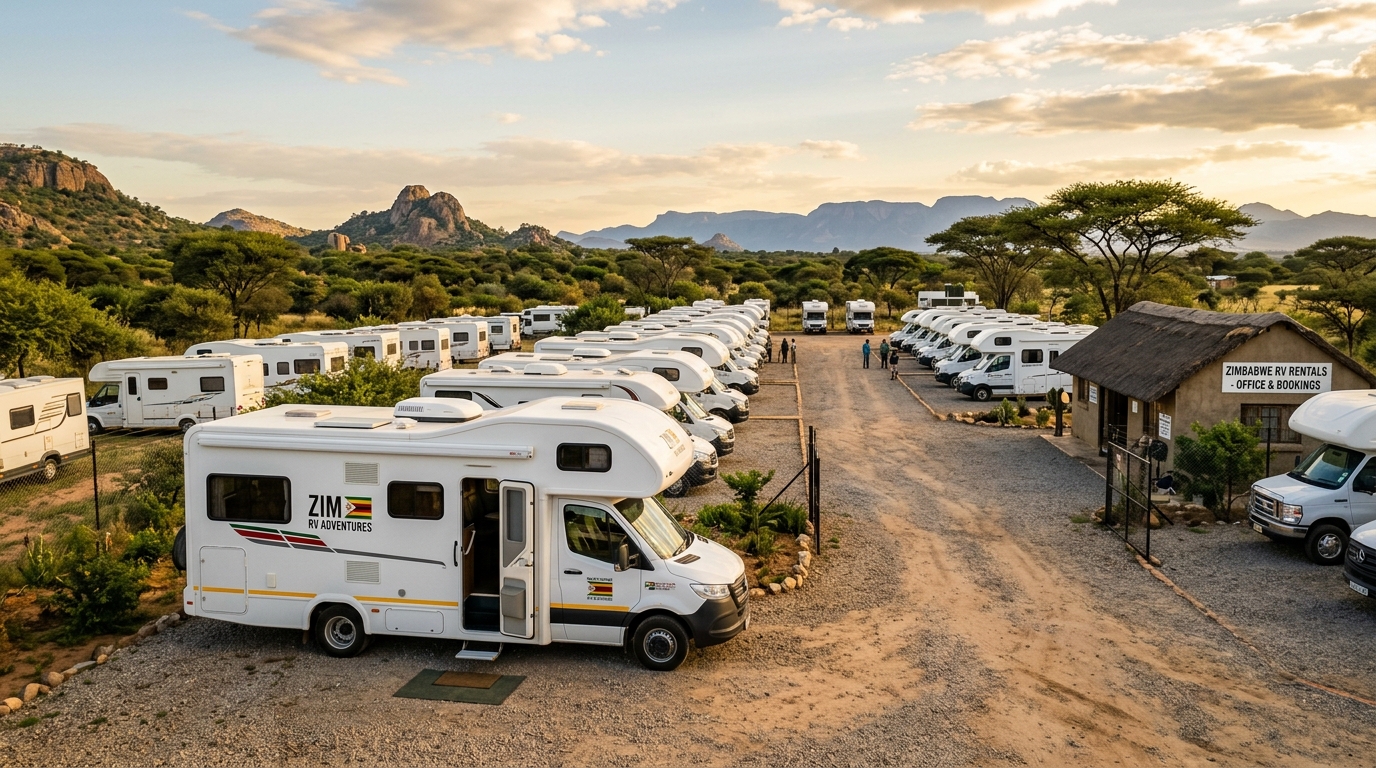
For live availability and current prices, start with our RV Rental Zimbabwe - Complete Guide 2026 guide.
In This Guide
- Can You Drive an RV in Zimbabwe? License & Age Rules
- Road Conditions & Terrain in Zimbabwe
- RV Size Limits, Bridges & Restricted Zones
- Fuel: Diesel vs. Petrol & Cost per 100 km
- Tolls, Vignettes & Border Rules
- Driving Tips for RV Rental Travelers
- Recommended RV Class for Zimbabwe Roads
- Should I Choose a Compact Van Instead of a Large RV in Zimbabwe?
- Can I Park Anywhere? Free & Wild Camping Rules in Zimbabwe
- Can I Drive an RV Into the City Center? Heights, Tunnels & Local Signage
Can You Drive an RV in Zimbabwe? License & Age Rules
Yes, you can drive an RV in Zimbabwe, and with a rented motorhome, you have a mobile headquarters to venture out to national parks and explore the country's diverse landscapes. A standard national driver's license is typically sufficient for driving most RVs in Zimbabwe, often corresponding to a Class B equivalent for vehicles up to 3,500 kg. However, an International Driving Permit (IDP) is highly recommended for foreign drivers and is often required by rental companies to be presented alongside a valid national license. Most RV rental providers in Zimbabwe stipulate a minimum driver age, usually between 23 and 25 years old. For larger RVs exceeding 3,500 kg Gross Vehicle Mass, it's essential to confirm with your rental provider if a higher license category is necessary. For live availability and current prices, start with our RV PLANET (rvplan.net) guide to compare options across suppliers.
Road Conditions & Terrain in Zimbabwe
Zimbabwe's main arterial roads that connect major cities, such as the routes from Harare to Bulawayo or to Victoria Falls, are generally paved and in fair to good condition. However, secondary roads, particularly those leading to national parks, rural communities, or more remote attractions, can vary significantly. These often consist of gravel, dirt, or poorly maintained surfaces with potholes, necessitating slower travel speeds and a more cautious approach. The terrain across Zimbabwe is also diverse, ranging from the flat highveld plateaus to the mountainous regions in the Eastern Highlands and the rugged, lower-lying areas. RV travelers should always anticipate slower travel speeds on unpaved roads and practice defensive driving to account for potential hazards like livestock, pedestrians, and unmarked obstacles. Planning your journey with the help of RV PLANET (rvplan.net) can help identify route conditions.
RV Size Limits, Bridges & Restricted Zones
Zimbabwe does not impose widespread, strict height or weight restrictions on its main road network that would typically impede RV travel, unlike some European urban centers. However, drivers should remain vigilant for any local signage, particularly when encountering older infrastructure, narrower bridges, or specific access points within national parks or smaller towns that might have unadvertised limitations. While low bridges or tunnels are uncommon on primary RV routes, it's always advisable to observe any posted warnings. Environmental or low-emission zones, which can restrict vehicle types in certain urban areas, are not a typical feature affecting general RV travel within Zimbabwe.
Fuel: Diesel vs. Petrol & Cost per 100 km
Most RVs suitable for travel in Zimbabwe, including those in Bandana's global fleet, operate on diesel fuel, which is generally widely available across the country, though supply can be intermittent in very remote areas. For instance, a Class B Camper Van from Bandana's fleet typically consumes 8-10 liters per 100 km, while a Class SI Semi-integrated RV averages 10–11 liters per 100 km. Larger Class C Alcove RVs generally consume 10–12 liters per 100 km, and robust Class TC Truck Campers are typically 12–17 liters per 100 km, while Class A Integrated RVs average 8-11 liters per 100 km. The actual cost per 100 km will depend on current fuel prices in Zimbabwe, which can fluctuate; it's advisable to budget flexibly and check local rates regularly. For finding detailed route cost estimations, explore the RV PLANET (rvplan.net) platform.
Tolls, Vignettes & Border Rules
Zimbabwe has toll gates on its major highways where tolls are typically paid in local currency or USD; the country does not utilize a vignette system for road access. If you plan to cross borders into neighboring countries like South Africa, Botswana, or Zambia with your rented RV, you will generally need to obtain Temporary Import Permits (TIPs) for the vehicle, ensure you have COMESA yellow card insurance, and potentially pay carbon tax. It is crucial to research and prepare all necessary cross-border documentation in advance, as specific requirements can vary by destination and are subject to change without prior notice. When planning international trips, always check the specific requirements for each country you intend to visit. On the routes offered through RV PLANET routes, you can itemize and track every expense along the way for easy budgeting.
Driving Tips for RV Rental Travelers
When driving an RV in Zimbabwe, adopting a defensive driving approach is key. Anticipate unexpected hazards such as potholes, livestock on the roads, and pedestrians, especially outside urban areas. Prioritize daylight travel to minimize driving at night, which significantly reduces visibility and increases the risk from unlit vehicles and increased wildlife activity. Always carry essentials like sufficient water, a spare tire (or two for extended trips), and a basic toolkit, as roadside assistance can be sparse in remote regions. Allow ample time for your journeys, as road conditions, border crossings, and scenic stops often mean travel times are longer than anticipated; avoid rushing. Staying hydrated and rested is also crucial, as long drives in warm climates can be fatiguing, so plan regular breaks for everyone's comfort and alertness.
Recommended RV Class for Zimbabwe Roads
For a balanced experience across Zimbabwe's diverse road network, a Class B Camper Van or a Class SI Semi-integrated RV is often recommended. These vehicles offer good maneuverability and comfort, essential for navigating varied terrain. Bandana's Class B Camper Vans, averaging 5.8 meters in length and accommodating an average of 3.2 sleeping places, provide excellent agility for varied road conditions and are more economical on fuel (8-10 Liters/100 km). The Class SI Semi-integrated RVs, typically around 6.9 meters long with an average of 3.8 sleeping places, offer enhanced living space and amenities, making them suitable for longer journeys without being overly cumbersome. For adventurers prioritizing higher ground clearance and a robust build for rougher tracks to remote conservancies, a Class TC Truck Camper, averaging 5.5 meters, can be an excellent choice, despite its higher fuel consumption (12–17 Liters/100 km).
Should I Choose a Compact Van Instead of a Large RV in Zimbabwe?
Generally, there is no inherent issue driving any RV size on Zimbabwe's primary road network, which accommodates commercial vehicles. A compact van, such as a Class B Camper Van, offers superior maneuverability for navigating narrower tracks to remote campsites or smaller towns, and provides better fuel efficiency. However, a larger RV, like a Class C Alcove or Class SI Semi-integrated motorhome, typically offers significantly more indoor living space, greater comfort, and more extensive facilities such as a full kitchen and bathroom, which can be invaluable for self-sufficient travel in potentially remote areas. The ultimate choice depends on your travel style: a compact van for agile exploration and budget-consciousness, or a larger RV for enhanced comfort and amenity-rich adventures. You can compare different RV classes and their suitability for your trip using tools available through RV PLANET (rvplan.net). For ideas you can prep on the road, watch our RV-friendly recipes playlist on YouTube.
Can I Park Anywhere? Free & Wild Camping Rules in Zimbabwe
Wild camping in Zimbabwe is generally not permitted outside designated campgrounds, particularly within national parks and protected areas, due to the presence of wildlife and safety concerns. It is crucial to always adhere to national park regulations and only camp in official, pre-booked campsites, which often provide basic amenities and security. Some private conservancies or community-based tourism initiatives may offer opportunities for wild camping, but this always requires prior arrangement and explicit permission, often involving a fee. Always check local regulations and follow local law before parking overnight to ensure a safe and legal experience.
Can I Drive an RV Into the City Center? Heights, Tunnels & Local Signage
Driving an RV into Zimbabwean city centers like Harare or Bulawayo is generally feasible, but be prepared for potential traffic congestion, challenging parking, and busy urban environments. Drivers should always be mindful of local signage regarding height restrictions, especially when attempting to enter older car parks or specific underpasses; however, widespread height limitations are rare. Tunnels are uncommon in Zimbabwean city centers, and environmental zones or low-emission areas that restrict vehicle types are not typically a concern for general RV travel. For ease of exploration, consider parking larger RVs on the outskirts of major cities and utilizing local transport (taxis, ride-hailing services) for inner-city sightseeing.
What You Shouldn't Miss
- Explore Victoria Falls: Witness the sheer power and beauty of one of the world's largest waterfalls, a UNESCO World Heritage Site. Consider activities like a sunset cruise on the Zambezi River or a helicopter flight for a bird's-eye view.
- Wildlife Safari in Hwange National Park: As Zimbabwe's largest park, Hwange offers incredible opportunities for RV-based game viewing, known for its large elephant herds and diverse birdlife. Many campsites are situated near waterholes, offering unique viewing experiences.
- Journey through the Eastern Highlands: Explore destinations like Nyanga, Vumba, and Chimanimani for stunning mountain scenery, cooler climates, and unique cultural experiences. While roads can be winding, the landscapes are breathtaking.
- Visit Great Zimbabwe National Monument: Discover the impressive ruins of this ancient city, another UNESCO World Heritage Site, which offers a glimpse into Zimbabwe's rich history and architectural prowess.
- Relax by Lake Kariba: Enjoy the vast expanse of Lake Kariba, a man-made lake famous for its stunning sunsets and opportunities for fishing and boating. The surrounding landscape, dotted with dead trees from its creation, offers a surreal visual experience.
- Experience Harare's Markets and Culture: While driving an RV into city centers can be challenging, exploring Harare by parking on the outskirts and using local transport allows you to discover vibrant markets, art galleries, and the city's cultural pulse.
Final Thoughts
Embarking on an RV adventure in Zimbabwe offers an incredible opportunity to connect with nature, wildlife, and vibrant culture at your own pace. From the awe-inspiring Victoria Falls to the serene landscapes of the Eastern Highlands, your rented RV provides the perfect blend of freedom and comfort.
Remember to plan your routes, be mindful of road conditions, and embrace the slower pace of travel. With Bandana Caravan and resources like RV PLANET (rvplan.net), you can navigate the planning process smoothly, ensuring your journey is as enriching as it is memorable. Get inspired for your next trip!
