In This Guide
- Can You Drive an RV in Tokyo - Airport? License & Age Rules
- Road Conditions & Terrain in Tokyo - Airport
- RV Size Limits, Bridges & Restricted Zones
- Fuel: Diesel vs. Petrol & Cost per 100 km
- Tolls, Vignettes & Border Rules
- Driving Tips for airport rv rental Travelers
- Recommended RV Class for Tokyo - Airport Roads
- Should I Choose a Compact Van Instead of a Large RV in Tokyo - Airport?
- Can I Park Anywhere? Free & Wild Camping Rules in Tokyo - Airport
- Can I Drive an RV Into the City Center? Heights, Tunnels & Local Signage
- What are the best RV parking spots near Narita and Haneda airports?
- How difficult is it to drive an RV in Japan, especially in urban areas?
- What are the typical costs associated with RV travel in Japan, including tolls and campgrounds?
- Can I combine RV travel with public transportation in Tokyo?
- What are the cultural norms and etiquette for RV camping in Japan?
- Are there specific times of year to avoid or recommend for RVing around Tokyo?
Exploring Tokyo - Airport and beyond in a rented RV offers unparalleled freedom, allowing you to discover Japan's vibrant cities, serene landscapes, and rich culture at your own pace. With Bandana RV, you're not just renting a vehicle; you're gaining a partner that ensures full transparency with no hidden fees and 24/7 support for all your pre-booking and booking needs. For live availability and current prices, start with our RV Rental Tokyo - Airport - Complete Guide 2026 guide.
Can You Drive an RV in Tokyo - Airport? License & Age Rules
Yes, you can absolutely drive a rented RV in Tokyo - Airport and throughout Japan, but foreign drivers must possess a valid International Driving Permit (IDP) issued under the 1949 Geneva Convention, along with their national driver's license. The minimum driver age for most RV rentals in Tokyo - Airport is typically 21 years old, although some specific vehicle classes or suppliers may have different requirements. For standard motorhomes, generally up to 3,500 kg gross vehicle weight, a Class B (or equivalent) IDP is sufficient, as most rental RVs fall within this category and do not require a special license or additional permits. Our team of true RV specialists is here to help you navigate these details before you finalize your booking, ensuring you travel with complete peace of mind.
Road Conditions & Terrain in Tokyo - Airport
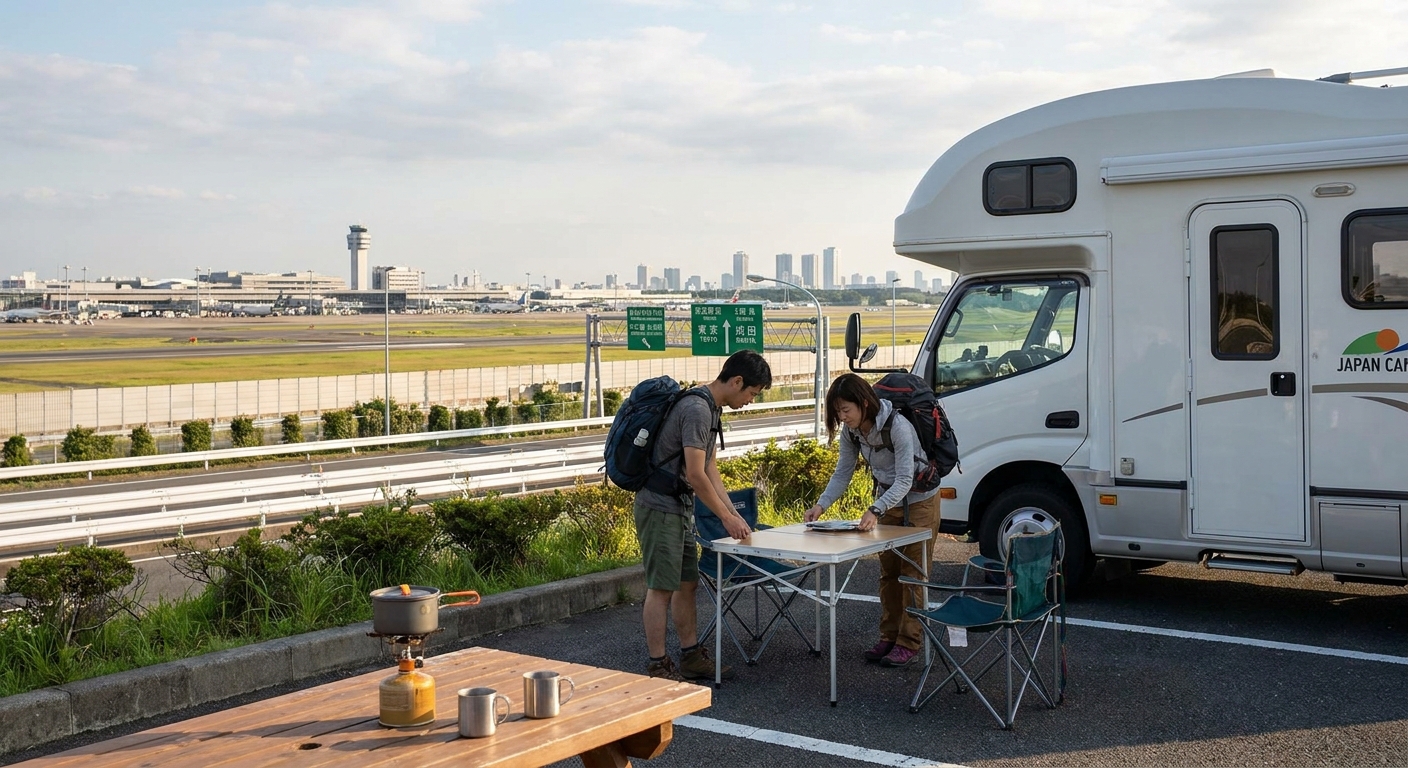
Road quality around Tokyo - Airport and its major airports like Narita (NRT) and Haneda (HND) is consistently excellent, featuring well-maintained surfaces on both bustling expressways and local routes. The terrain immediately surrounding Tokyo airports and central Tokyo is predominantly flat, which simplifies driving for all RV sizes. However, as you venture beyond the immediate metropolitan area towards popular scenic destinations such as Hakone or Mount Fuji, you will encounter more challenging hills and winding mountain roads, where slow and careful driving is always recommended. While major multi-lane routes are wide and easy to navigate, some local roads, particularly in older towns or rural settings, can be notably narrow, necessitating extra vigilance and common sense for larger rented motorhomes.
RV Size Limits, Bridges & Restricted Zones
While general height and weight restrictions are clearly marked on Japanese roads, drivers of rented RVs in Tokyo - Airport should be particularly mindful of specific infrastructure like low bridges, underground parking garages, and certain tunnels. It's especially crucial to pay attention to these restrictions when exploring off the main expressways or within older, more compact urban areas. Japan does not widely implement environmental zones restricting RV access based on emissions, unlike many European cities. However, local signage for specific vehicle types or size limitations in certain areas should always be observed to avoid issues. If you're considering ferry travel to nearby islands, confirming your RV's exact dimensions against the ferry operator's requirements in advance is essential to ensure a smooth journey.
Fuel: Diesel vs. Petrol & Cost per 100 km
Most rented motorhomes in Japan, including many within Bandana's diverse fleet, operate on petrol (gasoline), though some larger Class A or Class C models may utilize diesel fuel. Availability for both fuel types is widespread across Japan, making it easy to refuel your vehicle throughout your adventure. Based on Bandana's global fleet averages, a Class SI - Semi-integrated RV typically consumes 10-11 Liters/100 km, while a Class C - Alcove motorhome uses 10-12 Liters/100 km, and a Class B - Camper Van is the most efficient at 8-10 Liters/100 km. To estimate your fuel budget, simply multiply your chosen vehicle's average consumption rate by the current prevailing fuel prices. A typical cost per 100 km around Tokyo - Airport can range from ¥1,500 to ¥2,000, depending on the fuel type and market fluctuations. Remember that on RV PLANET routes, you can itemize and track every expense, making budgeting for these ancillary costs simple and transparent. On the routes offered through RV PLANET routes, you can itemize and track every expense along the way for easy budgeting.
Tolls, Vignettes & Border Rules
Japan's extensive expressway system is predominantly toll-based, with costs varying significantly based on distance, time of day, and the specific route you take around Tokyo - Airport. Unlike some European countries, Japan does not use vignettes for general road use; instead, tolls are paid per section or distance traveled. These tolls can be quite high, so travelers often benefit from using an Electronic Toll Collection (ETC) card, which many rental RVs offer. An ETC card allows for smoother, non-stop passage through toll gates and can sometimes provide discounts for off-peak travel or specific routes. There are no international border rules for driving a rented RV from Tokyo to neighboring countries, as Japan is an island nation, making any RV trip a purely domestic adventure.
Driving Tips for airport rv rental Travelers
Always drive on the left side of the road in Japan and take the time to familiarize yourself with Japanese road signs; while many are pictographic, understanding common phrases in Japanese is incredibly helpful. For families embarking on an extended road trip from Tokyo - Airport, plan frequent stops every 2-3 hours at 'Michi-no-Eki' (Roadside Stations) or expressway service areas, which offer clean restrooms, diverse food options, and often feature local goods and attractions. Budget-conscious travelers should seriously consider utilizing an ETC card for toll payments to streamline their journey and potentially benefit from off-peak discounts, as tolls are a notable expense. Many luxury RVs in Bandana's fleet, such as the "Active Long Select" which is an Automatic transmission Class SI - Semi-integrated, often feature automatic transmissions, simplifying driving on Japan's sometimes congested roads, especially in urban areas. Be prepared for potentially narrow roads in rural or historic areas; simply maintain a cautious speed, use your mirrors frequently, and you can drive almost anywhere without issues. No need to stress - just use common sense and pay attention. We're here to help you before and during your booking, providing the support you need to plan a smooth trip.
Recommended RV Class for Tokyo - Airport Roads
For navigating the diverse roads around Tokyo - Airport and venturing into scenic areas, a Class B - Camper Van or a Class SI - Semi-integrated RV is often recommended due to their excellent balance of comfort and maneuverability. Class B - Camper Vans, with an average length of 5.8 meters, offer superior agility for narrower local roads and easier parking, making them perfect for exploring urban fringes and winding scenic routes. Alternatively, Class SI - Semi-integrated RVs, typically around 6.9 meters in length, provide more interior space and amenities without being excessively large. A Class SI - Semi-integrated RV like the "2 Berth Tamar" which has automatic transmission and roof air condition, is a great choice for extended tours, comfortably sleeping around 3-4 people while still being manageable on Japan's road network. For those planning a Family RV Rental in Tokyo - Airport - Pricing Guide 2026 and needing more space, Class C - Alcove motorhomes also offer excellent comfort.
Should I Choose a Compact Van Instead of a Large RV in Tokyo - Airport?
While a compact van offers superior maneuverability in extremely tight historic centers or very narrow mountain passes, most modern RVs, including those up to 7.5 meters in length, can be comfortably driven in and around Tokyo - Airport with careful planning. For many travelers, the enhanced comfort, generous indoor space, and comprehensive amenities of a larger rented RV, such as a Class C - Alcove like the "29' Class C Motorhome" which is 8.8m in length and offers 6 sleeping places, often outweigh the marginal maneuverability benefits of a compact van. A compact van genuinely helps when frequent urban parking in multi-story garages (due to common height restrictions) or navigating particularly challenging, single-lane rural roads is a primary concern. However, for general touring and enjoying a more spacious adventure, a larger RV often provides a superior overall experience. Bandana RV offers a range of options, allowing you to compare final prices across suppliers and choose what best fits your travel style.
Can I Park Anywhere? Free & Wild Camping Rules in Tokyo - Airport
True 'wild camping' or unrestricted overnight parking in a rented RV is generally not permitted in Japan outside of designated areas, especially in developed regions like Tokyo - Airport. Instead, RV travelers should make use of 'Michi-no-Eki' (Roadside Stations) for short, often free, overnight stays. These are excellent for 'car sleeping' but are not considered official campgrounds with full facilities, so avoid setting up awnings or outdoor cooking. For traditional camping with amenities like power hook-ups, water, and waste disposal, travelers must use dedicated campgrounds or RV parks, which are readily available throughout Japan. Always check local regulations and follow local laws before parking overnight, respecting private property and public signage. For finding campsites and campgrounds during your trip, we recommend using RV PLANET (rvplan.net) - a great resource for locating available spots along your route.
Can I Drive an RV Into the City Center? Heights, Tunnels & Local Signage
Yes, you can drive a rented RV into most city centers in Japan, including central Tokyo, but it demands careful attention to local signage regarding height limits, narrow streets, and specific parking restrictions. Drivers must be particularly vigilant for signs indicating height restrictions for tunnels, underpasses, and multi-story parking garages, as many of these facilities are designed for standard passenger vehicles and can be as low as 2.3 meters. While environmental zones are less common in Japan compared to many European cities, always observe local signage for residents-only streets, no-entry zones, or areas with specific vehicle access limitations. For exploring central Tokyo, it's often more practical and less stressful to park your RV on the outskirts or at a dedicated RV park and then utilize Japan's excellent public transportation system, which is incredibly efficient and far-reaching. This approach aligns with recommending slow travel, max 100-150 km per day on average, allowing you to immerse yourself in the city's offerings without worrying about parking a larger vehicle.
🎬 Video coming soon
What are the best RV parking spots near Narita and Haneda airports?
Near Narita Airport (NRT), direct overnight RV parking at the airport itself is limited, so travelers often look for dedicated RV parks slightly outside the immediate airport vicinity or utilize large shopping center parking lots, always with prior permission. For instance, Michi-no-Eki Tako-Ajisai-kan is a popular option for overnight 'car sleeping' for those flying in or out of Narita. For Haneda Airport (HND), which is much closer to central Tokyo, finding immediate RV parking can be quite challenging, leading travelers to often rely on RV parks located further south of Tokyo or use Michi-no-Eki along major routes connecting to the airport. Some private parking facilities or specific 'Michi-no-Eki' along expressways like the Tomei Expressway or Chuo Expressway, which connect to NRT or HND, may offer shuttle services or easy public transport links into Tokyo, but direct airport shuttles specifically for RV parks are rare. For detailed RV planning, including parking options and routes, check out RV Travel Guide to Tokyo - Airport - Tips and Top Spots 2026.
How difficult is it to drive an RV in Japan, especially in urban areas?
Driving a rented RV in Japan is generally manageable, but it does present unique challenges, particularly due to narrower roads outside of main expressways, limited urban parking, and the need to understand local road signs. While major highways are well-maintained and multi-lane, some local roads, especially in older towns or scenic areas, can be notably tight, requiring cautious navigation for larger motorhomes. Urban parking for RVs can be difficult because of limited spaces and strict height restrictions (often under 2.3 meters) in many parking garages around Tokyo, making street parking often the only option. Understanding Japanese road signs, which incorporate both standard international symbols and Japanese script, is crucial; major signs often have English translations, but local ones might not. Drive slowly and carefully, and you can drive almost anywhere without issues. No need to stress - just use common sense and pay attention. If you're looking for an RV Rental in Tokyo - Airport for Couples - Pricing 2026, you might consider a smaller campervan for easier maneuverability.
What are the typical costs associated with RV travel in Japan, including tolls and campgrounds?
Beyond the initial RV rental fees, the primary costs for RV travel in Japan include fuel, which, based on Bandana's fleet, could average ¥1,500-¥2,000 per 100 km depending on your vehicle choice, and significant expressway tolls. Japan's tolls can accumulate quickly on longer journeys, so budgeting for these is essential. Campground fees in Japan typically range from ¥2,000 to ¥5,000 per night for a basic pitch, with premium facilities or popular locations sometimes costing more. A budget-friendly alternative is utilizing 'Michi-no-Eki' (Roadside Stations) for free overnight 'car sleeping', though these do not offer full camping amenities. Other ancillary costs include propane, dump fees, and groceries. When planning your trip, consider checking our Cheap RV Rental in Tokyo - Airport - Budget Guide 2026 for more detailed cost estimations. You'll find that Bandana RV offers bookings in 30+ currencies with full price transparency, ensuring no hidden fees or conversion commissions.
Can I combine RV travel with public transportation in Tokyo?
Yes, combining your rented RV adventure with Tokyo's world-class public transport system is highly recommended for exploring the city center, effectively avoiding urban driving stress and parking difficulties. The most effective approach is to park your motorhome at a designated RV park or a 'Michi-no-Eki' located on the outskirts of Tokyo or conveniently along major train lines. From there, you can easily commute into the city using trains or subways, which are known for their efficiency and punctuality. Look for RV-friendly parking facilities situated near train stations outside the immediate Yamanote Line loop, which provide excellent access to central Tokyo attractions like Shinjuku, Shibuya, or Ueno. This strategy allows you to enjoy the flexibility of your RV for scenic routes and nature while seamlessly experiencing Tokyo's urban highlights via its extensive public transport network, enabling you to truly travel slowly and connect to the culture.
What are the cultural norms and etiquette for RV camping in Japan?
Cultural etiquette in Japan dictates respectful behavior for RV camping, particularly concerning waste disposal: always use designated bins and avoid leaving any trash behind. It's crucial to distinguish between 'car sleeping' (chūhaku) at 'Michi-no-Eki', which is intended for rest, and formal 'camping' at designated campgrounds with full facilities. At Michi-no-Eki, while overnight parking is generally tolerated, it's considered polite not to extend awnings, set out camping chairs, or engage in outdoor cooking, as this constitutes a 'campsite' and is usually not permitted. Maintaining discretion and ensuring your rented RV is parked neatly without encroaching on others is key. At formal campgrounds, always follow their specific rules regarding noise levels, quiet hours, and proper use of shared facilities. Honoring these local customs ensures a pleasant experience for everyone and reflects positively on RV travelers.
Are there specific times of year to avoid or recommend for RVing around Tokyo?
Spring (March-May) and Autumn (September-November) are generally the most recommended times for RV travel around Tokyo - Airport due to pleasant weather, comfortable temperatures, and beautiful scenery, such as the famous cherry blossoms in spring or vibrant autumn foliage. It is advisable to avoid Japan's Golden Week (late April to early May) and the Obon Festival (mid-August) if possible, as these national holidays result in extremely heavy traffic, crowded popular attractions, and higher prices for accommodations and potentially RV rentals. Summer (June-August) around Tokyo can be hot and humid, with a higher potential for typhoons, which can impact travel plans. Winter (December-February) can be cold, especially in regions north or west of Tokyo, but RVing is still a wonderful option for those prepared for cooler temperatures, offering unique experiences like snowy landscapes and hot springs. For the best RV Rental Deals in Tokyo - Airport - Latest Offers 2026, consider traveling during the shoulder seasons.
What You Shouldn't Miss
- Explore Hakone National Park: Just a short drive southwest of Tokyo - Airport, Hakone offers stunning views of Mount Fuji (on clear days), serene lake cruises on Lake Ashi, and relaxing hot springs. Park your rented motorhome at a local RV park and use the Hakone Free Pass for convenient access to the area's many attractions.
- Visit the Fuji Five Lakes Region: Head to Lake Kawaguchiko, one of the Fuji Five Lakes, for iconic views of Mount Fuji reflecting on the water. Many campgrounds and Michi-no-Eki are available, making it a perfect multi-day RV stop for picturesque sunrises and outdoor activities.
- Discover Nikko's Shrines and Temples: Journey north from Tokyo - Airport to Nikko, a UNESCO World Heritage site known for its elaborate shrines and temples nestled in beautiful natural surroundings. While city driving may require parking on the outskirts, the natural beauty and historical significance make it a must-see.
- Indulge in Local Cuisine at Michi-no-Eki: Immerse yourself in local culture by stopping at Michi-no-Eki along your routes. These roadside stations are fantastic for trying fresh regional produce, local delicacies, and unique souvenirs, offering a true taste of Japan. If you're looking for some inspiration to cook up your own meals in your RV kitchen, check out our RV-friendly recipes playlist.
- Stroll through Coastal Villages on the Izu Peninsula: Drive your campervan south to the Izu Peninsula for scenic coastal drives, charming fishing villages, and more hot springs. It's an ideal route for slow travel, allowing you to take time to feel the place, connect to the culture, the food, and the scenery away from the city's hustle.
Final Thoughts
Embarking on an RV adventure from Tokyo - Airport opens up a world of discovery, from the bustling heart of the city to the tranquil beauty of Japan's countryside. With a rented motorhome or campervan, you gain the ultimate flexibility to craft your own unique itinerary, stopping wherever inspiration strikes. Remember to embrace slow travel, allowing yourself time to truly connect with the culture, taste the incredible food, and soak in the breathtaking scenery.
Navigating Japan's roads by RV is a rewarding experience when you come prepared with the right information on licensing, local driving customs, and parking options. Bandana RV is dedicated to making your planning process as smooth and transparent as possible, offering you the tools and support to compare prices and choose the perfect vehicle for your week-long trip or extended road trip.
So, imagine the freedom of your own mobile homebase, ready to take you on an unforgettable journey. Life is now - seize the opportunity to explore Tokyo - Airport and Japan your way!
Find Motorhome Rentals in Tokyo - Airport