
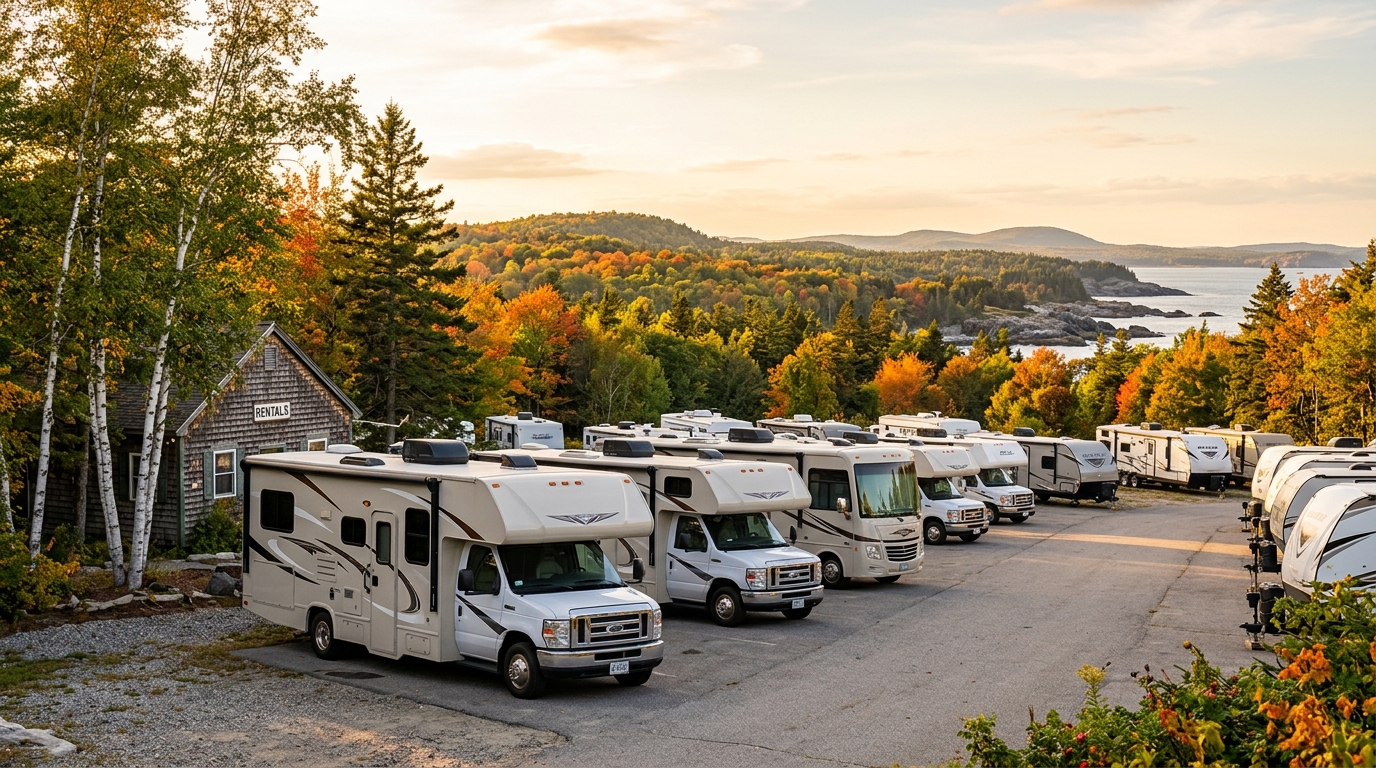
For live availability and current prices, start with our RV Rental Maine - Complete Guide 2026 guide.
In This Guide
- Can You Drive an RV in Maine? License & Age Rules
- Road Conditions & Terrain in Maine
- RV Size Limits, Bridges & Restricted Zones
- Fuel: Diesel vs. Petrol & Cost per 100 km
- Tolls, Vignettes & Border Rules
- Driving Tips for RV Rental Travelers
- Recommended RV Class for Maine Roads
- Should I Choose a Compact Van Instead of a Large RV in Maine?
- Can I Park Anywhere? Free & Wild Camping Rules in Maine
- Can I Drive an RV Into the City Center? Heights, Tunnels & Local Signage
- What is the best time of year to RV in Maine?
- How much does it cost to rent an RV in Maine?
- Where can I pick up an RV rental in Maine?
- Connectivity and Emergency Preparedness in Maine
- Discovering Maine's Authentic Local Culture & Hidden Gems by RV
- Essential RV Packing List for Maine
Can You Drive an RV in Maine? License & Age Rules
Most RVs up to 26,000 lbs GVWR, including Class B camper vans and Class C motorhomes, can be driven with a standard U.S. driver's license, equivalent to a Class C license. For vehicles exceeding this weight, a non-commercial Class A or B license might be required, though most rental RVs fall within the standard license category. The minimum age to rent an RV in Maine typically ranges from 21 to 25 years old, depending on the rental supplier; some may have higher age limits for larger motorhomes. Foreign drivers need a valid license from their home country, and an International Driving Permit (IDP) is highly recommended for translation purposes, though not always mandatory.
Road Conditions & Terrain in Maine
Maine's road network presents a diverse driving experience for RV travelers. You'll encounter well-maintained interstate highways like I-95, offering smooth travel, but also venture onto winding coastal routes that pass through charming towns, and potentially unpaved gravel or dirt roads when accessing more remote campsites or trailheads, particularly in inland and mountainous regions. Some coastal roads can be narrow, and inland routes may feature steep grades and sharp turns, necessitating slow and careful navigation. Embracing slow travel is key to appreciating Maine's stunning landscapes and safely managing these varied conditions. Be aware that winter conditions can significantly impact travel outside the peak summer season, with potential for snow, ice, and road closures from November through April.
RV Size Limits, Bridges & Restricted Zones
Drivers must be aware of specific height and weight restrictions, particularly on secondary roads and at certain park entry points where historic low bridges are common. Always check posted height clearance signs, as some can be as low as 10-12 feet. Acadia National Park, for instance, has vehicle size restrictions on its scenic Park Loop Road, recommending smaller RVs for easier navigation of certain stretches. Maine does not have explicit environmental zones that restrict RV entry based on emissions, but noise ordinances are typically enforced in campgrounds. If you plan to visit islands via ferry services, be aware that they have strict length and weight limits, and advance booking is usually required.
Fuel: Diesel vs. Petrol & Cost per 100 km
Your RV's fuel type will depend on its class; diesel is common for larger motorhomes, while gasoline (petrol) powers smaller RVs and camper vans. Bandana RVs provide an average fuel consumption estimate: Class B camper vans typically use 8-10 Liters/100 km, semi-integrated RVs around 10-11 Liters/100 km, and larger alcove models (Class C) around 10-12 Liters/100 km. While diesel stops are plentiful along major interstates, they can be scarce in more remote Maine areas. Petrol stations are universally available, though prices may be higher in isolated regions. To help manage fuel expenses, some Bandana RV rentals may come with fuel discount cards.
Tolls, Vignettes & Border Rules
Maine primarily features tolls on the Maine Turnpike, which is part of I-95. Both cash and electronic toll payment systems, like E-ZPass, are accepted, with E-ZPass often providing discounts and the most convenient experience. When crossing the border from Canada into Maine, standard border crossing procedures apply, requiring valid passports and vehicle documentation. Notably, there are no tolls when traveling from New Hampshire into Maine on I-95. To simplify toll payments during your journey, some Bandana RV rentals can be equipped with pre-purchased toll passes, such as E-ZPass transponders, helping you avoid fines and streamline travel. On the routes offered through RV PLANET routes, you can itemize and track every expense along the way for easy budgeting.
Driving Tips for RV Rental Travelers
When navigating Maine in a rented RV, careful route planning is crucial. Utilize RV-specific GPS systems that account for your vehicle's dimensions to avoid low bridges and restricted routes. Always monitor your fuel levels, especially when venturing into remote regions where service stations can be infrequent. If your trip extends into late fall or early spring, ensure your RV is properly winterized or familiarize yourself with how to prevent your RV's water pipes from freezing. Before hitting crowded tourist areas, practice parking and maneuvering your larger RV in spacious lots to build confidence. Finally, drive cautiously at dawn and dusk to watch for wildlife, particularly moose and deer, which can pose a significant hazard.
Recommended RV Class for Maine Roads
For navigating Maine's diverse terrain, from coastal byways to inland routes, Class B camper vans and Class SI semi-integrated RVs are highly recommended due to their excellent balance of maneuverability and comfort. Bandana's Class B camper vans, averaging around 5.8 meters in length, are ideal for narrow roads and easier parking, with an average fuel consumption of 8-10 Liters/100 km. The slightly larger Class SI semi-integrated RVs, averaging 6.9 meters, offer more living space for small families while remaining manageable on most roads, typically consuming 10-11 Liters/100 km. While larger Class C and Class A RVs are certainly feasible, they may require more careful planning for tighter turns and access to specific park areas. Truck Campers (Class TC), averaging 5.5 meters, offer versatility but generally have higher fuel consumption, around 12-17 Liters/100 km.
Should I Choose a Compact Van Instead of a Large RV in Maine?
While a compact camper van certainly offers superior maneuverability for Maine's charmingly narrow coastal roads and often challenging parking situations, most standard RV sizes can navigate the state without significant issues. Compact vans (Class B) are particularly advantageous for exploring historic towns and accessing smaller, more rustic campsites. Their shorter length, with Bandana's Class B models averaging 5.8 meters, and inherent agility can reduce stress in dense urban areas or on winding mountain passes. However, larger RVs provide significantly more interior space, dedicated sleeping areas, and a wider range of amenities, greatly enhancing comfort on extended trips. Many RV parks and larger campgrounds throughout Maine are well-equipped to accommodate all RV sizes. Ultimately, the choice between a compact van and a larger RV depends heavily on your specific itinerary: opt for a compact model if your plans involve extensive exploration of remote wilderness or tightly packed coastal villages, and consider a larger RV for increased comfort when staying primarily in established areas.
Can I Park Anywhere? Free & Wild Camping Rules in Maine
In Maine, free and wild camping, often referred to as boondocking or dispersed camping, is generally restricted to specific public lands, primarily found within certain areas of the North Maine Woods. These areas often require thorough research into specific regulations, adherence to fire restrictions, and potentially obtaining permits for camping on public lands managed by the Bureau of Parks and Lands (BPL). Boondocking is typically prohibited in Maine State Parks and along most coastal areas unless explicitly designated in official campgrounds. Local ordinances in towns and cities generally prohibit overnight parking in rest areas or most public spaces unless specifically signed or permitted by property owners. Always practice Leave No Trace principles by packing out all trash, minimizing campfire impacts, and respecting private property. Remember that rules can vary significantly by region, so always check local regulations and laws before parking your RV overnight.
Can I Drive an RV Into the City Center? Heights, Tunnels & Local Signage
Yes, you can generally drive an RV into Maine's city centers, including popular destinations like Portland, Bangor, or Augusta, but it requires careful attention to local signage and road conditions. Main thoroughfares into cities are typically RV-accessible, but it's crucial to pay close attention to overhead clearance signs for tunnels, underpasses, and especially historic low bridges, which can be found even in urban areas and may have clearances as low as 10-12 feet. Be mindful of local signage indicating one-way streets, narrow lanes, and tight turns, particularly in the older, more historic sections of cities. Finding suitable RV parking within city centers can be challenging; look for designated oversized vehicle parking areas or peripheral lots that may offer better accessibility. Maine does not have specific environmental zones within its cities that restrict RV entry based on emissions.
What is the best time of year to RV in Maine?
Late spring (May-June) and early fall (September-October) are generally the ideal times to RV in Maine, offering pleasant weather, fewer crowds, and stunning natural beauty. Summer (July-August) is peak season, boasting warm temperatures and all attractions open, but also comes with the largest crowds and highest prices. For those seeking the spectacle of autumn colors, late September to mid-October provides breathtaking foliage for scenic drives, though it's essential to plan routes and book campgrounds well in advance. Spring (May-June) offers lighter crowds and moderate temperatures, though some roads or seasonal attractions might still be opening up. Winter (November-April) RVing in Maine presents significant challenges, requiring a fully winterized RV, limited campground availability, and closed attractions due to the harsh weather.
How much does it cost to rent an RV in Maine?
The total cost to rent an RV in Maine can range significantly, typically from $100 to $400+ per night, heavily influenced by the RV class, rental season, duration, and included amenities. Smaller Class B camper vans might start around $100-$200 per night, while larger Class C or semi-integrated RVs could range from $150-$300+ per night, with premium Class A models potentially exceeding $400 per night during peak season. Fuel expenses are a substantial part of the budget due to Maine's vast size and varying gas prices, directly impacted by your RV's fuel efficiency (e.g., 8-12 Liters/100 km). Campground fees typically range from $30-$70 per night, with premium locations or sites offering full hookups being more expensive. Remember to also budget for food, groceries, and activity costs such as park entry fees or tours. For finding campsites and campgrounds during your trip, check out RV PLANET routes — a great tool for locating available spots along your route.
Where can I pick up an RV rental in Maine?
RV rental pick-up locations in Maine are most commonly found near major population centers and transportation hubs, with a significant concentration of depots around Portland and Bangor. Portland, being Maine's largest city and a primary airport hub (PWM), offers several convenient rental locations, making it an excellent starting point for many travelers. Bangor also serves as a key pick-up point, particularly for those flying into Bangor International Airport (BGR) or planning to explore northern and eastern Maine. Additionally, some smaller, independent rental companies or private owners might offer pick-up options in popular coastal towns like Wells or Bar Harbor. Beyond dedicated rental companies, many RV dealerships also provide rental services, and peer-to-peer platforms offer a wide array of options from private owners located throughout the state. Always check Bandana's platform for the most current availability and specific pick-up addresses closest to your desired starting point.
Connectivity and Emergency Preparedness in Maine
While major towns and highway corridors in Maine generally offer reliable cell service, connectivity can become extremely limited or completely nonexistent in the state's more remote wilderness areas. You can expect good cell coverage along I-95 and near populated centers, but anticipate potential 'dead zones' in the vast North Woods and mountainous regions. Many campgrounds provide Wi-Fi, but its reliability can vary greatly. For critical connectivity needs, consider a mobile hotspot or even a satellite communicator. Know that the emergency number in Maine is 911, but be aware that response times can be significantly longer in rural areas. Always carry a well-stocked first-aid kit, extra water, non-perishable food, flashlights, a weather radio, and a physical map, as GPS may be unreliable. Research specialized RV repair services along your planned route, as they can be scarce in remote locations; having basic repair tools and knowledge is also advisable.
Discovering Maine's Authentic Local Culture & Hidden Gems by RV
Beyond the well-trodden tourist paths, Maine offers a wealth of authentic local culture, unique community events, and lesser-known RV-accessible hidden gems. Venture inland to towns like Dover-Foxcroft or Greenville to immerse yourself in logging history and experience the heart of Maine's wilderness culture. Seek out local harvest festivals, blueberry festivals, or fishermen's fairs in smaller communities for a genuine taste of Maine life. Many craft breweries and distilleries, especially those located outside the major cities, offer RV-friendly parking and tastings. Explore lesser-known State Parks such as Camden Hills or Grafton Notch for stunning views and excellent RV-accessible campsites. Visiting local farmers' markets is a great way to interact with residents, sample fresh Maine produce, and discover artisan goods.
Essential RV Packing List for Maine
When preparing your RV for a trip to Maine, pack strategically to accommodate the state's varied weather, diverse terrain, and abundant outdoor activities. Essential items include layers of clothing, with waterproof and windproof outerwear being crucial, as coastal weather can change rapidly. Don't forget effective bug repellent, especially for the interior wilderness areas during warmer months, and sturdy hiking boots for exploring trails. Waterproof sandals or shoes are practical for coastal walks or rainy days. For spring or fall travel, pack warm sleeping bags, extra blankets, and thermal layers for chilly nights. Always carry physical maps in addition to GPS for remote areas where cell service may be intermittent, along with a compass. Binoculars are great for wildlife viewing, and consider packing fishing gear (remembering to obtain necessary licenses) and comfortable, sturdy chairs for relaxing outdoors.
What You Shouldn't Miss
- Drive the scenic routes of Acadia National Park: Experience breathtaking coastal views and rugged beauty, keeping in mind vehicle size restrictions on some loops.
- Explore the historic lighthouses: Visit iconic structures like Pemaquid Point Light or Bass Harbor Head Light for picturesque coastal scenery.
- Taste authentic Maine Lobster: Enjoy fresh lobster rolls or steamed lobster directly from local fisheries or roadside stands.
- Discover the charming coastal towns: Wander through Kennebunkport, Ogunquit, or Camden for quaint shops, art galleries, and harbor views.
- Venture into the wilderness: Explore the remote beauty of Baxter State Park or the North Maine Woods for a true taste of Maine's natural splendor.
- Chase the fall foliage: Plan your RV trip in early to mid-October for spectacular displays of autumn colors, especially along scenic byways.
Final Thoughts
Renting an RV in Maine unlocks an unparalleled way to experience its stunning natural beauty and charming towns at your own pace. From the rugged coastline to the serene inland forests, your motorhome serves as your comfortable basecamp for adventure. With a little planning and attention to the road conditions, your Maine RV journey promises to be a memorable exploration.
Remember to leverage resources like RV PLANET (rvplan.net) for route planning and campsite discovery, and always prioritize slow travel to truly connect with the destination. Embrace the freedom of the open road and discover the magic of Maine, one scenic mile at a time!
Ready to plan your Maine RV adventure? Compare RV rental options and find the perfect vehicle for your journey today!
