In This Guide
- Can You Drive an RV in Cape Town? License & Age Rules
- Road Conditions & Terrain in Cape Town
- RV Size Limits, Bridges & Restricted Zones
- Fuel: Diesel vs. Petrol & Cost per 100 km
- Tolls, Vignettes & Border Rules
- Driving Tips for Airport RV Rental Travelers
- Recommended RV Class for Cape Town Roads
- Should I Choose a Compact Van Instead of a Large RV in Cape Town?
- Can I Park Anywhere? Free & Wild Camping Rules in Cape Town
- Can I Drive an RV Into the City Center? Heights, Tunnels & Local Signage
- What do I need to rent an RV in South Africa?
- What is the best RV rental in Cape Town?
- How much does it cost to rent an RV in South Africa?
- What is the best time of year to RV in Cape Town?
- Can you take an RV to Kruger National Park?
- Cape Town RV Itineraries: Winelands, Coast, & Peninsula Routes
- Water & Dump Stations for RVs in Cape Town
- Safety and Security Tips for RV Travel in Cape Town
- Pet-Friendly RV Travel in Cape Town and the Western Cape
- Unique RV Camping & Farm Stays Near Cape Town
- Sustainable RVing Practices in the Cape Floral Region
- Food & Drink Experiences for RVers in Cape Town
Embarking on an airport RV rental in Cape Town offers unparalleled freedom to explore the breathtaking landscapes of the Western Cape. Picking up your motorhome directly from Cape Town International Airport (CPT) means your adventure begins the moment you land, transforming travel from mere transit into an immediate exploration of South Africa's diverse beauty. For live availability and current prices, start with our RV Rental Cape Town - Complete Guide 2026 guide.
Can You Drive an RV in Cape Town? License & Age Rules
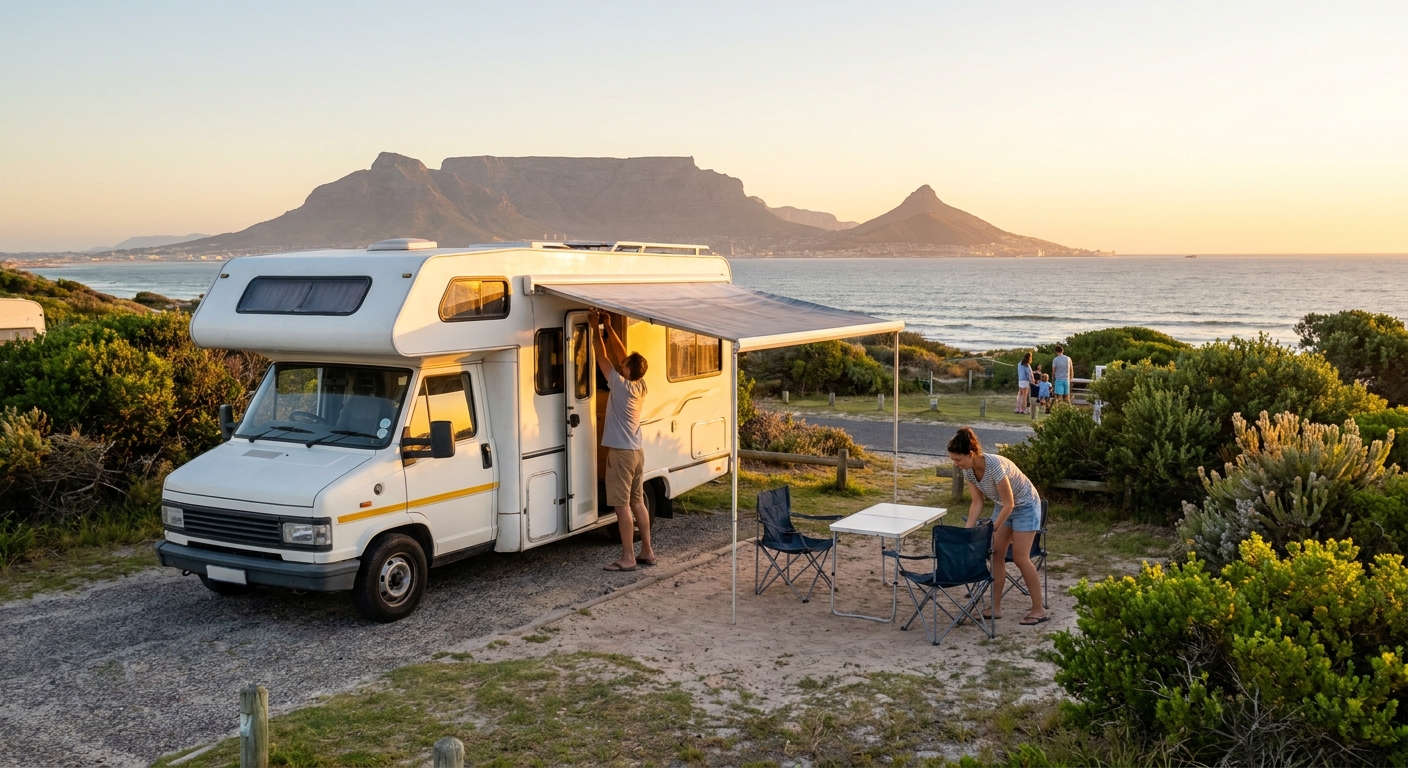
Yes, you can absolutely drive a rented RV in Cape Town, as most standard motorhomes up to 3,500 kg Gross Vehicle Mass (GVM) can be operated in South Africa with a standard B (Code 08) driver's license. Foreign drivers are required to carry an International Driving Permit (IDP) in addition to their national license, especially if the national license is not in English. The minimum driver age for renting an RV in Cape Town through our partners is typically 21 years old, with no young driver surcharges or vehicle class restrictions based on age, making RV adventures accessible to a wide range of travelers. Our comprehensive comparison platform ensures full transparency on all licensing and age requirements before you book.
Road Conditions & Terrain in Cape Town
Cape Town boasts well-maintained primary roads and highways, including scenic coastal routes like Clarence Drive and Boyes Drive, which are generally excellent for RV travel. Drivers should be prepared for varied terrain, from the flat stretches of the Cape Flats leading towards the city to winding mountain passes like Chapman's Peak Drive and coastal roads that hug the dramatic coastline. While urban areas can experience heavy traffic, particularly during peak hours around the CBD (Central Business District) and major arteries like the N2 and N1, you can drive almost anywhere without issues by driving slowly and carefully and paying attention. Gravel roads do exist, especially leading to some remote campsites or natural attractions, but they are generally manageable for RVs designed for local conditions, encouraging a slower, more immersive driving style. We always recommend slow travel, averaging a maximum of 100-150 km per day, allowing you to truly connect with the culture, food, and scenery of each place.
RV Size Limits, Bridges & Restricted Zones
Cape Town generally accommodates a wide range of RV sizes, but drivers should be mindful of specific height and weight restrictions, particularly for older bridges and underground parking garages which RVs are often too tall to access. There are no specific widespread environmental zones or ferry limits that significantly restrict typical RV travel within the immediate Cape Town area, unlike some European cities. Always pay close attention to local road signage for vehicle dimensions, particularly on picturesque routes like Chapman's Peak Drive which may have length or height advisories for larger vehicles, though it is usually navigable for standard RVs. Planning ahead with route research and being aware of your rental motorhome's dimensions will ensure a smooth journey.
Fuel: Diesel vs. Petrol & Cost per 100 km
Most RVs available for airport RV rental in Cape Town, including Bandana's diverse fleet, predominantly run on Diesel, which is widely available at service stations across South Africa. Average fuel consumption for our Cape Town fleet ranges from approximately 6-7 liters per 100 km for Class B Camper Vans, such as a "2 Berth Hi Top" or "Active Standard" model, to 11-12 liters per 100 km for larger Class SI Semi-integrated and Class C Alcove RVs like the "4 Berth Deluxe" or "6 Berth Deluxe." Based on these averages and an estimated diesel price of R25 per liter, the average fuel cost per 100 km for a rented RV in Cape Town would range from approximately R175 to R300, varying with vehicle type and individual driving style. When planning your budget, remember that RV PLANET routes allow you to itemize and track every expense, including fuel, for easy budgeting. On the routes offered through RV PLANET routes, you can itemize and track every expense along the way for easy budgeting.
Tolls, Vignettes & Border Rules
South Africa operates a toll road system on some national highways, which are typically paid at physical toll gates using cash or a credit card; there are no vignette systems common in parts of Europe. Within the immediate Cape Town region, extensive urban tolling is not common, however, key routes connecting to other provinces, such as portions of the N1 (e.g., towards Worcester) and N2 (e.g., towards Somerset West), may have tolls. For travelers considering cross-border adventures into neighboring countries like Namibia or Botswana, specific documentation, customs procedures, and potentially additional vehicle insurance or permits are required, and it's essential to arrange these well in advance with your rental provider. Our team at Bandana RV can assist with information regarding these requirements during your pre-booking comparison and post-booking coordination stages.
Driving Tips for Airport RV Rental Travelers
To ensure a smooth RV adventure from Cape Town airport, take it slow: remember that a rented motorhome handles differently than a regular car, so maintain ample stopping distance and reduce your speed, especially on winding coastal roads like Chapman's Peak Drive and mountainous passes. Plan your route carefully, utilizing GPS navigation designed for RVs to avoid potential low bridges, narrow roads, or unsuitable routes; research parking options in advance for popular attractions in areas like the V&A Waterfront or central Stellenbosch, as well as for overnight stays. Always secure all items inside the RV, ensuring cupboards and overhead bins are latched before driving, especially when navigating Cape Town's diverse terrain which can include sudden inclines or tight turns. In South Africa, remember to drive on the left-hand side of the road and yield to traffic from the right at intersections, unless specific signage indicates otherwise. Lastly, monitor your fuel levels, as while diesel is abundant in urban centers, service stations can be sparse in more rural areas of the Western Cape, requiring careful planning for longer stretches. Our RV Travel Guide to Cape Town - Tips and Top Spots 2026 offers more comprehensive advice.
Recommended RV Class for Cape Town Roads
For a perfect balance of maneuverability and comfort on Cape Town's varied roads, the Class B - Camper Van is highly recommended, often averaging around 5.6 meters in length, making it agile for navigating urban areas and winding coastal routes. The Class SI - Semi-integrated RV, typically around 6.7 meters in length, offers more generous living space and amenities while still being manageable for most roads, providing a comfortable home-away-from-home experience for couples or smaller families. Both Class B and Class SI options provide adequate ground clearance for typical South African road conditions, making them well-suited for exploring the diverse landscapes around Cape Town, from city streets to the picturesque Winelands. Larger Class C Alcove RVs are also perfectly suitable for Cape Town, offering maximum space for larger families or groups, and most popular attractions and campsites can accommodate them.
Should I Choose a Compact Van Instead of a Large RV in Cape Town?
While a compact campervan, like a Class B Camper Van, indeed offers superior maneuverability for tight city streets and generally easier parking in urban areas of Cape Town, most larger RVs can navigate Cape Town's main roads and popular tourist routes, such as the R44 scenic route or roads to Stellenbosch, without significant issues. The primary trade-off often lies in interior comfort and amenities versus vehicle size; larger RVs provide more expansive living space, dedicated sleeping areas, and often full bathroom and kitchen facilities, enhancing the overall travel experience for a week-long trip or longer. If your itinerary heavily emphasizes exploring dense urban centers or very narrow, historic town areas, a compact van might be slightly more convenient. However, for extended road trips and family travel around Cape Town and the wider Western Cape, a larger motorhome often provides superior comfort and convenience, with most popular attractions and campsites accommodating standard RV sizes. Remember, drive slowly and carefully, and you can drive almost anywhere without issues.
Can I Park Anywhere? Free & Wild Camping Rules in Cape Town
No, free or wild camping is generally prohibited and unsafe in Cape Town and throughout South Africa, particularly in urban areas, protected nature reserves like Table Mountain National Park, and along public roads. Designated campsites, registered caravan parks, and private farm stays are the legal and strongly recommended options for overnight RV parking, offering essential facilities, security, and a community atmosphere. Always prioritize booking secure overnight parking in advance, especially during peak seasons in popular spots like the Cape Peninsula. Rules vary by region and private property, so it is crucial to research and check local regulations and follow local law before parking overnight to avoid fines or safety risks. For finding campsites and campgrounds during your trip, we recommend using RV PLANET (rvplan.net) - a great resource for locating available spots along your route.
Can I Drive an RV Into the City Center? Heights, Tunnels & Local Signage
Yes, you can generally drive a rented RV into the Cape Town city center, as major roads and arteries like Buitengracht Street and Nelson Mandela Boulevard are well-suited for larger vehicles. Drivers should pay close attention to local signage for specific height limits, particularly for underground parking garages where RVs are usually too tall, and be aware of any weight restrictions or residents-only streets that might affect access or parking in historic areas like Bo-Kaap. While there are tunnels on routes such as the N1 (e.g., the Huguenot Tunnel further inland), these are designed for general traffic and do not typically pose height restrictions for standard RVs. The primary challenge in the city center is finding suitable and secure parking for a larger vehicle, so planning your stops and researching designated RV parking areas near major attractions is advisable. For detailed route plans and parking tips, consider leveraging our Rent&Plan service or exploring RV PLANET (rvplan.net).
What do I need to rent an RV in South Africa?
To rent an RV in Cape Town, you typically need a valid driver's license, which for South African residents is a Code 08/B license, and for foreign visitors, an International Driving Permit (IDP) alongside their national license, translated into English if necessary. You must also be above the minimum age, which is usually 21 years old across Bandana partner suppliers, and hold a valid credit card for the rental deposit. Most rental companies also require a copy of your passport or national ID, proof of address, and may have specific insurance requirements or optional coverages that you can purchase, such as upgrading to a top-level deductible for extra peace of mind. It is advisable to check the specific requirements of your chosen rental provider in advance, as terms and conditions can vary, ensuring a smooth pick-up at the airport RV rental location.
What is the best RV rental in Cape Town?
The "best" RV rental in Cape Town depends significantly on individual needs and travel style, but top options typically offer a diverse fleet, comprehensive insurance choices, and strong local knowledge. Look for Bandana partner suppliers like Apollo or Britz that provide detailed, Cape Town-specific RV itineraries or route plans, such as optimized Winelands routes, Cape Peninsula drive tips, or suggestions for navigating local driving challenges. Factors like vehicle condition, customer service, the inclusion of essential amenities (e.g., a fully equipped kitchen with a gas stove for preparing meals), and the availability of secure overnight parking options contribute significantly to a superior rental experience. Our platform offers a transparent comparison of options, ensuring what you see is what you pay, with no surprise fees at pickup.
🎬 Video coming soon
How much does it cost to rent an RV in South Africa?
The cost to rent an RV in South Africa, particularly in Cape Town, is dynamic and varies significantly based on vehicle class, rental duration (e.g., a week-long trip versus a month-long adventure), season, and included features, generally ranging from approximately R1,500 to R5,000+ per day. Budgeting for your Cape Town RV travel should encompass not only rental fees but also ancillary costs like campsite fees (typically R200-R500 per night for a powered site), fuel costs (as detailed previously, approximately R175-R300 per 100 km), and activity prices. Longer rentals, such as a two-week adventure, often yield lower daily rates. Additional expenses can include optional insurance excess reduction, one-way rental fees if you pick up in Cape Town and drop off in another city, additional driver fees, specific equipment hire (e.g., camping chairs, GPS), and a refundable security deposit. All these should be factored into your total trip budget. For comparing prices, our "RV Rental in Cape Town - Prices and Best Deals 2026" guide offers current insights, and our "Cheap RV Rental in Cape Town - Budget Guide 2026" provides tips on finding more economical options.
What is the best time of year to RV in Cape Town?
The best time of year to explore Cape Town by RV is generally during the dry, warm summer months from November to February, which offers ideal weather for outdoor activities, beach visits, and scenic drives along the coast. However, the shoulder seasons of March-April (autumn) and September-October (spring) also provide excellent conditions with milder temperatures, fewer crowds, and vibrant natural beauty, including the spectacular blooming of the Cape Floral Kingdom. Winter (May-August) is cooler and wetter, but can be suitable for RVers seeking lower prices, fewer tourists, and a different kind of natural beauty, though some campsites or activities might have reduced availability. Prices for RV rentals are dynamic, like flight tickets, and change daily based on availability and seasonality; booking during shoulder seasons might offer better value for your "Weekly RV Rental in Cape Town - Pricing 2026".
Can you take an RV to Kruger National Park?
Yes, you can absolutely take a rented RV to Kruger National Park, which offers excellent infrastructure for caravan and campervan visitors within its numerous rest camps and surrounding private reserves. Kruger boasts well-equipped campsites with power points, ablution blocks, and often communal kitchen facilities, making it a popular RV destination. It's essential to book your campsite well in advance, especially during peak season, as spots can fill up quickly. Adhere strictly to park rules regarding speed limits (usually 50 km/h on tarred roads and 40 km/h on gravel roads), designated roads, and remaining inside your vehicle in wildlife areas for safety. Our "RV Rental South Africa - Complete Guide 2026" provides more general information for country-wide travel.
Cape Town RV Itineraries: Winelands, Coast, & Peninsula Routes
Cape Town offers numerous RV-optimized itineraries that immerse travelers in the region's diverse attractions. For example, discover the iconic Winelands with routes that include picturesque towns like Stellenbosch and Franschhoek, highlighting vineyards such as Spier Wine Farm which often provide designated RV parking and tasting experiences. Explore the stunning Cape Peninsula by following a planned route down to Cape Point, making breathtaking coastal stops at Hout Bay and Boulders Beach, with clear tips for navigating scenic roads like Chapman's Peak Drive in a motorhome. Suggested itineraries can span from a compact 3-day exploration of the immediate Cape Town area, focusing on Table Mountain and the V&A Waterfront, to a leisurely 7-day or two-week journey extending to the Garden Route, tailored for a relaxed RV travel pace and ensuring campsite availability. For personalized planning, consider our Rent&Plan service, offering pre-planned routes by professionals, and enjoy a 25% planning discount when you use rvplan.net.
Water & Dump Stations for RVs in Cape Town
Cape Town and its surrounding areas provide numerous well-equipped caravan parks and designated campsites that offer essential fresh water refill points and grey/black water dump stations for rented RVs. Popular campgrounds like Imhoff Caravan Park near Kommetjie or Berg River Resort near Paarl are reliable options. It's crucial for RVers to plan their routes to include scheduled stops at these facilities, as dedicated public dump stations outside of campgrounds are less common and typically found within organized campsites. Always enquire with your rental provider about the nearest accessible dump stations near the airport RV rental pick-up/drop-off point and map out facilities along your chosen itinerary to ensure a hassle-free trip. Proper management of water and waste is key to sustainable RVing, especially in the water-conscious Western Cape.
Safety and Security Tips for RV Travel in Cape Town
Prioritize secure overnight parking by booking accredited caravan parks or private campsites known for their security measures, such as Imhoff Caravan Park or Monkey Valley Resort, and always avoid isolated or informal parking spots in Cape Town and surrounding areas. When leaving your rented RV, always lock all doors and windows, and keep valuables out of sight to deter opportunistic theft. Consider using additional security devices like wheel clamps or internal alarms if provided by your rental supplier. Stay informed about local conditions by checking local news and following advice from locals and rental staff, and be vigilant, especially in crowded tourist areas like Greenmarket Square. By taking these common-sense precautions, you can ensure a safe and enjoyable RV experience in Cape Town, allowing you to focus on the beauty of your adventure.
Pet-Friendly RV Travel in Cape Town and the Western Cape
Traveling with pets in a rented RV in the Cape Town region requires careful planning, as not all campgrounds, national parks, or attractions are pet-friendly. Research and book pet-friendly campgrounds in advance, as many private caravan parks and farm stays in the Western Cape, such as those in the Elgin Valley, welcome well-behaved pets, though often with specific rules or additional fees. Be aware of local regulations regarding pet access to beaches (some allow dogs on leashes, others do not), nature reserves (most national parks restrict pets to designated areas), and public spaces in the city. Always ensure your pet's vaccinations and documentation are up-to-date for travel, and carry waste bags to maintain cleanliness and respect for the environment. Some of our RV models, like the "24' Class C Motorhome" and "29' Class C Motorhome," are pet-friendly, making family travel with furry friends a reality.
Unique RV Camping & Farm Stays Near Cape Town
Beyond traditional caravan parks, the Western Cape offers unique RV camping experiences at private farm stays, allowing for immersive encounters in agricultural settings such as the Winelands or fruit-growing valleys. These options, like a stay on a working wine farm in Franschhoek or a serene olive grove near Riebeek Kasteel, often provide access to local produce, artisanal goods, and farm activities. Some private landowners and boutique wineries increasingly offer exclusive RV parking spots, providing a tranquil and distinct alternative to larger, more crowded campsites, with varying levels of amenities. While true boondocking (free, dispersed camping outside designated areas) is generally not legal or recommended in South Africa for safety and legal reasons, these alternative private options provide a safe and unique way to experience the region's diverse landscapes and connect with local communities. Look for these unique stays on RV PLANET (rvplan.net) as you plan your route plans.
Sustainable RVing Practices in the Cape Floral Region
Practicing eco-friendly RVing is paramount when exploring the stunning Cape Floral Region around Cape Town, a UNESCO World Heritage Site with unparalleled biodiversity. Minimize your water usage, especially given Cape Town's past water challenges, by taking shorter showers and using efficient washing methods. Opt for biodegradable cleaning products to protect the sensitive fynbos ecosystem and its unique flora and fauna. Ensure proper waste management by utilizing designated bins and dump stations, avoiding any littering, and separating recyclables where facilities allow. Respect natural habitats by sticking to established roads and campsites, minimizing noise pollution, and observing wildlife from a respectful distance. Your conscious efforts contribute significantly to the preservation of this unique biodiversity hotspot for future generations to enjoy in their rented motorhome adventures.
Food & Drink Experiences for RVers in Cape Town
Cape Town presents a bounty of culinary experiences that are wonderfully accessible to RVers, from vibrant local markets like the Oranjezicht City Farm Market, perfect for stocking your RV kitchen with fresh, seasonal produce, to designated braai (BBQ) spots found in many campsites and picnic areas. Imagine cooking a delicious meal right outside your campervan, fueled by fresh, local ingredients! Explore the renowned Winelands, where numerous wine farms, such as Groot Constantia or Delaire Graff Estate, provide ample and accessible parking for RVs, allowing you to enjoy tastings and cellar tours responsibly. Look for charming roadside farm stalls along routes like the R44, offering fresh, seasonal produce, artisanal cheeses, and local delicacies, providing authentic taste experiences that perfectly complement the freedom of RV travel. For inspiration on meals you can create on the road, check out our RV-friendly recipes playlist.
What You Shouldn't Miss
- **Table Mountain Cableway**: Ascend for panoramic views of Cape Town, Lion's Head, and the entire peninsula. RV parking is available at the lower station.
- **Boulders Beach Penguin Colony**: Witness hundreds of endangered African Penguins waddling ashore and nesting in the Fynbos. Many RV-friendly campsites are nearby.
- **Chapman's Peak Drive**: Drive this iconic toll road for spectacular coastal scenery, making sure to stop at the numerous viewpoints. Larger RVs can navigate this route.
- **Cape Winelands Tour (Stellenbosch/Franschhoek)**: Explore historic wine estates, many offering RV-friendly parking for tastings and tours.
- **V&A Waterfront**: Enjoy world-class dining, shopping, and entertainment with various parking options within the vicinity for RVs.
- **Garden Route Extension**: Consider an extended road trip east along the stunning Garden Route, an ideal continuation for a multi-week RV adventure.
Looking for expert insights from Avi Bandana? Top 5 Adventures - recommendations from Avi Bandana
Final Thoughts
An airport RV rental in Cape Town opens up a world of discovery, allowing you to seamlessly transition from arrival to adventure. Imagine waking up to the sound of the ocean or vineyards, with the majestic Table Mountain as your backdrop, all from the comfort of your rented motorhome. Whether you envision a leisurely week-long trip exploring the Winelands, a two-week adventure down the Garden Route, or an extended road trip through "RV Rental South Africa - Complete Guide 2026", the flexibility and intimacy of RV travel are unmatched.
With Bandana Caravan, you're not just renting a vehicle; you're gaining a partner dedicated to making your journey transparent, supported, and unforgettable. Our expertise in RV travel, from navigating local roads to finding the perfect campsite, ensures you're well-prepared every step of the way. So, pack your bags, prepare for scenic wonders, and get ready to experience Cape Town like never before. Life is truly now – start planning your exceptional RV getaway today!
Find Motorhome Rentals in Cape Town