
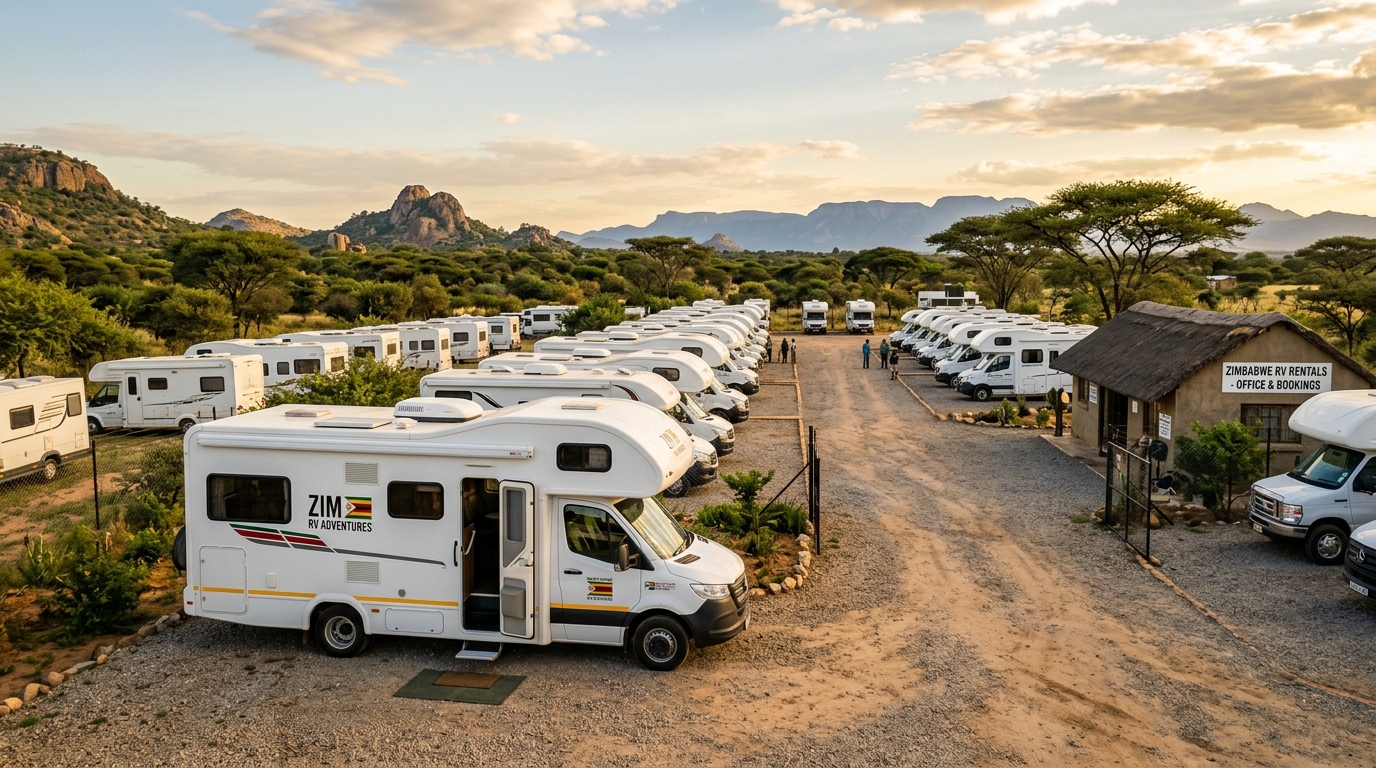
For live availability and current prices, start with our RV Rental Zimbabwe - Complete Guide 2026 guide.
In This Guide
- The 5 RV Families Compared for Zimbabwe
- Class A (Integrated) - Best For
- Price Comparison by RV Class in Zimbabwe
- Class SI (Semi-Integrated) - Best For
- Class C (Alcove) - Best For
- Class B (Campervan) - Best For
- Class TC (Truck Camper) - Best For
- Side-by-Side Comparison Table
- Our Recommendation for cheap rv rental Travelers in Zimbabwe
- How much does it cost to rent an RV in Zimbabwe?
- What is the best time to RV in Zimbabwe?
- Are RVs allowed in Zimbabwe National Parks?
- Can you wild camp in Zimbabwe?
- What is the fuel situation for RVs in Zimbabwe?
- How safe is RV travel in Zimbabwe?
- What kind of RV is best for Zimbabwe?
- What paperwork is needed for RV travel in Zimbabwe?
- Top Cities for RV Rental in Zimbabwe
- Practical Road Trip Advice for Zimbabwe
- What You Shouldn't Miss
- Why Book with Bandana Caravan
- Final Thoughts
- Frequently Asked Questions
The 5 RV Families Compared for Zimbabwe
Selecting the right RV family for your Zimbabwean adventure is paramount, as it significantly impacts terrain navigation, climate suitability, overall trip duration, and the comfort level for your travel group. An optimal choice is crucial for maximizing value and achieving a truly cheap RV rental experience in Zimbabwe. Factors like vehicle length, sleeping capacity, and fuel efficiency must be carefully considered against your planned itinerary, especially if you intend to explore both well-maintained primary routes and more adventurous, less-developed tracks. For live availability and current prices, start with our RV Rental Zimbabwe - Complete Guide 2024. When thinking about your vehicle, consider the typical features like air conditioning and water tanks to ensure comfort on your extended road trip.Class A (Integrated) - Best For
Class A integrated motorhomes, averaging 7.5 meters in length and comfortably sleeping 4-6 people, are ideal for larger groups or families seeking maximum comfort and amenities on Zimbabwe's well-maintained primary routes. These extensive vehicles offer ample living space, full kitchens, and private bathrooms, making them exceptionally suitable for longer week-long or two-week trips where luxury is a priority. However, be mindful that Class A motorhomes typically incur higher initial rental costs and greater fuel consumption, averaging 11-12 Liters/100 km, and their size can limit access to rougher or more remote roads within Zimbabwe. While navigating cities with a Class A, remember to drive slowly and carefully, and you can drive almost anywhere without issues, just use common sense and pay attention.Price Comparison by RV Class in Zimbabwe
Comparing rental prices across different RV classes in Zimbabwe reveals that Class B campervans and Class TC truck campers often represent the most budget-friendly options for short to medium trips. Larger Class A and C motorhomes typically incur higher costs due to their size, extensive amenities, and increased fuel consumption. Prices are dynamic like flight tickets, changing daily based on availability, seasonality, and supplier marketing decisions; the final price is set at the actual booking time. For example, a "rv rental denver example Category Van" may be a compact choice with good value.Live April Price Comparison — RV Class × Trip Length
| Trip length | Class A | Class B | Class C | Class SI | Class TC |
|---|---|---|---|---|---|
| 1 week 15/04 → 22/04 | Check prices | Check prices | Check prices | Check prices | Check prices |
| 2 weeks 15/04 → 29/04 | Check prices | Check prices | Check prices | Check prices | Check prices |
| 1 month 01/04 → 30/04 | Check prices | Check prices | Check prices | Check prices | Check prices |
Estimates only — flex-rate prices change daily based on availability and season.
Class SI (Semi-Integrated) - Best For
Class SI semi-integrated motorhomes, typically around 6.9 meters in length and accommodating 3-4 sleepers, strike a good balance between comfort and maneuverability for exploring Zimbabwe. These vehicles are well-suited for couples or small families, offering better fuel efficiency, usually 10-11 Liters/100 km, than larger Class A models while still providing ample living space, a kitchen, and a private toilet. For instance, a "2 Berth Rover" model might be a great choice for such a trip. They are a popular choice for those desiring more space than a campervan but without the bulk and higher rental cost of a fully integrated Class A motorhome, making them versatile for varied routes across the country.Class C (Alcove) - Best For
Class C alcove motorhomes, with an average length of 7.5 meters and sleeping capacity for 4-6 people, are excellent for families traveling in Zimbabwe due to their cost-efficiency and additional over-cab sleeping area. These models, like a "24' Class C Motorhome," offer a robust build suitable for various road conditions with typical fuel consumption of 10-12 Liters/100 km, while keeping rental costs relatively lower than Class A options. Their design prioritizes practicality and space, making them a strong contender for cheap RV rental travelers with children, especially for extended week-long or two-week road trips through Zimbabwe's national parks and scenic routes.Class B (Campervan) - Best For
Class B campervans, typically 5.8 meters long and sleeping 2-3 people, are ideal for solo travelers or small groups prioritizing maneuverability, fuel economy, and easy access to remote areas or smaller campsites in Zimbabwe. These compact vehicles, such as an "rv rental denver example Category Van" or a "2 Berth Hi Top", boast efficient fuel consumption, usually 8-10 Liters/100 km, making them a highly cost-effective and agile 'cheap RV rental' option for those on a budget. Their smaller size allows for easier navigation on less-developed roads and effortless parking, offering a flexible way to explore destinations like Victoria Falls or the Eastern Highlands. We highly recommend these for finding the cheapest cheap rv rental in Zimbabwe.Class TC (Truck Camper) - Best For
Class TC truck campers, averaging 5.5 meters in length and typically sleeping 2-3 people, are the ultimate choice for adventurers seeking off-grid flexibility and robust capability on challenging terrain in Zimbabwe. Models such as a "Patagonia Camper 4x4 double cab" or "4x4 Jimny" exemplify the ruggedness of these vehicles. Their detachable nature allows access to challenging terrain, making them perfect for exploring remote national parks and less-traveled routes, though they often have higher fuel consumption, typically 12-17 Liters/100 km, compared to campervans. They offer the flexibility of a motorhome with the ruggedness of a 4x4, ideal for serious overland exploration, ensuring you can reach even the most secluded wonders Zimbabwe has to offer.Side-by-Side Comparison Table
A side-by-side comparison of RV families in Zimbabwe highlights key differences in length, sleeping capacity, fuel efficiency, and ideal use cases, helping travelers align their needs with the right vehicle for a cheap RV rental experience. This table provides a quick overview to aid in the decision-making process for different travel styles and budgets, ensuring you pick the perfect motorhome for your extended road trip.| Family | Avg Length | Sleeps | Fuel Use | Best Use Case in Zimbabwe |
|---|---|---|---|---|
| Class A (Integrated) | 7.5 m | 4.4 | 11-12 L/100 km | Large groups, maximum comfort, main roads. |
| Class SI (Semi-Integrated) | 6.9 m | 3.8 | 10-11 L/100 km | Couples/small families, balanced comfort/maneuverability, varied routes. |
| Class C (Alcove) | 7.5 m | 5.8 | 10-12 L/100 km | Families, cost-efficient, good for varied roads. |
| Class B (Campervan) | 5.8 m | 3.2 | 8-10 L/100 km | Solo/small groups, maneuverability, fuel economy, remote access. |
| Class TC (Truck Camper) | 5.5 m | 2.4 | 12-17 L/100 km | Off-grid adventure, 4x4 capability, challenging terrain. |
Our Recommendation for cheap rv rental Travelers in Zimbabwe
For travelers seeking a cheap RV rental in Zimbabwe, we primarily recommend Class B Campervans due to their superior fuel economy (8-10 Liters/100 km), ease of maneuverability on diverse roads, and typically lower rental costs, making them perfect for couples or small groups on a budget. As a strong runner-up, Class C Alcove motorhomes are ideal for families needing more space and berths without excessive expense, offering a good balance of comfort and practicality for main routes and established campsites. The choice between these two vehicle types ultimately depends on your group size and how much emphasis you place on off-road capability versus overall living space, but both offer an excellent way to explore Zimbabwe by rented RV. For more budget-specific details, consult our "Cheap RV Rental in Zimbabwe - Budget Guide 2024".How much does it cost to rent an RV in Zimbabwe?
The cost of renting an RV in Zimbabwe varies significantly based on the RV class, rental duration, season, and specific inclusions, with Bandana's live pricing demonstrating that campervans and truck campers generally offer the most affordable options for a cheap RV rental. Rental costs fluctuate by RV class and season; for example, a compact campervan may start from $80-$120 USD per day in the low season, while a larger Class C motorhome could range from $150-$250 USD per day. Longer rentals often result in lower daily rates, so a two-week adventure might be more cost-effective per day than a week-long trip. Additional costs beyond the rental fee include fuel (factor in 8-17 Liters/100 km depending on RV class and terrain), campground fees ($10-$30 USD per night), national park entry fees ($10-$20 USD per person per day), and activity permits, which can be significant. For instance, a 1-week cheap RV trip in Zimbabwe for a couple might cost approximately $1000-$1500 USD in total, including basic rental, fuel, and some park entries. A 2-week trip for a family of four in a Class C motorhome could range from $2500-$4000 USD. A comprehensive cost analysis for RV travel in Zimbabwe should include budgeting for these incidentals for an accurate overall trip cost, especially when comparing to traditional safari lodge expenses. You can plan your budget effectively using RV PLANET routes, which allow you to itemize and track every expense along the way. Remember, prices are dynamic and can change daily, so comparing options and booking when you find a good deal is key. For more in-depth pricing details, explore our "Weekly RV Rental in Zimbabwe - Pricing 2024" or "Luxury RV Rental in Zimbabwe - Premium Prices 2024" guides.What is the best time to RV in Zimbabwe?
The best time to RV in Zimbabwe is generally during the dry season, from May to October, as road conditions are most favorable, wildlife viewing is excellent, and accessibility to various regions is at its peak. During these months, the weather is mostly sunny with average daytime temperatures ranging from 20-28°C, and nights are cool. The dry season offers optimal road conditions for a rented RV, minimizing mud and river crossings, which can be particularly challenging for larger motorhomes on less-maintained routes. Wildlife viewing is also easier as animals congregate around shrinking water sources. The wet season, from November to April, brings lush green landscapes and spectacular bird migration, but can lead to challenging muddy roads, potential river crossings, and limited accessibility to certain remote areas for RVs. Some gravel roads may become impassable. RV maintenance tips specific to Zimbabwe's climate include regularly checking tire pressure and tread, and ensuring proper sealing against dust in the dry season and rain in the wet season. Planning adventure activities suitable for RV base camps, such as hiking in the Eastern Highlands or fishing in Lake Kariba, and exploring unique scenic routes, is typically more feasible and enjoyable during the drier, more accessible months.Are RVs allowed in Zimbabwe National Parks?
RVs are generally allowed in Zimbabwe's National Parks, but only within designated campsites equipped for overnight stays, and specific booking procedures and park entry fees apply. Most national parks offer designated campsites suitable for RVs, providing a safe and regulated environment with basic facilities. For instance, Hwange National Park and Mana Pools National Park have several well-known campsites that can accommodate motorhomes and campervans. Pre-booking campsites is highly recommended, especially during peak season (May-October), to secure a spot and understand specific amenities available. While 25-30% of spots may be available on a first-come, first-serve basis, calling ahead to the park office or checking online resources is advisable. National park entry fees for both the vehicle and occupants are additional to campsite fees; some parks may have size or weight restrictions for larger RVs, so it is always wise to inquire beforehand. Amenities at national park campsites vary but often include basic ablution blocks (toilets and showers), communal braai (barbecue) facilities, and water points, though purifying water for your RV's fresh water tank is advised. For finding campsites and campgrounds during your trip, we recommend using RV PLANET (rvplan.net) - a great resource for locating available spots along your route.Can you wild camp in Zimbabwe?
Wild camping in Zimbabwe outside of designated campsites is generally not recommended or legally permitted in national parks and protected areas due to safety concerns, significant wildlife presence, and land ownership regulations. This policy is primarily enforced to protect both travelers and wildlife, ensuring ecological preservation and visitor security. Legal and designated campsites provide necessary infrastructure, security, and waste disposal facilities for RVers, mitigating risks from encounters with dangerous wildlife such as elephants, lions, and buffalo, as well as potential security issues. While truly 'wild' camping is officially discouraged, some private conservancies or properties might offer specific, pre-arranged, and supervised bush camping spots with prior permission. These exclusive experiences, often guided, require adherence to strict 'leave no trace' principles and a high degree of self-sufficiency. Adhering to local regulations and prioritizing safety by using established sites is crucial for a responsible and secure RV experience in Zimbabwe; understanding the clear distinctions between legal/safe wild camping versus designated campsites is key.What is the fuel situation for RVs in Zimbabwe?
The fuel situation for RVs in Zimbabwe generally requires careful planning, as availability can be intermittent in remote areas and quality may vary, necessitating carrying extra fuel and utilizing reliable apps for station locations. In major towns like Harare, Bulawayo, and Victoria Falls, fuel availability for both petrol and diesel is usually consistent. However, as you venture into rural or very remote regions, service stations become fewer and far between, and occasional shortages can occur. Fuel quality can also vary; it is advisable to refuel at larger, reputable stations to ensure optimal performance and longevity for your rented RV. Carrying jerry cans for an extra 10-20 liters of fuel is a wise precaution for long distances between towns or when planning to go off main routes, especially considering Bandana's fleet typically consumes between 8-17 Liters/100 km. Planning your routes around known fuel stops is essential, and mobile apps or local advice can help in locating reliable service stations along your journey through Zimbabwe.How safe is RV travel in Zimbabwe?
RV travel in Zimbabwe is generally safe with proper preparation and adherence to local advice, though common-sense precautions against wildlife encounters and petty crime are necessary, especially when camping in remote areas. On primary routes connecting major cities and tourist attractions, roads are generally safe during daylight hours. We always recommend slow travel, averaging a maximum of 100-150 km per day, allowing you to fully absorb the surroundings and react to any unexpected road conditions or wildlife crossings. Safety for RVers involves specific wildlife encounter advice, such as securing all food items, never approaching animals on foot, and maintaining a safe distance, especially within national parks where animals roam freely. Petty crime, like vehicle break-ins, can occur in urban areas or poorly secured campsites; therefore, securing valuables, locking doors, and avoiding travel at night are recommended practices. Carrying a comprehensive medical kit, especially for remote RV travel, is essential, along with ensuring sufficient water purification and supply for your RV's tanks. While internet and cellular connectivity can be limited in remote areas, subscribing to a local SIM card can improve communication for emergencies, and having contacts for RV breakdown/recovery services is vital. We are with travelers before, during, and after their booking to assist with coordination and support.What kind of RV is best for Zimbabwe?
The best kind of RV for Zimbabwe largely depends on your itinerary and comfort preferences, with 4x4 capable Class TC Truck Campers or Class B Campervans being optimal for venturing into more remote areas, while larger Class C and SI motorhomes suit primary routes. For navigating rougher, unpaved roads and accessing off-the-beaten-path locations, a 4x4 RV is often necessary, making Class TC Truck Campers or robust 4x4 campervans highly recommended. These provide the ground clearance and traction needed for safari parks and rugged landscapes. Class B Campervans, such as a "Patagonia Camper 4x4 double cab" or "4x4 Camper B - THOR", offer excellent maneuverability and fuel economy for varied routes, making them versatile for many Zimbabwean adventures where some gravel roads are expected but extreme off-roading is not the primary goal. Larger Class C and SI motorhomes provide more comfort and space for families on well-maintained main roads and designated campsites but may struggle on very poor tracks or in deep sand. A comprehensive RV preparation checklist should consider the chosen RV's capabilities, including extra spare tires, a basic repair kit, and recovery gear appropriate for the anticipated terrain. For comparisons of different vehicle types, our "RV Rental Deals in Zimbabwe - Latest Offers 2024" can provide insights.What paperwork is needed for RV travel in Zimbabwe?
For RV travel into or within Zimbabwe, essential paperwork typically includes a valid passport, driver's license, vehicle registration, international driving permit, and potentially a Carnet de Passage or temporary import permit for your RV if it is not a local rental. All travelers need a valid passport with at least six months of validity remaining beyond your intended departure date and any necessary visas for Zimbabwe, which can often be obtained on arrival or in advance depending on your nationality. An International Driving Permit (IDP) is recommended for visitors from non-English-speaking countries alongside their national driver's license, though it is not strictly mandatory in all cases. For personally owned or cross-border rented RVs (e.g., if starting an "RV Rental Africa - Complete Guide 2024" trip from a neighboring country), a Carnet de Passage or a temporary import permit is often required at border crossings; ensure these are obtained in advance from your motoring association. Vehicle registration documents, proof of ownership (or the Bandana RV rental agreement), and comprehensive insurance are mandatory for all vehicles. It is crucial to check detailed border crossing specifics for RVs well in advance, as requirements and regulations can change without prior notice, ensuring all temporary import permits and vehicle documentation are current for a smooth journey.Top Cities for RV Rental in Zimbabwe
Zimbabwe offers a few key locations where you can pick up your rented motorhome or campervan, providing convenient starting points for your African adventure. These cities serve as excellent hubs for exploring the country's diverse landscapes and vibrant culture. * **Harare**: As the capital and largest city, Harare is a primary hub for RV rentals. It offers the widest selection of vehicles and is well-connected for arrivals, including Harare - Airport. From here, you can easily set off towards the Eastern Highlands or the Great Zimbabwe Ruins. * **Victoria Falls**: Home to one of the Seven Natural Wonders of the World, Victoria Falls is another popular RV rental location, especially convenient for those flying directly into Victoria Falls - Airport. Renting a camper here allows immediate access to the Falls and nearby wildlife parks. * **Bulawayo**: Zimbabwe's second-largest city, Bulawayo, is an excellent starting point for exploring the Matobo Hills National Park and the Hwange National Park. It offers a more relaxed pace than Harare and a good selection of rental options. * **Mutare**: Located in the Eastern Highlands, Mutare is a smaller, scenic option for picking up a rented RV if you plan to focus on the mountainous region, its coffee plantations, and stunning vistas right from the start. Choosing your pickup location thoughtfully can significantly enhance your travel efficiency and overall experience as you embark on your cheap RV rental adventure in Zimbabwe.Practical Road Trip Advice for Zimbabwe
Embarking on a rented RV road trip through Zimbabwe promises an unforgettable adventure, but a bit of practical advice can ensure a smooth journey. First, Zimbabwe drives on the left-hand side of the road, similar to the UK and South Africa. Speed limits are generally 120 km/h on national highways, 100 km/h on open roads, and 60 km/h in urban areas; always adhere to posted signs. Drive slowly and carefully, and you can drive almost anywhere without issues. No need to stress - just use common sense and pay attention, especially to potholes which can be common on secondary roads. Emergency numbers include 999 for police, fire, and ambulance services, though these can be unreliable in remote areas; it's wise to have local contacts or your rental supplier's emergency number handy. For connectivity, consider purchasing a local SIM card (Econet, NetOne, or Telecel) upon arrival for better network coverage, especially outside major towns. RV parking in cities is generally manageable in designated areas or at shopping centers; for overnight stays, always opt for secure campgrounds. You'll find a spot. If not at the first campground, then the next one. Call ahead before driving. Remember, with a rented motorhome, you have the flexibility to adjust your itinerary as needed, ensuring a comfortable and memorable exploration of Zimbabwe.What You Shouldn't Miss
- **Victoria Falls**: Experience the thunderous Mosi-oa-Tunya, "The Smoke that Thunders," one of the largest waterfalls in the world. Enjoy a sunset cruise on the Zambezi River for incredible wildlife viewing.
- **Hwange National Park**: Embark on a self-drive safari in your rented RV through Zimbabwe's largest national park, home to over 100 mammal species, including a vast elephant population.
- **Matobo Hills National Park**: Discover the unique balancing rock formations and ancient San rock art, a UNESCO World Heritage site, offering incredible hiking opportunities and designated RV campsites.
- **Great Zimbabwe Ruins**: Explore the ancient stone city, a UNESCO World Heritage site, offering a profound glimpse into the country's rich history and a powerful cultural immersion opportunity.
- **Eastern Highlands**: Drive your campervan through the scenic mountains of Nyanga, Vumba, and Chimanimani, exploring lush tea plantations, waterfalls, and cool climate resorts, perfect for slow travel.
- Looking for expert insights from Avi Bandana? Top 5 Adventures - recommendations from Avi Bandana.
Final Thoughts
Exploring Zimbabwe in a rented RV offers an unparalleled sense of freedom and immersion, allowing you to connect deeply with its breathtaking landscapes, diverse wildlife, and rich culture at your own pace. Whether you choose the agility of a campervan or the comfort of a larger motorhome, every mile brings new discoveries and unforgettable moments. Remember, the journey is just as important as the destination, so embrace slow travel and let Zimbabwe unfold before you. We at Bandana RV are here to ensure your planning is seamless and your adventure is worry-free. With our full transparency, expert advice, and robust support system, you're well-equipped for an incredible experience. So, start dreaming, start planning, and get ready to create lasting memories on the open roads of Zimbabwe.Get inspired for your next trip! Discover top destinations and planning tips, all in one place!
Ready to find your perfect home on wheels?
For ideas you can prep on the road, watch our RV-friendly recipes playlist on YouTube.
On the routes offered through RV PLANET routes, you can itemize and track every expense along the way for easy budgeting.
