
In This Guide
- Can You Drive an RV in UK? License & Age Rules
- Road Conditions & Terrain in UK
- RV Size Limits, Bridges & Restricted Zones
- Fuel: Diesel vs. Petrol & Cost per 100 km
- Tolls, Vignettes & Border Rules
- Driving Tips for cheap rv rental Travelers
- Recommended RV Class for UK Roads
- Should I Choose a Compact Van Instead of a Large RV in UK?
- Can I Park Anywhere? Free & Wild Camping Rules in UK
- Can I Drive an RV Into the City Center? Heights, Tunnels & Local Signage
- How much does it cost to rent an RV in the UK?
- Is wild camping legal in UK?
- Is it hard to drive an RV in UK?
- What is the best month to RV in UK?
- Where can I fill up water in an RV UK?
- What documents do I need to rent an RV in UK?
- Can I bring my dog in a motorhome UK?
Can You Drive an RV in UK? License & Age Rules
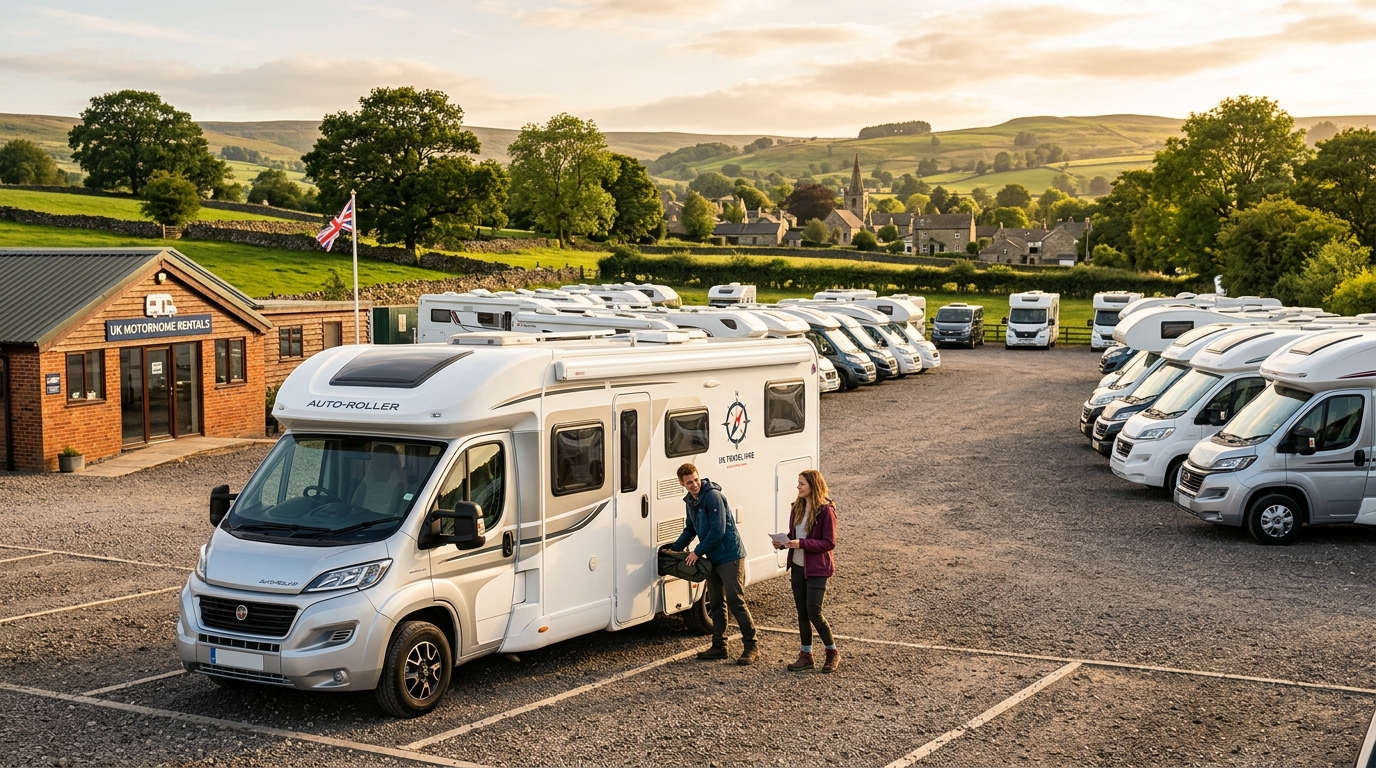
Most standard UK car driving licenses (Category B) permit the operation of motorhomes with a Maximum Authorised Mass (MAM) of up to 3,500kg, which covers a significant portion of smaller and mid-sized RVs. For RVs exceeding this weight, typically between 3,500kg and 7,500kg MAM, a Category C1 license is generally required. This license is often attainable through additional testing, or it may be held by drivers who passed their test before 1 January 1997. When renting an RV in the UK, the minimum driver age typically falls between 21 and 25 years, although some rental companies may impose higher age limits or require additional insurance excesses for younger drivers. Foreign drivers will need to present a valid driving license from their home country; an International Driving Permit (IDP) is highly recommended for non-EU/EEA licenses and is mandatory for certain nationalities if their license is not provided in English. For live availability and current prices, start with our RV Rental UK - Complete Guide 2026 guide.
Road Conditions & Terrain in UK
UK road conditions present a varied landscape, from the broad, modern multi-lane motorways of the M-series to the often ancient and narrow single-track country lanes, particularly in rural and highland regions. You might also encounter potentially unpaved access roads, especially when venturing off the beaten path. The terrain across the UK is incredibly diverse; you'll find the flat expanses of East Anglia, the rolling hills of the Peak District, and the rugged, mountainous terrain of Wales and Scotland. Navigating UK roads with a rented RV often encourages a slower, more deliberate driving pace, which is particularly beneficial on these narrower routes and allows you to fully appreciate the stunning scenery. It's wise to be prepared for frequently changing road surfaces and to consider the suitability of your chosen RV for potentially challenging routes, especially if you plan to explore less-traveled areas.
RV Size Limits, Bridges & Restricted Zones
RV drivers in the UK must remain vigilant regarding frequent low bridges, a common feature on older infrastructure and rural routes, with height limits typically displayed in both meters and feet. Many historic UK towns and villages present their own navigational challenges, boasting very narrow streets, tight corners, and weight restrictions that can make passage difficult for larger RVs, often necessitating alternative routes. Urban areas, including London with its Congestion Charge and Ultra Low Emission Zone (ULEZ), and other cities introducing Clean Air Zones (CAZs), may levy charges or restrict access for RVs that do not meet specific emission standards. Furthermore, when planning ferry journeys to islands or across channels, RV length, height, and weight are critical factors for booking and pricing, as ferry operators maintain strict dimension guidelines.
Fuel: Diesel vs. Petrol & Cost per 100 km
The vast majority of RVs available for rent in the UK, and indeed across Bandana's global fleet, are diesel-powered. Diesel is widely available at fuel stations nationwide, making it a convenient choice for RV travelers. Based on Bandana's global fleet averages, a Class B Camper Van typically consumes 8-10 Liters/100 km, while a Class SI Semi-integrated RV averages 10-11 Liters/100 km. As of 2026, the average cost per 100 km for an RV in the UK can fluctuate with fuel prices, but budgeting approximately £15-£25 per 100 km for diesel is a reasonable estimate. Some RV rental providers may offer fuel discount cards or options for pre-purchasing fuel, which can be a helpful strategy for budget-conscious travelers to manage their running costs effectively. If you're considering your fuel budget in more detail, our guide to Cheap RV Rental in UK - Budget Guide 2026 offers further insights. On the routes offered through RV PLANET routes, you can itemize and track every expense along the way for easy budgeting.
Tolls, Vignettes & Border Rules
The UK has a limited number of toll roads, primarily consisting of specific bridges such as the Dartford Crossing and the Severn Bridges, along with one motorway, the M6 Toll. Unlike many continental European countries, the UK does not operate a national vignette system for road use; tolls are typically paid on a per-use basis at designated locations or via online payment systems. The Dartford Crossing, situated on the M25, operates under a 'Dart Charge' system, which requires payment online in advance or by midnight the day after crossing, as physical toll booths are no longer in operation. Travel between England, Scotland, and Wales does not involve border checks. However, if you plan to drive your rented RV to Northern Ireland, ferry travel will be necessary, and you'll need to adhere to any relevant customs regulations, especially if entering from the Republic of Ireland.
Driving Tips for cheap rv rental Travelers
When opting for a cheap RV rental in the UK, consider choosing a more compact RV class, such as a Class B Camper Van or a smaller Semi-integrated model, to significantly simplify navigation on the UK's narrower roads and in bustling towns. Budget-focused travelers should meticulously plan their routes to avoid toll roads and maximize fuel efficiency by adopting smooth driving habits and regularly checking tire pressure. Always remember to drive on the left side of the road, practice navigating roundabouts correctly, and be mindful of the often lower speed limits on rural roads. Taking regular breaks, especially when traveling with family, is essential to prevent driver fatigue and allow passengers to stretch; aim for stops every 2-3 hours. Utilizing an RV-specific GPS navigation system is highly recommended, as it can help identify potential hazards like low bridges, narrow lanes, and environmental zone restrictions, thereby enhancing both safety and planning efficiency for your journey.
Recommended RV Class for UK Roads
For navigating the UK's diverse road network effectively, a Class B Camper Van is highly recommended due to its superior maneuverability; these typically average 5.8 meters in length across Bandana's global fleet. Class B Camper Vans are ideal for tackling narrow country lanes and offer more convenient parking options in towns, all while providing sufficient amenities for 2-3 adults without excessive bulk. Alternatively, a Class SI Semi-integrated RV, averaging 6.9 meters in length within Bandana's fleet, offers a comfortable balance between interior living space and manageable dimensions suitable for most UK roads. Both Class B and smaller Class SI models are well-equipped to handle varied UK terrains, generally providing adequate ground clearance and minimizing stress when encountering tight spots compared to larger, more unwieldy RVs. For a comparison of these options, check out our guide to Class A vs Class B vs Class C RV Rental in UK 2026.
Should I Choose a Compact Van Instead of a Large RV in UK?
Opting for a compact camper van over a large RV in the UK often provides a significant advantage when navigating the country's famously narrow roads and congested urban areas. Compact vans, such as Class B Camper Vans, are considerably easier to park, maneuver through historic town centers, and handle on winding rural routes, which can substantially reduce driving stress and increase your enjoyment of the journey. However, the primary trade-off for a compact van is typically less interior living space, potentially fewer built-in amenities like a full bathroom, and reduced storage capacity compared to a larger motorhome. While a larger RV certainly offers more comfort for extended stays or for larger groups, for truly exploring the UK's diverse landscapes and charming historic sites, a compact van often presents a better overall balance of practicality, accessibility, and cost-effectiveness for budget-conscious travelers.
Can I Park Anywhere? Free & Wild Camping Rules in UK
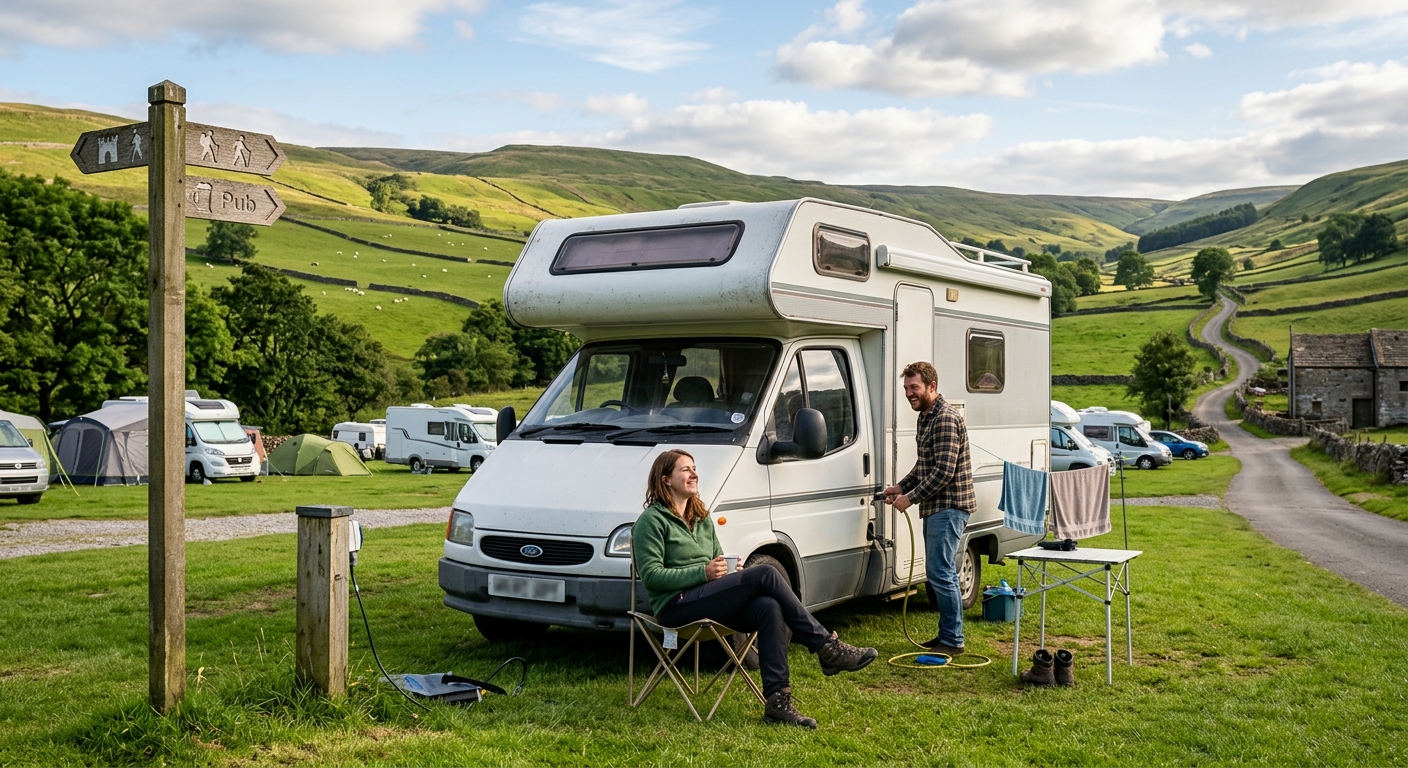
In England and Wales, 'wild camping' or overnight RV parking on public land is generally prohibited unless you have explicit permission from the landowner. Numerous areas strictly enforce 'no overnight parking' bylaws to manage visitor numbers and protect sensitive environments. Designated overnight parking spots, which you might find in larger car parks or lay-bys, may permit short stays, but these are typically not equipped with camping amenities like hookups or waste disposal. While Scotland does have a 'right to roam' that generally allows wild camping, this primarily applies to lightweight tent camping, and motorhomes are usually directed towards official campsites or designated informal stopovers. Crucially, rules for overnight parking and free camping vary significantly by region and specific location; it is always advisable to check local council regulations and strictly adhere to 'leave no trace' principles to avoid fines and respect local environments. For those interested in planning their UK adventure, our guide to Last-Minute RV Rental in UK - What to Expect 2026 can help with timely booking.
Can I Drive an RV Into the City Center? Heights, Tunnels & Local Signage
You can generally drive an RV into UK city centers, but it requires a high degree of vigilance regarding local signage, particularly for height and weight restrictions, as well as environmental zones. Many urban areas, especially those with older infrastructure, feature tunnels, bridges, and underpasses with strict height limits that may necessitate rerouting larger vehicles. It's essential to be aware of Clean Air Zones (CAZ) or Low Emission Zones (LEZ) in cities like London, Birmingham, and others, which may impose daily charges for RVs not meeting specific emission standards. Always pay close attention to local road signs indicating 'residents only' streets, width restrictions, and parking limitations. Using an RV-specific GPS can be invaluable for identifying suitable routes and parking options, helping you navigate urban environments with greater ease.
How much does it cost to rent an RV in the UK?
The cost to rent an RV in the UK typically ranges from £70-£150 per night for a compact campervan during the off-peak seasons, increasing to £150-£250+ per night for larger motorhomes during the peak summer months. When creating your trip budget, it's vital to include not just the rental fees but also significant ongoing expenses like fuel, campsite pitch fees (which can range from £20-£50+ per night), and food. Cost-saving strategies involve booking rentals well in advance, traveling during the shoulder seasons of spring and autumn to avoid peak pricing, selecting a smaller, more fuel-efficient RV, and cooking your own meals onboard. You should also budget for potential additional costs such as ferry crossings (for island travel or to Ireland) and occasional toll roads, like the M6 Toll, along with comprehensive insurance coverage and breakdown assistance. For a detailed breakdown and cost-saving tips, consult our guide to Cheap RV Rental in UK - Budget Guide 2026. For ideas you can prep on the road, watch our RV-friendly recipes playlist on YouTube.
Is wild camping legal in UK?
Wild camping in an RV is largely illegal across England, Wales, and Northern Ireland without explicit permission from the landowner, a distinction that sets it apart from Scotland's more permissive 'right to roam' principles. In Scotland, while the 'right to roam' (as codified in the Land Reform (Scotland) Act 2003) generally permits wild camping, it primarily pertains to lightweight tent camping and typically excludes motorized vehicles from overnight parking outside designated areas. Specific guidance for motorhomes in Scotland often recommends utilizing official campsites, designated informal stopovers, or seeking prior landowner permission to comply with the Scottish Outdoor Access Code. Across popular areas and National Parks in England, Wales, and Scotland, by-laws frequently prohibit overnight RV parking to protect the environment and manage visitor numbers, so verifying local rules before you park is always essential.
Is it hard to drive an RV in UK?
Driving an RV in the UK can present some challenges, primarily due to the prevalence of narrow, winding country roads, numerous low bridges, and often congested urban centers. Practical advice for successfully navigating these conditions includes selecting a smaller RV size for enhanced maneuverability and utilizing RV-specific GPS systems to avoid unsuitable routes. Parking an RV in UK towns and cities can be particularly difficult, often necessitating the use of out-of-town car parks and subsequent use of public transport for urban exploration. Gaining a solid understanding of UK driving etiquette, such as correctly using passing places on single-track roads and mastering the art of navigating roundabouts, is crucial for ensuring a smoother and safer journey. For first-time renters, our article on First-Timer RV Rentals in UK - Tips & Mistakes 2026 offers valuable guidance.
What is the best month to RV in UK?
The prime months for RV travel in the UK are typically May, June, and September, as these periods offer a pleasant balance of warmer weather, longer daylight hours, and fewer crowds compared to the peak summer season. When planning your trip, it’s important to be prepared for the UK's famously unpredictable weather, which often includes packing layers and waterproof gear for potential rain and wind, even during the summer months. Winter RV travel from October to April is certainly feasible but demands an RV with excellent insulation and reliable heating, alongside careful planning for shorter daylight hours and potential road closures in mountainous regions. To avoid the infamous midges, particularly prevalent in the Scottish Highlands, visiting in early spring (April/May) or late autumn (September/October) are often preferred times for exploring these picturesque areas.
Where can I fill up water in an RV UK?
Essential utilities like fresh water fill-ups for RVs are most reliably accessed at official campsites across the UK, which provide dedicated service points specifically for motorhome users. Beyond official campsites, some larger petrol stations, specific motorhome dealerships, and dedicated service areas may also offer water fill-ups and grey/black water dump stations, though their availability can vary significantly. For LPG/Autogas, commonly used for heating and cooking, these can be sourced at designated petrol stations; it is advisable to use online maps or specialist apps to locate these and confirm compatibility with your RV's specific system. Regarding mobile connectivity, data coverage is generally good across most of the UK, but it can become intermittent in remote areas like parts of the Scottish Highlands or Welsh mountains, so consider a portable Wi-Fi device or local SIM card for more consistent internet access during your travels.
What documents do I need to rent an RV in UK?
A pre-trip planning checklist for RV rental in the UK typically requires a valid full driving license (which must have been held for a minimum of 2 years), a secondary form of photographic identification such as a passport, and proof of address. Non-UK residents should always carry an International Driving Permit (IDP) alongside their national license if it is not in English or originates from a non-EU/EEA country. It's crucial to ensure you have comprehensive insurance coverage, including breakdown assistance, which is often a mandatory component of rental agreements; carefully review what is covered and consider opting for additional excess reduction options for greater peace of mind. If you plan to use ferries, for instance for travel to islands or the Republic of Ireland, it's essential to confirm with your rental company that this is permitted and that your insurance extends to ferry travel and any intended international use.
Can I bring my dog in a motorhome UK?
Many RV rental companies in the UK offer pet-friendly motorhomes, making it possible to bring your canine companion along for the adventure, although an additional cleaning fee or pet deposit is commonly required. When planning your itinerary, prioritize pet-friendly campsites, which are widely available across the UK and often provide convenient facilities such as designated dog walking areas and waste disposal points. It's also wise to research pet-friendly attractions beforehand, as access for dogs can vary significantly; many National Trust or English Heritage sites have specific dog policies, and national parks often require dogs to be kept on a lead to protect wildlife and other visitors. Always adhere to local regulations regarding pets, including keeping dogs on leads in public spaces and ensuring prompt and proper waste disposal, reflecting responsible travel etiquette during your UK RV trip.
What You Shouldn't Miss
- Explore the stunning Scottish Highlands: Take a Class B Camper Van on routes like the North Coast 500, enjoying its dramatic landscapes and ancient castles.
- Discover the Cotswolds: Drive a compact RV through charming villages like Bibury and Bourton-on-the-Water, experiencing quintessential English countryside.
- Journey through Wales: Navigate the scenic routes of Snowdonia National Park, perhaps with a Class C motorhome, and enjoy breathtaking mountain vistas.
- Experience the Jurassic Coast: Drive a rented motorhome along the South Coast of England, exploring geological wonders and seaside towns.
- Visit historic cities: Park your RV outside major cities like Edinburgh or Bath and use public transport to explore their rich history and culture without the stress of city driving.
Final Thoughts
Renting an RV in the UK opens up a world of possibilities for discovering the country's diverse landscapes and rich history at your own pace. By choosing the right vehicle size, planning your routes thoughtfully, and understanding the local driving nuances, you're set for an unforgettable adventure.
From the rolling hills of the Cotswolds to the rugged beauty of the Scottish Highlands, a rented RV provides the perfect mobile base. Remember to book in advance, especially during peak seasons, and embrace the freedom that comes with your own wheels. Your British RV journey awaits!
Get inspired for your next trip! Discover top destinations, planning tips, all in one place! Plan a trip itinerary in advance with minimal effort and maximum enjoyment.
