In This Guide
- Can You Drive an RV in Portugal? License & Age Rules
- Road Conditions & Terrain in Portugal
- RV Size Limits, Bridges & Restricted Zones
- Fuel: Diesel vs. Petrol & Cost per 100 km
- Tolls, Vignettes & Border Rules
- Driving Tips for cheap rv rental Travelers
- Recommended RV Class for Portugal Roads
- Should I Choose a Compact Van Instead of a Large RV in Portugal?
- Can I Park Anywhere? Free & Wild Camping Rules in Portugal
- Can I Drive an RV Into the City Center? Heights, Tunnels & Local Signage
- Are motorhomes popular in Portugal?
- What is the speed limit for RVs in Portugal?
- Is it safe to wild camp in Portugal?
- Can you use chemical toilets in Portugal?
- What is the best month to RV in Portugal?
- Can I travel with my dog in Portugal RV?
- How much does it cost to rent an RV in Portugal for 2 weeks?
- What do you need to hire a motorhome in Portugal?
- Are there campsites in Portugal?
- Do you need to book campsites in Portugal?
Can You Drive an RV in Portugal? License & Age Rules
Yes, driving an RV in Portugal is generally straightforward with the correct documentation and adherence to local regulations. A standard Category B driving license is sufficient for RVs with a Maximum Authorized Mass (MAM) up to 3,500 kg, which covers most camper vans and smaller motorhomes. For larger RVs, specifically those between 3,500 kg and 7,500 kg MAM, a Category C1 license is legally required. Rental companies typically set a minimum driver age of 21 or 25, even though the legal driving age for a Category B license is 18. Drivers from EU/EEA countries can usually use their national license without issue. However, non-EU/EEA drivers will generally need an International Driving Permit (IDP) in addition to their national license to legally operate an RV in Portugal.
Road Conditions & Terrain in Portugal
Portugal offers a varied driving experience for RV travelers, with a generally well-maintained road network. Modern motorways, designated as A-roads, allow for efficient and swift travel between major cities and regions. Complementing these are the scenic national roads (N-roads), which are ideal for slower exploration and uncovering the country's hidden gems. The terrain itself is diverse, ranging from the flat coastal plains found in the Algarve and Alentejo regions to the more challenging rolling hills and winding mountain ranges, such as the Serra da Estrela, which necessitate careful driving for larger RVs. Many historic city centers, while charming, feature narrow, cobbled streets that can be particularly challenging for RVs, especially when it comes to parking and maneuvering. Rural routes, while offering picturesque views, may be less maintained, encouraging a more deliberate and relaxed driving pace.
RV Size Limits, Bridges & Restricted Zones
While explicit, nationwide size limits for RVs on main roads are rare in Portugal, RV drivers must always remain vigilant and adhere to marked height and weight restrictions. These are particularly important when navigating under bridges, through tunnels, and in specific urban areas where infrastructure may be older or more constricted. Bandana's fleet, which includes Class SI Semi-integrated RVs averaging 6.9 meters in length and Class C Alcove RVs averaging 7.5 meters, generally navigates the Portuguese road network without significant issue. However, it's crucial to always observe signage for height clearances, especially when entering city centers or traversing areas with older infrastructure. Some cities, notably Lisbon and Porto, implement environmental zones or restricted access areas that may limit vehicle access based on size, emissions standards, or require specific permits.
Fuel: Diesel vs. Petrol & Cost per 100 km
The vast majority of RVs in Portugal, including the Bandana rental fleet, operate on diesel fuel, known locally as 'Gasóleo.' Diesel is readily available at service stations across the country, ensuring convenient refueling. Based on global fleet averages, a Class B Camper Van typically consumes between 8-10 liters per 100 km. For larger vehicles, a Class SI Semi-integrated RV will generally consume 10–11 liters per 100 km, while a Class C Alcove RV typically uses 10–12 liters per 100 km. With current diesel prices in Portugal fluctuating around €1.60-€1.80 per liter, you can anticipate fuel costs per 100 km to range approximately from €13 to €22, depending on your chosen RV's class and your driving style. To help manage your budget, some rental RVs may include fuel discount cards, offering minor savings on longer journeys. On the routes offered through RV PLANET routes, you can itemize and track every expense along the way for easy budgeting.
Tolls, Vignettes & Border Rules
Portugal employs a comprehensive electronic toll system on its motorways, known as SCUT roads, which require payment via a transponder or specific payment methods rather than traditional physical vignettes. Many rented RVs, particularly those provided by Bandana, come equipped with a Via Verde transponder. This device facilitates automatic toll payments, ensuring seamless travel and preventing potential fines for using these electronic-only toll roads. For vehicles registered outside Portugal that do not have a transponder, alternative payment options include EasyToll, which associates your license plate with a credit card for toll payments, or purchasing a pre-paid Toll Card. When traveling to neighboring Spain, you'll generally encounter traditional toll barriers where payment can be made using cash or card; no vignettes are required for Spanish motorways.
Driving Tips for cheap rv rental Travelers
To ensure a smooth and enjoyable RV journey through Portugal, embracing a relaxed driving pace is key, particularly on scenic routes, and always allowing more assertive Portuguese drivers to pass safely. Utilizing a Via Verde transponder, often supplied with rental RVs, is highly recommended for seamless toll payments, helping to optimize your budget. Plan for frequent stops every 2-3 hours at designated service areas or scenic viewpoints for comfort, especially on longer drives or when traveling with family. Embracing sustainable RV travel principles, such as minimizing waste, using designated dump stations correctly, and showing respect for local culture and environments, will enhance your experience. Prioritizing national roads (N-roads) over toll motorways can offer a more scenic route and potential cost savings, but be prepared for narrower or winding sections that require careful navigation.
Recommended RV Class for Portugal Roads
When navigating Portugal's diverse road network, balancing maneuverability, comfort, and budget is essential. For this, a **Class B Camper Van** or a **Class SI Semi-integrated** RV is highly recommended. Class B Camper Vans, typically around 5.8 meters in length and ideal for 2-3 adults, offer excellent fuel efficiency, consuming about 8-10 Liters/100 km, and superior agility for navigating tighter village streets and urban parking. Class SI Semi-integrated RVs, usually around 6.9 meters in length and suitable for 3-4 adults, provide more spacious living areas and storage while remaining manageable on most Portuguese roads, consuming approximately 10-11 Liters/100 km. Both these classes strike a good balance between interior comfort for extended trips and dimensions that are well-suited to Portugal's varied terrain, making them an ideal choice for a budget-friendly RV rental experience.
Should I Choose a Compact Van Instead of a Large RV in Portugal?
While a compact van offers superior maneuverability for extremely tight historic centers and narrow mountain passes, most standard-sized RVs, including semi-integrated or alcove models like Bandana's Class C at approximately 7.5 meters length, can navigate Portugal without significant issues. The key advantage of larger RVs lies in their enhanced comfort, offering more spacious living areas, larger kitchens, and often separate sleeping zones, which can be a significant benefit for longer trips or families. For the majority of popular Portuguese routes, the difference in maneuverability between a compact van and a mid-size RV is less critical than the added amenities and space provided by a larger vehicle. Consider your planned itinerary: a compact van is advantageous if your priority is deep urban exploration or very remote, unpaved roads, but for general touring, a larger RV typically provides a better overall experience.
Can I Park Anywhere? Free & Wild Camping Rules in Portugal
No, 'wild camping' or parking overnight outside designated areas is largely prohibited across Portugal, with regulations primarily aimed at protecting natural environments and preventing uncontrolled overnight stays. Since 2026, strict laws generally forbid motorhomes from parking overnight outside licensed campsites or specifically authorized locations, especially along the coastline and within protected natural parks. Legal alternatives for RV travelers include utilizing designated 'service areas for motorhomes' (ASAs – Áreas de Serviço para Autocaravanas), municipal parking lots where explicitly permitted (often with a 48-hour limit), or private agri-camping sites. Violating wild camping rules can result in substantial fines, making it essential to always check local municipal regulations and strictly adhere to signage before parking overnight. Remember that rules can vary significantly by region, so always verify local ordinances.
Can I Drive an RV Into the City Center? Heights, Tunnels & Local Signage
Generally, yes, you can drive an RV into most Portuguese city centers; however, it is critical to pay very close attention to specific local signage regarding height restrictions, environmental zones, and streets designated as narrow or residents-only. In historic city centers like Lisbon or Porto, streets can be extremely narrow, winding, and cobbled, making driving a large RV challenging and parking difficult. Always observe height limit signs before entering tunnels, underground car parks, or passing under low archways and bridges, which are prevalent in older urban areas. Be aware of 'Zona de Acesso Automóvel Condicionado' (Restricted Vehicle Access Zone) signs or environmental zone markers that may limit vehicle access based on size or emission standards. For a more practical approach to city exploration, consider parking your RV in designated peripheral lots and utilizing public transport to navigate the central areas.
Are motorhomes popular in Portugal?
Motorhome travel is indeed very popular and steadily growing in Portugal, especially among European tourists seeking flexibility and access to the country's diverse landscapes and cultural sites. Portugal's warm climate, beautiful coastlines, and rich historical attractions make it a highly attractive destination for RV enthusiasts. The country is also actively supporting this growth with an expanding network of campsites and dedicated motorhome service areas (ASAs), catering to the increasing number of RV travelers. The rising popularity means that during peak seasons, demand for both RV rentals and campsite spaces can be quite high, making advance planning advisable.
What is the speed limit for RVs in Portugal?
Speed limits for RVs in Portugal vary based on the vehicle's Maximum Authorized Mass (MAM). For motorhomes with a MAM under 3,500 kg (like many Camper Vans), the general speed limits are 120 km/h on motorways, 90 km/h on main roads, and 50 km/h in urban areas. For RVs with a MAM exceeding 3,500 kg, these limits are typically reduced to 90 km/h on motorways, 80 km/h on main roads, and 50 km/h in urban areas. It's crucial to always observe local signage, as speed limits can fluctuate, particularly near towns, schools, or in areas with specific road conditions. Driving at a moderate and safe speed is advisable not only for safety but also for better fuel efficiency and a more enjoyable overall journey, especially when navigating a larger vehicle.
Is it safe to wild camp in Portugal?
While the legality of wild camping in Portugal is restricted, utilizing designated overnight parking areas and legal alternatives offers much safer and compliant options for RV travelers. Camping in isolated or unauthorized areas can carry inherent risks, including potential fines, theft, or unwanted disturbances from curious locals or authorities. Prioritizing stays at official campsites, municipal motorhome service areas (ASAs), or private agri-camping sites ensures greater security, access to essential amenities, and valuable peace of mind. If you do opt for a legal overnight park-up, it's wise to select well-lit locations, keep valuables out of sight, and ensure all vehicle access points are securely locked.
Can you use chemical toilets in Portugal?
Yes, chemical toilets are a standard and well-supported feature in most rental RVs in Portugal. They can be utilized and emptied through dedicated dump stations readily available at campsites, motorhome service areas (ASAs), and some public facilities. It is both legally and environmentally imperative to dispose of chemical toilet waste ('black water') and grey water solely at designated disposal points, never in natural environments or public drains. Most campsites and ASAs provide comprehensive facilities for emptying chemical toilets, alongside grey water disposal and fresh water refill stations. To easily locate these facilities along your route, consider using apps like Park4Night and Campercontact, which are invaluable resources for finding the nearest and most reliable water and waste disposal points, as well as LPG (gas) refill stations.
What is the best month to RV in Portugal?
The shoulder seasons, specifically April-May and September-October, are generally considered the optimal months for RV travel in Portugal. During these periods, you'll experience pleasant weather, fewer crowds, and often more favorable rental pricing. Spring (April-May) offers mild temperatures, vibrant blooming landscapes, and a moderate tourist presence, making it ideal for exploring both coastal and inland regions. Autumn (September-October) continues to provide warm weather, particularly in the south, with comfortable sea temperatures and a more relaxed atmosphere after the summer peak. While Summer (June-August) is popular, it typically brings higher temperatures, significant crowds, increased rental costs, and necessitates advance bookings for popular campsites and attractions. Winter (November-March) offers the lowest prices and quietest roads for those seeking a peaceful escape, though it can be rainier, especially in the northern parts of the country.
Can I travel with my dog in Portugal RV?
Yes, traveling with your dog in an RV in Portugal is generally permitted, provided you comply with specific pet travel regulations, choose pet-friendly accommodations, and adhere to local rules for animals in public spaces. Before entering Portugal, ensure your dog has an up-to-date EU Pet Passport, is microchipped, and has current vaccinations, especially for rabies. Many campsites across Portugal are pet-friendly, but it's always wise to confirm their specific policies, any additional fees, and potential breed restrictions when making reservations. Remember to keep your dog leashed in public areas, as some beaches, restaurants, and national parks may have specific restrictions or require muzzles for certain breeds. Researching local emergency veterinary services along your planned route will also provide peace of mind regarding your pet's welfare.
How much does it cost to rent an RV in Portugal for 2 weeks?
The cost to rent an RV in Portugal for two weeks typically ranges from approximately €800-€1,500 in the low season to €2,000-€3,500 or more during the peak summer months. This variation is influenced by the RV class, rental company, and how far in advance you book. In the low season (winter), a Class B Camper Van might cost between €50-€80 per day, totaling €700-€1,120 for two weeks, excluding insurance and optional extras. During the shoulder seasons (spring/autumn), a Class SI Semi-integrated RV could range from €80-€120 daily, amounting to €1,120-€1,680 for a fortnight. In peak season (summer), popular Class C Alcove models can command daily rates of €150-€250+, pushing two-week rental costs to €2,100-€3,500 and beyond. Remember to budget for additional costs such as insurance, mileage packages, cleaning fees, bedding, kitchen kits, tolls, fuel, and campsite fees, which can significantly impact the overall trip cost. For a detailed breakdown of potential expenses along your route, exploring the features offered by RV PLANET routes can be very helpful. For ideas you can prep on the road, watch our RV-friendly recipes playlist on YouTube.
What do you need to hire a motorhome in Portugal?
To hire a motorhome in Portugal, you will typically need a valid driving license, often accompanied by an International Driving Permit (IDP) for non-EU/EEA residents. A major credit card is essential for the security deposit, and you must meet the rental company's minimum age and driving experience requirements. A Category B driving license is sufficient for most standard RVs up to 3,500 kg MAM, though an IDP is strongly recommended or required for licenses issued outside the EU/EEA. Most rental providers stipulate that drivers must be at least 21 or 25 years old and have held their license for a minimum of 2-3 years. A valid passport or national ID card will be necessary for identification purposes during the rental process. It's always advisable to thoroughly review the rental agreement, paying close attention to details on insurance coverage, mileage limitations, and available breakdown assistance, before finalizing your booking.
Are there campsites in Portugal?
Yes, Portugal boasts an extensive and varied network of campsites and motorhome parks situated throughout the country, offering a wide array of facilities to suit different traveler preferences. These campsites range from large, family-friendly resorts equipped with swimming pools, restaurants, and entertainment options, to smaller, more rustic sites nestled in beautiful natural landscapes. Popular regions such as the Algarve, the Lisbon coast, and central Portugal are particularly well-served with numerous choices for RVers. Beyond traditional campsites, dedicated motorhome service areas (ASAs) and private farm stays (agri-camping) provide additional legal overnight parking options, often including essential services like water and waste disposal.
Do you need to book campsites in Portugal?
Booking campsites in Portugal in advance is highly recommended, particularly during the peak summer months (June to August) and for popular coastal or national park locations, to guarantee availability. During July and August, sought-after campsites, especially those in the Algarve and near major cities, can become fully booked months ahead due to high demand. While booking might be less critical in the shoulder seasons (April-May, September-October), it is still advisable for popular destinations or if you have specific pitch preferences. Securing your spot ahead of time, even in off-peak periods, can often lead to better rates and ensures you have a guaranteed place, especially if arriving late in the day. Utilizing online booking platforms or contacting campsites directly is the best way to check current availability and make reservations.
What You Shouldn't Miss
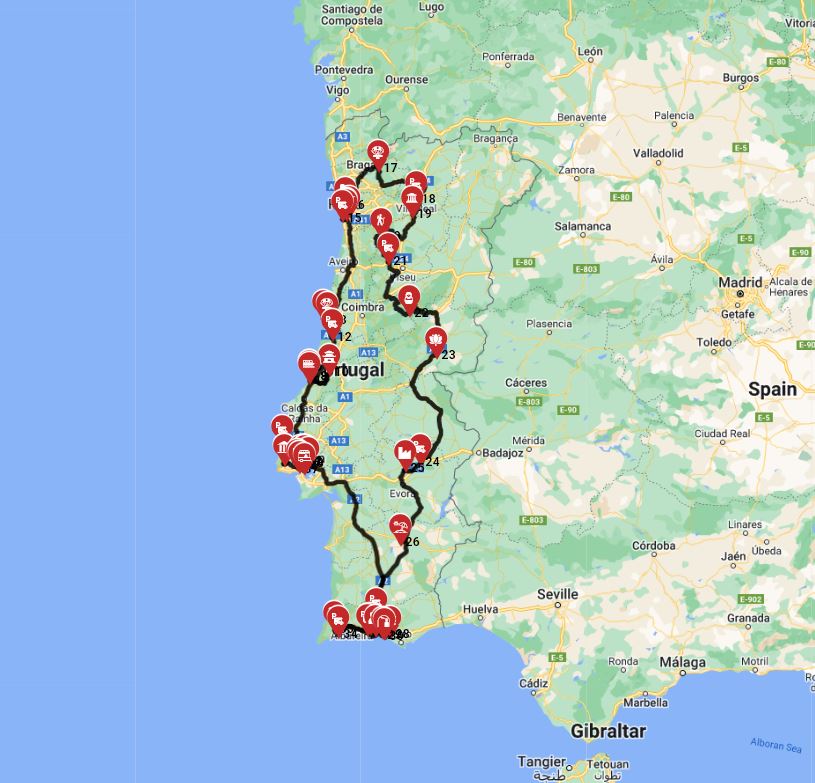
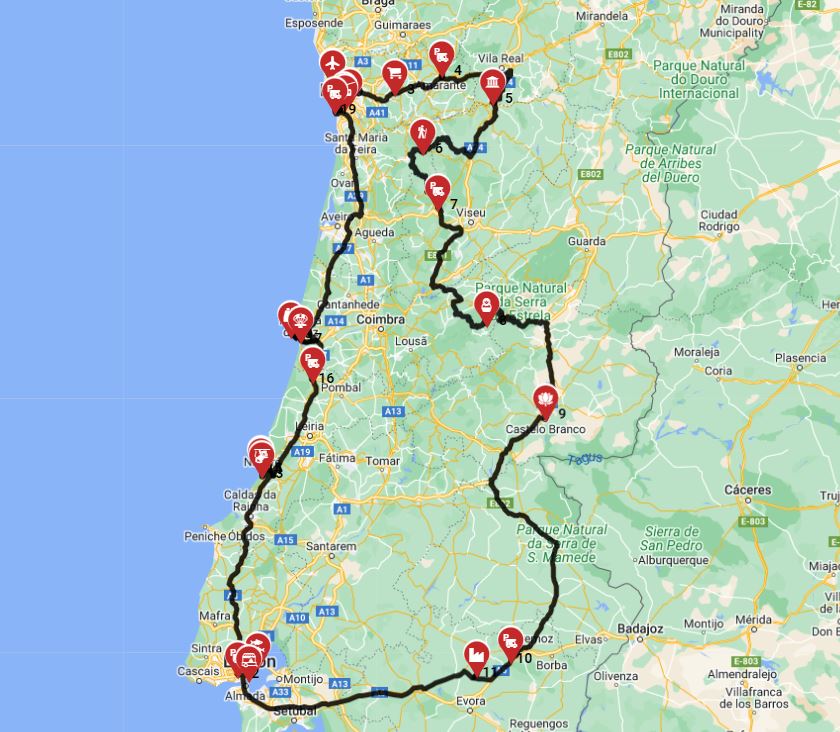
- Drive the N2 Road: Embark on Portugal's equivalent of Route 66, a 739 km journey from Chaves in the north to Faro in the south, passing through diverse landscapes and charming towns.
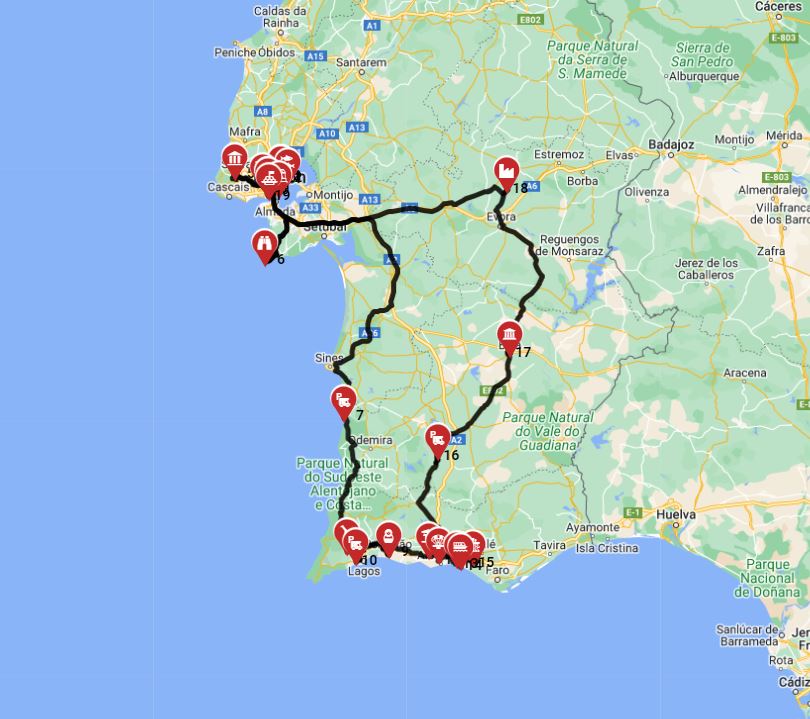
- Explore the Algarve Coastline: Discover stunning cliffs, sea caves (like Benagil), and golden beaches. Many coastal spots offer designated overnight parking for RVs, allowing for breathtaking sunsets.
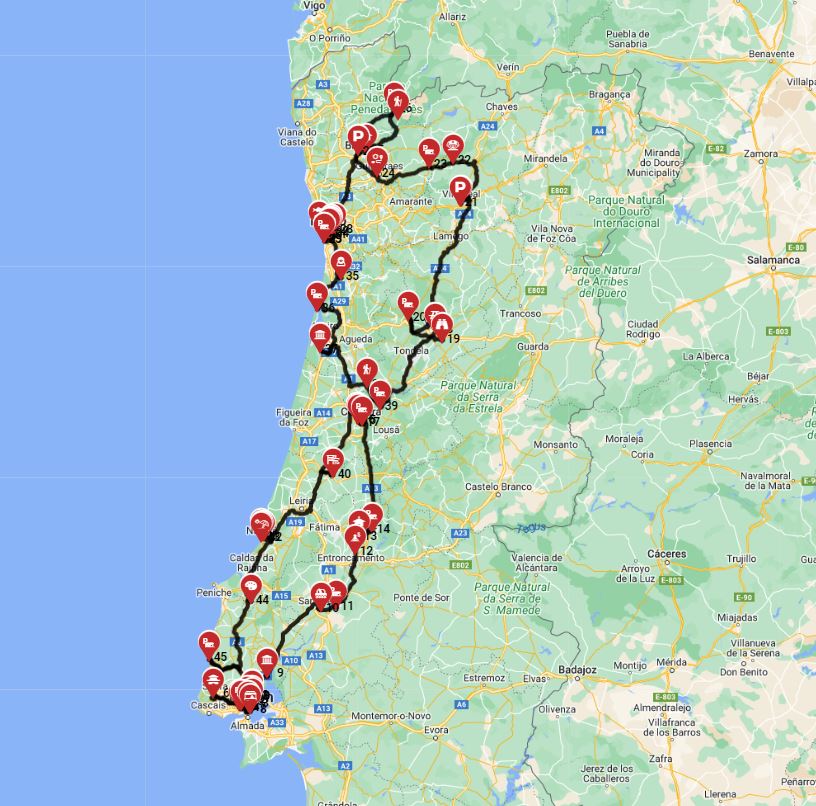
- Visit the Schist Villages (Aldeias do Xisto): Venture inland to these unique stone villages, often accessed via scenic routes ideal for RVs, offering a glimpse into traditional Portuguese life and stunning natural beauty.
- Experience the Douro Valley Wine Region: Follow the Douro River through terraced vineyards, stopping at Quintas for wine tastings and enjoying the dramatic landscapes from your RV. Many offer camper-friendly parking.
- Discover Lisbon's Charm: While city centers can be challenging, parking at designated RV areas on the outskirts and using public transport provides access to historic districts, Fado music, and iconic sights like Belém Tower.
- Relax in the Alentejo's Rolling Hills: Experience the tranquility of Portugal's largest region, known for its cork oak forests, vineyards, and olive groves, offering plenty of scenic stops and potential agri-camping opportunities.
Final Thoughts
Embarking on an RV adventure in Portugal offers an unparalleled way to experience its diverse landscapes, rich culture, and stunning coastline. By understanding the nuances of driving, fuel, tolls, and local regulations, you can ensure a smooth and stress-free journey. Remember that flexibility in your dates or choosing slightly less popular regions can often lead to better rental deals.
With Bandana Caravan, you gain access to a vast network of rental providers and transparent pricing, making it easier than ever to find the perfect motorhome for your Portuguese escapade. Take advantage of our expertise and planning tools to craft an itinerary that suits your style, whether you prefer bustling cities or tranquil rural retreats. Get inspired for your next trip and discover the freedom of the open road!
Ready to start planning? Compare RV rental prices for Portugal and discover the best deals available. Use our integrated planning tools to map out your route and find campsites with ease. Plan a trip itinerary in advance with minimal effort and maximum enjoyment, making your Portuguese RV adventure truly unforgettable.