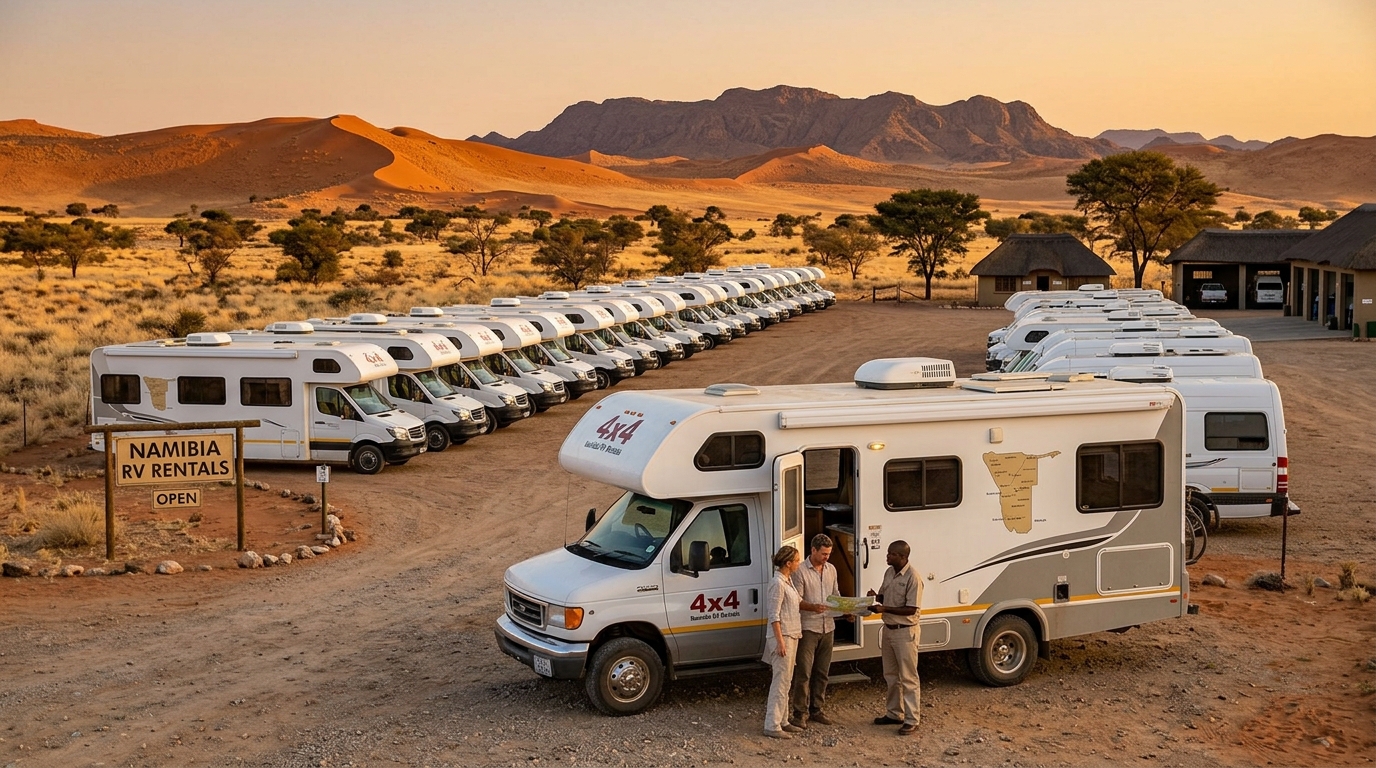
In This Guide
- Can You Drive an RV in Namibia? License & Age Rules
- Road Conditions & Terrain in Namibia
- RV Size Limits, Bridges & Restricted Zones
- Fuel: Diesel vs. Petrol & Cost per 100 km
- Tolls, Vignettes & Border Rules
- Driving Tips for cheap rv rental Travelers
- Recommended RV Class for Namibia Roads
- Should I Choose a Compact Van Instead of a Large RV in Namibia?
- Can I Park Anywhere? Free & Wild Camping Rules in Namibia
- Can I Drive an RV Into the City Center? Heights, Tunnels & Local Signage
- Do I Need a 4x4 RV for Namibia's Roads, and What Gear Should I Bring?
- How Do I Manage Water, Fuel, and Power for Remote RV Camping in Namibia?
- What are Essential Safety Tips for RV Travel in Namibia's Wilderness?
- Where Can I Find Off-the-Beaten-Path RV Campsites and Special Permits in Namibia?
- What are the Best Connectivity and Emergency Communication Options for RVers in Namibia?
- How Can RVers Practice Cultural Sensitivity While Traveling in Namibia?
- What Should I Pack for an RV Camping Trip in Namibia?
- Class SI - Semi-integrated RVs for Namibia
- Class C - Alcove RVs for Namibia
- Class B - Camper Vans for Namibia
- Class A - Integrated RVs for Namibia
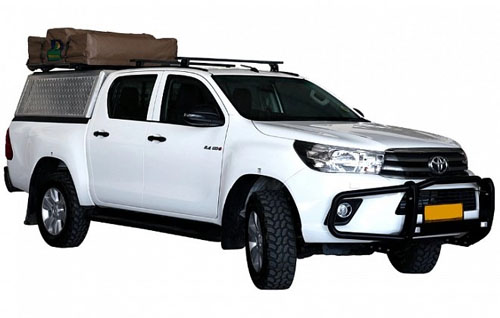
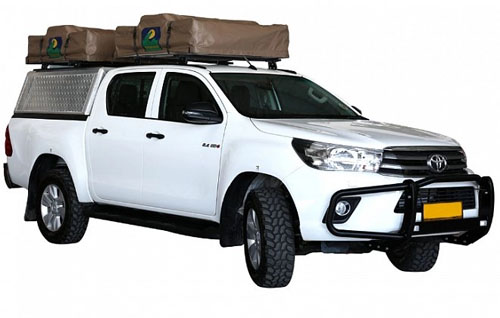
- Class TC - Truck Campers for Namibia
Can You Drive an RV in Namibia? License & Age Rules
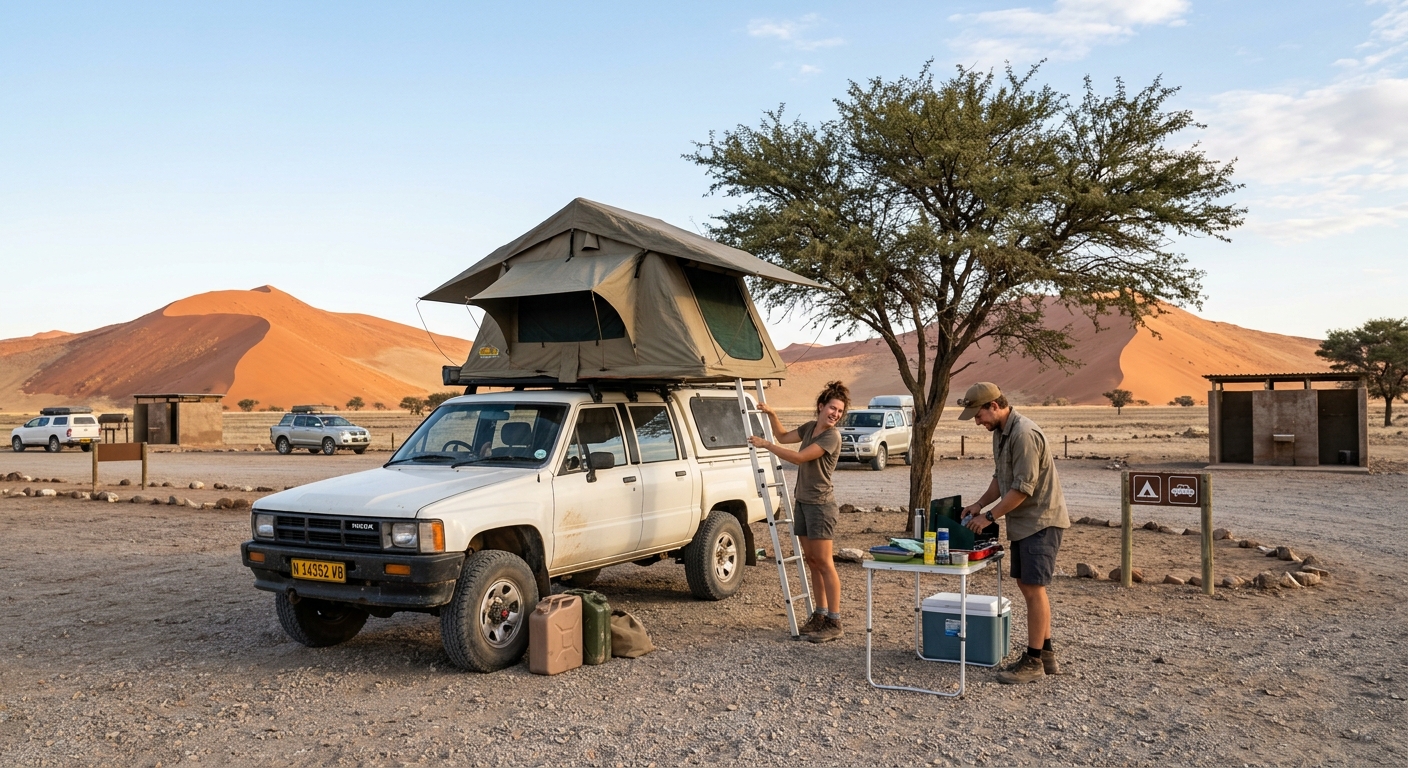
Driving an RV in Namibia is generally permissible with a standard driver's license, provided it corresponds to the vehicle's weight. For most rented campervans and smaller motorhomes, typically weighing under 3,500 kg Gross Vehicle Mass (GVM), a regular car license (Class B) is sufficient. For larger motorhomes exceeding this weight, a higher license category, such as a C1, is usually required.
Foreign drivers must carry their valid national driver's license along with an International Driving Permit (IDP) translated into English to ensure clarity and compliance. The minimum driver age for RV rentals in Namibia is generally 23 or 25 years old, with some rental companies potentially having stricter age policies or higher insurance premiums for younger drivers.
Road Conditions & Terrain in Namibia
Namibia's diverse terrain offers a unique RV driving experience, characterized primarily by well-maintained tar roads connecting major towns and extensive networks of gravel roads leading to many attractions. Over 80% of Namibia's road network consists of gravel roads, requiring careful and slower driving due to potential corrugations, loose stones, and washboarding effects. While major mountain passes are rare, some winding roads with elevation changes can be found in regions like the Naukluft.
Driving slowly and defensively, especially on gravel surfaces, is crucial for both safety and the longevity of your rental RV. Speeds of 60-80 km/h are advisable on gravel roads to maintain control and minimize the risk of punctures or damage. Consideration of appropriate tire types, adequate ground clearance, and basic recovery gear is paramount when planning routes that may involve less-maintained gravel or more remote areas.
RV Size Limits, Bridges & Restricted Zones
Namibia generally imposes few strict height or weight restrictions on its primary road network, meaning most standard rental RVs are suitable for travel across the country. Low bridges or restrictive urban height limits are uncommon issues for RVs outside of very specific, infrequent instances in older city areas.
Currently, Namibia does not implement environmental zones or 'low emission zones' that would restrict RV access in urban centers. Ferry limits are also largely irrelevant as there are no domestic RV ferry routes within Namibia. The primary 'restricted zones' are national parks and conservancies, which may have specific entry fees and require travelers to stay on designated roads. Always check park regulations and permit requirements before venturing into these protected areas.
Fuel: Diesel vs. Petrol & Cost per 100 km
Diesel is the predominant fuel type for RVs in Namibia and is widely available across the country, with petrol stations also being common. Based on Bandana's global fleet averages, a Class B Camper Van typically consumes 8-10 Liters/100 km, and a Class SI Semi-Priced RV generally uses 10-11 Liters/100 km. For the adventurous traveler opting for a Class TC Truck Camper, expect fuel consumption to be higher, potentially ranging from 12-17 Liters/100 km.
Fuel prices in Namibia are government-regulated and consistent nationwide, although they can fluctuate monthly. It is crucial to refuel whenever the opportunity arises, especially before embarking on journeys through remote regions where fuel stations can be spaced hundreds of kilometers apart. Planning for an extended fuel range might involve carrying extra jerry cans for multi-day trips through unserviced areas, ensuring you never run the risk of being stranded.
Tolls, Vignettes & Border Rules
Namibia does not utilize tolls or vignettes on its national road network, meaning RV travelers will not encounter these specific fees within the country. This simplifies budget planning and adds to the ease of overland travel. On the routes offered through RV PLANET routes, you can itemize and track every expense along the way for easy budgeting.
When planning to travel to neighboring countries such as South Africa or Botswana, specific border crossing requirements will apply, including vehicle permits and potential road access fees. It is essential to ensure that all vehicle documentation, including registration papers and any necessary cross-border permits obtained from your rental company, are in order before approaching international borders. While not applicable for Namibia itself, some RV rental companies may offer options for pre-purchasing toll passes for countries that do have them as part of an integrated travel package.
Driving Tips for cheap rv rental Travelers
When navigating Namibia's vast landscapes in a rented RV, adopting safe and efficient driving practices is key. Drive slowly on gravel roads, reducing speeds to 60-80 km/h to maintain control, prevent punctures, and minimize dust ingress. Always watch for wildlife crossing roads, especially during dawn and dusk, and exercise extreme caution within national parks.
Carry at least one, preferably two, properly inflated spare tires and ample drinking water due to the vast distances and remote nature of many areas. Plan your fuel stops carefully by consulting maps for fuel station locations and refueling whenever possible to avoid running dry. For areas with limited or no mobile signal, consider investing in a local SIM card for towns or renting a satellite phone for emergencies, ensuring you have reliable communication when needed.
Recommended RV Class for Namibia Roads
For navigating Namibia's varied road conditions, a Class B Camper Van or a Class SI Semi-integrated RV are often highly recommended for their balance of maneuverability and comfort. These vehicles are well-suited for both the main tar roads and the more common well-maintained gravel roads.
Class B Camper Vans, averaging 5.8 meters in length, are excellent for gravel roads and provide ample sleeping space for 2-3 adults, making them ideal for couples or small families. The Class SI Semi-integrated RVs, averaging 6.9 meters in length, offer more interior space and sleeping places (3-4 adults) while still being manageable on major routes. For those prioritizing extensive off-road capability and access to more challenging terrains, a Class TC Truck Camper, like the Patagonia Camper 4x4 double cab, might also be suitable, although they typically come with higher fuel consumption.
Should I Choose a Compact Van Instead of a Large RV in Namibia?
While larger RVs can comfortably navigate Namibia's main roads, opting for a compact van, such as a Class B Camper Van, can offer a distinct advantage in terms of maneuverability and fuel efficiency on the country's extensive gravel roads. The primary benefit of a compact van, like Bandana's Class B Camper Vans averaging 5.8 meters, lies in their easier handling on corrugated surfaces and their ability to fit into tighter campsites.
For those planning longer trips where comfort and living space are prioritized, larger RVs, such as a Class C Alcove motorhome averaging 7.5 meters, provide significantly more interior room, often including a separate toilet and shower, and greater storage capacity. However, Namibia's urban centers and national parks generally feature ample space and parking, meaning a larger RV rarely poses significant access challenges. The choice ultimately hinges on prioritizing agility on rougher terrain and potentially lower rental and fuel costs versus maximizing interior living space and amenities.
Can I Park Anywhere? Free & Wild Camping Rules in Namibia
Free or wild camping is generally not permitted and is strongly discouraged in Namibia, particularly within national parks, on private land, or in communal areas, due to safety concerns and environmental protection regulations. Travelers are expected to utilize designated campsites, which are abundant and well-equipped throughout Namibia, offering a safe and convenient base.
Ignoring designated camping areas can lead to fines, cause environmental damage, and potentially result in dangerous encounters with wildlife. For those seeking truly remote or off-the-beaten-path experiences, specific permits are often required for restricted areas like the Sperrgebiet or certain conservancies, and these must be obtained well in advance. Always ensure proper waste disposal in any wilderness areas you may be traveling through and manage your water and solar power resources responsibly.
Can I Drive an RV Into the City Center? Heights, Tunnels & Local Signage
Yes, RVs can generally be driven into Namibia's city centers, including Windhoek, as the infrastructure is largely accommodating. Urban areas are typically less congested with restrictive height or width limits compared to many older European cities.
Windhoek, the capital, features wide roads and ample parking, making navigation straightforward even with larger RVs. Travelers should always pay attention to local signage for general traffic rules, speed limits, and any infrequent specific parking restrictions that may apply. Namibia does not commonly present challenges with low bridges or narrow streets that would typically hinder RV access, unlike regions with extensive tunnel networks or historic city cores. Being mindful of driving etiquette and cultural sensitivity is always good practice when navigating urban areas and interacting with local populations.
Do I Need a 4x4 RV for Namibia's Roads, and What Gear Should I Bring?
While a 4x4 RV is not strictly necessary for all Namibian routes, it is highly recommended and often essential for accessing certain remote or off-the-beaten-path destinations. Many popular attractions are reachable by 2WD RVs, but routes into areas like the Kaokoveld or deeper into national parks frequently require 4x4 capability for safe and successful navigation.
If you opt for a 4x4 RV, ensure it comes with robust tires, such as all-terrain tires, adequate ground clearance, and a reliable 4x4 system. Essential recovery gear for any remote 4x4 RV adventure should include a high-lift jack, a tire repair kit, a shovel, and a tow rope. Understanding how to use this gear and possessing basic self-recovery knowledge will significantly enhance your safety and independence during exploration.
How Do I Manage Water, Fuel, and Power for Remote RV Camping in Namibia?
Effective management of water, fuel, and power is crucial for successful and comfortable remote RV camping in Namibia, as resources can be scarce outside of designated towns and established campsites. Prioritize water conservation by utilizing purification tablets or a portable filter and ensuring your RV has a sufficiently large freshwater tank, supplementing with extra jerry cans when possible.
Extended fuel range planning is paramount; always fill up at every available opportunity, carry extra jerry cans for fuel, and closely monitor your consumption. For waste disposal in wilderness areas, adhere strictly to 'leave no trace' principles: carry out all trash and utilize designated dump points for greywater and blackwater. Solar and battery power management involves optimizing usage, charging devices during daylight hours, and potentially choosing an RV equipped with a robust solar setup to ensure continuous power supply.
What are Essential Safety Tips for RV Travel in Namibia's Wilderness?
Prioritizing RV-specific safety protocols is essential when traveling through Namibia's wilderness, particularly concerning wildlife encounters, vehicle breakdowns, and secure overnight parking. To effectively handle wildlife encounters from your RV, remain inside your vehicle, maintain a safe distance from animals, and strictly avoid feeding them. Drive cautiously at dawn and dusk, times when animals are most active and visibility can be reduced.
In the event of a breakdown in remote, unserviced areas, it is best practice to stay with your vehicle and utilize emergency communication devices like a satellite phone or personal locator beacon if available. Secure overnight parking strategies should focus on utilizing established, fenced campsites whenever possible, especially in areas known for petty crime or with significant wildlife presence. Avoid wild camping without explicit permission or thorough prior research into local conditions and regulations.
Where Can I Find Off-the-Beaten-Path RV Campsites and Special Permits in Namibia?
For RVers seeking unique, less-traveled campsites in Namibia, explore options beyond popular national park resorts and investigate community-run conservancy campsites or smaller, privately-owned establishments. Regions like Damaraland, Kaokoveld, and the Caprivi Strip offer incredible wilderness camping opportunities, often requiring a higher degree of self-sufficiency and preparedness.
Unique permit requirements are crucial for accessing restricted areas such as the Sperrgebiet or parts of the Kaokoveld, and these permits must be obtained well in advance of your trip. Researching local conservancies directly and exploring their booking channels can sometimes uncover hidden gems not listed on larger booking platforms. Always verify permit requirements and road accessibility thoroughly before finalizing your route to these distinct, more challenging, yet rewarding locations.
What are the Best Connectivity and Emergency Communication Options for RVers in Namibia?
For RVers venturing into areas with no mobile signal in Namibia, a combination of local SIM cards and dedicated emergency communication devices provides the most reliable approach to ensuring connectivity and safety. Purchasing a local SIM card from providers like MTC or Telecom Namibia offers good 3G/4G coverage in major towns and along primary travel routes.
However, outside of these areas, particularly within national parks or remote wilderness regions, mobile signal becomes sporadic or nonexistent. For essential emergency communication in such areas, a satellite phone is highly recommended, as it provides reliable two-way communication capabilities virtually anywhere. Alternatively, personal locator beacons (PLBs) or satellite messengers can send distress signals or limited text messages, offering a vital lifeline in critical situations.
How Can RVers Practice Cultural Sensitivity While Traveling in Namibia?
RVers can practice cultural sensitivity while traveling in Namibia by demonstrating respect for local customs, traditions, and the environment, especially when passing through rural communities or interacting with local populations. When encountering local communities, it's polite to greet people respectfully, ask for permission before taking photographs, and be mindful of individual privacy.
Dress modestly, particularly when visiting villages or religious sites, and avoid public displays of affection. Consider purchasing local crafts or services from community projects to directly support local economies and foster positive interactions. When driving through rural communities, reduce speed, remain alert for pedestrians and livestock, and maintain a polite and friendly demeanor. Always ask permission before entering private or communal land, and be conscious of your waste disposal to protect the environment.
What Should I Pack for an RV Camping Trip in Namibia?
A comprehensive packing list for RV camping in Namibia's diverse climate and potentially challenging conditions extends beyond typical road trip items, focusing on self-sufficiency, comfort, and preparedness. Essential clothing includes layered items suitable for both hot days and cold nights, sturdy walking shoes, a wide-brimmed hat, sunglasses, and swimwear for any water activities.
Vehicle and safety essentials should include at least one spare tire (preferably two), a tire repair kit, an air compressor, a basic toolkit, a well-stocked first-aid kit, and emergency communication devices. Camping essentials encompass headlamps, binoculars, a cooler or fridge (if not integrated into the RV), reliable water containers, water purification tablets, and eco-friendly toiletries. Don't forget navigation aids like detailed paper maps (as a backup), a GPS device with offline maps, power banks, car chargers, and a local SIM card for communication.
Class SI - Semi-integrated RVs for Namibia
Class SI Semi-integrated RVs, averaging 6.9 meters in length and typically offering sleeping accommodations for 3-4 adults, present a balanced combination of comfort and manageability, making them well-suited for Namibia's primary tar and well-maintained gravel roads. These motorhomes often feature a permanent bed in the rear and a convertible lounge area, providing ample living space for couples or small families.
With an average load capacity that allows for essential supplies and luggage, these RVs offer a comfortable base for exploring Namibia. Their fuel consumption generally ranges from 10-11 Liters/100 km, presenting a relatively efficient option for covering long distances. Furthermore, their streamlined profile tends to handle crosswinds on Namibia's open roads more effectively than some larger, high-profile RVs.
Class C - Alcove RVs for Namibia
Class C Alcove RVs, easily recognizable by the distinct sleeping area located above the driver's cab, and averaging 7.5 meters in length, are an excellent choice for families or larger groups traveling through Namibia, offering substantial sleeping and living space. These RVs typically accommodate 4-6 people and provide generous interior room, often including separate dinette areas, full kitchens, and bathroom facilities.
While they offer ample space for luggage, careful packing is advised due to their average load capacity. The common fuel consumption for Class C models ranges from 10-12 Liters/100 km, reflecting their larger size and capacity. Their robust construction makes them capable of handling Namibia's main tar roads and better-quality gravel roads, providing a comfortable and well-equipped base for exploring the country's diverse landscapes.
Class B - Camper Vans for Namibia
Class B Camper Vans, averaging 5.8 meters in length and typically accommodating 2-3 people, are highly versatile for a cheap RV rental in Namibia, offering excellent maneuverability and impressive fuel efficiency. These compact RVs are ideal for couples or solo travelers, providing essential amenities within a vehicle that handles much like a regular large van.
Their smaller footprint makes them particularly easy to drive on corrugated gravel roads and to park in more confined spaces. While they may offer slightly less storage than larger RVs, their agility and fuel economy often make them a preferred choice for exploring Namibia's extensive road network. Expect fuel consumption for these camper vans to be among the most economical, typically ranging from 8-10 Liters/100 km.
Class A - Integrated RVs for Namibia
Class A Integrated RVs, averaging 7.5 meters in length and designed with the driver's cab seamlessly integrated into the living space, represent a more luxurious and spacious option for RV travel in Namibia. These motorhomes are best suited for those prioritizing maximum comfort and space, particularly when traveling on major routes and well-maintained roads.
They offer expansive living areas, often featuring multiple lounge spaces, fully equipped kitchens, and generous bathroom facilities. While their size and lower ground clearance make them less ideal for very rough or challenging gravel roads, their integrated design and luxury amenities provide an unparalleled travel experience for those who prefer to prioritize comfort on the road. Careful route planning is essential to ensure these vehicles are best utilized on Namibia's primary routes.
Class TC - Truck Campers for Namibia
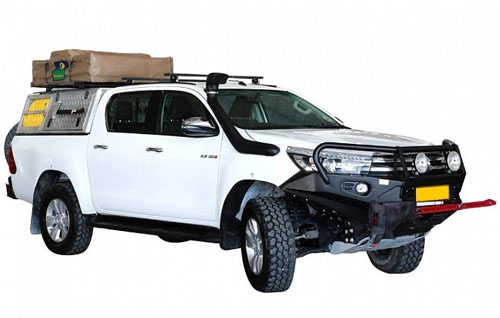
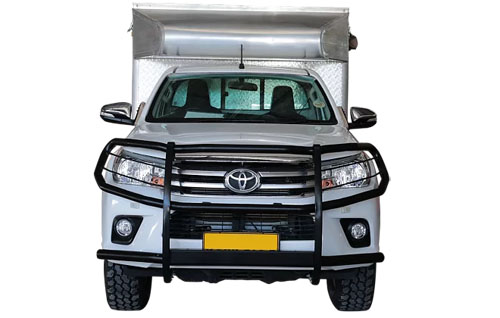
Class TC Truck Campers, averaging 5.5 meters in length, are an excellent choice for adventurers prioritizing true 4x4 capability and access to Namibia's most remote and challenging terrains. These units are typically mounted on robust 4x4 pickup truck chassis, offering superior ground clearance and off-road performance essential for tackling deep sand, rocky tracks, and river crossings.
While they offer a more compact living space, they provide essential sleeping and basic cooking facilities for 2-3 people, focusing on functional ruggedness and capability. Fuel consumption for Class TC models is generally higher due to their 4x4 nature, averaging 12-17 Liters/100 km. Their design makes them ideal for self-sufficient exploration of Namibia's rugged landscapes, offering a unique way to experience the country's wilder side.
What You Shouldn't Miss
- Explore Sossusvlei and Deadvlei: Witness the iconic red sand dunes and ancient camel thorn trees in Namib-Naukluft National Park. A Class B campervan is suitable for reaching the park's main attractions, but a 4x4 or park shuttle is required for the final stretch to Deadvlei.
- Drive the Skeleton Coast: Experience the dramatic, desolate coastline with its shipwrecks and stark beauty. The C34 road is partly compacted salt, offering a unique driving surface.
- Visit Etosha National Park: Enjoy incredible wildlife viewing opportunities at waterholes, especially during the dry season. A 2WD RV is generally sufficient for the well-maintained internal park roads.
- Explore Swakopmund and Walvis Bay: Discover coastal towns offering adventure activities like dune boarding, quad biking, and boat tours to see seals and dolphins.
- Discover Damaraland: This rugged region is known for its ancient rock art at Twyfelfontein and the chance to spot desert-adapted wildlife, requiring careful navigation, potentially a 4x4 RV for deeper exploration.
- Experience the Fish River Canyon: Marvel at the second-largest canyon in the world, offering breathtaking viewpoints and hiking opportunities. Access is via well-maintained roads suitable for most RVs.
Final Thoughts
Embarking on an RV adventure in Namibia promises an unparalleled journey through some of Africa's most breathtaking and diverse landscapes. From the towering dunes of Sossusvlei to the wildlife-rich plains of Etosha, a rented RV offers the freedom and flexibility to explore at your own pace.
Remember that thorough planning, particularly regarding fuel, water, and the specific demands of Namibia's road conditions, will greatly enhance your experience. Embrace the slow travel ethos, take your time to immerse yourself in the stunning scenery and unique culture, and you're guaranteed an unforgettable Namibian road trip.
Get inspired for your next trip! Discover top destinations, planning tips, and much more, all in one place. Plan your RV adventure with minimal effort and maximum enjoyment.
For ideas you can prep on the road, watch our RV-friendly recipes playlist on YouTube.