In This Guide
- Can You Drive an RV in Iceland? License & Age Rules
- Road Conditions & Terrain in Iceland
- RV Size Limits, Bridges & Restricted Zones
- Fuel: Diesel vs. Petrol & Cost per 100 km
- Tolls, Vignettes & Border Rules
- Driving Tips for cheap rv rental Travelers
- Recommended RV Class for Iceland Roads
- Should I Choose a Compact Van Instead of a Large RV in Iceland?
- Can I Park Anywhere? Free & Wild Camping Rules in Iceland
- Can I Drive an RV Into the City Center? Heights, Tunnels & Local Signage
- How Much Does an RV Trip in Iceland Truly Cost? (Beyond Rental Fees)
- What Are Iceland's F-Roads and Which RVs Can Drive Them?
- How to Prepare Your RV for Iceland's Weather Conditions
- Where Can RVs Legally Camp in Iceland? (Official Campsites vs. Wild Camping)
- When Is the Best Time to Rent an RV in Iceland? (Seasonal Guide)
- How to Manage Food, Water, and Supplies for Your Iceland RV Trip
- What Are 'Leave No Trace' Principles for RVing in Iceland?
- What to Do in an RV Emergency in Remote Iceland
- Beyond the Ring Road: Unique RV Routes in Iceland
- Essential Gear to Pack for Your Iceland RV Adventure
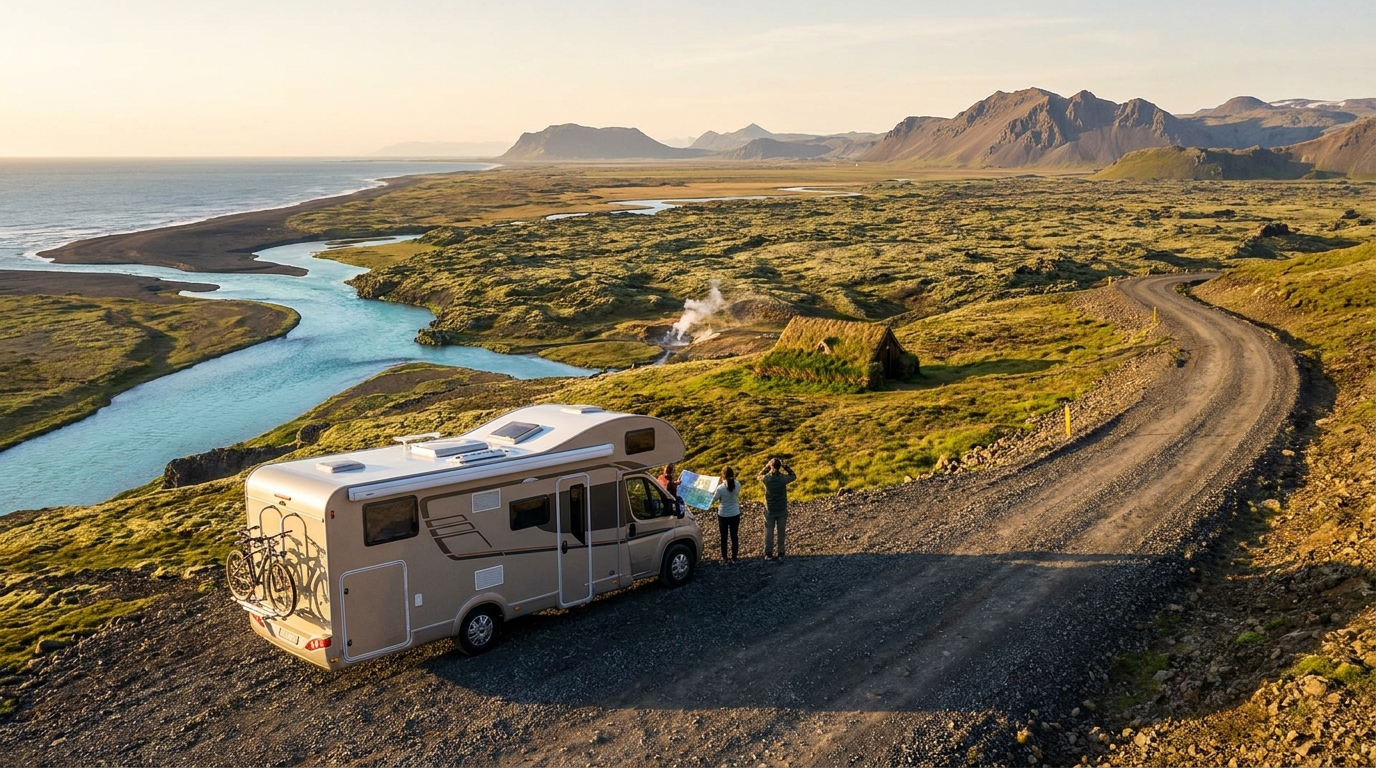
Imagine yourself surrounded by Iceland's dramatic landscapes, the freedom of the open road stretching before you, and the comfort of your rented motorhome as your base. RV travel in Iceland offers an unparalleled way to explore this incredible country, from its volcanic vistas to its serene hot springs. At Bandana RV, we specialize in helping you find the perfect cheap rv rental in Iceland, ensuring full transparency with no hidden fees and 24/7 support before, during, and after your booking.
For live availability and current prices, start with our RV Rental Iceland - Complete Guide 2026 guide. Whether you're a seasoned RVer or planning your first adventure, we're here to make your journey seamless and unforgettable. Remember to travel slowly, averaging a maximum of 100-150 km per day, allowing you to truly connect with Iceland's unique culture, delicious food, and breathtaking scenery.
Can You Drive an RV in Iceland? License & Age Rules
Yes, you can absolutely drive an RV in Iceland, and a standard B-category driver's license is generally sufficient for most rental RVs under 3,500 kg. This covers a wide range of motorhomes and campervans available for rent. The minimum driver age for RV rentals in Iceland is typically 21 years old, with no young driver surcharges or vehicle class restrictions based on age, a significant advantage when planning your trip. For visitors from non-English-speaking countries, an International Driving Permit (IDP) is recommended in addition to your valid national license, although it is not mandatory in most cases.
Before booking, always verify the specific weight and class of your chosen rented RV to ensure it aligns with your license category, particularly if you are considering larger Class C or Class A models. Our full transparency promise means we ensure you have all the necessary information upfront, so there are no surprises when it comes to licensing or vehicle requirements. Rest assured, driving an RV in Iceland is accessible and straightforward for most licensed travelers.
Road Conditions & Terrain in Iceland
Iceland's main Ring Road (Route 1) is mostly paved and well-maintained, making it suitable for all types of rented RVs, though travelers should always be prepared for strong winds and sudden weather changes. Beyond the Ring Road, many secondary roads are gravel, including unpaved sections and all F-roads (mountain roads), which demand caution and often a 4x4 vehicle. F-roads are typically open only during the summer (late June to September) and require 4x4 vehicles with high ground clearance; attempting these roads in a standard 2WD rented RV will void your insurance and can lead to dangerous situations.
We strongly encourage slow, scenic driving, especially on gravel or winding roads, allowing you to fully enjoy the unique volcanic landscapes and ensure safety for yourself and your rented vehicle. This approach also aligns with our philosophy of traveling slowly, allowing you to absorb the local culture and breathtaking scenery at your own pace. With 24/7 support, Bandana RV is with you before, during, and after your booking to answer any questions about road conditions and vehicle suitability.
RV Size Limits, Bridges & Restricted Zones
Iceland generally lacks restrictive low bridges or tight city centers that significantly impact common rented RV sizes, with the main concern being maneuverability on narrower roads or gravel surfaces. There are no specific environmental zones or general RV height/weight restrictions commonly found in continental Europe that universally apply to RVs in Iceland. Some single-lane bridges, often found on the Ring Road, require drivers to yield to oncoming traffic; larger RVs should approach these cautiously and with common sense. Drive slowly and carefully, and you can drive almost anywhere without issues. No need to stress - just use common sense and pay attention.
F-roads are explicitly restricted to 4x4 vehicles only, irrespective of overall size, and require robust ground clearance; attempting these routes in a 2WD rented RV, such as a Class SI Semi-integrated RV or a Class B Camper Van, will void insurance and can lead to hazardous situations. Understanding these distinctions is key to planning a seamless adventure, and our team of true RV specialists is here to provide authoritative guidance on vehicle choice and route planning.
Fuel: Diesel vs. Petrol & Cost per 100 km
Diesel is the most common fuel type for rented RVs in Iceland, and both diesel and petrol are widely available at gas stations across the country, particularly along the Ring Road. A typical RV from Bandana's global fleet can consume between 8-17 liters per 100 km, depending on the RV class and driving conditions, which can significantly impact your cheap rv rental budget. For example, a Class B Camper Van like the "Camper 2 - LOKI" typically consumes 8-10 Liters per 100 km, while a Semi-integrated (Class SI) RV like the "EcoLine 2" averages 10-11 Liters per 100 km.
Larger Alcove (Class C) RVs, such as a "4 Berth Henty", generally consume 10-12 Liters per 100 km. Adventurous Class TC Truck Campers like a "4x4 Truck Camper Gold", often 4x4 models, tend to have higher consumption at 12-17 Liters per 100 km, influencing overall trip costs significantly. Many rental companies provide fuel discount cards for major petrol station chains like N1 or Olís/Skeljungur, which can offer helpful savings on your journey. When planning your budget, remember that fuel is a major ancillary cost, and on RV PLANET routes, you can itemize and track every expense for easy budgeting. On the routes offered through RV PLANET routes, you can itemize and track every expense along the way for easy budgeting.
Tolls, Vignettes & Border Rules
Iceland has very few tolls, with the Vaðlaheiðargöng tunnel in North Iceland being the primary one, requiring payment online or at designated gas stations within three hours of passing through to avoid higher fees. Unlike many continental European countries, Iceland does not utilize vignettes (road tax stickers) for its road network. As an island nation, Iceland has no land borders, which means border rules and crossings with neighboring countries are not a concern for RV travelers, simplifying international travel logistics considerably.
This straightforward system, combined with our full transparency policy, means you won't encounter unexpected road charges during your Iceland cheap rv rental adventure. Always check local signs for any temporary changes or new charges, but generally, toll management in Iceland is minimal.
Driving Tips for cheap rv rental Travelers
Observing posted speed limits is crucial in Iceland, where fines are substantial, and road conditions can change suddenly, often requiring adherence to limits like 90 km/h on paved rural roads and 80 km/h on gravel. Beware of Iceland's extremely strong and unpredictable winds; always secure awnings and doors, and be prepared for potential 'door-ripping' incidents, as this damage is typically not covered by standard rental insurance. It is legally required to drive with headlights on at all times, day or night, throughout the year.
Approach single-lane bridges cautiously, noting signage for priority (usually the vehicle closest or the one entering first). If you rent a 4x4 RV like the "4x4 Scout Adventure Truck Camper Gold" and plan to drive F-roads, ensure you have adequate insurance coverage, understand how to cross unbridged rivers, and inform your rental company of your detailed itinerary. Our 24/7 support team is always available for pre-booking questions to help you prepare thoroughly for your journey.
Recommended RV Class for Iceland Roads
For most travelers sticking to the main Ring Road and major sights, a Class B Camper Van (averaging 5.8m in length) or a Class SI Semi-integrated RV (averaging 6.9m in length) from Bandana's diverse fleet are excellent choices for an Iceland cheap rv rental. Class B Camper Vans, such as the "Active Classic" or "Juliette 2-3", offer superior maneuverability, easier parking in towns, and better fuel economy (typically 8-10 Liters/100 km), making them ideal for couples or small families seeking flexibility. For example, a "MiniVan" model provides a compact solution for easy navigation.
Class SI Semi-integrated RVs, like the "Active Standard" or "Cruz", provide more spacious living areas, comfortable sleeping for up to 4 adults, and enhanced amenities for longer trips, while still being manageable on paved roads with an average consumption of 10-11 Liters/100 km. For adventurous travelers intent on exploring Iceland's Highlands via F-roads, a Class TC Truck Camper (averaging 5.5m in length, often 4x4) like the "Adventure Truck Select" or "4x4 Jimny" is specifically recommended, though these have higher fuel consumption (12-17 Liters/100 km). Our true RV specialists can help you compare options like "Luxury Small" or "Group L - Toyota Landcruiser - Automatic" to find the perfect match for your adventure.
Should I Choose a Compact Van Instead of a Large RV in Iceland?
Generally, there are no widespread issues driving larger RVs, such as Class C Alcove models like the "Conquest" or Class A Integrated models like the "E3", on Iceland's main roads, including the entire Ring Road. A compact van (e.g., a Class B Camper Van like "Juliette 2-3") genuinely helps with easier parking in towns, offers better fuel efficiency at 8-10 liters/100km, and provides greater agility on narrower gravel roads. However, opting for a larger rented RV, like a "6 Berth Deluxe" or a "Category Family 5 AT", provides significantly more indoor living space, greater comfort for families or longer trips, and amenities such as larger kitchens and bathrooms.
The decision often boils down to a trade-off between the increased comfort and amenities of a larger RV versus the slight maneuverability advantages and fuel savings of a compact van. For exploring F-roads, the crucial factor is 4x4 capability and high ground clearance, not overall length, so a dedicated 4x4 Truck Camper such as "Adventure Camper" is needed regardless of its 'compact' designation. Our full transparency policy ensures you understand these trade-offs to make the best choice for your cheap rv rental in Iceland.
Can I Park Anywhere? Free & Wild Camping Rules in Iceland
Wild camping with RVs in Iceland is largely illegal and strictly prohibited outside of designated campsites or without explicit, written permission from the landowner, primarily due to the country's fragile ecosystem. Iceland has very strict environmental protection laws, making 'leave no trace' principles paramount and rigorously enforced to preserve its pristine natural beauty. Therefore, RV travelers must utilize official campsites for all overnight stays, which offer necessary facilities like electricity hookups, fresh water, and waste disposal points for both grey and black water.
Numerous well-maintained campsites are available throughout Iceland, especially along the Ring Road, and many are open year-round, even in winter. Rules can vary slightly by region and municipality, so always check local regulations and adhere strictly to local law before parking overnight to avoid hefty fines and environmental damage. We promise full transparency in outlining these rules to ensure your trip is smooth and compliant.
Can I Drive an RV Into the City Center? Heights, Tunnels & Local Signage
Yes, you can almost always drive a rented RV into Iceland's city centers, including Reykjavík, as there are no widespread height or weight restrictions preventing access. Reykjavík city center parking can be challenging due to limited available spaces and often requires payment; consider parking on the outskirts and utilizing public transport or walking for easier exploration. Pay close attention to local signage, especially for parking restrictions, 'residents-only' streets, and occasional temporary height limits for specific underground car parks or structures.
Iceland does not have the complex network of low bridges or city-specific environmental zones that might restrict RV access in some other European cities, making urban navigation relatively straightforward. Always be mindful of bus lanes and pedestrian zones, ensuring your RV does not obstruct traffic or cause damage. Drive slowly and carefully, and you can drive almost anywhere without issues. No need to stress - just use common sense and pay attention.
🎬 Video coming soon
How Much Does an RV Trip in Iceland Truly Cost? (Beyond Rental Fees)
Beyond the daily rental fee for your cheap rv rental in Iceland, an RV trip incurs significant additional costs for fuel, which, with consumption rates of 10-17 liters per 100km, can become a major expenditure. Travelers should budget for official campsite fees, typically ranging from 1,500-2,500 ISK (approximately $11-18 USD) per person per night, plus potential additional charges for electricity hookups or showers. Food costs are generally high in Iceland, so planning for an average of 5,000-8,000 ISK (approximately $36-58 USD) per person per day for groceries is crucial for self-catering, with restaurant meals being substantially higher.
It's also wise to allocate funds for comprehensive insurance coverage, including specific gravel protection and windshield insurance, and an emergency fund for unexpected repairs or situations. Factor in activity costs, such as entry to the Blue Lagoon, glacier hikes, or whale watching tours, which can vary widely. Don't forget potential fees like the Vaðlaheiðargöng tunnel toll. Remember that on RV PLANET routes, you can itemize and track every single expense along the way for easy budgeting and to ensure no hidden fees surprise you.
What Are Iceland's F-Roads and Which RVs Can Drive Them?
Iceland's F-roads are unpaved, often rough, mountain roads that traverse the Highlands, characterized by steep inclines, loose gravel, and sometimes unbridged river crossings, offering access to some of the country's most remote and stunning wilderness. Access to F-roads is strictly limited to 4x4 vehicles with high ground clearance; attempting to drive a 2WD RV, such as a "Category Van" or "Van - Economy", on an F-road will void your rental insurance and is highly dangerous. Only 4x4 Truck Campers, like the "4x4 Camper B - TYR" or "4x4 Scout Adventure Truck Camper Gold", or specifically modified 4x4 campervans are suitable for F-roads, offering the necessary traction and suspension.
F-roads typically open only during the summer months, from late June to mid-September, and their condition can change rapidly with weather, requiring constant monitoring. Popular destinations accessible primarily via F-roads include Landmannalaugar, Thórsmörk, and Askja, which offer unique and rugged wilderness experiences for those equipped and prepared. Our true RV specialists are here to guide you on selecting the appropriate rented RV for such adventurous routes, emphasizing safety and compliance.
How to Prepare Your RV for Iceland's Weather Conditions
Icelandic weather is famously unpredictable and can change rapidly, presenting challenges like strong winds, heavy rain, snow (even in summer in the Highlands), and volcanic ash, requiring diligent preparation for your RV adventure. Prioritize monitoring the Icelandic Met Office (vedur.is) for real-time weather and road conditions, paying close attention to wind warnings, as these can significantly impact RVs. Strong winds, which can exceed 20 m/s (72 km/h), can cause damage to RV doors, awnings, and even impact vehicle stability; always park facing the wind when possible and secure all exterior elements.
Prepare for all seasons, even in summer, by packing appropriate clothing layers and ensuring your rented RV has good heating and insulation for comfortable overnight stays. In winter or shoulder seasons, be prepared for icy roads and potential road closures due to snow, and ensure your RV is equipped with winter tires and potentially studded tires. Our top-level deductible reimbursement option provides extra peace of mind for unexpected incidents, though prevention is always key.
Where Can RVs Legally Camp in Iceland? (Official Campsites vs. Wild Camping)
RVs in Iceland are legally required to camp overnight at official, designated campsites; wild camping in an RV is strictly prohibited across most of the country to protect its fragile environment. Official campsites are plentiful, well-maintained, and offer essential facilities such as fresh water, waste disposal (grey and black water), electricity hookups, and often showers, making them the only legal and practical option for RVers. Staying at official campsites supports local infrastructure, helps preserve Iceland's unique natural environment, and ensures compliance with strict 'Leave No Trace' principles, which are vital for sustainable tourism.
While some private landowners might grant permission for overnight parking, this must be secured in advance and in writing; never assume permission. Utilize reliable resources like the Tjalda.is app or website to locate and, where possible, book official campsites across Iceland, ensuring a hassle-free and legal overnight stay. We recommend planning your route and campsites in advance, and RV PLANET (rvplan.net) offers 1,300+ pre-planned routes across 5 continents, including specific itineraries for Iceland, for a 25% planning discount.
When Is the Best Time to Rent an RV in Iceland? (Seasonal Guide)
Summer (June-August) is the most popular time for RV travel in Iceland, offering mild weather, nearly 24-hour daylight, full road accessibility (including most F-roads), and all attractions being open. Shoulder seasons (April-May, September-October) provide a balance of fewer crowds, potentially lower prices for a cheap rv rental, and decent daylight, but with colder temperatures, a higher chance of snow, and F-roads may be closed. Winter (November-March) is ideal for experienced cold-weather RVers seeking the northern lights, but features very short daylight hours (e.g., only 4-5 hours in December), frequent road closures due to snow and ice, and virtually no F-road access.
Road accessibility and suitable vehicle types vary significantly by season; a 4x4 RV such as a "Patagonia Camper 4x4 double cab" is essential for winter conditions or F-roads, while any Class B or Class C RV ("Explorer", "Active Bunk Auto") suffices for the Ring Road in summer. Consider seasonal activities: summer for hiking and long drives, shoulder seasons for stunning autumn colors and nascent northern lights viewing, and winter for ice caves and optimal aurora opportunities. Our pricing, like flight tickets, is dynamic, changing daily based on availability and seasonality, so flexible dates can help you find the cheapest rv rental in Iceland.
How to Manage Food, Water, and Supplies for Your Iceland RV Trip
Plan to shop for groceries at larger supermarkets like Bónus, Krónan, or Nettó in major towns such as Reykjavík, Akureyri, or Egilsstaðir, where prices are generally lower than in smaller village stores or convenience stops. Typical food costs in Iceland are higher than in many other countries, so budgeting for self-catering in your RV's kitchen is crucial for a cheap rv rental trip. Your rented RV, whether a compact "Aero - Campervan" or a spacious "MH4-5 - HEL", will have cooking facilities like a stove and fridge, enabling you to prepare delicious meals and save significantly over eating out; you can find inspiration in our RV-friendly recipes playlist.
Water refills are readily available at all official campsites and many gas stations; Iceland's tap water is famously clean, pristine, and safe to drink directly. Waste disposal for grey and black water is mandatory at designated dump stations found at official campsites; never dispose of waste in nature due to strict environmental regulations. This diligent approach to supplies and waste management is integral to responsible RV travel in Iceland.
What Are 'Leave No Trace' Principles for RVing in Iceland?
'Leave No Trace' in Iceland emphasizes protecting its incredibly fragile and unique volcanic ecosystem from human impact, especially for RVers, given the delicate nature of its moss and lava fields. This principle means strictly staying on marked roads and trails, never driving off-road (which is illegal and causes permanent damage), and only camping overnight in designated official campsites. Properly disposing of all waste, including grey and black water, is critical, and must be done at designated dump stations found in campsites; never leave any trash, food scraps, or human waste in nature, as this can have long-lasting environmental consequences.
Respect wildlife and natural features by not disturbing animals, picking plants, or removing rocks/fossils, and specifically avoid walking on delicate moss and lava formations, which take decades or even centuries to grow. Be considerate of other visitors and locals, keep noise levels down, and minimize your overall impact to ensure Iceland remains pristine and accessible for future generations of travelers. Our commitment to full transparency includes educating travelers on responsible practices.
What to Do in an RV Emergency in Remote Iceland
In remote areas of Iceland, cellular coverage can be limited or nonexistent; always inform someone of your itinerary, especially when venturing off the main Ring Road into less populated areas. For breakdowns or emergencies, use the European emergency number 112, which connects you to police, fire, and ambulance services across the country. Many rented RVs are equipped with emergency assistance contacts or GPS trackers; familiarize yourself with these systems before your departure. For example, some Class C RVs like the "cruise america rv rental example Explorer" may have integrated systems.
Carry essential emergency supplies like a first-aid kit, extra warm and waterproof clothing, sufficient water and non-perishable food, and a fully charged power bank for your phone, regardless of the season. If stranded, stay with your vehicle, which provides crucial shelter from unpredictable weather conditions, and wait for assistance rather than attempting to walk long distances, which can be dangerous in Iceland's elements. While Bandana RV provides 24/7 support for booking and pre-trip coordination, local emergency services are your direct contact during your journey.
Beyond the Ring Road: Unique RV Routes in Iceland
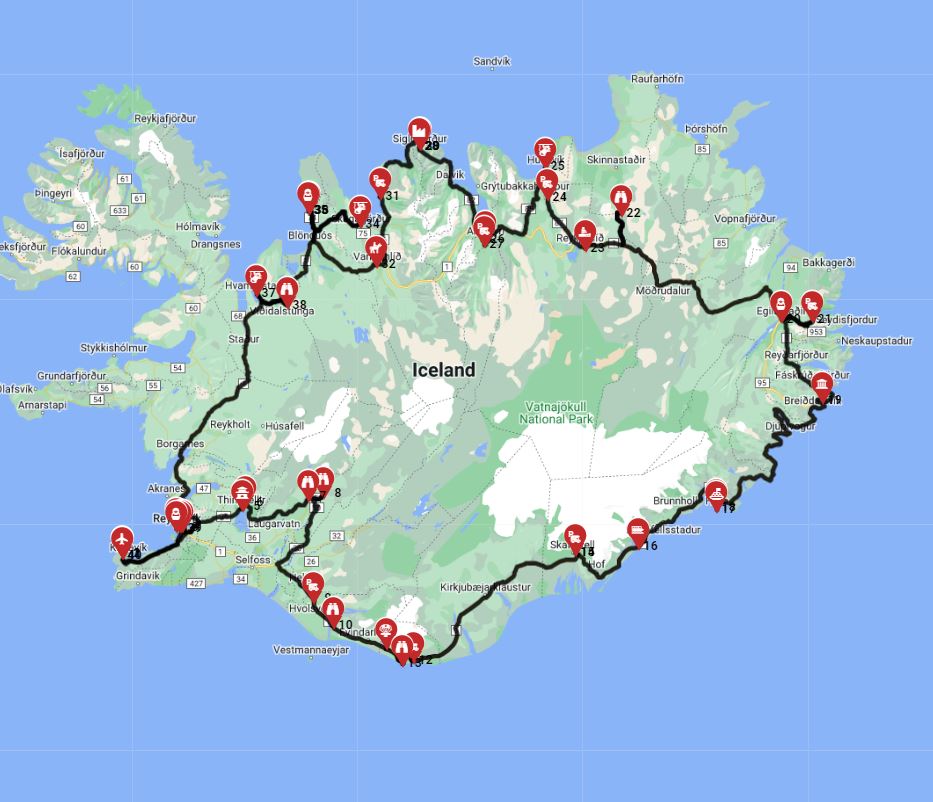
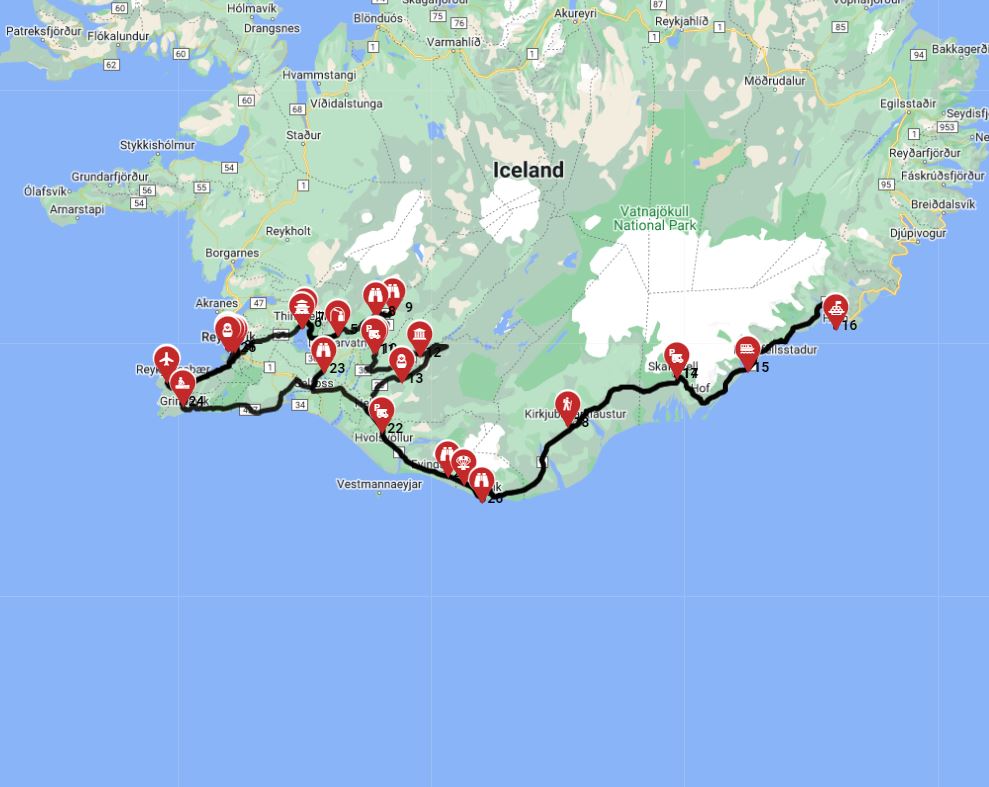
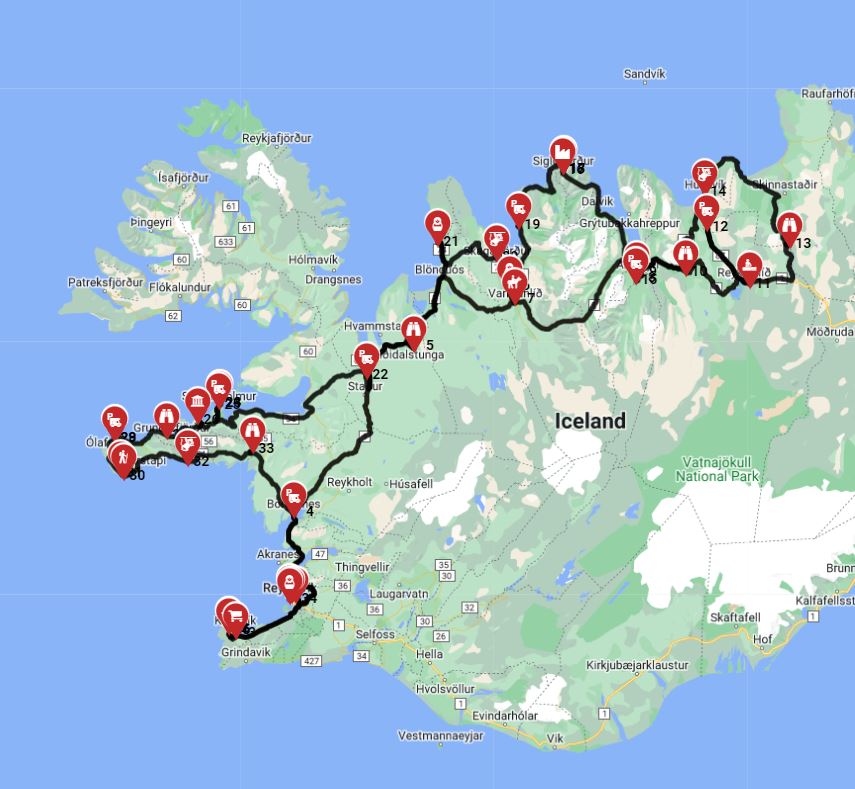
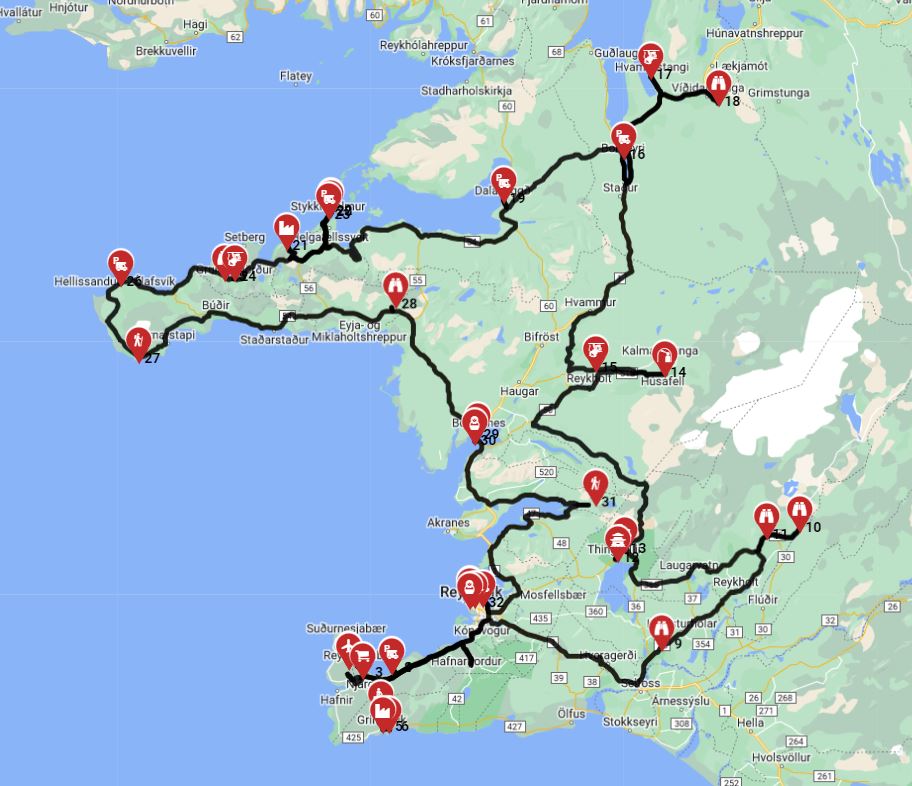
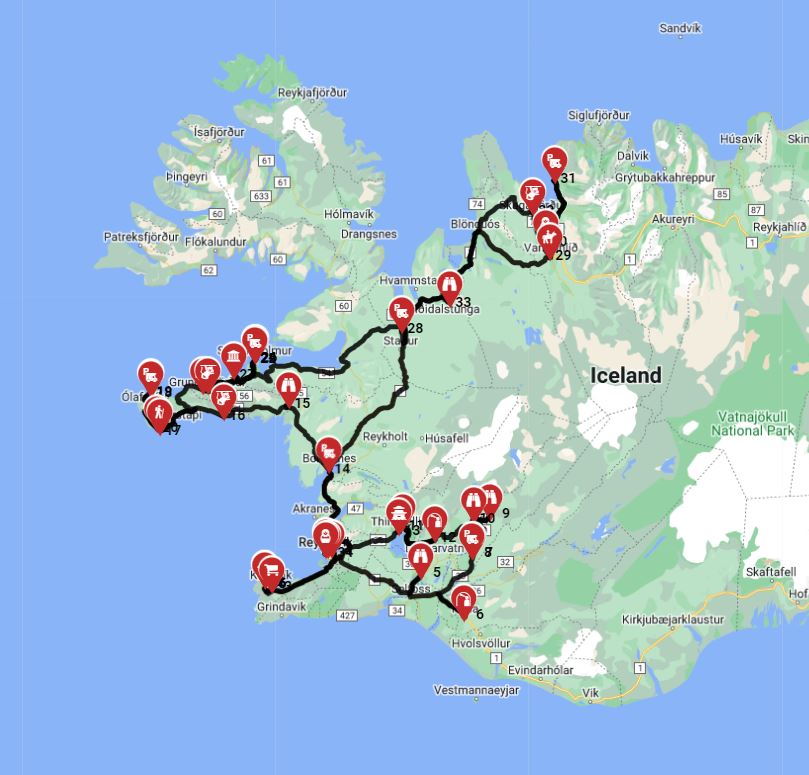
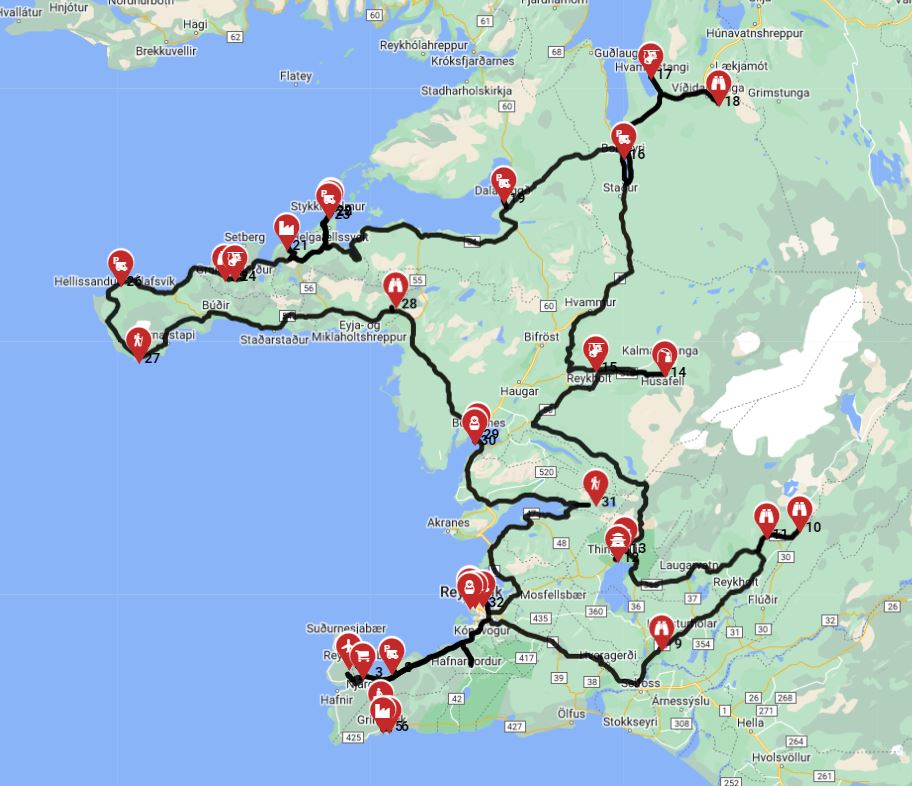
While the Ring Road offers many iconic sights, consider unique RV routes in Iceland like the Snaefellsnes Peninsula for diverse landscapes, including black sand beaches, basalt columns, and charming fishing villages, which is suitable for all RV types. The Westfjords region presents rugged, dramatic scenery with fewer tourists, but roads are often winding, gravel, and require more time; a compact RV or 4x4 camper is recommended due to the challenging terrain. For example, a "Category Van 4x4" would be ideal here.
For a truly off-the-beaten-path experience, explore the F-roads into the Highlands, such as routes to Landmannalaugar or Askja, which demand a 4x4 Truck Camper like the "4x4 Camper B - THOR" and careful planning, as well as adherence to the strict 4x4 only rule. The Diamond Circle in North Iceland offers attractions like Dettifoss waterfall, Lake Myvatn, and Húsavík (known for whale watching), providing a concentrated alternative to the full Ring Road loop. Always research road conditions (vegagerdin.is) and seasonal accessibility for these alternative routes, especially outside of peak summer. We offer pre-planned itineraries like the "
Essential Gear to Pack for Your Iceland RV Adventure
Pack versatile layers of warm, waterproof, and windproof clothing, including thermals, fleece, a sturdy rain jacket, and waterproof pants, as Icelandic weather can change dramatically regardless of the season. Bring extra warm bedding, even if your RV has some, as nights can be cold, especially in shoulder seasons or if you opt for smaller campervans like an "Active Small" with a smaller living space. Sturdy waterproof hiking boots are essential for exploring Iceland's diverse natural attractions, along with comfortable shoes for driving and relaxing in your RV.
Consider bringing traction mats or a small shovel if planning to drive on gravel roads or in potentially muddy conditions, especially off the main routes. Other useful items include a reliable power bank for charging devices (like phones or cameras), a comprehensive first-aid kit, sunglasses (for both bright days and low sun angles), a reusable water bottle, a travel adapter, and a high-quality camera to capture the stunning landscapes. Remember to plan a trip itinerary in advance with minimal effort and maximum enjoyment by considering these essentials.
What You Shouldn't Miss
- **The Golden Circle:** This iconic route features Thingvellir National Park, Geysir geothermal area, and Gullfoss waterfall, offering a concentrated experience of Iceland's natural wonders.
- **Jökulsárlón Glacier Lagoon:** Witness icebergs calved from Vatnajökull glacier floating in a stunning lagoon, often accompanied by seals.
- **Skaftafell Nature Reserve:** Part of Vatnajökull National Park, it offers incredible hiking trails, including the path to Svartifoss waterfall with its basalt columns.
- **Reynisfjara Black Sand Beach:** Explore the dramatic black sands, basalt columns, and powerful Atlantic waves near Vík.
- **Myvatn Nature Baths:** Relax in geothermal waters in North Iceland, a more serene alternative to the busier Blue Lagoon, offering stunning views.
Looking for expert insights from Avi Bandana? Top 5 Adventures - recommendations from Avi Bandana:
Final Thoughts
Embarking on a cheap rv rental adventure in Iceland promises an unforgettable journey through a land of fire and ice, offering unparalleled flexibility and closeness to nature. By understanding the unique driving conditions, respecting local camping regulations, and budgeting wisely, you can experience the stunning beauty of this Nordic island without breaking the bank. Remember to embrace slow travel, allowing ample time to soak in every geyser, waterfall, and glacier along your route.
At Bandana RV, we are committed to making your planning and booking process as transparent and supportive as possible. Our expertise in RV rentals ensures you receive the best advice and deals, so you can focus entirely on the excitement of your Icelandic exploration. Get inspired for your next trip, compare motorhome prices for Iceland today, and discover top destinations, planning tips, all in one place!
Ready to discover Iceland's dramatic landscapes and vibrant culture? Find cheap rv Rentals in Iceland now!