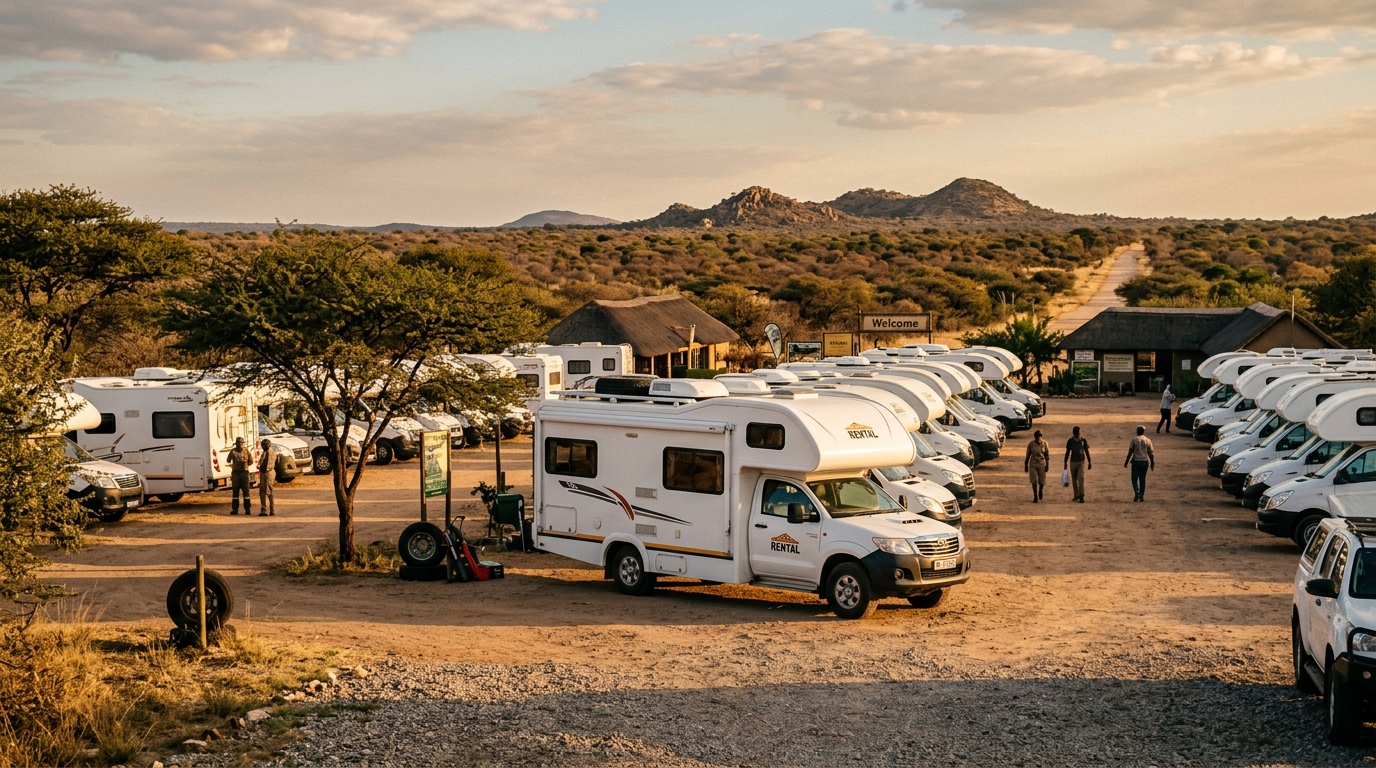
For live availability and current prices, start with our RV Rental Botswana - Complete Guide 2026 guide.
In This Guide
- Can You Drive an RV in Botswana? License & Age Rules
- Road Conditions & Terrain in Botswana
- RV Size Limits, Bridges & Restricted Zones
- Fuel: Diesel vs. Petrol & Cost per 100 km
- Tolls, Vignettes & Border Rules
- Driving Tips for cheap rv rental Travelers
- Recommended RV Class for Botswana Roads
- Should I Choose a Compact Van Instead of a Large RV in Botswana?
- Can I Park Anywhere? Free & Wild Camping Rules in Botswana
- Can I Drive an RV Into the City Center? Heights, Tunnels & Local Signage
Can You Drive an RV in Botswana? License & Age Rules
Yes, you can drive an RV in Botswana, provided you hold a valid driver's license that covers the vehicle class. Foreign drivers require an International Driving Permit (IDP) in conjunction with their national driver's license to legally drive in Botswana. The minimum driving age for RV rentals in Botswana is typically 21 or 23, with specific age limits varying by rental company and vehicle category, often requiring a full license held for at least two years. Standard Class B (Camper Van) or Class C (Alcove) RVs generally require a regular Class B (or equivalent) driver's license; heavier vehicles exceeding 3,500 kg might necessitate a higher license category (e.g., C1).
Road Conditions & Terrain in Botswana
Botswana's road network features well-maintained tarred roads connecting major towns like Gaborone, Maun, and Kasane, but venturing into national parks and remote areas necessitates driving on gravel, deep sand, and sometimes severely corrugated tracks. For diverse terrains, particularly within national parks and wildlife reserves such as Chobe or Moremi, a 4x4 capable RV with high clearance and robust suspension is often essential, directly addressing the need for detailed vehicle requirements. RV travelers should anticipate significantly slower travel speeds on unpaved roads and be prepared for potential soft sand, mud during the wet season, and seasonal water crossings, demanding a resilient vehicle. While standard campervans or integrated RVs are suitable for the main tar roads, extensive wilderness exploration specifically requires specialized features like dual fuel tanks and extended water capacity due to the challenging and remote conditions.
RV Size Limits, Bridges & Restricted Zones
Botswana generally does not have strict height or weight restrictions for RVs on its primary road network, unlike some European countries with extensive low bridges or tunnels. The main consideration for RV size in Botswana relates more to maneuverability on narrow bush tracks, sufficient ground clearance for uneven terrain, and fitting into designated national park campsites, rather than urban height limits. While specific environmental zones are not defined by RV dimensions, access to certain remote areas or national park tracks might be explicitly restricted to 4x4 vehicles only, irrespective of overall RV length or height. Ferry crossings, particularly for accessing parts of the Okavango Delta, can accommodate various RV sizes but may have weight limits and often require advance booking, emphasizing the need for planning.
Fuel: Diesel vs. Petrol & Cost per 100 km
Diesel is the predominant fuel type and is widely available across Botswana, particularly in towns and along major routes, making diesel RVs a practical choice for most journeys. Bandana's global fleet averages for common fuel consumption include Class SI (Semi-integrated) at 10–11 Liters/100 km, Class C (Alcove) at 10–12 Liters/100 km, and Class B (Camper Van) at 8-10 Liters/100 Km. The average cost per 100 km can be estimated by current fuel prices and the RV's specific consumption, highlighting that fuel costs form a significant part of the overall detailed budget. Fuel stations can be sparse in remote regions, so planning routes with adequate fuel stops and carrying extra fuel in jerry cans for extended wilderness trips is highly recommended to avoid running out in isolated areas. On the routes offered through RV PLANET routes, you can itemize and track every expense along the way for easy budgeting.
Tolls, Vignettes & Border Rules
Botswana does not typically employ traditional highway tolls or vignettes for its road network; however, temporary vehicle entry fees and road permit charges are levied at border crossings. When driving from neighboring countries like South Africa, comprehensive border crossing documentation is essential, including your passport, original vehicle registration papers, driver's license (with IDP), and a Letter of Authority from the RV rental company. Travelers must budget for and obtain temporary import permits for the vehicle, road taxes, carbon taxes, and specific third-party insurance requirements, which must be acquired directly at the border posts. Ensure all vehicle papers are in order and carry multiple copies of all documents, as officials may require them at various checkpoints throughout your journey and during cross-border travel specifics.
Driving Tips for cheap rv rental Travelers
Prioritize slow and steady driving, especially on gravel or sand roads, to prevent punctures, maintain control, and conserve fuel, as speed limits in national parks are typically low (e.g., 40 km/h). Always be alert for wildlife, as animals can appear suddenly on roads; avoid driving at night outside of fenced areas due to increased wildlife activity and reduced visibility, adhering to ethical wildlife viewing guidelines. Carry ample water, fuel, and provisions, especially when venturing into remote areas where services are infrequent or non-existent, and plan for waste management by carrying out all trash. Equip your RV with essential recovery gear, such as a shovel, tow strap, air compressor, and tire repair kit, as getting stuck in sand or mud is a common occurrence in challenging terrains. Maintain regular communication through satellite phones or emergency beacons in areas with no cellular reception, and share your detailed itinerary with someone reliable for emergency preparedness.
Recommended RV Class for Botswana Roads
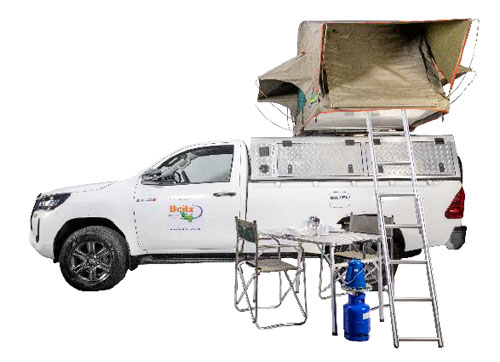
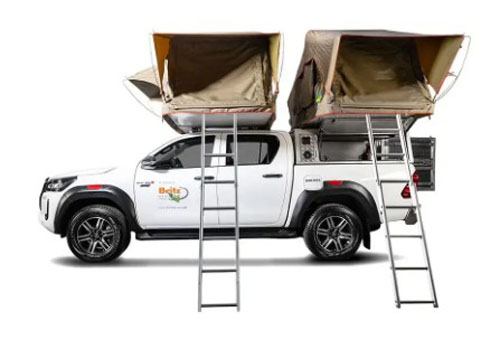
For extensive travel within Botswana, particularly to national parks and remote areas with challenging terrain, a 4x4 capable RV is highly recommended, with Class TC (Truck Camper) being a strong contender due to its typically robust chassis and ground clearance. Bandana's global fleet Class TC (Truck Camper) averages 5.5m in length and offers 2.4 sleeping places, providing a compact yet rugged option often mounted on a 4x4 pickup, making it ideal for the demanding Botswana terrains. While Class B (Camper Vans) or smaller Class SI (Semi-integrated) RVs (averaging 5.8m and 6.9m length, respectively) can traverse main tar roads, they generally lack the high ground clearance, 4x4 capability, and specific features (e.g., recovery gear) needed for deeper wilderness exploration. Choosing an RV with excellent ground clearance, robust construction, and reliable off-road tires is more critical than overall length or interior luxuries for navigating Botswana's diverse and often challenging landscapes.
Should I Choose a Compact Van Instead of a Large RV in Botswana?
Choosing a compact van, such as a Class B Camper Van (averaging 5.8m in length), offers enhanced maneuverability and generally better fuel economy, which can be advantageous on longer trips and some unpaved roads in Botswana. However, a larger RV, like a Class C (Alcove) at an average length of 7.5m, provides significantly more indoor living space, storage, and comfort, which often outweighs minor maneuverability concerns on Botswana's predominantly open roads. For challenging off-road routes into national parks and remote areas, neither a standard compact van nor a large RV will suffice without genuine 4x4 capability; in such cases, a purpose-built 4x4 expedition vehicle or a truck camper is preferred. While a compact van might seem appealing for its size, the need for robust construction, high ground clearance, and potentially 4x4 drive often makes specialized 'overland' vehicles more suitable for a truly immersive Botswana adventure than typical European-style touring RVs.
Can I Park Anywhere? Free & Wild Camping Rules in Botswana
Free and wild camping is generally not permitted in Botswana, especially within national parks, game reserves, and populated areas, making designated campsites mandatory for RV travelers. National park campsites often require booking permits months in advance, particularly during peak seasons, and are typically unfenced, demanding strict adherence to wilderness etiquette and wildlife safety protocols due to potential encounters. RV campers must manage waste responsibly by carrying out all trash, ensure proper water sourcing (often requiring carrying sufficient supplies), and adhere to fire regulations, which may restrict open fires in certain areas to prevent bushfires. Rules vary by region—always check local regulations and follow local law before parking overnight, as unauthorized camping can lead to significant fines and safety risks due to wildlife presence.
Can I Drive an RV Into the City Center? Heights, Tunnels & Local Signage
Yes, you can generally drive an RV into city centers in Botswana, such as Gaborone, as there are typically no severe height or weight restrictions, tunnels, or environmental zones that impede RV access. The main considerations for driving an RV in Botswana's cities are navigating traffic, finding suitable parking, and being aware of local signage for general road rules rather than specific RV restrictions. Parking a larger RV in central areas might require more effort to find spacious spots, but this is usually manageable outside of peak hours or in designated larger vehicle parking zones. Always pay attention to standard traffic laws and general cautionary signage, as road conditions and local driving behaviors can differ from what you might be accustomed to in other regions.
What You Shouldn't Miss
- Okavango Delta Exploration: While direct RV access is limited, base yourself in Maun and arrange a mokoro (traditional dugout canoe) or small boat safari to experience the unique water-wilderness of the Okavango Delta.
- Chobe National Park Game Drives: This park is renowned for its massive elephant herds, especially along the Chobe River. A self-drive safari in your rented RV (if appropriate for conditions) or a guided game drive offers incredible wildlife viewing.
- Makgadikgadi Salt Pans: For a truly unique experience, drive onto these vast salt pans during the dry season for unparalleled stargazing and a sense of profound isolation. Ensure your RV is suited for sandy terrain.
- Nxai Pan National Park & Baines' Baobabs: Explore this park for its desert-adapted wildlife and the iconic Baines' Baobabs, a cluster of ancient baobab trees, famously painted by artist Thomas Baines. A 4x4 RV is often recommended here.
- Kalahari Desert Cultural Encounters: Visit a San (Bushman) community to learn about their traditional way of life, a deeply enriching cultural experience that offers a glimpse into ancient survival techniques and a profound connection to the land.
- Tsodilo Hills UNESCO World Heritage Site: Although access can be challenging for larger RVs, the ancient rock art and cultural significance of these hills are a profound historical journey.
Final Thoughts
Embarking on an RV adventure in Botswana is an unparalleled experience, offering a unique blend of breathtaking landscapes, abundant wildlife, and the freedom of the open road. While the country presents its own set of driving challenges, particularly in its renowned national parks, meticulous planning and choosing the right vehicle—often a 4x4 capable RV—will pave the way for an unforgettable journey. Remember to travel slowly, embrace the unexpected, and allow yourself to be fully immersed in the magic of Botswana. With Bandana Caravan, you have a partner dedicated to making your dream RV trip a reality.
We’re here to help you navigate every step of the way, from comparing rental options to offering advice on routes and planning. Let us help you discover the true spirit of Botswana from the comfort and convenience of your own rented RV. Get inspired for your next trip, discover top destinations, and plan your itinerary with ease!