In This Guide
- The 5 RV Families Compared for Windhoek
- Class SI (Semi-integrated) — Best For
- Class C (Alcove) — Best For
- Class TC (Truck Camper) — Best For
- Price Comparison by RV Class in Windhoek
- Side-by-Side Comparison Table
- Our Recommendation for airport rv rental Travelers in Windhoek
- What is the Best Time of Year to RV in Namibia
- What Documents Do I Need to Rent an RV in Namibia
- What Are the Road Conditions Like for RVs in Namibia
- Can I Rent a 4x4 RV in Windhoek
- Is It Safe to Drive an RV at Night in Namibia
- Are There Specific Rules for Driving an RV in Namibia
- Where Can I Camp With an RV in Namibia
- How Do I Deal With Waste and Water in an RV in Namibia
The 5 RV Families Compared for Windhoek
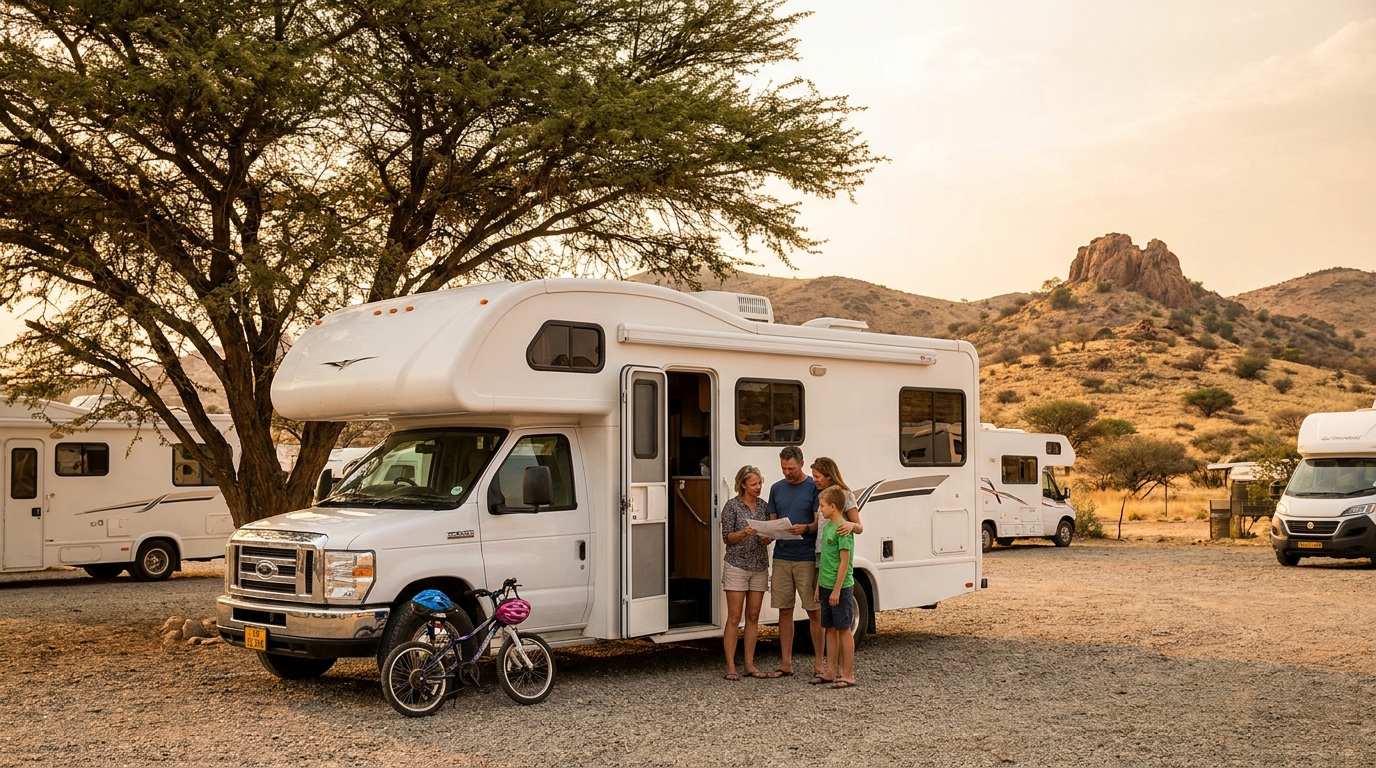
Choosing the right rental motorhome in Windhoek is a pivotal step for your Namibian adventure, significantly impacting your comfort, ability to traverse diverse terrains, and overall trip cost. Namibia presents unique travel opportunities, from the paved highways leading to Windhoek Hosea Kutako International Airport (WDH) to the extensive gravel roads that crisscross the country's breathtaking landscapes. For live availability and current prices, start with our RV Rental Windhoek - Complete Guide 2026 guide. Consider your group size, preferred level of maneuverability, and the types of roads you plan to explore when selecting your RV for an airport RV rental comparison in Windhoek. Bandana RV specializes in connecting you with the perfect motorhome or campervan, ensuring full transparency with no hidden fees and 24/7 support from real people as you plan your booking. We understand that every traveler has different needs, which is why we compare final prices across 50+ leading RV suppliers worldwide, including trusted names like Apollo and Britz. Our role as true RV specialists, founded in 2001, means we bring over 23 years of hands-on experience helping tens of thousands of travelers explore the world by RV.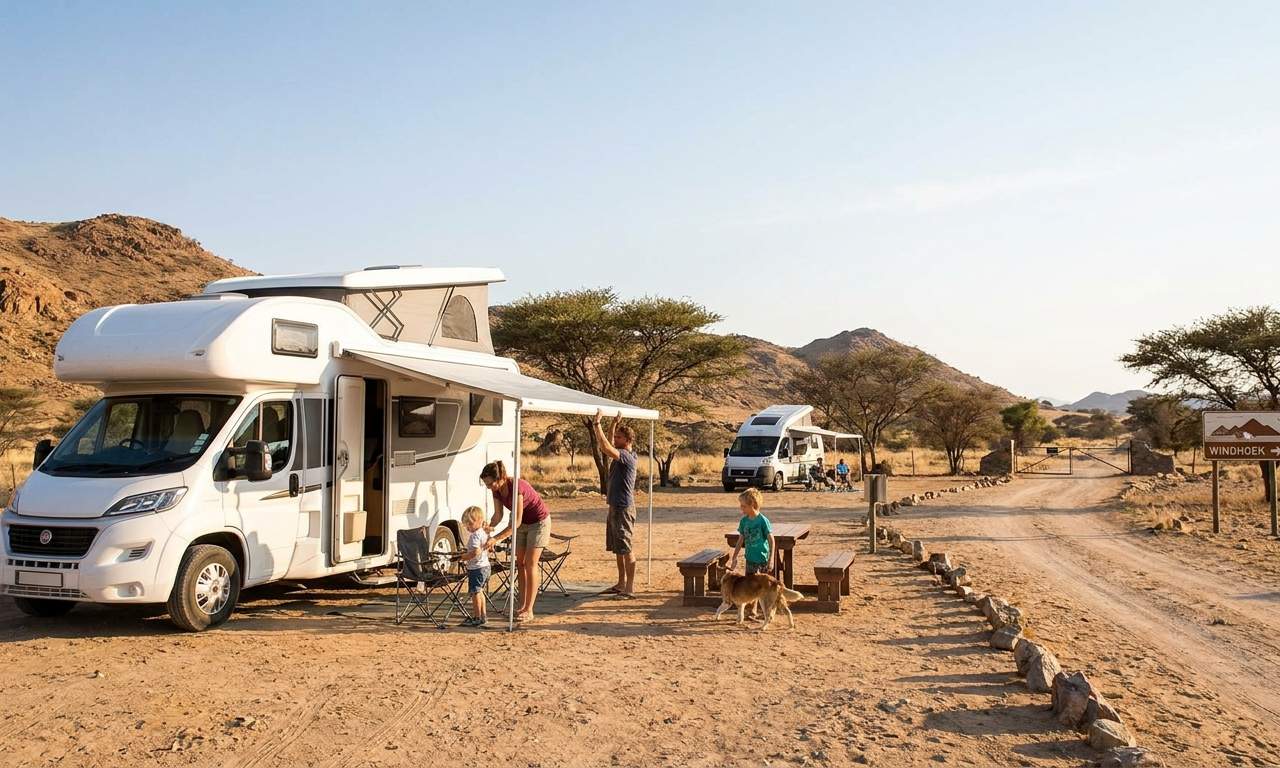
Class SI (Semi-integrated) - Best For
Class SI (Semi-integrated) motorhomes, typically averaging 6.7 meters in length and comfortably sleeping 2-4 people, are an excellent choice for couples or small families seeking a balance of comfort and maneuverability for their Windhoek airport RV rental. These vehicles offer a streamlined profile and efficient design, making them relatively easy to drive on Namibia's major paved roads and well-maintained gravel tracks. Imagine driving slowly through the stunning landscapes outside Windhoek, like the Daan Viljoen Game Reserve, in a comfortable, modern campervan. With an average fuel consumption of 12 liters/100km, they provide a good balance between amenities and operational costs, perfect for extended road trips where comfort is important but extreme off-road adventures are not the main goal. A Class SI motorhome like a "2 Berth Tamar" with its automatic transmission and roof air conditioning, or an "Active Compact Select" which is pet-friendly and recent model, offers a versatile and enjoyable base for exploring Namibia's accessible attractions.Class C (Alcove) - Best For
Class C (Alcove) motorhomes, averaging 6.7 meters in length and designed to sleep up to 6 people, are ideally suited for families or larger groups needing ample sleeping capacity and amenities directly from their Windhoek airport RV rental. The distinctive alcove over the cab maximizes sleeping space, making these vehicles a popular choice for group travel without requiring special driving licenses, as a standard car license is sufficient for all motorhome classes. Despite their size, these mobile homes are generally stable and suitable for Namibia's main road networks, including many major gravel routes if driven carefully. Their average fuel consumption of 12 liters/100km is economical for their capacity, allowing groups to spread costs efficiently. Models like the "4 Berth Deluxe" or "Euro Deluxe," often featuring a well-equipped kitchen and a shower, provide a home-away-from-home experience, perfect for preparing RV-friendly recipes. For more cooking inspiration on the road, check out our RV-friendly recipes playlist.Class TC (Truck Camper) - Best For
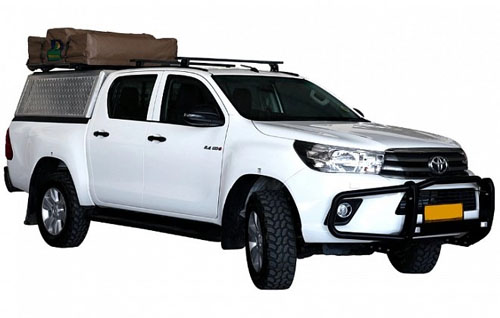
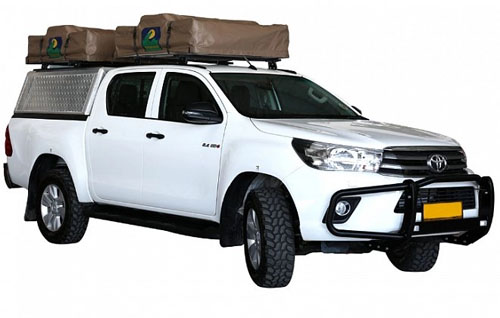
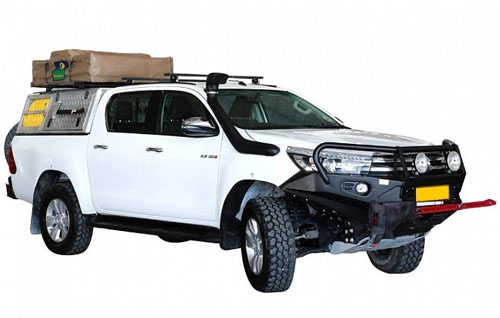
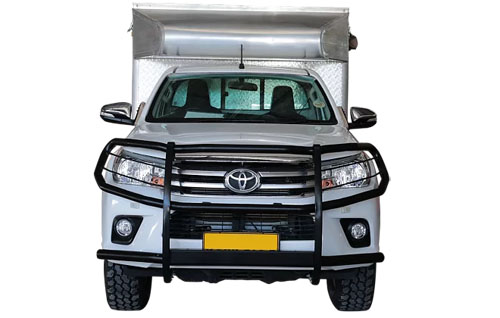
Class TC (Truck Camper) units, averaging 5.4 meters in length and typically accommodating 2-3 people, are the prime choice for adventurous couples or small groups prioritizing off-road capability and flexibility for their Windhoek airport RV rental. These robust campervans are usually mounted on 4x4 pickup trucks, providing superior ground clearance and traction essential for tackling Namibia's more challenging, remote tracks, such as those found in Damaraland or Kaokoveld. With an average fuel consumption of 12 liters/100 km, they offer a rugged yet efficient solution for exploring national parks and wilderness areas where standard motorhomes might struggle. Models like the "Patagonia Camper 4x4 double cab" or "4x4 Scout Adventure Truck Camper Gold" exemplify this class's readiness for true off-the-beaten-path exploration, allowing access to unique wild camping spots and unforgettable natural beauty.Price Comparison by RV Class in Windhoek
RV rental prices in Windhoek are dynamic, much like flight tickets, and are heavily influenced by the RV class, rental duration, season, and how far in advance you book. Opting to rent a campervan or motorhome during Namibia's shoulder seasons (April or November) often yields better rates than the peak dry season (July-September). For instance, a week-long Class SI rental might be 15-20% cheaper in May compared to August. Prices also depend on supplier marketing decisions and current availability, making flexible travel dates a smart strategy for finding cheaper airport RV rental deals in Windhoek. Because pricing is flex-rate, the table below pulls real example prices from Bandana's live search. These figures provide an overview of typical costs for various RV classes and durations, but for the most accurate and up-to-date pricing, always check live availability.Live April Price Comparison — RV Class × Trip Length
| Trip length | Class A | Class B | Class C | Class SI | Class TC |
|---|---|---|---|---|---|
| 1 week 15/04 → 22/04 | Check prices | Check prices | 21,386.00 ZAR | 19,776.00 ZAR | 701.88 € EUR |
| 2 weeks 15/04 → 29/04 | Check prices | Check prices | 40,098.75 ZAR | 37,080.00 ZAR | 1,313.40 € EUR |
| 1 month 01/04 → 30/04 | Check prices | Check prices | 80,197.50 ZAR | 74,160.00 ZAR | 2,545.18 € EUR |
Estimates only — flex-rate prices change daily based on availability and season.
Side-by-Side Comparison Table
A direct comparison of key specifications helps airport RV rental travelers in Windhoek quickly assess which vehicle class aligns best with their travel needs and preferences. This table focuses on the primary motorhome and campervan types available for rental, highlighting factors crucial for a Namibian road trip.| Family | Avg Length (m) | Sleeps (Avg) | Fuel Use (Avg) | Best Use Case in Windhoek |
|---|---|---|---|---|
| Class SI (Semi-integrated) | 6.7 | 4 | 12lt/100km | Couples/small families, balanced comfort and maneuverability on main roads. |
| Class C (Alcove) | 6.7 | 6 | 12lt/100km | Larger families/groups, maximum sleeping capacity, main road travel. |
| Class TC (Truck Camper) | 5.4 | 3.1 | 12 l / 100 km | Adventurous couples/small groups, off-road capability, remote exploration. |
Our Recommendation for airport rv rental Travelers in Windhoek
For most airport RV rental travelers in Windhoek seeking a balance of comfort and capability for exploring Namibia's diverse landscapes, a Class SI (Semi-integrated) RV is often the ideal recommendation. These vehicles, such as a "2 Berth Tamar" or "Active Compact Select," offer sufficient living space and amenities for small families or couples while remaining agile enough for Namibia's mixed road conditions, including well-maintained gravel roads. Their compact nature also makes parking easier in towns like Windhoek or at popular campsites. However, for those prioritizing off-grid adventures and access to more remote areas, a Class TC (Truck Camper) like the "Patagonia Camper 4x4 double cab" is an excellent runner-up, providing robust 4x4 capability and versatility for deep wilderness exploration. Conversely, if you're embarking on a Family RV Rental in Windhoek - Pricing Guide 2026 with a larger group where maximizing sleeping capacity and cost-efficiency on main routes is paramount, a Class C (Alcove) motorhome, such as a "4 Berth Deluxe," offers the best solution. No matter your choice, remember that Bandana RV provides top-level deductible reimbursement options for added peace of mind.What is the Best Time of Year to RV in Namibia
The best time to RV in Namibia for most travelers is during the dry season, which spans from May to October, offering pleasant temperatures and clear skies. This period is renowned for excellent wildlife viewing opportunities, as animals congregate around diminishing waterholes, making them easier to spot in national parks like Etosha. Daily temperatures typically range from 18-25°C (64-77°F), while nights can be cooler, sometimes dropping to 5-10°C (41-50°F) in June and July, especially at higher altitudes around Windhoek. The shoulder months of April and November can also be appealing for those looking to avoid peak crowds, although temperatures might be hotter, particularly in northern regions. The wet season (December to March) transforms the landscape into lush green, but heavy rains can make some remote gravel roads impassable, especially for 2WD motorhomes.What Documents Do I Need to Rent an RV in Namibia
To rent an RV in Namibia, travelers must present a valid national driving license from their home country and a valid passport. While not always mandatory, an International Driving Permit (IDP) is highly recommended for visitors from non-English-speaking countries, as it provides a multi-language translation of your driver's license. Most rental companies require the primary driver to be at least 21 years old and to have held a driving license for a minimum of two years, with no young driver surcharges for any motorhome class. It is also essential to have a major credit card for the security deposit, which can range from $1,000 to $3,000, and carry a copy of your rental agreement and insurance documents at all times. A comprehensive pre-departure checklist for Namibia RV travel should also include copies of all documents stored separately, any necessary visas, and details of your travel insurance.What Are the Road Conditions Like for RVs in Namibia
Namibia's road conditions for RVs are highly variable, featuring a network of paved tar roads and extensive, well-maintained gravel roads that account for a significant portion of tourist routes. Major routes, like the B1 connecting Windhoek to other cities, are paved and generally in good condition. However, many scenic routes and roads leading to national parks or remote attractions, such as those towards Sossusvlei or Damaraland, consist of gravel (categorized as 'C' or 'D' roads). Expect corrugated sections, loose gravel, and occasional potholes on these unpaved routes. Drive slowly and carefully, and you can drive almost anywhere without issues. No need to stress - just use common sense and pay attention. Reducing speed to 80 km/h or less on gravel roads and maintaining a safe following distance is crucial to prevent stone chips and maintain control. A 4x4 RV, like a Truck Camper, is highly recommended for tackling more challenging sandy tracks or during the rainy season to avoid getting stuck.Can I Rent a 4x4 RV in Windhoek
Yes, renting 4x4 RVs in Windhoek is certainly possible, primarily available as Class TC (Truck Campers) specifically designed for off-road capabilities in Namibia. These specialized rental motorhomes are typically mounted on sturdy 4x4 pickup truck chassis, offering essential features like elevated ground clearance, robust suspension, and enhanced traction. Such capabilities are crucial for accessing remote areas and national parks that might be inaccessible to standard 2WD motorhomes. For instance, exploring the challenging terrains of the Kaokoveld or certain off-grid sections of Etosha National Park absolutely necessitates a 4x4 RV. When comparing vehicle choices for your adventure, consider a "4x4 Camper B - TYR" or "4x4 Jimny" for their rugged suitability. Always inquire about specific route advice and vehicle capabilities from your supplier to ensure a safe and enjoyable journey on Namibia's diverse roads.Is It Safe to Drive an RV at Night in Namibia
It is generally not recommended to drive a rented RV at night in Namibia due to several significant safety risks. The primary concern is the high probability of wildlife encounters; animals, ranging from large game like kudu to smaller nocturnal creatures, frequently cross roads, particularly at dusk and dawn, posing a severe collision risk. Furthermore, most Namibian roads, including those around Windhoek, lack streetlights, and road markings can be faint, severely limiting visibility and making potholes or other hazards difficult to spot. For personal security, it is always safer to be settled into a designated and secure campsite before nightfall, especially when traveling through less populated or urban areas outside the capital. Always plan your daily routes to ensure you reach your overnight destination well before sunset.Are There Specific Rules for Driving an RV in Namibia
Specific rules for driving a rental RV in Namibia include adhering to posted speed limits: generally 120 km/h (75 mph) on tar roads, 80 km/h (50 mph) on gravel roads, and 60 km/h (37 mph) in urban areas like Windhoek. All occupants must wear seatbelts, and driving under the influence of alcohol or drugs is strictly prohibited. RV travelers should also be mindful of unique safety protocols, such as reducing tire pressure slightly on corrugated gravel roads to improve traction and comfort, and always carrying extra fuel and water for remote stretches. Vigilance for wildlife is paramount, particularly during early mornings and late afternoons. For a smooth trip, consider obtaining pre-planned itineraries or route plans from services like RV PLANET (rvplan.net) that include local driving tips and cultural etiquette. Remember that a standard car driver's license is sufficient for all motorhome classes.Where Can I Camp With an RV in Namibia
RV travelers in Namibia have a variety of camping options, from well-equipped designated campsites within national parks and private game reserves to more rustic municipal sites in towns like Windhoek. Designated sites, such as those in Etosha National Park or the popular NWR Daan Viljoen Game Reserve near Windhoek, typically offer amenities ranging from basic ablutions to powered sites, braai (barbecue) facilities, and sometimes even swimming pools. These popular spots often require advance booking, especially during the peak dry season. While true wild camping is generally restricted, certain conservancies or private land may permit it with explicit permission, requiring travelers to be entirely self-sufficient for water, waste disposal, and power. When selecting a campground, prioritize locations that offer unique experiences, such as the stargazing opportunities near the NamibRand Nature Reserve, and always adhere to 'leave no trace' principles to protect Namibia's pristine natural environment.How Do I Deal With Waste and Water in an RV in Namibia
Effectively managing waste and water in a rented RV in Namibia demands meticulous planning due to the country's arid climate and often limited infrastructure in remote areas. For water refilling, rely on designated campsites, larger towns like Windhoek, and some major fuel stations; however, always carry supplementary water supplies, especially when venturing off main routes. Waste disposal, including both black and grey water, must strictly adhere to environmental guidelines, meaning it should only be discharged at designated dump stations found at most established campsites and selected RV service points, never in the wilderness. For general refuse, store all rubbish securely in bags until you can dispose of it in appropriate bins at campsites or town facilities, actively practicing 'leave no trace' principles to preserve Namibia's natural beauty. Planning for these essential logistics ensures a responsible and enjoyable RV adventure through this magnificent country.What You Shouldn't Miss
- **Explore the Namib-Naukluft National Park:** Drive your rented RV to Sossusvlei and climb Dune 45 for an unforgettable sunrise over the ancient desert.
- **Wildlife Safari in Etosha National Park:** Spend several days driving your motorhome through Etosha, stopping at waterholes to observe elephants, lions, rhinos, and countless other species.
- **Visit Spitzkoppe:** Camp with your campervan amidst the towering granite inselbergs of Spitzkoppe, enjoying incredible rock formations and ancient rock art.
- **Discover Swakopmund's Charm:** Enjoy a break from desert landscapes in the coastal town of Swakopmund, known for its German colonial architecture and adventure sports.
- **Stargazing in NamibRand Nature Reserve:** Experience some of the darkest night skies on Earth at Africa's first International Dark Sky Reserve, a truly awe-inspiring RV camping experience.
- **Experience Damaraland's Unique Culture and Landscapes:** Drive a 4x4 RV to encounter desert-adapted elephants, ancient rock engravings at Twyfelfontein, and the Petrified Forest.
Final Thoughts
An airport RV rental in Windhoek opens up a world of unparalleled adventure, offering the freedom to explore Namibia's vast and breathtaking landscapes at your own pace. Whether you opt for the comfort of a semi-integrated motorhome, the family-friendly space of an alcove model, or the rugged capability of a truck camper, the perfect vehicle for your journey awaits. Remember, Bandana RV is dedicated to making your booking experience as smooth and transparent as possible, providing you with all the information and support you need to embark on a memorable road trip. Don't just dream about the wide-open spaces and starry nights of Namibia – make it a reality. With careful planning for routes, camping, and on-the-road logistics, your Windhoek RV adventure promises to be an experience filled with discovery and wonder. We handle the details, you live the journey, ensuring personal service from day one until your booking is confirmed. Find Motorhome Rentals in WindhoekOn the routes offered through RV PLANET routes, you can itemize and track every expense along the way for easy budgeting.