In This Guide
- The 5 RV Families Compared for Tokyo
- Price Comparison by RV Class in Tokyo
- Class C (Alcove) - Best For
- Side-by-Side Comparison Table
- Our Recommendation for airport RV rental Travelers in Tokyo
- What are the rules for RV camping in Japan
- What is a Michi-no-Eki
- Can you legally sleep in your car in Japan
- Is an RV a good idea in Japan
- How much does it cost to RV in Japan
- Can foreigners drive RV in Japan
- Is it easy to drive in Japan
- What do you need to drive in Japan
- What is the best month to visit Japan
Exploring Japan from Tokyo by a rented RV or campervan offers unparalleled freedom, allowing you to immerse yourself in its vibrant cities and serene natural landscapes. Whether you're planning a week-long journey or an extended road trip, picking up an RV rental directly from a Tokyo airport provides immediate access to your adventure. For live availability and current prices, start with our RV Rental Tokyo - Complete Guide 2026 guide. We partner with over 50 leading RV suppliers globally, including popular names, to ensure you find the perfect mobile home for your Japanese escape, all with full price transparency and no hidden fees.
The 5 RV Families Compared for Tokyo
Understanding RV families is crucial for a comfortable and compliant journey in Tokyo, especially given Japan's unique road conditions and parking limitations. While many RV families exist globally, Bandana's local fleet for Tokyo airport rentals often features more compact, maneuverable options like Class C (Alcove) and Class B Campervans, which are ideal for navigating the country. Choosing the right RV size significantly impacts your ability to drive on narrower roads, find suitable parking, and enjoy your overall travel experience in Japan. Our dedicated team of true RV specialists can help you compare options to ensure your trip is smooth and enjoyable.
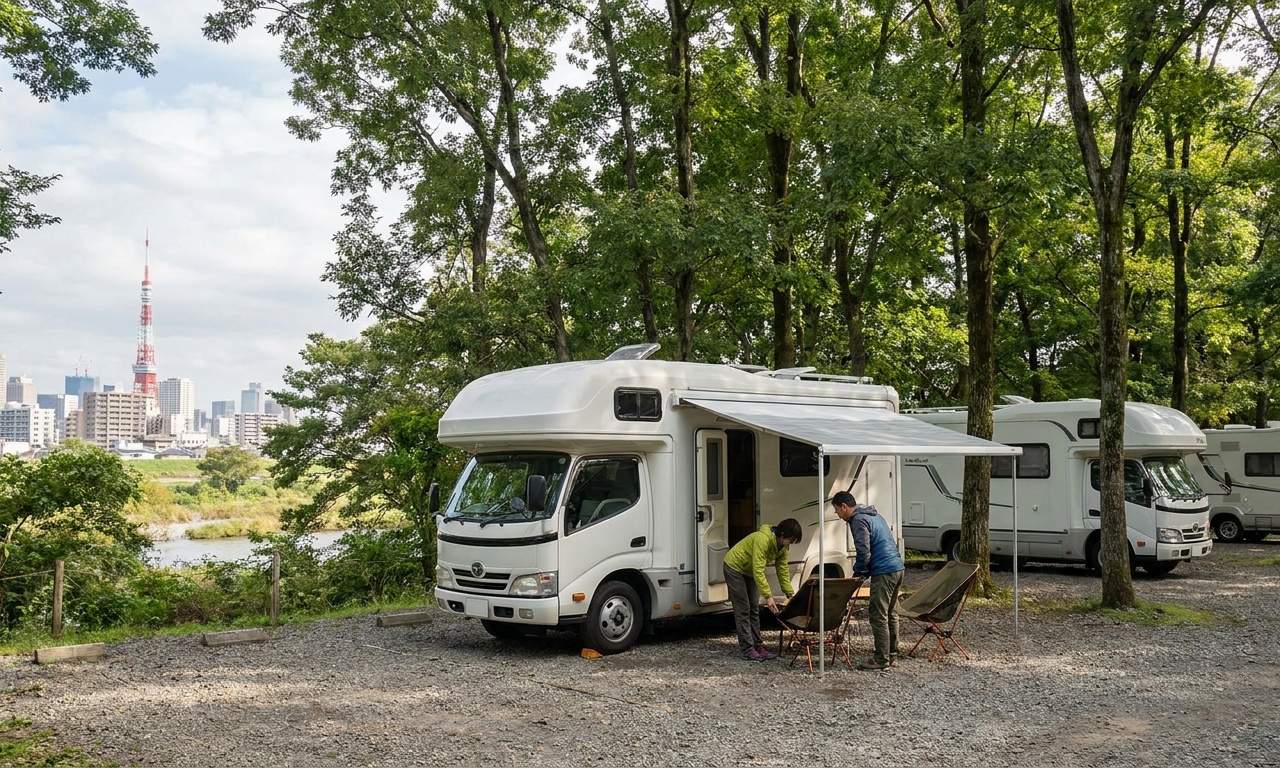
When considering an airport RV rental in Tokyo, you'll primarily encounter Class C motorhomes and various Campervan (Class B) models, which are best suited for the local infrastructure. For example, a typical Class C (Alcove) motorhome available in Japan might be around 5-7 meters long, sleeping up to 6 people comfortably, with features like a gas stove, refrigerator, shower, and toilet. Smaller Campervans, such as a 'Category Van', often come equipped with a double bed (e.g., 139/192cm), a small fridge, and are perfect for a couple seeking agility. Drive slowly and carefully, and you can drive almost anywhere without issues. No need to stress - just use common sense and pay attention.
Price Comparison by RV Class in Tokyo
RV rental prices in Tokyo fluctuate based on RV class, rental duration, and seasonality, reflecting market demand and vehicle size, with a 1-week rental for a Class C typically ranging from $1050-$2450 USD. Use the live pricing table on our platform for real-time cost estimates for various rental periods and vehicle types. It's important to remember that prices are dynamic, similar to flight tickets, and subject to daily changes based on availability and supplier marketing decisions; always check the live search on Bandana Caravan for current rates. For detailed information on costs, refer to our "RV Rental in Tokyo - Prices and Best Deals 2026" guide.
A longer rental duration, such as a two-week adventure or extended road trip, often results in lower daily rates compared to shorter bookings. For instance, a Class C motorhome that might cost $200-$350 USD per day for a week could drop to $150-$250 USD per day for a month-long rental. For flexible travelers, exploring off-peak dates or booking slightly further out can yield more budget-friendly options. We pride ourselves on full transparency, so the price you see when you compare final prices across suppliers is what you pay, with no surprise fees at pickup.
Families with kids will generally find Class C motorhomes, like the '6 Berth Discovery' which sleeps 6 and has a 190-liter refrigerator, to be the most practical option, offering dedicated sleeping areas and more living space. Couples or solo travelers looking for more compact options, like a 'Combi Van' typically 5 meters long and sleeping 4, might opt for a campervan for easier navigation and lower fuel consumption. For deeper discounts and the latest promotions, be sure to check our "RV Rental Deals in Tokyo - Latest Offers 2026" regularly.
Class C (Alcove) - Best For
Class C (Alcove) motorhomes are typically best suited for families or groups traveling from Tokyo's airports, offering a balance of sleeping capacity and maneuverability ideal for navigating Japanese roads, and often feature robust amenities like a 100-liter fresh water tank. Bandana's local Class C fleet in Tokyo averages 5-7 meters in length and sleeps up to 6 people, accommodating 3 adults comfortably. Its compact size makes it significantly easier to manage on Japan's narrower roads compared to larger RVs, while still providing ample living space and amenities for family travel. This class aligns well with the need for an appropriate RV type for Japanese roads and parking conditions, making it a practical choice for airport RV rental travelers in Tokyo.
Imagine your family on a scenic route around Mount Fuji, with your comfortable Class C motorhome serving as your mobile home base. You can wake up to stunning views, prepare breakfast in your onboard kitchen featuring a gas stove and refrigerator, and have easy access to a private shower and toilet. These motorhomes are designed for practicality and comfort, often including a dining area and enough storage for luggage for a family of four. For those seeking a blend of comfort and ease of driving in Japan, a Class C is often the top recommendation from our true RV specialists.
Side-by-Side Comparison Table
A comparative overview helps quickly discern the specific attributes and best-fit scenarios for different RV classes available for airport rentals in Tokyo, highlighting that Class C (Alcove) is often a practical choice for families with capacities up to 6 people. The Class C (Alcove) offers a balance of size, sleeping capacity, and fuel efficiency suitable for diverse travel needs around Tokyo, generally measuring between 5-7 meters in length. This table highlights key specifications to aid in selecting the most appropriate RV for your week-long trip or extended adventure, such as the typical fuel consumption of 11-14 liters/100 km for a mid-size RV.
| RV Class | Typical Length (meters) | Sleeps (Adults) | Key Features | Best For |
|---|---|---|---|---|
| Class A (Integrated) | 8-10+ | 4-7 | Spacious living area, large beds, full kitchen (e.g., 'Class A - Thor ACE 30' sleeps 6), shower, toilet. | Larger families, luxury travel, long trips with less city driving. |
| Class C (Alcove) | 5-7 | 3-6 | Over-cab bed, dining area, compact kitchen (e.g., '24 Class C Motorhome' sleeps 5 with 166L fresh water tank), shower, toilet. | Families (2+2 kids), groups of friends, balancing comfort and maneuverability. |
| Class B (Campervan) | 4.5-6 | 2-4 | Compact, agile, often a pop-top or fixed roof, basic kitchen (e.g., 'Condo' with 80L fridge), minimal or no shower/toilet. | Couples, solo travelers, urban exploration, budget-conscious trips. |
Understanding these differences is crucial for a great travel experience. While Class A motorhomes offer maximum luxury and space, their larger dimensions (e.g., 9.37 meters length for a 'Class A - Thor ACE 30') can be challenging on Japan's often narrower roads and in tight parking spots around Tokyo. Campervans, such as a 'Condo' or 'Combi Van', are nimble and fuel-efficient, perfect for navigating tighter spaces and parking in more urban-adjacent areas.
Our Recommendation for airport RV rental Travelers in Tokyo
For airport RV rental travelers in Tokyo, a Class C (Alcove) motorhome is highly recommended due to its practical size, comfortable sleeping capacity for up to 6 people, and adaptability to Japan's unique driving and parking conditions, featuring amenities like a 100-liter fresh water tank. The average length of 5-7 meters for a Class C RV strikes an excellent balance, providing sufficient interior space for families while being significantly easier to maneuver on Japan's frequently narrower roads and into smaller parking areas compared to larger Class A vehicles. This class offers a good mix of amenities and manageable dimensions, making it an ideal base for exploring regions around Tokyo without the bulk of larger vehicles, aligning perfectly with the priorities of an airport RV renter.
Consider the '24 Class C Motorhome' which is 7.46 meters long, sleeps 5, and comes with a 283-liter refrigerator and microwave, providing all the comforts of home. For couples or solo adventurers, a compact campervan like a 'Condo' (4.7 meters long, sleeps 4) offers incredible flexibility for urban and rural exploration. We, as true RV specialists, understand the nuances of international RV travel and are here to help you pick the best fit. Remember, you can always upgrade to a top-level deductible for extra peace of mind during your travels.
Driving in Japan on the left side of the road with a right-hand drive vehicle is an adjustment, but Class C motorhomes and campervans offer good visibility. Drive slowly and carefully, and you can drive almost anywhere without issues. No need to stress - just use common sense and pay attention. For detailed route plans and expert itineraries around Tokyo, we highly recommend exploring the resources on RV PLANET (rvplan.net). You can even get a 25% planning discount when using their professional services for your RV adventure.
What are the rules for RV camping in Japan
RV camping in Japan is primarily permitted at designated campsites, Michi-no-Eki (roadside stations), and some private parking areas; wild camping is largely discouraged and often illegal, especially in sensitive natural or urban areas. Adherence to strict cultural etiquette is essential, including proper waste disposal (no dumping grey/black water outside designated facilities, meticulous garbage sorting), maintaining quiet, and respecting public behavior norms (e.g., no extensive outdoor cooking at Michi-no-Eki). Be mindful of local safety protocols, such as awareness of designated evacuation sites for natural disasters like earthquakes or typhoons, and keeping an emergency kit in your RV, as Japan is prone to seismic activity. Utilize local facilities like onsen (public baths) respectfully, ensuring personal hygiene before entering communal areas.
For finding campsites and campgrounds during your trip, we recommend using RV PLANET (rvplan.net) - a great resource for locating available spots along your route. Many Japanese campgrounds offer excellent facilities, including electricity hookups, fresh water, and waste disposal points. Prices for campsites near Tokyo, such as at Wakasu Seaside Park Campground, can range from ¥2,000 to ¥5,000 per night (approximately $13-$35 USD) for a powered site. Remember, RV PLANET routes also allow you to itemize and track every expense along the way for easy budgeting, including campsite fees, tolls, and fuel. On the routes offered through RV PLANET routes, you can itemize and track every expense along the way for easy budgeting.
When cooking inside your rented RV, always ensure proper ventilation and manage food waste diligently, as Japan has strict waste separation rules. Check out our RV-friendly recipes playlist for ideas on delicious meals you can prepare on the go. Local supermarkets like those found near Narita International Airport offer fresh, affordable ingredients perfect for your mobile kitchen. Always be polite and considerate of others, especially when staying overnight at Michi-no-Eki.
What is a Michi-no-Eki
Michi-no-Eki are government-designated roadside stations across Japan offering essential amenities like restrooms, local product shops, restaurants, and often free overnight parking for travelers, with over 1,200 stations nationwide. These stations are crucial for RVers, serving as safe and convenient rest stops; however, they are primarily for resting and not full 'camping' setups, meaning extensive outdoor activities like setting up awnings or barbecues are generally not permitted. To leverage Michi-no-Eki effectively, look for those with specific amenities such as 24-hour restrooms, charging stations, or unique local cultural experiences like foot baths or special produce markets. Always be considerate of other travelers and local residents when using Michi-no-Eki, adhering to their unspoken rules of quiet overnight parking without extensive outdoor activities.
Many Michi-no-Eki near Tokyo, such as Michi-no-Eki Kawaguchi-ko (near Lake Kawaguchiko), offer stunning views of Mount Fuji and provide tourist information. These facilities are an excellent way to experience local culture and purchase regional specialties. They are also a good option for a brief overnight stop when traveling between major destinations, like on a route plan from Tokyo to Kyoto. Remember that while overnight parking is usually free, using the facilities respectfully is key. Some stations may have dedicated RV parking areas with better facilities, so it's always worth checking ahead.
Can you legally sleep in your car in Japan
While not strictly illegal in all contexts, sleeping in your car in Japan is generally tolerated for short rests at Michi-no-Eki or designated parking areas, but prolonged 'living' in a vehicle or wild camping on private/public land is frowned upon and can lead to issues. It is crucial to distinguish between resting overnight for a few hours and setting up a full camp; Michi-no-Eki are provided for the former. Always prioritize respecting local rules and private property to avoid any conflicts or legal repercussions. This practice aligns with Japanese cultural norms of not inconveniencing others.
For peace of mind and access to proper facilities, we highly recommend utilizing official campgrounds for overnight stays rather than relying solely on informal parking. Many campgrounds near Tokyo, like those in the Chiba Prefecture, are well-equipped for rented motorhomes and campervans. If you're planning your route, consider checking RV PLANET (rvplan.net) for detailed information on available campsites and their facilities around Tokyo. This approach ensures a comfortable, compliant, and enjoyable RV trip in Japan.
Is an RV a good idea in Japan
An RV can be an excellent idea for exploring Japan, especially for families or those seeking flexibility and immersive experiences beyond major cities, offering convenience and access to remote scenic areas that are otherwise hard to reach. While a rented RV offers freedom and potential cost savings on accommodation, it requires careful itinerary planning to account for narrower roads, limited city parking, and extensive toll fees, particularly around Tokyo. Embrace unique food and dining experiences by visiting local markets for fresh ingredients, seeking out restaurants with accessible parking, and diligently managing food waste. Consider exploring strategies for connecting with local Japanese RV communities through online forums or local events to enhance cultural immersion and gain authentic travel insights. For comprehensive route plans, consider our "RV Travel Guide to Tokyo - Tips and Top Spots 2026".
Imagine driving a comfortable Class C motorhome through the scenic Hakone region, stopping at a local ramen shop with convenient parking for your vehicle, then continuing to a tranquil lake for an evening campfire. This is the magic of RV travel in Japan. While central Tokyo presents parking challenges, areas just outside the city, such as around Narita or Haneda airports, offer more RV-friendly parking and easy access to public transport for urban excursions. Traveling slowly, perhaps covering max 100-150 km per day on average, allows you to take time to feel the place, connect to the culture, the food, and the scenery, truly experiencing Japan. Our 24/7 support ensures you're never alone in your planning journey, both before and after your booking.
How much does it cost to RV in Japan
The total cost of an RV trip in Japan encompasses rental fees, fuel, tolls, campsite fees (if applicable), and daily expenses for food and attractions, which can vary widely, with daily averages for a Class C motorhome ranging from $150-$350 USD. RV rental costs are dynamic; refer to the 'Price Comparison by RV Class in Tokyo' section for example rental prices. Budget for fuel, as Japan's prices are comparable to Western countries, with smaller RVs like a Class C offering better economy (e.g., 11-14 liters/100 km), and potentially expensive toll roads, for which an ETC card is highly recommended to save time and sometimes money. Estimate a daily budget of approximately ¥15,000-¥30,000 (roughly $100-$200 USD) for a mid-range RV trip, excluding major attractions and luxury dining experiences. For even more detailed financial planning, our "Cheap RV Rental in Tokyo - Budget Guide 2026" offers excellent tips.
Beyond the rental itself, ancillary costs like campground fees (averaging ¥2,000-¥5,000 per night), propane, and dump fees contribute to the overall trip expense. An ETC card, available for purchase or rent at major airports and service areas, is almost a necessity for seamless toll road navigation around Tokyo and across Japan. For efficient budgeting and tracking of all these expenses, remember that RV PLANET routes allow travelers to itemize and track every cost along the way. Planning your itinerary with professionals can even lead to a 25% planning discount, helping you manage your overall RV PLANET routes expenses effectively.
Can foreigners drive RV in Japan
Foreigners can legally drive an RV in Japan if they possess a valid international driving permit (IDP) based on the 1949 Geneva Convention, or a Japanese translation of their national license, alongside their original national driver's license. The IDP must be issued in your home country, valid for one year from your date of entry into Japan, and always presented with your original license. Travelers from certain countries (e.g., Germany, France, Switzerland, Belgium) require an official Japanese translation of their national license instead of an IDP. Always carry all necessary documentation, including your passport, as police checks are common, and driving without proper permits can lead to severe penalties. For a one-way trip, consult our "One-Way RV Rental in Tokyo - Price Guide 2026" to understand any specific licensing requirements for different pick-up and drop-off locations.
A standard car driver's license is sufficient for all motorhome classes (Class A, Class B, and Class C) in Japan; no special license, CDL, or additional permits are required for any rental motorhome. The minimum rental age for an RV in Tokyo is 21 years old, and there are no young driver surcharges or vehicle class restrictions based on age. It’s always best to prepare all your documents before arriving at Tokyo airport, ensuring a smooth pickup process for your rented RV.
Is it easy to drive in Japan
Driving an RV in Japan is generally manageable with proper preparation, thanks to well-maintained roads, clear signage often in English, and disciplined drivers, though navigating narrower streets in rural areas and complex city layouts can be challenging. Practical solutions for connectivity and navigation are crucial; consider using a Japanese GPS system (often pre-installed in rental RVs), local data plans via pocket Wi-Fi or eSIM, and familiarizing yourself with common road signs, many of which have English translations. Be prepared for left-hand traffic and right-hand drive vehicles, which may require an adjustment for drivers from countries used to driving on the right. Despite potential challenges, the excellent road infrastructure and polite driving culture contribute to a generally pleasant driving experience, especially in a compact rented motorhome like a Class C (Alcove).
Toll roads are prevalent, particularly around major hubs like Tokyo and connecting intercity routes, so having an ETC (Electronic Toll Collection) card can save significant time and hassle. Gas stations are plentiful, but some may have limited hours in remote areas; it's always wise to refuel when your tank is half full. Parking in central Tokyo is extremely challenging for RVs due to height and length restrictions, so plan to park on the outskirts and use public transportation for city exploration. Drive slowly and carefully, and you can drive almost anywhere without issues. No need to stress - just use common sense and pay attention, especially when maneuvering your campervan or motorhome through smaller towns.
What do you need to drive in Japan
To drive an RV in Japan, you need a valid international driving permit (IDP) based on the 1949 Geneva Convention or an official Japanese translation of your national license, your original national driver's license, your passport, and the appropriate vehicle registration and insurance documents from your rental provider. Ensure all driving documents are current and issued by the correct authorities in your home country. Mandatory liability insurance is typically included in RV rental agreements, providing essential coverage for your trip. Always keep these documents readily accessible in the RV, as they may be requested during roadside checks, especially when picking up your motorhome from a Tokyo airport location. Our full transparency policy means all necessary insurance details are clear before you book.
Additionally, while not legally required, a Japanese Phrasebook or a translation app can be incredibly helpful for communicating at gas stations, Michi-no-Eki, or local shops. Having a local data SIM or pocket Wi-Fi device is also highly recommended for navigation and staying connected. For more premium rental options, check out "Luxury RV Rental in Tokyo - Premium Prices 2026" which often include enhanced navigation systems or connectivity solutions as part of the package.
What is the best month to visit Japan
The best months for an RV trip to Japan are generally spring (March to May) for cherry blossoms and mild weather, and autumn (September to November) for vibrant fall foliage and comfortable temperatures, with average temperatures ranging from 10-20°C. For spring travel, book RVs and campsites well in advance due to high demand for cherry blossom viewing, and plan specific routes around Tokyo like the Fuji Five Lakes region with parking strategies in mind, as popular spots can fill quickly. Summer (June-August) brings high humidity and the typhoon season, necessitating careful route planning to avoid potential closures or flooding, though coastal areas like Chiba can still be enjoyable. Winter travel, especially in northern or mountainous regions, may require winter tires or chains and offers unique experiences like snow festivals, with potentially lower RV demand in some areas around Tokyo and lower daily rental prices.
If you prefer a quieter travel experience with fewer crowds and potentially better rental deals, consider visiting during the shoulder seasons of late spring or early autumn. These times offer pleasant weather for exploring national parks and scenic routes in your rented campervan or motorhome. Regardless of when you choose to visit, Bandana provides 24/7 support before and after your booking to assist with any questions about seasonality or vehicle preparation. Remember to consult "RV Rental Japan - Complete Guide 2026" for broader travel context and tips applicable across the country.
What You Shouldn't Miss
- Mount Fuji and Fuji Five Lakes: Drive your rented motorhome to the iconic Fuji Five Lakes region for breathtaking views of Mount Fuji, especially from locations like Lake Kawaguchiko or Lake Ashi. Many campsites offer direct views, making for an unforgettable morning coffee experience.
- Hakone Open-Air Museum: Explore this unique outdoor art museum in Hakone, easily accessible by RV with ample parking available on the outskirts, then take a scenic ropeway ride for panoramic views of the surrounding mountains.
- Michi-no-Eki Roadside Stations: Make a point to stop at several Michi-no-Eki beyond just for rest. Discover unique local produce, artisan crafts, and perhaps even an onsen bath at a station like Michi-no-Eki Fujiyoshida near Fuji.
- Coastal Drives of Chiba: Head east from Tokyo to the Chiba Prefecture for stunning coastal roads, tranquil beaches, and fresh seafood. The Boso Peninsula offers picturesque drives perfect for a leisurely RV itinerary.
- Ghibli Museum (Mitaka): For fans of Studio Ghibli, a visit to this enchanting museum in Mitaka, just outside central Tokyo, is a must. Plan ahead for tickets, and note that RV parking is best found at nearby public lots, utilizing local transit to reach the museum.
Looking for expert insights from Avi Bandana? Top 5 Adventures - recommendations from Avi Bandana
🎬 Video coming soon
Final Thoughts
Embarking on an RV adventure from Tokyo offers a unique and unforgettable way to experience the captivating beauty and rich culture of Japan. From the bustling streets of the capital to the serene landscapes around Mount Fuji, having your own rented motorhome provides the ultimate flexibility and comfort. Whether you choose a compact campervan for agile city-fringe exploration or a spacious Class C for family adventures, Bandana Caravan is here to ensure your journey is seamless and transparent.
We're passionate about RV travel and committed to supporting you at every stage, offering clear pricing, expert advice, and the peace of mind you deserve. So, pack your bags, prepare your international driving permit, and get ready to discover Japan at your own pace. The open road awaits!
Find Motorhome Rentals in Tokyo