
In This Guide
- The RV Families Compared for India
- Class A (Integrated) - Best For
- Class SI (Semi-Integrated) - Best For
- Class C (Alcove) - Best For
- Class B (Campervan) - Best For
- Price Comparison by RV Class in India
- Side-by-Side Comparison Table
- Our Recommendation for Airport RV Rental Travelers in India
- What are the road conditions like for RVs in India?
- What health and safety protocols should RV travelers follow in India?
- What are the specific driving laws and etiquette for RVs in India?
- How much does it cost to RV in India, beyond just the rental?
- Is wild camping legal or feasible for RVs in India?
- How can RVers interact respectfully with local communities in India?
- Should foreign tourists self-drive or use driver-assisted RV tours in India?
- Which RV types are truly suitable for Indian roads and terrain?
- What You Shouldn't Miss
- Why Book with Bandana Caravan
- Final Thoughts
- Frequently Asked Questions
Embarking on a motorhome adventure in India offers an unparalleled journey through a land of vibrant cultures, stunning landscapes, and unforgettable experiences. Picking up your rented RV directly from an airport provides immediate freedom to explore, allowing you to bypass city traffic and set off on your grand tour without delay. Whether you're dreaming of cruising the scenic Western Ghats, exploring the ancient forts of Rajasthan, or finding tranquility in the Himalayan foothills, India truly comes alive when you travel at your own pace. For live availability and current prices, start with our RV Rental India - Complete Guide 2026 guide.
The RV Families Compared for India
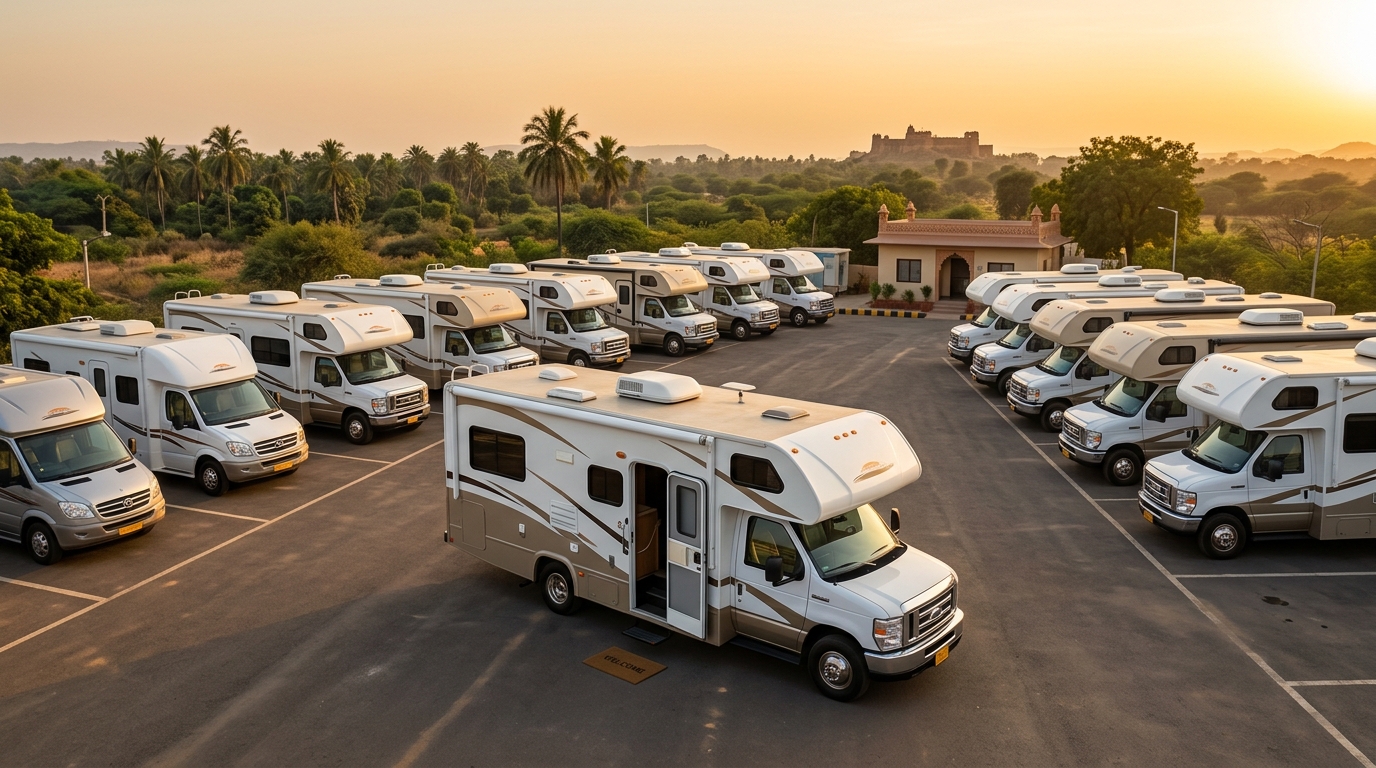
Choosing the right RV family in India significantly impacts your maneuverability on diverse terrain, your comfort in varying climates, and the overall suitability for your group size and trip duration. An airport RV rental requires careful consideration of India's unique road infrastructure and travel logistics. This comparison focuses on Class A (Integrated), Class SI (Semi-Integrated), Class C (Alcove), and Class B (Campervan) motorhomes, outlining their specific advantages and disadvantages for Indian adventures.
Class A (Integrated) - Best For
Class A integrated motorhomes are best suited for large groups or families seeking maximum comfort, luxury, and ample living space for longer trips in India. Bandana's global fleet typically features Class A RVs averaging 7.5 meters in length, sleeping around 4.4 people, and offering a significant load capacity of approximately 209.5 kg. These vehicles, with an estimated fuel consumption of 11-12 liters/100 km, provide a premium experience but may face challenges on India's narrower, less-maintained roads due to their size. Trade-offs include higher rental costs and less maneuverability in dense urban traffic or tight parking spots near airports. For a truly luxurious journey across major highways, Class A offers unmatched amenities like spacious living areas and full kitchens, perfect for preparing your favorite RV-friendly recipes playlist on the go.
Class SI (Semi-Integrated) - Best For
Class SI semi-integrated motorhomes represent a balanced choice, ideal for couples or small families seeking a blend of comfort, amenities, and relatively manageable size for an airport RV rental in India. Bandana's global fleet of Class SI RVs typically averages 6.9 meters in length, sleeps about 3.8 people, and has a load capacity of approximately 72.2 kg, with fuel consumption around 10-11 liters/100 km. These vehicles offer better maneuverability than Class A on India's varied road network while still providing essential living comforts, making them versatile for both highway cruising and exploring smaller towns. They outperform Class A in terms of agility and Class C in terms of sleek design and potentially better fuel efficiency for travelers flying into Indian airports.
Class C (Alcove) - Best For
Class C alcove motorhomes are primarily best for families or larger groups traveling through India, offering significant sleeping capacity and cost-efficiency for airport RV rentals. Bandana's global fleet typically shows Class C RVs averaging 7.5 meters in length, capable of sleeping around 5.8 people, with a load capacity of about 42.4 kg, and fuel consumption generally around 10-12 liters/100 km. Their distinctive over-cab sleeping area maximizes space, providing extra beds that are invaluable for family trips, aligning well with the need for comfortable accommodation after an airport arrival. While similar in length to Class A, their construction often makes them more robust and potentially better suited for the diverse and sometimes challenging Indian road conditions, prioritizing practicality over pure luxury. You can compare Motorhome Prices for India to find the best Class C options.
Class B (Campervan) - Best For
Class B campervans are best for solo travelers, couples, or very small groups prioritizing maneuverability, fuel economy, and the ability to navigate India's diverse and often congested roads with ease. Bandana's global fleet typically features Class B campervans averaging a compact 5.8 meters in length, sleeping around 3.2 people, with a load capacity of about 37 kg, and excellent fuel efficiency around 10 liters/100 km. These agile vehicles excel in urban environments, smaller villages, and less-traveled routes where larger RVs would struggle, making them ideal for exploring without being restricted by vehicle size. For airport RV rental travelers in India, a campervan offers the flexibility to blend in more readily, find parking, and access remote areas, providing a sense of freedom unmatched by larger RV classes.
Price Comparison by RV Class in India
RV rental pricing in India is dynamic and flex-rate, meaning costs fluctuate daily based on demand, seasonality, rental duration, and specific vehicle features. Just like flight tickets, prices can change, so the final price is always set at the actual booking time. Generally, smaller, more fuel-efficient RVs like Class B campervans tend to be more budget-friendly, starting from around $80-120 USD per day in off-peak seasons, compared to larger, luxury Class A integrated motorhomes, which can range from $180-300+ USD daily. Class SI and Class C motorhomes fall in between, typically costing $130-200 USD per day. To obtain the most accurate and up-to-date pricing for airport RV rentals in India, we always recommend using the search box at the top of the page. Booking ahead can often secure better rates, but last-minute deals sometimes emerge depending on availability.
Side-by-Side Comparison Table
This table provides a quick overview of the key differences between motorhome and campervan families available for airport rental in India, aiding in your selection process. Consider average length for maneuverability, sleeping capacity for group size, and fuel use for budgeting, especially given India's varying fuel costs and infrastructure. On the routes offered through RV PLANET routes, you can itemize and track every expense along the way for easy budgeting.
| Family | Avg Length (m) | Sleeps (Avg) | Fuel Use (L/100 km) | Best Use Case in India |
|---|---|---|---|---|
| Class A (Integrated) | 7.5 | 4.4 | 11-12 | Luxury, large groups, long trips on main highways. |
| Class SI (Semi-integrated) | 6.9 | 3.8 | 10-11 | Couples/small families, balanced comfort and maneuverability. |
| Class C (Alcove) | 7.5 | 5.8 | 10-12 | Families, maximum sleeping capacity, practical. |
| Class B (Campervan) | 5.8 | 3.2 | 10 | Solo/couples, urban exploration, high maneuverability, fuel economy. |
Our Recommendation for Airport RV Rental Travelers in India
For most airport RV rental travelers in India seeking a balance of comfort, maneuverability, and family suitability, a Class SI (Semi-integrated) motorhome is the primary recommendation. Its average length of 6.9 meters and capacity for nearly four people makes it adept at navigating India's varied roads, from national highways to smaller provincial routes, while providing ample amenities. The Class B (Campervan) is an excellent runner-up, particularly for solo travelers or couples prioritizing extreme maneuverability, fuel efficiency, and the ability to access more remote or congested areas. Its compact size (5.8m) and efficient fuel consumption make it an ideal choice for agile exploration, especially when picking up directly from an Indian airport for immediate travel. These options allow for comfortable slow travel, letting you truly immerse yourself in the culture and scenery, covering a maximum of 100-150 km per day on average.
What are the road conditions like for RVs in India?
Indian road conditions for RVs vary significantly, ranging from well-maintained national highways to rough, unpaved rural roads, requiring drivers to be adaptable and choose suitable RV types. Major national highways are generally good but can be heavily congested with diverse traffic, including cars, trucks, motorcycles, and livestock. State and district roads often have potholes, unmarked speed breakers, and unexpected obstacles, so always drive slowly and carefully, and you can drive almost anywhere without issues. Infrastructure for RVs, such as dedicated waste disposal points and easily accessible water/fuel stations for larger vehicles, is still developing outside of major tourist hubs, so plan accordingly. It's advisable to consider a rented RV with higher ground clearance and robust suspension for maximum comfort on varied surfaces.
What health and safety protocols should RV travelers follow in India?
RV travelers in India should prioritize health and safety by ensuring comprehensive travel insurance that covers medical emergencies and roadside assistance. Always carry a well-stocked first-aid kit, including any personal medications, and be aware of local medical facility access along your planned route. Food and water safety is paramount: drink only bottled or filtered water, avoid uncooked street food from unhygienic vendors, and wash hands frequently to prevent common travel illnesses. For emergencies, have local contact numbers for roadside assistance, police (112 for all emergencies), and your embassy readily available, and consider purchasing an Indian SIM card for reliable communication. Maintaining situational awareness and practicing defensive driving are also crucial for road safety on India's dynamic roads.
What are the specific driving laws and etiquette for RVs in India?
Driving a rented RV in India requires familiarity with specific traffic laws and cultural nuances, which can differ significantly from Western norms. Traffic drives on the left side of the road, and seatbelt use is mandatory. However, horn usage is highly prevalent for communication rather than aggression; drivers use horns to indicate their presence during overtakes, blind turns, or in congested areas. Drivers must always yield to larger vehicles, pedestrians, and animals, which often have right-of-way, and be prepared for erratic driving patterns from other road users. An International Driving Permit (IDP) is recommended for foreign tourists from non-English speaking countries, although not strictly mandatory in all cases, and it is advisable to carry all vehicle registration, rental agreement, and insurance documents at all times.
How much does it cost to RV in India, beyond just the rental?
Beyond the RV rental fee, comprehensive budgeting for an Indian RV trip should account for several ancillary costs, including fuel, tolls, national park permits, and potential expenses for local assistance or unique cultural experiences. Fuel costs can be substantial given India's vast distances and varying prices across states; research average diesel/petrol prices along your route to budget accurately. Tolls are common on national highways, especially on expressways, and specific regions, particularly sensitive border areas like Ladakh or Spiti Valley, may require Inner Line Permits (ILP) or other special permissions for entry, incurring additional fees ranging from $10-50 USD per person per day. Also, budget for campground fees (ranging from $10-30 USD per night in private parks or resorts), propane refills, and groceries for cooking in your RV. It's wise to consider a contingency fund for unforeseen repairs or local assistance in remote areas. For detailed cost breakdowns and to itemize and track every expense along the way for easy budgeting, we recommend exploring the pre-planned RV PLANET routes.
Is wild camping legal or feasible for RVs in India?
The feasibility and legality of 'wild camping' or off-grid RVing in India are generally complex and not widely supported by explicit laws or extensive infrastructure. While not explicitly illegal in all areas, India lacks designated wild camping spots or clear regulations, making it safer and more respectful to opt for established campsites, private resorts, or paid parking areas with security. Cultural sensitivity and safety are key considerations; parking overnight in remote or isolated areas without permission can attract unwanted attention or pose security risks. Always seek permission from local landowners or authorities before attempting to camp outside designated areas, especially near villages, agricultural lands, or protected wildlife reserves. Sticking to recognized overnight spots ensures peace of mind and access to basic amenities. For finding campsites and campgrounds during your trip, we recommend using RV PLANET (rvplan.net) - a great resource for locating available spots along your route.
How can RVers interact respectfully with local communities in India?
RVers in India can interact respectfully with local communities by demonstrating cultural sensitivity, learning a few basic Hindi phrases, and being mindful of local customs and traditions. Modest dress is appreciated, especially when visiting religious sites, rural villages, or interacting with conservative communities. Always ask for permission before taking photographs of people, particularly women and children. Support local economies by purchasing goods and services from small businesses, and engage in friendly conversation, as locals are often curious, hospitable, and eager to share their culture. Maintain a low environmental impact by disposing of all waste properly, avoiding noise pollution, and respecting local natural resources, particularly when camping or parking near populated areas. A small gesture of gratitude or a friendly "Namaste" goes a long way in fostering positive interactions.
Should foreign tourists self-drive or use driver-assisted RV tours in India?
Foreign tourists renting an RV in India should carefully weigh the pros and cons of self-driving versus utilizing driver-assisted RV tours, with the latter often offering significant advantages for a less stressful experience. Self-driving provides maximum freedom and flexibility to explore at your own pace but requires navigating challenging road conditions, complex traffic rules, and potential language barriers outside major cities. Driver-assisted RV tours mitigate these challenges by providing an experienced local driver who is familiar with routes, local etiquette, and emergency procedures, significantly enhancing safety and reducing stress. While self-driving offers a unique adventure for experienced international drivers comfortable with diverse road dynamics, driver-assisted options are highly recommended for those less familiar with Indian driving conditions, allowing tourists to fully enjoy the scenery and cultural immersion without the burdens of navigation and driving.
Which RV types are truly suitable for Indian roads and terrain?
For Indian roads and terrain, RV types offering a balance of maneuverability, robustness, and adequate ground clearance are generally most suitable. Class B campervans and Class SI (Semi-integrated) motorhomes are highly recommended for their agility and ability to handle narrower roads, congested urban areas, and more challenging, unpaved sections commonly found in rural India. Their compact size, averaging 5.8 to 6.9 meters, allows for easier navigation and parking in diverse environments. Class C (Alcove) motorhomes can also be suitable for longer trips on major national highways and well-developed routes, offering more comfort and sleeping capacity, but they require more cautious driving in dense traffic or on less-maintained surfaces. Extensive modifications are generally not necessary for rental RVs, as suppliers usually provide vehicles suitable for local conditions, but models with reinforced suspension and good tires are advantageous for durability on varied Indian surfaces.
What You Shouldn't Miss
An RV adventure in India unlocks incredible experiences, allowing you to immerse yourself deeply in its diverse beauty. Here are a few must-do experiences:
- The Golden Triangle & Beyond: Explore the iconic sights of Delhi, Agra's Taj Mahal, and Jaipur's Pink City. Then, extend your journey into rural Rajasthan to discover hidden villages and local craftsmanship with your comfortable rented motorhome.
- Kerala's Backwaters by Road: Drive through the lush landscapes of Kerala, parking your campervan near serene backwater villages. Take a houseboat cruise during the day and return to your mobile home at night for a unique blend of experiences.
- Himalayan Road Trip to Ladakh: For the adventurous, a motorhome journey to Ladakh, though requiring permits, offers unparalleled mountain vistas and monastic tranquility. Remember, slow travel is key here; average 80-100 km a day to truly soak in the breathtaking high-altitude scenery.
- Goa's Coastal Charms: Discover the relaxed vibe of Goa's beaches, from bustling markets to tranquil coves. Your RV gives you the freedom to hop between different beaches and villages, experiencing the diverse flavors of this popular coastal state.
- Wildlife Encounters: Plan a trip to one of India's numerous national parks, such as Ranthambore or Jim Corbett, to spot tigers, elephants, and other incredible wildlife. Many parks have designated RV-friendly parking near their entrances, offering a convenient base for your safari adventures.
- Spiritual Journeys to Varanasi: While navigating an RV directly through Varanasi's ancient streets might be challenging, parking on the outskirts and using local transport to explore the ghats and temples offers a profound spiritual experience, returning to the comfort of your mobile home after a day of immersion.
🎬 Video coming soon
Final Thoughts
An airport RV rental in India opens up a world of adventure, offering a unique blend of comfort and exploration. Imagine the freedom of waking up to a new vista every day, preparing your morning tea with a view of a tranquil lake, or stopping spontaneously at a bustling local market. With the right preparation and the ideal motorhome or campervan, your journey through India will be nothing short of extraordinary. Remember to travel slowly, embracing the rhythm of the country and allowing yourself to connect deeply with its rich culture, diverse food, and breathtaking scenery.
We at Bandana Caravan are here to support your dream trip every step of the way, offering transparent pricing and expert advice before and during your booking. Our goal is to make your RV rental experience in India as seamless and enjoyable as possible. Get inspired for your next trip and discover top destinations, planning tips, all in one place!
Ready to start planning your incredible adventure? Find airport RV Rentals in India and let the journey begin!
