In This Guide
- Can You Drive an RV in New York? License & Age Rules
- Road Conditions & Terrain in New York
- RV Size Limits, Bridges & Restricted Zones
- Fuel: Diesel vs. Petrol & Cost per 100 km
- Tolls, Vignettes & Border Rules
- Driving Tips for rv rental deals Travelers
- Recommended RV Class for New York Roads
- Should I Choose a Compact Van Instead of a Large RV in New York?
- Can I Park Anywhere? Free & Wild Camping Rules in New York
- Can I Drive an RV Into the City Center? Heights, Tunnels & Local Signage
- What You Shouldn't Miss
Exploring the Empire State by rented RV offers unparalleled freedom, allowing you to discover everything from vibrant cities to serene wilderness at your own pace. With Bandana RV, your New York adventure begins with full transparency and dedicated support, ensuring no hidden fees or surprises along the way. For live availability and current prices, start with our RV Rental New York - Complete Guide 2026 guide.
Can You Drive an RV in New York? License & Age Rules
Most Class C motorhomes under 26,000 pounds (11,793 kg) GVWR can be driven in New York with a standard Class D driver's license, which is the same license required for most passenger cars. A standard Class D license is sufficient for operating typical Class C alcove RVs, which average 7.7 meters in length, making them a popular choice for families and groups. New York State law requires a Commercial Driver's License (CDL) only for vehicles exceeding 26,000 pounds (11,793 kg) Gross Vehicle Weight Rating (GVWR) or for towing certain heavy trailers, which rarely applies to recreational rental motorhomes and campervans. The minimum age to rent and drive an RV in New York is generally 21, and Bandana RV does not impose young driver surcharges or vehicle class restrictions based on age, making RV travel accessible to a wider range of adventurers. Out-of-state drivers with valid licenses from their home state or country, including those with an International Driving Permit (IDP) if their license is not in English, can operate RVs in New York provided their license permits the class of vehicle they are driving, typically for up to six months. We believe in providing you with all the details up front, ensuring a smooth start to your journey.Road Conditions & Terrain in New York
New York offers incredibly diverse terrain, from the rugged Adirondacks and Catskill Mountains to the gentle rolling hills of the Finger Lakes region and the often-congested urban sprawl of Long Island, all of which present varied road conditions for RV travelers. You can expect well-maintained highways for inter-state travel, such as the New York State Thruway (I-90), but be prepared for narrower, winding roads in rural and mountainous areas, where slow and scenic driving is encouraged to fully appreciate the views. Urban areas, particularly around New York City, can present challenges with heavy traffic, numerous tolls, and aggressive drivers, requiring careful navigation for any RV. During colder months, upstate New York experiences significant snow and ice, necessitating caution and appropriate vehicle preparation; ensure your rented RV is equipped for the season, though special winter tires are generally not required for recreational vehicles. Many state and national parks feature gravel access roads that are typically navigable for most motorhomes and campervans but may require slower speeds and increased awareness of changing road surfaces. Remember, we’re true RV specialists who understand these nuances, ensuring you’re well-informed for your journey.RV Size Limits, Bridges & Restricted Zones
While New York does not impose statewide RV length restrictions beyond federal standards, drivers must be highly aware of specific local height limits, particularly for numerous bridges and tunnels. New York City and its surrounding boroughs are notorious for low bridges, with many parkways having clearances as low as 8 to 10 feet (2.4 to 3 meters), making them impassable for most RVs; always use truck-specific GPS navigation or consult physical maps for RV-safe routes to avoid costly mistakes. The New York State Thruway (I-90) is generally RV-friendly, but you should always monitor signage for specific vehicle class restrictions, especially when entering tunnels like the Lincoln Tunnel or Holland Tunnel, or navigating certain urban areas. Weight restrictions can apply to older bridges or local roads, so be mindful of your rented RV's Gross Vehicle Weight Rating (GVWR) and any posted limits, particularly with larger Class A or C models. Environmental zones, often relevant for commercial vehicles, generally do not impact recreational RV rentals, but always verify local regulations if planning to drive into very specific urban or protected areas.Fuel: Diesel vs. Petrol & Cost per 100 km
Most RV rentals in New York, including popular Class C - Alcove models like the Cruise America Explorer with its 75-liter fuel tank, typically run on gasoline (petrol), though some larger Class A motorhomes or certain truck campers may utilize diesel. The availability of both gasoline and diesel is widespread across New York State, but diesel pumps may be less common in very rural areas or smaller towns, so it's always wise to plan your fuel stops. Based on Bandana's Class C - Alcove fleet, common fuel consumption averages around 23 liters per 100 kilometers (7-10 miles per gallon), which can lead to significant fuel costs over longer trips. For an estimated average fuel price of $4.00 per gallon (approximately $1.05 per liter) in New York, driving 100 kilometers in a Class C RV could cost roughly $24.15 (23 L * $1.05/L). To help manage these expenses, remember that RV PLANET routes allow you to itemize and track every expense along the way for easy budgeting. While Bandana does not currently offer fuel discount cards for RV rentals, utilizing gas station apps that compare prices can significantly help manage your fuel budget. For more detailed insights into overall trip costs, check out "RV Rental in New York - Prices and Best Deals 2026".Tolls, Vignettes & Border Rules
New York State features numerous toll roads, bridges, and tunnels, especially in and around metropolitan areas like New York City, where an E-ZPass transponder is highly recommended to avoid higher cash rates and simplify travel. Cash payment options are being phased out in many New York toll plazas, transitioning to cashless tolling where bills are mailed to the vehicle's registered owner, typically the rental company, which often incurs administrative fees that are then passed on to the renter. Some RV rental companies may offer options to pre-purchase E-ZPass coverage or include a transponder in the rental, allowing seamless passage through tolls and avoiding potential fines and administrative charges. There are no 'vignette' systems (pre-paid time-based road use permits) in New York; road usage is exclusively managed via per-use tolls. For travelers planning to cross into neighboring states like Pennsylvania, New Jersey, or Massachusetts, E-ZPass is generally interoperable, but always confirm the specific rental agreement's coverage for multi-state toll usage to ensure no surprises. If you are considering a one-way trip, our "One-Way RV Rental in New York - Price Guide 2026" provides detailed information on associated costs.Driving Tips for rv rental deals Travelers
To ensure a smooth and enjoyable RV rental experience in New York, careful planning and attentive driving are key. First, always plan your route meticulously using RV-specific navigation apps that account for vehicle height and weight, especially to avoid low bridges and restricted parkways around New York City and older rural areas. Second, practice safe following distances, as RVs require significantly longer braking distances than passenger cars; maintain ample space, especially on highways and in wet conditions. Third, master your turns by taking wider arcs, particularly with longer Class C or Truck Camper RVs, to clear curbs, lampposts, and other obstacles, always checking your mirrors thoroughly. Fourth, be mindful of wind and weather conditions, as New York can experience strong crosswinds, especially on bridges and open highways, which high-profile RVs are susceptible to; reduce speed and grip the steering wheel firmly when encountering such conditions. Finally, pre-pay tolls where possible and consider an E-ZPass; this will avoid unexpected fees and streamline your journey through New York's many toll booths. Remember, Bandana RV handles the details, so you can live the journey with peace of mind.Recommended RV Class for New York Roads
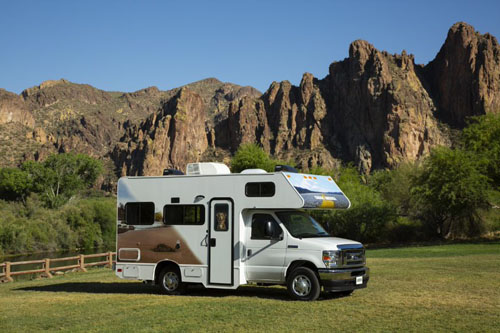
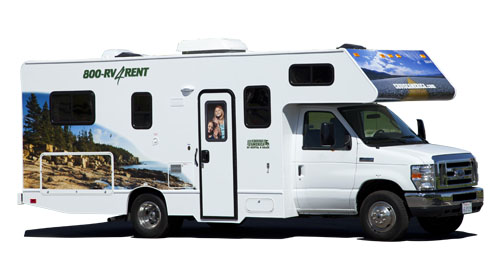
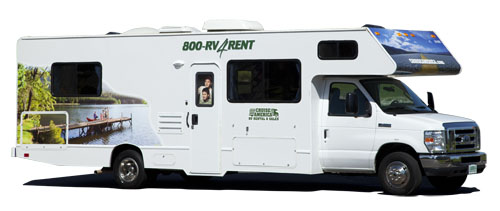
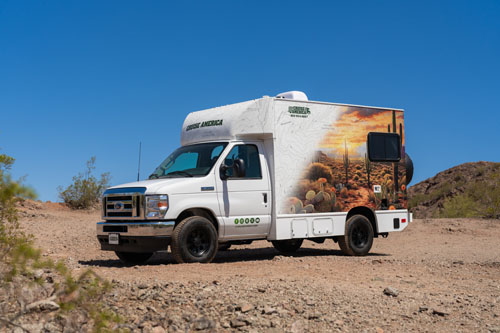
For navigating New York's diverse road network, from charming small towns to sprawling state parks and even the outskirts of urban centers, both Class C - Alcove and Class TC - Truck Camper models from Bandana's fleet are highly recommended due to their balanced maneuverability and comfort. Bandana's Class C - Alcove RVs, averaging 7.7 meters (25.3 feet) in length, offer ample living space for families (avg. 5.3 sleeping places) while remaining manageable on most highways and secondary roads. For example, a 24' Class C Motorhome provides generous space with features like a generator and TV, suitable for a family of 2+2. The slightly more compact Class TC - Truck Camper, averaging 5.9 meters (19.4 feet) in length, provides excellent agility, making it ideal for tighter turns, navigating smaller towns, and accessing more remote campsites that larger vehicles might struggle with. While Class A motorhomes offer maximum space and luxury, their larger size can be more challenging on New York's narrower, winding roads and in congested urban areas with numerous height and parking restrictions. Both Class C and Truck Camper options provide a good balance of indoor amenities, storage, and external dimensions suitable for enjoying the scenic drives and varied destinations across New York State.Should I Choose a Compact Van Instead of a Large RV in New York?
Choosing between a compact van (Class B campervan) and a larger Class C or Truck Camper RV in New York depends largely on your travel style and priorities, as most RV sizes are generally manageable outside of dense urban centers. A compact van or smaller Class B RV offers superior maneuverability and easier parking, which can be particularly beneficial for exploring tight historic centers like those in Saratoga Springs, navigating narrow country roads in the Catskills, or finding parking in smaller towns. For example, a 'hire campervan example Paradise S/T' campervan offers automatic transmission and is ideal for a couple, providing nimble navigation. However, for those prioritizing comfort, abundant indoor living space, and amenities like a full kitchen or private bathroom, a larger Class C or Truck Camper RV offers a significantly better experience, particularly for extended road trips or family travel with multiple kids. While a compact van can simplify urban navigation, the trade-off is often less sleeping capacity, limited storage, and fewer on-board conveniences compared to a Class C RV averaging 7.7 meters in length, such as an 'rv rentals example Comfort Class' which offers three double beds. Ultimately, there's no inherent "issue" with driving most RV sizes in New York; the decision often comes down to balancing the desire for maximal maneuverability with the need for living comfort and amenities on your journey. If you're looking for different vehicle sizes and budget differences, explore our "RV Rental in New York for Couples - Pricing 2026".Can I Park Anywhere? Free & Wild Camping Rules in New York
Generally, you cannot simply park a rented RV anywhere for overnight camping in New York; unauthorized overnight parking or "wild camping" on public or private land without explicit permission is typically prohibited throughout the state. New York State Parks and DEC (Department of Environmental Conservation) campgrounds offer designated sites for RV camping, often requiring reservations, particularly during peak seasons like summer and fall foliage, which can book up quickly. While true boondocking (dispersed camping without facilities) is quite limited in New York, it is sometimes permitted in certain State Forests and on federal lands, such as those within the vast Adirondack Park, following specific Leave No Trace principles and permit requirements. Always check local ordinances for overnight parking rules, especially within city limits or smaller towns like Lake Placid or Cooperstown, as many prohibit sleeping in vehicles on public streets or parking lots. Rules vary significantly by region and land ownership-always verify local regulations and follow local law before parking overnight to avoid fines or other issues. For finding campsites and campgrounds during your trip, we recommend using RV PLANET (rvplan.net) - a great resource for locating available spots along your route.Can I Drive an RV Into the City Center? Heights, Tunnels & Local Signage
Yes, you can drive a rented RV into most city centers in New York, but extreme caution and diligent route planning are essential due to specific vehicle restrictions and challenging conditions. New York City, in particular, has notorious low bridges (especially on parkways), narrow streets, dense traffic, and very limited RV-appropriate parking, making driving a large RV into Manhattan or other boroughs exceptionally difficult. For example, many of the bridges on the historic parkways like the Belt Parkway or Northern State Parkway have clearance limits around 9-10 feet, well below the height of most Class C or A motorhomes. Always pay close attention to local signage, which will clearly indicate height limits for tunnels and bridges, weight restrictions for certain roads, and any environmental zones that may apply to older vehicles. Utilizing RV-specific GPS navigation systems that can account for your vehicle's dimensions is crucial to avoid impassable routes and prevent costly mistakes like hitting low overpasses. For visiting cities like Buffalo, Rochester, or Albany, driving an RV into the downtown core is more feasible than NYC, but parking can still be a challenge; consider parking at a suburban campground like Croton Point Park or even Liberty Harbor RV Park in nearby Jersey City, and using public transit, such as the PATH train, to reach city attractions. Drive slowly and carefully, and you can drive almost anywhere without issues. No need to stress - just use common sense and pay attention.What You Shouldn't Miss
- **Niagara Falls:** A breathtaking natural wonder on the border with Canada, offering spectacular views and boat tours like the Maid of the Mist. Enjoy the surrounding Niagara Falls State Park, which has RV-friendly parking options.
- **Adirondack Park:** Immerse yourself in over 6 million acres of pristine wilderness. Hike trails, paddle tranquil lakes, or drive scenic routes like the Olympic Scenic Byway.
- **Finger Lakes Wine Country:** Explore the picturesque region surrounding Cayuga Lake and Seneca Lake, home to over 100 wineries. Many campgrounds in the area offer excellent access to tasting rooms and local culinary delights.
- **Letchworth State Park:** Known as the "Grand Canyon of the East," this park boasts a dramatic gorge and three major waterfalls. RV camping is available within the park, providing stunning vistas.
- **Hudson Valley:** Discover historic estates, charming towns like Cold Spring and Beacon, and revolutionary war sites. Take a leisurely drive along the Hudson River to soak in the cultural and natural beauty.
- **The Catskill Mountains:** A haven for outdoor enthusiasts, offering hiking, fishing, and quaint mountain towns. Explore attractions like the Zoom Flume Water Park or simply relax amidst nature.
🎬 Video coming soon
Looking for expert insights from Avi Bandana? Top 5 Adventures - recommendations from Avi Bandana
Final Thoughts
An RV adventure through New York offers an incredible opportunity to create lasting memories, whether you're chasing waterfalls at Niagara, exploring the wilderness of the Adirondacks, or savoring local flavors in the Finger Lakes. With our commitment to full transparency, expert advice, and a wide selection of reliable motorhomes and campervans, planning your trip is simple and stress-free. Remember to embrace slow travel, averaging no more than 100-150 km per day, allowing you to truly connect with the culture, food, and stunning scenery that New York has to offer.Don't wait to embark on your dream road trip. Discover top destinations, planning tips, all in one place and let us help you find the perfect RV rental deals in New York for your journey.
Find Motorhome Rentals in New YorkFor ideas you can prep on the road, watch our RV-friendly recipes playlist on YouTube.
On the routes offered through RV PLANET routes, you can itemize and track every expense along the way for easy budgeting.