In This Guide
- Can You Drive an RV in Tokyo - Airport? License & Age Rules
- Road Conditions & Terrain in Tokyo - Airport
- RV Size Limits, Bridges & Restricted Zones
- Fuel: Diesel vs. Petrol & Cost per 100 km
- Tolls, Vignettes & Border Rules
- Driving Tips for Luxury RV Rental Travelers
- Recommended RV Class for Tokyo - Airport Roads
- Should I Choose a Compact Van Instead of a Large RV in Tokyo - Airport?
- Can I Park Anywhere? Free & Wild Camping Rules in Tokyo - Airport
- Can I Drive an RV Into the City Center? Heights, Tunnels & Local Signage
- How to rent a luxury RV near Narita Airport (NRT)
- What is the best time of year to rent an RV in Tokyo - Airport?
- Are RVs popular in Japan?
- What are the rules for driving a campervan in Japan?
- How much does it cost to rent an RV in Japan?
- What are the best RV campsites near Tokyo?
- Can you park an RV at Narita Airport?
Embarking on a luxury RV adventure around Tokyo - Airport offers an unparalleled way to explore Japan's rich culture and stunning landscapes at your own pace. With a rented motorhome, you're not just booking transportation, you're securing a mobile base for an unforgettable journey, free from the constraints of hotel bookings and train schedules. For live availability and current prices, start with our RV Rental Tokyo - Airport - Complete Guide 2026 guide. At Bandana, we are true RV specialists, dedicated to making your travel seamless and enjoyable, providing full transparency with no hidden fees and offering 24/7 support for pre-booking comparisons, booking assistance, and post-booking coordination. Our mission since 2001 has been to help tens of thousands of travelers discover the world by RV.
Can You Drive an RV in Tokyo - Airport? License & Age Rules
Yes, foreign travelers can typically drive most luxury RVs in Japan, including in Tokyo - Airport, with an International Driving Permit (IDP) obtained in their home country, which must be carried alongside their original domestic driver's license and passport. For standard motorhomes or campervans up to 3.5 tons, a valid IDP, based on an ordinary passenger car license (Class B equivalent), is sufficient. While some larger Class A motorhomes exceeding 3.5 tons might theoretically require a higher license category, Bandana's fleet typically consists of luxury RVs well within the standard license limits, such as a Class SI - Semi-integrated RV or a Class B - Camper Van. The minimum driver age for luxury RV rentals in Japan is generally 21 years old, and importantly, there are no young driver surcharges or vehicle class restrictions based on age when you book through our platform.
Road Conditions & Terrain in Tokyo - Airport
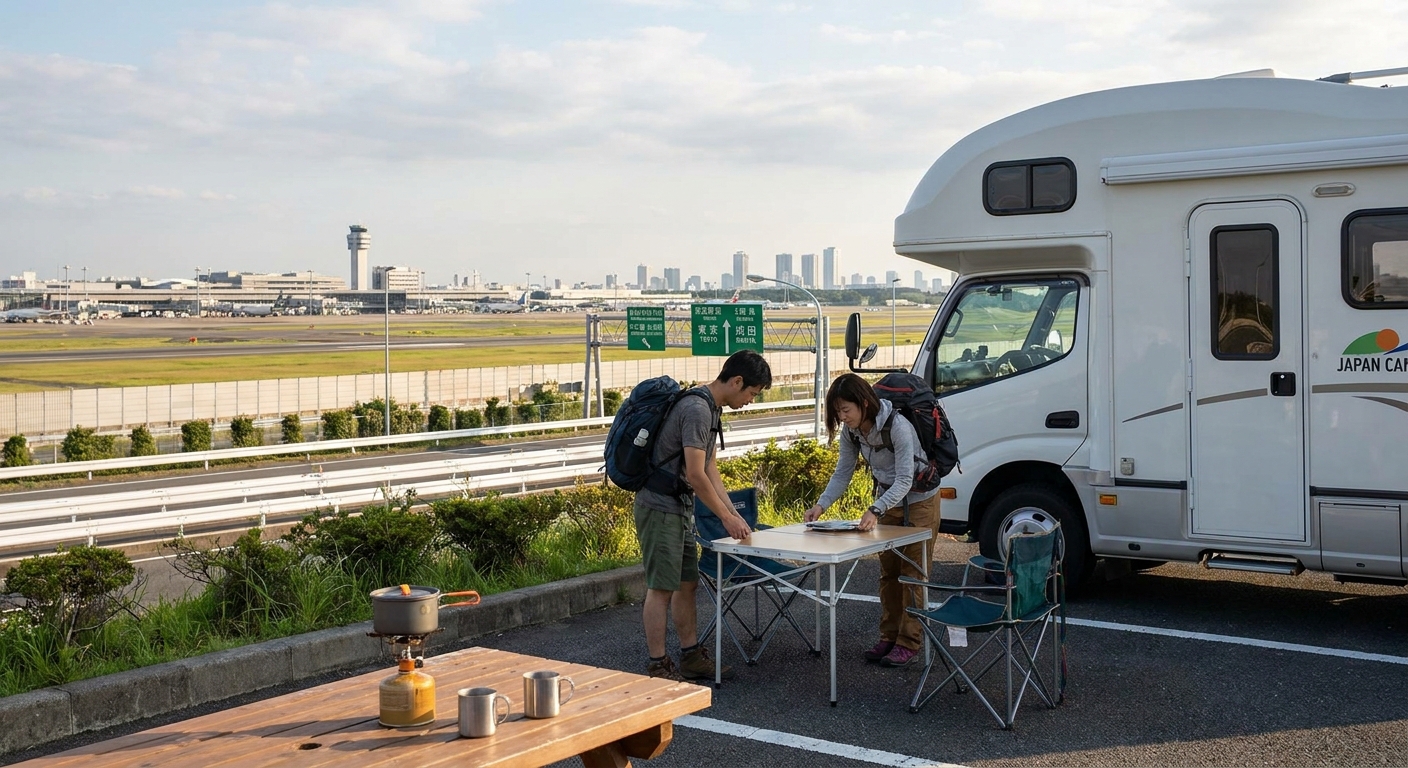
Roads in and around Tokyo - Airport, including major expressways like the Shuto Expressway and routes to Narita Airport, are typically well-maintained, paved, and of high quality, offering a smooth driving experience. The terrain directly around Narita Airport and within Chiba Prefecture is generally flat, making it straightforward for driving a rented motorhome. However, Tokyo itself is a dense urban environment featuring some narrower streets and complex intersections, where careful navigation is key. When venturing beyond the greater Tokyo area, mountainous regions are common in Japan, necessitating attentive driving on winding roads, though main tourist routes are usually broad and well-suited for RVs. Slow travel, averaging 100-150 km per day, allows you to fully appreciate Japan's diverse landscapes, from coastal vistas along the Boso Peninsula to tranquil countryside roads.
RV Size Limits, Bridges & Restricted Zones
Most luxury RVs, especially those available from Bandana's partner suppliers like Class SI or Class C models, are specifically designed to navigate standard Japanese roads, which can be narrower than in some Western countries. While height and weight restrictions are uncommon on major highways and expressways, urban areas like central Tokyo, older tunnels, and some local roads or residential zones may have specific limits, requiring drivers to always pay close attention to posted signage. Japan does not widely implement environmental zones for RVs akin to those found in Europe, but local traffic regulations, such as those near temples or residential neighborhoods, must always be observed. When planning extended trips, remember that ferry services for island hopping, like those to Hokkaido, will have specific length and weight restrictions and pricing for your campervan or motorhome, making advance booking essential.
Fuel: Diesel vs. Petrol & Cost per 100 km
In Japan, most rental RVs, including luxury motorhomes and campervans, typically operate on petrol (gasoline), with diesel vehicles being less common for leisure rentals from Tokyo - Airport. Petrol stations are widely available throughout the country, particularly along major roads and near urban centers like Tokyo and its airports. Based on Bandana's global fleet averages, fuel consumption for a Class SI - Semi-integrated RV is typically 10-11 Liters/100 km, while a Class C - Alcove RV averages 10-12 Liters/100 km. More fuel-efficient Class B - Camper Vans average 8-10 Liters/100 km, and Class A - Integrated RVs typically consume 8-12 Liters/100 km. Estimated fuel costs vary with current prices, but budgeting approximately ¥15-25 (roughly $0.10-$0.17 USD) per kilometer based on these consumption rates is a realistic starting point for planning your trip around Tokyo - Airport. When planning your budget, remember that you can itemize and track every expense along the way using RV PLANET routes. On the routes offered through RV PLANET routes, you can itemize and track every expense along the way for easy budgeting.
Tolls, Vignettes & Border Rules
Japan operates an extensive network of toll roads, known as expressways, which are the most efficient way to cover long distances quickly in your rented RV, especially when traveling from Tokyo - Airport to other regions. An ETC (Electronic Toll Collection) card is highly recommended for luxury RV travelers, as it enables seamless passage through toll gates without needing to stop for manual payment and can often provide discounts, such as a 20-30% saving on certain routes or times. ETC cards are often available for rent with your RV or separately at major airports. Estimated toll costs can be significant, so factor them into your overall budget; a typical day of extensive expressway travel could incur several thousand yen in tolls. There are no vignettes in Japan; tolls are charged per distance traveled or per section. As an island nation, Japan has no physical border crossings with neighboring countries for RV travel, simplifying international logistics for your RV rental Japan trip.
Driving Tips for Luxury RV Rental Travelers
When driving a luxury RV rental in Tokyo - Airport and throughout Japan, always remember to drive on the left side of the road and strictly adhere to posted speed limits, which are generally lower than in many Western countries (e.g., 80-100 km/h on expressways, 40-60 km/h in urban areas). Utilize the comprehensive network of over 1,200 'Michi-no-eki' (Roadside Stations) for comfortable breaks, access to local produce, and often spotless, 24-hour restrooms; many permit overnight parking for your motorhome, offering a convenient alternative to campgrounds. While most RVs are perfectly capable, be prepared for narrower roads in older towns and residential areas; drive slowly and carefully, and you can drive almost anywhere without issues, just use common sense and pay attention. Familiarize yourself with common Japanese road signs, especially those indicating height restrictions, turns, and hazards, as language barriers can pose challenges. For waste disposal, primarily use designated RV campgrounds for grey and black water dumping, as public facilities are rare, and never dispose of waste indiscriminately.
🎬 Video coming soon
You might want to review our "RV Travel Guide to Tokyo - Airport - Tips and Top Spots 2026" for more specific local insights.
Recommended RV Class for Tokyo - Airport Roads
For navigating the roads around Tokyo - Airport and comfortably venturing throughout Japan, a Class B - Camper Van is highly recommended due to its excellent maneuverability and compact size. These campervans, with Bandana's fleet averaging around 5.8 meters in length, offer the agility needed for tighter city streets and smaller parking spaces while providing essential amenities for a couple or small family. Alternatively, a Class SI - Semi-integrated RV, typically averaging 6.9 meters in length, presents a superb balance of comfort and reasonable size, offering more spacious living areas and amenities without being overly cumbersome. These RV classes strike an optimal balance between the luxury and features desired by high-end travelers and the practicalities of Japan's road infrastructure, including urban driving and access to scenic routes. While larger Class A - Integrated RVs (averaging 7.5m) offer maximum luxury, their size can make navigating very narrow city streets or some more winding scenic routes more challenging. For families, consider a "Family RV Rental in Tokyo - Airport - Pricing Guide 2026" to find the perfect size.
Should I Choose a Compact Van Instead of a Large RV in Tokyo - Airport?
While compact campervans undeniably offer superior maneuverability for extremely narrow alleyways or very tight parking spaces in dense urban cores, most luxury RVs can be comfortably driven and parked in and around Tokyo - Airport with careful planning. Choosing a larger luxury RV, such as a Class SI or Class C motorhome, often provides significant benefits in terms of indoor space, more robust kitchen facilities for preparing RV-friendly recipes playlist, and overall comfort, which can greatly enhance your extended road trip experience. A compact van may be genuinely advantageous if your itinerary primarily focuses on exploring very historic city centers with restricted access, very remote, unpaved mountain passes, or if you are looking for a "Cheap RV Rental in Tokyo - Airport - Budget Guide 2026". However, for the majority of popular routes and destinations in Japan, including major tourist areas and the invaluable Michi-no-eki, a larger Class SI or Class C RV offers a better trade-off for comfort without excessive compromise on maneuverability.
Can I Park Anywhere? Free & Wild Camping Rules in Tokyo - Airport
In Japan, wild camping or free overnight parking outside of designated areas is generally discouraged and often illegal, especially in urban or protected natural areas around Tokyo - Airport. The primary and highly convenient option for overnight parking for your rented RV are the ubiquitous 'Michi-no-eki' (Roadside Stations), common throughout Japan, including near Chiba and Narita. These stations typically offer free parking, clean restrooms, and local shops, with Michi-no-Eki Tako Ajisai-kan being a popular choice in the Narita area. While Michi-no-eki allow overnight parking, they are primarily rest stops and not designated campgrounds, meaning full camping setups like awnings and outdoor furniture are usually not permitted, and waste disposal facilities are limited. For full camping amenities, including electricity, water, and grey/black water disposal, travelers should seek out private or public RV campgrounds and resorts, which offer a more complete camping experience. Always check local regulations and follow local laws before parking overnight, especially in sensitive natural or urban areas.
Can I Drive an RV Into the City Center? Heights, Tunnels & Local Signage
Yes, you can generally drive a luxury RV into the city center of Tokyo and other major Japanese cities, but it certainly requires careful attention and prior planning. Key considerations include navigating narrower streets, especially in older districts like Ginza or Shibuya, and finding suitable parking, which can be challenging and expensive in central areas. Always pay close attention to local signage, which will clearly indicate height limits for tunnels and parking garages, as well as any residents-only streets or restricted zones. A rented Class B or Class SI motorhome is usually manageable for city driving due to their relatively smaller dimensions compared to larger Class C or A models, but drivers should always be mindful of their vehicle's exact length (e.g., 5.99m for a "cruise america example EX-Group A" campervan or 7.1m for a "cruise america rv rental example Explorer") and width to avoid obstacles. For exploring the dense core of Tokyo, utilizing park-and-ride options on the outskirts, such as parking lots near Saitama-Shintoshin Station, with world-class public transport connections is often a more convenient and stress-free strategy, allowing you to avoid central city traffic. We also offer advice in our "RV Travel Guide to Tokyo - Airport - Tips and Top Spots 2026" on this topic.
How to rent a luxury RV near Narita Airport (NRT)
To rent a luxury RV near Narita Airport (NRT) in Tokyo, begin your search by visiting reputable online rental platforms like Bandana, which offer a wide selection of premium vehicles from trusted suppliers. It is highly advisable to book your RV well in advance, especially for popular travel seasons such as cherry blossom season in spring or autumn foliage, to ensure availability and secure the most competitive rates. Many rental companies serving NRT, including our direct partners like Apollo and Britz, offer convenient pick-up and drop-off services directly at or very close to the airport, simplifying your arrival and departure logistics. When comparing options for your motorhome rental, pay close attention to different RV classes, check included amenities, review comprehensive insurance options (you can upgrade to a top-level deductible for extra peace of mind), and inquire about additional services like GPS, Wi-Fi, or essential ETC card rentals for toll roads. For a detailed cost breakdown, you might want to consult "Luxury RV Rental in Tokyo - Airport - Premium Prices 2026" or "RV Rental in Tokyo - Airport for Couples - Pricing 2026".
What is the best time of year to rent an RV in Tokyo - Airport?
The best time of year to rent a luxury RV in Tokyo - Airport and explore Japan is typically during spring (March to May) or autumn (September to November) due to generally pleasant weather conditions across the country. Spring offers comfortable temperatures ranging from 10°C to 20°C and the iconic cherry blossoms (sakura), drawing many travelers. Autumn provides equally stunning foliage with mild climates, ideal for outdoor activities and sightseeing. Summer (June to August) can be quite hot and humid in Tokyo, often exceeding 30°C, with a higher chance of typhoons in late summer, though northern regions like Hokkaido remain pleasant. Winter (December to February) can be cold, with temperatures dipping below 5°C, and snow in mountainous areas, but it offers unique experiences like hot springs (onsen) and fewer crowds outside major ski resorts. For the latest deals during these times, check out "RV Rental Deals in Tokyo - Airport - Latest Offers 2026".
Are RVs popular in Japan?
RVs and campervans have experienced a significant surge in popularity in Japan in recent years, fueled by a growing interest in domestic travel and the global 'van life' trend. The country's robust infrastructure, including the extensive Michi-no-eki network (Roadside Stations) with over 1,200 locations and well-maintained roads, makes it highly conducive to motorhome travel. Japanese RV culture often emphasizes convenience, comfort, and the ability to explore natural beauty and local hidden gems at one's own pace, especially given the ease of accessing public bathhouses like sento or onsen. Both local and international travelers increasingly opt for rented RVs to experience Japan beyond conventional tourist routes, seeking greater flexibility and a unique travel style. Our commitment as true RV specialists means we know this evolving landscape well, and can guide you through securing the ideal rental.
What are the rules for driving a campervan in Japan?
Driving a campervan in Japan requires adherence to standard traffic laws, including consistently driving on the left side of the road and observing all posted speed limits, which range from 40-60 km/h in urban areas to 80-100 km/h on expressways. All occupants must wear seatbelts, and strict laws against driving under the influence of alcohol or drugs are rigorously enforced with severe penalties. An International Driving Permit (IDP) is absolutely essential for foreign drivers and must be carried at all times, along with your original domestic driver's license and passport. Specific campervan rules involve careful parking (avoiding wild camping), proper waste disposal at designated facilities, and being mindful of vehicle dimensions for narrow roads and height restrictions, especially in older city centers. For any last-minute questions or deals, consider checking "Last-Minute RV Rental in Tokyo - Airport - What to Expect 2026".
How much does it cost to rent an RV in Japan?
The cost to rent an RV in Japan, specifically near Tokyo - Airport, varies significantly based on factors such as the RV class (e.g., a compact Class B campervan vs. a spacious Class C motorhome), rental duration, seasonality, and additional services. Daily rates typically range from ¥15,000 to ¥40,000+ (approximately $100 to $270+). Luxury RVs, such as larger Class C or Class A models with enhanced amenities, will naturally fall at the higher end of this spectrum, while more compact campervans are generally more affordable, as detailed in our "Cheap RV Rental in Tokyo - Airport - Budget Guide 2026". Beyond the base rental fee, travelers should budget for additional costs including comprehensive insurance (which you can upgrade for top-level deductible reimbursement), fuel (estimated ~¥15-25/km or $0.10-$0.17/km for models like the "cruise america rv rental example Explorer" with a 75 Liter fuel tank consuming 11 Liter / 100 Km.), tolls (an ETC card is recommended), and potentially campsite fees (ranging from ¥2,000 - ¥5,000+ per night). A realistic total cost breakdown for a week-long luxury RV trip in Japan should budget around ¥300,000 - ¥500,000+ (approximately $2,000-$3,400+), covering rental, insurance, estimated tolls, fuel, and overnight parking/campsite fees. At Bandana, we offer full price transparency so what you see is what you pay, with no surprise fees at pickup.
What are the best RV campsites near Tokyo?
Several excellent RV campsites near Tokyo - Airport offer convenience and amenities, making them ideal bases for exploring the region while enjoying your luxury RV rental. Popular options include campsites around Lake Sagami, such as the Sagamiko Resort Pleasure Forest Camp Field in Kanagawa Prefecture, which provides nature-rich surroundings and facilities like power hookups and dump stations, all within a reasonable driving distance from central Tokyo (around 60 km). For travelers near Narita Airport, facilities like Narita Yume Farm Family Auto Campground in Chiba Prefecture offer a blend of farm activities and comfortable RV parking with hookups and waste disposal. Many campgrounds, particularly in Chiba and Kanagawa prefectures, offer essential amenities such as power hookups, fresh water, shower facilities, and designated waste disposal points. These sites serve as excellent staging points for exploring destinations like Hakone, the Izu Peninsula, or even a relaxed drive through the countryside. For finding campsites and campgrounds during your trip, we recommend using RV PLANET (rvplan.net) - a great resource for locating available spots along your route.
Can you park an RV at Narita Airport?
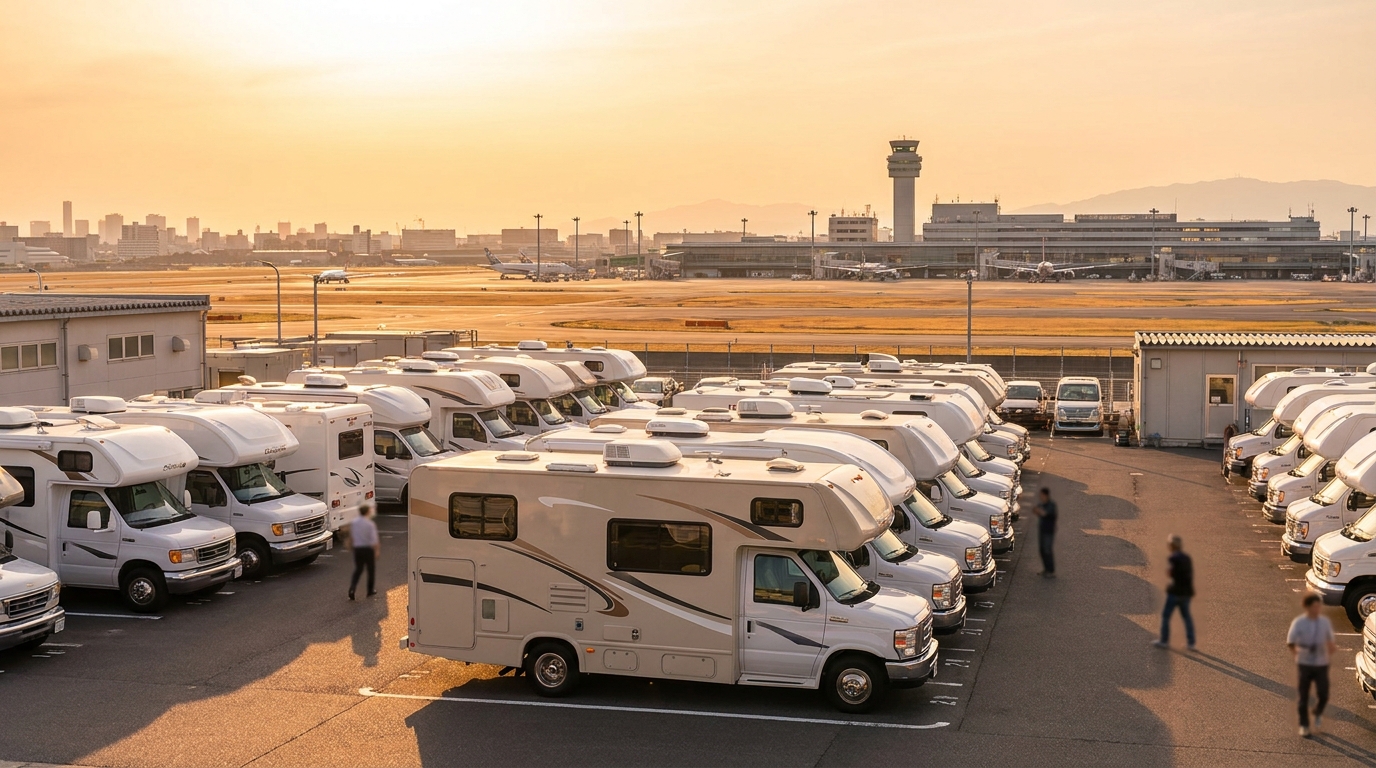
Yes, it is possible to park a rented RV at Narita Airport (NRT), particularly in designated long-term parking lots. Narita Airport offers various parking facilities, and while specific RV-sized bays may not be explicitly marked, larger standard spaces or multiple adjacent spaces can often accommodate motorhomes and campervans. Long-term parking rates apply, and it's always advisable to check the official Narita Airport website for current parking maps, fees (which can vary from ¥1,000 to ¥2,000+ per day), and to inquire about suitability for larger vehicles prior to your arrival. For ultimate convenience, some luxury RV rental companies operating near NRT may offer airport transfer services, allowing you to pick up and drop off your RV without needing to navigate airport parking yourself. This can be particularly useful for those planning a quick transition from flight to their RV adventure.
What You Shouldn't Miss
- **Explore the Boso Peninsula:** Just a short drive from Tokyo - Airport, this scenic coastal area in Chiba Prefecture offers beautiful beaches, quaint fishing villages, and fresh seafood markets. Drive slowly, max 100-150 km per day, and discover hidden gems like the Nosaki Lighthouse or the vibrant Kamogawa Sea World.
- **Visit Michi-no-eki Tako Ajisai-kan:** Near Narita Airport, this Michi-no-eki is renowned for its local rice, fresh vegetables, and a beautiful Hydrangea (Ajisai) garden in season. It’s a perfect first or last stop for stocking your RV kitchen or enjoying a local meal before returning.
- **Immerse in Onsen Culture:** Embrace Japan's communal bathing experience at an onsen. Many RV-friendly locations and Michi-no-eki have excellent onsen facilities nearby. Imagine soaking in hot spring waters after a day of driving, connecting to Japanese traditions.
- **Discover Historic Sakura City:** Just southwest of Narita Airport, Sakura offers historical sites like the samurai residences in the former castle town, and the National Museum of Japanese History. It provides a peaceful contrast to bustling Tokyo.
- **Experience Lake Kawaguchiko:** While a bit further (around 2-3 hours drive), the iconic views of Mount Fuji reflected in Lake Kawaguchiko are breathtaking. Secure a campsite with a view and enjoy the tranquility. Our "RV Rental Japan - Complete Guide 2026" has more ideas for national park visits.
Looking for expert insights from Avi Bandana? Top 5 Adventures - recommendations from Avi Bandana.
Final Thoughts
A luxury RV rental in Tokyo - Airport opens up a world of possibilities for exploring Japan's incredible blend of ancient traditions and modern marvels. Imagine the freedom to chase cherry blossoms in spring, witness vibrant autumn leaves, or simply discover serene hidden temples off the beaten path, all from the comfort of your mobile home. With our full transparency, expert support, and dedication as true RV specialists, your Japanese adventure is set to be smooth and unforgettable.
Whether you're planning a week-long journey through tranquil prefectures or a more extended road trip, Bandana is here to help you find the perfect motorhome for your needs. We believe in slow travel, allowing you to truly connect with the culture, food, and scenery of each place you visit. So, pack your bags, prepare your IDP, and get ready for the road trip of a lifetime in Japan.
Find Motorhome Rentals in Tokyo - Airport