
For live availability and current prices, start with our RV Rental Osaka - Complete Guide 2026 guide.
In This Guide
- Can You Drive an RV in Osaka? License & Age Rules
- Road Conditions & Terrain in Osaka
- RV Size Limits, Bridges & Restricted Zones
- Fuel: Diesel vs. Petrol & Cost per 100 km
- Tolls, Vignettes & Border Rules
- Driving Tips for long term rv rental Travelers
- Recommended RV Class for Osaka Roads
- Should I Choose a Compact Van Instead of a Large RV in Osaka?
- Can I Park Anywhere? Free & Wild Camping Rules in Osaka
- Can I Drive an RV Into the City Center? Heights, Tunnels & Local Signage
- What are the Specific RV Regulations for Driving and Waste Disposal in Osaka?
- What are Effective Urban RV Parking Strategies for Sightseeing in Osaka?
- Beyond Campsites: What are Alternative Overnight RV Stay Options in Osaka (Michi-no-Eki)?
- What are Osaka's Unique Driving Challenges for RVs and How to Navigate Them?
- What is the Cultural Etiquette for RVers in Osaka?
- What is the Detailed Cost Breakdown for a Long Term RV Rental Trip in Osaka?
- What are RV-Friendly Itineraries and Day Trips from Osaka?
Can You Drive an RV in Osaka? License & Age Rules
To drive an RV in Osaka, international visitors typically require an International Driving Permit (IDP) alongside their valid national driver's license. Most RV rental companies in Japan enforce a minimum driver age, usually between 21 and 25 years, depending on the specific vehicle class. A standard Class B equivalent license is generally sufficient for RVs under 3.5 metric tons, encompassing most camper vans and smaller semi-integrated models. For heavier RVs exceeding 3.5 tons, a higher license category might be necessary, so always verify the weight specifications of your chosen rental. Always ensure you carry both your physical home country license and your IDP while driving in Osaka to comply with local regulations.
Road Conditions & Terrain in Osaka
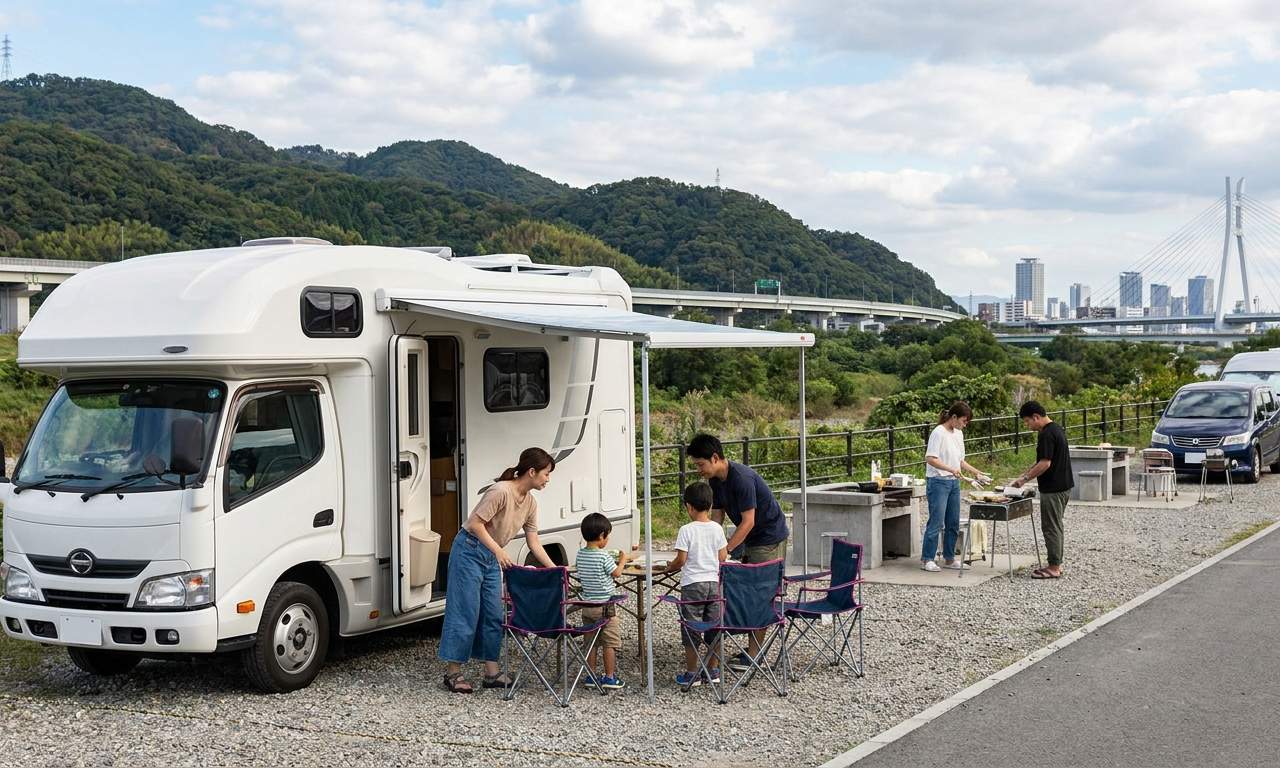
Osaka features a robust network of well-maintained roads, including modern multi-lane expressways and intricate urban street systems. The city center of Osaka is largely flat, but the surrounding prefectures transition into rolling hills and accessible mountainous regions, offering varied terrain for RV travel. While main roads are wide, side streets in residential and older commercial areas of Osaka can be quite narrow, demanding cautious navigation for larger RVs. For long-term RV rentals, embracing a slower, more scenic driving pace allows for a richer experience of both Osaka's urban charm and Japan's natural beauty. For those planning a trip across the country, our RV Rental Japan guide offers broader context.
RV Size Limits, Bridges & Restricted Zones
While there are no blanket 'restricted zones' for RVs in Osaka, drivers must pay close attention to height and width restrictions, particularly for urban structures. Common height limits for urban underpasses, tunnels, and especially multi-story parking garages in Osaka can range from 2.5m to 3.5m, often precluding larger RV classes. For context, Bandana's Class C Alcove RVs average 7.5m in length, and their Class A Integrated RVs also average 7.5m, both potentially exceeding urban height restrictions. Japan does not generally implement environmental zones like some European cities; however, always remain observant for specific local signage that might indicate temporary or permanent access restrictions. Ferry services for island exploration might have specific length and weight limitations, which should be checked in advance if planning inter-island travel.
Fuel: Diesel vs. Petrol & Cost per 100 km
Both diesel (軽油 - keiyu) and petrol (ガソリン - gasorin) are readily available at service stations throughout Osaka and across Japan. The majority of Bandana's global fleet of rental RVs typically operate on diesel fuel, which tends to offer better fuel efficiency. Based on Bandana's global fleet averages, a Class SI Semi-integrated RV generally consumes between 10-11 Liters/100 km, while a Class B Camper Van averages 8-10 Liters/100 km. Fuel costs in Japan are comparatively higher than in many international destinations, necessitating careful budgeting for long-term RV rentals, with average costs per 100 km varying based on fuel price fluctuations and RV class. For a broader perspective on travel costs, consider exploring RV Rental in Osaka - Prices and Best Deals 2026. On the routes offered through RV PLANET routes, you can itemize and track every expense along the way for easy budgeting.
Tolls, Vignettes & Border Rules
Japan operates a comprehensive electronic toll collection (ETC) system for its extensive network of expressways, and no 'vignettes' are used. Tolls in Japan, particularly on the busy expressways around urban centers like Osaka, can be substantial, making an ETC card an almost essential item for convenient travel. Some rent-motorhome RVs may offer options for pre-purchasing or renting an ETC card, which streamlines payment and can sometimes offer discounted rates compared to manual cash payments, thereby avoiding potential fines for missed tolls. As an island nation, Japan has no land borders with neighboring countries, so typical international 'border rules' for RVs are not applicable.
Driving Tips for long term rv rental Travelers
Always remember to drive on the left side of the road, and be mindful of right-hand drive vehicles common in Japan. Utilize an Electronic Toll Collection (ETC) card for Japan's expressways; this saves time, offers smoother transit, and can be more cost-effective than cash payments. Familiarize yourself with common Japanese road signs, which blend international symbols with some unique local pictograms, often available in English translations on major routes. Plan your routes meticulously, especially in Osaka's dense urban areas, considering potential narrow streets and limited parking for larger RVs (Bandana's Class C averages 7.5m in length). Practice local cultural etiquette by minimizing noise in campgrounds and parking areas, and strictly adhering to waste disposal regulations.
Recommended RV Class for Osaka Roads
For navigating Osaka's diverse road conditions, including urban environments and scenic routes, a Class B Camper Van or Class SI Semi-integrated RV is generally recommended. Bandana's Class B Camper Vans, averaging 5.8m in length, offer excellent maneuverability for city streets and ease of parking, making them ideal for urban exploration. Class SI Semi-integrated RVs, with an average length of 6.9m, provide a good balance of comfortable living space and manageable size for most Japanese roads outside the very densest city centers. While larger classes like Class C (average 7.5m) and Class A (average 7.5m) offer more amenities, their size requires more careful planning for urban navigation and parking in Osaka. When comparing options, consider the RV Rental Deals in Osaka - Latest Offers 2026 for the best vehicle choices.
Should I Choose a Compact Van Instead of a Large RV in Osaka?
While a compact van offers superior maneuverability for extremely narrow streets and tight parking in Osaka's dense core, larger RVs typically pose no issue on main roads and offer significantly more comfort for long-term rentals. The trade-off between maneuverability and living space is key: a larger RV (such as Bandana's Class SI, averaging 6.9m) provides essential indoor amenities and space for extended trips. A compact van genuinely helps in navigating very old, intricate historic districts or extremely narrow mountain passes, but for general touring and expressway travel around Osaka, a larger RV often provides a better overall experience. Consider your primary travel style: if extensive urban exploration in tight areas is paramount, a compact van might be preferable, but for comfort and longer journeys, a larger RV is often the better choice. For family trips, the Family RV Rental in Osaka - Pricing Guide 2026 can help you find the perfect fit.
Can I Park Anywhere? Free & Wild Camping Rules in Osaka
Free or 'wild' camping, which involves parking and staying overnight outside of designated facilities, is generally prohibited and strongly discouraged in Osaka and throughout Japan. Dedicated campgrounds are the primary legal and recommended option for overnight RV stays, providing necessary amenities like power hookups, restrooms, and waste disposal points. Japan's 'Michi-no-Eki' (roadside stations) often allow overnight parking for rest purposes in your RV, but full 'camping' activities such as setting up awnings, barbecues, or extended outdoor living are typically not permitted. Rules vary by region — always check local regulations and follow local law before parking overnight to ensure a respectful and lawful RV experience.
Can I Drive an RV Into the City Center? Heights, Tunnels & Local Signage
Yes, you can generally drive an RV into Osaka's city center, but parking availability and strict attention to local signage, particularly regarding height limits, are paramount. Be extremely vigilant for height restrictions on urban underpasses, tunnels, and the entrances to multi-story parking garages, as many larger RVs (such as Bandana's Class C at an average height of around 3.2m) will exceed these limits. While explicit 'environmental zones' are not common, some inner-city streets may have specific restrictions (e.g., residents-only access, no large vehicles during peak hours). For a more convenient experience, it is often advisable to park your RV at a designated facility on the outskirts of Osaka and utilize the city's efficient public transportation network for central exploration.
What are the Specific RV Regulations for Driving and Waste Disposal in Osaka?
Specific RV regulations in Osaka, consistent with national Japanese laws, encompass vehicle dimensions, driving license requirements, and strict waste disposal protocols. While a standard international driving permit covers most RVs under 3.5 tons, drivers should be aware of dimensional limits, as vehicles exceeding 2.5m in width or 3.8m in height may encounter challenges on certain urban roads and in older infrastructure. Waste disposal, including both gray and black water, must be exclusively performed at designated dump stations, which are primarily located at official campgrounds and some larger Michi-no-Eki (roadside stations). Improper waste disposal is strictly prohibited in Japan and can lead to significant fines, emphasizing the importance of utilizing appropriate facilities to maintain environmental standards. For comprehensive route planning and finding necessary facilities, consider the services offered through RV PLANET routes.
What are Effective Urban RV Parking Strategies for Sightseeing in Osaka?
Effective urban RV parking strategies for sightseeing in Osaka primarily involve utilizing park-and-ride options, positioning your RV on the city's periphery, and then commuting via Osaka's extensive public transportation system. Look for larger, open-air 'coin parking' (コインパーキング) lots located near major train or subway stations on the outskirts of the city, as these are more likely to accommodate RV dimensions than multi-story garages. Some larger commercial complexes or shopping malls away from the central business district may offer suitable parking, but it's crucial to verify their RV parking policies and any time restrictions. Booking a campsite that is well-connected to Osaka's public transport network provides a secure base for your RV and convenient access to city attractions without the stress of urban parking. For insights into specific spots, check out our RV Camping in Osaka - Best Campgrounds 2026.
Beyond Campsites: What are Alternative Overnight RV Stay Options in Osaka (Michi-no-Eki)?
Beyond traditional campgrounds, Japan offers 'Michi-no-Eki' (roadside stations) as legitimate, safe, and often amenity-rich alternative overnight parking options for RVs. These government-designated rest areas typically provide clean restrooms, local product shops, and restaurants, and permit RVs to park overnight for rest, differentiating them from informal 'freedom camping'. It's important to note that while overnight parking is usually allowed, Michi-no-Eki are primarily for resting, and full 'camping' activities like deploying awnings, setting out chairs, or cooking extensively outside the RV are generally discouraged. Michi-no-Eki serve as excellent, often free, stopover points when traveling between destinations, offering a convenient alternative to booking a full campsite every night. For ideas you can prep on the road, watch our RV-friendly recipes playlist on YouTube.
What are Osaka's Unique Driving Challenges for RVs and How to Navigate Them?
Osaka presents unique driving challenges for RVs, including its high urban density with narrow streets, complex elevated expressways, and distinct traffic patterns. Navigating the intricate toll road system and understanding ETC card usage is a key challenge for foreign drivers, as manual payment can be cumbersome and potentially more expensive. While signage is clear, the sheer volume of information and occasional Japanese-only signs can be confusing, making a reliable GPS with height/width warnings highly beneficial. To effectively navigate these challenges, drivers should plan routes meticulously, consider driving during off-peak hours to avoid heavy traffic, and utilize park-and-ride options when exploring dense city areas.
What is the Cultural Etiquette for RVers in Osaka?
Adhering to local cultural etiquette is crucial for RVers in Osaka, particularly regarding noise levels and respectful conduct in shared spaces. Maintaining low noise levels, especially during evening and morning hours in campgrounds, Michi-no-Eki, and residential areas, demonstrates respect for local communities. Proper waste management is paramount; always dispose of all waste, including general rubbish and RV gray/black water, at designated facilities, never in public areas or undesignated spots. Show courtesy and politeness in interactions with locals, and be mindful of your footprint in public spaces, ensuring your RV does not obstruct pathways or views.
What is the Detailed Cost Breakdown for a Long Term RV Rental Trip in Osaka?
A detailed cost breakdown for a long term RV rental in Osaka encompasses several key expenses beyond the initial rental fee, including fuel, tolls, parking, and campsite charges. Fuel costs will constitute a significant portion of your budget due to Japan's higher fuel prices; for example, a Bandana Class SI RV typically consumes 10-11 Liters/100 km. Tolls on Japan's extensive expressway network are substantial and essential for efficient travel, making an ETC card a wise investment to manage these costs effectively. Expect to incur parking fees, especially in and around urban Osaka, and dedicated campsite costs, which can be higher compared to other countries for similar amenities. Factor in additional variable expenses such as food, entrance fees for attractions, and public transport costs if you opt for park-and-ride strategies to explore city centers. For tips on managing expenses, explore One-Way RV Rental in Osaka - Price Guide 2026.
What are RV-Friendly Itineraries and Day Trips from Osaka?
RV-friendly itineraries from Osaka can strategically combine the city's vibrant culture and culinary delights with exploration of surrounding natural beauty and historic sites. For urban exploration, a common strategy is to park your RV at an accessible peripheral Michi-no-Eki or campground with good public transport connections, then use trains or subways to visit central Osaka attractions. Consider day trips or multi-day excursions to nearby destinations like ancient Kyoto and Nara, the scenic coastal routes of Wakayama Prefecture, or the serene landscapes around Lake Biwa, all offering RV-friendly routes and stops. When planning, integrate driving on Japan's efficient expressways for inter-regional travel with quieter local roads to experience unique cultural stops, always keeping RV dimensions in mind for smaller villages. For route inspiration, our RV Travel Guide to Osaka - Tips and Top Spots 2026 offers excellent suggestions.
What You Shouldn't Miss
- Explore Dotonbori: Immerse yourself in Osaka's vibrant entertainment district, famous for its dazzling neon lights, iconic Glico Running Man sign, and incredible street food.
- Visit Osaka Castle: Step back in time at this magnificent reconstructed castle, surrounded by a serene park, offering panoramic views of the city from its upper floors.
- Day trip to Nara: Just a short RV drive from Osaka, Nara offers ancient temples, serene gardens, and friendly wild deer roaming freely in Nara Park.
- Experience Universal Studios Japan: A must-visit for theme park enthusiasts, offering thrilling rides and immersive experiences based on popular movies and franchises.
- Discover Shinsekai & Tsutenkaku Tower: Explore Osaka's retro district, soak in the nostalgic atmosphere, and enjoy city views from the iconic Tsutenk's observation deck.
- Savor Osaka's Culinary Scene: From takoyaki and okonomiyaki to exquisite kaiseki ryori, Osaka is a food lover's paradise – don't miss the Kuromon Ichiba Market.
Final Thoughts
Embarking on a long-term RV rental adventure in Osaka offers an unparalleled way to experience the rich culture and diverse landscapes of Japan. By understanding the unique driving conditions, embracing local etiquette, and planning your routes wisely, you're set for an unforgettable journey.
Remember, slow travel is the key to truly connecting with a destination. Take your time, savor the experiences, and let the spirit of adventure guide you. Bandana Caravan is here to support you every step of the way, from initial planning to a smooth return.
Find Motorhome Rentals in Osaka