In This Guide
- The 4 RV Families Compared for Tokyo - Airport
- Class A (Integrated) - Best For
- Price Comparison by RV Class in Tokyo - Airport
- Class SI (Semi-Integrated) - Best For
- Class C (Alcove) - Best For
- Class B (Campervan) - Best For
- Side-by-Side Comparison Table
- Our Recommendation for last minute rv rental Travelers in Tokyo - Airport
- Where can I rent an RV in Tokyo for a last-minute trip?
- What are the best RV rental companies near Narita Airport (NRT)?
- Are there RV rentals available at Haneda Airport (HND)?
- How much does it cost to rent an RV in Tokyo for a week?
- What is the average fuel consumption for RVs in Japan?
- Can I park an RV overnight at Narita or Haneda Airport?
- What are the driving rules for RVs in Japan?
- Where can I find RV parking in Tokyo city?
- Are there RV campsites or 'Michi-no-Eki' near Tokyo?
- How do toll roads work for RVs in Japan, and do I need an ETC card?
- What type of fuel do RVs use in Japan, and how do I pay for it?
- What You Shouldn't Miss
- Why Book with Bandana Caravan
- Final Thoughts
- Frequently Asked Questions
Discovering Tokyo and its stunning surroundings by rented RV offers unparalleled freedom, even for spontaneous last-minute adventures. For live availability and current prices, start with our RV Rental Tokyo - Airport - Complete Guide 2026 guide. Whether you're flying into Narita International Airport (NRT) or Haneda Airport (HND), choosing the right motorhome or campervan is key to unlocking a memorable trip.
The 4 RV Families Compared for Tokyo - Airport
The choice of RV family significantly impacts your last-minute Tokyo trip, considering factors like maneuverability on Japanese roads, parking availability, and accommodation for your group size. Tokyo's bustling urban environment and the serene natural beauty surrounding it call for careful selection, as vehicle dimensions affect your ability to navigate, park, and access various attractions efficiently. Even with last-minute rentals, understanding which RV class offers the best balance of comfort, cost, and practicality is crucial for your specific travel needs in and around Tokyo - Airport. Bandana specializes in motorhome and campervan rentals, ensuring you get a vehicle perfectly suited for your journey.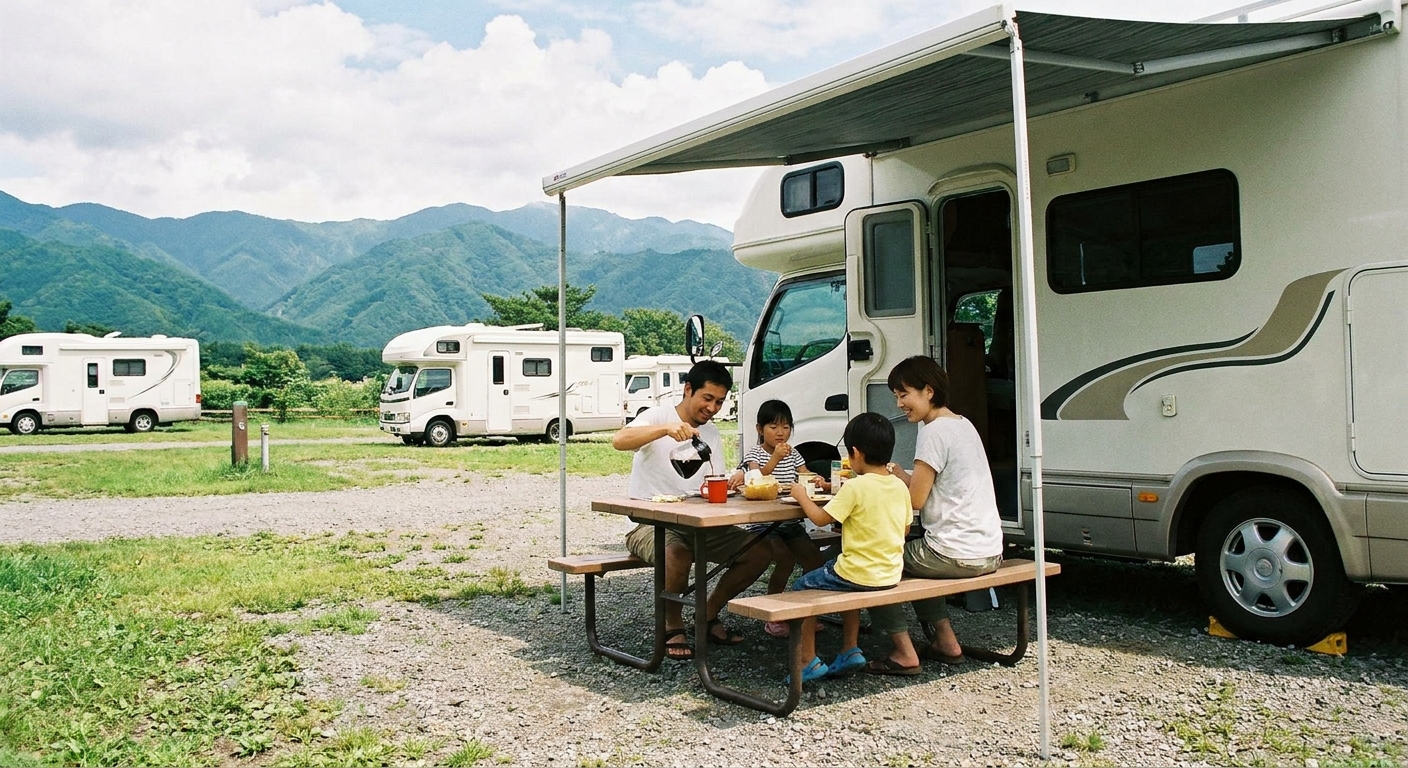
Class A (Integrated) - Best For
Class A integrated motorhomes are ideal for last-minute travelers in Tokyo - Airport seeking maximum comfort and amenities, akin to a luxury coach. Bandana's global fleet typically features Class A RVs with an average length of 7.5 meters, accommodating around 4.4 sleeping places for 4 adults, making them suitable for larger groups or those desiring spacious living quarters. While offering extensive facilities and a commanding view of the road, their larger size (average length 7.5m) and fuel consumption (typically 11-12 Liters/100 km) may pose challenges on Tokyo's narrower streets and incur higher operating costs, with an average load capacity of 209.5 kg for personal belongings. These motorhomes offer a truly indulgent way to explore, providing a home-away-from-home feel even on a spontaneous adventure.Price Comparison by RV Class in Tokyo - Airport
Pricing for RV rentals is dynamic and flex-rate, meaning rates change daily based on availability, seasonality, and supplier marketing decisions, similar to flight tickets. For a last-minute RV rental in Tokyo - Airport, prices will vary. Here are some real example prices from Bandana's live search for various durations and RV classes, which provide general estimates.Prices are estimates based on a specific period and may vary daily. Always check the search box at the top of the page for the most current availability and rates.
| RV Class | Average Daily Rate (USD) - Low Season | Average Daily Rate (USD) - High Season | Estimated 1-Week Rental (USD) |
|---|---|---|---|
| Class B (Campervan) | $120 - $180 | $180 - $250 | $840 - $1750 |
| Class SI (Semi-Integrated) | $180 - $250 | $250 - $350 | $1260 - $2450 |
| Class C (Alcove) | $200 - $300 | $300 - $400 | $1400 - $2800 |
| Class A (Integrated) | $300 - $450 | $450 - $600+ | $2100 - $4200+ |
Class SI (Semi-Integrated) - Best For
Class SI (Semi-integrated) motorhomes represent a balanced choice for last-minute Tokyo - Airport travelers, offering a good compromise between space and maneuverability. These RVs from Bandana's global fleet typically average 6.9 meters in length, providing comfortable sleeping for 3.8 people and accommodating around 3.4 adults, with an average load capacity of 72.2 kg. They often outperform larger Class A models in urban navigation and tighter parking spots around Tokyo, while still providing more amenities than a campervan, with typical fuel consumption around 10-11 Liters/100 km. Our "Weekly RV Rental in Tokyo - Airport - Pricing 2026" guide can help you find suitable options.Class C (Alcove) - Best For
Class C (Alcove) motorhomes are highly recommended for last-minute family or group travelers in Tokyo - Airport due to their practicality and cost-efficiency. Bandana's global fleet of Class C RVs typically average 7.5 meters in length, featuring an over-cab sleeping area that boosts capacity to around 5.8 sleeping places for 4.4 adults, with an average load capacity of 42.4 kg for gear. Their robust design handles various road conditions well, aligning with last-minute priorities for accessible, budget-friendly comfort, typically consuming 10-12 Liters/100 km. Imagine preparing family meals in your rented Class C motorhome's kitchen, making your trip even more comfortable. You can find inspiration and practical tips on our RV-friendly recipes playlist.Class B (Campervan) - Best For
Class B (Campervan) models are the optimal choice for last-minute Tokyo - Airport travelers prioritizing maneuverability, fuel economy, and ease of navigation in urban settings. Bandana's global fleet of campervans typically average 5.8 meters in length, making them the most compact RV class suitable for navigating Japan's narrow roads and finding parking, while offering 3.2 sleeping places for 2.7 adults. With an average fuel consumption of approximately 10 Liters/100 km and a load capacity of 37 kg, Class B campervans are perfect for solo adventurers or small groups seeking a flexible and efficient travel experience around Tokyo. These agile vehicles are ideal for exploring city sights or taking a quick escape to nearby natural wonders.Side-by-Side Comparison Table
This concise table provides a clear side-by-side comparison of key specifications and best use cases for each motorhome and campervan family available for rental in Tokyo - Airport, drawing from Bandana's global fleet averages. This helps in understanding how "Cheap RV Rental in Tokyo - Airport - Budget Guide 2026" options differ.| Family | Avg Length (m) | Sleeps | Fuel Use (L/100km) | Best Use Case in Tokyo - Airport |
|---|---|---|---|---|
| Class A (Integrated) | 7.5 | 4.4 | 11-12 | Luxury comfort, large groups, spacious living |
| Class SI (Semi-Integrated) | 6.9 | 3.8 | 10-11 | Balanced comfort and maneuverability, small families |
| Class C (Alcove) | 7.5 | 5.8 | 10-12 | Families with children, cost-effective group travel |
| Class B (Campervan) | 5.8 | 3.2 | 8-10 | Solo travelers/couples, urban navigation, fuel efficiency |
Our Recommendation for last minute rv rental Travelers in Tokyo - Airport
For last-minute RV rental travelers in Tokyo - Airport, we primarily recommend a Class B (Campervan) due to its unparalleled maneuverability and ease of parking in densely populated areas and on Japan's narrower roads. Its compact size (average 5.8m length) and excellent fuel economy (around 10 Liters/100 km) make it highly practical for navigating urban environments and reaching attractions efficiently, even when planning quickly. As a strong runner-up, a Class SI (Semi-integrated) motorhome offers a good balance for those needing more space (average 6.9m length, sleeps 3.8) than a campervan while still being manageable for last-minute travel around Tokyo, providing more amenities without the bulk of a Class A or C. For broader planning, consult our "RV Rental Japan - Complete Guide 2026".Where can I rent an RV in Tokyo for a last-minute trip?
You can rent an RV in Tokyo for a last-minute trip from various providers, often with convenient pick-up locations near major airports like Narita (NRT) and Haneda (HND). Bandana offers a streamlined online booking platform that allows for quick searches of available RVs, including Class B campervans, Class SI semi-integrated, and Class C alcove models, perfect for spontaneous travel. Many rental companies operate just a short shuttle ride from the airport terminals, providing accessible options even with limited planning time.What are the best RV rental companies near Narita Airport (NRT)?
The best RV rental companies near Narita Airport (NRT) often include a mix of international aggregators like Bandana and local Japanese specialists, providing specific RV options close to the airport. Many rental depots are located within a 10-30 minute drive from NRT, offering convenience for international arrivals, with shuttle services commonly provided. When booking last-minute, check for availability of different RV classes, particularly smaller, more maneuverable options like campervans or semi-integrated models that are well-suited for Japanese roads, to explore the area efficiently, perhaps starting with a scenic drive through Chiba Prefecture.Are there RV rentals available at Haneda Airport (HND)?
Yes, RV rentals are available near Haneda Airport (HND), though actual pick-up locations are typically off-site, requiring a short taxi or shuttle ride to the rental depot. Haneda's proximity to central Tokyo makes it a convenient gateway, and several RV rental providers operate nearby, catering to both domestic and international travelers. For last-minute bookings, it's advisable to use online platforms like Bandana to quickly compare availability and choose a vehicle that suits your travel plans directly from HND. This makes planning a "One-Way RV Rental in Tokyo - Airport - Price Guide 2026" trip more straightforward.How much does it cost to rent an RV in Tokyo for a week?
The cost to rent an RV in Tokyo for a week varies significantly based on the RV class, time of year, and booking lead time, but you can find current flex-rate estimates in the 'Price Comparison by RV Class in Tokyo - Airport' section above. Generally, smaller RVs like Class B campervans are more budget-friendly, typically starting from $840 USD for a week in low season, while larger Class A or C models offer more space and amenities at a higher weekly rate, potentially exceeding $4200 USD. For the most accurate and up-to-date pricing for a "Weekly RV Rental in Tokyo - Airport - Pricing 2026", always refer to Bandana's live search engine, which dynamically updates rates based on demand and availability.What is the average fuel consumption for RVs in Japan?
The average fuel consumption for RVs in Japan largely depends on the vehicle class, with Bandana's global fleet typically consuming between 8-17 Liters per 100 km. Smaller Class B campervans are the most fuel-efficient, averaging around 10 Liters/100 km, while larger Class A integrated motorhomes and Class C alcove models tend to consume more, often 11-12 Liters/100 km. Driving habits, terrain (e.g., mountainous routes like those towards Mount Fuji), and vehicle load will also influence actual fuel efficiency during your trip, especially when navigating Japan's varied landscapes.Can I park an RV overnight at Narita or Haneda Airport?
Overnight RV parking at Narita (NRT) or Haneda (HND) airports is generally not permitted in standard parking lots, as these facilities are designed for short-term vehicle storage, not extended RV stays. Legality and safety for overnight RV parking in undesignated areas within Japan, including airport vicinities like the area around Terminal 1 at Narita, are often restrictive; it's always best to seek official campgrounds or Michi-no-Eki. Travelers should plan to pick up their RV and proceed to a designated RV park or campground for their first night rather than attempting to stay at the airport.What are the driving rules for RVs in Japan?
Driving an RV in Japan requires adherence to specific rules, including possession of an International Driving Permit (IDP) alongside your national license, and understanding that vehicles drive on the left side of the road. RV-specific laws include general awareness of vehicle height and width in certain areas, with many older roads, city underpasses near destinations like the Ginza district, and parking garages having low overhead clearances or narrow passages, necessitating careful navigation. Drive slowly and carefully, and you can drive almost anywhere without issues. No need to stress - just use common sense and pay attention to signs, many of which now have English translations. The minimum rental age for any motorhome class is 21.Where can I find RV parking in Tokyo city?
Finding RV-specific parking in Tokyo city can be challenging due to space limitations, but dedicated RV parking solutions exist, though they are fewer and often require advance booking. Look for larger commercial parking lots outside the immediate city center, such as those near Odaiba, or specialized RV parks on the outskirts, as many multi-story car parks in areas like Shinjuku will have height/width restrictions unsuitable for RVs. Planning your itinerary with RV-friendly parking in mind is crucial, as availability for larger vehicles within the core of Tokyo is limited. The "RV Travel Guide to Tokyo - Airport - Tips and Top Spots 2026" offers more local insights.Are there RV campsites or 'Michi-no-Eki' near Tokyo?
Yes, there are numerous RV campsites, campgrounds, and 'Michi-no-Eki' (roadside stations) suitable for overnight RV stays near Tokyo and its airports. Wakasu Seaside Park Campground, about 30 km from Tokyo - Airport, offers designated RV spots with some facilities, and several Michi-no-Eki like Michi-no-Eki Tako Ajisai-kan in Chiba Prefecture provide free overnight parking, though often without hookups. These roadside stations, which literally translate to "road stations," are popular for local produce, restrooms, and a safe place to rest. Researching and booking these spots in advance is highly recommended, especially during peak travel seasons, to secure suitable overnight accommodation for your RV. For finding campsites and campgrounds during your trip, we recommend using RV PLANET (rvplan.net) - a great resource for locating available spots along your route.How do toll roads work for RVs in Japan, and do I need an ETC card?
Toll roads in Japan, especially expressways connecting airports to Tokyo like the Tokyo Bay Aqua-Line, operate efficiently, and RVs are typically charged based on vehicle class and axle count, often falling into a larger vehicle category with higher costs than standard cars. Acquiring an ETC (Electronic Toll Collection) card is highly recommended and almost essential for RV travel, as it allows for seamless passage through toll gates without stopping, often providing discounts. You can usually rent an ETC card with your RV or purchase one, as it significantly enhances convenience and helps manage toll expenses across Japan's extensive expressway network.What type of fuel do RVs use in Japan, and how do I pay for it?
RVs in Japan primarily use either regular unleaded gasoline (レギュラー - Regyuraa) or diesel (軽油 - Keiyu), so it is crucial to confirm your rented RV's specific fuel type upon rental pickup near Tokyo - Airport. Payment methods at Japanese fuel stations include credit cards (Visa, Mastercard are widely accepted, but some smaller stations may be cash-only) and cash, with many self-service stations requiring payment before fueling. Finding suitable stations is generally easy along major routes like the Higashi-Kanto Expressway and in urban areas, but always keep an eye on your fuel gauge when venturing into more rural or mountainous regions, as stations can be sparse.What You Shouldn't Miss
- Explore Hakone National Park: Drive your rented motorhome to Hakone, approximately 1.5-2 hours from Tokyo - Airport, for stunning views of Mount Fuji, relaxing hot springs, and scenic cruises on Lake Ashi.
- Coastal Cruise to Kamakura: Take a day trip or overnight stay to Kamakura, a historic coastal city just over an hour from Tokyo, famous for its Great Buddha and numerous temples.
- Hike in Nikko National Park: Venture north to Nikko, about 2.5 hours from Tokyo, to experience beautiful shrines, temples, and natural waterfalls, perfect for a slow travel itinerary.
- Visit the Ghibli Museum (Mitaka): For anime fans, this magical museum dedicated to Studio Ghibli is a must-see, easily accessible with your campervan or motorhome (book tickets well in advance!).
- Indulge in Local Cuisine at a Michi-no-Eki: Stop at a roadside station for fresh local produce, regional snacks, and unique culinary experiences – a true taste of Japan beyond the city.
Final Thoughts
A last-minute RV rental in Tokyo - Airport opens up a world of possibilities, from exploring the vibrant city life to escaping into Japan's stunning natural landscapes. We encourage you to travel slowly, averaging no more than 100-150 km per day, allowing you to truly feel the place and connect with the local culture, delicious food, and breathtaking scenery. With our transparent pricing and dedicated support, you can embark on your Japanese adventure with confidence. Remember, finding a great spot is part of the adventure. Many national and state parks reserve 25-30% of their spots as first-come-first-serve, so you'll find a spot; if not at the first campground, then the next one. Just call ahead before driving! Your spontaneous journey through Japan, from the bustling streets of Tokyo to serene mountain retreats, awaits. Find Motorhome Rentals in Tokyo - AirportOn the routes offered through RV PLANET routes, you can itemize and track every expense along the way for easy budgeting.