In This Guide
- The 5 RV Families Compared for Tokyo - Airport
- Class A (Integrated) - Best For
- Price Comparison by RV Class in Tokyo - Airport
- Class SI (Semi-Integrated) - Best For
- Class C (Alcove) - Best For
- Class B (Campervan) - Best For
- Class TC (Truck Camper) - Best For
- Side-by-Side Comparison Table
- Our Recommendation for rv rental beginners Travelers in Tokyo - Airport
- Comprehensive guide to Michi-no-Eki (Roadside Stations): how to use them, etiquette, specific amenities near Tokyo/NRT, and their role in RV travel
- Detailed cost breakdown beyond just rental fees, including estimated fuel, tolls (specifics for major routes from NRT/HND), parking, and potential hidden charges
- Specific legalities and cultural etiquette for RV parking and 'freedom camping' in Japan, differentiating between acceptable (Michi-no-Eki) and prohibited areas
- Practical advice for navigating Japan's unique road system from Tokyo airports: toll road payment (ETC card necessity), narrow roads, specific signage, and city driving challenges
- Foreigner-specific requirements for driving an RV in Japan, including International Driving Permit nuances, useful Japanese phrases for road travel, and navigation assistance
- Curated itineraries starting from Narita/Haneda, highlighting suitable routes, campgrounds, Michi-no-Eki stops, and points of interest accessible by RV
- Safety and security considerations for RV travelers in Japan, including emergency procedures and local contacts
- Best times of year for RV travel from Tokyo, considering weather, crowded periods, and specific regional events
The 5 RV Families Compared for Tokyo - Airport
RV family choice significantly impacts your Tokyo - Airport trip due to varied terrain, specific climate considerations, trip length requirements, and group size dynamics. Choosing the right motorhome class for your Japanese adventure as a beginner means balancing comfort, maneuverability on Japan's roads, and your overall budget. Bandana Caravan offers full transparency with no hidden fees, helping you compare options from over 50 leading RV suppliers worldwide, ensuring you find the perfect rented mobile home without surprises. For live availability and current prices, start with our RV Rental Tokyo - Airport - Complete Guide 2026 guide.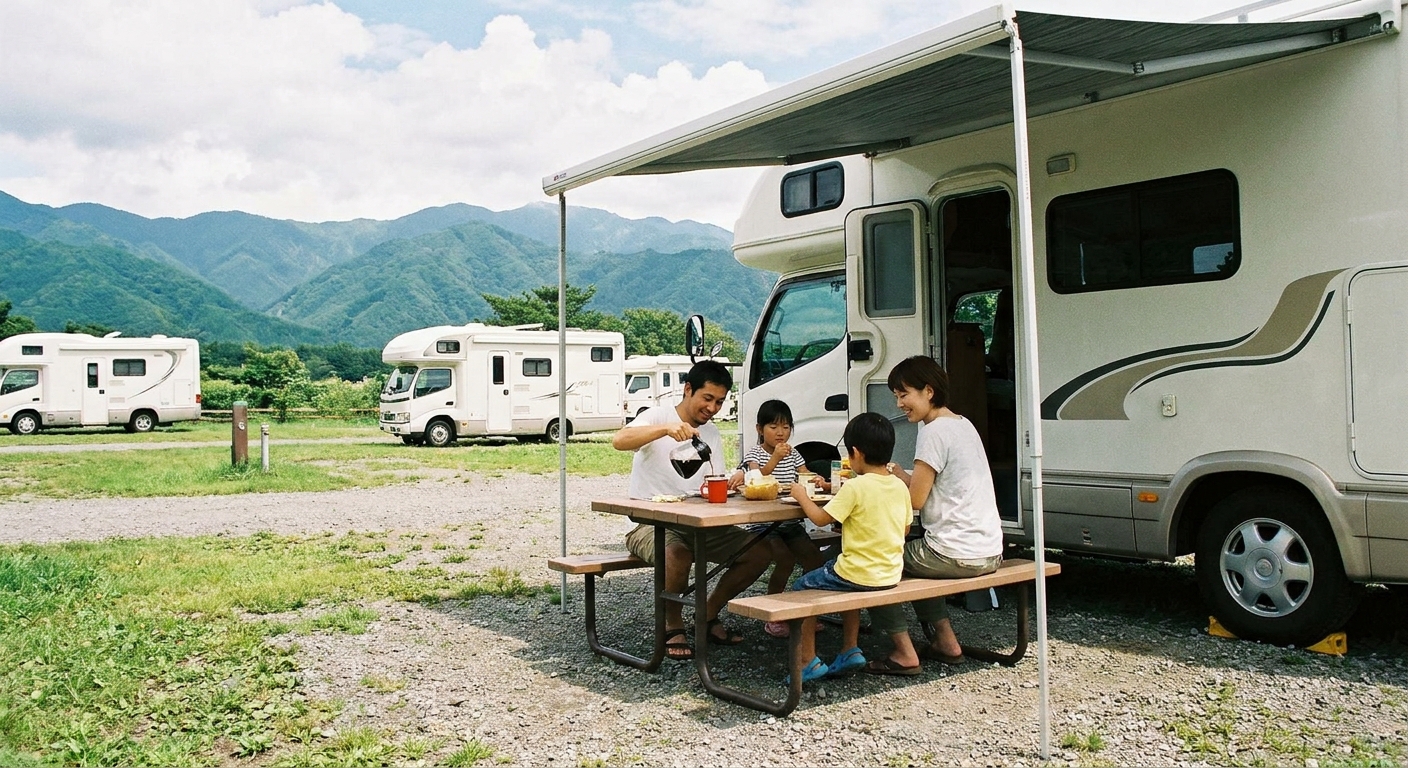
Class A (Integrated) - Best For
Class A (Integrated) motorhomes are best for travelers seeking maximum space and luxury in Tokyo - Airport, offering a home-away-from-home experience ideal for larger groups or extended week-long trips. Bandana's global fleet of Class A RVs typically average 7.5 meters in length and sleep around 4-6 people, with a fuel consumption range often between 8-12 Liters/100 km. These integrated vehicles, such as the "Class A - Thor ACE 30" with its 7.3L V8 engine and capacity for 6 sleepers, provide extensive amenities and a spacious living area, making them comfortable for longer stays or for those prioritizing onboard comfort over compact size. Trade-offs for beginners in Tokyo include their larger size, which can be challenging to navigate on Japan's narrower roads and find suitable parking, and generally higher rental and fuel costs. Drive slowly and carefully, and you can drive almost anywhere without issues. No need to stress - just use common sense and pay attention.Price Comparison by RV Class in Tokyo - Airport
Understanding RV rental costs for beginners in Tokyo - Airport involves comparing different RV classes across various rental durations, as prices are dynamic and vary by season. Because pricing is flex-rate, the final price is set at actual booking time and updates daily, reflecting current demand and availability. For example, a "Luxury RV Rental in Tokyo - Airport - Premium Prices 2026" or a "Family RV Rental in Tokyo - Airport - Pricing Guide 2026" could vary significantly.Live April Price Comparison — RV Class × Trip Length
| Trip length | Class A | Class B | Class C | Class SI | Class TC |
|---|---|---|---|---|---|
| 1 week 15/04 → 22/04 | Check prices | Check prices | Check prices | Check prices | Check prices |
| 2 weeks 15/04 → 29/04 | Check prices | Check prices | Check prices | Check prices | Check prices |
| 1 month 01/04 → 30/04 | Check prices | Check prices | Check prices | Check prices | Check prices |
Estimates only — flex-rate prices change daily based on availability and season.
Class SI (Semi-Integrated) - Best For
Class SI (Semi-Integrated) motorhomes are ideal for beginners looking for a balanced option in Tokyo - Airport, combining comfortable living space with better maneuverability than larger classes on Japan's roads. Bandana's global fleet of Class SI RVs typically average 6.9 meters in length, accommodate around 3-4 sleepers, and have a common fuel consumption of 10-11 Liters/100 km. These models, like the "2 Berth Rover" or "Active Standard Auto," offer a good compromise between the spaciousness of an Alcove and the drivability of a Campervan, making them suitable for small families or couples seeking a comfortable touring experience without the bulk. For beginners in Tokyo - Airport, semi-integrated models are easier to handle in urban environments and on toll roads compared to Class A or C, while still providing essential amenities like a shower and toilet.Class C (Alcove) - Best For
Class C (Alcove) motorhomes are particularly well-suited for families or larger groups of beginners traveling from Tokyo - Airport, offering ample sleeping capacity and a cost-efficient option. Bandana's global fleet of Class C RVs typically average 7.5 meters in length, sleep around 5-7 people due to the distinctive overhead 'alcove' bed (like the "24' Class C Motorhome" with a 152/203cm bed over the cab), and consume roughly 10-12 Liters/100 km. Their design prioritizes sleeping arrangements, making them excellent for families with children, while providing a good balance of interior space and drivability for longer trips. While larger than B or SI classes, their robust construction and familiar truck-chassis driving experience can be reassuring for beginners, though navigating narrow Japanese streets might require more caution. Drive slowly and carefully, and you can drive almost anywhere without issues. No need to stress - just use common sense and pay attention.Class B (Campervan) - Best For
Class B (Campervan) models are the top choice for RV rental beginners in Tokyo - Airport prioritizing maneuverability, fuel economy, and ease of driving for small groups or couples. Bandana's global fleet of Class B campervans typically average 5.8 meters in length, sleep about 2-3 people, and boast an efficient fuel consumption of 8-10 Liters/100 km. Their compact size, resembling a large car (e.g., "Active Pop Top" or "Chubby Camper"), makes them incredibly easy to navigate Japan's potentially narrow roads, park in standard spaces, and handle city traffic near Narita or Haneda. While offering less interior space than larger RVs, their agility and lower operating costs make them ideal for adventurers focused on exploring diverse areas around Tokyo, including more secluded spots accessible by smaller vehicles. For finding campsites and campgrounds during your trip, we recommend using RV PLANET (rvplan.net) - a great resource for locating available spots along your route.Class TC (Truck Camper) - Best For
Class TC (Truck Camper) units are best for RV rental beginners seeking flexibility and ruggedness from Tokyo - Airport, offering a detachable living unit mounted on a pickup truck chassis, ideal for off-grid adventures. Bandana's global fleet of Class TC RVs, such as the "4x4 Truck Camper Gold," typically average 5.5 meters in length, accommodate around 2-3 sleepers, and have a fuel consumption often between 12-17 Liters/100 km. Their unique design allows the camper unit to be detached, freeing up the truck for day trips or navigating tighter spots, making them excellent for exploring diverse terrains around Tokyo and beyond. For beginners, the Truck Camper provides a robust driving experience and capability for unpaved roads, appealing to those who prioritize active exploration and a blend of vehicle versatility with compact living space.Side-by-Side Comparison Table
When comparing RV classes for beginners in Tokyo - Airport, key factors such as length, sleeping capacity, and fuel efficiency greatly influence suitability for Japanese roads and travel styles. This comparison helps you quickly identify the best fit for your adventure, whether you're looking at a "RV Rental in Tokyo - Airport for Couples - Pricing 2026" or a "Family RV Rental in Tokyo - Airport - Pricing Guide 2026".| Family | Avg Length (m) | Sleeps | Fuel Use (L/100 km) | Best Use Case in Tokyo - Airport |
|---|---|---|---|---|
| Class A (Integrated) | 7.5 | 4-6 | 8-12 | Luxury, large groups, long trips (comfortable driving, but challenging in cities) |
| Class SI (Semi-integrated) | 6.9 | 3-4 | 10-11 | Balanced comfort and maneuverability, small families/couples, touring |
| Class C (Alcove) | 7.5 | 5-7 | 10-12 | Families with children, budget-conscious groups, good sleeping capacity |
| Class B (Campervan) | 5.8 | 2-3 | 8-10 | Couples/small groups, urban exploration, fuel efficiency, easy parking |
| Class TC (Truck Camper) | 5.5 | 2-3 | 12-17 | Adventurous couples, off-grid travel, flexible base camp (detachable unit) |
Our Recommendation for rv rental beginners Travelers in Tokyo - Airport
For RV rental beginners traveling from Tokyo - Airport, the **Class B (Campervan)** is our primary recommendation due to its unparalleled maneuverability on Japan's often narrow roads and excellent fuel economy. Its compact size, averaging 5.8 meters in length (like the "V3" or "Active Pop Top Select"), makes it the easiest to drive and park in both urban and rural settings, significantly reducing stress for first-time RVers. Imagine easily navigating the streets around Narita City or finding parking near a local shrine, then cruising towards scenic spots like Lake Kawaguchiko without worry. The **Class SI (Semi-integrated)** is a strong runner-up, offering a good balance between comfortable living space (avg. 6.9m length, such as the "K1/25") and relatively manageable driving dimensions. This class provides more amenities, including a separate shower and toilet (like the "Active Compact Select"), than a campervan without the imposing size of an Alcove or Integrated model, suitable for beginners seeking a bit more comfort for small families or couples on a week-long trip. Travel slowly, max 100-150 km per day on average. Take time to feel the place, connect to the culture, the food, and the scenery. For personalized route plans, explore the RV PLANET (rvplan.net) routes, which offer a 25% planning discount when you book through us.Comprehensive guide to Michi-no-Eki (Roadside Stations): how to use them, etiquette, specific amenities near Tokyo/NRT, and their role in RV travel
Michi-no-Eki, or Japanese roadside stations, are crucial for RV travelers, providing safe overnight parking, clean restrooms, local produce, and unique cultural experiences across Japan. To use them effectively, understand that while overnight parking (泊まる - tomaru) is generally permitted, 'camping out' with awnings and full setups is often discouraged; proper etiquette involves minimizing your footprint and maintaining quiet. Near Tokyo and Narita Airport, specific Michi-no-Eki like 'Michi-no-Eki Tako Ajisai-kan' (about 15 km from NRT) offer fresh local goods and basic facilities, serving as excellent initial stops for beginners. These stations are vital for RV travel as they offer rest areas, local information, and opportunities to sample regional specialties, acting as a network of safe havens for motorhome users. You can plan a trip itinerary in advance with minimal effort and maximum enjoyment using these stops.Detailed cost breakdown beyond just rental fees, including estimated fuel, tolls (specifics for major routes from NRT/HND), parking, and potential hidden charges
Beyond daily rental fees, an RV trip from Tokyo requires budgeting for significant expenses like fuel, tolls, and parking, which can collectively add considerably to your total cost. Estimated fuel costs can be substantial, with vehicles like Class C Alcoves consuming 10-12 Liters/100 km, and Japanese gasoline prices fluctuating; prepare for roughly ¥170-¥185 per liter (as of 2026) for regular unleaded, found at stations along expressways and major routes like National Route 51 from Narita. Tolls are prevalent on Japan's expressways (e.g., from NRT to Tokyo's outskirts via Higashi-Kanto Expressway can be ¥2,000-¥3,000), necessitating an ETC (Electronic Toll Collection) card for efficiency and potential discounts, which can often be rented with your RV. Parking fees vary widely, from free at many Michi-no-Eki to several hundred yen per hour in city centers (e.g., around Ginza or Shinjuku) or specific campground nightly rates (¥2,000-¥5,000), while potential hidden charges might include excess mileage fees, cleaning fees, or insurance deductibles if you haven't opted for the top-level deductible reimbursement. On RV PLANET routes, travelers can itemize and track every expense along the way for easy budgeting.Specific legalities and cultural etiquette for RV parking and 'freedom camping' in Japan, differentiating between acceptable (Michi-no-Eki) and prohibited areas
RV parking and 'freedom camping' in Japan are governed by specific legalities and cultural etiquette that prioritize respect for public and private property. While overnight parking is generally permitted at Michi-no-Eki, it is crucial to understand that this is for resting, not 'camping' - avoid setting up tables, chairs, or awnings outside your vehicle. Wild camping or 'freedom camping' in non-designated areas, such as public parks, beaches, or private land without permission, is generally prohibited and can lead to fines or cultural friction. Always seek out designated RV parks, campgrounds (like Pica Fujiyama near Fuji or Oedo Onsen Monogatari Urayasu Mangekyo parking near Tokyo Bay), or Michi-no-Eki for overnight stays to ensure compliance with local laws and cultural norms, maintaining a low profile even where allowed. This practice ensures a respectful and enjoyable trip across Japan, as detailed in our RV Rental Japan - Complete Guide 2026.Practical advice for navigating Japan's unique road system from Tokyo airports: toll road payment (ETC card necessity), narrow roads, specific signage, and city driving challenges
Navigating Japan's road system from Tokyo airports requires understanding its unique characteristics, including extensive toll roads, often narrow streets, and specific signage. An ETC (Electronic Toll Collection) card is highly recommended for toll road payment, as it allows seamless passage through toll gates and can offer discounts, preventing the need for cash transactions at every booth. Rental suppliers near Narita (NRT) and Haneda (HND) airports often offer ETC card rentals, crucial for routes like the Metropolitan Expressway. Be prepared for narrow roads, especially in rural areas and older city districts such as those in Asakusa or Yanaka, making smaller RVs like Class B Campervans (e.g., "hire campervan example Paradise S/T") or Class SI Semi-integrated models (e.g., "Kiwi Compact") more manageable. Japanese road signage primarily uses Japanese characters but also includes English translations on major routes, though city driving challenges involve complex intersections, dense traffic, and limited parking. Drive slowly and carefully, and you can drive almost anywhere without issues. No need to stress - just use common sense and pay attention.Foreigner-specific requirements for driving an RV in Japan, including International Driving Permit nuances, useful Japanese phrases for road travel, and navigation assistance
Foreigners driving a rented RV in Japan must adhere to specific requirements, primarily holding a valid International Driving Permit (IDP) based on the 1949 Geneva Convention. Ensure your IDP is issued by your home country before you arrive in Japan, as local issuance is not possible, and it must be used in conjunction with your original national driving license. The minimum rental age for RVs in Tokyo - Airport is 21, and there are no young driver surcharges. Useful Japanese phrases for road travel include 'hidari' (left), 'migi' (right), 'massugu' (straight), 'toire' (restroom), and 'michinoeki' (roadside station), which can be invaluable for communication, especially in less touristy areas. For navigation, using reliable GPS systems that support English (either built-in RV systems or smartphone apps like Google Maps) is crucial, and downloading offline maps is recommended for areas with spotty signal or for exploring routes from our "RV Travel Guide to Tokyo - Airport - Tips and Top Spots 2026".Curated itineraries starting from Narita/Haneda, highlighting suitable routes, campgrounds, Michi-no-Eki stops, and points of interest accessible by RV
Curated itineraries starting from Narita (NRT) or Haneda (HND) airports can guide RV beginners through suitable routes, campgrounds, and Michi-no-Eki stops, maximizing exploration of Japan's accessible points of interest. A popular beginner-friendly route from NRT could involve heading towards the Hakone/Fuji Five Lakes area, utilizing expressways like the Tomei Expressway (E1). Along such routes, plan stops at campgrounds like 'Fumotoppara Campground' near Mt. Fuji or various Michi-no-Eki such as 'Michi-no-Eki Fujiyoshida' which provide facilities and local insights. Key RV-accessible points of interest include natural parks, historical towns (like Kawagoe), and hot spring resorts (Onsen) like those around Hakone, ensuring a diverse and memorable Japanese experience. For pre-planned routes designed by professionals, explore Rent&Plan options on RV PLANET (rvplan.net) and receive a 25% planning discount when you book with Bandana.Safety and security considerations for RV travelers in Japan, including emergency procedures and local contacts
Safety and security are paramount for RV travelers in Japan, necessitating awareness of emergency procedures and having access to local contacts. Familiarize yourself with your rented motorhome's safety features, including fire extinguishers and emergency exits, and ensure all passengers know how to use them. For cooking onboard, whether preparing breakfast or a simple dinner, always keep ventilation adequate and know the location of your fire extinguisher; consult our RV-friendly recipes playlist for easy meal ideas. In case of emergencies, dial 110 for police or 119 for fire and ambulance services, and clearly state your location and the nature of the emergency, perhaps noting nearby landmarks like Tokyo Tower or Naritasan Shinsho-ji Temple. Key local contacts should include your RV rental company's roadside assistance number, the Japan National Tourism Organization (JNTO) emergency hotline (+81-50-3816-2787), and your embassy's contact information. Bandana provides personal service from day one until your booking is confirmed, ensuring all your pre-trip concerns are addressed.Best times of year for RV travel from Tokyo, considering weather, crowded periods, and specific regional events
The best times of year for RV travel from Tokyo largely depend on desired weather conditions, avoiding crowded periods, and whether you wish to experience specific regional events. Spring (March-May) offers pleasant weather and the iconic cherry blossoms, but this is a very crowded period, especially in popular spots like Ueno Park or Shinjuku Gyoen, requiring early bookings for RVs and campgrounds up to 6 months in advance to secure desirable spots. Autumn (September-November) is another excellent time with comfortable temperatures and stunning fall foliage, generally less crowded than spring but still popular for destinations like Nikko National Park. Summer (June-August) can be hot and humid with typhoon season risks, while winter (December-February) is cold but offers unique experiences like snow festivals in Hokkaido (a longer trip from Tokyo) and less crowded attractions for those prepared for cold-weather camping in their rented campervan. For deals and offers throughout the year, keep an eye on our RV Rental Deals in Tokyo - Airport - Latest Offers 2026.What You Shouldn't Miss
- **Mount Fuji & Lake Kawaguchiko:** Drive your RV to this iconic area for stunning views of Fuji, especially from the northern shores of Lake Kawaguchiko. Camp at a lakeside site for unforgettable sunrises and access to walking trails.
- **Hakone Open-Air Museum:** Explore this unique art museum set against the backdrop of Hakone's natural beauty, featuring sculptures by world-renowned artists. Easy RV parking is available.
- **Naritasan Shinsho-ji Temple:** Just a short drive from Narita Airport, this vast Buddhist temple complex offers a peaceful escape and a deep dive into Japanese history and culture. Allow 2-3 hours to explore.
- **Michi-no-Eki Stops:** Embrace local culture by stopping at Michi-no-Eki like 'Michi-no-Eki Tako Ajisai-kan' for fresh produce, local crafts, and clean facilities. It's a great way to discover regional specialties and take a break.
- **Chiba Prefecture Coastal Drive:** Head east from Tokyo to explore Chiba's picturesque coastline, including the Byobugaura Cliffs, often called the "Dover of the East," for dramatic ocean vistas and a leisurely drive.
- **Looking for expert insights from Avi Bandana?** Top 5 Adventures - recommendations from Avi Bandana.
Final Thoughts
Embarking on your first RV adventure from Tokyo - Airport is an incredible way to experience the unique blend of Japanese culture, stunning landscapes, and modern conveniences at your own pace. With Bandana Caravan, you're not just renting a vehicle; you're gaining a partner who understands RV travel inside and out, ensuring full transparency and dedicated support from the moment you start planning your trip. Whether you opt for the agile Class B campervan to navigate city streets or a comfortable Class SI for family touring, the freedom of a rented motorhome in Japan is truly unmatched. Remember to travel slowly, savoring every moment and discovering hidden gems along your route. Take advantage of Japan's fantastic Michi-no-Eki stations, plan your budget with our detailed cost breakdowns, and drive with confidence knowing you have a reliable vehicle and expert advice. Your unforgettable journey through Japan, starting from Tokyo - Airport, awaits! Get inspired for your next trip! Find Motorhome Rentals in Tokyo - AirportOn the routes offered through RV PLANET routes, you can itemize and track every expense along the way for easy budgeting.