
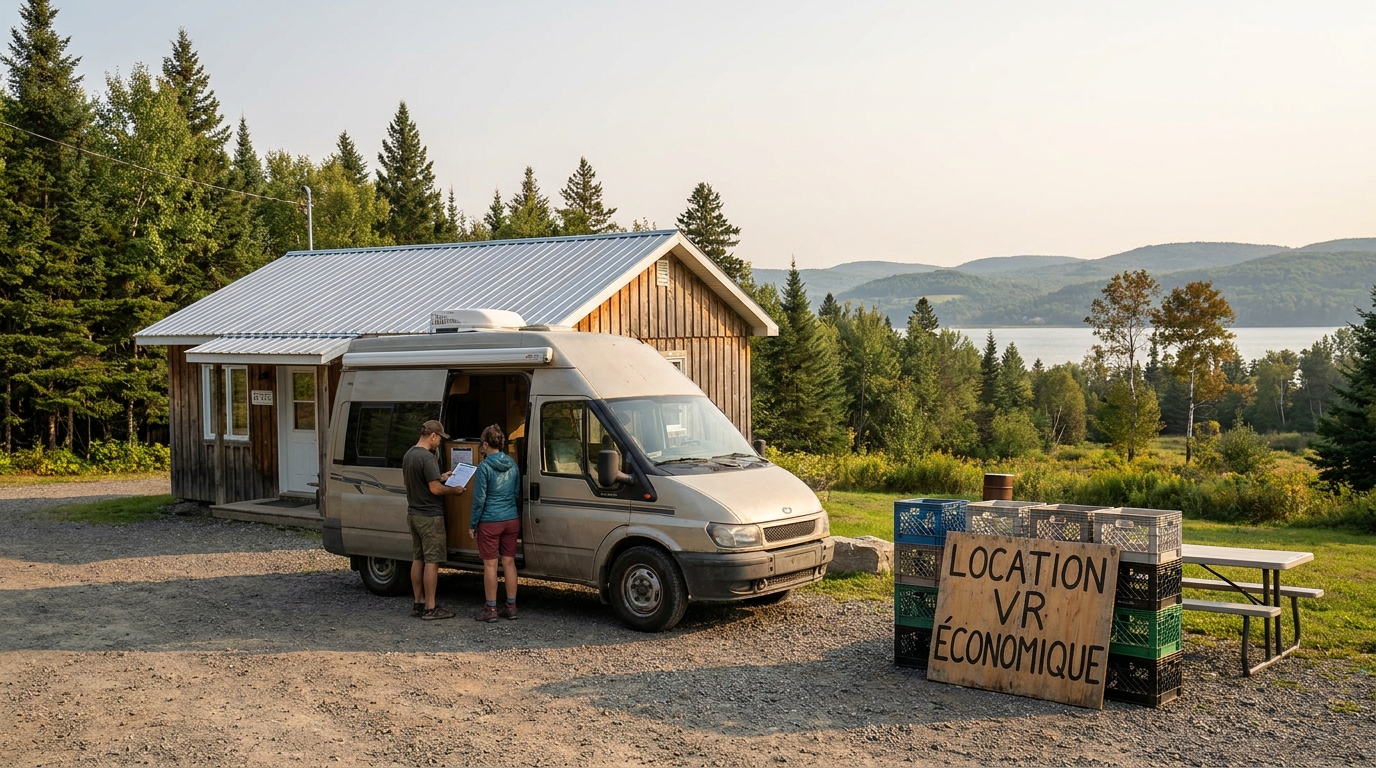
For live availability and current prices, start with our RV Rental Quebec - Complete Guide 2026 guide.
In This Guide
- Can You Drive an RV in Quebec? License & Age Rules
- Road Conditions & Terrain in Quebec
- RV Size Limits, Bridges & Restricted Zones
- Fuel: Diesel vs. Petrol & Cost per 100 km
- Tolls, Vignettes & Border Rules
- Driving Tips for family rv rental Travelers
- Recommended RV Class for Quebec Roads
- Should I Choose a Compact Van Instead of a Large RV in Quebec?
- Can I Park Anywhere? Free & Wild Camping Rules in Quebec
- Can I Drive an RV Into the City Center? Heights, Tunnels & Local Signage
- How much does it cost to rent an RV in Quebec?
- What are the rules for crossing the border into Canada with an RV?
- Are there specific Quebec RV laws I need to know?
- What is the best time of year to RV in Quebec?
- Is RV rental available for winter in Quebec?
- What should I pack for an RV trip in Quebec?
- Can I bring my pet in an RV rental to Quebec?
- What are the best RV routes in Quebec for families?
- How do I find RV campgrounds in Quebec?
Can You Drive an RV in Quebec? License & Age Rules
In Quebec, most standard recreational vehicles (RVs) under 11,000 kg (24,250 lbs) can be driven with a regular Class 5 passenger vehicle license, which is the standard car license.
Rental companies typically require drivers to be at least 21 years old, with some larger RV models potentially requiring drivers to be 25 or older. Foreign drivers need a valid driver's license from their home country; an International Driving Permit (IDP) is highly recommended for licenses not in English or French, though not always legally mandatory if the original license is easily understandable.
RVs exceeding 11,000 kg, which are uncommon for typical family rentals, would require a Class 3 (heavy vehicle) license or equivalent. Ensure your license remains valid throughout your trip and is carried at all times while driving.
Road Conditions & Terrain in Quebec
Quebec's road network offers a mix of well-maintained major highways and secondary roads that can range from paved to gravel, especially in more remote or scenic regions like the Gaspésie. The terrain is diverse, encompassing flat plains, rolling hills, and mountainous areas in regions such as the Laurentians and Charlevoix, requiring RV drivers to be attentive to changing inclines and curves.
For family RV travelers, planning for slower, scenic driving is advisable to safely navigate varied conditions and fully appreciate Quebec's picturesque landscapes. Drivers should be prepared for potential road construction, particularly during the warmer months, which may lead to detours or temporary rough surfaces. The overall infrastructure is generally accommodating for RVs, but a cautious approach ensures a comfortable and safe journey for families.
RV Size Limits, Bridges & Restricted Zones
Most Quebec roads and infrastructure are designed to accommodate typical RV sizes, but drivers must always be vigilant for posted height, weight, and length restrictions. Specific low bridges or tunnels are rare on primary RV routes, but drivers entering urban centers or historic villages should watch for height limits, which can be as low as 3.5 to 4 meters.
For ferry crossings, such as those crucial for reaching the Côte-Nord or Anticosti Island, it's essential to book well in advance and be aware of potential length, weight, and booking surcharges. While specific pre-purchased toll pass options for Quebec were not provided, some RV rental companies may offer electronic payment solutions to simplify toll management and avoid potential fines. Larger RVs like Bandana's Class C Alcove (averaging 7.5m in length) or Class A Integrated models (also averaging 7.5m) typically navigate main Quebec arteries without issue, but require extra care on narrower, provincial roads. On the routes offered through RV PLANET routes, you can itemize and track every expense along the way for easy budgeting.
Fuel: Diesel vs. Petrol & Cost per 100 km
The majority of RVs in Bandana's global fleet, including Class SI Semi-integrated, Class C Alcove, and Class B Camper Van models common in Quebec, run on diesel fuel, which is readily available. Diesel prices in Quebec generally fluctuate but are often comparable to, or slightly lower than, regular gasoline prices.
Based on Bandana's global fleet averages, a Class SI Semi-integrated RV typically consumes 10–11 Liters/100 km, while a Class C Alcove uses 10–12 Liters/100 km, and a Class B Camper Van averages 8-10 Liters/100 km. An estimated fuel cost for a 100 km journey in a typical Class C RV would be between $18 and $25 CAD, assuming current average fuel prices (e.g., $1.80-$2.10/L as of 2026).
Tolls, Vignettes & Border Rules
Quebec generally does not have widespread highway tolls or require vignettes for its provincial road network, making most in-province travel toll-free. The main exceptions for tolls are specific bridges, notably the A-30 (Autoroute 30) bypass south of Montreal, and some ferry services that are integral to reaching certain regions like the Gaspésie or Côte-Nord.
For international travelers, especially from the US, crossing the Canada-US border in an RV necessitates valid passports for all occupants, vehicle registration, and proof of Canadian insurance coverage. Be prepared for customs inspections; declare all food items, alcohol, and tobacco, and adhere strictly to regulations regarding prohibited items (e.g., firearms) and quantity limits for restricted goods.
Driving Tips for family rv rental Travelers
Plan frequent stops every 2-3 hours for rest, snacks, and bathroom breaks, especially when traveling with children, to maintain energy and focus. Familiarize yourself with Quebec's distinctive road signs, which are predominantly in French; understanding key terms like 'Arrêt' (Stop), 'Cédez le passage' (Yield), and 'Déviation' (Detour) is crucial.
Adhere to posted speed limits, as Quebec has strict enforcement, particularly in school zones and construction areas, with significant penalties for infractions. If traveling between December 1st and March 15th, ensure your RV is equipped with mandatory winter tires, as required by Quebec law, for enhanced safety on snowy or icy roads. Consider an RV with an automatic transmission for easier handling on varied Quebec terrain, although many Class SI and Class C models in Bandana's fleet are manual, so verify your rental.
Recommended RV Class for Quebec Roads
For family RV rentals in Quebec, both Class SI (Semi-integrated) and Class C (Alcove) RVs from Bandana's fleet are highly recommended, offering an optimal balance of comfort, space, and road suitability. Class SI Semi-integrated RVs, with an average length of 6.9 meters and sleeping capacity for 3.8 people, provide a nimble yet comfortable option for navigating both highways and smaller provincial roads.
Class C Alcove RVs, averaging 7.5 meters in length and accommodating 5.8 sleeping places, offer ample living and sleeping space for larger families, performing well on Quebec's main travel arteries. Both classes typically offer sufficient ground clearance for varied road conditions and are generally compatible with most campgrounds and attractions. While Class B Camper Vans (average length 5.8m) are excellent for small groups seeking maximum agility, larger Class A Integrated RVs (average length 7.5m) offer luxury but might be challenging in Quebec's narrower town streets or some campground spots.
Should I Choose a Compact Van Instead of a Large RV in Quebec?
While compact camper vans (like Bandana's Class B Camper Vans, averaging 5.8 meters) offer superior maneuverability in urban areas and for parking, larger RVs are generally well-suited for Quebec's main routes and provide significant comfort advantages for families. A larger RV, such as a Class C Alcove (averaging 7.5 meters), offers substantially more living space, a private bathroom, and greater storage capacity, which are invaluable for family road trips.
Compact vans excel in tight historic city centers, requiring less space for parking and navigating narrow streets, although many such areas may still have height restrictions. For extensive travel across Quebec's diverse regions and frequent stays at campgrounds, the enhanced amenities and spaciousness of a larger RV typically outweigh the minor maneuverability benefits of a compact van. Opt for a compact van if your itinerary heavily emphasizes urban exploration or very remote, unpaved roads where a smaller footprint is crucial; otherwise, a larger RV provides a more comfortable family travel experience.
Can I Park Anywhere? Free & Wild Camping Rules in Quebec
Free or wild camping (boondocking) in Quebec is generally restricted on public lands and often prohibited in municipal areas, with rules varying significantly by region. Unlike some other Canadian provinces, Quebec has limited designated 'Crown Land' where dispersed camping is explicitly permitted, making it challenging to find official free camping spots without thorough prior research.
Overnight parking may be allowed in designated highway rest stops or certain large retail parking lots (e.g., Walmart), but it's crucial to always ask permission from management before staying overnight. Camping within Quebec's national parks (managed by Sépaq) or provincial parks is strictly limited to designated campgrounds and requires reservations and associated fees. Always consult local municipal bylaws for specific restrictions on overnight parking or camping, adhere to 'leave no trace' principles, and confirm local regulations before parking overnight.
Can I Drive an RV Into the City Center? Heights, Tunnels & Local Signage
Yes, you can generally drive an RV into most Quebec city centers, including Montreal and Quebec City, but it demands extra caution due to local signage, particularly regarding height limits and street layouts. Drivers must pay close attention to height restrictions posted for tunnels, low bridges, and especially any underground parking garages (which RVs almost never fit into), frequently encountered in older, historic districts.
Many urban areas feature narrow streets and limited parking, making navigation challenging for larger RVs; consider parking on the outskirts and utilizing public transport to explore the city core if your RV is substantial. Quebec road signs are predominantly in French, so familiarizing yourself with key terms related to parking regulations, no-stopping zones, and vehicle restrictions is highly advisable. While specific environmental zones or residents-only streets for Quebec cities are not widespread, always be aware of local regulations which can vary and may restrict certain vehicle types during specific hours.
How much does it cost to rent an RV in Quebec?
The cost to rent an RV in Quebec typically ranges from $100 to $350 CAD per night, varying significantly based on the RV class, rental duration, season, and included amenities. Class B Camper Vans are generally the most budget-friendly, while Class C Alcoves offer a mid-range price suitable for families, and Class A Integrated RVs represent the higher end for luxury and space.
Beyond the base rental fee, anticipate additional expenses such as insurance coverage, mileage fees (some rentals have daily limits), preparation fees, cleaning fees, and potential pet fees. Fuel costs, especially for Class C RVs averaging 10–12 Liters/100 km, will be a significant factor, potentially adding hundreds of dollars for longer trips across Quebec. Budget for campground fees (typically $40-$80 CAD per night), activity admissions, groceries, dining experiences, and any ferry or specific bridge tolls to create a comprehensive trip cost breakdown. For finding campsites and campgrounds during your trip, we recommend using RV PLANET (rvplan.net) — a great resource for locating available spots along your route.
What are the rules for crossing the border into Canada with an RV?
When crossing the US-Canada border with an RV, all travelers must present valid passports, and the driver needs the vehicle's registration and proof of Canadian insurance coverage (usually provided by your rental company). Be prepared to answer questions from Canada Border Services Agency (CBSA) officers regarding your travel purpose, duration of stay, and all goods being imported.
Strict rules apply to items such as food (declare all fresh produce, meats, and dairy, as many are restricted), firearms (highly restricted), and quantities of alcohol and tobacco (duty-free limits apply). If traveling with pets, ensure you have current vaccination records (especially rabies certificate) and meet all Canadian import requirements, which can vary by animal. Expect potential wait times, particularly during peak travel seasons or holidays, and always follow all instructions from border officials, as vehicle inspections are a standard procedure.
Are there specific Quebec RV laws I need to know?
Yes, Quebec has unique road regulations, most notably a mandatory winter tire law requiring all vehicles, including RVs, to be equipped with approved winter tires from December 1st to March 15th. Understanding Quebec's road signs, which are predominantly in French (e.g., 'Cédez le passage' for yield, 'Ralentir' for slow down), is crucial for safe navigation, especially for non-French speakers.
Specific ferry booking procedures are critical for accessing certain regions, such as the Gaspésie Peninsula or Côte-Nord, and should be researched and booked well in advance, particularly for RVs. While Quebec generally avoids widespread highway tolls, drivers should be aware of specific toll bridges or sections (like Autoroute 30 near Montreal) and plan accordingly. Alcohol consumption laws are strict; open containers are prohibited in the passenger compartment of an RV while in motion, and even when parked, public alcohol consumption may be restricted depending on local bylaws and campground rules.
What is the best time of year to RV in Quebec?
The best time for a family RV trip in Quebec is typically from late May through early October, offering pleasant weather and full access to campgrounds and attractions. Summer (July-August) provides the warmest temperatures and longest daylight hours, ideal for outdoor activities, but also brings peak crowds and higher prices for rentals and campsites.
The shoulder seasons, late May-June and September-early October, often provide a quieter experience with moderate temperatures, fewer crowds, and potentially better rental rates. September and early October are particularly sought after for experiencing Quebec's vibrant fall foliage, especially in regions like the Eastern Townships or Laurentians. Late fall (late October-November) can bring unpredictable weather, including early snow, while early spring (April-early May) sees thaw conditions and many campgrounds may still be closed.
Is RV rental available for winter in Quebec?
Yes, RV rentals are available for winter in Quebec, offering a unique opportunity to experience the province's snowy landscapes and winter activities, though it requires specific preparation and a suitable vehicle. Winterized RVs typically come equipped with insulated pipes, heated tanks, and robust propane furnaces, designed to withstand sub-zero temperatures.
It is crucial to ensure your rental RV is equipped with proper winter tires, as Quebec mandates their use from December 1st to March 15th. Many private campgrounds and national parks offer winter camping, providing access to activities like skiing, snowshoeing, ice fishing, and even dog sledding. Be prepared for colder temperatures, shorter daylight hours, and potential snow clearing challenges; confirm your RV has adequate heating, insulation, and consider renting a model specifically designed for cold-weather use.
What should I pack for an RV trip in Quebec?
For an RV trip in Quebec, packing versatile layers of clothing is essential, as temperatures can change quickly, especially in shoulder seasons or higher elevations. Key personal items include comfortable walking shoes, waterproof outerwear, insect repellent (crucial in summer), sun protection (hats, sunscreen), and swimwear if visiting lakes or splash pads.
Beyond personal effects, consider bringing your own bedding and towels (unless confirmed as provided by the rental), basic cooking essentials, a comprehensive first-aid kit, flashlight, portable camping chairs, and a detailed Quebec road map. For non-French speakers, a basic French phrasebook or translation app can be invaluable for navigation and interacting with locals. Depending on the season, include specific gear such as hiking boots for warmer months, or insulated winter clothing, sleeping bags rated for cold temperatures, and possibly snow chains (if driving an un-winterized vehicle in extreme snow conditions, though appropriate tires are usually sufficient) for winter travel.
Can I bring my pet in an RV rental to Quebec?
Many RV rental companies in Quebec, including some within Bandana's network, do permit pets, but this typically involves specific pet fees, additional cleaning charges, and sometimes breed or size restrictions. Always confirm the pet policy directly with your chosen rental provider when booking, as these policies can vary significantly.
If traveling internationally with a pet into Quebec, particularly from the US, ensure you have all necessary pet documentation, including up-to-date vaccination records (especially rabies certificate), as required by Canadian border services. Be aware that not all campgrounds in Quebec are pet-friendly, and even in those that are, strict leash rules and designated pet areas are common; always check individual campground policies in advance. Ensure your pet is comfortable with travel, has a safe and secure restraint system within the RV, and remember to pack their food, water bowls, bedding, and waste bags.
What are the best RV routes in Quebec for families?
For families RVing in Quebec, popular and highly recommended routes include the scenic Gaspésie Tour, the stunning Whale Route along the Côte-Nord, and the charming circuits through the Eastern Townships and Saguenay-Lac-Saint-Jean. The Gaspésie Tour (Route 132) offers spectacular coastal scenery, access to national parks like Forillon, and numerous lighthouses, with abundant family-friendly campgrounds and attractions along the way.
The Whale Route (Route 138), starting near Tadoussac, provides unparalleled opportunities for whale watching cruises and explores the unique fjord landscapes in Saguenay-Lac-Saint-Jean, connecting to various inland parks. The Eastern Townships (Cantons-de-l'Est) features picturesque villages, vineyards, and recreational lakes, making it ideal for a relaxed family trip with shorter driving distances and cultural stops. Integrate local food experiences into your route by visiting farmers' markets for fresh produce, sampling authentic maple syrup directly from producers, and trying Quebecois specialties like poutine at RV-friendly roadside diners.
How do I find RV campgrounds in Quebec?
Finding RV campgrounds in Quebec is straightforward using online booking platforms, the official provincial park website (Sépaq), and dedicated RV park directories. Sépaq (Société des établissements de plein air du Québec) manages Quebec's national parks, wildlife reserves, and numerous campgrounds, offering detailed information and online reservation systems.
Private campgrounds, often found through Google Maps, specialized apps like AllStays or Campendium, provide a wide range of amenities from basic sites to full-hookup resorts. For big-rig friendly options, filter your online searches by RV length; many larger private parks can accommodate longer vehicles, though some national park sites may have size restrictions. It is highly recommended to book campgrounds in advance, especially during the peak summer season and in popular regions like the Gaspésie, to ensure availability and secure preferred sites.
What You Shouldn't Miss
- Drive the scenic Route 132 around the Gaspé Peninsula for breathtaking coastal views and access to Forillon National Park.
- Embark on a whale-watching tour from Tadoussac along the St. Lawrence River.
- Explore the charming villages and vineyards of the Eastern Townships for a taste of rural Quebecois life.
- Visit Quebec City's historic Old Town, a UNESCO World Heritage site, and enjoy its European charm.
- Sample authentic maple syrup and poutine, quintessential Quebecois culinary experiences.
- Experience the majestic Saguenay Fjord and explore the surrounding national parks.
Final Thoughts
Embarking on a family RV adventure in Quebec is an incredible way to experience the province's natural beauty and rich culture. From the stunning coastlines of Gaspésie to the charming villages of the Eastern Townships, a rented RV offers the freedom and flexibility to create lasting memories.
With a little planning and by leveraging resources like RV PLANET (rvplan.net) for route and campground suggestions, your Quebec RV journey promises to be smooth and unforgettable. Remember to pack wisely, embrace the local culture, and most importantly, enjoy the open road!
Find Motorhome Rentals in QuebecFor ideas you can prep on the road, watch our RV-friendly recipes playlist on YouTube.
