For live availability and current prices, start with our RV Rental New York - Complete Guide 2026 guide.
In This Guide
- Can You Drive an RV in New York? License & Age Rules
- Road Conditions & Terrain in New York
- RV Size Limits, Bridges & Restricted Zones
- Fuel: Diesel vs. Petrol & Cost per 100 km
- Tolls, Vignettes & Border Rules
- Driving Tips for rv rental Travelers
- Recommended RV Class for New York Roads
- Should I Choose a Compact Van Instead of a Large RV in New York?
- Can I Park Anywhere? Free & Wild Camping Rules in New York
- Can I Drive an RV Into the City Center? Heights, Tunnels & Local Signage
- How big of an RV can I drive with a normal license?
- What is the largest RV you can drive without a special license?
- Do you have to have a CDL to drive a 30 ft RV?
- Are RVs allowed in New York?
- Do you need a license to drive an RV in NY?
- What license does an RV require?
- Do you need RV insurance in NY?
- How much is insurance on a $200,000 RV?
Can You Drive an RV in New York? License & Age Rules
In New York, driving most recreational vehicles (RVs) is accessible with a standard Class D driver's license, provided the vehicle's Gross Vehicle Weight Rating (GVWR) is under 26,000 pounds. This encompasses the majority of Class B camper vans, Class C motorhomes, and many smaller Class A motorhomes commonly available for rent. The minimum age to operate an RV in New York is 18, though rental companies often have a higher minimum age requirement, typically 21 or 25. For international travelers, a valid home country license and an International Driving Permit (IDP) are generally sufficient for operating an RV in NY for up to six months. It's crucial to confirm specific rental company age policies before booking.
Road Conditions & Terrain in New York
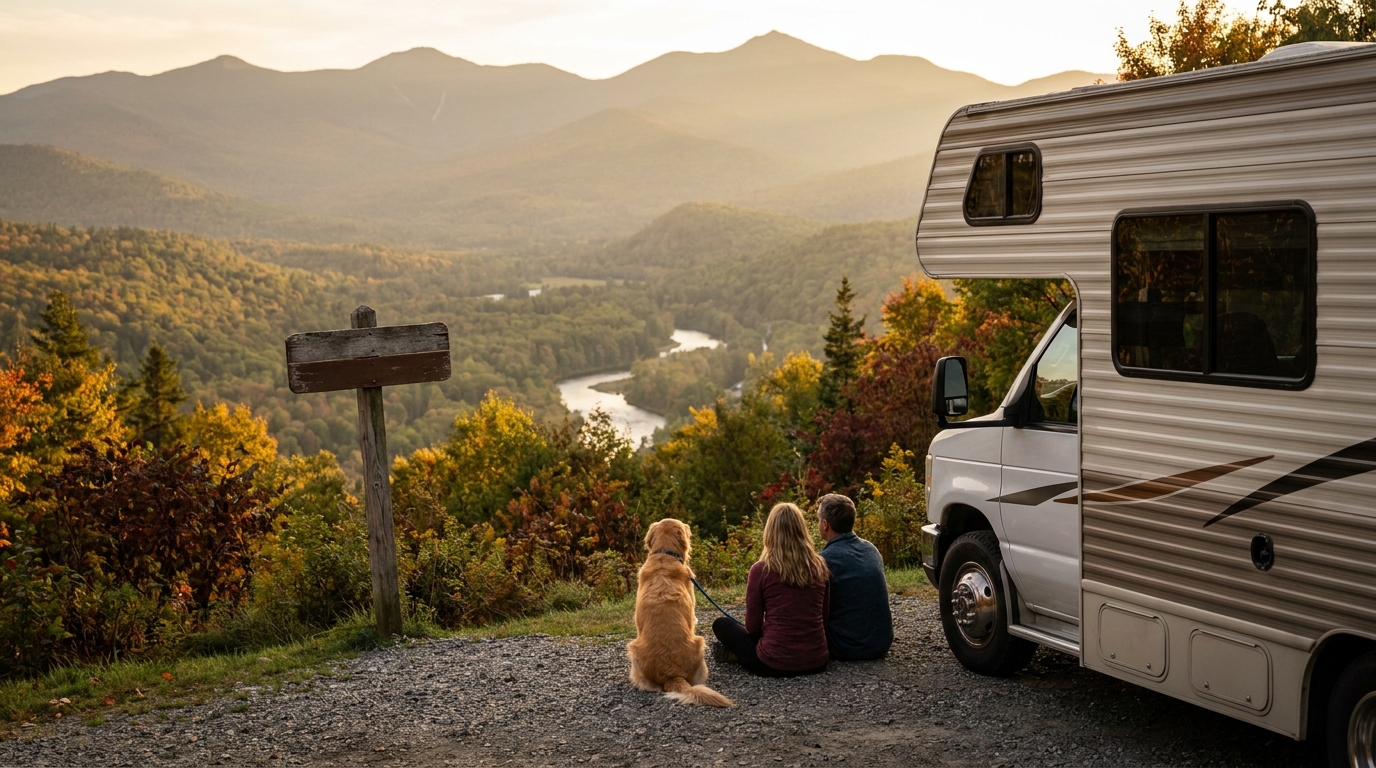
New York State presents a diverse driving landscape, ranging from bustling urban environments to the serene, mountainous regions of the Adirondacks and Catskills. Generally, the roads are well-maintained, but RV drivers should be prepared for varying conditions. Urban driving, particularly in New York City, can involve heavy traffic and narrower streets, necessitating slow, careful maneuvering. Upstate routes often feature winding country roads, and some may include unpaved sections, especially in more remote areas. Seasonal weather plays a significant role; winter snow can create challenging driving conditions, while spring thaw can lead to potholes on some roads. Many of New York's scenic routes are designed to encourage a slower, more deliberate pace, which is ideal for RV exploration, allowing you to truly soak in the beauty of the state.
RV Size Limits, Bridges & Restricted Zones
When planning your RV journey through New York, it's essential to be aware of vehicle size limitations. New York State typically imposes maximum dimensions for RVs, generally capping height at 13 feet 6 inches, width at 8 feet 6 inches, and single-vehicle length at 45 feet. Many historic parkways, such as the Taconic State Parkway and sections of the Merritt and Saw Mill River Parkways, feature low bridge clearances, often between 8 to 10 feet, and explicitly prohibit commercial vehicles, which can include many larger RVs. Driving in New York City, especially Manhattan, involves strict height and weight limits, with commercial and larger vehicles frequently rerouted around tunnels and specific bridges. Additionally, ferry services, like those operating on Lake Champlain, may have their own unique size and weight restrictions for RVs, so always check in advance.
Fuel: Diesel vs. Petrol & Cost per 100 km
Most RVs in New York operate on either petrol (gasoline) or diesel fuel. Petrol is more common in smaller RVs like Class C models, while diesel engines are often found in larger Class A units. Both fuel types are readily available throughout New York, though diesel may be slightly less common at smaller, rural service stations. For Bandana's Class C - Alcove fleet, the average fuel consumption is approximately 23 liters per 100 km, translating to an estimated fuel cost of around $21.28 per 100 km, based on current fuel prices. Some rental companies and partners, including Bandana, may offer fuel discount cards to help manage travel expenses. On the routes offered through RV PLANET routes, you can itemize and track every expense along the way for easy budgeting.
Tolls, Vignettes & Border Rules
New York State employs an extensive electronic tolling system, with E-ZPass being the predominant method on many highways, bridges, and tunnels, including the New York State Thruway. Utilizing an E-ZPass is highly recommended for RV travelers to avoid the higher 'Tolls by Mail' rates. Some rental RVs may come equipped with transponders or allow for pre-purchasing them. RVs are frequently classified as multi-axle vehicles, which typically results in higher toll charges compared to standard passenger cars. New York does not use a vignette system; tolls are collected at specific points or sections of roadways. For international travelers entering New York from Canada, standard U.S. customs and immigration procedures apply, with no specific RV-related border restrictions beyond general vehicle requirements.
Driving Tips for rv rental Travelers
To ensure a smooth RV journey in New York, always pre-plan your route using GPS or navigation apps that account for RV-specific dimensions like height and weight, as well as restricted parkways, to avoid low bridges and prohibited roads. Keep a close eye on your fuel levels and plan stops accordingly, especially in rural areas where stations might be less frequent. Allocate extra time for RV travel; driving, parking, and navigating in New York will generally take longer than in a standard car, particularly when traveling with family. Before hitting the road, practice maneuvering and backing up your RV in an open space, utilizing a spotter if available. Always remain cautious of strong crosswinds on highways and bridges, and be prepared to reduce your speed significantly during adverse weather conditions across New York.
Recommended RV Class for New York Roads
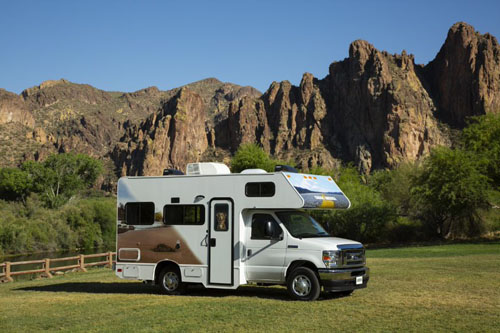
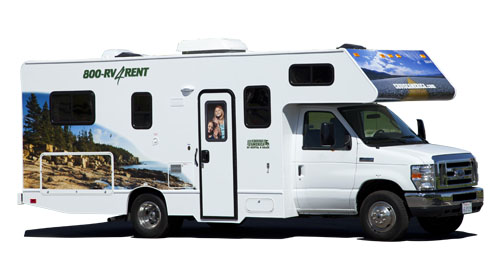
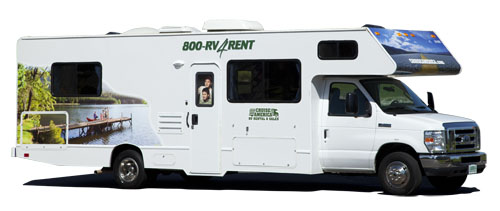
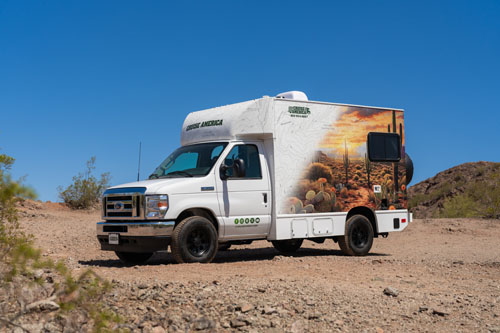
For navigating the diverse road conditions in New York, a Class C Alcove RV or a Class TC Truck Camper offers an optimal blend of maneuverability and living space. Bandana's Class C - Alcove models, averaging around 7.7 meters (approximately 25 feet) in length, provide comfortable interior accommodations for about 4 adults and 5.3 sleeping places, making them suitable for many state parks and smaller towns. Class TC - Truck Campers, typically around 5.9 meters (approximately 19 feet), are excellent for couples, offering maximum flexibility for tighter spots or more remote locations, much like driving a large truck. Both these classes are generally well-suited for New York's scenic routes and offer better accessibility to many campgrounds compared to larger, less maneuverable RV types.
Consider Bandana's RV fleet for your New York adventure. For instance, our Explorer model, a popular Class C motorhome, offers ample space for four travelers and features such as a generator and sun canopy, ideal for exploring national parks.
Should I Choose a Compact Van Instead of a Large RV in New York?
While a compact van provides superior maneuverability and easier city navigation in New York, a larger RV typically offers significantly more comfort and indoor living space, which is often preferred for extended trips outside of dense urban centers. Compact vans are advantageous for solo travelers or couples prioritizing simple parking, better fuel efficiency, and access to areas with strict restrictions, such as certain urban streets or historic parkways. Larger RVs, like Class C models, come equipped with amenities such as full kitchens, bathrooms, and dedicated sleeping areas, making them ideal for families or longer journeys requiring more 'home-like' comforts. For most upstate New York destinations and state parks, larger RVs are manageable, with their primary challenge being navigation and parking within highly congested areas like Manhattan.
Can I Park Anywhere? Free & Wild Camping Rules in New York
Free or 'wild' camping in New York is generally restricted, particularly within state parks and designated forest preserves. Adherence to specific local regulations and potential permits for dispersed camping on state-owned land is often required. Overnight RV parking and camping in state parks and forests are typically limited to designated campgrounds, which usually necessitate reservations and fees. Camping on private land is only permissible with the express permission of the landowner. Some retail store parking lots, such as Walmart or Cabela's, may permit overnight RV parking at the manager's discretion, but this is not guaranteed and should always be confirmed first. Many New York municipalities and specific areas strictly prohibit overnight RV parking, so always check local signage and ordinances before planning to park overnight.
Can I Drive an RV Into the City Center? Heights, Tunnels & Local Signage
While technically possible to drive an RV into certain parts of New York City, it is generally discouraged due to extreme traffic congestion, very limited and expensive parking, and numerous low bridge clearances and vehicle restrictions, particularly in Manhattan. Drivers must pay close attention to local signage in NYC, which indicates height limits, weight restrictions, and specific vehicle prohibitions on parkways and through tunnels. Many parkways leading into and around NYC have extremely low bridges (some as low as 8-10 feet), making them impassable for most RVs, and tunnels often prohibit propane tanks. Finding suitable and affordable RV parking in Manhattan is exceptionally difficult; it is highly recommended to park outside the city (e.g., in New Jersey or upstate NY) and utilize public transit for access.
How big of an RV can I drive with a normal license?
In New York, you can drive most recreational vehicles (RVs) with a standard Class D driver's license, provided the vehicle's Gross Vehicle Weight Rating (GVWR) is 26,000 pounds or less. This limit covers the vast majority of Class B camper vans, Class C motorhomes, and many smaller Class A motorhomes that are commonly rented or owned. The Class D license is sufficient for the vast majority of RVs, making advanced licensing unnecessary for most recreational use. If an RV's GVWR exceeds 26,000 lbs, or if it's towing another vehicle over 10,000 lbs, a specific 'R' endorsement (a non-CDL Class A or B) on your license is required, rather than just a standard Class D.
What is the largest RV you can drive without a special license?
The largest RV you can operate in New York without needing a special license beyond a standard Class D is any recreational vehicle with a Gross Vehicle Weight Rating (GVWR) of 26,000 pounds or less. This specific weight threshold is the primary determinant for licensing requirements, rather than the physical length of the RV alone. Many Class C RVs, including Bandana's Class C Alcove models (averaging 7.7 meters or approximately 25 feet), comfortably fall within this 26,00A0-pound GVWR limit. For larger Class A motorhomes, it is crucial to verify the specific GVWR, as some models may exceed this limit and require an 'R' endorsement.
Do you have to have a CDL to drive a 30 ft RV?
No, you do not typically need a Commercial Driver's License (CDL) to operate a 30-foot RV in New York; a standard Class D license is usually sufficient, or an 'R' endorsement if the RV's Gross Vehicle Weight Rating (GVWR) exceeds 26,000 pounds. CDLs are specifically required for vehicles used for commercial purposes, not for recreational vehicles like motorhomes. A 30-foot RV (approximately 9.1 meters) is a common length for many Class C and smaller Class A models, most of which have a GVWR well below 26,000 pounds. The need for an 'R' endorsement (a non-CDL Class B for a single RV over 26,000 lbs GVWR, or Class A for certain RV/trailer combinations) is based on vehicle weight, not its length.
Are RVs allowed in New York?
Yes, recreational vehicles (RVs) are broadly allowed throughout New York State, providing extensive opportunities for road trips, camping, and exploring diverse landscapes. New York features numerous campgrounds, including state parks in regions like the Adirondacks and private resorts across the state, that are specifically designed to accommodate RVs. While RVs are permitted, drivers must be aware of and adhere to specific vehicle height and weight restrictions, particularly in congested urban areas and on certain historical parkways. The state actively promotes tourism and offers resources to assist RV travelers in navigating its varied regions.
Do you need a license to drive an RV in NY?
Yes, a valid driver's license is absolutely required to operate any recreational vehicle (RV) in New York State. The specific type of license needed depends primarily on the RV's Gross Vehicle Weight Rating (GVWR) and any towed weight. For the vast majority of RVs with a GVWR of 26,000 pounds or less, a standard New York Class D driver's license is sufficient. Heavier RVs or those towing significant trailers will necessitate a non-commercial Class B or Class A license with an 'R' endorsement. Operating an RV without the correct license is illegal and can lead to severe fines, legal penalties, and complications with insurance coverage.
What license does an RV require?
The specific license required to drive an RV in New York is determined by its Gross Vehicle Weight Rating (GVWR) and any towed weight, generally falling under either a standard Class D license or a specialized non-commercial 'R' endorsement. A standard Class D license is sufficient for RVs with a GVWR of 26,000 pounds or less, covering most Class B, Class C, and smaller Class A motorhomes, as well as many travel trailers. An 'R' endorsement (non-CDL Class B) is required for operating a single RV with a GVWR exceeding 26,000 pounds. For RVs towing a trailer with a GVWR over 10,000 pounds, where the combined GVWR of the RV and trailer exceeds 26,000 pounds, a non-CDL Class A license with an 'R' endorsement is mandated. A Commercial Driver's License (CDL) is typically not necessary for recreational vehicles, as they are not used for commercial purposes.
Do you need RV insurance in NY?
Yes, all recreational vehicles (RVs) operated in New York State are legally mandated to carry motor vehicle insurance, adhering to specific minimum liability coverages set by state law. New York requires minimum liability coverage for bodily injury and property damage, along with uninsured motorist coverage, for all registered vehicles, including RVs. For rental RVs, basic liability insurance is typically included in the rental agreement, but it is highly advisable to consider additional coverage options such as collision, comprehensive, and roadside assistance. Owners of personal RVs must maintain continuous insurance coverage to legally operate their vehicles on New York roads.
How much is insurance on a $200,000 RV?
The annual cost to insure a $200,000 RV in New York can vary significantly, typically ranging from $1,000 to $3,000, influenced by factors such as the RV's class, usage, the driver's history, and the specific coverage selected. Key factors affecting premiums include the RV's type (e.g., Class A motorhomes often cost more to insure due to higher value), whether it's used full-time or seasonally, and the driver's record. The chosen coverage limits (e.g., higher liability, comprehensive, collision, personal effects, roadside assistance) and deductibles will directly impact the final cost. Due to the substantial value of a $200,000 RV, insurance costs will be considerably higher than for a standard passenger vehicle, reflecting the increased potential for damage and liability claims. It is recommended to obtain multiple quotes from specialized RV insurance providers to find the most competitive rates and suitable coverage for a high-value RV.
What You Shouldn't Miss
- Drive a portion of the scenic Adirondack Park, exploring its vast wilderness with over 6 million acres of mountains, lakes, and forests.
- Experience the awe-inspiring power of Niagara Falls from the New York side, with numerous viewpoints and boat tours available.
- Visit Letchworth State Park, known as the 'Grand Canyon of the East,' to witness its stunning waterfalls and gorges.
- Explore the historic Erie Canalway Trail, perfect for RVers who enjoy cycling or walking alongside charming canal towns.
- Consider a New York Roundtrip - Upstate New York Incl. Niagara Falls via RV PLANET (rvplan.net) for a curated 19-day adventure covering 3,455 km, including 2 Zoos and 3 Points of Interest.
- Discover the diverse attractions of Northeastern Adventures: A Family Road Trip through New York, New Hampshire, and Massachusetts, a 11-day itinerary spanning 1,692 km, offering 3 hiking areas and a Museum visit.
Final Thoughts
Renting an RV in New York opens up a world of possibilities for immersive travel. From the bustling streets of NYC to the serene beauty of the Adirondacks, an RV offers the freedom to explore at your own pace. Remember to plan your route, be mindful of road conditions and size restrictions, and always prioritize safety. Bandana Caravan is here to help you find the perfect rental for your New York adventure, ensuring a smooth and unforgettable journey.
We encourage you to explore the pre-planned routes available on RV PLANET (rvplan.net) for inspiration and detailed itineraries. For instance, the "New York Roundtrip - Upstate New York Incl. Niagara falls" offers a comprehensive 19-day itinerary covering over 3,400 km, perfect for truly experiencing the state.
Find Motorhome Rentals in New York