In This Guide
- Can You Drive an RV in New York? License & Age Rules
- Road Conditions & Terrain in New York
- RV Size Limits, Bridges & Restricted Zones
- Fuel: Diesel vs. Petrol & Cost per 100 km
- Tolls, Vignettes & Border Rules
- Driving Tips for cheap rv rental Travelers
- Recommended RV Class for New York Roads
- Should I Choose a Compact Van Instead of a Large RV in New York?
- Can I Park Anywhere? Free & Wild Camping Rules in New York
- Can I Drive an RV Into the City Center? Heights, Tunnels & Local Signage
- Do you need a license to drive an RV in NY?
- What is the 3 3 3 rule for RVs and campers?
- How big of an RV can I drive without a CDL?
- What is the biggest RV you can drive without a special license?
- Can you drive an RV in NYC?
- Can you park an RV anywhere in NY?
- Is it cheaper to rent an RV or stay in a hotel?
- What is the cheapest state to register an RV in?
- How much does it cost to register an RV in New York State?
- What You Shouldn't Miss
- Why Book with Bandana Caravan
- Final Thoughts
- Frequently Asked Questions
Can You Drive an RV in New York? License & Age Rules
Most recreational vehicles (RVs) with a Gross Vehicle Weight Rating (GVWR) under 26,000 pounds can be driven in New York with a standard Class D driver's license. This applies to the vast majority of motorhomes and campervans available for rent, including popular Class C models. For larger RVs over 26,000 pounds GVWR, if not used for commercial purposes, a Class B Non-Commercial license with an 'R' endorsement is typically required in New York State. The minimum driving age for an RV rental in New York is generally 21, and with Bandana, there are no young driver surcharges or vehicle class restrictions based on age, making RV adventures accessible for younger adult travelers. Foreign drivers can operate a rented RV in New York with a valid foreign driver's license, though an International Driving Permit (IDP) is often recommended, especially for visitors from non-English-speaking countries, as it provides a translation of your license.Road Conditions & Terrain in New York
New York offers incredibly diverse terrain, ranging from the densely populated urban sprawl of New York City to the majestic mountainous regions of the Adirondacks and Catskills, and the gentle rolling hills of the Finger Lakes. Road quality varies significantly across these regions; major interstate highways like I-87 and I-90 are generally well-maintained and offer smooth travel. However, rural roads, particularly in upstate areas and within state parks, can be narrower, more winding, and sometimes less smooth, requiring drivers of rented motorhomes to remain attentive. In mountainous regions such as the Adirondacks, expect steep grades and sharp turns, which necessitate careful driving and appropriate gear selection for a larger RV. Urban areas, especially New York City, present heavy traffic, congestion, and limited maneuvering space, so driving slowly and carefully is essential to navigate without issues.RV Size Limits, Bridges & Restricted Zones
New York State generally permits RVs up to 13 feet 6 inches (4.11 meters) in height, 8 feet 6 inches (2.59 meters) in width, and 60 feet (18.29 meters) in length for a single vehicle. However, specific areas, particularly within New York City, have significantly lower bridge clearances, most notably on parkways where limits can be as low as 8 feet 9 inches (2.67 meters). Additionally, tunnels in the NYC area, such as the Holland Tunnel and Lincoln Tunnel, prohibit vehicles carrying propane tanks, which impacts nearly all rented RVs. Always pay close attention to all posted signage for height, weight, and length restrictions, especially when entering urban areas or traversing older infrastructure, to avoid costly mistakes. While New York does not have widespread environmental zones like some European cities, certain historical districts or restricted access roads might have specific vehicle restrictions; plan your route carefully using an RV-specific GPS to navigate these limitations smoothly.Fuel: Diesel vs. Petrol & Cost per 100 km
Most Class C RVs, which are widely available in Bandana's New York fleet, typically operate on petrol (gasoline), which is readily accessible at gas stations across the state. While some larger Class A motorhomes or certain truck campers might use diesel fuel, petrol remains the most common and easily found option for most renters. Based on Bandana's Class C fleet data, a typical fuel consumption rate averages around 23 liters per 100 km (equivalent to 7-10 miles per gallon), meaning that fuel costs can indeed be a significant portion of your travel budget. To accurately estimate your cost, you can multiply 23 liters by the current average petrol price per liter in New York, which fluctuates regionally and seasonally. Planning your meals and cooking in your RV kitchen can significantly offset overall trip costs; for inspiration, check out our RV-friendly recipes playlist.Tolls, Vignettes & Border Rules
New York State features numerous toll roads, bridges, and tunnels, with the New York State Thruway and various crossings in the greater NYC area being the most prominent examples. The primary electronic toll collection system in New York is E-ZPass, and many tolls are now cashless ("Tolls by Mail"), where a bill is sent to the registered owner (your rental company) if no E-ZPass transponder is detected. There are no "vignettes" or flat-rate road usage stickers common in some European countries; tolls are paid on a per-use basis. If your RV adventure takes you from New York to neighboring US states, be aware that other states also utilize various toll systems, many of which are compatible with E-ZPass, making it a convenient option. Many RV rental providers allow for pre-purchasing or renting an E-ZPass transponder, which can help you avoid higher "Tolls by Mail" rates and additional administrative fines from your rental company. For a more detailed breakdown of ancillary trip costs beyond your RV rental, such as fuel, campground fees, and tolls, remember that RV PLANET routes allow you to itemize and track every expense for easy budgeting.Driving Tips for cheap rv rental Travelers
Planning your route carefully is the most critical driving tip for cheap RV rental travelers in New York. Utilize a GPS system with RV-specific settings to help avoid low bridges, weight-restricted roads, and tight turns, particularly when navigating urban areas or exploring scenic byways. With an average fuel consumption around 23 L/100km for a Class C RV, it’s wise to monitor your fuel levels and plan your refueling stops, especially in rural upstate New York where gas stations can be sparse. To streamline your journey and avoid unexpected fees, consider obtaining an E-ZPass from your rental provider or purchasing one for tolls. New York's roads can be busy, so always drive defensively, maintaining extra following distance, using turn signals proactively, and being aware of your rented vehicle's blind spots. Finally, for an enjoyable and safe week-long trip or longer, take frequent breaks every 2-3 hours to stretch, refuel, and let passengers relax, ensuring everyone stays refreshed. Our "RV Travel Guide to New York - Tips and Top Spots 2026" can provide even more insights for your trip.Recommended RV Class for New York Roads
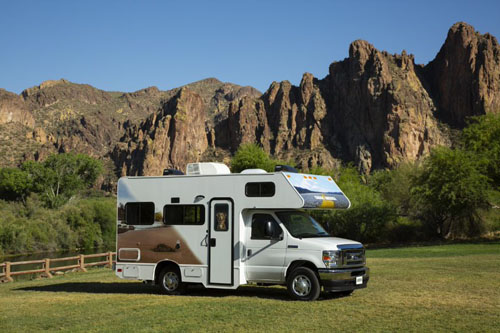
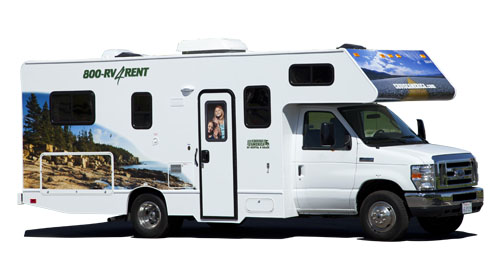
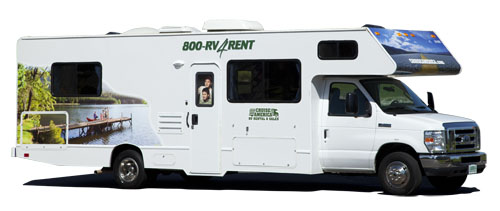
For navigating the diverse landscapes of New York, Class C motorhomes are highly recommended, offering an excellent balance of interior comfort and road maneuverability. A typical Class C RV, like the "rv rentals example Comfort Class" or "Adak Argonaut 21 - Gold," averages around 7.7 meters (approximately 25 feet) in length and provides ample sleeping space, often around 5.3 berths, making them ideal for families or small groups. These vehicles offer good on-road stability without being overly cumbersome for the varied road conditions from city outskirts to mountain passes. Alternatively, for couples or small groups seeking even greater agility and easier access to more remote areas, a Class TC Truck Camper is an excellent choice. At an average length of 5.9 meters (approximately 19 feet), a Class TC such as the "Patagonia Camper 4x4 double cab" is significantly easier to park and navigate on narrower upstate roads, while still providing essential amenities like a kitchen and sleeping quarters. Both Class C motorhomes and Class TC Truck Campers present practical and enjoyable options, with Class C generally offering more interior living space for longer trips, and Class TC excelling in flexibility and fuel efficiency. If you are a couple, consider looking into "RV Rental in New York for Couples - Pricing 2026".Should I Choose a Compact Van Instead of a Large RV in New York?
While a compact van or a smaller Class B campervan certainly offers superior maneuverability and easier parking in crowded areas, for most RV travel in New York, larger RVs like Class C vehicles do not pose significant driving issues. A compact van, such as a "Category Van" or "Active Standard", is genuinely beneficial for navigating very tight historic village centers, extremely narrow mountain passes, or seeking stealthier urban parking spots. However, for typical New York road trips that include exploring state parks, the Finger Lakes, or the Adirondacks, the added comfort, indoor space, and amenities of a larger motorhome often outweigh the slight increase in maneuverability challenges. A Class C RV, averaging 7.7 meters, strikes a good balance, offering enough space for families of 2+2 without being excessively large for most New York destinations. Therefore, consider a compact van if your itinerary heavily features city exploration or very remote, unimproved roads; otherwise, the comfort and features of a larger RV like a Class C provide a better overall experience for most extended trips.Can I Park Anywhere? Free & Wild Camping Rules in New York
No, you cannot generally park a rented RV anywhere in New York for overnight stays; specific rules and permits typically apply throughout the state. New York State Parks and Forests have designated campgrounds that require reservations and fees for overnight RV parking, with many popular spots offering advanced booking. Boondocking, also known as dispersed or wild camping, may be permitted in certain areas of New York State's public lands, particularly in some sections of State Forests, but this usually requires adherence to Leave No Trace principles and sometimes a specific permit. Overnight parking at private businesses like Walmart is strictly at the discretion of individual store managers; always ask for explicit permission before settling in for the night. Rest areas along highways generally prohibit overnight camping, as they are designated for short-term rest stops only, typically limited to a few hours. Rules vary significantly by region and land designation- always check local regulations and posted signs, or call ahead to the specific location, and follow local law before parking overnight, and consider using official campgrounds for peace of mind. For finding campsites and campgrounds during your trip, we recommend using RV PLANET (rvplan.net) - a great resource for locating available spots along your route.Can I Drive an RV Into the City Center? Heights, Tunnels & Local Signage
Yes, you can generally drive a rented RV into most city centers in New York, but urban areas, especially New York City, present unique challenges that require careful attention. In NYC, you must pay extreme attention to local signage, as parkways like the Belt Parkway or the Grand Central Parkway have very low bridge clearances, often prohibiting commercial vehicles and RVs, with some limits as low as 8 feet 9 inches. Furthermore, tunnels in the NYC area, such as the Holland Tunnel and Lincoln Tunnel, have strict restrictions on vehicles carrying propane, which applies to nearly all motorhomes. Parking in city centers is typically difficult to find and expensive for RVs; therefore, it's highly recommended to utilize perimeter parking lots or RV parks on the outskirts of the city, such as in nearby New Jersey or on Long Island, and use public transit to explore the city center. Always be aware of height limits, turning radii, and one-way streets in dense urban environments, as navigating a larger RV requires considerable caution and pre-planning. You can find more detailed parking options (addresses, costs, availability) and public transit strategies from RV-friendly locations outside the immediate core by consulting specialized RV route plans for New York City.🎬 Video coming soon
Do you need a license to drive an RV in NY?
For most rented RVs with a Gross Vehicle Weight Rating (GVWR) under 26,000 pounds, a standard Class D driver's license is sufficient to drive an RV in New York. This includes the vast majority of Class C and Class B motorhomes that Bandana offers for rental. If you plan to drive a recreational vehicle with a GVWR of 26,001 pounds or more, but it is not for hire, you will need a Class B Non-Commercial license with an 'R' endorsement in New York State. The process for obtaining an 'R' endorsement involves completing a specific application at the DMV, passing a written knowledge test, and potentially a road test in a qualifying vehicle, requiring more than just filling out a form and paying a fee. Minimum age requirements for RV rental in New York typically start at 21, but some rental companies may prefer or require drivers to be 25 or older for insurance purposes, though Bandana does not impose age-based class restrictions.What is the 3 3 3 rule for RVs and campers?
The "3-3-3 rule" for RVs and campers is a popular guideline designed to promote a relaxed and enjoyable travel pace rather than being a strict legal requirement. This rule suggests driving no more than 300 miles per day, stopping your travel by 3 PM, and staying for at least 3 nights at each location. Adhering to this guideline helps prevent driver fatigue, allows ample time for setting up and breaking down camp at different campgrounds, and provides sufficient opportunity to explore each destination thoroughly. While not mandatory, following the 3-3-3 rule can significantly enhance the quality of your RV road trip in New York, making it less rushed and more fulfilling, allowing you to connect to the culture, the food, and the scenery at a leisurely pace. Our recommended slow travel approach often suggests averaging no more than 100-150 km per day.How big of an RV can I drive without a CDL?
In New York, you can drive a rented RV with a Gross Vehicle Weight Rating (GVWR) up to 26,000 pounds using a standard Class D (operator's) license without needing a Commercial Driver's License (CDL). This weight limit covers most Class B campervans and Class C motorhomes, which are popular choices for leisure travel and available through our partners like Cruise America and El Monte. For recreational vehicles with a GVWR of 26,001 pounds or more, but not used for commercial purposes, a Class B Non-Commercial license with an 'R' endorsement is required, which is distinct from a CDL. Most rental RVs, particularly Class C models like the "cruise america rv rental example Explorer" (with a fuel tank of 75 Liters and Fresh Water Tank of 82 Liters), fall well within the 26,000-pound limit, making them accessible with a regular driver's license. For specific details on vehicle dimensions, you can often find information such as length_m of 7.1 and width_m of 2.78 for many RVs.What is the biggest RV you can drive without a special license?
The biggest RV you can typically drive without a special license in New York is one with a Gross Vehicle Weight Rating (GVWR) of up to 26,000 pounds (approximately 11,793 kg). This weight limit applies to a standard Class D driver's license, which most people hold and is sufficient for the majority of rental motorhomes. For recreational vehicles exceeding 26,000 pounds GVWR, a Class B Non-Commercial license with an 'R' endorsement is required, which is a specific non-CDL endorsement for heavier RVs. While New York has general length limits for single vehicles (around 60 feet or 18.29 meters), the primary factor determining the need for a special license is the RV's GVWR, not its physical dimensions alone. Most of Bandana’s fleet, including a "24' Class C Motorhome" designed for 5 people with a length of 7.46 meters, falls comfortably within these limits.Can you drive an RV in NYC?
Yes, you can legally drive a rented RV in New York City, but it presents significant challenges due to heavy traffic, narrow streets, low bridge clearances, and extremely limited parking. Specific restrictions in NYC are critical to note, including height limits on parkways (some as low as 8 feet 9 inches) and prohibitions on vehicles carrying propane in most tunnels, such as the Holland Tunnel and Lincoln Tunnel. It is generally recommended to park your RV at a campground or dedicated RV park outside the immediate city center, such as in nearby New Jersey or on Long Island, and use public transportation to enter Manhattan. For instance, you could park at Liberty Harbor RV Park in Jersey City, just a short PATH train ride from downtown. Detailed guidance on RV-friendly parking options, specific bridge heights, and public transit strategies from these locations is crucial for a stress-free visit to NYC with an RV. Drive slowly and carefully, and you can drive almost anywhere without issues. No need to stress- just use common sense and pay attention.Can you park an RV anywhere in NY?
No, you cannot park an RV anywhere in New York; overnight parking and camping are generally restricted to designated areas, and specific rules apply across the state. Legal options include reserving spots in New York State Parks, private campgrounds, or other permitted RV resorts. For example, sites like Robert H. Treman State Park near Ithaca offer well-maintained RV spots. Boondocking or dispersed camping is limited to specific public lands, primarily certain State Forests in regions like the Adirondacks or Catskills, and often requires adherence to strict Leave No Trace regulations and sometimes permits from the DEC. Overnight parking on private property, such as big-box store parking lots (e.g., Walmart), requires explicit permission from the store manager, and this courtesy varies by location. Rest areas along highways generally prohibit overnight camping; they are for short-term rest stops only, usually limited to a few hours. Illegal parking can result in fines or towing, so always verify local regulations and secure proper authorization before parking your rented RV overnight outside of established campgrounds.Is it cheaper to rent an RV or stay in a hotel?
Whether renting an RV is cheaper than staying in a hotel in New York depends heavily on factors like travel duration, group size, and your travel style, but RVs often offer significant cost savings for families or longer trips. RV rental costs typically include the daily rental fee, mileage charges, insurance, fuel (averaging 23 L/100km for a Class C), and campground fees, which can range from $30-$80+ per night for a spot with hookups. Hotel stays, on the other hand, involve nightly room rates that are often higher in popular New York destinations, plus additional costs for dining out for every meal, separate parking, and potentially a separate car rental. RV travel allows for substantial savings on food by enabling you to cook your own meals in the fully equipped kitchen, and can accommodate larger families more affordably than booking multiple hotel rooms. For shorter trips or solo travelers, hotels might be comparable, but for families or extended journeys through New York's scenic areas, a rented motorhome typically presents a more budget-friendly option when all expenses are considered. Look into "Cheap RV Rental in New York - Budget Guide 2026" for more cost insights.What is the cheapest state to register an RV in?
For RV *owners*, states like Montana, South Dakota, and Delaware are frequently cited as having the cheapest RV registration fees due to lower sales tax, no sales tax, or favorable vehicle titling laws. These options typically involve establishing residency or setting up an LLC in the state to register your RV there, which is a consideration primarily relevant for individuals purchasing and owning a recreational vehicle, not for those renting. When renting an RV for a trip in New York, the state where the rental company has registered its fleet is irrelevant to the renter, as registration costs are absorbed into the overall rental price. Therefore, for a cheap RV rental traveler in New York, the cheapest state to register an RV is not a direct concern, as you are not responsible for the registration process or its associated fees.How much does it cost to register an RV in New York State?
The cost to register an RV in New York State varies based on the vehicle's unladen weight plus its carrying capacity (Gross Vehicle Weight), its age, and the specific county of registration. New York's Department of Motor Vehicles (DMV) charges registration fees on a sliding scale, where heavier and newer RVs generally incur higher costs. For instance, a new RV weighing between 5,001 and 6,000 pounds might cost around $100-$120 annually, while larger RVs can cost significantly more, plus additional county use taxes. These registration costs are the responsibility of the RV owner (the rental company), not the renter, and are incorporated into the rental company's operational expenses. As a renter, these fees do not directly impact your cheap RV rental cost. Detailed information on specific fee schedules can be found on the New York State DMV website, categorized by vehicle type and weight, should you wish to understand the owner's perspective.What You Shouldn't Miss
Imagine yourself driving through spectacular landscapes, the freedom of the open road ahead, and new experiences around every corner. New York is a treasure trove for RV travelers!- **Explore the Majestic Adirondacks:** Dedicate at least a week to drive through Adirondack Park, larger than several national parks combined. Discover its 2,800 lakes and ponds, and stay at one of its many campgrounds. The "New York Roundtrip - Upstate New York Incl. Niagara falls" route plan offers 19 days covering 3455.6 km, including natural features, hiking areas, and even an amusement park along the way.
- **Indulge in Finger Lakes Wine Country:** Drive slowly, perhaps 100-150 km per day, along the shores of Seneca or Cayuga Lake. Visit the numerous wineries and craft breweries. Seneca Lake, New York's deepest, is home to a thriving wine region, perfect for a relaxed tour. Our "Weekly RV Rental in New York - Pricing 2026" guide can help you plan this type of experience.
- **Discover the Historic Hudson Valley:** From the majestic Palisades to the quaint towns of Rhinebeck and Cold Spring, the Hudson Valley offers stunning river views and rich history. Visit Staatsburgh State Historic Site or enjoy a scenic cruise.
- **Experience Niagara Falls:** No New York RV trip is complete without a visit to this iconic natural wonder. Stay at a nearby RV park and take a shuttle to witness the power of the falls. The previously mentioned "New York Roundtrip - Upstate New York Incl. Niagara falls" itinerary explicitly covers this must-see attraction.
- **Explore Northeastern Adventures:** If you're looking for a slightly shorter but equally enriching experience, consider the "New York round trip (north) - Northeastern Adventures: A Family Road Trip through New York, New Hampshire, and Massachusetts". This 11-day, 1692.9 km route is perfect for families, featuring 1 aquarium, 3 hiking areas, and a zoo.
- **Go Wild in the Mid-Atlantic and Appalachians:** For those craving a more rugged journey from New York, the "New York round trip (south) - Wild Rides and Winding Roads: An RV Journey through the Mid-Atlantic and Appalachians" is an excellent choice. This 11-day, 3027.4 km trip includes a cave, an extreme activity, and multiple historical sites, offering a thrilling and diverse experience.
Final Thoughts
Embarking on a cheap RV rental adventure in New York is more than just a trip; it's an opportunity to create lasting memories and experience the state's incredible diversity on your own terms. From the serene beauty of upstate parks to the vibrant energy of its cities (navigated with care, of course!), an RV provides the flexibility to explore at your own pace. Remember that planning makes perfect, whether you're focusing on fuel efficiency, navigating tolls with an E-ZPass, or choosing the ideal motorhome for your family. At Bandana Caravan, we are dedicated to making your RV journey as smooth and enjoyable as possible. With our full transparency and extensive range of vehicles from trusted suppliers, finding your perfect cheap RV rental in New York is straightforward and stress-free. So, pack your bags, prepare your favorite RV-friendly recipes playlist, and get ready to discover the magic of New York's open roads. Let's make your next adventure happen! Find Motorhome Rentals in New YorkOn the routes offered through RV PLANET routes, you can itemize and track every expense along the way for easy budgeting.