In This Guide
- Can You Drive an RV in Denver? License & Age Rules
- Road Conditions & Terrain in Denver
- RV Size Limits, Bridges & Restricted Zones
- Fuel: Diesel vs. Petrol & Cost per 100 km
- Tolls, Vignettes & Border Rules
- Driving Tips for rv rental Travelers
- Recommended RV Class for Denver Roads
- Should I Choose a Compact Van Instead of a Large RV in Denver?
- Can I Park Anywhere? Free & Wild Camping Rules in Denver
- Can I Drive an RV Into the City Center? Heights, Tunnels & Local Signage
- Do you need a special license to drive an RV in Colorado?
- Do you have to have a CDL to drive a 30 ft RV?
- Do you need a license to get an RV?
- How much is RV insurance in Colorado?
Imagine yourself behind the wheel of a comfortable rented motorhome, the Denver skyline shrinking in your rearview mirror as the majestic Rocky Mountains rise before you. This isn't just a vacation; it's the beginning of an adventure where the journey itself is the destination. Renting an RV in Denver unlocks a world of freedom, from the vibrant energy of the Mile High City to the serene wilderness of the Rockies, all while keeping your travel budget in check.
As true RV specialists, we at Bandana believe in making this dream accessible and straightforward. We focus exclusively on motorhome travel, ensuring you get expert advice and a seamless booking experience. Forget the complexities; we're here to handle the details so you can live the journey. Let's explore how to navigate Denver and its surroundings economically, making your fuel budget stretch as far as the incredible vistas.
Can You Drive an RV in Denver? License & Age Rules
Yes, you can absolutely drive most rental motorhomes in Denver with a standard car driver's license, provided you are at least 21 years old. Colorado law makes it incredibly simple for travelers. A standard Class R license is valid for operating vehicles with a Gross Vehicle Weight Rating (GVWR) up to 26,000 pounds, which includes nearly every Class A, B, and C motorhome available for rent. You do not need any special permits or a commercial license.
At Bandana, we partner with suppliers who welcome drivers starting at age 21, and we're proud that there are no young driver surcharges or vehicle restrictions based on age. For international visitors, a valid driver's license from your home country is all that's required. While not mandatory, carrying an International Driving Permit (IDP) is a good idea, as it provides a standardized translation that can simplify interactions with local authorities. This simple requirement is your first step towards an incredible road trip adventure.
Road Conditions & Terrain in Denver
Denver's roads are generally well-maintained and easy to navigate within the city, but the terrain changes dramatically as you head west into the mountains. In the metro area, you'll find smooth, wide interstates like I-25 and I-70. However, once you begin your ascent into the Rockies, be prepared for winding roads, steep grades, and significant elevation changes. This is where the real adventure begins, and it's nothing to fear-just something to respect.
The high altitude is a key factor to consider. Denver itself sits at 5,280 feet, and roads can climb well over 10,000 feet. This altitude affects both your rented RV's performance-reducing engine power and fuel efficiency-and your own body. We always recommend you travel slowly, averaging no more than 100-150 km per day. Take your time, stay hydrated to combat altitude sickness, and allow your vehicle's engine to work at a comfortable pace. This slower pace isn't a restriction; it's an invitation to truly savor the breathtaking scenery around every turn.
RV Size Limits, Bridges & Restricted Zones
You’ll find no significant RV-restricted zones in Denver, making the city surprisingly accessible for a rented motorhome of any size. The key is awareness. While major highways have ample clearance, older city streets or underpasses, particularly near downtown, may have lower bridges. Always know your vehicle's height-it's usually marked on a sticker inside the cab-and pay close attention to posted clearance signs.
There's no need to limit your vehicle choice out of fear of city driving. Our philosophy is simple: Drive slowly and carefully, and you can drive almost anywhere without issues. No need to stress-just use common sense and pay attention to your surroundings. Whether you choose a nimble campervan or a spacious Class A motorhome, you'll find that navigating Denver is perfectly manageable. Taking a moment to plan your route into the city using an RV-friendly GPS or app can help you avoid any potential surprises and ensure a smooth journey.
Fuel: Diesel vs. Petrol & Cost per 100 km
Most rental motorhomes in Denver run on petrol (gasoline), which is readily available at stations throughout the city and state. While some larger Class A motorhomes might use diesel, the popular Class C and Class B campervans you'll find from suppliers like Cruise America and El Monte are almost always petrol-powered. A standard rented Class C motorhome typically gets between 7-10 miles per gallon (MPG), which translates to about 23-33 liters per 100 kilometers.
To manage your budget, you can estimate your fuel costs to be around $23 to $30 per 100 km, though this will fluctuate with market prices. Saving on fuel is about driving smart: maintain a steady speed, avoid rapid acceleration, and keep your tires properly inflated. For a comprehensive budget plan that includes fuel, campgrounds, and groceries, the expertly designed RV PLANET routes allow you to itemize every expense, giving you a clear picture of your total trip cost before you even leave home. On the routes offered through RV PLANET routes, you can itemize and track every expense along the way for easy budgeting.
Tolls, Vignettes & Border Rules
Colorado uses an electronic toll system for certain express lanes and highways, notably the E-470 beltway that loops around the eastern side of Denver and provides convenient airport access. The state does not use a vignette or sticker system. When you're in a rented caravan, you simply drive through the toll gantries. Cameras will capture the vehicle's license plate, and the bill will be sent directly to the rental company, which then processes the payment from you. This makes for a seamless and worry-free experience.
Some suppliers offer toll passes as an add-on, which can sometimes save you a bit on administrative fees. As Denver is centrally located within the United States, you won't encounter any international border crossings or associated rules when traveling to neighboring states like Utah, Wyoming, or New Mexico. If you're planning a cross-country adventure, our `One-Way RV Rental in Denver - Price Guide 2026` provides great insight into planning those longer journeys.
Driving Tips for rv rental Travelers
Hitting the road in a rented motorhome from Denver is an experience like no other. To make it smooth, safe, and budget-friendly, here are a few tips from our years of experience helping travelers like you.
- Master Mountain Driving: When descending Colorado's steep mountain passes, shift to a lower gear to let the engine assist with braking. This saves your brakes from overheating. On long ascents, keep an eye on the temperature gauge and don't be afraid to pull over if needed. The views are a great excuse for a break!
- Budget-Conscious Travel: One of the best ways to save money is to use your mobile home's kitchen. Preparing your own breakfast and lunch can cut daily expenses significantly. For ideas, check out our RV-friendly recipes playlist. Also, research low-cost camping options on RV PLANET (rvplan.net) to find spots outside of popular national parks.
- Plan for Family Stops: If you're traveling with kids, plan to stop every couple of hours. A short break to stretch legs at a scenic overlook or let them run around at a rest area keeps everyone happy and makes the driver more rested and alert.
- Acclimatize to the Altitude: Denver is the "Mile High City" for a reason. Upon arrival, take it easy for the first day. Drink plenty of water and be mindful of headaches or fatigue, which can be signs of altitude sickness. Give your body time to adjust before heading to even higher elevations.
- Research RV Parking: In downtown Denver and at popular sites like Red Rocks, dedicated RV parking can be limited. Before you go, use apps or online resources to identify large parking lots, park-and-ride stations, or areas known to be accommodating for larger vehicles.
Recommended RV Class for Denver Roads
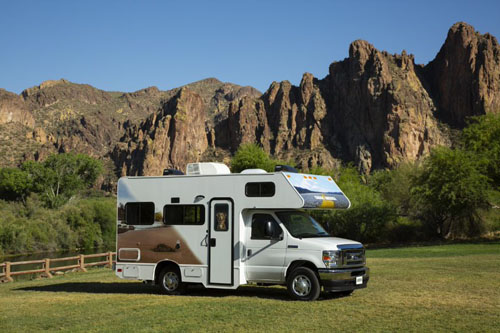
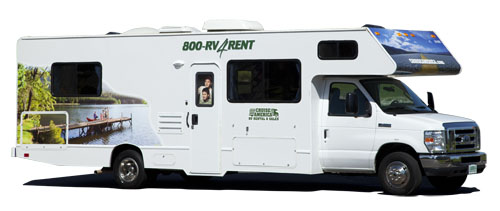
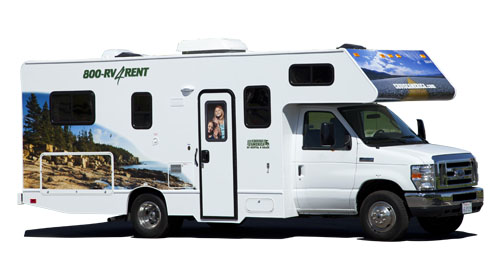
For exploring Denver and the surrounding Rocky Mountains, Class C motorhomes and Class B campervans are the most recommended vehicle types. These models provide the perfect blend of interior comfort and road maneuverability. They are large enough to feel like a home on wheels but nimble enough to confidently navigate both city streets and winding mountain roads.
A Class C motorhome, often featuring an alcove bed over the cab, is ideal for families, typically sleeping 4-6 people and measuring around 26 feet (7.9 meters). It offers a full kitchen, bathroom, and distinct living spaces. A Class B campervan is more compact, usually around 20 feet (6.1 meters), and drives much like a large van, making it perfect for couples who prioritize ease of parking and better fuel economy. While larger Class A motorhomes are available and offer luxurious space, their size can be more challenging for first-time RV renters on narrow mountain passes. Get inspired for your next trip by comparing models to find your perfect fit!
Should I Choose a Compact Van Instead of a Large RV in Denver?
While a compact campervan certainly offers easier parking in downtown Denver, a larger rented RV provides significantly more comfort and amenities, making it a worthy trade-off for most travelers. For the typical road trip starting in Denver, which involves exploring vast national parks and scenic byways, the extra living space, larger water tanks, and full-featured kitchen and bathroom of a Class C motorhome often outweigh the minor parking advantages of a van.
Don't let the size of a larger RV intimidate you. With a little practice and common sense, driving any standard motorhome is perfectly manageable on Denver's roads and the main routes into the mountains. A compact van is a great choice for solo travelers or couples focused on urban exploration, but for families or anyone planning a week-long adventure or more, the comfort of a larger mobile home is invaluable. You can find options for every group size in our `RV Rental in Denver - Prices and Best Deals 2026` guide.
Can I Park Anywhere? Free & Wild Camping Rules in Denver
No, you cannot park a rented RV for the night just anywhere within Denver's city limits. Free or "wild" camping is generally prohibited on city streets, in parks, or in commercial parking lots. Denver enforces local ordinances that restrict overnight vehicle camping to ensure safety and neighborhood integrity. Your legal and safest option for staying overnight in the metro area is to book a spot at a designated RV park or campground.
There are several great options in and around the city, like Cherry Creek State Park or Chatfield State Park, which offer hookups and amenities. For finding these spots, we always recommend using a reliable resource like RV PLANET (rvplan.net). If you are seeking free camping, you'll need to drive out of the city into National Forests or onto Bureau of Land Management (BLM) land, where dispersed camping is often permitted in designated areas. Always check the specific regulations for the area you plan to visit, as rules can change.
Can I Drive an RV Into the City Center? Heights, Tunnels & Local Signage
Yes, you can confidently drive a rented motorhome into Denver's city center, as long as you remain vigilant about your vehicle's size and heed all local signage. Major arteries into downtown are built to accommodate large vehicles, but your primary concern will be vertical clearance. Always be aware of your RV’s height and watch for posted warning signs on underpasses and bridges, especially on older, non-interstate roads.
The key is to drive with caution and common sense. A great strategy many RVers use is to park their mobile home at a campground on the outskirts of the city, such as near an RTD Light Rail station, and use public transportation to explore the dense downtown core. This gives you the best of both worlds: a comfortable home base and stress-free access to attractions like Larimer Square and the 16th Street Mall. For more in-depth information, our `RV Rental Denver - Complete Guide 2026` covers all aspects of your trip.
Do you need a special license to drive an RV in Colorado?
In Colorado, you do not need a special license to drive the vast majority of rental recreational vehicles. A standard Class R driver's license, the same one you use for a car, is sufficient for operating any vehicle with a Gross Vehicle Weight Rating (GVWR) up to 26,000 pounds. This generous weight limit covers virtually all Class B campervans, Class C motorhomes, and even many large Class A models available on the rental market.
A Commercial Driver's License (CDL) is only required for massive, privately-owned rigs that exceed this weight limit or for vehicles used for commercial purposes. For your vacation in a rented RV, your existing license is all you need to get on the road and start exploring the beauty of Colorado.
Do you have to have a CDL to drive a 30 ft RV?
No, you do not need a Commercial Driver's License (CDL) to drive a 30-foot RV in Colorado for recreational purposes. As long as the vehicle's Gross Vehicle Weight Rating (GVWR) is under the 26,001-pound threshold, your standard car driver's license is perfectly adequate. Most 30-foot motorhomes, including popular Class C and many Class A models from suppliers like El Monte and Cruise America, fall comfortably below this weight limit.
This is one of the great simplicities of RV travel in the United States. The rules are designed to make it easy for families and adventurers to rent a motorhome and explore the country without needing specialized training or licensing. Getting behind the wheel of your home-on-wheels is as straightforward as renting a car.
Do you need a license to get an RV?
Yes, you absolutely need a valid driver's license to rent and operate any motorhome in Denver and throughout the United States. Reputable rental companies require all drivers to be at least 21 years old and present a valid, non-probationary driver's license at the time of pickup. This is a standard requirement for insurance and legal compliance.
For visitors from other countries, a valid license from your home country is generally accepted. We strongly recommend also carrying an International Driving Permit (IDP) as a supporting document, as it provides an official translation of your license in English, which can be very helpful during a traffic stop or at the rental counter.
How much is RV insurance in Colorado?
For a rental motorhome, basic liability insurance is almost always included in your daily rental rate, providing a foundational level of coverage. However, the cost of supplemental insurance in Colorado, which we highly recommend, can range from $15 to $40 per day. This extra coverage typically reduces your financial responsibility (the deductible) in case of an accident and can include collision, comprehensive, and roadside assistance.
At Bandana, we believe in full transparency, so you'll see all your insurance options clearly broken down during the booking process. For added confidence on the road, you can upgrade to a top-level deductible reimbursement for extra peace of mind, ensuring that even in a worst-case scenario, your out-of-pocket costs are minimized. This is different from the annual insurance costs for privately owned RVs, which can range from $800 to over $3,000 per year.
What You Shouldn't Miss
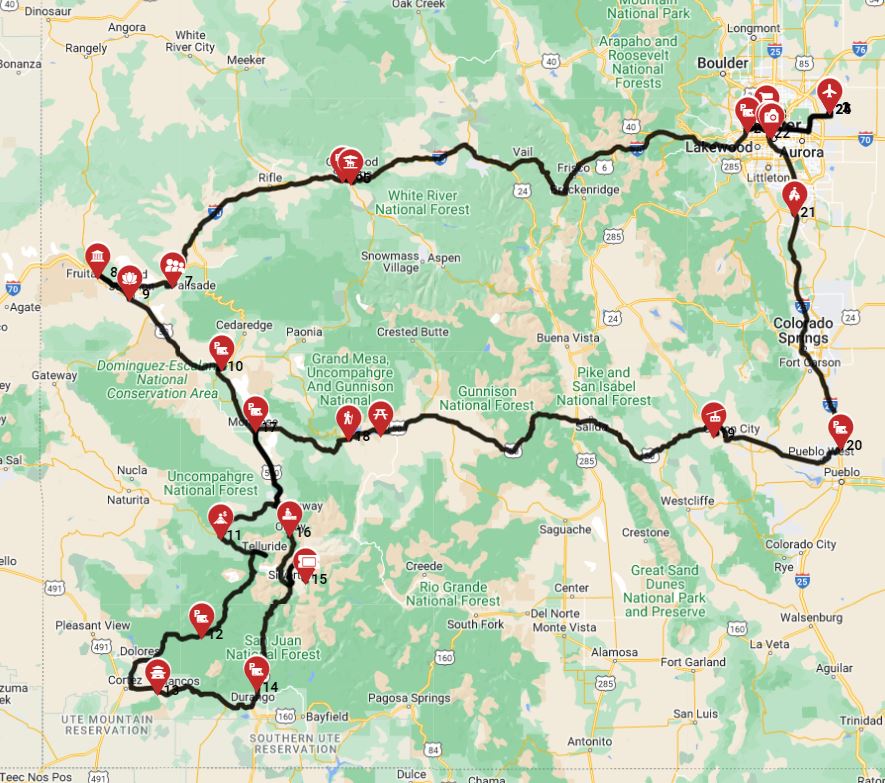
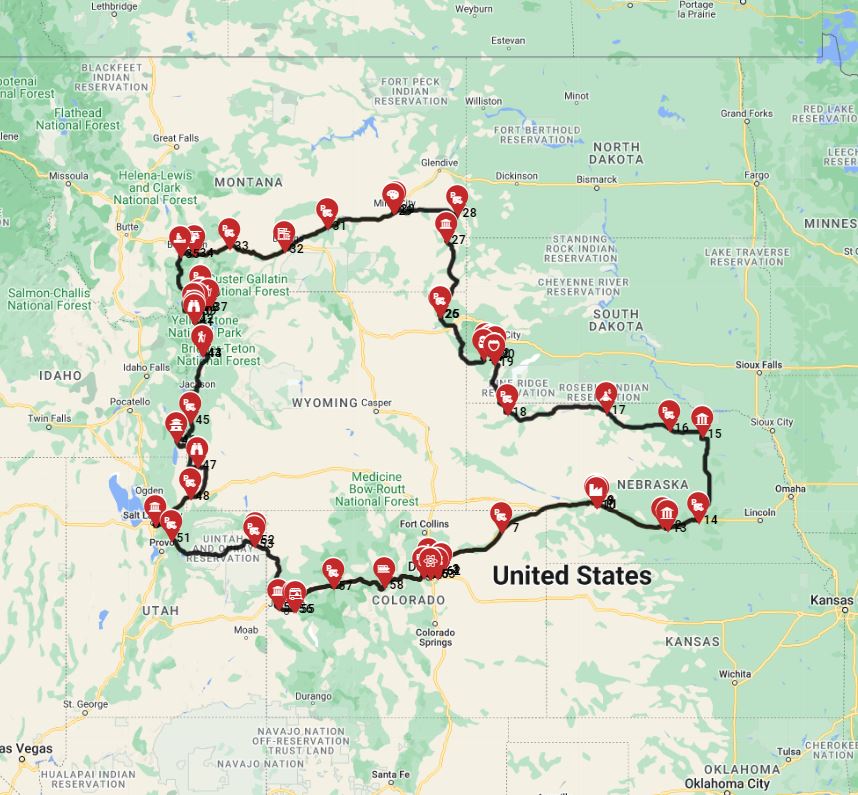
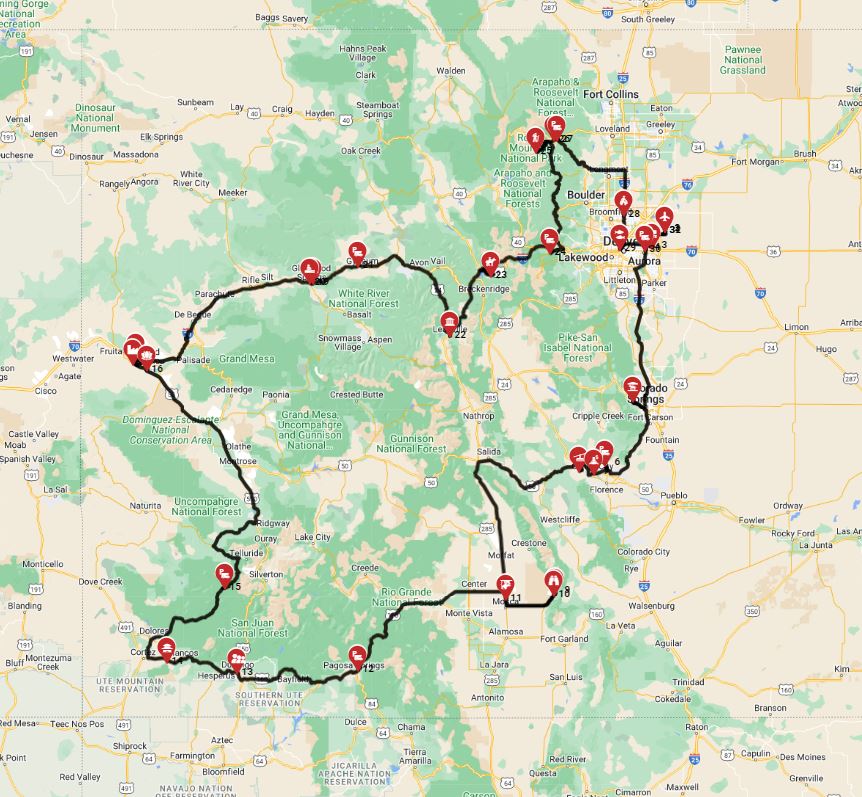
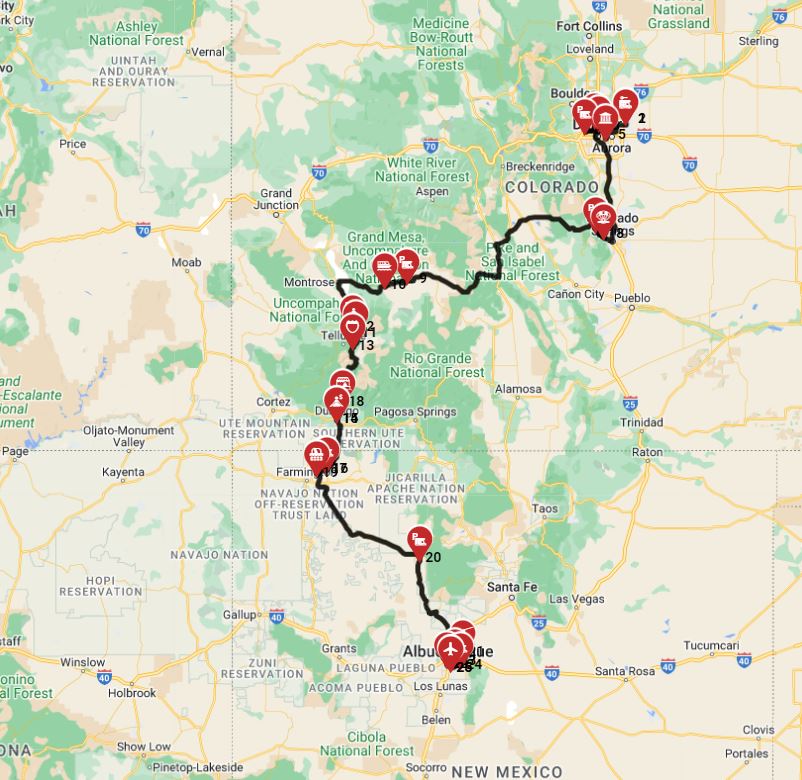
Looking for expert insights from Avi Bandana? Here are some adventures and route plans you simply shouldn't miss when starting your journey from Denver. These itineraries from our sister company, RV PLANET, are professionally planned to maximize your enjoyment and minimize the hassle.
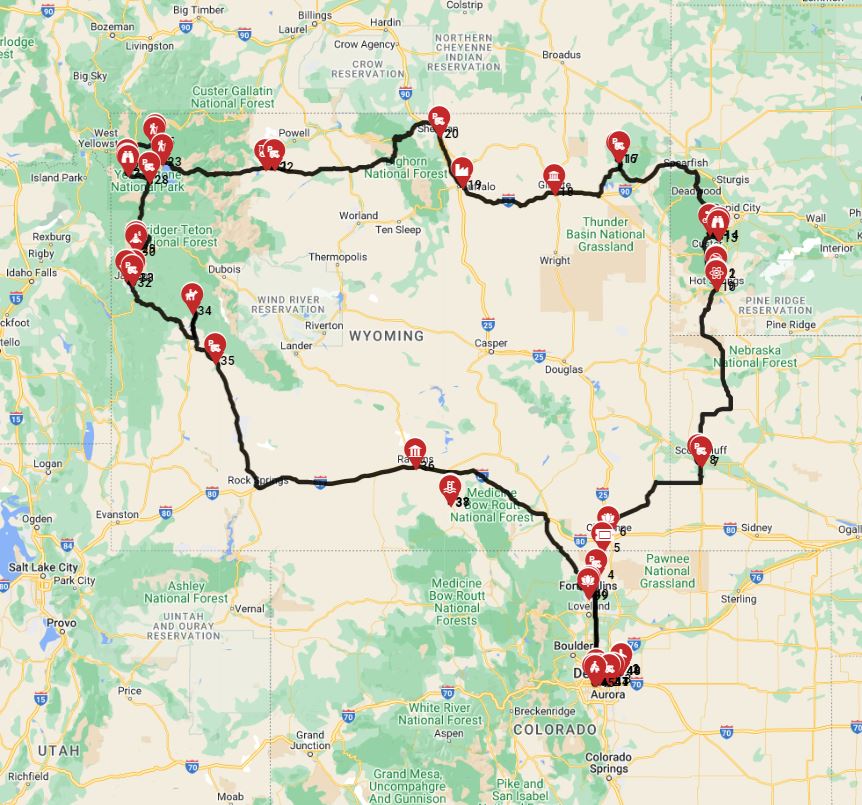
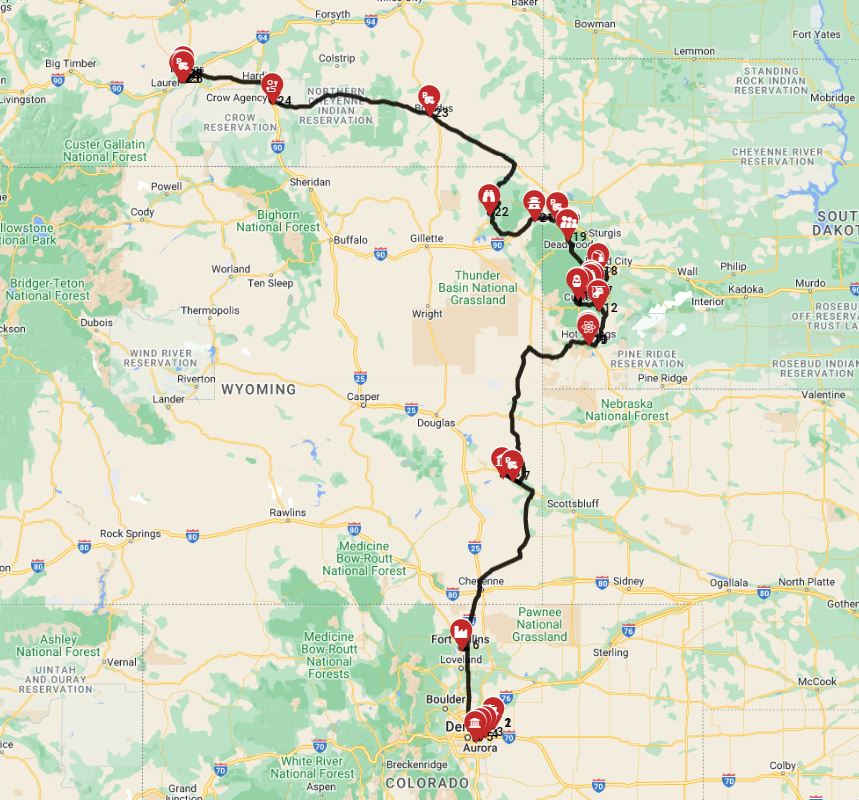
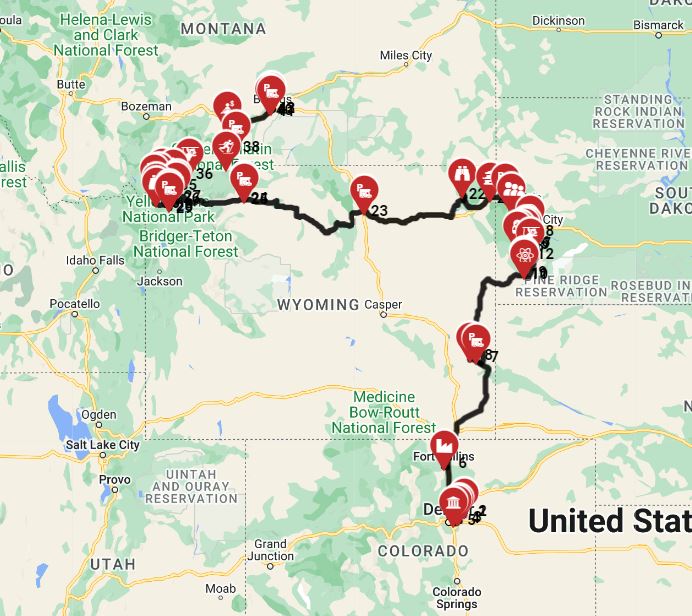
- Explore the Wild West: Take on an unforgettable journey through the heart of American West history and nature. This route showcases the best of Wyoming and Montana, packed with wildlife viewing and stunning landscapes.
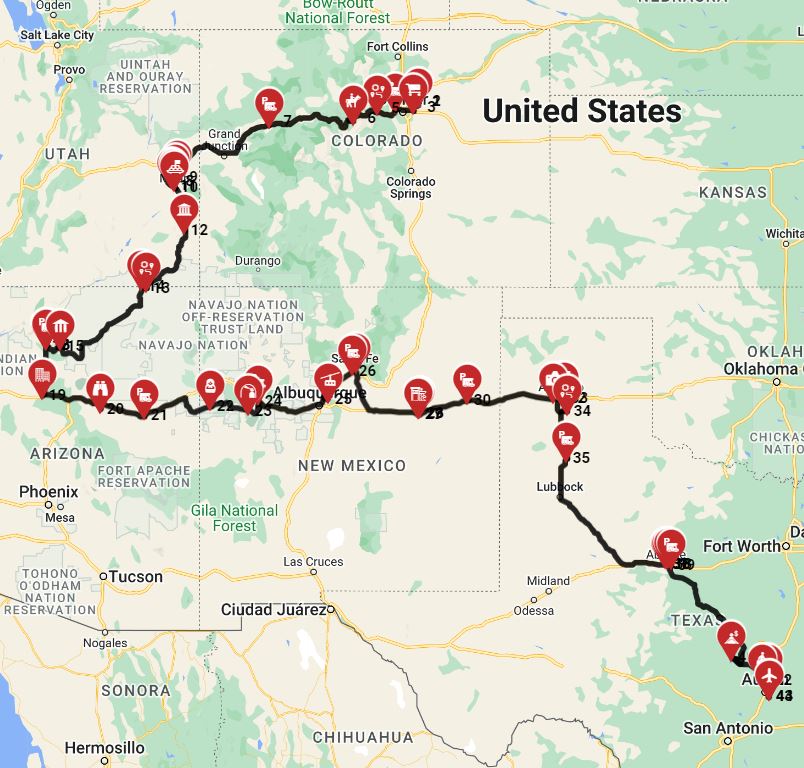
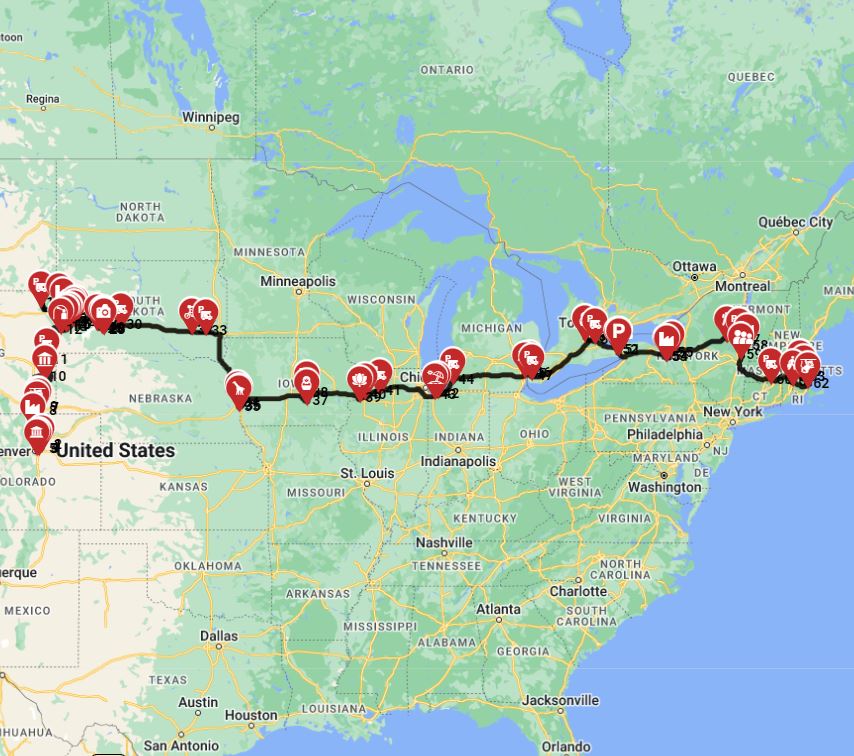
- Cross-Country from the Midwest: For a longer, more immersive trip, this route from Chicago takes you through iconic canyons and into the heart of the Rockies. With over 20 unique activities and stops, it's a true American odyssey.
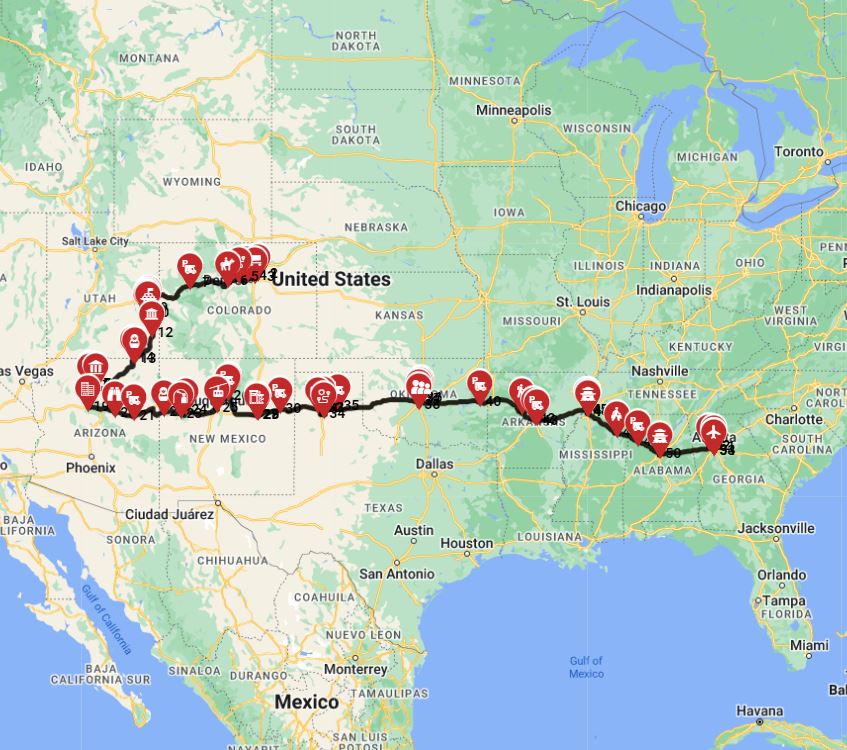
- The Great American Adventure: If you're starting from the West Coast, this epic 25-day itinerary is the ultimate road trip. It guides you from Los Angeles through stunning national parks and iconic landscapes, culminating in Denver.
Plan a trip itinerary in advance with minimal effort and maximum enjoyment. These Rent&Plan options are a cornerstone of the Bandana experience, and when you book a route through our sister site, rvplan.net, you're rewarded with a 25% planning discount on your route plan.
Final Thoughts
Your Denver RV adventure is more than just a trip; it's a chance to create lasting memories against the backdrop of one of America's most stunning landscapes. From navigating the friendly city streets to winding your way up a mountain pass, the freedom of the open road is an unparalleled experience. With a rented motorhome, you have the flexibility to chase sunsets, discover hidden trails, and wake up to a new, breathtaking view every morning.
At Bandana, our greatest joy comes from helping you embark on that journey with confidence. We handle the small details because we know they make the big difference. With transparent pricing, expert support, and a passion for RV travel that spans over two decades, we're here to ensure your road trip is everything you've dreamed of and more. The mountains are calling-it's time to answer.
Find Motorhome Rentals in Denver